

If you have tile floors and pets, choosing the right robot vacuum matters for daily cleanliness and pet-hair control. Tile demands powerful suction and good edge cleaning, while pet hair requires tangle-resistant brushes and easy debris disposal. This guide shortlists seven top robot vacuums suited to tile floors and pet hair and explains the features that make them a practical fit for busy pet households. Read on to see which qualities we prioritized and what to expect from these top picks.
Top Picks at a Glance
| Best Overall Robot Vacuum for Tile Floors and Pet Hair A top all-around choice for tile and heavy pet shedding | roborock Q7 M5+ Robot Vacuum |  |
| Best Budget Robot Vacuum for Tile Floors and Pet Hair An affordable pick that still handles hair and hard floors | ILIFE V2 Robot Vacuum |  |
| Best Premium Robot Vacuum Higher-end features and performance for owners who want the best | roborock Saros 20 Robot Vacuum |  |
| Best High-Suction Robot Vacuum Stronger suction strength for embedded pet hair and debris on tile | Redroad R11 Max Robot Vacuum |  |
| Best Self-Emptying Robot Vacuum Auto-empty base reduces how often you touch collected pet hair | Shark AV2501AE AI Robot Vacuum |  |
| Best Compact Robot Vacuum Smaller footprint that fits under low furniture and in tight spaces | Lefant M310 Ultra Robot Vacuum |  |
| Best Long-Run Robot Vacuum Extended battery life for larger homes or longer cleaning cycles | Tikom G8000 Max Robot Vacuum |  |
roborock Q7 M5+ Robot Vacuum
Best Overall Robot Vacuum for Tile Floors and Pet Hair
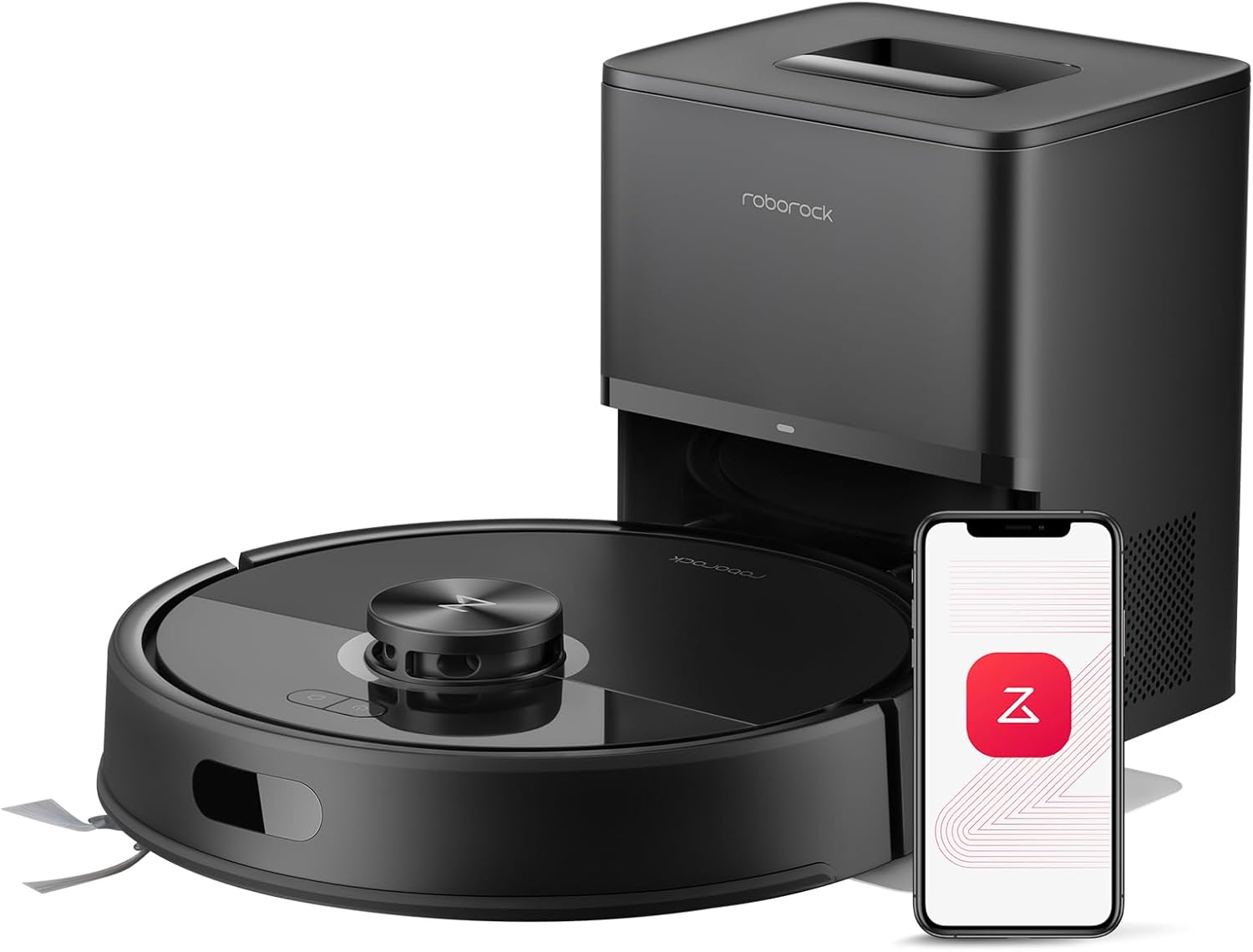
| Maximum Suction | 10000Pa |
|---|---|
| Capacity | 2.7 liters |
| Battery Life | 150 minutes |
| Filter Type | Cartridge |
| Noise Level | 65 db |
The roborock Q7 M5+ is a robot vacuum-and-mop combination built to handle pet hair and deep dirt on mixed floors. It uses PreciSense LiDAR for reliable mapping and multi-level maps, and the app plus voice control let you schedule cleanings and set no-go zones. The key hardware strengths are a 10000 Pa HyperForce motor for strong extraction and a Dual Anti-Tangle system that reduces brush hair wrap for long-haired pets. Paired with the RockDock Plus self-emptying base and a 2.7 L sealed dust bag, it can go many weeks between manual emptying, which is helpful in heavy-shedding homes. The VibraRise 2.0 electronic mop and adjustable water flow provide basic mopping between vacuum passes but will not replace manual deep scrubbing on textured grout or stubborn stains. Expect typical robot limitations such as navigation around very cluttered rooms, occasional edge residue on high-pile rugs, and app dependency for advanced settings. For households prioritizing suction and low-maintenance pet hair pickup, the Q7 M5+ is a strong choice.
Best for: Buyers with heavy-shedding dogs or homes with textured floors who want the strongest possible suction in a low-maintenance robot and value scheduled, automated cleaning.
Less Ideal for: People who need a robot that replaces deep manual mopping or who prefer a fully manual upright for spot deep-cleaning and stairs.
- Very high suction power rated at 10000 Pa for deep carpet and rug extraction
- Dual Anti-Tangle brush system reduces hair wrap and maintenance
- 2.7 L sealed dust bag in the RockDock Plus supports weeks of hands-free emptying
- PreciSense LiDAR navigation with multi-level mapping for efficient room coverage
- App and voice control with scheduling and no-go zones for convenient automation
- Mopping function is basic and not a substitute for aggressive manual scrubbing on textured floors
- May struggle with very cluttered spaces or extremely high-pile carpets
Verdict: The best overall robot vacuum for tile floors and pet hair that balances suction, navigation, cleaning coverage, and ease of upkeep for most pet owners.
ILIFE V2 Robot Vacuum
Best Budget Robot Vacuum for Tile Floors and Pet Hair

| Battery Life | 120 minutes |
|---|---|
| Capacity | 300 ml |
| Filter Type | Sponge |
| Noise Level | 69 db |
| Control Method | Remote |
The ILIFE V2 is a budget-focused robot vacuum that targets homes with hard floors and pet hair by using a tangle-free suction port instead of a roller brush. You operate it with the included physical remote or the onboard button, and it offers multiple modes—auto, edge, and spot—to cover routine runs, wall-to-wall edges, and concentrated messes. The 300 ml dustbin and sponge filter handle everyday debris and hair, and the ultra-slim 2.99 inch profile helps it reach under low furniture. Runtime is strong for the price at up to 120 minutes, and the unit automatically returns to its charger when battery is low. Expect simple, random navigation rather than mapping, and there is no Wi-Fi app or smart home integration, so scheduling and control are limited to the remote. Noise sits around 69 dB, which is noticeable but typical for this class. For buyers who want straightforward, effective hair pickup on floors without paying for advanced sensors or app features, the V2 delivers solid value with practical everyday performance.
Best for: Owners prioritizing effective hair pickup on floors and a low-cost, easy-to-use robot without needing mapping or app controls.
Less Ideal for: Buyers who want precise mapping, room-by-room scheduling, or smartphone and smart home integration should consider higher-end models.
- Tangle-free suction design avoids hair wrap without a roller brush
- Up to 120 minutes runtime for extended cleaning sessions
- Ultra-slim 2.99 inch profile reaches under low furniture
- Multiple cleaning modes including auto, edge, and spot for flexible coverage
- Simple remote control operation with no Wi-Fi required
- Navigation is random rather than mapped so coverage can be less efficient
- No smartphone app or smart home integration for remote scheduling
Verdict: The best budget robot vacuum for tile floors and pet hair that delivers reliable pickup and basic navigation without a high price tag.
roborock Saros 20 Robot Vacuum
Best Premium Robot Vacuum

| Suction | 36,000 Pa |
|---|---|
| Battery life | 180 minutes |
| Filter type | Washable Filter |
| Noise level | 55 db |
| Control | App, Remote, Voice |
The roborock Saros 20 is a premium robot vacuum and mop designed for heavy-duty daily cleaning, especially in homes with pets. It pairs a 36,000 Pa digital motor with an anti-tangle brush system and a low 3.13-inch profile so it can pull deep-set pet hair from hardwood and reach under sofas and beds. Navigation is handled by StarSight Autonomous System 2.0 with 3D ToF sensors and an RGB camera that identify and avoid 300+ obstacles while building accurate maps for room-based scheduling in the Roborock app. The multifunctional RockDock automates mop washing with very hot water, hot air drying, and long auto-empty intervals to minimize manual maintenance. Practical benefits include strong edge and corner cleaning via an extendable side brush, app and voice controls, and up to three hours of runtime for large coverage. Trade-offs are that this is a feature-rich, heavy unit with a substantial dock footprint and higher complexity that may require occasional app updates and familiarity to get the most from SmartPlan mapping features.
Best for: Buyers who prioritize maximum suction, intelligent mapping, and hands-off maintenance to manage heavy dog hair and frequent whole-home cleaning on hardwood floors.
Less Ideal for: People who need a simple, compact robot with minimal setup or have very small homes where dock footprint and advanced features are unnecessary.
- Very high suction power (36,000 Pa) that tackles embedded pet hair on hardwood
- Advanced 3D ToF plus RGB camera navigation that avoids 300+ obstacles and builds accurate maps
- Ultra-slim 3.13-inch profile for cleaning under low furniture
- Multifunctional dock with hot-water mop washing, hot-air drying, and extended auto-emptying for low maintenance
- Long battery life up to 180 minutes suitable for large homes
- Large, complex dock requires significant floor space and setup
- Feature set and app require learning and occasional updates to run optimally
Verdict: The best premium robot vacuum for pet owners who want top-tier suction, advanced mapping, and longer-lasting components even at a higher price.
Redroad R11 Max Robot Vacuum
Best High-Suction Robot Vacuum

| Suction | 38,000 Pa |
|---|---|
| Capacity | 4 liters |
| Battery Type | Lithium Ion |
| Controller Type | App Control, Voice Control |
| Filter Type | High-Efficiency |
The Redroad R11 Max is a high-suction robot vacuum designed for whole-home cleaning where pet hair and tracked-in dirt are a concern. It pairs a claimed 38,000 Pa suction motor with a 4L self-emptying station and extendable side brush to pull hair and debris from edges and carpets, while the anti-tangle main roller reduces brush maintenance. LiDAR mapping stores up to four floor plans for reliable navigation and targeted runs, and the app plus Alexa/Google voice control let you schedule cleanings, set no-go zones, and change suction or mop settings. The included large dust bags promise long stretches between maintenance, which helps households with heavy shedding pets, and the mop function offers three water-flow levels for tile and hardwood touch-ups. Trade-offs are platform realism and verification of peak suction claims and the need to replace dust bags over time, but for practical use it offers robust edge cleaning, mapped navigation, and long autonomous runtime for busy homes with pets.
Best for: Households with heavy-shedding pets that need strong extraction power and long autonomous cleaning intervals, especially on tile and hard floors where hair and tracked-in dirt accumulate.
Less Ideal for: People who prefer completely bagless systems or who want a compact, low-maintenance unit without periodic consumable replacements.
- Very high advertised suction (38,000 Pa) for extracting embedded dirt and pet hair
- 4L self-emptying station with included dust bags reduces how often you handle debris
- 360° LiDAR navigation with rapid mapping and storage for up to 4 maps
- Extendable side brush and anti-tangle main roller improve edge cleaning and hair management
- App control plus Alexa and Google voice support for scheduling, no-go zones, and suction adjustments
- Suction figure and runtime claims are manufacturer-stated and may vary in real-world conditions
- Requires replacing dust bags over time which adds ongoing consumable costs
Verdict: The best high-suction robot vacuum for households with heavy-shedding pets that need extra extraction power to remove hair and ground-in dirt from hard floors.
Shark AV2501AE AI Robot Vacuum
Best Self-Emptying Robot Vacuum

| Filter Type | HEPA |
|---|---|
| Battery Life | 120 minutes |
| Other Special Features of the Product | Bagless, LiDAR Navigation |
| Control Method | Voice |
| Compatible Devices | Amazon Echo, Google Home |
The Shark AV2501AE is a self-emptying robot vacuum built to reduce hands-on maintenance while keeping pet hair and dander under control. It navigates with 360° LiDAR and Matrix Clean Navigation to map rooms and run methodical multi-pass cleaning, and it returns to its XL bagless base that holds up to about 60 days of debris before you need to empty it. The unit includes HEPA filtration and a self-cleaning brushroll to help capture pet hair and allergens, and it supports app control plus voice assistants for on-demand or scheduled runs. Runtime is up to 120 minutes with recharge-and-resume for large homes. Practical benefits include long autonomous intervals between emptying, reliable mapping for fewer missed spots, and simplified operation for busy owners. Limitations to consider are the sizable footprint of the robot and base compared with compact units, and routine maintenance like filter and brush replacement is still required to keep performance high.
Best for: Busy pet owners who want to minimize how often they manually empty hair and dander and prefer an automated, scheduled cleaning system that reduces daily upkeep.
Less Ideal for: People with very small homes or limited floor space for a larger self-empty base should consider a compact robot or non–self-empty model instead.
- Long 120-minute runtime with recharge-and-resume for whole-home cleaning
- Large bagless self-empty base holds up to 60 days of debris for less frequent emptying
- 360° LiDAR mapping and Matrix Clean Navigation deliver methodical, multi-pass coverage
- True HEPA filtration and self-cleaning brushroll help capture pet hair and allergens
- App and voice control enable hands-off scheduling and spot cleaning
- Self-empty base and robot together take up more floor space than compact docked robots
- Requires periodic filter and brush replacement to maintain peak performance
Verdict: The best self-emptying robot vacuum for pet owners who want minimal maintenance and fewer trips to the dustbin while managing frequent hair accumulation.
Lefant M310 Ultra Robot Vacuum
Best Compact Robot Vacuum

| Suction Power | 6000Pa |
|---|---|
| Navigation | ToF LiDAR |
| Runtime | 170 minutes |
| Filter Type | HEPA |
| Control Method | App, Voice |
The Lefant M310 Ultra is a low-profile robot vacuum and mop built to handle pet hair on hard floors while staying unobtrusive. It uses ToF LiDAR mapping and 190° PSD obstacle avoidance to make multi-room maps and avoid collisions, and the slim 3-inch body lets it reach under low furniture. The unit supports app and voice control for scheduled or zone cleaning, and it automatically boosts suction on carpets or avoids them when the mop is attached. With a 2600mAh battery rated for about 170 minutes per charge and a HEPA filter, it can cover large areas between recharges. In practice the 6000Pa suction is strong enough to pick up fur and debris on hardwood and low-pile rugs, and the quiet brush and motor design make it suitable for homes where noise matters. Limitations include a modest water tank for mopping and no self-emptying base, so you will need to empty the dustbin regularly in pet households; larger or high-pile carpets may require additional spot cleaning. For the money it balances effective pet-hair pickup, mapping, and quiet operation in a compact package.
Best for: Buyers who need a quiet, compact robot that reliably removes pet hair from hard floors and low rugs while mapping rooms for repeatable schedules.
Less Ideal for: Homes that need fully hands-off maintenance or heavy-duty deep cleaning of high-pile carpets should consider models with self-emptying docks and higher suction.
- Slim 3-inch profile reaches under low furniture
- ToF LiDAR plus PSD obstacle avoidance for accurate mapping and fewer collisions
- App and voice control for scheduling and custom cleaning modes
- Automatic carpet detection with suction boost for deeper cleaning
- HEPA filter helps capture pet dander and fine dust
- No self-emptying station so frequent bin emptying is required
- Water tank capacity is limited for extended mopping sessions
Verdict: The best compact robot vacuum for homes with low-clearance furniture or tight layouts where a smaller device cleans hard-to-reach tile areas effectively.
Tikom G8000 Max Robot Vacuum
Best Long-Run Robot Vacuum

| Suction | 5000Pa |
|---|---|
| Battery Life | 150 minutes |
| Dustbin Capacity | 450 ml |
| Water Tank Capacity | 300 ml |
| Filter Type | Hepa Filter |
The Tikom G8000 Max is a compact robot vacuum that combines 5000Pa suction with a simultaneous vacuum-and-mop system, making it useful for daily cleaning of hardwood and short- to medium-pile carpet. In practice it runs up to 150 minutes on a charge and will auto-recharge between jobs, which helps for larger homes or extended cleaning sessions. The 450 ml dustbin plus a 300 ml water tank let it pick up pet hair and then mop without swapping accessories, and its slim 3-inch profile reaches under low furniture. Navigation relies on anti-collision and anti-fall sensors rather than high-end lidar, so it avoids drops and most obstacles but may not map multi-room layouts as precisely as premium models. You can control it via app, remote, voice, or onboard button and pick spot, edge, zig-zag, or manual modes to focus cleaning where needed. Noise is reasonable for the power level and the HEPA filter helps contain allergens. If you want long unattended runtime and strong suction for dog hair on hardwood, this model delivers practical cleaning power with a modest navigation trade-off.
Best for: Households that need long unattended cleaning sessions across multiple rooms and want strong suction to collect dog hair on hardwood while also mopping, with priority on runtime over premium mapping features.
Less Ideal for: Buyers who require precise multi-room mapping, advanced obstacle avoidance, or the most efficient room-by-room scheduling should consider models with lidar-based mapping instead.
- High 5000Pa suction effective at lifting pet hair and debris from hard floors
- Long runtime up to 150 minutes with automatic recharge for extended coverage
- Simultaneous vacuuming and mopping with separate dustbin and water tank reduces manual intervention
- Multiple control options (app, remote, voice, button) and four cleaning modes for flexible scheduling
- Slim 3-inch profile and anti-fall/anti-collision sensors let it clean under low furniture and avoid stairs
- Navigation uses basic sensors rather than mapping, so room-to-room mapping and route efficiency may lag behind higher-end models
- Dustbin and water capacities are moderate and may need emptying/refilling on very large homes
Verdict: The best long-run robot vacuum for pet households and bigger floorplans that need sustained runtime to finish cleaning tile and hair in one pass.
Choosing the Right Robot Vacuum Tile Floor Pet Hair: Key Factors to Consider
Suction Power and Airflow
Suction is the primary driver of pickup performance on tile, where bristles cannot sink into fibers to dislodge debris. Look at both advertised suction and real-world airflow measurements when possible.
Higher sustained airflow helps lift pet hair and grit from grout lines and uneven tiles. Machines with variable power or boost modes can shift into stronger settings for concentrated pet-hair zones without killing battery life during open-area cleaning.
Brush System and Hair Management
Brush design determines how well the robot handles long hair and pet fur. Brushless rollers or rubberized multi-surface rollers tend to resist tangling better than traditional bristle brushes.
Consider a system with an anti-tangle pathway, quick-release brushes, or a brushless main pickup for low maintenance. Brushes that are easy to remove and clean reduce time spent untangling hair and keep performance consistent.
Navigation and Edge Cleaning
Good navigation ensures the robot covers tiled rooms systematically and returns to missed areas. Laser or camera-based mapping helps maintain efficient routes and avoid repeated passes that waste battery.
Edge-cleaning performance matters on tile because debris often accumulates along baseboards and grout. Look for dedicated side brushes or optimized edge modes that keep hair and dust from settling at the room perimeter.
Filtration and Dustbin Capacity
Pet homes produce fine dander that can re-enter the air if filtration is inadequate. HEPA or high-efficiency filters capture smaller particles, improving air quality after cleaning cycles.
Dustbin size matters for multi-pet households or larger rooms; a larger bin or auto-empty base reduces how often you must intervene. Easy-to-empty, sealed designs also limit dust exposure during maintenance.
Run Time, Recharge, and Area Coverage
Battery life determines whether a single charge will cover your tiled area. For medium to large homes, aim for models with longer runtimes or smart recharge-and-resume behavior that finish jobs across multiple charge cycles.
Consider how efficiently the robot uses battery during different modes. High-power modes may shorten runtime significantly, so machines that balance power and run time or let you schedule targeted cleanups are more practical.
Maintenance and Noise
Frequent cleaning cycles are common in pet households, so maintenance burden should be low. Evaluate how often filters and brushes need replacement, how easy it is to clear clogs, and whether parts are tool-free to remove.
Noise can be disruptive to pets and people. Choose a machine with acceptable noise levels for daytime or scheduled runs and quieter modes for evening use. Low-maintenance designs with fewer moving parts reduce long-term hassle.
How Do Robot Vacuums Handle Grout Lines and Textured Tile?
Grout lines and textured tile present small ridges and gaps where hair and grit can collect. A robot with higher suction and narrow nozzle design does a better job pulling debris out of these shallow crevices than units relying mostly on brushes.
Smooth-rolling wheels and responsive suspension help a robot maintain consistent contact over uneven surfaces. Also, robots that slow down or increase suction when encountering resistance tend to extract more trapped hair from grout without getting stuck.
- Look for strong suction and steady airflow for grout cleaning
- Wider openings and concentrated edge suction improve pick-up from textured surfaces
- Robust wheel design reduces hang-ups on grout transitions
Should I Prioritize Run Time or Suction for Typical Daily Cleanups?
For short daily cleanups in small to medium tiled areas, moderate suction with longer runtime often delivers the most consistent results. This lets the robot complete a full pass without pausing to recharge, which is useful for routine hair control.
If you have concentrated pet-shedding zones or a large open floor plan, prioritize higher suction and models with recharge-and-resume. Boost modes can be used strategically on problem areas while standard mode covers general spaces efficiently.
- Daily maintenance: longer runtime with balanced suction
- Targeted deep cleaning: higher suction, boost modes, or spot clean features
- Large homes: models that resume after charging are more practical
How to Minimize Hair Wrap and Simplify Maintenance
Choose robots with anti-tangle engineering, such as rubberized rollers, brushless pickups, or dedicated hair-removal pathways. These features reduce the frequency of manual untangling and keep performance consistent between cleanings.
Routine quick steps cut down maintenance time: empty the bin after heavy sessions, check the side brush for wrapped hair, and tap or wash pre-filters regularly. Keeping hair away from the main brush area by pre-clearing loose clumps also helps.
- Prefer brushless or rubberized roller systems where possible
- Schedule quick daily emptying if you have heavy shedding
- Use detachable parts that are easy to rinse or wipe
What Filtration Level Do I Need for Pet Dander?
High-efficiency filtration, such as HEPA-grade or multi-layer filters, captures finer dander particles that standard filters may miss. If allergies are a concern, filtration quality becomes as important as pickup performance.
Also consider filter replacement intervals and how accessible the filter is for cleaning. Sealed dust paths help prevent dust from escaping during emptying, which is especially useful for allergy-sensitive homes.
- Look for HEPA or multi-stage filters for dander control
- Check replacement frequency and availability of washable pre-filters
- Sealed dustbins reduce airborne dust during disposal
Tips for Using a Robot Vacuum with Multiple Pets
With multiple pets, hair accumulates faster and bins fill sooner. Increase cleaning frequency and favor robots with larger dustbins or auto-empty bases to reduce intervention. Staggered scheduling can keep high-traffic areas tidy throughout the day.
Map out no-go zones and set virtual boundaries around pet bowls, litter areas, or fragile items. Some robots also let you set room-by-room schedules so high-shedding areas get more frequent passes without running the entire house constantly.
- Use frequent, short scheduled runs to prevent heavy buildup
- Employ mapping and virtual barriers to protect pet zones
- Consider auto-empty solutions when bin capacity is a limiting factor
How We Chose the Best Robot Vacuum Tile Floor Pet Hair
We focused on features and real-world performance metrics that matter most for cleaning tile floors and removing pet hair. First, we prioritized suction power and airflow, since tile lacks carpet fibers to help trap debris and instead relies on suction to lift hair and particles. Second, we evaluated brush systems and agitation design, emphasizing tangle resistance and brushless or hybrid rollers that clear hair without frequent snags. Third, navigation and edge-cleaning capability were considered so the robot can reach grout lines and baseboards common in tiled rooms. Fourth, filtration and dustbin design were reviewed for how they handle fine dander and make emptying simple. Fifth, runtime and recharge behavior were included because run time determines how much area a unit can cover between charges. Finally, we looked at noise and maintenance needs because pet households often need frequent quick cleanups without excessive disturbance. We excluded robots that are clearly designed primarily for deep-pile carpet cleaning or that lack features necessary for pet hair management, such as small-capacity dustbins or fixed brushes that tangle easily. We did not consider handhelds, upright vacuums, or mop-only robots. The resulting shortlist reflects machines that balance suction, brush design, navigation, filtration, and maintenance for tile-floor pet-hair cleaning.
Our full evaluation process is outlined in our review methodology.
FAQ
Will a robot vacuum scratch my tile floors?
Most robot vacuums are designed with soft bumpers and non-marking wheels that minimize scraping. To be safe, check wheel material and avoid operating models with damaged wheels; regular cleaning of wheels also prevents grit buildup that could cause scratches.
Can a robot vacuum pick up long pet hair without getting stuck?
Some robots handle long hair better than others by using rubberized rollers or brushless pickups that resist tangling. Look for models explicitly designed to reduce hair wrap and that provide easy brush access for occasional clearing.
How often should I empty the bin in a pet household?
Emptying frequency depends on the number of pets and the robot's bin size, but for moderate shedding households expect to empty after every one to three cleaning cycles. Heavier shedding may require daily emptying to maintain suction performance.
Is boost mode necessary for tile floors?
Boost mode can help when dealing with concentrated piles of hair or ground-in grit in grout lines, but it consumes battery faster. For routine maintenance on tile, balanced power settings usually suffice and preserve runtime.
Do robot vacuums work around pet bowls and litter areas?
Robots can navigate around obstacles, but food and litter can scatter and cause clogging. Use virtual boundaries or manual exclusion to keep robots away from litter boxes and feeding areas to reduce mess and maintenance.
Final Verdict
For tile floors with pets, prioritize suction and a brush system that resists tangles while keeping maintenance simple. Balance runtime against power needs: longer run times help with regular upkeep, while boost modes handle stubborn hair or grout-line debris. Also give attention to filtration and dustbin design if allergies or frequent emptying are concerns. By focusing on these tradeoffs, you can choose a robot vacuum that keeps tile surfaces tidy with minimal daily effort.

