

Choosing the right safe dog muzzle matters for both everyday handling and occasional stressful situations. A well-fitting muzzle reduces the risk of bites, helps with safe veterinary care and grooming, and can make walks more manageable for reactive dogs. This guide covers the top shortlisted options for safe muzzles, focusing on fit, comfort, durability and breathability. Each pick was evaluated for how it performs in real use so you can decide which style and features will work best for your dog. Read on to see the criteria we used and what to prioritize when you shop.
Top Picks at a Glance
| Best Overall Safe Muzzle The top all-around choice balancing safety, comfort, and fit | Baskerville Ultra Dog Muzzle Size 5 |  |
| Best Budget Safe Muzzle A low-cost option that still meets basic safety and fit needs | Evollax Dog Muzzle Large |  |
| Best Premium Safe Muzzle Higher-end construction and comfort for owners who want extra features | JorVet Leather Muzzle Medium |  |
| Best Lightweight Safe Muzzle Minimal-weight muzzle that reduces strain on the dog's snout | DoggieKit Soft Breathable Dog Muzzle M |  |
| Best Adjustable Safe Muzzle Multiple adjustment points for a precise, secure fit on varied dogs | HEELE Dog Muzzle L |  |
Baskerville Ultra Dog Muzzle Size 5
Best Overall Safe Muzzle

| Material Type | Thermoplastic Elastomer (TPE) |
|---|---|
| Closure Type | Buckle |
| Breed Recommendation | Large |
| Size | 5 |
The Baskerville Ultra is a basket muzzle intended for everyday handling, training and walks where bite prevention is needed but the dog must still pant and drink. Built from thermoplastic elastomer the muzzle is heat-shapeable so you can customize the fit for shorter or wider noses, and padded adjustable straps plus a headstrap and collar loop help keep it secure during activity. Its open design gives the dog good airflow and the ability to drink or take treats, which makes it practical for longer wear and for desensitization work. The muzzle is lightweight and has no metal contact on the dog's face, but sizing matters: you should follow the size guide carefully and consider trying sizes where possible because muzzle fit varies between breeds. For very strong chewers or dogs intent on removing restraints, the plastic construction is safe for most situations but is not indestructible compared with heavy-duty metal basket muzzles.
Best for: Owners who need a versatile, everyday muzzle for training, vet visits and walks and who prioritize breathability and comfort for their dog during regular use.
Less Ideal for: People seeking an indestructible muzzle for dogs that aggressively chew through plastics or for heavy-duty bite control during high-risk work should consider heavy metal alternatives.
- Allows panting and drinking which makes longer wear and training easier
- Heat-moldable design for better fit across different nose shapes
- Padded adjustable straps plus headstrap and collar loop increase stability
- No metal on the face and a lightweight construction improves comfort
- Plastic TPE construction is not as bite-proof as heavy metal basket muzzles
Verdict: The best overall safe muzzle for most dog owners, balancing reliable restraint, comfortable materials, secure fit, and everyday usability.
Evollax Dog Muzzle Large
Best Budget Safe Muzzle

| Breed Recommendation | Large |
|---|---|
| Closure Type | Buckle |
| Dog Breed Size | Large |
| Size | Large-Mesh |
This Evollax large dog muzzle is a soft, air-mesh option intended to provide basic restraint for grooming, vet visits, travel, or to prevent biting and excessive barking. It slips over the snout and secures with adjustable straps and a buckle so you can tighten the fit for different head shapes, and the open mesh allows panting and some drinking while keeping the muzzle lightweight and foldable for easy carrying. The construction prioritizes comfort and breathability over heavy-duty protection, so it is convenient for short supervised sessions and for dogs that tolerate soft muzzles. Important practical limits are its soft mesh material and light build, which are not suitable for powerful chewers or dogs that will continually paw or try to remove the muzzle; the listing also warns sizing must be measured by snout circumference rather than breed. Conditioning and supervised use are recommended when fitting this muzzle for the first time.
Best for: Owners who need an inexpensive, comfortable muzzle for short supervised tasks like grooming, vet visits, or temporary bark control and who prioritize breathability and portability over heavy-duty security.
Less Ideal for: Do not choose this if you need a heavy-duty, chew-resistant muzzle for truly aggressive or destructive dogs or for unsupervised long-term restraint.
- Soft, breathable air-mesh keeps the dog cooler and allows panting
- Adjustable straps with a buckle let you fine-tune fit for different snout sizes
- Lightweight and foldable for easy carrying and storage
- Easy to clean with a quick wipe or rinse
- Soft mesh construction is not chew-proof or suitable for strong escape attempts
- Sizing requires careful snout measurement and may not fit short-snouted breeds
Verdict: The best budget safe muzzle for owners who need an affordable, functional muzzle that provides adequate safety and decent comfort without extra features.
JorVet Leather Muzzle Medium
Best Premium Safe Muzzle

| Breed Recommendation | Medium Breeds |
|---|---|
| Closure Type | Buckle |
| Pet Type | Dog |
| Material Type | Leather |
The JorVet Leather Muzzle is a vet-designed, full-grain leather muzzle made for medium breeds and intended for repeated or extended use. It secures with adjustable buckle straps and a form-fitting leather basket to keep the dog from biting while still allowing breathing and panting. In practice it works well for vet visits, grooming, training sessions, and controlled public outings where a durable, comfortable restraint is needed. The handcrafted construction and thicker leather give it a premium feel and durability compared with thin synthetic muzzles, and the adjustable fit helps prevent slipping without chafing when sized correctly. Limitations to note are that leather requires periodic care to stay supple and that the medium size is aimed at specific breeds so accurate measurement is important before purchase, since an ill-fitting leather muzzle will be uncomfortable and less secure. This muzzle is best where long-term comfort and build quality matter more than minimal weight or instant packability.
Best for: Owners who prioritize top-tier materials and long-term comfort for frequent muzzle use and are willing to buy the right size and maintain leather properly.
Less Ideal for: Owners who need a lightweight, washable, quick-dry muzzle for occasional or water-based activities should consider synthetic alternatives.
- Handcrafted full-grain leather construction for durability and a premium feel
- Adjustable buckle straps for a secure, customizable fit
- Designed to allow breathing and panting while preventing biting
- Vet-designed product trusted for use during grooming and veterinary visits
- Requires periodic leather care to maintain suppleness and longevity
- Only available in specific sizes so precise measurement is needed to ensure proper fit
Verdict: The best premium safe muzzle for owners willing to pay more for superior materials, enhanced comfort, durability, and refined fit details.
DoggieKit Soft Breathable Dog Muzzle M
Best Lightweight Safe Muzzle
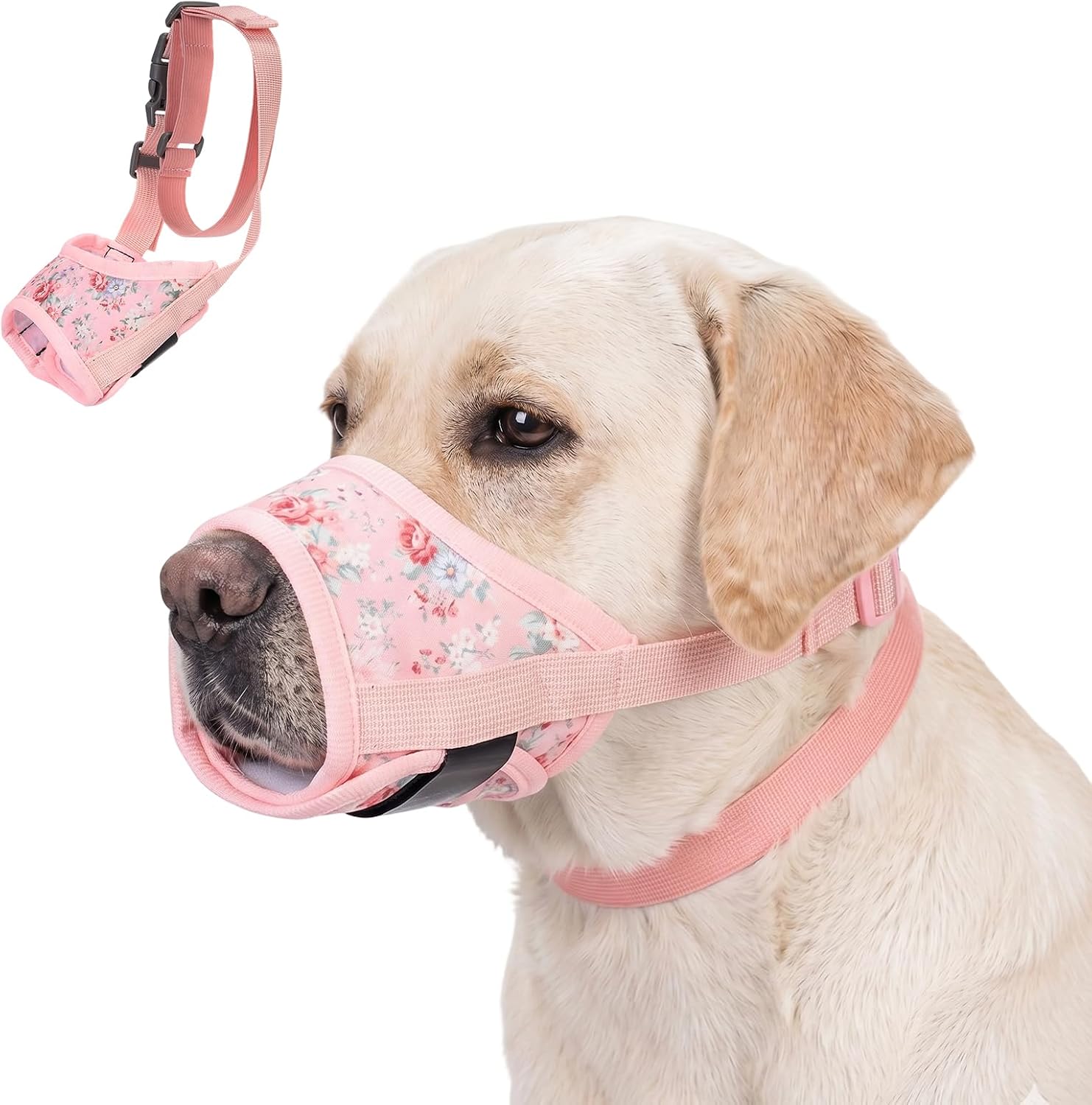
| Material Type | Polyester |
|---|---|
| Closure Type | Buckle, Hook & Loop |
| Breed Recommendation | Small, Medium, Large Breed Dogs |
| Item Weight | 50 g |
The DoggieKit soft mesh muzzle is a lightweight training muzzle intended to prevent biting, chewing, and excessive barking while still allowing panting and drinking. It is built from breathable polyester mesh with an elastic escape‑proof neck collar plus adjustable snout Velcro and a quick‑release head buckle so you can fine‑tune the fit for vet visits, grooming, nail trims or supervised walks. The open front and mesh material keep airflow high, so dogs can cool and drink, and the fabric construction makes it machine washable for easy cleaning. Because it is soft and low‑profile the muzzle is comfortable for longer, monitored wear compared with rigid basket muzzles, but it is not designed to stop determined heavy chewers or handle sustained aggressive behavior. Sizing and gradual positive introduction are important — the brand recommends measuring snout circumference and using treats to acclimate your dog. For owners seeking a low‑bulk, breathable muzzle for behavior management and routine care, this model is a practical option.
Best for: Buyers who want a minimal, comfortable muzzle for supervised training, grooming, vet visits, or calm walks and prioritize breathability and low bulk during wear.
Less Ideal for: Owners needing a heavy‑duty basket muzzle for powerful chewers or for managing severe aggression should choose a sturdier, chew‑resistant option.
- Very lightweight breathable mesh keeps panting and drinking possible
- Escape‑proof elastic neck collar helps prevent slipping off during movement
- Adjustable snout Velcro and head strap with buckle allow a customized fit
- Soft fabric construction is machine washable for easy maintenance
- Not suitable for heavy chewers or dogs with strong, sustained aggression
Verdict: The best lightweight safe muzzle for dogs that need minimal bulk and high comfort during longer wear while still maintaining secure restraint.
HEELE Dog Muzzle L
Best Adjustable Safe Muzzle

| Material Type | Nylon |
|---|---|
| Closure Type | Buckle |
| Breed Recommendation | Small, Medium, Large |
| Size | L |
This HEELE muzzle is a soft nylon design that combines breathable mesh, interior padding, and multiple adjustment points to create a secure, comfortable fit for short-term use. It fastens with a buckle and adjustable neck and snout straps so you can fine-tune tension for different head shapes and sizes, and the open mesh lets dogs pant and drink while wearing it. The lightweight construction and machine-washable material make it easy to clean and carry for vet visits, grooming, or stressful outings. Practical limitations are that it is intended as a behavioral and safety tool rather than a long-term restraint, and fit depends on measuring the snout tip correctly and choosing the right size; owners of bulky or unusually shaped muzzles may need to try different sizes. The muzzle is best used for supervised short sessions and to help manage reactive or mouthy dogs while you work with a trainer.
Best for: Owners who need a muzzle they can fine-tune to different head shapes for short supervised outings, vet visits, or training support.
Less Ideal for: People looking for a heavy-duty containment device for prolonged restraint or for dogs that must be left unattended while muzzled.
- Multiple adjustment points for neck and snout allow a closer, customizable fit
- Breathable mesh and padded interior let dogs pant and drink while muzzled
- Lightweight nylon construction is easy to carry and machine washable
- Quick-release buckle and hook-and-loop strap make it simple to secure and remove
- Not intended for unsupervised or long-term restraint
- Fit accuracy depends on correct measuring and selecting the right size
Verdict: The best adjustable safe muzzle for owners who need fine-tuned straps and sizing options to achieve a secure, comfortable fit across different head shapes.
Choosing the Right Safe Dog Muzzle: Key Factors to Consider
Fit and Sizing
A proper fit is the single most important factor because an ill-fitting muzzle can slip, rub or fail to prevent bites. Measure snout length, circumference and head strap placement and compare to sizing guides before choosing. Adjustable straps are essential to fine-tune fit; look for multiple adjustment points rather than a single static strap.
Snout shapes vary across breeds and individuals, so a muzzle with flexible adjustment and some room for panting will accommodate those differences better. Consider whether the muzzle design concentrates pressure on one spot or spreads it across the nose and muzzle; wider contact areas and padding reduce hotspots and skin irritation.
Breathability and Panting Allowance
Dogs regulate temperature largely by panting, so any safe dog muzzle must allow unhindered panting and, ideally, drinking. Look for open designs or structured cages that keep the airway clear while still preventing biting. Materials that trap heat or sit flush against the nostrils can increase stress and risk of overheating.
Test whether the muzzle keeps space in front of the nose rather than pressing inward. For situations that require longer wear, prioritize models with better airflow and a construction that avoids concentrating exhaled air back toward the nose.
Comfort and Padding
Comfort influences whether a dog will tolerate a muzzle and whether the handler can use it effectively. Soft padding at strap contact points and around the nose bridge prevents chafing and raw spots. Look for muzzles with removable or washable padding so you can keep the contact areas clean.
Also consider how the muzzle behaves during movement; stiff edges that rub when the dog moves its jaw will cause resistance and stress. Materials that balance structure with cushioning tend to be accepted more readily by dogs.
Durability and Maintenance
A muzzle needs to withstand repeated fastening, pulling and exposure to moisture. Durable materials and solid hardware for buckles or clips reduce the chance of failure in a stressful moment. Consider corrosion-resistant metal parts or reinforced plastic clips that are less likely to crack.
Ease of cleaning matters because muzzles contact saliva and dirt. Designs that allow quick rinsing or machine-washable components make it easier to maintain hygiene and prolong product life.
Security and Attachment Methods
How a muzzle attaches to the head affects both safety and ease of use. Dual-strap systems that anchor behind the ears or at the crown prevent rotation and slipping, while a single strap can sometimes shift when the dog moves. Buckles, quick-release clips and sturdy D-rings offer different tradeoffs between speed and reliability.
Consider whether the muzzle integrates with a collar or leash, and whether the connection points could be accidentally unclipped. For dogs that pull or lunge, secure attachment is critical to prevent escape from the restraint.
Purpose and Wear Duration
Think about how and how long the muzzle will be used. Short-term use for brief vet procedures requires different features than longer wear during travel or training. For short periods, minimal padding and basic fit may be acceptable, but extended use calls for breathable, padded designs with room for panting and drinking.
Also consider the training aspect: some muzzles are intended for behavior management and need to allow barking and panting, while others used for short, controlled situations can be more restrictive. Match the muzzle style to the intended task to avoid unnecessary stress.
How Do I Measure My Dog for a Safe Muzzle?
Measure three key dimensions: snout length from the tip of the nose to the base of the skull, snout circumference at the widest point, and the distance around the head where the straps will sit. Use a soft tape measure and double-check while the dog is relaxed.
Compare your measurements to each manufacturer's sizing chart rather than assuming breed-based sizing. If your dog falls between sizes, choose the larger size and use the adjustment points to achieve a snug but comfortable fit.
- Measure with the mouth closed and the jaw relaxed.
- Record measurements in centimeters and inches for reference.
- Check strap placement so buckles do not press on the ears or eyes.
Can My Dog Pant and Drink While Wearing a Muzzle?
A safe muzzle should allow full panting and, when appropriate, drinking. Look for designs that keep space in front of the nose and provide unobstructed airflow. Cage-style and well-ventilated soft muzzles typically permit panting, while models that fit tight around the nostrils may not.
If your dog needs to wear a muzzle for extended periods, choose a model specifically described as allowing drinking or that provides a secure opening to accept a water source without removal.
- Test airflow before extended use by observing your dog panting naturally while the muzzle is in place.
- Avoid leaving any muzzle on during heavy exercise or in hot weather unless it is explicitly designed for long wear.
How to Introduce a Muzzle so Your Dog Accepts It
Introduce the muzzle gradually using positive reinforcement. Start by letting your dog sniff the muzzle, reward calm interest, then proceed to brief sessions of touching and placing the muzzle for seconds at a time. Pair each step with treats and praise to create a positive association.
Increase the duration slowly and practice wearing the muzzle during low-stress activities like sitting or short walks. Never force the muzzle on in a way that creates a negative experience, and avoid using the muzzle solely as a punishment tool.
- Make sessions short and positive at first.
- Use high-value treats while the muzzle is in place.
- Gradually build up to the full secure fit over multiple sessions.
Are There Breed or Snout-shape Considerations?
Different snout shapes and sizes require different muzzle styles. Dogs with short, broad snouts need muzzles designed to fit compact dimensions and still leave room for panting. Long-nosed breeds need longer cages that prevent the muzzle from pressing on the nostrils. Measure carefully rather than relying on broad breed categories.
If a dog has facial wrinkles, scars or sensitive spots, choose a muzzle with softer contact areas and ample adjustability to avoid irritation. The right style for one snout shape may be uncomfortable or ineffective on another, so prioritize fit adjustments and trial fitting.
- Short snouts: prioritize depth and secure but breathable fit.
- Long snouts: ensure the muzzle length prevents nose pressure.
- Wrinkled faces: look for padded contact points and flexible materials.
Maintaining and Cleaning a Muzzle
Regular cleaning preserves hygiene and prevents skin problems. Rinse cage-style muzzles after use, and launder washable components per manufacturer guidance. Dry thoroughly before storing to avoid mildew and odor buildup.
Inspect straps, buckles and seams frequently for wear. Replace or repair any hardware that shows cracking or weakening to maintain safety. Keep spare padding or replacement straps on hand if you use the muzzle regularly.
- Rinse off saliva and debris after outdoor use.
- Hand wash soft components and air dry away from direct heat.
- Check fasteners before each use for secure attachment.
How We Chose the Best Safe Dog Muzzle
We prioritized features that directly affect safety, comfort and practical use when selecting the muzzles on this list. Key evaluation criteria included fit accuracy and adjustability to ensure a secure, stable fit across different head shapes; breathability and panting allowance so dogs can cool themselves and drink while muzzled; material durability and ease of cleaning to withstand regular use and maintain hygiene; padding and pressure distribution to minimize chafing and pressure points during longer wear; and attachment options and security so the muzzle stays in place during common handling scenarios. We excluded any designs that restrict breathing, prevent panting, or are intended for punishment rather than safety. We also filtered out options lacking clear adjustability or made from materials known to break down quickly. The final shortlist reflects muzzles that balance restraint with humane design, prioritizing safe handling over cosmetic features. Practical usability in vet, grooming and urban-walk situations guided the selection rather than novelty features.
Our full evaluation process is outlined in our review methodology.
FAQ
Will a muzzle stop my dog from barking?
Some muzzles reduce barking by limiting jaw movement, but many safe muzzles are designed to allow panting and some vocalization. If stopping barking is the primary goal, consider whether restricting barking is humane and necessary; training often addresses the underlying cause more effectively than restraint.
How long can a dog wear a muzzle safely?
Short supervised periods are generally fine for vet visits or grooming. For extended wear, choose a muzzle specifically designed for longer use that allows panting and drinking, and monitor the dog closely for signs of stress or overheating. Avoid long unsupervised periods.
Can I use a muzzle for training?
Muzzles can be a temporary management tool in training, particularly to prevent biting while working on behavior. They should be used alongside positive training methods and not as a substitute for behavior modification. Ensure the muzzle chosen supports the training goals and comfort.
Are soft muzzles safe for all dogs?
Soft muzzles can be comfortable and useful for short-term scenarios, but they may not be suitable for dogs that can remove them easily or for situations where higher security is required. Consider the dog's strength, motivation and the specific situation when choosing a soft design.
What signs show the muzzle does not fit properly?
Signs of poor fit include sliding or twisting, rubbing and raw skin, restricted panting, visible pressure points, and the dog attempting to paw it off repeatedly. If you observe any of these, stop use and reassess sizing and adjustment.
Final Verdict
Prioritize fit, breathability and comfort when choosing a safe dog muzzle. The right balance between secure attachment and room for panting will keep your dog safer and calmer during vet visits, grooming or controlled walks. Consider how long the muzzle will be worn and select materials and attachment methods that match that use. Ultimately, a muzzle is a management tool that works best when combined with sensible handling and positive training. Choose a design that you can fit reliably and that your dog tolerates well, and you will be better prepared to handle stressful situations safely.

