

If you own a mastiff, choosing the right shock collar matters more than with smaller dogs because of the breed s size, strength, and temperament. A properly selected collar can help you reinforce boundaries, recall, and training cues while minimizing stress and risk. This guide shortlists seven top options that suit mastiff needs and explains the features that make each appropriate for large, powerful dogs. We evaluated range, intensity control, safety features, and fit so you can find an option that matches your training approach and your dog s tolerance.
Top Picks at a Glance
| Best Overall Shock Collar for Mastiff The best all-around choice for Mastiff owners seeking reliable training | Dogtra 280X 2-Dog E-Collar |  |
| Best Budget Shock Collar for Mastiff A low-cost option that still works for big-breed training | DDZ Shock Collar P21 |  |
| Best Premium Shock Collar A higher-end pick with advanced features and durable build | Educator ET-300 Mini E Collar |  |
| Best Heavy-Duty Shock Collar Built for strength, longer wear, and large, powerful dogs | BLACKDOG Military Shock Collar OT9 |  |
| Best Long-Range Shock Collar Maximized remote range for off-leash or distant training sessions | PAWPRO Dog Shock Collar Ultimate |  |
| Best Waterproof Shock Collar Resists rain, puddles, and wet-weather training conditions | Dogtra iQ PLUS Training Collar |  |
| Best Rechargeable Shock Collar Rechargeable power for convenience and lower ongoing costs | HapTop AC131 Dog Shock Collar |  |
Dogtra 280X 2-Dog E-Collar
Best Overall Shock Collar for Mastiff
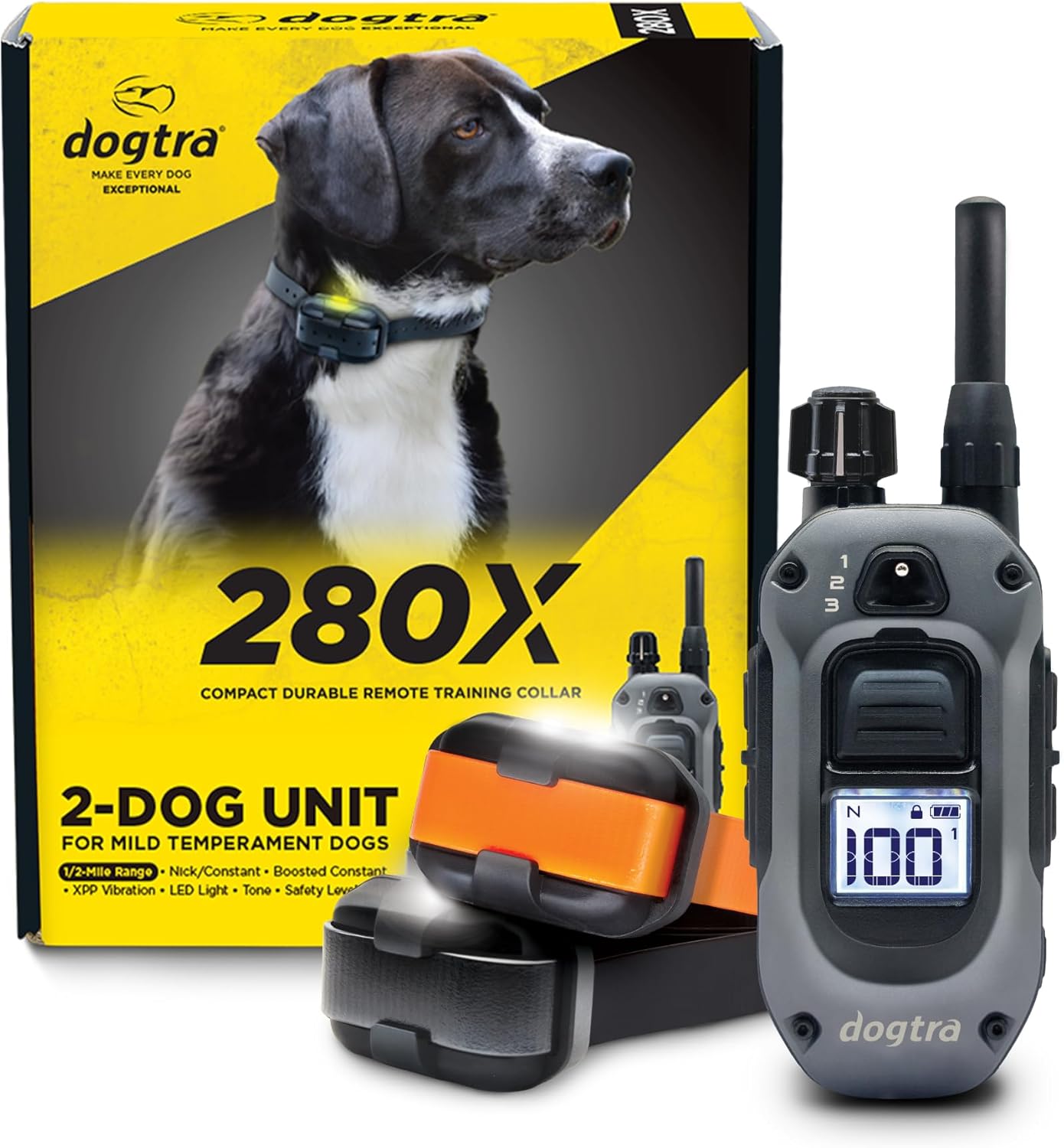
| Range | 1/2 Mile |
|---|---|
| Channels | 2-dog (expandable to 3) |
| Stimulation Levels | 100 levels |
| Modes | Static, Tone, XPP Vibration |
| Waterproof | Yes |
The Dogtra 280X is a rugged two-dog remote training system built for frequent outdoor use and progressive training plans. It pairs a single transmitter with two color-coded waterproof receivers and offers 100 discrete stimulation levels plus tone and XPP vibration so you can match corrections to a dog's sensitivity. The transmitter's large front button and BOOST feature let you deliver an instant higher-level correction for urgent recall without fumbling through menus, and the safety level lock reduces accidental activations. Expandability to a third receiver and a bright 1000-lux LED on the receiver make it practical for off-leash work and low-light sessions. Rechargeable receivers and removable contact points simplify maintenance and fit adjustments. Trade-offs are that the system is aimed at experienced trainers who can use fine-grained levels effectively and some buyers may prefer simpler single-button vibration/tone-only options for basic obedience; the unit also requires familiarization with settings before first use. For owners who plan regular off-leash training and need durable, precise control, the 280X delivers a professional-feel package.
Best for: Owners who want a durable, professional-grade two-dog system with long range and very fine control for regular off-leash or field training.
Less Ideal for: Casual pet owners seeking a minimal, entry-level trainer or those uncomfortable with learning detailed stimulation settings should consider simpler alternatives.
- Two-receiver kit lets you train two dogs from one transmitter
- Half-mile wireless range for wide-open or rural environments
- 100 stimulation levels plus tone and XPP vibration for precise, incremental corrections
- Waterproof, durable receivers with a 1000-lux LED for night visibility
- Front-mounted main button and BOOST provide fast access to corrections in urgent moments
- Complexity of 100 levels requires time to learn and dial in appropriate settings
- Designed for committed trainers rather than casual users preferring simple systems
Verdict: The best overall shock collar for a Mastiff balances effective correction range, adjustable stimulation levels, secure fit for large necks, and durable construction for everyday training.
DDZ Shock Collar P21
Best Budget Shock Collar for Mastiff

| Range | 2000 ft |
|---|---|
| Waterproof rating | IPX7 |
| Fit range | 15–120 lb |
| Power | Rechargeable batteries |
This DDZ P21 shock collar is a budget-focused remote training system that provides beep, vibration, and adjustable static stimulation across multiple intensity levels plus a built-in flashlight and security lock. In everyday use the handheld remote and receiver pair quickly and the wide claimed 2000 ft range is useful for yard or park training; the collar is rechargeable and the vendor states long standby life so it needs less frequent charging than disposable-battery units. The IPX7 waterproof receiver makes it usable in wet weather and outdoor play, and multiple contact point lengths and silicone caps help fit a range of coat types. Practical limitations to expect are a basic feature set compared with higher-end systems and a learning curve dialing in safe stimulation levels for each dog. For owners focused on straightforward correction and recall work without premium extras, this collar covers the essentials at a low price point.
Best for: Owners seeking an inexpensive, no-frills remote collar that reliably provides basic safety controls and adjustable stimulation for routine outdoor training.
Less Ideal for: People who need advanced tracking, multi-dog telemetry beyond four channels, or professional-level customization and logs should consider higher-end systems instead.
- IPX7 waterproof receiver suitable for rain and wet conditions
- Rechargeable batteries with long standby time to reduce frequent charging
- Includes beep, vibration, and adjustable static modes for graduated training
- 2000 ft claimed remote range useful for open-area training
- Comes with multiple contact point lengths and silicone caps for better fit
- Basic feature set without advanced safety/telemtry found on premium models
- Intensity control requires careful adjustment and user judgment for safety
Verdict: The best budget shock collar for a Mastiff provides dependable basic stimulation settings and a sturdy fit without extra bells and whistles for owners on a tight budget.
Educator ET-300 Mini E Collar
Best Premium Shock Collar

| Dog weight recommendation | 15+ lbs |
|---|---|
| Stimulation levels | 100 adjustable levels |
| Modes | Stimulation, Tone, Vibration |
| Water resistance | Waterproof |
| Included components | Receiver, Remote, Two contact point sets, Dual charger |
The Educator ET-300 Mini is a compact e-collar system designed for focused obedience and behavior work with dogs 15 pounds and up. The kit pairs a lightweight waterproof receiver with a floating remote and delivers 100 adjustable blunt stimulation levels along with tone and vibration modes, letting trainers dial responses to an individual dog rather than relying on a single intensity. The receiver and remote are built to withstand wet conditions and include an integrated LED for night visibility, and the package ships with two sets of contact points and a dual charger to keep both units ready. In practice the unit is suited to frequent outdoor training and real-world distraction management because of the long range and durable construction, and the multiple stimulation settings make it usable across a wide temperament range. Expect a premium feel and dependable electronics, but be prepared for a learning curve when setting the correct stimulation level and for paying more than budget alternatives for the refined controls and build quality.
Best for: Owners who prioritize dependable, durable training equipment and want precise, adjustable controls for intensive or long-term behavior work.
Less Ideal for: Casual owners seeking a low-cost, no-frills training aid or those uncomfortable using stimulation-based collars should consider alternative training tools.
- Very wide adjustment range with 100 stimulation levels for fine tuning
- Waterproof receiver and remote suitable for outdoor training in wet conditions
- Includes tone and vibration modes as non-shock communication options
- Built-in LED improves visibility during low-light sessions and tracking
- Kit includes extra contact points and a dual charger for continuous use
- Higher priced than basic training collars
- Requires time and care to find the correct stimulation level for each dog
Verdict: The best premium shock collar offers higher-quality components, more precise stimulation modes, superior range and ergonomics, and extra features for owners willing to invest in long-term performance.
BLACKDOG Military Shock Collar OT9
Best Heavy-Duty Shock Collar

| Training modes | Beep, Vibration, Safe Shock, Strobe Light |
|---|---|
| Range | 4200ft |
| Waterproof rating | IP67 |
| Power | USB-C fast charge; 90-day claimed runtime (1 hr/day) |
The BLACKDOG OT9 is a rechargeable training collar system aimed at regular use in outdoor conditions. The remote and collar provide four user-selectable modes—beep, vibration, safe shock, and a strobe light—with multiple intensity levels, an LCD on the transmitter for clear mode and battery readouts, and tool-free removable prongs so you can switch to no-shock operation. Its rechargeable design (USB-C fast charge) and claimed 90-day battery life based on one hour of daily use make it convenient for owners who train often and want low running costs compared with disposable batteries. The unit is built to a rugged spec with an IP67 rating and reinforced casing for heavy-duty outdoor use, while the remote flashlight and collar strobe improve night safety. Practical limits: the shock mode is present so careful, informed use is required, and real-world range and battery life will vary with terrain and usage intensity. The system suits hands-on, consistent trainers who need a weatherproof rechargeable collar with visible lighting features.
Best for: Owners who train regularly and prioritize a rechargeable collar that is rugged enough for outdoor use and includes visibility features for night or low-light sessions.
Less Ideal for: People who want a purely positive-reinforcement tool without any static stimulation or those who need a collar-free solution for noise-only behavior control.
- Rechargeable USB-C system with fast charging and long claimed runtime
- Multiple training modes including beep, vibration, and adjustable safe shock levels
- IP67 waterproof build and reinforced casing for rugged outdoor use
- Integrated remote flashlight and collar-mounted strobe for night visibility
- Tool-free removable prongs allow switching to no-shock configuration
- Shock feature requires responsible use and may not suit sensitive or inexperienced handlers
- Real-world range and battery life depend on terrain and usage and may be lower than claims
Verdict: The best heavy-duty shock collar is engineered for large, strong dogs with reinforced housings, rugged straps, and reliable electronics that withstand rough outdoor use and strong pulls.
PAWPRO Dog Shock Collar Ultimate
Best Long-Range Shock Collar

| Range | Up to 4 miles (open terrain) |
|---|---|
| Stimulation levels | Beep 1–8, Vibration 1–16, Static 1–99 |
| Waterproof rating | IPX7 |
| Battery life | Up to 15 days (per listing) |
The PAWPRO Dog Shock Collar is built for long-distance off-leash training, pairing a dual-channel remote with an advertised 4-mile open-terrain range. You use the remote to deliver beep, vibration, or adjustable static stimulation and to activate a built-in LED for low-light visibility; the unit supports two dogs with the dual-channel function. Practical features include an IPX7 waterproof receiver, hypoallergenic adjustable strap, multiple contact points for size tuning, and a 30-day step-by-step training guide to help beginners start gently. The controls offer fine-grained adjustment across beep, vibration and 99 static levels so you can find an appropriate response for different dogs and distractions. Battery life and fast charging are convenient for multi-day outings, and the collar is made to handle rain and trails. The main compromises are that real-world effective range depends on terrain and obstacles, and static stimulation requires careful, informed use so you can train safely and humanely. For owners who need extended remote control, this package gives versatile modes and practical outdoor readiness.
Best for: Owners who need dependable remote control across large open areas and want a feature-rich collar that balances long range with adjustable stimulation and outdoor durability.
Less Ideal for: People who only train indoors or in small fenced yards where extreme range is unnecessary, or those unwilling to learn responsible use of static stimulation methods.
- Very long advertised open-terrain range up to 4 miles for wide-area recall and off-leash training
- Multiple stimulation modes with wide adjustment (beep, vibration, 1–99 static) for precise responses
- IPX7 waterproof receiver and reflective adjustable strap for outdoor use in wet conditions
- Dual-channel remote supports training two dogs with a single transmitter
- Includes step-by-step 30-day training guide and multiple contact points for fit and beginner support
- Effective range will be reduced by trees, buildings, and terrain so 4-mile performance is situational
- Static stimulation requires careful, informed use and gradual introduction to avoid misuse
Verdict: The best long-range shock collar gives owners extended remote control distance and consistent signal reliability so they can train a Mastiff at greater distances without signal dropouts.
Dogtra iQ PLUS Training Collar
Best Waterproof Shock Collar

| Range | 400 yards |
|---|---|
| Correction levels | 0-100 levels |
| Stimulation modes | Nick, Constant, Pager Vibration |
| Power | Rechargeable batteries |
| Expandable | Up to 2 dogs |
The Dogtra iQ PLUS is a compact remote e-collar aimed at basic obedience and behavior management, packing 100 levels of nick and constant stimulation plus pager vibration into a small, rechargeable system with a 400-yard range. It is used like a standard remote trainer: fit the ultra-compact receiver to the dog, use the front-facing rheostat dial for one-handed level adjustments, and deliver nick (quick) or constant (up to 12 seconds) corrections or vibration as needed during off-leash work. Notable features include a durable biothane collar strap, IPX-style waterproof receiver, and the ability to control a second receiver for two-dog sessions. Practical benefits are its small receiver that sits comfortably on smaller necks, fine-grained intensity control for precise adjustments, and straightforward ergonomics for field use. Important limitations for the assigned goal are that the unit is marketed for dogs 10 pounds and up with medium output and a 400-yard range, so it lacks the higher output, longer range, and heavier-duty hardware typically preferred for large, thick-coated breeds that need stronger stimulation and ruggedized contacts for reliable signal through dense fur.
Best for: A buyer who prioritizes a precise, compact remote trainer for controlled obedience work and who values fine-level adjustment and simple one-handed operation during regular training sessions.
Less Ideal for: Owners seeking a heavy-duty, high-output collar specifically to handle very large dogs, thick double coats, or extended long-range control should consider more powerful, ruggedized systems instead.
- Compact, lightweight receiver suitable for small-neck fit and less bulk during wear
- Front-facing rheostat dial allows one-handed, fine-grain adjustment across 100 levels
- Includes nick and constant stimulation plus pager vibration for multiple cue types
- Expandable to a second dog for training two dogs with one transmitter
- Rechargeable battery and waterproof receiver increase day-to-day usability outdoors
- Medium output and compact contacts may be insufficient to penetrate heavy, dense coats on large breeds
- 400-yard range and smaller transmitter intended for basic field work rather than long-distance control
Verdict: The best waterproof shock collar protects internal electronics from moisture and is suitable for outdoor training in wet conditions while remaining easy to rinse and dry.
HapTop AC131 Dog Shock Collar
Best Rechargeable Shock Collar

| Training modes | Beep, Vibration, Safe Shock, Shock Boost |
|---|---|
| Range | 4500 ft |
| Fit neck | 7.8"-24.4" (10-120 lb) |
| Waterproof rating | IPX8 |
| Charging | USB-C |
The HapTop AC131 is a rechargeable e-collar kit designed for everyday obedience and distance work. It uses a 2-channel remote to control up to two dogs and offers four training modes: beep, vibration, safe shock (0–99 levels) and a shock boost, with the shock function optional for no-shock training. The remote's long 4500 foot range and memory for individual dog settings make it useful for off-leash recall, boundary training, and reinforcing commands across yards or trails. The receiver is IPX8 waterproof and the kit includes multiple prong lengths, silicone covers, a test light tool, and USB-C charging for practical field use. Safety-oriented features include an adjustable low-to-high stimulation range, a security lock to prevent accidental corrections, and a manufacturer guideline limiting continuous wear to 12 hours. Trade-offs are typical for this class: it relies on batteries and correct fitment to be effective, and some owners prefer vibration or beep-only methods before adding shock. The unit's feature set and range make it a strong daily trainer for owners willing to follow safe use guidelines.
Best for: Owners who want a versatile, safety-minded e-collar for regular obedience and distance work and who plan to use multiple training modes progressively.
Less Ideal for: People who want a purely non-aversive training tool or who are uncomfortable using shock-style corrections should choose vibration- or treat-based training alternatives.
- Very long 4500 ft remote range for off-leash training
- Multiple modes (beep, vibration, adjustable shock) for progressive training
- IPX8 waterproof receiver suitable for wet outdoor use
- Includes extra prongs, silicone covers, test light tool, and USB-C charging
- 2-channel remote controls two dogs and remembers individual settings
- Shock feature requires careful adjustment and responsible use to avoid misuse
- Not intended for continuous wear longer than 12 hours per day
Verdict: The best rechargeable shock collar provides dependable battery life, quick charging, and consistent power delivery so owners avoid frequent battery replacements during regular Mastiff training.
Choosing the Right Shock Collar Mastiff: Key Factors to Consider
Intensity Range and Fine Control
A mastiff requires a wider intensity range than small breeds, but raw power alone is not enough. You need precise control so you can start at the lowest effective level and increase gradually. Fine gradations let you use the minimum correction needed to get a reliable response, which reduces stress and lowers the chance of accidental overcorrection.
Look for collars that clearly label levels and offer intermediate steps or continuous adjustments. Digital controls with memory for preferred levels can speed consistent use during training sessions.
Fit and Strap Durability
A secure, comfortable fit is essential for both safety and signal consistency. Mastiffs often have thick, muscular necks and heavy heads, so the strap material and buckle must resist stretching and chafing while staying in place. Poor fit can cause the electrodes to lose contact or concentrate pressure on a small area, increasing the risk of irritation.
Choose collars with wide straps, reinforced buckles or quick-release hardware, and guidance on correct tension. Consider collars with replaceable straps or multiple length options to accommodate growth, seasonal coat changes, and individual neck shapes.
Alternative Correction Modes
Using shock as the only feedback can be unnecessary or counterproductive for some mastiffs. Collars that include vibration, tone, or progressive warning beeps give you non-painful options to get attention or warn before escalating intensity. These modes let you tailor corrections to your dog's sensitivity and temperament.
Training plans that pair voice commands and positive reinforcement with low-level vibration or tone often reduce reliance on static stimulation. Look for collars where alternative modes are distinct and easy to trigger without cycling through multiple settings.
Range and Signal Reliability
A mastiff can cover ground quickly, so the transmitter range matters for off-leash boundary work or field training. Reliable radio communication with minimal lag helps ensure commands register when needed. Inconsistent signal can lead to missed corrections or unpredictable behaviour, undermining training.
Consider typical training distances you expect to use. Test environments with obstacles or dense vegetation reduce true range, so prefer systems with proven performance and clear range specs. Local legal restrictions or park rules may also affect how and where you use a remote collar.
Battery Life and Charging Method
Long battery life reduces downtime during extended training sessions and frequent outdoor use. Mastiff owners should prefer collars with multi-day receiver life under normal use and transmitters that remain charged through training routines. Fast-charging or swappable batteries add convenience when you are away from home.
Also check for clear battery-level indicators and predictable run-time under mixed-mode use. Replaceable batteries can be handy for extended fieldwork, while sealed rechargeable packs are often lighter and simpler for everyday use.
Safety Features and Automatic Cutoffs
Safety mechanisms such as automatic shutoff after continuous stimulation, lockout thresholds, and failsafe behavior protect dogs from prolonged correction in the event of accidental activation. Mastiffs can be powerful and resilient, but they should still be protected from extended exposure to stimulation.
Prioritize collars that document these safety behaviors, have an easy way to disable or limit maximum intensity, and provide clear instructions for proper electrode placement to minimize skin irritation.
How Should You Size a Collar for a Mastiff's Neck?
Measure the neck circumference at the thickest point where the collar will sit, usually just behind the ears. Add a couple of inches for comfort and to prevent tightness. Many receivers sit on the underside of the neck; ensure the chosen strap keeps electrodes flat against the skin without pinching.
If you are between sizes, opt for the larger option and use a chin strap or additional padding to stabilize the receiver. Check the manufacturer s guidance for recommended tightness and recheck the fit after a week of normal use, as straps can stretch slightly over time.
- Measure neck circumference in centimeters and inches to match sizing charts
- Leave enough room for two fingers between strap and skin for comfort
- Recheck fit after the dog s coat grows or during seasonal shedding
When Should You Use Vibration or Tone Instead of Shock?
Start with the least intrusive mode such as tone or vibration to capture attention. If your mastiff responds reliably, continue with that method and reserve static stimulation for escalation when non-painful cues fail. Many dogs will learn to associate tone or vibration with a command and respond without needing a shock.
Use vibration or tone during early training, recall work, or in situations where stress levels should be minimized. Reserve higher-intensity corrections for clear safety situations where immediate compliance is required and other cues have not worked.
- Use tone/vibration for initial training and nonurgent corrections
- Escalate to static stimulation only when necessary and proportional
- Monitor the dog s behavior and body language for stress indicators
How to Maintain the Collar and Prevent Skin Irritation
Clean electrodes and the contact area regularly with a damp cloth to remove dirt and oils that can interfere with conductivity. Inspect the contact points for corrosion, and replace them if they become worn. Keep the receiver housing dry and check seals around charging ports if the product is water-resistant.
Rotate placement slightly along the neck during long-term use to avoid constant pressure and reduce the risk of rubbing. If you notice redness, hair loss, or repeated irritation, stop using the collar and consult a veterinarian or a professional trainer for alternatives.
- Wipe electrodes after heavy activity or swimming
- Replace worn contact points as recommended
- Check skin daily during initial weeks of use
What Training Situations Are Best Suited for Remote-collar Use?
Remote collars can be useful for long-range recall work, boundary training, and managing high-value distractions during field sessions. They are helpful when visual or voice cues are insufficient because of distance or environmental noise.
They are less appropriate as a substitute for basic obedience training at close range. Use them as part of a structured training plan that includes positive reinforcement so you do not rely solely on correction-based signals.
- Ideal for off-leash recall and distance control
- Useful for reinforcing boundaries in open areas
- Not a replacement for early-stage obedience and socialization
How to Read Intensity and Mode Feedback During a Session
Familiarize yourself with the transmitter s indicators before using the collar with your dog. Many units show level numbers, mode icons, and battery bars that help you monitor settings at a glance. Practice triggering modes with the receiver off the dog first so you learn the spacing between levels.
During live use, keep intensity as low as necessary and increase in small increments if the dog does not respond. Pause between pulses to observe whether the dog complies before continuing to escalate. Clear, consistent timing between the trainer s cue and the correction improves learning and reduces the need for higher intensities.
- Test controls off-dog to avoid accidental overcorrection
- Use small changes between intensity levels to find the effective minimum
- Watch for immediate behavioral response after each cue
How We Chose the Best Shock Collar Mastiff
We selected options that address the particular needs of mastiffs: heavy-duty construction, low-to-high intensity range tailored for large dogs, and reliable signal range for common training distances. Our evaluation criteria prioritized adjustable stimulation levels with fine gradations, robust waterproofing and battery life to withstand outdoor use, and durable strap and receiver designs that fit thick necks without slipping. We also considered safety features such as automatic shutoff, graduated stimulation modes, and alternative correction methods like vibration or beep so handlers can choose less intrusive cues. Filters excluded lightweight or toy-category collars, units designed exclusively for very small breeds, and products lacking verifiable intensity controls or basic safety cutoffs. We focused on models that offer clear fit-adjustment guidance and accessible customer support documentation. In short, we favored durable, adjustable, and safety-focused collars that are practical for training a large, strong breed.
Our full evaluation process is outlined in our review methodology.
FAQ
Is a shock collar safe for a mastiff?
Safety depends on correct selection, fit, and use. When you use the lowest effective intensity, include alternative modes like vibration or tone, and follow recommended placement and session length, a collar can be used safely as part of a broader training plan. Monitor the dog for signs of stress or skin irritation and stop use if problems appear.
How long should a training session with a shock collar last?
Sessions should be short and focused, often 5 to 15 minutes, depending on the exercise and the dog s tolerance. Frequent short sessions are usually more effective than long sessions, which can increase stress and reduce learning. Allow rest and reward-based repetitions between brief correction trials.
Will a shock collar work through a thick mastiff coat?
Thick coats can interfere with electrode contact, so trim or move the contact points to a spot with less hair according to fit guidelines. Wide straps and longer electrode posts can improve contact for dogs with dense fur. Always verify the collar maintains consistent contact during typical movement.
Can I use a shock collar for basic obedience training?
While collars can reinforce commands, they should not replace foundational positive-reinforcement training. Use alternative modes and low intensities for obedience cues and reserve stronger stimulation for clear safety scenarios or persistent dangerous behavior. Pair collar use with reward-based methods for best results.
How often should I charge or replace the batteries?
Charging frequency depends on use intensity and transmitter activity, but many receivers last several days to weeks on a single charge under typical use. Check battery indicators before outings and charge transmitters after extended sessions. If a product uses replaceable batteries, carry spares for long field days.
Final Verdict
Choosing the right shock collar for a mastiff means balancing effective control with safety and comfort. Prioritize systems with a broad but finely graded intensity range, secure fit options for thick necks, and built-in safety cutoffs. Use tone and vibration modes whenever possible and reserve static stimulation for escalation. Ultimately, integrate the collar into a training plan that emphasizes clear cues, consistent timing, and positive reinforcement. That approach helps you manage behavior while minimizing stress and producing more reliable, long-term results.

