

Finding the right shock collar for a medium dog matters because fit, power range, and control options directly affect training safety and results. You want a unit that is adjustable enough for your dog's temperament, comfortable enough for daily wear, and reliable during typical walks or backyard sessions. This guide shortlists the top options for medium dogs and explains the practical strengths of each pick. We evaluated units on control precision, intensity range, and wearability to help you choose a collar that supports clear, humane training. Read on to see the top-rated picks and the criteria that guided our selections.
Top Picks at a Glance
| Best Overall Shock Collar The top all-around training collar for most medium dogs | HapTop AC131 Dog Shock Collar |  |
| Best Budget Shock Collar A low-cost collar that still delivers basic training features | DDZ Shock Collar P21 |  |
| Best Premium Shock Collar Higher-end materials, advanced features, and superior build quality | Dogtra 280X E-Collar 1-Dog |  |
| Best Compact Shock Collar A smaller, lightweight unit made for medium dogs with minimal bulk | Heaflex Shock Collar D10-1P |  |
| Best Long-Range Shock Collar Designed for extended remote control distance during outdoor training | HapTop AC132 Training Collar 2-Pack |  |
HapTop AC131 Dog Shock Collar
Best Overall Shock Collar

| Training modes | Beep, Vibration, Safe Shock, Shock Boost |
|---|---|
| Range | 4500 ft |
| Fit neck | 7.8"-24.4" (10-120 lb) |
| Waterproof rating | IPX8 |
| Charging | USB-C |
The HapTop AC131 is a rechargeable e-collar kit designed for everyday obedience and distance work. It uses a 2-channel remote to control up to two dogs and offers four training modes: beep, vibration, safe shock (0–99 levels) and a shock boost, with the shock function optional for no-shock training. The remote's long 4500 foot range and memory for individual dog settings make it useful for off-leash recall, boundary training, and reinforcing commands across yards or trails. The receiver is IPX8 waterproof and the kit includes multiple prong lengths, silicone covers, a test light tool, and USB-C charging for practical field use. Safety-oriented features include an adjustable low-to-high stimulation range, a security lock to prevent accidental corrections, and a manufacturer guideline limiting continuous wear to 12 hours. Trade-offs are typical for this class: it relies on batteries and correct fitment to be effective, and some owners prefer vibration or beep-only methods before adding shock. The unit's feature set and range make it a strong daily trainer for owners willing to follow safe use guidelines.
Best for: Owners who want a versatile, safety-minded e-collar for regular obedience and distance work and who plan to use multiple training modes progressively.
Less Ideal for: People who want a purely non-aversive training tool or who are uncomfortable using shock-style corrections should choose vibration- or treat-based training alternatives.
- Very long 4500 ft remote range for off-leash training
- Multiple modes (beep, vibration, adjustable shock) for progressive training
- IPX8 waterproof receiver suitable for wet outdoor use
- Includes extra prongs, silicone covers, test light tool, and USB-C charging
- 2-channel remote controls two dogs and remembers individual settings
- Shock feature requires careful adjustment and responsible use to avoid misuse
- Not intended for continuous wear longer than 12 hours per day
Verdict: The best overall shock collar balances effective training stimulation, reliable range, comfort for medium dogs, and straightforward controls for everyday use.
DDZ Shock Collar P21
Best Budget Shock Collar

| Range | 2000 ft |
|---|---|
| Waterproof rating | IPX7 |
| Fit range | 15–120 lb |
| Power | Rechargeable batteries |
This DDZ P21 shock collar is a budget-focused remote training system that provides beep, vibration, and adjustable static stimulation across multiple intensity levels plus a built-in flashlight and security lock. In everyday use the handheld remote and receiver pair quickly and the wide claimed 2000 ft range is useful for yard or park training; the collar is rechargeable and the vendor states long standby life so it needs less frequent charging than disposable-battery units. The IPX7 waterproof receiver makes it usable in wet weather and outdoor play, and multiple contact point lengths and silicone caps help fit a range of coat types. Practical limitations to expect are a basic feature set compared with higher-end systems and a learning curve dialing in safe stimulation levels for each dog. For owners focused on straightforward correction and recall work without premium extras, this collar covers the essentials at a low price point.
Best for: Owners seeking an inexpensive, no-frills remote collar that reliably provides basic safety controls and adjustable stimulation for routine outdoor training.
Less Ideal for: People who need advanced tracking, multi-dog telemetry beyond four channels, or professional-level customization and logs should consider higher-end systems instead.
- IPX7 waterproof receiver suitable for rain and wet conditions
- Rechargeable batteries with long standby time to reduce frequent charging
- Includes beep, vibration, and adjustable static modes for graduated training
- 2000 ft claimed remote range useful for open-area training
- Comes with multiple contact point lengths and silicone caps for better fit
- Basic feature set without advanced safety/telemtry found on premium models
- Intensity control requires careful adjustment and user judgment for safety
Verdict: The best budget shock collar gives owners essential training functions and acceptable durability at a lower price for cost-conscious shoppers.
Dogtra 280X E-Collar 1-Dog
Best Premium Shock Collar

| Range | 1/2 mile |
|---|---|
| Stimulation levels | 100 levels |
| Functions | Tone, Vibration, Static (Nick/Continuous), BOOST |
| Waterproof | Yes |
| Expandable to | Up to 3 dogs |
The Dogtra 280X is a premium, purpose-built e-collar aimed at serious trainers and owners of larger, energetic dogs. It pairs a compact, rugged receiver with a handheld remote that offers 100 discrete stimulation levels plus tone and an XPP vibration pager, so you can tailor corrections precisely as your dog progresses. The front-mounted main button and programmable BOOST instantly raise intensity for urgent recalls without fumbling through controls, and the safety level lock reduces accidental activations. Built waterproof and designed for daily outdoor use, the unit includes a bright 1000-lux LED for visibility and removable contact points for comfort and fit. The system supports expansion to additional dogs and charges via USB-C. Trade-offs are the higher-end positioning and feature set that may be more than a casual owner needs, and learning to find the correct stimulation level takes time and careful introduction. For handlers who want refined ergonomics, reliable range, and durable construction, the 280X is a strong premium choice for large-dog training tasks.
Best for: Owners who prioritize top-tier durability, precise control, and advanced ergonomics for training large or strong dogs and are willing to invest in a premium tool.
Less Ideal for: Casual owners looking for a simple, low-cost humane correction or those uncomfortable with adjustable electronic stimulation should consider gentler or lower-feature alternatives.
- 100 levels of precise stimulation for fine-tuned training
- Front-facing main button and BOOST for instant, one-handed recall control
- Fully waterproof receiver and rugged construction for outdoor use
- Bright 1000-lux LED improves visibility for evening or low-light training
- Expandable system supports additional receivers for multi-dog households
- Premium features and durability come at a higher cost which may exceed casual needs
- Requires time and careful introduction to identify appropriate stimulation levels
Verdict: The best premium shock collar is for owners willing to pay more for refined controls, better materials, and extra features like multi-mode training and enhanced range.
Heaflex Shock Collar D10-1P
Best Compact Shock Collar
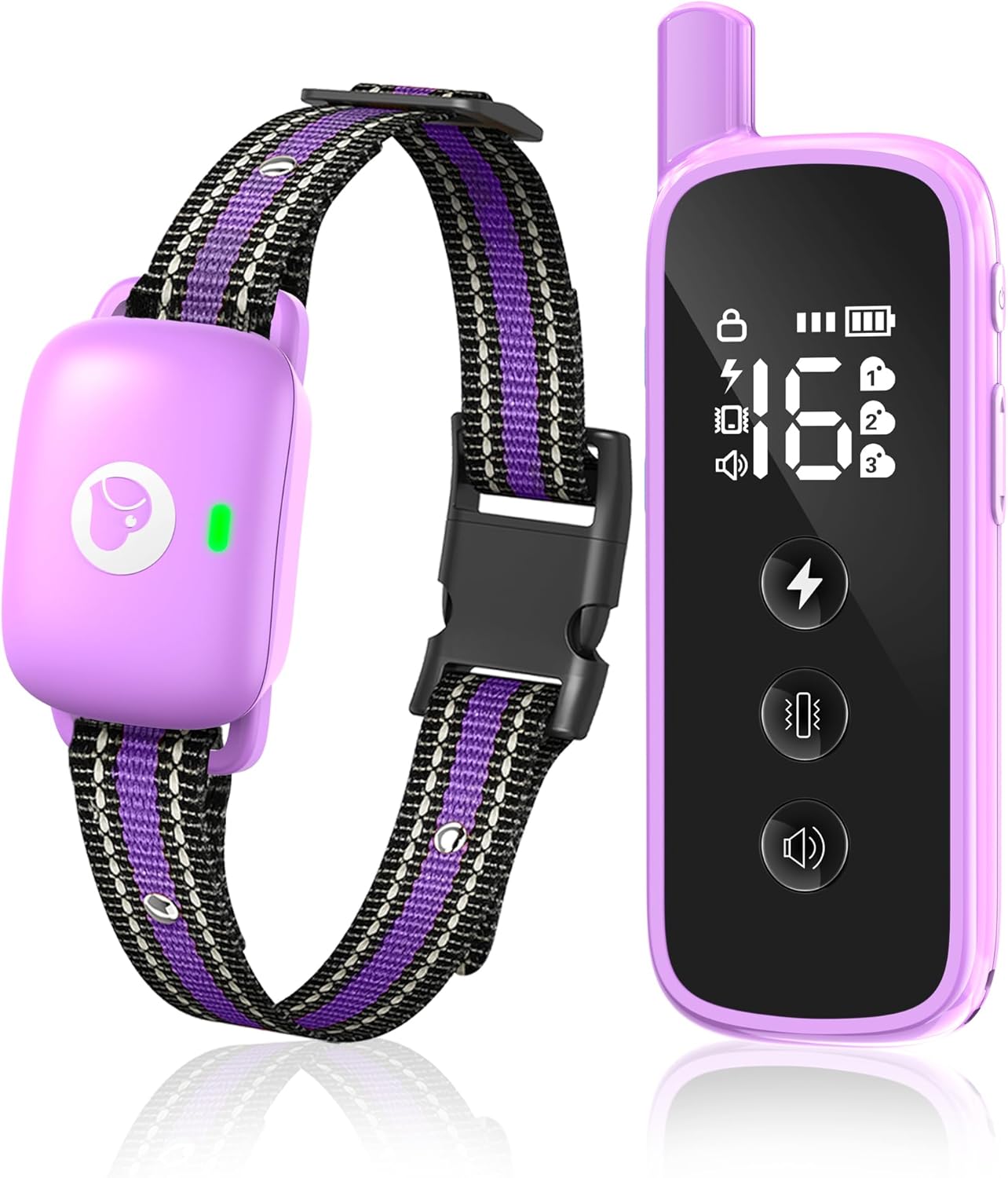
| Training modes | Beep, Vibration, Shock (1-16) |
|---|---|
| Range | 2600 ft |
| Water resistance (receiver) | IP68 |
| Fit | Neck 6-27 in |
| Charging | 2.5 hours dual 2-in-1 charger |
The Heaflex Shock Collar D10-1P is a compact remote training system that offers three stimulus modes — beep, vibration and adjustable safe shock — and can control up to three receivers with one remote. It is typically used for recall, boundary and bark/chase correction during outdoor training sessions thanks to its 2600 ft maximum range and an IP68 waterproof receiver for wet conditions; the remote itself is not waterproof. Practical features include two silicone probe covers for different coat types, a lightweight nylon strap that fits necks 6–27 inches, a security lock to prevent accidental activation and a memory function that resists interference from neighboring e-collars. The system charges quickly via a 2-in-1 charger and reports long standby times for both remote and receiver, which makes it convenient for regular use and trips. Limitations to consider are that the remote is not waterproof and the shock mode, while adjustable, requires careful introduction and supervision to avoid overuse, and some users may prefer models with more granular level feedback or different ergonomics for very small or very large dogs.
Best for: Buyers who want a lightweight, easy-to-carry training collar for medium dogs that still provides effective range and adjustable correction options for outdoor recall and behavior work.
Less Ideal for: Owners who need a fully waterproof remote for frequent water work or those who prefer strictly non-aversive training tools should consider alternatives.
- Three training modes (beep, vibration, adjustable shock) for flexible correction.
- 2600 ft remote range suitable for yard and park recall work.
- IP68 waterproof receiver withstands rain and puddles.
- Lightweight receiver with two silicone probe covers for different coat types.
- Long battery standby and fast dual charging for remote and receiver.
- Remote is not waterproof which limits use in wet conditions.
- Shock mode needs careful, responsible use and gradual calibration for each dog.
Verdict: The best compact shock collar fits medium dogs comfortably and offers effective training without the size and weight of larger units.
HapTop AC132 Training Collar 2-Pack
Best Long-Range Shock Collar

| Range | 4500FT |
|---|---|
| Breed Recommendation | 10-120lbs |
| Waterproof Rating | IPX8 |
| Included Components | Remote Control, Training Collar |
| Power | Rechargeable (USB) |
The HapTop AC132 is a rechargeable e-collar kit designed for everyday obedience and recall work with one remote that can operate two receivers. It offers beep, vibration and adjustable static modes plus a shock boost setting, and the receiver can be converted to a no-shock option by removing the contact points or setting static to zero. In use the system targets off-leash and long-range training—HapTop advertises a 4500 ft signal and on-board memory so your settings persist between sessions. The collars are IPX8 waterproof and come with adjustable nylon straps to fit a wide range of neck sizes, which helps with active dogs that get wet or muddy. Charging is convenient via a fast USB cable and HapTop claims long standby runtimes for both remote and receivers, which suits owners who want fewer recharge cycles. Expect to spend a little time dialing in stimulation levels for sensitive, long-haired dogs since contact with dense fur can reduce effectiveness and you may need to use longer contact probes or tighter fit for consistent feedback.
Best for: Owners who prioritize long runtimes and USB rechargeability for active dogs and need a single controller to manage two dogs during off-leash or recall training.
Less Ideal for: People who want a completely shock-free training path without any static capability or those unwilling to adjust contact fit for long-haired breeds.
- Single remote controls two collars for simultaneous multi-dog training
- Multiple stimulation modes including beep and vibration for progressive training
- IPX8 waterproof receivers suitable for swimming, rain, and muddy play
- Fast USB charging with long standby runtimes reduces how often you recharge
- Contact point-to-skin delivery can be less reliable on very long or dense coats without longer probes or tighter fit
- Static intensity ranges require careful adjustment to avoid overcorrection on sensitive dogs
Verdict: The best long-range shock collar is ideal for owners who need reliable remote control at greater distances during off-leash or field training sessions.
Choosing the Right Shock Collar Medium Dog: Key Factors to Consider
Adjustable Stimulation Levels
Different medium dogs respond to different intensity levels. A collar that offers fine-grained adjustment lets you begin with the lowest effective setting and increase only as needed. This reduces the risk of overcorrection and makes it easier to pair corrections with positive reinforcement.
Look for clearly labeled steps or continuously adjustable controls so you can replicate settings between sessions. Some collars provide multiple stimulation modes such as static, vibration, and tone; being able to switch modes gives you non-aversive options to try before applying stronger stimulation.
Comfort and Fit for Medium Necks
A collar must sit correctly on a medium dog's neck to deliver consistent contact without chafing. The strap material, width, and adjustability determine how well the unit stays in place during movement and play. Ill-fitting collars can slip, change contact angle, or irritate skin.
Check for rounded contact points, multiple height adjustment holes, and breathable strap materials. Consider the weight of the receiver; a heavy module can pull the collar out of position or be uncomfortable on long walks. Proper fit helps both safety and consistent training feedback.
Battery Life and Charging Convenience
A reliable battery ensures the collar is ready when you are and prevents interrupted training. For medium-dog owners who walk or train daily, multi-day battery life under normal use is important. Fast-charging options reduce downtime between sessions.
Also consider whether the remote and receiver charge separately and how battery degradation might affect long-term intensity. Removable batteries or easily replaceable battery modules can extend service life, while sealed units rely on good long-term charging performance.
Control Range and Signal Reliability
Training at a distance requires a dependable connection between remote and receiver. For backyard recall practice or rural walking routes, adequate remote range matters. Signal stability is equally important; intermittent signals can lead to missed corrections or inconsistent responses.
Look for collars with tested ranges suitable for your typical training environment and features such as anti-interference encoding. Consider whether the remote uses a line-of-sight radio band or another method and how terrain or obstacles might reduce practical range.
Safety Features and Moderation Options
Built-in safety measures reduce the risk of accidental or prolonged stimulation. Time-limited stimulation, automatic shutoff after a set duration, and lock functions on the remote prevent unintended high-intensity pulses. These features protect the dog and provide peace of mind to the handler.
Moderation options such as vibration or tone let you escalate corrections in stages, offering less aversive cues before resorting to static stimulation. Safety-focused design helps ensure training stays effective without causing undue stress.
Durability and Water Resistance
Medium dogs spend time outdoors in varied conditions, so a durable collar is essential. Water resistance protects internal electronics from rain, splashes, and the occasional swim. Corrosion-resistant contact points and robust strap hardware extend usable life.
Pay attention to IP ratings when provided, overall construction quality, and how easy it is to clean the collar without damaging the receiver. A rugged design lowers the chance of failure during an important training session.
How Do I Determine the Right Intensity Level for My Medium Dog?
Start by observing your dog's baseline sensitivity. Apply the lowest non-aversive setting and watch for an immediate, calm response such as stopping the unwanted behavior or looking toward you. If there is no response after several trials, increase one step and reassess. The correct level is the lowest that prompts attention or a change in behavior without signs of fear or distress.
Always pair stimulation with a cue and positive reinforcement so your dog learns what behavior you expect. Use vibration or tone modes first when available; static stimulation should be a last resort or used at very low settings for shaping reliable responses.
- Test indoors at close range before using greater distances
- Use short, single pulses rather than prolonged stimulation
- Keep notes of effective settings for different environments
Where Should the Collar Sit on a Medium Dog's Neck?
Place the receiver high on the neck, just behind the jawline and below the ears, so contact points rest against skin. This position reliably transmits stimulation without requiring excessive power and reduces the chance of slippage. The collar should be snug but not tight; you should be able to fit two fingers between the strap and the neck.
Recheck fit after play or vigorous activity and look for any signs of redness or hair wear. Rotate contact points or adjust strap placement if you notice irritation during the first few days of use.
- High, behind-the-jaw placement improves contact consistency
- Two-finger rule for safe snugness
- Inspect skin daily during initial training period
Can I Use Vibration or Tone Instead of Static Stimulation?
Yes. Vibration and tone are effective for many medium dogs and should be tried before static stimulation. They are less aversive and can be useful for attention-getting, recall, or interrupting nuisance behaviors. Some dogs respond strongly to a firm vibration or a distinct tone and never require static correction.
If those modes do not produce reliable results, use low-level static stimulation in brief, controlled pulses while continuing to reward correct responses. Gradual escalation and consistent timing help the dog associate the cue with the desired behavior.
- Try non-static modes first whenever possible
- Combine with verbal cues and rewards for best results
- Avoid escalating rapidly; give the dog time to respond
What Maintenance Keeps a Collar Reliable for Daily Use?
Regularly clean contact points and the strap to prevent skin irritation and corrosion. Wipe the receiver dry after exposure to water and check for secure battery contacts. Inspect the strap and hardware for wear and replace components before they fail.
Keep firmware or receiver remotes updated if the manufacturer provides updates. Store units charged but not at full charge for prolonged storage if recommended in the manual, and follow any manufacturer guidance for battery care to maximize long-term life.
- Wipe contact points weekly during active use
- Replace worn straps or broken hardware promptly
- Follow recommended charging practices to preserve battery health
How to Integrate a Shock Collar Into a Positive Training Routine
Use the collar as part of a broader training plan that emphasizes rewards, clear cues, and short sessions. Before relying on the collar, teach basic cues with leash and treats until your dog understands the desired behaviors. Introduce the collar gradually: let the dog wear it without activation for short periods, then practice cues with non-static modes.
When you add corrections, do so sparingly and only to reinforce behaviors that are already being taught. Always follow corrections with a quick opportunity for success and a reward so the dog learns which action earns reinforcement.
- Pair corrections with consistent verbal cues
- Keep training sessions short and frequent
- Use treats or play immediately after correct responses
How We Chose the Best Shock Collar Medium Dog
We selected products based on features and performance factors that matter most for medium dogs. Key evaluation criteria included adjustable intensity and stimulation modes, strap fit and contact-point design for medium neck sizes, battery life and charge time, remote range and signal reliability for typical suburban and rural conditions, and overall build quality including water resistance and corrosion-resistant contacts. We also considered user safety features such as graduated stimulation levels, vibration and tone alternatives, and lockouts that prevent accidental high-intensity pulses. We excluded devices that only suit very small or very large breeds, single-intensity units without adjustment, or accessories lacking basic durability for outdoor use. We did not include collars that require complicated fitting procedures or specialized tools for basic adjustments. Our process prioritized options that balance humane training capability with dependable operation for everyday owners of medium dogs.
Our full evaluation process is outlined in our review methodology.
FAQ
Are shock collars safe for medium dogs?
When used correctly and at the lowest effective settings, shock collars can be a safe training tool for medium dogs. Safety depends on fit, appropriate intensity, session length, and pairing corrections with positive reinforcement. Avoid prolonged or high-intensity stimulation.
How often should my dog wear the collar?
For training, wear time is usually limited to sessions rather than continuous 24/7 use. Some owners use the collar for specific outings or targeted behavior work. If the collar is worn more frequently, check skin daily and give periodic breaks to prevent irritation.
Will my dog become afraid of me if I use a shock collar?
Fear is more likely when corrections are unpredictable, excessive, or not paired with clear cues. Using consistent timing, minimal effective intensity, and positive reinforcement reduces the chance of fear and helps your dog understand the desired behavior.
Can I use the same intensity setting in different environments?
Not always. Distractions, terrain, and distance can change how a dog responds, so you may need slightly different settings for crowded parks versus quiet yards. Start at your documented baseline and adjust conservatively while monitoring your dog's comfort and response.
What should I do if my dog shows signs of stress with the collar?
Stop using stimulation immediately and switch to non-aversive cues such as tone or vibration while reducing session intensity. Reassess fit and introduce the device more gradually, or consult a qualified trainer if stress signs persist.
Final Verdict
Choose a shock collar for a medium dog by prioritizing adjustable, low-starting intensity, a comfortable fit, and clear safety features. Balance training needs with humane practices by trying non-static modes first and using the collar as one tool within a reward-based routine. Consider battery life and signal reliability for the environments where you train. The best choice is the collar that lets you achieve consistent responses with the least force and the fewest side effects. Focus on fit, moderation, and predictable control so you can train confidently and keep your dog comfortable and responsive.

