

Training a rottweiler with a collar that suits the breed's strength and temperament matters for safety and results. You need a device that provides clear, adjustable signals, robust construction, and reliable range so corrections are effective without risking accidental harm. This guide shortlists the top options for rottweiler owners and explains the features that make each choice suitable for larger, strong-jawed dogs. We evaluated stimulation types, fit and contact design, battery life, and durability to focus on collars that support consistent, humane training. Read on to see the top picks and how to choose the right shock collar for your rottweiler.
Top Picks at a Glance
| Best Overall Shock Collar for Rottweiler The best all-around choice for reliably training strong dogs | Dogtra 280X E-Collar 1-Dog |  |
| Best Budget Shock Collar for Rottweiler A low-cost option that still handles basic Rottweiler training | Doparet Dog Training Collar 69YL-09 |  |
| Best Premium Shock Collar Higher-end models with advanced features and superior build quality | Garmin Sport PRO Training Collar |  |
| Best Heavy-Duty Shock Collar Built tougher to withstand large, powerful dogs and rough use | BLACKDOG Military Shock Collar OT9 |  |
| Best Long-Range Shock Collar Extended remote distance for off-leash training and wide spaces | Thereye Dog Shock Collar ER-DT01 |  |
| Best Waterproof Shock Collar Waterproof or water-resistant design for wet environments and baths | MrSpark HQ01 Shock Training Collar |  |
| Best Adjustable-Strength Shock Collar Precise intensity controls to match a dog's size and temperament | Dogtra 200iQ E-Collar 1-Dog |  |
Dogtra 280X E-Collar 1-Dog
Best Overall Shock Collar for Rottweiler

| Range | 1/2 mile |
|---|---|
| Stimulation levels | 100 levels |
| Functions | Tone, Vibration, Static (Nick/Continuous), BOOST |
| Waterproof | Yes |
| Expandable to | Up to 3 dogs |
The Dogtra 280X is a premium, purpose-built e-collar aimed at serious trainers and owners of larger, energetic dogs. It pairs a compact, rugged receiver with a handheld remote that offers 100 discrete stimulation levels plus tone and an XPP vibration pager, so you can tailor corrections precisely as your dog progresses. The front-mounted main button and programmable BOOST instantly raise intensity for urgent recalls without fumbling through controls, and the safety level lock reduces accidental activations. Built waterproof and designed for daily outdoor use, the unit includes a bright 1000-lux LED for visibility and removable contact points for comfort and fit. The system supports expansion to additional dogs and charges via USB-C. Trade-offs are the higher-end positioning and feature set that may be more than a casual owner needs, and learning to find the correct stimulation level takes time and careful introduction. For handlers who want refined ergonomics, reliable range, and durable construction, the 280X is a strong premium choice for large-dog training tasks.
Best for: Owners who prioritize top-tier durability, precise control, and advanced ergonomics for training large or strong dogs and are willing to invest in a premium tool.
Less Ideal for: Casual owners looking for a simple, low-cost humane correction or those uncomfortable with adjustable electronic stimulation should consider gentler or lower-feature alternatives.
- 100 levels of precise stimulation for fine-tuned training
- Front-facing main button and BOOST for instant, one-handed recall control
- Fully waterproof receiver and rugged construction for outdoor use
- Bright 1000-lux LED improves visibility for evening or low-light training
- Expandable system supports additional receivers for multi-dog households
- Premium features and durability come at a higher cost which may exceed casual needs
- Requires time and careful introduction to identify appropriate stimulation levels
Verdict: The best overall shock collar for Rottweilers balances reliable correction, safety features, adjustable intensity, comfort, and durable construction for everyday training.
Doparet Dog Training Collar 69YL-09
Best Budget Shock Collar for Rottweiler

| Remote range | 3300 ft |
|---|---|
| Receiver waterproof rating | IP67 |
| Neck size fit | 8-27" |
| Training modes | Beep, Vibration, Shock, LED |
This Doparet training collar is a compact, budget-friendly e-collar that offers the core tools most owners need for basic obedience and recall work. The kit includes a waterproof (IP67) receiver that tolerates rain and muddy play while a handheld remote provides three-channel control for training up to three dogs and an advertised 3300 ft line-of-sight range for off-leash work. Users can choose between beep, vibration, or 0–20 levels of shock and enable an LED for visibility. The receiver is small and light compared with many rivals and uses USB charging with long standby times, which reduces how often you recharge during casual use. Practical limits are the non-waterproof remote and the fact that very thick, dense undercoats may still require closer probe spacing or longer introduction sessions to get consistent contact. For the price you get a solid set of features, straightforward controls, and a rugged receiver suited to outdoor training, but it is not aimed at specialized behavior work or professional handlers who need advanced customization or app integration.
Best for: Owners who want a capable, low-cost electronic collar that reliably works outdoors on active dogs with thicker coats and value basic remote range and waterproofing over advanced features.
Less Ideal for: Handlers who need app control, extensive customization, or a fully waterproof remote for frequent water work should consider higher-end models instead.
- IP67 waterproof receiver suitable for rain and muddy outdoor use
- Multiple training modes: beep, vibration, shock (0–20 levels) and LED for visibility
- Three-channel remote lets one transmitter control up to three dogs
- Compact, lightweight receiver with USB charging and long standby times
- Long claimed remote range for off-leash recall and field work
- Remote is not waterproof which limits use in heavy rain or water activities
- No app connectivity or advanced customization for professional trainers
Verdict: The best budget shock collar for Rottweilers provides effective basic correction, acceptable durability, and essential safety controls without a high price tag.
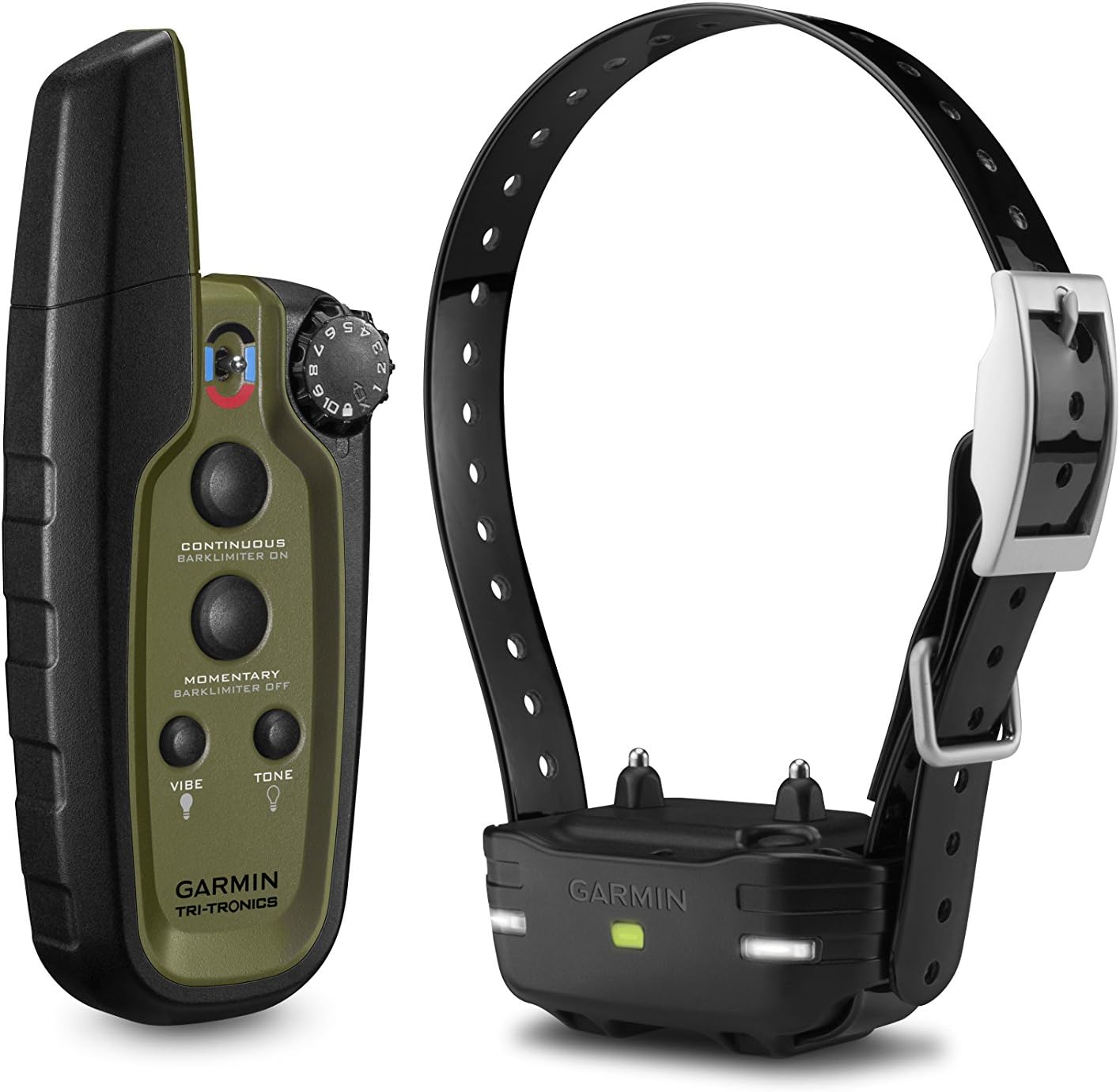
Garmin Sport PRO Training Collar
Best Premium Shock Collar
| Range | 3/4 mile |
|---|---|
| Training modes | Tone, Vibration, 10 stimulation levels |
| Dog capacity | Up to 3 dogs |
| Handheld battery life | Up to 60 hours |
| Handheld water rating | IPX7 |
The Garmin Sport PRO bundle pairs a one-handed handheld transmitter with a rechargeable dog device to deliver tone, vibration and 10 levels of static stimulation for training at distances up to three quarters of a mile. The handheld is ergonomically shaped for one-handed, no-look operation and uses a quick-turn dial with positive clicks to step through stimulation levels and auxiliary functions, while four buttons provide momentary and continuous corrections plus vibration and tone. Built-in LED beacon lights help locate a dog in low light and a settable BarkLimiter offers automatic barking control. Both units use rechargeable lithium-ion batteries and the handheld floats, adding practical durability for field use. The dog device accepts long and short stainless steel contact points for wet conditions and the system is rated water-resistant for rugged outdoor use. Limitations include no GPS tracking or advanced smartphone integration and the dog device water rating is lower than the handheld, so fully submerged use is limited.
Best for: Buyers who need a rugged, easy-to-operate remote trainer for active outdoor work and want reliable controls and durable contact hardware for strong, energetic dogs.
Less Ideal for: If you require GPS tracking, smartphone integration, or full waterproofing for underwater use, consider alternatives with those specific features.
- One-handed ergonomic handheld with quick-turn dial for easy level changes
- Up to 3/4 mile range suitable for open-field training
- Rechargeable, user-replaceable lithium-ion batteries for long runtimes
- Interchangeable long and short stainless steel contact points for wet use and durability
- Built-in LED beacon lights and settable BarkLimiter for locating and barking control
- Dog device has lower water rating than the handheld, limiting submerged use
- No GPS location tracking or smartphone app integration
Verdict: The best premium shock collar is for owners who want top-tier materials, refined controls, extra training modes, and long-term reliability for intensive use.
BLACKDOG Military Shock Collar OT9
Best Heavy-Duty Shock Collar

| Training modes | Beep, Vibration, Safe Shock, Strobe Light |
|---|---|
| Range | 4200ft |
| Waterproof rating | IP67 |
| Power | USB-C fast charge; 90-day claimed runtime (1 hr/day) |
The BLACKDOG OT9 is a rechargeable training collar system aimed at regular use in outdoor conditions. The remote and collar provide four user-selectable modes—beep, vibration, safe shock, and a strobe light—with multiple intensity levels, an LCD on the transmitter for clear mode and battery readouts, and tool-free removable prongs so you can switch to no-shock operation. Its rechargeable design (USB-C fast charge) and claimed 90-day battery life based on one hour of daily use make it convenient for owners who train often and want low running costs compared with disposable batteries. The unit is built to a rugged spec with an IP67 rating and reinforced casing for heavy-duty outdoor use, while the remote flashlight and collar strobe improve night safety. Practical limits: the shock mode is present so careful, informed use is required, and real-world range and battery life will vary with terrain and usage intensity. The system suits hands-on, consistent trainers who need a weatherproof rechargeable collar with visible lighting features.
Best for: Owners who train regularly and prioritize a rechargeable collar that is rugged enough for outdoor use and includes visibility features for night or low-light sessions.
Less Ideal for: People who want a purely positive-reinforcement tool without any static stimulation or those who need a collar-free solution for noise-only behavior control.
- Rechargeable USB-C system with fast charging and long claimed runtime
- Multiple training modes including beep, vibration, and adjustable safe shock levels
- IP67 waterproof build and reinforced casing for rugged outdoor use
- Integrated remote flashlight and collar-mounted strobe for night visibility
- Tool-free removable prongs allow switching to no-shock configuration
- Shock feature requires responsible use and may not suit sensitive or inexperienced handlers
- Real-world range and battery life depend on terrain and usage and may be lower than claims
Verdict: The best heavy-duty shock collar is designed for powerful breeds, offering reinforced components, stronger attachment points, and durability that stands up to rough handling.
Thereye Dog Shock Collar ER-DT01
Best Long-Range Shock Collar

| Range | 5000 ft (open area) |
|---|---|
| Waterproof rating | IP67 receiver |
| Correction modes | Tone, vibration, static, ultrasonic |
| Charging | USB-C fast charging |
| Receiver strap length | Adjustable up to 25 inches |
The Thereye ER-DT01 combines a remote trainer, automatic anti-bark system, ultrasonic deterrent, and FM radio into a single unit aimed at outdoor training and long-range control. You use the handheld transmitter to send tone, vibration, or static stimulation at adjustable levels while the receiver can also operate autonomously as an anti-bark collar using waveform recognition and motion sensing. Notable features include an advertised 5,000 ft open‑area range, IP67 waterproofing for the receiver, bright locating lights, and USB-C fast charging with multi-day battery life. For real-world use this means reliable commands across large yards or parks, daytime and low-light locating, and flexible correction choices you can tailor to a strong, stubborn breed like a Rottweiler. Trade-offs to consider are that the remote is not waterproof, range drops with obstacles, and the high number of static levels requires careful adjustment and familiarization to use humanely and effectively. Instruction reading and gradual introduction are recommended before intensive off‑leash work.
Best for: Owners who need dependable remote control across large properties or for off‑leash training and who are prepared to learn and tune correction levels for a strong, high‑drive breed.
Less Ideal for: Those who want a fully waterproof remote, very simple one‑button trainers, or owners uncomfortable using adjustable static stimulation should consider alternatives.
- Long advertised remote range up to 5,000 feet for off‑leash or large property work
- IP67 waterproof receiver suitable for wet conditions and accidental water exposure
- Multiple correction modes and fine-grained level settings for tone, vibration, ultrasonic and static stimulation
- Fast USB-C charging with long battery life on both receiver and remote
- Bright locating lights on remote and receiver for low-light visibility
- Remote unit is not waterproof
- Range performance will degrade with trees, buildings, or other obstacles
- Many static intensity levels require careful tuning to avoid overcorrection
Verdict: The best long-range shock collar is made for owners who need reliable remote control at greater distances for off-leash work or large properties.
MrSpark HQ01 Shock Training Collar
Best Waterproof Shock Collar

| Training modes | Beep, Vibration, Shock (adjustable levels) |
|---|---|
| Waterproof rating | IP68 receiver |
| Remote range | 4500ft |
| Recharge time | 2 hours |
The MrSpark HQ01 is a rechargeable e-collar designed for remote obedience and bark control using three modes: beep, vibration and adjustable shock levels. You use the handheld remote to send instant corrections up to 4,500 feet away, which makes it practical for off-leash field work, recall training, and perimeter control. Notable features include an IP68 waterproof receiver that can be rinsed after swims or muddy sessions, a built-in LED collar light and a remote flashlight for night visibility, and a safety lock plus automotive-grade safety chip to reduce accidental stimulation. Battery life is strong: the receiver claims up to about 20 days between charges and the remote up to 90 days with a two-hour full charge time. The collar ships with short and long metal prongs and silicone covers to fit different coat types and has an adjustable buckle fit. Limitations to be aware of are that the remote is not waterproof and users must follow the daily-wear and skin-inspection guidance to avoid irritation from sustained contact; effective, humane use requires gradual level setting and monitoring during training.
Best for: Pet owners who prioritize a durable, moisture-resistant training collar for frequent outdoor use, night walks, and water activities and who want a long-range remote for off-leash correction.
Less Ideal for: Owners who need a fully waterproof remote or who prefer passive bark-only collars without user-controlled correction should consider other options.
- IP68-rated receiver that can be rinsed after swimming or muddy play
- Long 4,500 ft RF range with adaptive frequency hopping for stable response
- Multiple training modes with adjustable levels for gradual, precise corrections
- Long battery runtime and 2-hour fast recharge to minimize downtime
- Included hardware (short/long prongs and silicone covers) for fit across coat types
- Remote unit is not waterproof which limits use in wet conditions
- Requires careful daily-wear management and periodic skin checks to prevent irritation
Verdict: The best waterproof shock collar protects electronics and maintains performance for dogs that swim, work outdoors, or encounter wet conditions regularly.
Dogtra 200iQ E-Collar 1-Dog
Best Adjustable-Strength Shock Collar

| Range | 1/2-Mile |
|---|---|
| Stimulation Levels | 100 Levels |
| Communication Modes | Tone, Vibration, LED Light |
| Charging | USB-C Rapid Charging |
The Dogtra 200iQ is a one-dog remote training collar built for regular, real-world use. It provides a half-mile wireless range and 100 discrete stimulation levels, plus audible tone, XPP vibration, and a bright LED for night visibility, so you can communicate from a distance and redirect attention without complicated menus. The transmitter uses an easy dial for single-handed level changes and can expand to a second dog with an added receiver, while the receiver offers removable contact points and a 3/4" nylon strap for a secure fit. Practical benefits include USB-C rapid charging, a high waterproof rating that tolerates wet conditions, and swappable casings for a personalized look. Limitations are the single-receiver kit here — you must buy an extra receiver to train two dogs out of the box — and the system requires careful fit and starting at low levels to avoid overstimulation. For everyday owners who want precise, durable controls and versatile cues, the 200iQ balances power and usability in a compact package.
Best for: Buyers who need a durable, easy-to-use e-collar for regular off-leash training and value precise, adjustable feedback and waterproof reliability.
Less Ideal for: Owners who want a multi-dog system out of the box or who prefer completely hands-free automated containment solutions should consider other options.
- Wide 1/2-mile range for off-leash control in open areas
- 100 precise stimulation levels for gradual adjustment
- Multiple communication modes: tone, vibration, and LED light
- USB-C rapid charging and IPX9K waterproofing for reliable outdoor use
- Simple one-handed dial and expandable system for easy operation
- Sold as a single-dog kit; extra receiver required to train two dogs
- Requires careful fit and conservative level selection to avoid discomfort
Verdict: The best adjustable-strength shock collar lets owners fine-tune stimulation levels for safe, gradual training tailored to a Rottweiler’s size and sensitivity.
Choosing the Right Shock Collar Rottweiler: Key Factors to Consider
Stimulation Modes and Intensity Control
Different collars offer static stimulation, vibration, tone, or a mix. For a rottweiler, having multiple modes means you can start with the least invasive option and only use static stimulation if necessary.
Precise intensity steps matter because large dogs often require higher absolute stimulation levels, but you still want to use the minimum effective setting. Fine-grain control helps avoid overcorrection and allows gradual desensitization during training. A mode lock or safety ramp that prevents sudden jumps in intensity reduces the risk of accidental high-intensity output.
Contact Design and Strap Adjustability
Rottweilers have thick necks and dense coats in places, so electrode length, shape, and placement affect reliability. Longer or curved contacts can maintain skin contact through fur, while replaceable contacts let you adapt to seasonal coat changes.
Strap adjustability and secure fastenings are critical to keep the electrodes positioned correctly during movement. A collar that slips or rotates will deliver inconsistent signals and frustrate training. Look for materials that resist stretching and buckles or clips that lock firmly yet allow quick removal when needed.
Durability and Weather Resistance
Large-breed activity levels mean collars will face tugging, dirt, and moisture. Robust housings and water resistance ratings reduce the chance of failure after outdoor sessions or rainy walks.
Sturdy construction also matters for long-term value because worn or broken components can change signal delivery. Seals around buttons and connectors help keep moisture and debris out, and impact-resistant plastics or metal reinforcements reduce damage from knocks or chewing.
Battery Life and Charging Convenience
Consistent training requires a collar you can rely on day after day. Longer battery life reduces interruptions and the temptation to skip sessions.
Fast recharging and clear battery indicators prevent unexpected downtime. Replaceable batteries can be useful for extended remote-field use, while integrated rechargeable packs are fine for everyday urban training. Consider how charging fits your routine and whether you need spare power for longer outings.
Remote Range and Signal Reliability
Range matters if you plan to train at distance on fields or large properties. A remote that maintains a stable connection through typical obstacles ensures commands reach your dog without lag.
Reliable pairing procedures and low-latency response times help when timing is important for behavior correction. Interference resistance and clear feedback from the transmitter reduce confusion during sessions. Consider realistic distances you will use rather than maximum claims.
Safety Features and Ease of Use
Automatic safety cutoffs, lockable controls, and gradual ramping features lower the risk of accidental overstimulation. These safeguards are especially important with strong breeds where unintended high output could cause harm.
A simple, intuitive remote lowers the chance of operator error in distracting environments. Clear labeling, tactile controls, and feedback indicators for active stimulation make correct operation more likely during training. Think about how the collar will be used day to day and favor designs that reduce complexity while preserving control.
How Do Stimulation Modes Affect a Rottweiler's Learning?
Different stimulation modes change how your dog perceives a correction. Tone and vibration can interrupt attention and are useful for basic obedience or recall training, while static stimulation is typically reserved for repeated or high-distraction scenarios where other cues fail.
For a rottweiler, begin with nonstatic cues and only progress to static when you have established timing and consistency. Proper timing and consistent use of the same signals help the dog associate the stimulus with the undesired behavior rather than the handler or environment.
- Start with the least aversive mode and increase only as needed.
- Use consistent cues and timing to build a clear association.
- Avoid mixing signals in the same training session to prevent confusion.
Will a Shock Collar Work with a Thick Coat?
Coat thickness can interfere with electrode contact. Choose contacts designed for longer reach or consider replaceable contact options that let you test what maintains skin contact without unnecessary pressure.
Regularly check fit and contact location, especially during seasonal coat changes, and clean electrodes to ensure consistent conduction. If you see broken or intermittent signals, refit the collar and reassess contact length before increasing intensity.
- Inspect contact alignment before each session.
- Trim a small area if recommended by your trainer to maintain reliable contact.
- Keep spare contacts on hand to match changing coat conditions.
What Maintenance Keeps a Collar Reliable?
Basic upkeep extends service life and performance. Wipe the unit and electrodes after wet or muddy sessions, dry components thoroughly, and inspect for cracked housings or frayed straps.
Charge batteries on a routine schedule and replace worn straps or contacts promptly. Periodic function checks—testing each mode and confirming battery level—prevent unexpected failures during training.
- Clean electrodes and housing after exposure to moisture.
- Check strap tension and replace if stretched.
- Test remote pairing and all modes before important sessions.
How to Introduce a Rottweiler to a Shock Collar Safely
Introduce the collar gradually. Let the dog wear the unit without activating it so they can acclimate to the feel and weight. Pair the collar with positive, low-stress routines such as leash walks or calm obedience drills.
When you begin using stimulation, start at the lowest setting and monitor the dog's behavior closely. Use stimulation sparingly and only as part of a consistent training plan that includes positive reinforcement for desired behaviors.
- Begin with short, calm sessions to reduce stress.
- Combine collar use with treats or praise to reinforce correct responses.
- Stop immediately if the dog shows signs of distress and consult a professional trainer.
Realistic Range Expectations for Field Training
Remote range is often advertised under ideal conditions. Trees, terrain, and structures reduce effective distance. For reliable field training, choose a system that provides stable control at the distances you realistically plan to use.
Test range in your typical training environment before relying on it for recall or off-leash work. Consistent signal performance matters more than headline maximums because a sudden loss of control can endanger a roaming dog.
- Test transmitter range in the training location.
- Consider a conservative working distance based on obstacles you expect.
- Ensure the transmitter provides clear feedback when a signal is sent.
When to Seek Professional Help or Alternative Methods
If a rottweiler shows persistent fear, aggression, or stress responses during collar introduction, stop use and consult a certified trainer or behaviorist. Some behavioral issues require a behavior modification plan rather than stronger stimulation.
Alternative tools and structured training approaches can often resolve problems without relying solely on aversive inputs. A professional can assess whether collar-based corrections are appropriate and guide safer application tailored to your dog.
- Stop collar use if the dog becomes avoidant or aggressive.
- Work with a professional for complex or safety-sensitive behaviors.
- Use collars as one tool in a broader, positive-focused training plan.
How We Chose the Best Shock Collar Rottweiler
We prioritized products that address the specific demands of training a large, strong breed. Our selection process filtered for collars offering multiple stimulation modes and fine-grain intensity control so owners can find the lowest effective level. We favored units with rugged housings and weather resistance to handle outdoor use and the physical activity typical of rottweilers. Long battery life and straightforward charging matter because frequent power loss interrupts training consistency. We also looked for adjustable, secure strap systems and electrode/contact designs that maintain skin contact on thick necks. Safety features such as automatic shutoff, gradual ramping, and lockout settings were required criteria. We excluded any collars lacking clear intensity adjustments, without specification of contact design for thicker coats, or missing basic safety cutoffs. We did not consider products that make unverifiable behavior-change claims or include only single-mode stimulation. Final consideration leaned on documented build quality, the presence of user-adjustable settings, and features that promote consistent, humane training outcomes.
Our full evaluation process is outlined in our review methodology.
FAQ
Is a shock collar safe for rottweilers?
When used correctly with appropriate intensity levels and safety features, collars can be safe tools for training large breeds. Safety depends on proper fit, conservative settings, and responsible timing rather than the device alone.
How tight should the collar fit on a rottweiler?
Fit should be snug enough that the electrodes maintain skin contact but not so tight that it restricts movement or breathing. You should be able to slide a finger between the strap and the neck while keeping the contacts positioned against the skin.
Can vibration or tone replace static stimulation?
Often vibration or tone is sufficient for many obedience tasks and is less aversive. Static stimulation is typically reserved for situations where other cues fail, and you should test all modes to see which reliably elicits the desired response at low levels.
How often should I use a shock collar during training?
Use collars sparingly and as part of short, focused sessions. Frequent, prolonged use can desensitize or stress a dog; aim for consistent, brief sessions combined with positive reinforcement for correct behavior.
Will a rottweiler need special contacts because of a thick coat?
Many large-breed owners use longer or curved contacts to ensure consistent skin contact through dense fur. Replaceable contact lengths allow you to adapt for seasonal shedding and maintain reliable signal delivery.
Final Verdict
Prioritize collars that give you precise control, reliable contact, and built-in safety features when training a rottweiler. Balance stimulation capability with humane use: start with the least aversive modes, verify fit and contact daily, and choose durable units that stand up to active outdoor use. If you are unsure about settings or notice stress reactions, consult a qualified trainer so you can apply corrections safely and effectively.

