

If you have a big, fast-eating dog, the right slow feeder can prevent gulping, reduce digestive upset, and stretch mealtime into a calmer routine. Choosing a large-dog slow feeder matters because many standard feeders are too small, flimsy, or have spacing patterns that do not slow a big dog's bite effectively. This guide shortlists the top options built for larger breeds and evaluates them for sturdiness, cleaning, and how well they actually slow eating. You'll find straightforward guidance on the features that matter and why these picks earned a place on the list.
Top Picks at a Glance
| Best Overall Slow Feeder for Large Dogs Top all-around slow feeder that balances flow control and durability | Neater Feeder Deluxe Large Slow Feed |  |
| Best Budget Slow Feeder for Large Dogs An affordable slow feeder that still slows eating and holds up | Outward Hound Fun Feeder Slow Bowl Large |  |
| Best Durable Slow Feeder Built to withstand heavy use from large, enthusiastic eaters | Feedoo Slow Feeder 3-Cup |  |
| Best Large-Capacity Slow Feeder Extra-large bowl volume for big appetites and multiple servings | Tolopu Slow Feeder Dog Bowl Extra-Large |  |
| Best Non-Slip Slow Feeder Stable base and grip features to prevent sliding on floors | Oiwliur Slow Feeder Stainless Steel Bowl 5 Cups |  |
| Best Easy-Clean Slow Feeder Simple disassembly or dishwasher-safe parts for fast cleanup | ProSelect Stainless Steel Slow Feeder Large |  |
| Best Premium Slow Feeder Higher-end materials and thoughtful design for long-term use | LE TAUCI Slow Feeder Ceramic 3 Cups |  |
Neater Feeder Deluxe Large Slow Feed
Best Overall Slow Feeder for Large Dogs

| Capacity (food) | 3 cups |
|---|---|
| Capacity (water) | 9 cups |
| Feeding height | 8" (standard) / 11" with extensions |
| Material | Plastic stand, stainless steel bowls |
The Neater Feeder Deluxe pairs a 3-cup slow-feed stainless steel bowl with a raised, dual-reservoir plastic stand that separates and contains spilled food and drains spilled water into a lower basin. Designed for large dogs, it raises bowls to a more comfortable feeding height and includes removable leg extensions to reach an 11 inch rim height when needed. The slow-feed insert reduces gulping and helps with digestion while the splash guard and lower reservoir keep floors and walls dry from both food and water mess. Bowls and the holder are dishwasher safe and the plastic stand has non-skid feet to limit movement. Build quality is noticeably solid compared with basic elevated bowls, and the stainless bowls are BPA-free and easy to sanitize. The main compromises are that the slow-feed food bowl holds only about 3 cups, which may be small for multi-dog households or very large eaters, and the unit is bulkier than a simple elevated tray so it occupies more floor space. For buyers prioritizing a durable, mess-controlling slow feeder with a premium, long-lasting finish, this model delivers clear practical benefits.
Best for: Owners who want a premium, long-lasting elevated slow feeder that minimizes mess and improves eating posture for large dogs and who value durable construction and easy cleaning.
Less Ideal for: People looking for a minimalist, space-saving bowl or those who need very large single-meal food capacity for multiple big dogs.
- Integrated splash-guard and dual reservoir effectively contain spilled food and direct water away from floors
- Includes slow-feed stainless steel bowl that reduces rapid eating and is dishwasher safe
- Raised feed height with removable leg extensions improves eating posture for large dogs
- Non-skid feet and sturdy construction provide stability during mealtimes
- Parts are dishwasher safe for easy cleaning
- Slow-feed bowl capacity (3 cups) may be small for very large or multiple dogs
- Bulkier footprint than a standard elevated bowl stand, requiring more floor space
Verdict: The best all-around slow feeder for large dogs, offering an effective pace-slowing design, sturdy construction, and ease of use for most big-breed owners.
Outward Hound Fun Feeder Slow Bowl Large
Best Budget Slow Feeder for Large Dogs

| Capacity | 4 cups |
|---|---|
| Material Type | Plastic |
| Operation Mode | Manual |
| Product Care Instructions | Dishwasher Safe |
The Outward Hound Fun Feeder Slow Bowl is a budget-friendly plastic puzzle bowl that turns a regular meal into a paced feeding session by forcing dogs to eat around ridges and in deep grooves. Intended for medium to large dogs, this large version holds about 4 cups and uses the most challenging "Slowest" maze pattern to extend mealtime and discourage gulping. In everyday use it sits on the floor as a single-piece feeder; its non-slip profile and deep channels help reduce spills and keep food contained. Practical benefits include straightforward cleaning on the top rack and reassuringly food-safe plastics without BPA, PVC, lead, or phthalates. Be aware that the fixed plastic design is not adjustable and very aggressive chewers could damage it, and very wet or sticky foods can be harder to remove from tight crevices. For owners who want an inexpensive, effective way to stretch meals and aid digestion for larger dogs, this bowl does the job with minimal fuss.
Best for: Owners of larger dogs who need an affordable, no-frills feeder to slow down fast eating and manage portioned meals without complicated setup.
Less Ideal for: Those who have aggressive chewers looking for chew-resistant or metal feeders, or owners who prefer adjustable or multi-piece feeders for very messy wet-food routines.
- Large 4-cup capacity fits a full meal for many large dogs
- Challenging maze pattern labeled Slowest prolongs eating time
- Top-rack dishwasher safe for easy cleaning
- Made from food-safe plastics without BPA, PVC, lead, or phthalates
- Non-slip design reduces sliding and spillage during meals
- Single-piece plastic construction can be damaged by heavy chewers
- Deep grooves can trap very wet or sticky food, requiring extra rinsing
Verdict: The best budget slow feeder for large dogs when you want a low-cost option that reliably reduces gulping without sacrificing basic durability or safety.
Feedoo Slow Feeder 3-Cup
Best Durable Slow Feeder
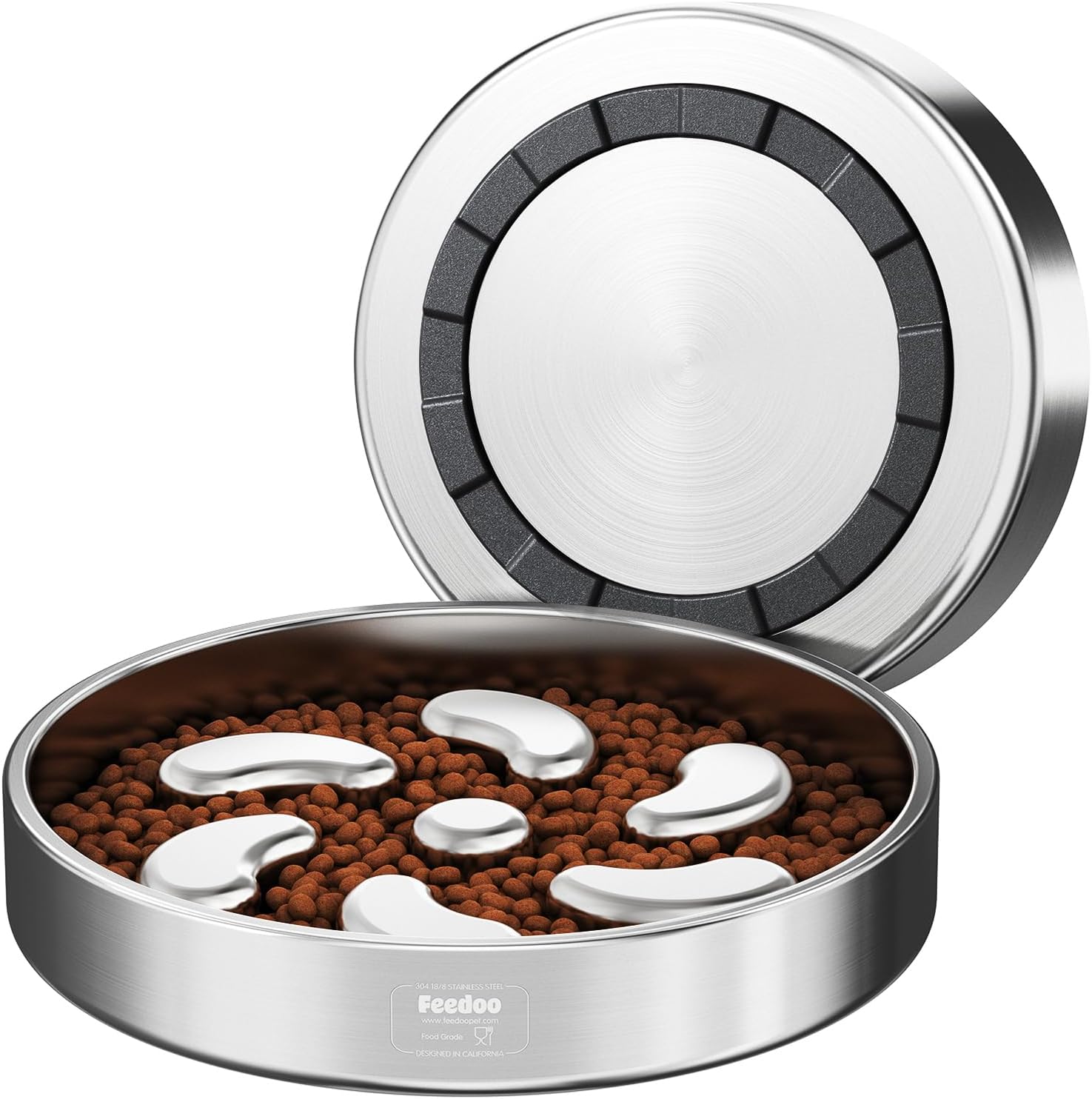
| Capacity | 3 cups |
|---|---|
| Material Type | Stainless Steel |
| Target Species | Large Breed Dogs |
| Operation Mode | Manual |
The Feedoo Slow Feeder is a heavy-duty stainless steel bowl built to slow rapid eaters and withstand everyday use. Its raised, flower-shaped maze forces dogs to work for kibble, which helps reduce gulping, vomiting, and overeating while extending meal time to promote digestion. The bowl uses a double-wall stainless design for extra heft and durability, and a full-circle silicone ring on the underside keeps it from sliding or tipping during enthusiastic feeding. Because it is stainless steel it is rust-resistant and safe for dry or wet food, and it is advertised as dishwasher safe for easy cleanup. The deep, rounded maze keeps edges smooth so it is gentle on muzzles, but the pattern can make scraping the last bits of food out a little harder than a simple bowl. It is heavier than plastic slow feeders, which aids stability but makes it less portable. For buyers who want a refined, long-lasting slow feeder the Feedoo offers a premium-feel alternative to plastic or ceramic options, though those who need ultra-lightweight or very shallow designs should look elsewhere.
Best for: Buyers who prioritize premium materials and long-lasting performance and want a durable, refined stainless steel slow feeder that improves mealtime behavior.
Less Ideal for: Those who need an ultra-light, collapsible, or very shallow bowl for travel or for dogs that prefer flat feeding surfaces should consider different styles.
- Double-wall food-grade stainless steel construction for durability and rust resistance
- Raised maze slows eating and reduces gulping and vomiting
- Full-circle non-slip silicone base keeps the bowl stable and protects floors
- Dishwasher-safe stainless steel makes cleaning straightforward
- Maze design can trap small food pieces and take more effort to fully clean by hand
- Heavier double-wall construction reduces portability for travel
Verdict: The best durable slow feeder for owners of large dogs who need a heavy-duty design and robust materials to resist chewing and frequent use.
Tolopu Slow Feeder Dog Bowl Extra-Large
Best Large-Capacity Slow Feeder
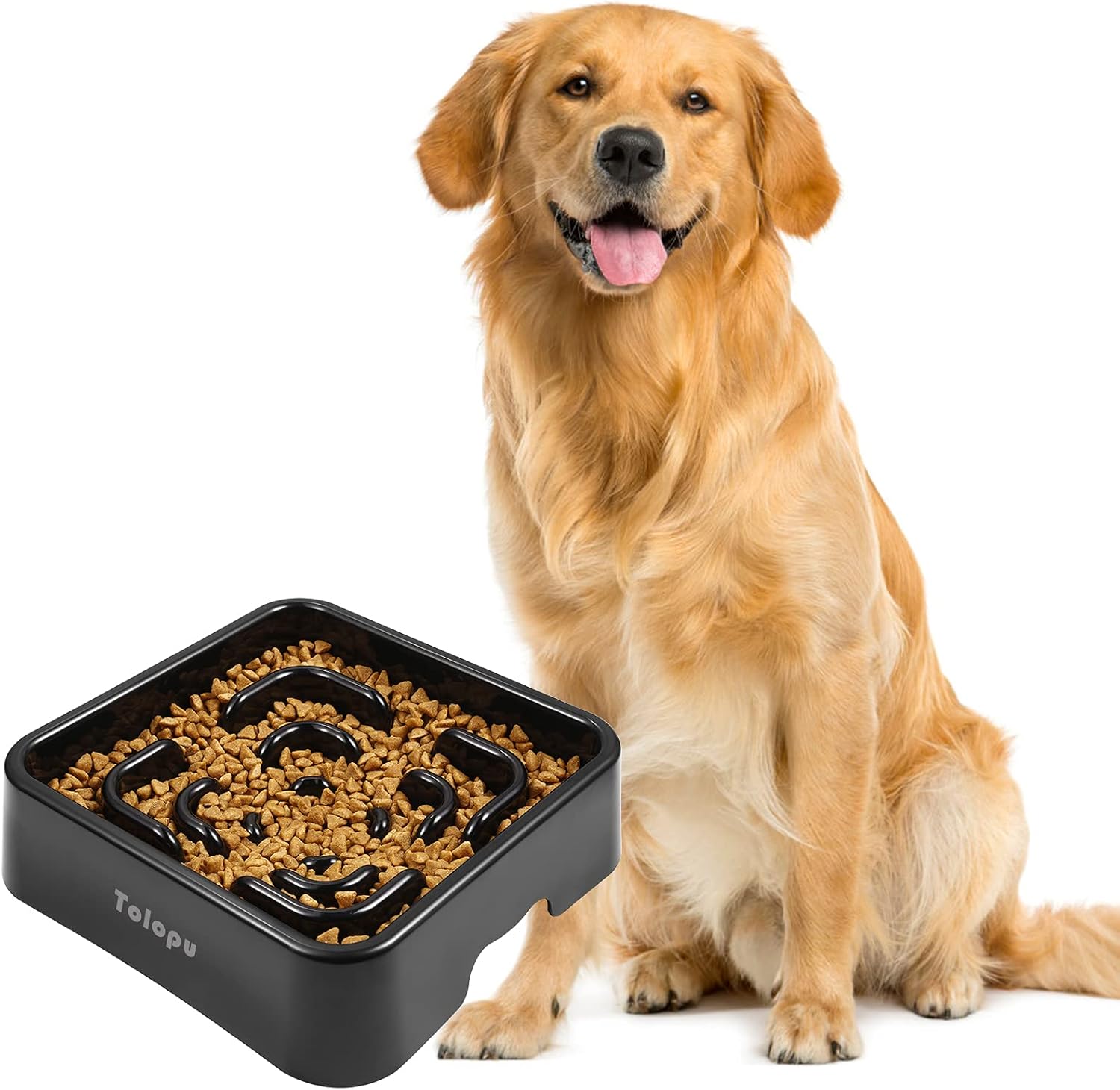
| Capacity | 10 cups |
|---|---|
| Material Type | Acrylonitrile Butadiene Styrene |
| Recommended Uses For Product | Indoor, Dry Food, Wet Food |
| Product Care Instructions | Hand Wash Only |
The Tolopu Extra-Large Slow Feeder is a 10-cup plastic bowl with a raised maze pattern that forces dogs to eat more slowly, which helps reduce gulping and the risk of indigestion. It is intended for indoor use with dry or wet food and is commonly used as a single large meal bowl or to hold multiple portions between feedings. The ABS construction feels durable and the glossy surface makes hand-wiping straightforward, while the four rubber pads on the base help keep the bowl from sliding during enthusiastic feeding. Practical benefits include a large 10-cup capacity for big breeds, a playful maze layout that mentally engages dogs while they eat, and easy cleaning when food does not get trapped too deeply in the channels. Limitations are that the bowl is hand-wash only and the ABS surface can retain grease compared with some ceramic or stainless options, so it may need more frequent cleaning; very aggressive chewers might also damage the plastic over time. The bowl is a simple, no-frills manual solution for owners who need larger portions and want to slow a fast eater without complicated features.
Best for: Buyers who need a single large-capacity slow feeder for big-breed dogs or to hold multiple meal portions between feedings and prioritize slowing fast eating with a low-tech solution.
Less Ideal for: Owners who want dishwasher-safe materials, stainless or ceramic construction for long-term odor resistance, or who have dogs that habitually chew hard plastic.
- Large 10-cup capacity suited for big breeds or multiple portions
- Maze-style interior effectively slows rapid eating and encourages mental engagement
- Durable ABS construction designed to resist everyday use
- Glossy finish and simple shape make hand-cleaning straightforward
- Rubber pads on the base reduce slippage during feeding
- Hand wash only rather than dishwasher safe
- Plastic material can retain grease and may wear with heavy chewing
Verdict: The best large-capacity slow feeder for large dogs that need more food per meal or multi-meal portions without frequent refilling.
Oiwliur Slow Feeder Stainless Steel Bowl 5 Cups
Best Non-Slip Slow Feeder

| Material Type | Stainless Steel |
|---|---|
| Capacity | 5 cups |
| Additional Features | Nonslip |
| Product Care Instructions | Hand Wash Only |
| Power Source | Battery Powered |
The Oiwliur slow feeder is a stainless steel bowl shaped with internal ridges to slow a dog's eating and a rubberized non-slip base to keep it steady during mealtimes. It is intended for use with dry or wet food and water and holds up to 5 cups, so it works for single-meal portions for small to medium dogs or combined feeding for multiple smaller pets. The 304 stainless steel construction resists rust and is easy to clean by hand or in the dishwasher, which helps prevent lingering odors and staining over time. The manual operation and simple shape make it durable against chewing and rough use compared with plastic slow feeders, and the low profile helps dogs reach food while slowing their pace. Limitations are the flat, compact footprint that may not suit very large breeds that need raised feeders and the fixed internal pattern that cannot be adjusted for different slowdown levels.
Best for: Buyers who prioritize a durable, hygienic metal bowl that slows eating and is simple to clean will appreciate this product for everyday feeding of small to medium dogs or multi-pet setups.
Less Ideal for: Owners seeking an elevated feeder or an adjustable slow-feed solution for very large breeds should consider other formats designed for height or variable resistance.
- 304 stainless steel resists rust and is food-safe
- Non-slip rubber base keeps bowl stable during feeding
- 5-cup capacity handles typical single meals for small to medium dogs
- Dishwasher-safe finish makes cleaning and odor control easy
- Low, compact profile may be awkward for very large or tall dogs
- Fixed slow-feeder pattern cannot be changed to alter eating resistance
Verdict: The best non-slip slow feeder for large dogs and active eaters who push or paw at their bowls and need a stable, skid-resistant solution.
ProSelect Stainless Steel Slow Feeder Large
Best Easy-Clean Slow Feeder

| Material Type | Stainless Steel |
|---|---|
| Capacity | 1.9 pounds |
| Recommended Uses For Product | Dry Food, Indoor |
| Dog Breed Size | Large |
| Product Care Instructions | Dishwasher Safe |
This heavy-duty stainless steel slow feeder uses raised ribs and a maze-like interior so dogs must eat around obstacles instead of gulping food, which slows intake and helps with portion control. It is intended for dry food and indoor use and is sized for large dogs, holding about 1.9 pounds of kibble. The stainless-steel construction resists chewing and odors better than plastic, and the bowl is top-rack dishwasher safe for easy cleaning. An anti-slip base keeps the bowl stable during enthusiastic feeding and reduces spills. Because it is manual and simple, there are no moving parts to break, making it well suited for frequent use in multi-dog homes or by strong chewers. The main limitation is the single-piece design offers fixed maze geometry, so very small kibble may still slip past obstacles and extremely aggressive chewers could potentially bend or damage thin edges over long periods, though stainless steel remains more durable than many alternatives.
Best for: Buyers who need a sturdy, low-maintenance slow feeder for large dogs or high-usage households that prioritizes durability and easy cleaning over adjustable feeding configurations.
Less Ideal for: Owners looking for adjustable or multi-stage slowing options, or those who need a very small-kibble-specific feeder, should consider other designs.
- Stainless steel construction resists chewing, staining, and odors
- Built-in slow-feed maze forces dogs to eat more slowly for better digestion
- Dishwasher-safe top rack for easy cleaning
- Anti-slip base keeps the bowl steady and reduces mess during use
- Fixed maze design may not suit every kibble size
- Not adjustable or modular so feeding pattern cannot be changed
Verdict: The best easy-clean slow feeder for owners who prioritize hygiene and convenience, with designs that disassemble easily or have dishwasher-safe surfaces.
LE TAUCI Slow Feeder Ceramic 3 Cups
Best Premium Slow Feeder
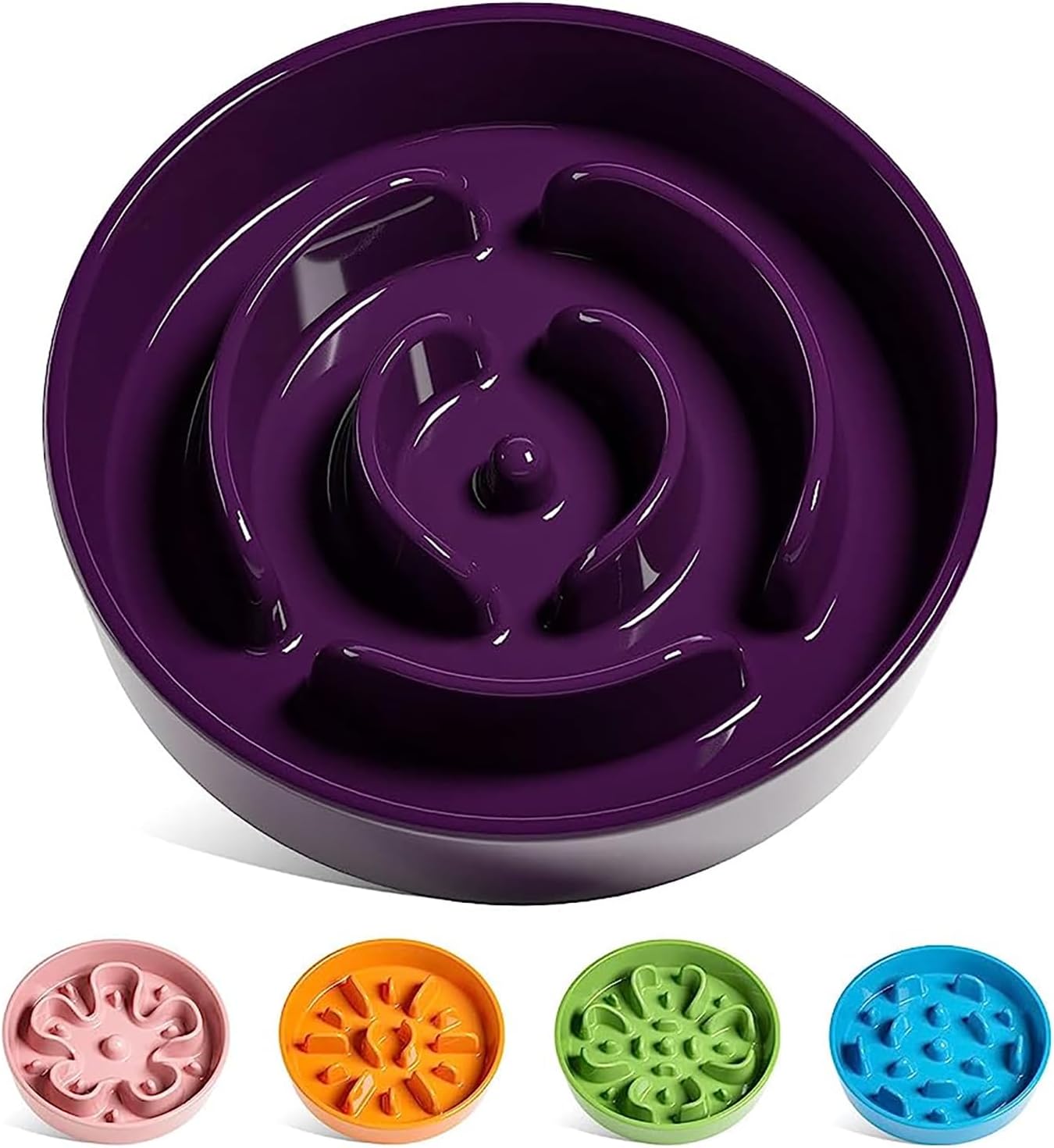
| Capacity | 1.9 pounds |
|---|---|
| Material Type | Ceramic |
| Dishwasher Safe | Yes |
| Target Species | Dog |
This LE TAUCI ceramic slow feeder is a heavy, dishwasher-safe bowl shaped with ridges and a maze pattern to slow down rapid eaters. It is used like a normal food dish but the raised interior obstacles force dogs to work around the channels, stretching mealtime and reducing gulping that can contribute to regurgitation or obesity. The ceramic construction makes the bowl stable and hard to tip, and the smooth glazed surface cleans well in the dishwasher or by hand. Included nonslip features and the weight of the ceramic help keep the bowl in place for larger dogs. Because it is ceramic, it is more scratch- and chew-resistant than plastic and feels more premium, but it will chip or crack if dropped or knocked from height and is heavier to move and wash. Capacity is suited to typical large-dog portions but buyers who need truly heavy-duty, chew-proof metal or silicone options for very aggressive chewers should consider alternatives.
Best for: Large-dog owners who prioritize premium, stable feeding ware and want a durable, refined slow-feeding solution to reduce gulping and related digestive issues.
Less Ideal for: Owners who need ultra-durable, chew-proof bowls for aggressive chewers or who prefer lightweight, travel-friendly feeders.
- Ceramic material provides heft and stability to resist tipping
- Maze-style ridges slow eating and create a puzzle-style feeding experience
- Dishwasher-safe glazed surface is easy to clean
- Non-slip base helps keep the bowl stationary during meals
- Ceramic can chip or crack if dropped or struck
- Heavier and less portable than plastic or silicone feeders
Verdict: The best premium slow feeder for large-dog owners willing to invest in superior materials, refined anti-gulp features, and enhanced longevity.
Choosing the Right Slow Feeder Large Dog: Key Factors to Consider
Size and Bowl Depth
Large dogs need more surface area and deeper wells than small-breed feeders. If the pattern is too cramped or the bowl too shallow, the dog will crowd the feeder and eat around obstacles instead of being slowed. Measure typical portion sizes and choose a feeder with wells or channels long enough for larger kibble or mixed meals.
Bowl depth also affects neck posture. A too-deep bowl can force the dog to lower its head awkwardly, while a too-shallow tray encourages gulping. Look for dimensions that match a relaxed, natural feeding position for your dog's height and neck length.
Material Strength and Chew Resistance
Durable materials matter because large dogs exert more force while eating and can damage flimsy plastics. Choose thick, impact-resistant plastics, heavy-duty silicone, or sturdy ceramic where appropriate. The material should resist cracking, chipping, and chewing through when subjected to daily use by powerful jaws.
Also consider edges and seams; weak seams or glued pieces can separate and create sharp edges or choking hazards. Materials that tolerate repeated washing without degrading are preferable for long-term hygiene and safety.
Pattern Design and Effectiveness
Different slow-feeder patterns—ridges, mazes, raised islands, and compartmentalized bowls—work in different ways. For large dogs, patterns should be scaled up so that obstacles interrupt big bites without making food impossible to reach. Effective patterns encourage smaller mouthfuls and slower search behavior rather than just blocking access.
Avoid overly intricate patterns that trap food in tiny crevices hard to clean. The right pattern balances slowing power with accessibility so the dog remains engaged and not frustrated at mealtime.
Stability and Non-slip Base
A large dog can push or nudge a feeder while eating, so stability is crucial. Look for feeders with a wide base, low center of gravity, or integrated non-slip rings that keep the feeder in place on tile or wood floors. Elevated designs should have secure feet and not wobble when a dog takes a sideways bite.
A stable feeder reduces mess, prevents tipping, and makes feeding safer for dogs that eat with enthusiasm. Consider where the feeder will sit and whether a silicone mat or weighted base can add security.
Ease of Cleaning
Feeders for large dogs often hold more food and get dirtier faster, so easy cleaning is essential. Dishwasher-safe components shorten maintenance time and reduce bacterial buildup. Avoid designs with narrow, hard-to-reach crevices that trap moisture and food residue.
Removable inserts, smooth surfaces, and materials that tolerate high-temperature washing are preferable. Regular, thorough cleaning keeps the feeder sanitary and extends its usable life.
Portability and Storage
If you travel with your dog, socialize at a trainer, or need to rotate feeders between rooms, portability matters. Lightweight but durable designs that nest or stack easily save space. Collapsible silicone options can be convenient for outings, while bulkier models may be better for permanent home use.
Consider where you store the feeder and how easy it is to move when cleaning or refilling. A design that balances portability with robustness will better suit active owners of large dogs.
How Do Slow-feeder Designs Actually Reduce Gulping for Large Dogs?
Slow-feeder geometry changes how a dog accesses food. Raised ridges and maze-like channels break large kibble into smaller bites and force the dog to take pauses between mouthfuls. For big dogs, scaled-up obstacles create the same effect without making food unreachable.
Behaviorally, slowing the pace encourages chewing and reduces air intake, which can lower the risk of bloating and regurgitation in many dogs. Successful designs encourage a searching motion that keeps the dog engaged while reducing rapid swallowing.
- Raised islands interrupt large mouthfuls and force smaller bites
- Channels and mazes spread food out so the dog moves its muzzle rather than gulping
- Open compartments allow large kibble while still forcing slower feeding patterns
Can a Slow Feeder Prevent Digestive Issues in Large Breeds?
Slower eating often reduces the amount of air a dog swallows during meals, which can help lower the chance of mild digestive upset and gas. For some dogs, pacing out food also promotes more complete chewing, aiding digestion.
However, a slow feeder is not a medical cure. If your dog has recurring vomiting, severe bloating, or other alarming symptoms, consult a veterinarian. Use a slow feeder as a practical step to reduce risk factors associated with rapid eating, not as a substitute for professional care.
- Helps reduce swallowed air and rapid intake
- May lower incidents of gas and regurgitation in many dogs
- Not a replacement for veterinary diagnosis or treatment
Which Slow-feeder Shapes Work Best for Different Feeding Styles?
Some large dogs prefer a flat, wide tray with raised ridges because it lets them root and nudge. Others do better with deeper bowls that separate portions into compartments. Consider your dog's typical style—does it scoop food with its tongue, or does it use broad chomps? Match the shape to that behavior.
Also think about mixed feeding. If you add wet food or toppers, choose a feeder with smoother wells that can be cleaned easily and that prevents the soft food from pooling in inaccessible crevices.
- Flat trays with ridges suit dogs that nudge and root
- Compartmentalized bowls control portion access and are good for measured portions
- Deeper wells help contain toppers but must remain accessible for big snouts
How to Introduce a Slow Feeder to a Large Dog Without Causing Frustration
Introduce the new feeder gradually. Start by placing a small portion in the feeder so your dog can learn the mechanics without getting frustrated. Supervise initial sessions to ensure the dog is not giving up on the food.
You can also use higher value treats at first to reward engagement with the feeder. If your dog hesitates, temporarily make the pattern less challenging by spreading food across fewer obstacles, then increase difficulty over several meals.
- Begin with small portions and short supervised sessions
- Use tasty treats to encourage exploration of the feeder
- Gradually increase portion size and pattern difficulty over days
Cleaning Tips That Keep Large-dog Feeders Sanitary
Wash feeders after each meal when possible, especially if you feed wet food or toppers. Use warm, soapy water and a brush to reach crevices. For dishwasher-safe parts, place them on the top rack to avoid warping.
For stubborn residues, soak the feeder in a baking soda and water solution or use a pet-safe enzymatic cleaner. Rinse thoroughly to remove cleaning agents before the next use. Regular inspection for hair, food buildup, and small cracks helps prevent hygiene problems.
- Soak and scrub to loosen trapped food
- Use enzymatic cleaners for protein-based buildup
- Inspect and replace feeders that show cracking or persistent staining
Practical Adjustments for Multi-dog Households
If you feed multiple dogs at once, consider having a dedicated slow feeder per dog to avoid guarding and competition. Feed at staggered times if space or supervision is limited. Match each feeder's size and pattern to that dog's eating style so smaller dogs are not overwhelmed by obstacles scaled for large breeds.
Also plan for different portion sizes. Some slow feeders are designed to clip together or stack for easy storage when not in use. Keep an eye on interactions during the transition period to prevent resource guarding.
- Use one feeder per dog when possible to reduce competition
- Stagger feeding times to ease supervision
- Match feeder scale to each dog rather than forcing all dogs to use the same design
How We Chose the Best Slow Feeder Large Dog
We evaluated contenders using criteria that reflect real-world use for large dogs and heavy daily feeding. Durability was a primary filter, focusing on materials and construction able to withstand repeated contact from strong jaws and larger snouts. Size and bowl depth were assessed to ensure portions sit naturally for large-breed feeding postures and to avoid cramping the neck or forcing awkward angles. Pattern effectiveness was measured by how well the design slows intake without creating frustration or excessive food trapping. Cleanability received strong weight, including dishwasher-safe components and access to tight crevices. Stability and non-slip features were considered to prevent tipping or sliding during vigorous feeding sessions. We excluded feeders that are clearly intended for small or medium dogs, very shallow novelty trays, or products with obvious food-hygiene issues like unreachable crevices. We also filtered out designs that rely solely on slippery coatings rather than physical geometry to slow eating. The final list balances robust construction, practical patterning, and easy maintenance so owners of large breeds can choose feeders that hold up to daily use and truly reduce rapid eating.
Our full evaluation process is outlined in our review methodology.
FAQ
How long should a large dog spend eating from a slow feeder?
A typical target is 10 to 20 minutes for a meal, depending on portion size and the dog's normal pace. The goal is steady, calm eating rather than rapid gulps. If it takes substantially more time, you may need a simpler pattern or smaller portions.
Are silicone slow feeders safe for heavy chewers?
Silicone can be durable but varies by thickness and quality. Some heavy chewers will damage thin silicone designs. For powerful jaws, look for thicker, reinforced silicone or rigid materials designed to resist chipping and tearing.
Can I use a slow feeder with wet food or toppers?
Yes, but choose a feeder with smooth, accessible wells that are easy to clean. Wet food can cling in narrow grooves, so opt for designs with removable inserts or those labeled dishwasher-safe to maintain hygiene.
Will a slow feeder work for a dog that gulps only occasionally?
Often it will. Many dogs respond to the pacing effects of a slow feeder even if they gulp infrequently. Start with moderate obstacles to see if it changes behavior before moving to more aggressive patterns.
How often should I replace a slow feeder for a large dog?
Replace the feeder if you see cracking, persistent staining that cannot be sanitized, or if the non-slip base wears out. Regular inspection every few months is sensible for heavy-use feeders to ensure safety and hygiene.
Final Verdict
Pick a slow feeder that fits your dog's size and eating style, prioritizing scaled-up patterns, sturdy construction, and easy cleaning. Tradeoffs are common: the most aggressive patterns slow intake best but can trap food or frustrate some dogs; simpler designs are easier to clean but may be less effective for determined gulpers. Focus on matching pattern scale, material strength, and stability to your large dog's behavior. With those priorities in mind, you can choose a feeder that improves mealtime pace and reduces the risks associated with rapid eating.

