

If you share your home with shedding pets, a smart robot vacuum can dramatically reduce daily fur, dander, and tracked-in dirt with much less effort on your part. The right model handles multiple floor types, traps fine particles, and integrates into your routine without constant intervention. This guide shortlists the top smart robot vacuums for pet hair and explains the practical differences that matter for busy pet owners. We evaluate cleaning performance, filtration, navigation, and upkeep so you can pick a model that fits your home and pet habits.
Top Picks at a Glance
| Best Overall Smart Robot Vacuum The top all-around choice balancing cleaning, features, and reliability | roborock Q7 M5+ Robot Vacuum |  |
| Best Budget Smart Robot Vacuum A wallet-friendly option that still cleans pet hair reasonably well | ILIFE V2 Robot Vacuum |  |
| Best Self-Emptying Smart Robot Vacuum A model with an automatic dirt-disposal base for low-maintenance cleaning | roborock Qrevo S Pro Robot Vacuum |  |
| Best High-Suction Smart Robot Vacuum Maximum suction power to lift embedded pet hair and ground-in dirt | ECOVACS DEEBOT T90 MAX PLUS |  |
| Best Compact Smart Robot Vacuum A smaller-footprint unit that fits under low furniture and tight spaces | eufy C10 Robot Vacuum |  |
| Best Quiet Smart Robot Vacuum Lower-noise performance for cleaning without disturbing pets or people | Lefant M210 Robot Vacuum |  |
| Best Premium Smart Robot Vacuum A higher-end model with advanced navigation, features, and build quality | Shark AV2501AE AI Robot Vacuum |  |
roborock Q7 M5+ Robot Vacuum
Best Overall Smart Robot Vacuum
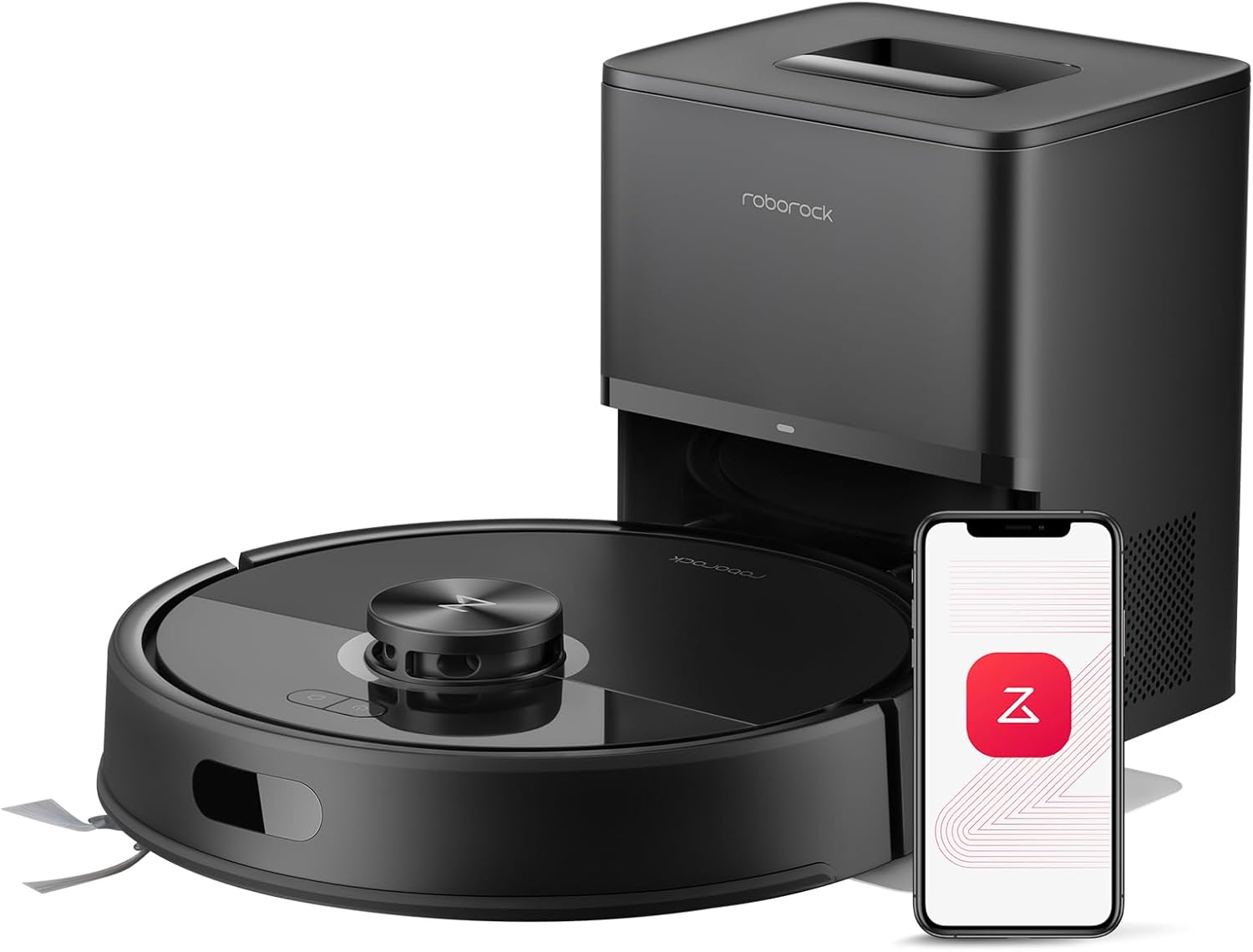
| Maximum Suction | 10000Pa |
|---|---|
| Capacity | 2.7 liters |
| Battery Life | 150 minutes |
| Filter Type | Cartridge |
| Noise Level | 65 db |
The roborock Q7 M5+ is a robot vacuum-and-mop combination built to handle pet hair and deep dirt on mixed floors. It uses PreciSense LiDAR for reliable mapping and multi-level maps, and the app plus voice control let you schedule cleanings and set no-go zones. The key hardware strengths are a 10000 Pa HyperForce motor for strong extraction and a Dual Anti-Tangle system that reduces brush hair wrap for long-haired pets. Paired with the RockDock Plus self-emptying base and a 2.7 L sealed dust bag, it can go many weeks between manual emptying, which is helpful in heavy-shedding homes. The VibraRise 2.0 electronic mop and adjustable water flow provide basic mopping between vacuum passes but will not replace manual deep scrubbing on textured grout or stubborn stains. Expect typical robot limitations such as navigation around very cluttered rooms, occasional edge residue on high-pile rugs, and app dependency for advanced settings. For households prioritizing suction and low-maintenance pet hair pickup, the Q7 M5+ is a strong choice.
Best for: Buyers with heavy-shedding dogs or homes with textured floors who want the strongest possible suction in a low-maintenance robot and value scheduled, automated cleaning.
Less Ideal for: People who need a robot that replaces deep manual mopping or who prefer a fully manual upright for spot deep-cleaning and stairs.
- Very high suction power rated at 10000 Pa for deep carpet and rug extraction
- Dual Anti-Tangle brush system reduces hair wrap and maintenance
- 2.7 L sealed dust bag in the RockDock Plus supports weeks of hands-free emptying
- PreciSense LiDAR navigation with multi-level mapping for efficient room coverage
- App and voice control with scheduling and no-go zones for convenient automation
- Mopping function is basic and not a substitute for aggressive manual scrubbing on textured floors
- May struggle with very cluttered spaces or extremely high-pile carpets
Verdict: The best all-around smart robot vacuum for most pet owners, offering a strong mix of suction, navigation, battery life, and app features to handle daily pet hair and debris.
ILIFE V2 Robot Vacuum
Best Budget Smart Robot Vacuum

| Battery Life | 120 minutes |
|---|---|
| Capacity | 300 ml |
| Filter Type | Sponge |
| Noise Level | 69 db |
| Control Method | Remote |
The ILIFE V2 is a budget-focused robot vacuum that targets homes with hard floors and pet hair by using a tangle-free suction port instead of a roller brush. You operate it with the included physical remote or the onboard button, and it offers multiple modes—auto, edge, and spot—to cover routine runs, wall-to-wall edges, and concentrated messes. The 300 ml dustbin and sponge filter handle everyday debris and hair, and the ultra-slim 2.99 inch profile helps it reach under low furniture. Runtime is strong for the price at up to 120 minutes, and the unit automatically returns to its charger when battery is low. Expect simple, random navigation rather than mapping, and there is no Wi-Fi app or smart home integration, so scheduling and control are limited to the remote. Noise sits around 69 dB, which is noticeable but typical for this class. For buyers who want straightforward, effective hair pickup on floors without paying for advanced sensors or app features, the V2 delivers solid value with practical everyday performance.
Best for: Owners prioritizing effective hair pickup on floors and a low-cost, easy-to-use robot without needing mapping or app controls.
Less Ideal for: Buyers who want precise mapping, room-by-room scheduling, or smartphone and smart home integration should consider higher-end models.
- Tangle-free suction design avoids hair wrap without a roller brush
- Up to 120 minutes runtime for extended cleaning sessions
- Ultra-slim 2.99 inch profile reaches under low furniture
- Multiple cleaning modes including auto, edge, and spot for flexible coverage
- Simple remote control operation with no Wi-Fi required
- Navigation is random rather than mapped so coverage can be less efficient
- No smartphone app or smart home integration for remote scheduling
Verdict: The best budget smart robot vacuum for owners who need competent pet-hair cleanup and basic smart features without paying for premium extras.
roborock Qrevo S Pro Robot Vacuum
Best Self-Emptying Smart Robot Vacuum

| Suction | 18,500 Pa |
|---|---|
| Dock capacity | 2.7 liters |
| Battery life | 180 minutes |
| Navigation | PreciSense LiDAR + Reactive Tech |
| Filter type | Washable |
The Roborock Qrevo S Pro is a full-featured robot vacuum and mop built to handle everyday dirt and pet hair with minimal intervention. In normal use it navigates with PreciSense LiDAR and Reactive Tech obstacle avoidance to map multiple floors, avoid shoes and toys, and cross low thresholds while cleaning carpets and hard floors. The included multifunctional dock automatically self-empties into a sealed 2.7 L bin, refills and washes the dual spinning mops at high temperature, and warm-dries them, which reduces hands-on maintenance. With up to 18,500 Pa suction, an anti-tangle brush package, and washable filter, it picks up pet hair and debris efficiently; the app offers no-go zones, custom carpet strategies, and scheduling for tailored runs. Battery life supports long cleaning cycles and the dock's larger dust capacity means fewer emptying chores. The unit is not the slimmest or lightest option and advanced features add complexity for users who prefer a very simple device, but for busy, pet-owning households this model cuts down routine upkeep and delivers repeatable clean floors.
Best for: People who want a mostly hands-off, whole-home cleaner that manages pet hair and mopping automatically and are willing to use app controls to customize performance.
Less Ideal for: Buyers who need an ultra-slim, simple robot with minimal setup or those who prefer manual-only vacuums and mops over automated docking systems.
- Powerful 18,500 Pa suction for deep pickup of pet hair and debris
- Multifunctional dock that self-empties, auto-washes mops at 167°F and warm-dries them
- LiDAR navigation with reactive obstacle avoidance and multi-floor mapping for reliable coverage
- Anti-tangle brush system and washable filter designed to reduce hair wrap and simplify maintenance
- Large sealed dust capacity (2.7 L) reduces frequency of manual emptying
- Relatively heavy and tall compared with ultra-slim models so may not access very low-clearance areas
- Advanced dock and app features add system complexity that can require setup and occasional troubleshooting
Verdict: The best self-emptying smart robot vacuum for pet households that want minimal daily upkeep and fewer trips to empty the dustbin.
ECOVACS DEEBOT T90 MAX PLUS
Best High-Suction Smart Robot Vacuum

| Battery Life | 200 minutes |
|---|---|
| Filter Type | WASHABLE |
| Capacity | 2.5 liters |
| Noise Level | 60 db |
| Power Source | Battery Powered |
The DEEBOT T90 MAX PLUS is built around high suction and hands-off maintenance for homes with heavy pet hair and dense carpets. Its BLAST vacuum system and quoted 40,000Pa suction combine with ZeroTangle 4.0 brushes to pull embedded hair and debris from carpet while reducing brush wrap, and the robot still runs as a mop on hard floors with the OZMO Roller 3.0. The OMNI all-in-one station automates emptying, fresh-water roller washing and hot-air drying, which cuts down routine maintenance and helps prevent dirty-water redepositing. dToF LiDAR mapping and TrueDetect obstacle sensing deliver organized, repeatable cleaning paths and reliable navigation under and around furniture. Battery life is long enough for large areas and the slim 3.7-inch profile reaches under low furniture. Expect louder operation at full power and a station that adds footprint and setup complexity, but the result is a powerful, low-touch cleaning system well suited to busy, pet-owning households.
Best for: Buyers who need maximum suction and reduced brush maintenance to manage heavy shedding and thick carpets and who prefer a largely automated cleaning routine.
Less Ideal for: People with very tight floor space who cannot accommodate the OMNI station footprint or buyers prioritizing the quietest possible robot for noise-sensitive homes.
- Very high suction power (up to 40,000Pa) for deep pickup on carpets
- ZeroTangle 4.0 main and side brushes reduce hair wrap and maintenance
- OMNI station handles auto-empty, roller washing and hot-air drying for low hands-on care
- OZMO Roller 3.0 provides continuous rinsing and scrubbing for sticky spills on hard floors
- dToF LiDAR and TrueDetect navigation create systematic mapping and obstacle avoidance
- Louder operation around 60 dB at higher power levels
- All-in-one station increases floor space required and setup complexity
Verdict: The best high-suction smart robot vacuum for homes with heavy shedding or carpeted areas that need stronger pickup performance.
eufy C10 Robot Vacuum
Best Compact Smart Robot Vacuum

| Battery Life | 120 minutes |
|---|---|
| Suction Power | 4000 Pa |
| Dust Bag Capacity | 3 liters |
| Filter Type | Washable |
| Control Method | App (2.4 GHz Wi‑Fi) |
The eufy C10 is a low-profile robot vacuum built to reach under low-clearance furniture while handling regular pet hair and debris. It pairs a 2.85-inch slim body with LiDAR navigation to map rooms and follow efficient paths, and it uses a 4,000 Pa suction system plus a rolling brush and extendable corner arm to lift trapped pet hair from edges and tight spots. The included self-empty station holds up to a 3 liter dust bag so you can run multiple cleaning cycles without emptying the robot frequently, and washable filters reduce replacement costs. App control enables scheduled runs, no-go zones, and remote starts, though the app requires 2.4 GHz Wi-Fi. Noise during normal cleaning is relatively low, but the station can be louder while emptying. Expect the C10 to be most effective on hard floors and short-pile carpets; deep-pile rugs may limit hair pickup and could increase brush tangles despite the Pro-Detangle comb. The slim profile and CornerRover arm make it especially useful for extracting hair from under beds and along baseboards, while the 120-minute runtime covers many medium-sized homes between charges.
Best for: Homeowners who need a slim robot that actually fits under low-profile beds and sofas and who want a mostly hands-off way to capture pet hair trapped in corners and under furniture.
Less Ideal for: People with mostly deep-pile or high-pile carpets where a low-profile unit may struggle to pull embedded hair and where a taller, more powerful vacuum would perform better.
- 2.85-inch ultra-slim body reaches under low-clearance furniture
- Self-emptying station with 3 liter dust bag reduces manual emptying frequency
- 4,000 Pa suction plus extendable corner brush improves edge and corner hair pickup
- LiDAR navigation with mapping for efficient, repeatable cleaning paths
- Washable filter lowers maintenance cost and app scheduling enables hands-off cleaning
- Best performance on hard floors and short carpets rather than deep-pile rugs
- App requires 2.4 GHz Wi-Fi and no remote control is included
Verdict: The best compact smart robot vacuum for apartments or homes with low-clearance furniture where a narrow profile and maneuverability matter most.
Lefant M210 Robot Vacuum
Best Quiet Smart Robot Vacuum

| Battery Life | 120 minutes |
|---|---|
| Dustbin Capacity | 500 ml |
| Filter Type | Cartridge |
| Noise Level | 52 db |
| Compatible Devices | Amazon Echo, Google Home, Smartphones |
The Lefant M210 is a slim, app-controlled robot vacuum aimed at everyday pickup of pet hair and dust in smaller homes. Its low-profile 2.99-inch height lets it reach under beds and sofas while the brushless suction port reduces hair tangles compared with roller brushes, making maintenance easier for pet owners. The unit offers six cleaning modes including zigzag, edge, spot, and scheduled runs via the Lefant app, plus voice control through Alexa or Google Assistant for hands-free starts. A 500 ml dustbin holds a fair amount of debris between emptying and the 120-minute runtime (measured at low suction) covers most single-room or small-apartment sessions. Navigation relies on infrared anti-collision and anti-drop sensors rather than lidar, so pathing is practical but can be more randomized on complex layouts. Suction and noise are reasonable for daily use, but you will miss higher suction and advanced mapping found on pricier models. For a compact, budget-friendly pet-focused vacuum that slips under furniture and resists hair wrap, the M210 performs solidly with predictable limitations in navigation and peak suction power.
Best for: Pet owners in small homes or apartments who need a compact robot that reaches under low furniture and reliably collects hair without frequent brush tangles.
Less Ideal for: Large homes with complex floorplans or buyers who want top-tier suction and lidar mapping should consider fuller-featured, higher-power alternatives.
- Very low profile design fits under low furniture for hidden dirt pickup
- Brushless suction port that reduces hair tangles compared with roller brushes
- App scheduling and Alexa/Google voice control for convenient hands-off cleaning
- 500 ml dustbin suitable for multiple runs between emptying
- Up to 120 minutes runtime sufficient for small homes or apartment cleaning sessions
- Navigation uses infrared sensors rather than lidar so mapping and path efficiency are limited
- Peak suction and advanced cleaning features are lower than higher-end models
Verdict: The best quiet smart robot vacuum for pet owners who value calmer cleaning cycles that are less likely to stress shy pets or interrupt households.
Shark AV2501AE AI Robot Vacuum
Best Premium Smart Robot Vacuum

| Filter Type | HEPA |
|---|---|
| Battery Life | 120 minutes |
| Other Special Features of the Product | Bagless, LiDAR Navigation |
| Control Method | Voice |
| Compatible Devices | Amazon Echo, Google Home |
The Shark AV2501AE is a self-emptying robot vacuum built to reduce hands-on maintenance while keeping pet hair and dander under control. It navigates with 360° LiDAR and Matrix Clean Navigation to map rooms and run methodical multi-pass cleaning, and it returns to its XL bagless base that holds up to about 60 days of debris before you need to empty it. The unit includes HEPA filtration and a self-cleaning brushroll to help capture pet hair and allergens, and it supports app control plus voice assistants for on-demand or scheduled runs. Runtime is up to 120 minutes with recharge-and-resume for large homes. Practical benefits include long autonomous intervals between emptying, reliable mapping for fewer missed spots, and simplified operation for busy owners. Limitations to consider are the sizable footprint of the robot and base compared with compact units, and routine maintenance like filter and brush replacement is still required to keep performance high.
Best for: Busy pet owners who want to minimize how often they manually empty hair and dander and prefer an automated, scheduled cleaning system that reduces daily upkeep.
Less Ideal for: People with very small homes or limited floor space for a larger self-empty base should consider a compact robot or non–self-empty model instead.
- Long 120-minute runtime with recharge-and-resume for whole-home cleaning
- Large bagless self-empty base holds up to 60 days of debris for less frequent emptying
- 360° LiDAR mapping and Matrix Clean Navigation deliver methodical, multi-pass coverage
- True HEPA filtration and self-cleaning brushroll help capture pet hair and allergens
- App and voice control enable hands-off scheduling and spot cleaning
- Self-empty base and robot together take up more floor space than compact docked robots
- Requires periodic filter and brush replacement to maintain peak performance
Verdict: The best premium smart robot vacuum for owners willing to invest in top-tier navigation, robust suction, and convenience features for consistently superior pet-hair management.
Choosing the Right Smart Robot Vacuum Pet Hair: Key Factors to Consider
Suction Power and Brush Design
Suction strength is central to lifting pet hair from carpets and hard floors. Higher airflow combined with a brushroll designed to resist tangling pulls more fur out of pile and along baseboards, reducing the need for repeated passes.
Brush geometry and material matter because soft rubber blades and combination bristles grab hair differently. Some systems use a dual-brush or counter-rotating layout to funnel fur into the intake without wrapping it around the motor shaft, which reduces maintenance time and keeps cleaning consistent.
Filtration and Dust Containment
Trapping fine dander and allergens prevents them from recirculating into living spaces during cleaning. A multi-stage filter with a HEPA-grade element or fine-particle capture reduces airborne irritants when the vacuum runs and when you empty the bin.
Look for easy-to-seal dust bins or self-emptying docks that minimize dust clouds during disposal. A tightly sealed collection path and washable pre-filters also extend the life of the main filter and cut the frequency of deep cleaning.
Navigation, Mapping, and Room Coverage
Reliable navigation ensures the robot reaches pet-favored spots such as under furniture, around food bowls, and along baseboards. Mapping features that let you set virtual boundaries, no-go zones, and room schedules let you target problem areas without manual relocation.
Robots with better sensors and mapping algorithms avoid repeated collisions and stuck states, which is important in homes with clutter, cords, or pet beds. Consistent coverage also reduces overlapping passes that waste battery life and increase wear.
Battery Life and Recharge Behavior
Longer battery runtime supports whole-room or multi-room cleaning sessions—useful if you have multiple shedding pets or a large floor plan. A robot that returns to recharge and resumes where it left off can complete a session across breaks in power without losing progress.
Consider the runtime in relation to your home size and how often you expect the vacuum to run. Faster recharge cycles reduce downtime between cleanings and make daily schedules more practical.
Maintenance and Ease of Cleaning
Frequent hair removal from brushrolls and filters is the reality in pet households. Models with tool-free brush removal, washable filters, and clear access to the dust bin cut the time you spend maintaining the unit.
Pay attention to how often filters need replacement and whether spare parts are easy to access. Features that reduce hair wrapping on axles and bearings will lower the need for shop-level maintenance.
Noise Level and Operating Schedules
Some homes need quiet operation during naps, work, or nighttime. Lower-noise designs may run more gently or use quieter brush systems, though very quiet modes can reduce suction and cleaning power.
Scheduling flexibility helps run cleanings at times that are least disruptive to pets and people. Look for customizable routines, zone-specific cleaning times, and options to temporarily boost suction for problem areas.
How Much Suction Do I Really Need for Pet Hair?
Suction needs vary with floor type and pet coat. Dense or long-haired pets shed more and may require higher airflow and a brush that resists tangles, while short-haired breeds often clean up well with moderate suction on hard floors.
Rather than a single number, compare how a robot combines suction with brush design and airflow pathways. A well-engineered intake that funnels hair into the bin will outperform a higher-powered unit that loses hair to side brushes or tucked corners.
- Hard floors typically need strong intake but less aggressive brush action.
- Deep-pile carpets demand more power and a brush that can reach into fibers.
- Edge and corner cleaning depend as much on side brush placement as on suction.
Can a Smart Robot Vacuum Replace Daily Spot Vacuuming?
Robots are excellent at reducing surface pet hair and keeping floors generally tidy, but they rarely eliminate the need for occasional hands-on cleaning. High-traffic zones, grooming areas, and upholstery may still need targeted attention.
Using a robot on a daily schedule will cut down the accumulation of fur and make less frequent deep cleans more manageable, but expect to supplement automated cleaning with spot checks and periodic manual vacuuming for full coverage.
- Set daily schedules for pet traffic patterns like morning and evening shedding peaks.
- Keep grooming and feeding areas clear of small debris that can tangle brushes.
What Maintenance Should I Plan for in a Pet Household?
Plan weekly checks of the main brush and side brushes to remove hair wraps. Clean or tap pre-filters regularly and replace HEPA or fine-particle filters as recommended by the manufacturer to maintain airflow and filtration performance.
Empty the dust bin frequently to avoid loss of suction and to prevent dander from building up inside the robot. If you have heavy shedding, consider models with larger bins or self-emptying docks to reduce disposal frequency.
- Inspect brush bearings and end caps for hair accumulation.
- Rinse washable filters and allow them to fully dry before reinserting.
- Store spare filters and brush parts if you have multiple shedding pets.
How Should I Set Up No-go Zones and Schedules for Pets?
Identify areas where the robot should avoid, such as pet food stations, water bowls, or spaces with lots of small toys. Virtual boundaries and keep-out lines prevent repeated messes and reduce the chance of the robot disturbing a pet while eating or resting.
Create schedules that run when pets are typically out of the room or during calmer parts of the day. If your pet is sensitive to noise, opt for quieter modes in shared spaces and reserve high-power cleans for when the home is empty.
- Map the home and block areas around water dishes and litter boxes.
- Stagger schedules to avoid running high-suction cycles during nap times.
Does Filter Type Really Affect Allergy Control?
Yes. Filtration grade influences how much dander and microscopic particles get trapped versus released back into the air. A higher-grade filter reduces allergens and is especially important for households with allergy sufferers.
Combine good filtration with sealed dust paths and careful emptying to minimize exposure when you maintain the unit. Regularly replacing filters restores capture efficiency over time.
- Look for multi-stage filtration with a fine-particle element.
- Washable pre-filters extend main filter life but do not replace HEPA-grade elements.
How We Chose the Best Smart Robot Vacuum Pet Hair
We focused on features and performance metrics that directly affect how well a smart robot vacuum manages pet hair in real homes. Key criteria included suction power and motor design, because stronger airflow and effective brush layouts pull fur from carpets and edges. Filtration grade and dust containment were tracked to see which designs reduce airborne dander during emptying. Navigation accuracy and mapping determine how consistently the unit covers high-traffic and hidden pet zones without getting stuck. Battery life and recharge behavior were weighed for multi-room cleaning sessions, and maintenance factors such as brush and filter access influence long-term usability. We excluded products that lack basic anti-tangle or brush designs suitable for fur, units without any mapping or scheduling features, and devices with unclear dust-bin access that complicate frequent emptying. We also deprioritized models that rely solely on manual, frequent intervention rather than automated routines. The final list reflects a balance of cleaning effectiveness, filtration performance, navigation reliability, and day-to-day convenience for pet households.
Our full evaluation process is outlined in our review methodology.
FAQ
How often should I run a robot vacuum to keep pet hair under control?
Often depends on shedding levels, but daily or every-other-day runs in high-traffic areas greatly reduce visible hair. For moderate shedders, scheduling the robot to run once per day in common areas is usually effective.
Will the robot tangle on long pet hair or toys?
Long hair can wrap around traditional brushrolls, though designs with tangle-resistant brushes reduce this problem. Removing small toys and cords from floors and checking brush ends weekly helps prevent tangles.
Are self-emptying docks worth it for pet owners?
They cut down on how often you handle the dust bin, which is useful with frequent hair and dander collection. However, docks add complexity and take more space, so weigh the convenience against how often you mind empties.
Can a robot vacuum spread pet dander while emptying?
If the dust path or bin is poorly sealed, emptying can release fine particles. Seek models with sealed bins or controlled empty cycles and empty in a well-ventilated area to reduce exposure.
How do I keep the robot from spooking or stressing my pet?
Introduce the robot gradually near calm pets, start with low-power or quiet modes, and run it when the pet can leave the room if they seem uncomfortable. Placing familiar bedding or treats near the robot during early sessions helps positive association.
Final Verdict
For homes with shedding pets, prioritize suction and brush systems that resist tangles, along with high-quality filtration and practical maintenance access. Navigation and scheduling features determine how consistently problem areas get cleaned, while battery life and dust-bin size affect how often you need to intervene. Balance cleaning power with noise and upkeep needs to match your household routine. Choose a model that fits your floor types and grooming habits, and set up targeted schedules and boundaries to get reliable, low-effort results from a smart robot vacuum.

