

If you are weighing whether a strong shock collar dog is right for difficult or high-drive behaviors, the right unit can give you repeatable corrections and clearer off-leash control. Safety, adjustable intensity, and a dependable fit matter most when working with larger or more stubborn dogs. This guide shortlists the top picks in the strong shock collar category and explains the features that influence real-world results. Read on to compare options based on intensity range, fit, and control ergonomics before you choose.
Top Picks at a Glance
| Best Overall Strong Shock Collar The all-around top pick for most dog training needs | Dogtra 280X E-Collar 1-Dog |  |
| Best Budget Strong Shock Collar A low-cost option that still delivers basic strong corrections | Asrcs X13 Dog Shock Collar |  |
| Best Compact Strong Shock Collar A smaller, lightweight unit for traveling or small dogs | Educator ET-300 Mini E Collar |  |
| Best Heavy-Duty Strong Shock Collar Built tougher for powerful, large, or active dogs | Dogtra 1900X E-Collar |  |
| Best Adjustable Strong Shock Collar Offers precise level control and many intensity settings | Bousnic RS2 Dog Training Collar |  |
| Best Premium Strong Shock Collar A higher-end model with advanced features and materials | Garmin Sport PRO Training Collar |  |
Dogtra 280X E-Collar 1-Dog
Best Overall Strong Shock Collar

| Range | 1/2 mile |
|---|---|
| Output Levels | 100 levels |
| Modes | Static, Vibration, Tone |
| Expandable | Up to 3 dogs |
| LED Light | Built-in 1000-lux LED |
The Dogtra 280X is a compact, trainer-focused e-collar designed for everyday use with dogs 10 pounds and up. It pairs a handheld transmitter with a waterproof receiver that mounts on the included Biothane collar and delivers up to 100 discrete correction levels plus tone and XPP vibration for attention. The front-facing large nick/constant button and quick BOOST feature let you raise intensity instantly for urgent recall without fumbling the dial, and the safety level lock reduces accidental activation. Built-in LED illumination improves visibility on evening outings and the removable contact points simplify upkeep and fit adjustments. Rechargeable batteries and a USB-C splitter cable are included for convenience. Trade-offs are typical of strong shock collars: setup and finding the right level require time and responsible adjustment, and owners who prefer non-static-only training will need to integrate vibration and tone effectively. For those wanting a rugged, reliable collar with precision control and practical safety features, the 280X is a strong choice.
Best for: Owners who need a rugged, high-control e-collar that balances strong correction capability with safety features and quick-response controls for real-world recall and obedience work.
Less Ideal for: Owners seeking purely non-static training tools or those unwilling to spend time learning level fitting and responsible use should consider alternative training methods.
- Wide 100-level output for precise adjustments
- Front-mounted nick/constant button and BOOST for fast, single-handed corrections
- Waterproof, durable receiver suitable for outdoor use
- Safety level lock and removable contact points for safer, cleaner fit
- Built-in 1000-lux LED increases visibility in low light
- Requires careful level-setting and training to avoid misuse
- Not a purely non-static training solution—effective training may require combining modes
Verdict: The best overall strong shock collar that balances reliable correction levels, safety features, comfortable fit, and ease of use for most owners and dogs.
Asrcs X13 Dog Shock Collar
Best Budget Strong Shock Collar

| Range | 2000FT |
|---|---|
| Waterproof rating | IPX7 |
| Dog size range | 8-150 lbs |
| Power | Rechargeable batteries (included) |
The Asrcs X13 is a no-frills remote training collar that combines adjustable shock with vibration, beep, and a built-in flashlight so you can use progressively stronger cues without swapping devices. It is sold as a single-dog system with dual-channel support for additional receivers, and typical use cases are basic obedience, boundary reinforcement, and off-leash recall at distance. Practical benefits include an IPX7 waterproof receiver for wet conditions, a compact rechargeable design that claims long standby on a short charge, and multiple contact point options for different coat lengths. The 2000 ft range and lightweight handset make it suitable for park or trail training, while included accessories like extra contacts, a test light, and charging cables simplify setup. Important limitations are that intensity control granularity and actual maximum range can vary with terrain and interference, and the product focuses on corrective signals rather than positive-only methods. For buyers wanting a budget-minded but capable electronic trainer, the X13 delivers core functionality without advanced telemetry or smartphone integration.
Best for: Owners who need an affordable, functional training collar that provides dependable corrective signals for basic obedience and off-leash recall without extra smart features.
Less Ideal for: People who want app control, advanced logging, or a strictly reward-based training approach should consider other options.
- Multiple stimulus modes (shock, vibration, beep) for stepwise training
- IPX7 waterproof receiver suitable for wet use
- Includes spare contact points and test light for easier fit and setup
- Rechargeable batteries with claimed long standby and quick charge
- Actual range and shock strength can be affected by terrain and may not meet the maximum in all environments
- No smartphone app or advanced telemetry; basic handset-only controls
Verdict: The best budget strong shock collar for owners who need an affordable but functional training collar that provides dependable correction without extra frills.
Educator ET-300 Mini E Collar
Best Compact Strong Shock Collar

| Dog weight recommendation | 15+ lbs |
|---|---|
| Stimulation levels | 100 adjustable levels |
| Modes | Stimulation, Tone, Vibration |
| Water resistance | Waterproof |
| Included components | Receiver, Remote, Two contact point sets, Dual charger |
The Educator ET-300 Mini is a compact e-collar system designed for focused obedience and behavior work with dogs 15 pounds and up. The kit pairs a lightweight waterproof receiver with a floating remote and delivers 100 adjustable blunt stimulation levels along with tone and vibration modes, letting trainers dial responses to an individual dog rather than relying on a single intensity. The receiver and remote are built to withstand wet conditions and include an integrated LED for night visibility, and the package ships with two sets of contact points and a dual charger to keep both units ready. In practice the unit is suited to frequent outdoor training and real-world distraction management because of the long range and durable construction, and the multiple stimulation settings make it usable across a wide temperament range. Expect a premium feel and dependable electronics, but be prepared for a learning curve when setting the correct stimulation level and for paying more than budget alternatives for the refined controls and build quality.
Best for: Owners who prioritize dependable, durable training equipment and want precise, adjustable controls for intensive or long-term behavior work.
Less Ideal for: Casual owners seeking a low-cost, no-frills training aid or those uncomfortable using stimulation-based collars should consider alternative training tools.
- Very wide adjustment range with 100 stimulation levels for fine tuning
- Waterproof receiver and remote suitable for outdoor training in wet conditions
- Includes tone and vibration modes as non-shock communication options
- Built-in LED improves visibility during low-light sessions and tracking
- Kit includes extra contact points and a dual charger for continuous use
- Higher priced than basic training collars
- Requires time and care to find the correct stimulation level for each dog
Verdict: The best compact strong shock collar for owners wanting a lightweight, unobtrusive unit that’s easier to fit, carry, and use on smaller dogs.
Dogtra 1900X E-Collar
Best Heavy-Duty Strong Shock Collar

| Model number | 1900X |
|---|---|
| Stimulation levels | 100 levels |
| Range | 3/4 mile |
| Waterproof rating | IPX9K |
| Included components | Charger, Collar (Receiver), Remote Control |
The Dogtra 1900X is a heavy-duty remote training collar built for active handlers and working dogs. It pairs a handheld remote with a metal-cased receiver that mounts to a wide biothane strap, and provides 100 stimulation levels plus tone and vibration for graduated corrections. The unit is intended for off-leash control at distances up to three quarters of a mile and includes features aimed at real-world use such as a 12-second automatic shutoff, a safety level lock to prevent accidental changes, and a built-in 1000 lux LED for visibility. Rechargeable lithium polymer batteries are included and the remote is shaped for one-handed operation with a central dial for precise level selection. Practical benefits are its rugged construction, long-range signal, and trainer-focused controls that let you deliver accurate timing and modulation; limitations are that it is designed for medium to large dogs with adequate neck strength and carries the weight of a robust receiver that smaller dogs may not tolerate comfortably.
Best for: Handlers and trainers working with large, active, or working-breed dogs who prioritize rugged construction, long range, and precise, repeatable corrections during off-leash training.
Less Ideal for: Owners of small dogs, puppies, or those seeking a lightweight or ultra-compact collar should consider smaller, lower-profile options instead.
- Durable metal receiver case and biothane strap for rugged outdoor use
- Long communication range up to 3/4 mile for off-leash control
- 100 stimulation levels plus tone and vibration allow fine-tuned training
- IPX9K waterproof rating and rechargeable batteries for reliable field performance
- Safety features like 12-second automatic shutoff and level lock reduce accidental overcorrection
- Designed for medium to large dogs so not suitable for small breeds or very lightweight dogs
- Receiver weight may be noticeable on dogs without sufficient neck strength
Verdict: The best heavy-duty strong shock collar for handlers of large or highly active dogs who need reinforced construction, stronger components, and durable hardware.
Bousnic RS2 Dog Training Collar
Best Adjustable Strong Shock Collar

| Remote range | 3300 Feet |
|---|---|
| Waterproof rating | IP67 |
| Suitable dog weight | 5-120lbs |
| Training modes | Beep, Vibration, Shock |
| Battery | Rechargeable (receiver ~15 days, remote ~1 month) |
The Bousnic RS2 is a rechargeable e-collar built for everyday home and outdoor training, offering beep, vibration, and adjustable static stimulation across multiple levels. It is typically used with the handheld remote to reinforce recall, boundary, and obedience commands at distances up to about 3300 feet, and the dual-channel remote can control two receivers for training two dogs. Notable features include an IP67 waterproof receiver for wet conditions, a wide shock level range and many vibration/beep intensities for fine-tuning, and long battery life that the brand claims can keep the receiver running for up to two weeks and the remote for over a month. In practice the long range and robust battery make it convenient for off-leash work at parks or on hikes, while the many levels let an experienced trainer step intensity up or down for different dogs. Limitations include the need to keep the remote dry and the lack of automatic bark-detection or fence features, so it requires manual operation and consistent handler timing to be effective.
Best for: Owners who want a single, versatile Bousnic collar for both yard and off-leash outdoor training and value long battery life and range for typical home and recreational use.
Less Ideal for: People who need an automatic bark collar, a wireless containment system, or a fully waterproof remote should consider other solutions.
- Long 3300 ft remote range suitable for off-leash training
- Three modes (beep, vibration, adjustable shock) provide flexible correction options
- IP67 waterproof receiver lets the collar be used in rain or mud
- Rechargeable units with extended battery life for the receiver and remote
- Dual-channel remote supports training two dogs from one transmitter
- Remote is not waterproof and must be kept dry
- No automatic bark detection or wireless fence function
- Large number of shock levels may require careful adjustment to avoid overcorrection
Verdict: The best adjustable strong shock collar for owners who want fine-grained control over correction strength and multiple intensity levels to match their dog’s sensitivity.
Garmin Sport PRO Training Collar
Best Premium Strong Shock Collar
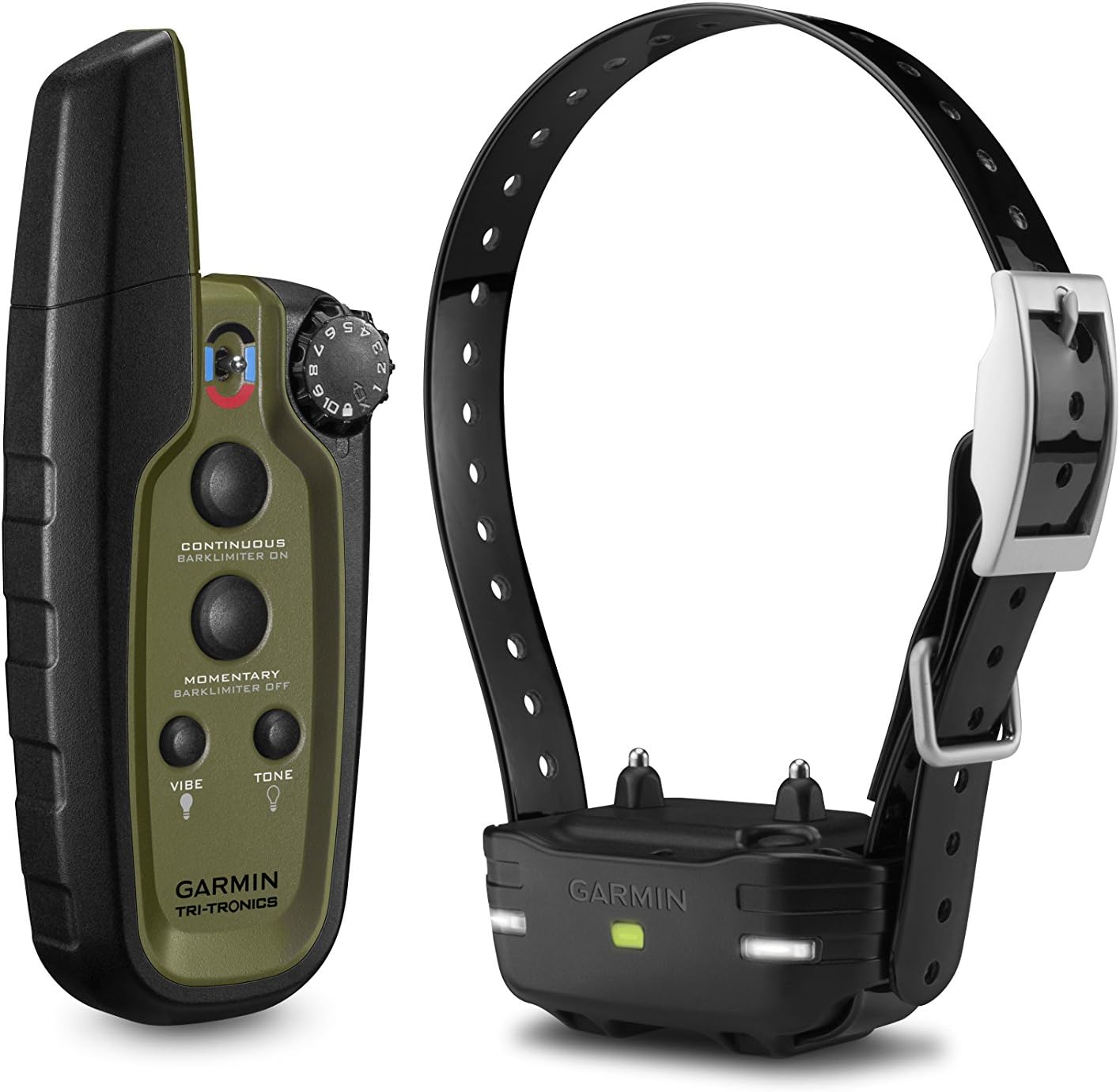
| Range | 3/4-mile |
|---|---|
| Training modes | Continuous, momentary, vibration, tone |
| BarkLimiter | Built-in, settable levels |
| Handheld battery life | Up to 60 hours |
| Water rating | Handheld IPX7, dog device 1 ATM |
The Garmin Sport PRO bundle pairs a one-handed handheld transmitter with a rechargeable dog device to give remote control of continuous and momentary stimulation across 10 levels plus vibration and tone. It is designed for single-hand operation with a tactile quick-turn dial and four training buttons so you can change levels or switch dogs without taking your eyes off the field. Practical features include a settable BarkLimiter, remote-controlled LED beacon lights for low-light locating, and user-replaceable lithium-ion batteries rated for long runtime on the handheld and dog device. The hardware is built for outdoor use with rugged, water-resistant ratings and two lengths of stainless steel contact points for wet conditions. Limitations are the 3/4-mile range, which is ample for most owners but shorter than some high-end hunting systems, and the need to buy extra dog devices separately to train multiple dogs. The bundle is straightforward to operate and emphasizes durability and real-world training features rather than smartphone integration or GPS tracking.
Best for: Owners who prioritize durable, well-built training gear and clear manual controls and are willing to pay for a reliable, safety-minded system designed for focused obedience and field work.
Less Ideal for: People who need very long-range control, integrated GPS tracking, or a multi-dog system included out of the box should consider different models.
- One-handed ergonomic handheld with tactile quick-turn dial for no-look operation
- Ten stimulation levels plus vibration and tone for flexible training options
- Settable BarkLimiter to reduce unwanted barking without constant manual input
- Remote-controlled LED beacon lights for locating dogs in low light
- Rechargeable, user-replaceable lithium-ion batteries with long handheld runtime
- Range limited to approximately 3/4 mile, shorter than some premium long-range units
- Additional dog devices must be purchased separately to control more than one dog
Verdict: The best premium strong shock collar for owners willing to pay more for superior build quality, advanced safety features, and enhanced comfort.
Choosing the Right Strong Shock Collar Dog: Key Factors to Consider
Intensity Range and Adjustment
How wide and precise the intensity range is determines whether you can tailor corrections to a single dog. A collar that only offers a few coarse levels forces handlers to jump from too little to too much stimulation, which increases the risk of misuse. Adjustable, incremental controls let you begin at the lowest effective level and step up only if the dog does not respond.
Precision matters for long-term training. Smaller increments support shaping behaviors with minimal aversive input, and clearer labeling or tactile controls on the transmitter reduces accidental escalation during a session.
Stimulation Modes and User Control
Most strong shock collars include multiple modes such as static stimulation, vibration, and audible tones. Having alternative cues lets you combine signals and reduce reliance on shock. For example, starting with tone or vibration before moving to static stimulation provides a warning phase that can prevent unnecessary corrections.
The transmitter layout and mode-switch ergonomics also affect safety. Controls should be intuitive so handlers can switch modes and adjust intensity without fumbling, which helps avoid accidental high-intensity bursts.
Contact Design and Fit
Effective stimulation requires consistent skin contact, which depends on electrode length, shape, and strap stability. For thick-coated or wrinkled necks, longer or replaceable probes may be necessary. On the other hand, very long probes can increase soreness on thin-skinned areas unless cushioned or used carefully.
A secure strap and reliable buckling system prevent the collar from rotating or slipping, which maintains consistent contact and reduces the chance of intermittent stimulation. Adjustable range of sizes is important when working across dogs or when a single unit must accommodate growth.
Safety Features and Fail-safes
Built-in safety features help limit accidental harm. Look for collars with automatic shutoff after continuous stimulation, clear low-battery warnings, and progressive stimulation options that ramp intensity rather than deliver sudden spikes. Lock or hold functions on the transmitter can prevent unintended button presses during handling.
Fail-safes are particularly important with high-intensity units because a stuck button or wireless interference can otherwise result in prolonged stimulation. Reliable design and clear safety labeling reduce those risks.
Battery Life and Charging
Consistent power delivery affects both training reliability and stimulation consistency. Long battery life reduces interruptions during extended training sessions and avoids unpredictable intensity drops that can confuse the dog. Rechargeable batteries with straightforward charging indicators are more convenient than replaceable cells and reduce long-term waste.
Also consider charge time and whether the transmitter and collar share a charging method. A predictable battery indicator on both devices helps plan sessions and avoid surprise drain during fieldwork.
Durability and Weather Resistance
Strong shock collars are often used outside, so water resistance and robust construction matter. A unit that tolerates rain, mud, and sweat will last longer and maintain reliable electrical contacts. Corrosion-resistant electrode materials and sealed housings protect electronics and keep stimulation consistent.
Durable straps and buckles prevent failures in the field, and replaceable parts extend useful life. Consider products with straightforward maintenance steps so you can clean electrodes and inspect straps between sessions.
How Do I Introduce a Strong Shock Collar Dog to Training Safely?
Start slowly and plan sessions with clear, simple cues. Before applying stimulation, teach a consistent verbal or hand cue and pair it with a low-intensity signal so the dog learns the expected response. Use the lowest effective level and treat the collar as one part of a broader training plan that includes positive reinforcement.
Always check fit and electrode contact before powering up. Keep sessions short, watch for stress signals, and stop if the dog shows fear, avoidance, or prolonged agitation. Incorporate non-aversive cues like tone or vibration first to give the dog a chance to respond without static stimulation.
- Begin with basic obedience cues without the collar on to establish baseline responses
- Use a helper or mirror to confirm contact and strap tension before the first activation
- Document the intensity level that elicits a clear but calm response and stay one step below any level that provokes panic
What Maintenance Keeps a Collar Working Reliably?
Regular maintenance extends service life and preserves consistent stimulation. Wipe electrodes after each use to remove dirt and oils that reduce conductivity. Inspect straps and buckles for wear and replace parts that show cracking or fraying.
Periodically test transmitters and collars together to confirm response and battery health. Store units dry and avoid prolonged exposure to direct sunlight or extreme temperatures, which can degrade plastic components and battery life.
- Clean electrodes with isopropyl alcohol and a soft cloth, then dry thoroughly
- Check for corrosion or loose contacts and replace electrodes if performance degrades
- Recharge both transmitter and collar fully before storing for extended periods
Which Intensity Settings Are Appropriate for Different Training Goals?
Use the lowest intensity that produces a prompt, calm response for obedience corrections. For boundary recall or escape prevention, a slightly higher but still controlled level may be necessary because the dog's motivation is stronger. For nuisance behaviors like persistent lunging, brief, precisely timed corrections combined with redirection work better than prolonged stimulation.
Avoid matching intensity to size alone. Individual sensitivity varies, so base settings on observed reaction rather than a fixed number. Keep records of effective levels for each dog to maintain consistency across sessions.
- Low settings: cue reinforcement, attention-getting
- Medium settings: escape prevention, strong distraction scenarios
- High settings: rarely needed, reserved for immediate safety risks and used cautiously
How Important Is Transmitter Ergonomics and Range?
A comfortable, intuitive transmitter reduces mistakes during training. Buttons should be distinguishable by touch so you can adjust intensity or switch modes without looking. A clear display or indicator simplifies setting confirmation under stress.
Range matters if you plan to work at distance. Make sure the transmitter's stated working range fits the environments where you will train. Keep in mind that vegetation, buildings, and interference can reduce effective range in real-world conditions, so test coverage in the actual locations you use most.
- Prefer transmitters with tactile, well-separated buttons for intensity changes
- Test communication range in open and obstructed environments
- Look for transmitters with easy-to-read battery indicators and mode confirmations
Alternatives and when to Use Them
Strong shock collars are a tool for specific situations but are not the only option. Before starting, evaluate whether vibration, tone, or other non-aversive strategies can achieve the same goal with less risk. In many training contexts, these alternatives combined with consistent reinforcement offer effective solutions.
Reserve static stimulation for cases where other methods fail to produce reliable, safe behavior change and always use it within a structured training plan under a handler who understands timing, incremental adjustment, and welfare considerations.
- Try vibration or audible cues first for attention and recall training
- Use static stimulation as a last resort or safety backup
- Combine modes to create a graduated cueing system that reduces reliance on shock
How We Chose the Best Strong Shock Collar Dog
We focused on features that matter most when evaluating strong shock collars for dogs and applied strict editorial filters to create the shortlist. First, we prioritized units with fine-grain intensity adjustment so handlers can start low and increase only as needed. Second, we included collars with multiple stimulation modes and clear mode-switching to support stepped training and reduce the risk of overcorrection. Third, fit and electrode design were emphasized: consistent contact across different neck shapes and robust strap systems are essential for reliable stimulation and safety. Fourth, battery life and rechargeability were considered because inconsistent power undermines training sessions. Fifth, we judged overall construction and water resistance since outdoor work exposes collars to moisture and wear. We excluded rudimentary units that lack adjustable intensity or have unclear mode labeling, and products without any safety features or with unverified waterproofing. Our process gave weight to predictable stimulation curves, ergonomic remote controls, and documented contact reliability. The result is a curated list that favors control precision, durability, and safer use practices for strong shock collars.
Our full evaluation process is outlined in our review methodology.
FAQ
Will a stronger collar necessarily work better on a large dog?
Not always. While larger dogs may require more intensity to elicit a response, individual sensitivity varies. Start at low levels and adjust based on the dog's reaction rather than assuming size equals needed intensity.
How often should I charge the collar and transmitter?
Charge frequency depends on usage patterns. For daily short sessions, recharge every few days or when indicators show low battery. For occasional use, recharge before extended outings and check indicators before each session to avoid interruptions.
Can the collar be used in wet weather?
Many collars offer water resistance, but performance varies. Confirm the unit's moisture protection level and dry the collar after exposure. Avoid submerging units unless they are explicitly rated for underwater use.
How do I know if the electrodes are making proper contact?
Proper contact is visible and stable: the strap should sit snugly, and electrodes should sit against the skin or moveable undercoat. Test responses at very low settings to confirm consistent activation and adjust strap tension or probe length as needed.
Is it okay to leave a strong shock collar on between sessions?
It is generally better to remove a training collar between sessions unless the device is specifically designed for continuous wear. Extended continuous contact can irritate the skin and increase the risk of chafing or pressure sores.
Final Verdict
Choosing the right strong shock collar dog depends on balancing effective control with safety and humane use. Prioritize units that let you fine-tune intensity, offer multiple modes, and deliver consistent electrode contact. Consider ergonomics, battery life, and weather resistance to match the collar to your training style and environment. When used responsibly, a well-chosen collar can be a reliable tool for specific, safety-driven scenarios. Start low, monitor the dog's response closely, and prefer devices with clear fail-safes and easy maintenance to keep training both effective and safe.

