

Picking the right dental treat for a small dog matters more than many owners expect. Smaller mouths, different chewing styles, and unique nutritional needs make some treats unsuitable or ineffective for toy and small-breed dogs. This guide shortlists seven top teeth cleaning treats for small dogs and explains the practical reasons they earned consideration. We focused on chew size, texture, and ingredient profiles so you can choose a treat that helps reduce plaque and freshen breath without creating a choking risk. Read on for the evaluation criteria and quick takeaways to help you decide.
Top Picks at a Glance
| Best Overall Teeth Cleaning Treat for Small Dogs A well-rounded pick balancing effectiveness, size, and palatability | Greenies Petite Dental Treats 60ct |  |
| Best Budget Teeth Cleaning Treat for Small Dogs An affordable option that still cleans and appeals to pups | DreamBone Triple Action Dental Sticks 10 Ct |  |
| Best Long-Lasting Teeth Cleaning Treat Durable chews that provide extended chewing to scrape plaque away | OraVet Dental Chews Small Dogs |  |
| Best Soft Teeth Cleaning Treat Gentle textured treats suitable for older or small-mouthed dogs | Ark Naturals Soft Brushless Toothpaste Chews 70ct |  |
| Best Low-Calorie Teeth Cleaning Treat Lower-calorie chews for frequent rewards without extra weight | Greenies Puppy Teenie Dental Treats 22 Count |  |
| Best Natural Ingredients Teeth Cleaning Treat Treats with simpler, recognizable ingredients and fewer additives | Whimzees Brushzees Small |  |
| Best Premium Teeth Cleaning Treat A higher-end option focused on superior ingredients and performance | OraVet Dental Hygiene Chews 30-Count |  |
Greenies Petite Dental Treats 60ct
Best Overall Teeth Cleaning Treat for Small Dogs

| Flavor | Original |
|---|---|
| Item Form | Bone |
| Specific Uses For Product | Dental Care |
| Unit Count | 60 Count |
Greenies Petite dental treats are daily chew treats designed to support small-dog oral health by cleaning plaque and tartar and freshening breath. They are used as one treat per day for dogs in the 15–25 lb range and feature a chewy, flexible texture that bends rather than snaps, which makes them easier to eat and digest. The shape and texture act like a toothbrush to clean down to the gumline, and the formula includes vitamins and minerals to bolster overall nutrition. Veterinary organizations accept these treats for plaque and tartar control and the manufacturer cites reductions in tartar and plaque with regular use. Practical benefits include a convenient single-serving routine, broad flavor appeal, and a rawhide-free recipe that many owners prefer. Important limitations are that they are size-specific and not suitable for very small or very large dogs, and owners must supervise to prevent gulping or choking. For owners focused on daily dental support, these treats are an easy, vet-recommended addition to an oral care routine.
Best for: Owners of small dogs who prioritize daily oral health and want a simple, veterinarian-accepted chew to reduce plaque, tartar, and bad breath as part of a routine.
Less Ideal for: People looking for a chew that fits very small puppies under 6 months or very large dogs, or owners who need long-lasting, durable chews for heavy chewers.
- Designed to reduce plaque and tartar with a toothbrush-like texture
- Vet recommended and accepted by the Veterinary Oral Health Council
- Chewy, flexible formula that is rawhide-free and easy to digest
- Single daily treat simplifies a regular dental care routine
- Sized for small dogs only and not suitable for very small puppies or large breeds
- Requires owner supervision to avoid gulping or choking
Verdict: The best all-around teeth cleaning treat for small dogs, offering a proven tartar-reducing texture, appropriate bite size, good flavor acceptance, and sensible ingredients for everyday use.
DreamBone Triple Action Dental Sticks 10 Ct
Best Budget Teeth Cleaning Treat for Small Dogs

| Flavor | Chicken |
|---|---|
| Age Range Description | Adult |
| Item Form | Stick |
| Unit Count | 6 Ounce |
| Number of Items | 1 |
DreamBone Triple Action Dental Sticks are rawhide-free chews designed to reduce plaque and tartar while freshening breath. Each stick has outer bristles to mechanically scrape teeth, calcium to support teeth and bone health, and a spearmint-flavored paste center to mask odors. They are meant to be given as an intermittent treat and come in a bag of ten chews sized for small to medium dogs. Because they are made from digestible ingredients like tapioca starch, sweet potato and chicken rather than rawhide, these chews are easier to digest for dogs with sensitive stomachs and are vitamin and mineral enriched with no artificial preservatives or colors from artificial sources. Practical benefits include longer chewing engagement than soft treats, straightforward dental surface contact from the bristles, and a minty center that helps tackle bad breath between brushings. Important limitations are that they are still a treat so should be limited to under 10 percent of daily calories and small fragments should be removed during supervision to avoid choking or overeating.
Best for: Buyers looking for a chew that provides breath benefits while being easier to digest for dogs with sensitive stomachs and who want a treat that doubles as occasional dental support.
Less Ideal for: Owners seeking a long-lasting heavy-duty chew for power chewers or a calorie-free dental solution should consider other options.
- Rawhide-free formula made from digestible ingredients suitable for sensitive stomachs
- Outer bristles provide mechanical plaque and tartar removal during chewing
- Spearmint paste center helps freshen breath between brushings
- Vitamin and mineral enriched with no artificial preservatives or colors
- Intended as an intermittent treat not a replacement for daily toothbrushing
- Small pieces can break off so supervision is required during chewing
Verdict: The best low-cost teeth cleaning treat for small dogs that delivers reasonable dental benefit and flavor at a value-oriented price without major ingredient compromises.
OraVet Dental Chews Small Dogs
Best Long-Lasting Teeth Cleaning Treat

| Flavor | Chicken |
|---|---|
| Special Ingredients | delmopinol |
| Unit Count | 30 Count |
| Breed Recommendation | Small Dogs |
OraVet Dental Chews are daily, individually wrapped sticks sized for small dogs (10–24 lb) that combine mechanical cleaning from chewing with the active ingredient delmopinol to help reduce plaque and tartar. You give one chew per day as part of an at-home oral care routine; the chew is designed to be highly dissolvable and palatable with a poultry flavor and vanilla aroma so most small dogs will accept it. The delmopinol coating forms a protective barrier on teeth to limit bacterial buildup, which complements the physical abrasion as the dog chews down to the gumline. Practical benefits include easy single-serve dosing, a month-long supply in a 30-count bag, and formulation choices targeted to breed sizes so the pieces are appropriately scaled. Important limitations are that this is an adjunct to professional dental care rather than a replacement, dogs with sensitivities to listed ingredients like pork, wheat, or soy may react, and owners should monitor consumption to avoid any choking risk even with small-breed sizing.
Best for: Owners of small-breed dogs who want a daily, vet-formulated chew that is sized and textured to clean teeth gently while fitting into an easy at-home oral care routine.
Less Ideal for: Pet owners seeking a complete dental treatment in place of veterinary cleanings or those whose dogs have allergies to pork, wheat, or soy should consider alternatives or consult a vet.
- Contains delmopinol, an ingredient that helps form a barrier against plaque-forming bacteria
- Sized and formulated specifically for small dogs with individually wrapped chews for easy daily dosing
- Clinically shown to reduce plaque and tartar when used as directed
- Palatable poultry flavor with vanilla aroma increases acceptance in picky eaters
- Contains common allergens such as pork protein, wheat, and soy which may not suit dogs with sensitivities
- Not a substitute for professional dental cleanings and veterinary care
Verdict: The best long-lasting teeth cleaning treat for dogs that need extended chewing time to mechanically reduce plaque and satisfy strong chewers safely.
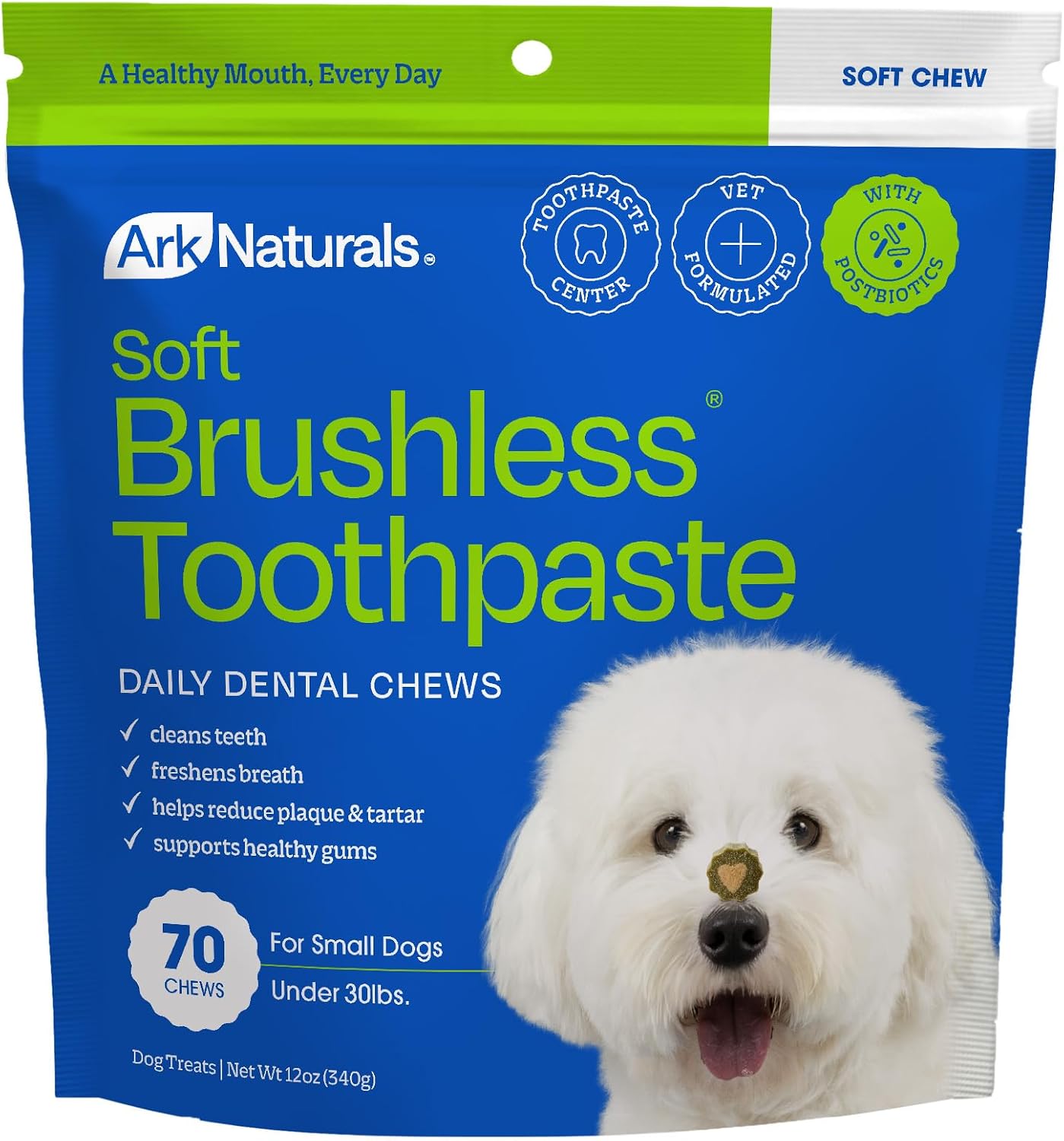
Ark Naturals Soft Brushless Toothpaste Chews 70ct
Best Soft Teeth Cleaning Treat
| Count | 70 ct |
|---|---|
| Recommended age | 1 month and up |
| Usage | 1–2 chews per day |
| Made in | USA |
Ark Naturals Soft Brushless Toothpaste chews are soft baked dental treats that combine a textured exterior with a chewy toothpaste center to help clean teeth without brushing. Intended for daily use, the ridged outer texture scrapes along the gumline while the toothpaste core polishes tooth surfaces, and aromatic spices aim to freshen breath. The recipe uses recognizable ingredients like long grain rice, honey, chicken and added probiotics and sodium hexametaphosphate to support plaque and tartar control. Because they are soft, these chews are easier on sensitive teeth and appropriate for gentle chewers and small dogs that struggle with hard chews. Limitations include that they are still a caloric treat so you should account for them in daily feeding, and results depend on regular use rather than replacing professional dental care. Directions recommend one to two chews daily for dogs 12 weeks and older.
Best for: Owners of small or sensitive-chewing dogs who want a gentler daily dental chew that still reduces plaque and helps freshen breath.
Less Ideal for: Dogs that require veterinary dental treatment for heavy tartar or advanced gum disease, or pet owners seeking a zero-calorie dental solution.
- Soft baked texture is gentle on sensitive teeth and suitable for small dogs
- Chewy toothpaste center that helps polish tooth surfaces during chewing
- Ridged outer texture that helps clean along the gumline
- Formulated to freshen breath with aromatic spices and can be given daily
- Not a substitute for brushing or professional dental care
- Contains calories and flavors so should be included in daily feeding calculations
Verdict: The best soft teeth cleaning treat for dogs that require gentler textures due to age, dental sensitivity, or smaller mouths while still offering some plaque control.
Greenies Puppy Teenie Dental Treats 22 Count
Best Low-Calorie Teeth Cleaning Treat

| Flavor | Original |
|---|---|
| Age Range Description | Puppy |
| Item Form | Bone |
| Unit Count | 22 Count |
Greenies Puppy Teenie dental treats are soft, bendable chews made for puppies roughly 5–15 lb and 6 months or older that combine a toothbrush-like shape with a chewy texture to reduce plaque and tartar while freshening breath. They are intended to be given once daily as an occasional treat and are formulated with vitamins, minerals and DHA for brain development plus calcium for teeth and jaw support. The pouch format keeps individual pieces reasonably fresh and the teenie size is appropriate for extra-small and small-breed puppies who can safely chew without excessive force. Because they are rawhide-free and designed to bend rather than snap, they are easier to digest than some harder chews, but they are still an edible treat so supervision is recommended to ensure proper chewing. Owners should follow the feeding directions and account for the calories by reducing main-meal portions. If you need a long-lasting, heavy-duty chew for intense chewers, these are not meant to replace that type of durable chew toy.
Best for: Puppy owners who prioritize a daily, food-based dental aid that is sized and textured for small breeds and supports oral hygiene as part of routine care.
Less Ideal for: Owners looking for long-lasting, indestructible chews for heavy chewers or older dogs that need intensive gnawing outlets should choose a firmer, more durable product.
- Designed specifically for small puppies with a teenie size and texture that cleans down to the gumline
- Rawhide-free, bendable formulation that is easier to chew and digest than hard rawhide
- Contains added nutrients like DHA and calcium to support development and dental strength
- Vet-recommended shape and clinically tested to help with plaque and tartar control
- Not a long-lasting chew for power chewers—intended as a daily edible treat rather than a durable toy
- Requires monitoring while feeding to ensure the puppy chews rather than gulps
Verdict: The best low-calorie teeth cleaning treat for owners who reward often but want to minimize added calories while maintaining a dental benefit.
Whimzees Brushzees Small
Best Natural Ingredients Teeth Cleaning Treat

| Package size | 24 Count |
|---|---|
| Flavor | Dental Small |
| Special Ingredients | grain-free |
| Target Species | Dog |
Whimzees Brushzees are firm, shaped dental treats made to mechanically scrub teeth as a dog chews, with a design that encourages longer chew time and reaches crevices with nubs and ridges. They are intended for daily use as a complement to brushing and veterinary care, with the manufacturer recommending one chew per day for dogs between 15 and 25 pounds and advising supervision. The chews are grain-free, use a short ingredient list (potato starch, glycerin, powdered cellulose and plant-based meals), and carry Veterinary Oral Health Council acceptance, which supports their plaque- and tartar-reducing claims. In practice they offer a convenient, low-effort option to help freshen breath and provide a brushing-like action without toothpaste or a brush. Limitations are that sizing and age guidelines must be followed closely, they are not suitable for very small dogs or puppies under recommended ages, and any hard chew can still pose a choking or swallowing risk if not monitored.
Best for: Pet parents who prioritize simple, naturally derived ingredients and want a daily, low-effort dental chew that supports plaque and tartar control for small adult dogs.
Less Ideal for: Owners of very small dogs, puppies below the recommended age range, or dogs that gulp treats without chewing should consider alternative dental options.
- VOHC accepted formulation with veterinarian recommendation for dental benefits
- Grain-free recipe and short ingredient list suitable for dogs with some sensitivities
- Firm, textured shapes and ridges provide extended chew time for mechanical cleaning
- Daily single-treat serving makes at-home dental care simple and low-effort
- Sized and age-restricted so not suitable for all dogs
- Requires supervision to prevent swallowing large pieces
Verdict: The best teeth cleaning treat made with natural or limited ingredients for owners prioritizing clean labels and simpler formulations without sacrificing effectiveness.
OraVet Dental Hygiene Chews 30-Count
Best Premium Teeth Cleaning Treat

| Unit Count | 30 Count |
|---|---|
| Flavor | Chicken |
| Age Range Description | All Life Stages |
| Special Ingredients | Delmopinol |
OraVet Dental Hygiene Chews are once-a-day dental sticks that use your dog's chewing action plus the active ingredient delmopinol to help reduce plaque and tartar and improve breath. They are given as a single chew daily, preferably after the last meal, and the 30-count bag supplies a month of daily use. The chew is designed to dissolve as the dog chews so it reaches the gumline and helps loosen and dislodge buildup, while delmopinol forms a protective coating that inhibits bacterial adhesion. Practical benefits include a veterinarian-backed formula and individual wrapping for convenient dosing and freshness. Ingredients include alfalfa, parsley, and chlorophyll for color and a poultry/chicken flavor dogs accept, and the product is made in the U.S. Important limitations are that chews are sized and marketed for medium-breed dogs and puppies over six months, so owners of very small or very large dogs should choose the correct size variant, and any dietary change can cause transient stomach upset so introduce them gradually.
Best for: Pet owners who value veterinarian-backed dental care and are willing to pay more for a clinically formulated daily chew to support plaque, tartar, and breath control as part of home oral care.
Less Ideal for: Owners looking for a general low-cost treat or those who need a single product to suit all dog sizes without selecting the correct size variant should consider alternatives.
- Clinically backed active ingredient delmopinol that creates a barrier against plaque-forming bacteria
- Once-daily, chew-based delivery reaches teeth and gumline through mechanical action
- Individually wrapped chews for convenient dosing and freshness
- Formulated and manufactured with identifiable ingredients and made in the USA
- Pack is targeted to medium-breed sizing so you must select the correct size for your dog
- Dietary changes may cause temporary gastrointestinal upset in some dogs
Verdict: The best premium teeth cleaning treat for owners willing to pay more for higher-quality ingredients, refined textures, and enhanced dental efficacy.
Choosing the Right Teeth Cleaning Treat Small Dog: Key Factors to Consider
Treat Size and Portioning
Size matters for small dogs because an oversized chew can be awkward to hold and raise the risk of choking. Choose treats designed or labeled for small breeds, or those that break into smaller portions easily. Smaller portion sizes also help you control calorie intake and make daily or frequent dental use practical.
Consider whether the treat requires a lot of vigorous chewing or is designed to be gnawed more gently. If a treat is intended to be shared over several sessions, confirm that it keeps well once opened and does not dry out or crumble into hazards.
Texture and Cleaning Action
The physical texture of a dental treat is the primary mechanism for plaque and tartar abrasion. Look for ridged, porous, or firm-but-edible textures that encourage chewing and contact with tooth surfaces. A well-designed texture promotes mechanical scrubbing without being so hard that it risks tooth fractures in small breeds.
Avoid extremely hard bones or mineral chews that are brittle or glassy in texture. For small dogs, moderation in hardness is important: enough resistance to stimulate chewing but with some give so teeth are not exposed to excessive force.
Ingredient Safety and Digestibility
Ingredients determine allergy risk, digestive tolerance, and overall safety if a dog swallows pieces. Favor treats with simple, recognizable ingredients and limited artificial additives. Ingredients that are highly digestible reduce the chance of gastrointestinal upset when a small dog ingests chewed fragments.
Also check for additives aimed at breath control and dental enzymes; these can be helpful, but their presence should not replace good texture-based cleaning. If your dog has known food sensitivities, ingredient transparency is essential for making a safe choice.
Calorie Load and Feeding Frequency
Dental treats often become part of a daily routine, so calories add up quickly for small dogs with modest total energy requirements. Review calorie information and treat frequency recommendations to avoid unintended weight gain. Choose treats formulated for daily or frequent use that state portion guidance for small breeds.
If a treat is higher in calories, consider using it less often or substituting it for other snacks. Low-calorie dental-specific options can help maintain a beneficial cleaning routine without compromising weight management goals.
Palatability and Chewing Behavior
Even the best-formulated dental treat is ineffective if a dog swallows it whole or refuses it outright. Palatability influences whether a small dog will chew slowly and thoroughly. Look for flavor profiles that your dog responds to and consider offering a test portion before committing to regular use.
Also factor in your dog's natural chewing style: some small breeds are persistent gnawers, while others prefer to lick or swallow quickly. Match the treat type to that behavior to get actual cleaning action rather than a quick ingestion.
Packaging and Storage
Freshness affects both texture and palatability. Packaging that reseals or single-serve portioning helps maintain treat integrity between uses. For treats intended for daily use, consider how easy the package is to open and reseal and whether the product maintains its texture over time.
Storage requirements matter too. Some dental treats can become soft or brittle if exposed to humidity. Check whether the packaging includes desiccant packs or instructions for airtight storage to preserve cleaning properties and safety.
How Often Should I Give a Teeth Cleaning Treat to a Small Dog?
Frequency depends on the treat's intended use and your dog's overall dental routine. Many dental treats are formulated for daily use, but feeding frequency should account for calorie content and your dog's weight. If a treat provides significant mechanical cleaning with low calories, daily use can be practical for ongoing plaque control.
Combine treats with a broader oral care plan: regular tooth brushing, periodic dental checkups, and monitoring for bad breath or tartar buildup. If you are unsure how often to use a particular treat, follow manufacturer guidance on portioning for small breeds and consult your veterinarian for a tailored plan.
- Start with the recommended serving size for small breeds and adjust based on your dog's reaction and body condition.
- Use treats as a supplement to brushing, not a replacement.
- If your dog gains weight, reduce treat frequency or switch to a lower-calorie option.
Are Softer Dental Chews Effective for Tiny Mouths?
Softer chews can be effective when they are designed to promote chewing and include textures that wipe tooth surfaces. For dogs that cannot handle firmer chews, a softer dental treat that encourages licking and moderate gnawing is preferable to forcing a hard chew that could cause anxiety or be swallowed whole.
However, very soft or paste-like products rely more on enzymatic or chemical action than mechanical abrasion. When choosing a softer option, look for evidence of cleaning action in the form of ridges, porous structure, or supplementary enzymes meant to reduce plaque.
- Softer treats may be better for elderly or small-jawed dogs.
- Verify texture and intended cleaning mechanism before assuming equivalence with firmer chews.
How to Introduce a Dental Treat to a Picky Small Dog
Introduce new dental treats gradually and in a familiar setting. Present a small piece alongside a regular low-value snack to build positive association. If the dog sniffs or licks but does not chew, try breaking the treat into smaller pieces or warming it slightly if safe to increase aroma.
Patience matters. Offer the treat at times when your dog is calm and less likely to gulp. Reward slow chewing behavior with praise or a tiny low-calorie topper to reinforce the desired interaction with the treat.
- Offer a single trial piece before buying larger quantities.
- Avoid forcing the treat; positive reinforcement encourages better chewing habits.
- Monitor early interactions to ensure the dog chews and does not swallow whole.
What to Do if a Small Dog Has Missing or Fragile Teeth
If your dog has missing, loose, or fragile teeth, choose gentler dental solutions. Lower-resistance chews, soft dental strips, or enzymatic supplements can clean surfaces without exerting excessive force on remaining teeth. Avoid hard, brittle chews that transfer high impact forces to teeth and roots.
Consult your veterinarian about specific dental limitations and recommended textures. A vet can also advise on safe portioning and whether some mechanical cleaning treats should be avoided entirely for your dog's dental condition.
- Prefer softer textures or enzymatic products when teeth are fragile.
- Get a professional dental assessment when in doubt.
- Avoid long-lasting hard chews that require aggressive chewing.
Understanding Dental Claims and Labels
Dental claims on packaging vary in specificity and supporting evidence. Terms like tartar control or plaque reduction describe potential benefits, but they do not reflect identical testing standards. Look for products that explain their cleaning mechanism—such as abrasive texture or enzymatic action—and provide feeding guidance for small breeds.
Labels indicating veterinarian acceptance or clinical testing may be useful, but interpret them in context. Clinical results can depend on study design, frequency of use, and dog behavior. Use labels as one input among texture, ingredients, and portion size when choosing a treat.
- Seek clear descriptions of how a treat cleans teeth rather than relying solely on broad marketing terms.
- Clinical or vet endorsements can add confidence but do not guarantee results for every dog.
- Combine label claims with real-world factors like size and chew pattern before deciding.
How We Chose the Best Teeth Cleaning Treat Small Dog
Our selection process prioritized attributes that directly affect dental effectiveness and safety for small dogs. We evaluated texture and physical design to ensure each treat provides appropriate abrasive action without requiring a large jaw or aggressive chewing. Ingredient transparency and safety were key; we favored treats with recognizable, minimally processed ingredients and avoided options with high-risk additives. Size and portioning were considered to minimize choking and overfeeding, prioritizing treats sized or portioned for small mouths. We also looked at palatability factors to ensure dogs would actually chew rather than swallow whole. Finally, we reviewed manufacturer guidance on dental claims and supporting evidence for tartar control. We excluded treats intended primarily as training rewards or soft chews that offer negligible mechanical cleaning. We also filtered out items with unclear ingredient lists or known high-risk additives. The final list reflects products that balance mechanical cleaning action, safe ingredient profiles, and portioning suitable for small dogs. Durability, daily-use suitability, and clear labeling were additional filters that shaped the final picks.
Our full evaluation process is outlined in our review methodology.
FAQ
Can dental treats replace regular tooth brushing?
Dental treats supplement brushing but usually do not replace it. Mechanical abrasion from a toothbrush is the most direct way to remove plaque. Treats can help reduce plaque buildup between brushings, especially for dogs that resist brushing, but they are best used as part of a broader oral care routine.
Are there choking risks with dental treats for small dogs?
Yes, some treats pose a choking hazard if they are too large or if a dog tends to swallow pieces whole. Choose treats sized for small breeds or portion treats appropriately. Always supervise a new treat until you are confident your dog chews it safely.
What if my small dog refuses dental treats?
Try tastier trial portions, break the treat into smaller pieces, or offer it at a calmer time of day. If refusal persists, consider softer textures or enzymatic options that emphasize cleaning chemistry rather than chewing. Consult your veterinarian if refusal is accompanied by dental pain or other concerns.
How quickly will I see a change in breath or tartar?
Changes vary by dog, frequency of use, and existing dental condition. Mild improvements in breath can appear within days, while measurable tartar reduction may take weeks of consistent use. For significant tartar or periodontal disease, professional dental care is usually required.
Are natural or limited-ingredient treats better for dental health?
Natural or limited-ingredient treats can reduce allergy risk and digestive upset, which is helpful for sensitive small dogs. However, effectiveness for dental cleaning depends more on texture and chewing mechanics than on whether ingredients are natural. Evaluate both ingredient safety and physical design.
Final Verdict
When choosing teeth cleaning treats for small dogs, prioritize size-appropriate portioning, a texture that promotes dental abrasion without excessive hardness, and clear ingredient lists that minimize digestive risk. Balance calorie content and feeding frequency so treats support dental care rather than contribute to weight gain. For dogs with fragile or missing teeth, choose gentler formulations or enzymatic alternatives and consult a veterinarian if you are unsure. Overall, use treats as one element of a complete dental plan and pick options that match your dog's chewing style and health profile to get the best results.

