

When you find ticks on your dog, a well-chosen tick comb makes removal safer, faster, and less stressful for both of you. The right comb reduces the chance of leaving mouthparts behind, helps you inspect the whole coat, and can be used frequently as part of routine grooming. This guide shortlists the top tick combs, focusing on tooth spacing, durability, and how easy each tool is to clean and use during inspections. Below are our top picks and practical buying advice so you can pick a comb that fits your dog's coat type and your preferred removal method.
Top Picks at a Glance
| Best Overall Tick Comb The all-around top choice for effective tick removal and daily grooming | Hartz Groomer's Best Flea Comb |  |
| Best Budget Tick Comb A low-cost comb that still removes ticks reliably for occasional use | BRILLIRARE Flea Lice Comb 4-Pack |  |
| Best Fine-Tooth Tick Comb Extra-close teeth designed to catch small ticks and fine debris | yumflan Fine Tooth Flea Comb |  |
| Best Long-Handle Tick Comb Extended reach and leverage for thicker coats and hard-to-reach spots | Paw Brothers Flea Comb with Handle |  |
| Best Stainless-Steel Tick Comb Durable metal construction for longevity and easy sanitation | Coastal Safari Double Row Comb |  |
| Best Compact Travel Tick Comb Small, portable comb for on-the-go checks and trips | Burt's Bees Dual-Sided Flea Comb 6" |  |
| Best Complete Tick Comb A more comprehensive tool with extra features or included accessories | Auibor 54-Piece Tick Removal Kit |  |
Hartz Groomer's Best Flea Comb
Best Overall Tick Comb

| Hair Type | All |
|---|---|
| Handle Material | Metal |
| Material Type | Metal |
| Unit Count | 1 Count |
The Hartz Groomer's Best Flea Comb is a simple, metal-toothed grooming tool intended to comb out adult fleas, flea eggs, and small debris from pets of all coat types. Its extra-fine stainless steel teeth are closely spaced for effective flea removal and can also help tease out small mats around the face and paws. The ergonomic metal handle gives decent control during targeted grooming sessions, and the compact, single-count design is easy to maneuver on small or sensitive areas. Built from metal, the comb is durable and easy to rinse clean after use, though the lack of a protective cover means teeth can catch on storage materials. Because it is a manual comb, it works best during focused grooming sessions rather than for covering large areas quickly, but for spot checks and close work it performs reliably. Practical benefits include gentle contact with skin thanks to the fine teeth and straightforward maintenance; limitations are that it requires patience on long, dense coats and offers no built-in flea capture or disposal mechanism.
Best for: Buyers who want a durable, no-frills flea comb for regular spot checks and close-up grooming work on most coat types and who prioritize effective tine spacing and easy cleaning.
Less Ideal for: People needing a tool to quickly process very large or heavily matted coats or those who prefer combs with built-in flea capture or disposal features.
- Extra-fine stainless steel teeth remove adult fleas, eggs, and small debris effectively
- Ergonomic metal handle provides firm control for precise grooming
- Durable all-metal construction that rinses clean easily
- Useful for detangling small mats around face and paws in addition to flea removal
- No protective cover for the teeth during storage
- Manual combing is time consuming on long, very dense coats
Verdict: The best overall tick comb balances tooth spacing, reach, and build quality to remove ticks efficiently for most dogs and typical coats.
BRILLIRARE Flea Lice Comb 4-Pack
Best Budget Tick Comb

| Pack quantity | 4 combs |
|---|---|
| Material | Stainless steel teeth + ABS handle |
| Corrosion resistance | Corrosion-resistant |
| Suitable for | Dogs, cats, small pets |
This four-pack of BRILLIRARE grooming combs provides a simple, budget-friendly toolkit for dealing with fleas, ticks, lice, loose fur and routine detangling. The set includes a tooth comb, a double-sided lice comb, and long- and short-needle combs, so you can pick the right spacing for fine facial hair or thicker undercoats. Stainless steel teeth are polished and rounded to avoid scratching skin, and the teeth are embedded in ergonomic ABS handles for a comfortable grip during short grooming sessions. In practice the combs work well to pull out visible parasites and trapped debris and to flatten tangles before brushing, and the rounded teeth offer a gentle massage that helps calm many pets. They are lightweight, easy to rinse clean, and corrosion-resistant for basic longevity. These are not professional veterinary tools, and very heavy matting or deeply embedded ticks may need specialized deshedding tools or vet attention, but for routine at-home tick checks and light removal they offer a competent, low-cost option.
Best for: Buyers seeking an inexpensive, no-frills toolset for routine at-home tick checks, flea and lice removal, and light detangling will find this set convenient and practical.
Less Ideal for: Owners who regularly deal with severe matting, very large dense coats, or professional groomers needing heavy‑duty extraction tools should choose a sturdier, specialized instrument instead.
- Four different comb types cover fine facial hair, general fur, and undercoat needs
- Stainless steel teeth are polished and rounded to reduce skin irritation
- Ergonomic ABS handles provide a comfortable grip for quick grooming sessions
- Corrosion-resistant construction that is easy to rinse and maintain
- Not designed for heavy mat removal or professional veterinary extraction
- Lightweight construction may feel less durable under heavy or repeated force
Verdict: The best budget tick comb delivers competent tick removal and durability for owners who need an inexpensive, no-frills tool.
yumflan Fine Tooth Flea Comb
Best Fine-Tooth Tick Comb

| Material | Stainless steel teeth |
|---|---|
| Handle | Rubber-sheathed anti-slip |
| Length | 7 inches |
| Item weight | 1.47 ounces |
The yumflan Fine Tooth Flea Comb is a compact stainless-steel comb built for precision grooming and flea removal. Its closely spaced, higher-grade metal teeth pick up tiny clumps, flea dirt, and short undercoat fibers when stroked close to the skin, and the rubber-sheathed, anti-slip handle makes repetitive short strokes more comfortable and controlled. Typical use is systematic: start behind the ears and neck, work down the back and along the belly and hindquarters, and dip the comb into soapy water between passes to remove captured fleas. The comb is lightweight and easy to maneuver on small areas and finishing passes after a brush-out, but it is not intended for heavy de-matting or very dense, heavily matted coats where the fine teeth could bend or snag. It works across coat types for touch-ups and inspection and is especially useful for checking for flea dirt or targeting short guard and undercoat fibers that wider-tooth tools miss.
Best for: Buyers who need a precise finishing tool to remove tiny clumps, flea dirt, and short undercoat hairs and who prioritize accuracy during targeted grooming or flea checks.
Less Ideal for: Owners looking for a main all-in-one dematting tool or who need to process very thick, severely matted coats quickly should choose a wider-tooth brush or specialized de-matter instead.
- Very fine, high-grade stainless-steel teeth catch tiny fleas, flea dirt, and short undercoat fibers.
- Rubber-sheathed handle provides an anti-slip grip for controlled, repetitive strokes.
- Compact, lightweight design allows precise finishing work around ears, neck, and tail base.
- Suitable for use on both dogs and cats and useful for regular pet health checks.
- Not designed for heavy mats or very dense coats and may bend if used aggressively.
- Small comb covers less surface area so full-body combing is slower than using wider tools.
Verdict: The best fine-tooth tick comb is ideal for pulling tiny or immature ticks and fine particulates from short or thin coats without missing small pests.
Paw Brothers Flea Comb with Handle
Best Long-Handle Tick Comb

| Power Source | Manual |
|---|---|
| Hair Type | All |
| Material Type | Metal |
| Size | Small,Large |
The Paw Brothers flea comb is a simple, manual grooming tool built for finding and removing fleas, flea eggs, and debris from all coat types. It uses tightly spaced round stainless steel pins that penetrate dense fur and catch small pests and dirt, while the contoured handle with raised rubber grips gives secure control during longer sessions or when working awkward areas. Typical use is combing along the skin in small sections, periodically wiping the pins to remove trapped debris. The comb is most valuable for owners and groomers who need a durable, no-power tool for spot checks and targeted removal rather than whole-animal treatment. It is compact and easy to clean, but because it is a hand tool it can be time-consuming on very large or heavily matted dogs and offers no chemical treatment for infestations. Expect effective mechanical removal when used carefully, but allow extra time on dense coats or for pets that are nervous during grooming.
Best for: People who need extra reach and control for targeted flea and tick checks on medium to large dogs and who prioritize a durable, manual tool for working through dense fur.
Less Ideal for: Owners looking for a quick whole-body solution for heavy infestations or those who prefer chemical or electric pest-control methods should consider other options.
- Tightly spaced stainless steel pins remove fleas, eggs, and fine debris
- Contoured handle with raised rubber grip for secure control
- Manual design requires no power or consumables
- Durable construction suitable for repeated use by groomers and owners
- Manual combing is slower than spray or topical treatments on heavy infestations
- May be uncomfortable to use through severe mats or extremely thick coats
Verdict: The best long-handle tick comb provides extra reach and control for working through dense fur or accessing awkward areas on larger dogs.
Coastal Safari Double Row Comb
Best Stainless-Steel Tick Comb

| Power Source | manual |
|---|---|
| Hair Type | All |
| Material Type | Plastic |
| Size | 6.4 Inch (Pack of 1) |
The Coastal Safari Double Row Comb is a simple, manual tool for finding fleas and identifying flaky or dry skin on dogs. It uses two closely spaced metal rows to catch fleas, nits, and loose debris as you comb through the coat, and the metal teeth make it easier to see small pests and skin flakes than plastic alternatives. The comb is contoured to sit in the palm for control during outdoor checks and routine grooming, and directions recommend dipping the teeth in soapy water between strokes for cleaning and removing trapped debris. Because it is a basic plastic-handled comb with metal teeth, it is lightweight and easy to carry on walks or to use in the yard, but it lacks a protective sheath and is not an all-in-one grooming tool for dematting or deep undercoat work. If you want a durable stainless steel body for maximum rust resistance and heavier duty use, this model provides the metal teeth but not a full stainless-steel construction.
Best for: Pet owners who want an inexpensive, easy-to-use flea detection comb for quick coat checks and outdoor use, prioritizing visibility of pests and portability.
Less Ideal for: Buyers seeking a full stainless-steel, heavy-duty grooming tool for frequent wet-use or deep undercoat detangling should consider a different model.
- Double-row metal teeth effectively pick up fleas and loose flakes for detection
- Contoured shape offers secure, easy control during quick checks
- Lightweight and compact for outdoor use or travel
- Simple manual design needs no power and is low-maintenance
- Handle and body are plastic rather than full stainless-steel construction
- No protective cover or storage case to protect teeth when not in use
Verdict: The best stainless-steel tick comb offers superior durability, rust resistance, and easy cleaning for owners who want a long-lasting grooming tool.
Burt's Bees Dual-Sided Flea Comb 6"
Best Compact Travel Tick Comb

| Length | 6 inch |
|---|---|
| Pins | Fine and wider metal pins |
| Handle material | Recycled plastic |
| Target pet | Dogs |
This compact dual-sided comb is built for quick flea and tick checks on the go and regular grooming at home. One side has fine metal pins for close combing to pull out fleas, ticks, and eggs while the opposite side has wider pins to detangle and restore softness to the coat. The metal pins are set in a metal spine for durability and the 6-inch length makes the tool easy to stow in a bag or treat pouch for walks and travel. The ergonomically shaped handle has grip ridges and is made from recycled coastal plastics, which keeps it lightweight and comfortable to use during short inspections. Important limitations are that the small travel size means it covers less surface per stroke than a full-size comb and heavier matting may require a broader grooming tool, but for quick outdoor checks and targeted combing it is convenient and effective.
Best for: People who want a slim, portable tool for quick tick and flea checks during walks, hikes, or travel and who value an easy-to-carry grooming aid for short inspections.
Less Ideal for: Owners who need to detangle heavy mats, cover large dogs quickly, or perform full grooming sessions should choose a larger, heavy-duty comb or professional grooming tool instead.
- Dual-sided pins for both fine removal of fleas and eggs and wider-pin grooming
- Compact 6-inch travel size fits easily in a bag or pouch
- Metal pins set in a metal spine for sturdiness during combing
- Ergonomic handle with grip ridges for comfortable one-handed use
- Handle made from recycled coastal plastics for a lightweight, eco-conscious build
- Small comb head covers less fur per pass compared with full-size grooming combs
- Not intended to remove heavy mats or replace professional grooming tools
Verdict: The best compact travel tick comb is a slim, portable tool that fits in a bag for quick tick checks during walks, trips, or outdoor outings.
Auibor 54-Piece Tick Removal Kit
Best Complete Tick Comb
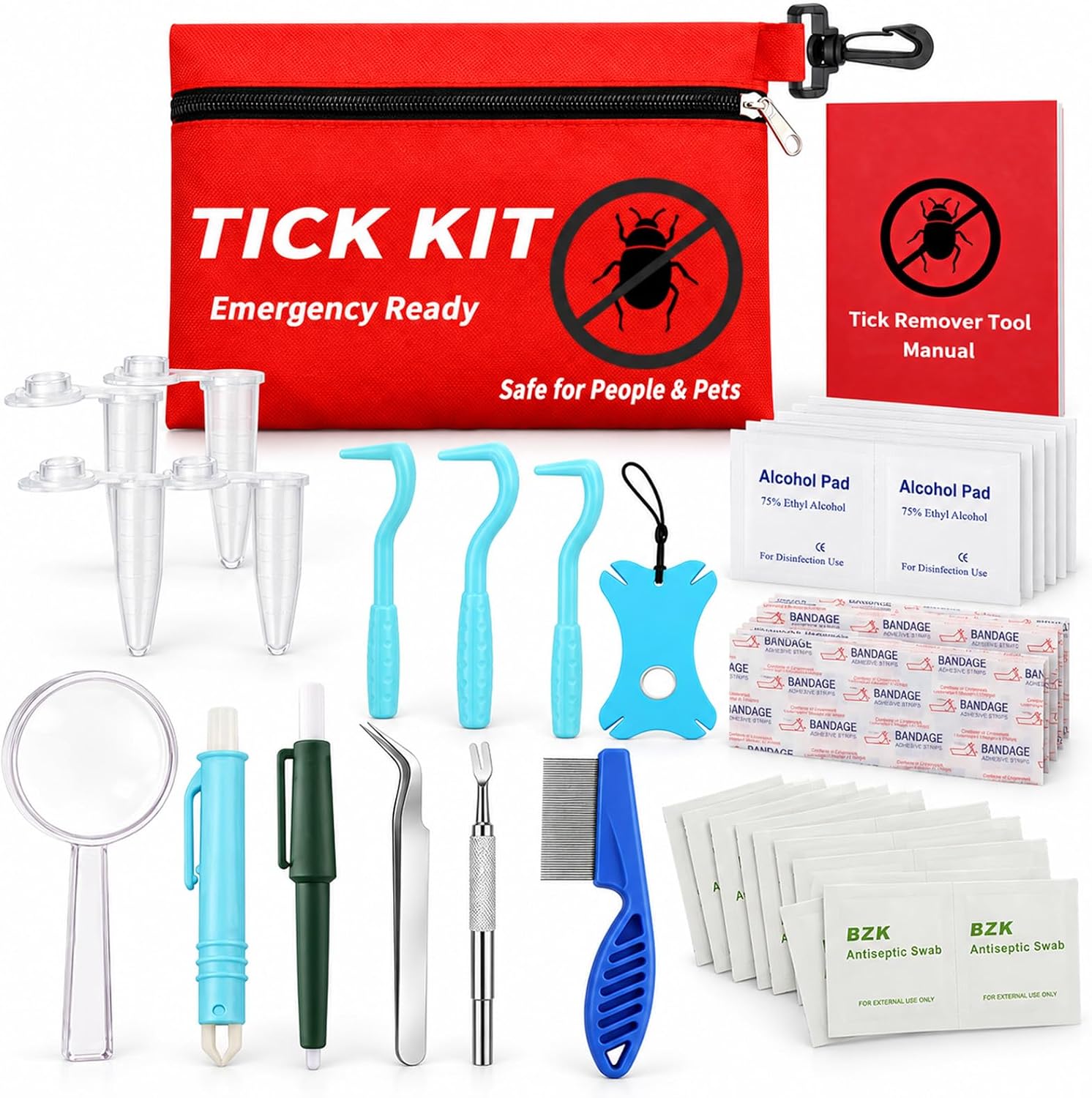
| Pieces | 54 |
|---|---|
| Case | Waterproof zippered case |
| Material | Stainless steel tools |
| Includes | Flea comb, magnifier, 4 specimen containers |
This kit combines a wide range of manual tick-removal tools with grooming aids to give pet owners a one-stop solution for finding and extracting ticks. It includes stainless steel fine-tip tweezers and nippers for precise grips, multiple hooks, pullers and slotted key-style removers for different tick sizes and body locations, plus a flea comb, brushes, magnifiers, ID cards and four specimen containers. The waterproof zippered case keeps the set organized at home or in a backpack for hikes and trips. In practice the variety of tools means you can pick the most appropriate remover for a small, embedded tick or a larger engorged one, and the combs and brushes help expose ticks hidden in thick fur. The kit does not replace professional veterinary care for infected bite sites, and some buyers may find the number of small parts unnecessary if they prefer a single dedicated tool. For owners who want a versatile, travel-ready tick and flea check kit, this delivers a comprehensive selection in one compact package.
Best for: Buyers who want a true all-in-one tick-check kit that covers locating, removing, identifying, and storing ticks for routine home use and outdoor trips.
Less Ideal for: People who prefer a single minimalist tool or who want veterinary-grade removal and follow-up rather than a home kit.
- Extensive selection of stainless steel tweezers, nippers, hooks and pullers for different tick sizes
- Includes flea comb, brushes and magnifiers to help locate ticks in dense fur
- Four specimen containers and ID cards help with identification and safe storage of removed ticks
- Waterproof zippered case organizes the full kit for home use or travel
- Many small pieces can be more than needed for users who prefer a single, simple remover
- No replacement guidance for medical follow-up if removal is incomplete
Verdict: The best complete tick comb includes added features or accessories—such as guards, cleaners, or multiple tooth options—so owners get a more versatile tick-removal solution.
Choosing the Right Tick Comb Dog: Key Factors to Consider
Tooth Spacing and Shape
Tooth spacing determines whether the comb can catch ticks without pulling excessively on hair. Wider spacing works better for thick or long coats because it moves through fur with less resistance, while closer spacing helps capture smaller ticks and debris in short, dense coats.
The tooth shape matters too. Rounded or slightly blunted tips reduce the risk of scratching or irritating the dog's skin during removal. Look for teeth that are evenly spaced and rigid enough to dislodge ticks but not so sharp they can break off embedded mouthparts.
Material and Durability
Durable materials resist bending and corrosion after exposure to water, disinfectants, and grooming shampoos. Metal teeth set into a solid base typically last longer than flimsy plastics, but high-quality plastics can be adequate if they are reinforced and well molded.
Corrosion-resistant metal or coated finishes help the comb remain sanitary after repeated cleaning. Consider how the comb will be stored and whether the material will tolerate being carried in a first-aid kit or kept near other grooming tools.
Handle Ergonomics and Grip
A comfortable handle reduces hand fatigue during a full-body inspection, which is important if your dog requires extra time to calm down or has many ticks. Non-slip textures or rubberized grips help maintain control when your hands are wet or if the dog moves.
Balance between handle length and comb head width affects maneuverability. A longer handle can give more reach for large dogs, while a shorter, compact handle offers better precision around sensitive areas such as ears and paws.
Ease of Cleaning and Maintenance
You will need to clean and disinfect the comb after tick removal to avoid cross-contamination and to keep the tool hygienic. Designs that allow quick removal of trapped debris, such as widely spaced teeth or a slide-release mechanism, speed up cleaning.
Avoid combs with hard-to-reach crevices where organic matter can accumulate. Materials that tolerate boiling or disinfectant sprays without degrading extend the useful life of the comb and reduce the risk of rust or bacteria buildup.
Size and Coat Coverage
The comb's overall width and tooth length determine how quickly you can scan a dog's coat. Wider combs cover more surface area per pass and are efficient on large, thick-coated breeds. Narrower combs are better for detailed work on small dogs or for checking around the face, feet, and tail.
Consider the tooth length relative to coat type. Longer teeth reach through dense undercoats to the skin, while shorter teeth work well on short-haired breeds without dragging on the coat.
Safety Features and User Control
Features that improve safety include blunted tooth tips, guarded comb edges, and handles that allow fine control when working close to skin. Being able to isolate and remove a tick without squeezing it reduces the risk of squeezing pathogen-containing fluids back into the tick.
A design that permits steady, controlled movements helps prevent accidental skin pinches or hair-pulling, which can make the dog resistant to future inspections. Consider whether the comb allows single-handed use or requires an assistant for better control.
How Do I Check My Dog for Ticks Safely and Thoroughly?
Start in a calm environment with good lighting and have a bowl or container ready for removed ticks. Run the comb systematically over the coat in overlapping passes, paying special attention to warm, protected areas such as around the ears, under the collar, between the toes, and at the base of the tail. Move slowly and inspect the teeth after each pass to remove any caught ticks.
If you find an attached tick, use the comb to lift and hold the tick while you prepare a removal tool or tweezers if needed. Keep the dog steady and avoid twisting the tick. After removal, disinfect the site and the comb. Make a note of the location and time in case you need to monitor for signs of infection or illness.
- Work methodically from head to tail in overlapping strokes.
- Use focused passes around ears, underarms, groin, and tail base.
- Check comb teeth frequently and clean as you go.
Which Combs Work Best for Different Coat Types?
Long, dense coats typically need combs with longer, sturdier teeth and wider spacing to penetrate the undercoat without excessive tugging. These combs cover more area and reduce the number of passes required for a thorough check.
Short, smooth coats respond better to finer-toothed combs that can pick up small ticks and debris close to the skin. For mixed or wiry coats, choose a comb that balances moderate tooth length with medium spacing to move through hair while still catching parasites.
- Long coats: long teeth, wider spacing.
- Short coats: shorter teeth, closer spacing.
- Wiry coats: medium teeth and spacing for balance.
Can a Tick Comb Replace Other Removal Tools?
A tick comb is an important first-line inspection and removal tool, but it is not always a complete replacement for precision removal instruments. Combs are excellent at lifting and trapping unattached ticks and helping locate attached ones, but deeply embedded ticks sometimes require fine-point tweezers or a dedicated removal tool to extract the mouthparts cleanly.
Keep a simple removal tool available in your grooming kit and know how to use it properly. After removing a tick with any method, clean the site and monitor your dog for signs of infection or illness over the following days.
- Use combs for detection and freeing lightly attached ticks.
- Use precision tools for deeply embedded ticks or delicate areas.
How Should I Clean and Store a Tick Comb After Use?
Immediately remove any visible debris and flush the comb under running water. Use a small brush to dislodge stuck material between teeth. After cleaning, disinfect with an appropriate pet-safe disinfectant or a dilute bleach solution, then rinse thoroughly and let air dry.
Store the comb in a dry location away from direct sunlight. If you keep a first-aid or grooming kit, store the comb in a sealed container to prevent contamination from other items and to make it easy to find during an inspection.
- Remove debris, brush between teeth, disinfect, rinse, and air dry.
- Store in a dry, sealed container with other grooming essentials.
When Should I Seek Veterinary Help After a Tick Removal?
Seek veterinary advice if you cannot fully remove the tick head or mouthparts, if the removal caused significant bleeding, or if the bite area shows increasing redness, swelling, or discharge. Also consult a veterinarian if your dog develops lethargy, fever, loss of appetite, lameness, or other unusual symptoms within several weeks of a tick bite.
Documenting the date and location of the bite and saving the removed tick (in a sealed container) can help your veterinarian assess risk and determine whether testing or preventive treatment is needed.
- Unable to remove tick head or mouthparts cleanly.
- Signs of wound infection or systemic illness after bite.
How We Chose the Best Tick Comb Dog
We evaluated candidate tick combs using criteria that matter to dog owners who need reliable, repeatable tick removal. Primary factors included tooth design and spacing to ensure the comb can catch small parasites without snagging hair, and material durability to withstand repeated use and cleaning. We also examined handle ergonomics and grip to minimize hand fatigue during thorough inspections, and the ease of cleaning and disinfecting so tools remain sanitary between uses. Additional factors were safety features that reduce the risk of pinching or scraping the skin, and the overall length and width of the comb for efficient coat coverage. We excluded tools intended primarily as flea combs with extremely fine teeth not suitable for removing attached ticks. We favored designs that balance effective tick capture with gentle action on skin and fur, and we prioritized items that support straightforward maintenance and long-term use.
Our full evaluation process is outlined in our review methodology.
FAQ
How often should I comb my dog for ticks?
Frequency depends on your environment and exposure risk. In tick-prone areas, inspect with a comb after every outdoor activity or at least once daily during peak season. For lower-risk periods, a weekly check is often sufficient.
Can I use a regular flea comb for ticks?
Sometimes a flea comb will catch ticks, but flea combs typically have very fine teeth that may not be optimal for lifting larger or attached ticks. A comb designed with sturdier teeth and appropriate spacing is usually more effective for tick removal.
Will combing hurt my dog?
Combing should not hurt when done gently and with the right tool. Use a comb with rounded teeth and move slowly, especially over sensitive areas. Stop if the dog shows signs of pain and switch to a calmer approach or seek assistance.
Should I save the tick after removal?
Saving the tick in a sealed container can be useful if you need veterinary advice later. It can help with species identification and possible testing, though keeping the tick is optional and depends on your veterinarian's recommendations.
What should I do if the tick's head stays embedded?
If a portion of the tick remains embedded, do not dig or squeeze aggressively. Clean the area and contact your veterinarian for proper removal and guidance to reduce infection risk.
Final Verdict
Choose a tick comb that matches your dog's coat and your preferred grooming routine. Prioritize tooth spacing and shape for effective capture, durable materials and easy cleaning for long-term use, and ergonomic handles for safe, steady control. Tradeoffs are typical: wider combs speed checks on large dogs, while finer-toothed combs help with short-haired breeds. Use combing as part of a broader tick prevention and monitoring strategy. With the right tool and a consistent inspection habit, you can reduce the likelihood of ticks going undetected and act promptly when you find one.

