

Keeping a Golden Retriever's mouth healthy is one of the simplest ways to support long-term wellbeing. Because goldens have larger mouths and a tendency toward tartar buildup, the right toothbrush and brushing routine make daily care faster and more effective. This guide highlights the top shortlisted toothbrushes chosen for their reach, bristle type, and handling for large-breed mouths. You will see how we judged ease of use, cleaning coverage, and durability to help you pick a brush that fits your dog and your routine.
Top Picks at a Glance
| Best Overall Toothbrush A well-rounded pick that suits most Golden Retriever owners' needs | Vet's Best Toothpaste & Toothbrush Kit |  |
| Best Budget Toothbrush A low-cost toothbrush that still cleans effectively and holds up | Arm & Hammer Complete Care Dog Dental Kit |  |
| Best Manual Toothbrush A simple, no-power option with ergonomic grip and effective bristle layout | Pets & Pupps Dual-Head Dog Toothbrush |  |
| Best Soft-Bristle Toothbrush Very gentle bristles for sensitive gums and frequent brushing routines | MoonyMars Dog Toothbrush 2-Pack |  |
| Best Compact Toothbrush A smaller head and short handle for tight mouths and travel use | Boshel Finger Toothbrush 8-Pack |  |
| Best Premium Toothbrush A higher-end option with advanced materials, features, or build quality | Jasper 360 Dog Tooth Brushing Kit |  |
Vet's Best Toothpaste & Toothbrush Kit
Best Overall Toothbrush

| Net weight | 3.5 ounces |
|---|---|
| Manufacturer recommended age | 1 month and up |
| Includes | Triple-head toothbrush, finger brush, enzymatic toothpaste |
| Ingredients | Glycerin, Aloe, Pectin, Neem Oil, Grapefruit Seed Extract, Baking Soda, Enzymes |
This kit combines an enzymatic toothpaste with two brush options to make regular tooth care straightforward. The gel toothpaste uses enzymes, baking soda, aloe, neem oil and natural flavors so it cleans and freshens breath without requiring rinsing, and it is safe to swallow which helps with reluctant dogs. The triple-headed toothbrush is the standout feature for at-home use because its three angled bristle heads envelop each tooth and clean multiple surfaces at once, speeding brushing sessions and helping reach back teeth; the finger brush offers a gentler option for small dogs or dogs being introduced to brushing. Typical use is brushing a few times per week to reduce plaque and tartar between professional cleanings, using the finger brush to acclimate puppies and switching to the triple-head for deeper cleaning. The practical benefits are ease of use, vet-formulated ingredients, and included tools so you do not need additional accessories. Limitations are that very determined chewers may still resist brushing and the kit does not replace professional dental scaling for heavy tartar or advanced periodontal disease.
Best for: Pet owners who want an effective, easy-to-use kit for routine at-home dental maintenance and who prioritize a brush that cleans multiple surfaces quickly.
Less Ideal for: Owners looking for a clinical solution for severe tartar, periodontal disease, or who need a power toothbrush-style device should consider professional treatments or specialized tools instead.
- Enzymatic toothpaste with natural ingredients designed to reduce plaque, tartar, and bad breath
- Triple-headed toothbrush cleans multiple surfaces at once for faster, deeper at-home brushing
- Includes finger toothbrush for gentle, controlled application with puppies or small dogs
- Veterinarian-formulated formula safe to swallow so no rinsing is needed
- Not a substitute for professional dental cleaning when heavy tartar or gum disease is present
- Dogs averse to mouth handling may still resist despite included tools
Verdict: The best overall toothbrush balances effective plaque removal, gentle bristles, comfortable handling, and durability for routine at-home tooth care.
Arm & Hammer Complete Care Dog Dental Kit
Best Budget Toothbrush

| Toothpaste size | 2.5 fl oz (67.5 g) |
|---|---|
| Intended age | Dogs 6 months and older |
| Flavor | Chicken |
| Formula highlights | Enzymatic baking soda with added calcium |
This Complete Care kit is a travel-friendly dog toothbrushing set that combines a 2.5 fl oz tube of enzymatic, baking soda toothpaste with a long-handled dual-ended toothbrush and a finger brush. It is designed for owners who want to maintain brushing routines away from home or while traveling because the small toothpaste tube and two brush options pack compactly and are simple to use. The chicken flavor makes initial training easier and the finger brush is helpful for nervous or sensitive dogs, while the dual-ended brush covers larger mouths. The formula includes baking soda and added calcium aimed at freshening breath and supporting tartar control when used regularly. Limitations to note are the modest 2.5 oz tube size, which may not last long for multi-dog households or extended trips, and it is intended for dogs six months and older. For travel use it is low-mess and easy to store in a toiletry bag, but you should plan resupply for longer journeys.
Best for: Owners who prioritize a compact, easy-to-pack dental kit to keep up a regular brushing routine while traveling or on short trips.
Less Ideal for: Those who need large-volume toothpaste for multiple dogs or extended travel without resupply should consider larger tubes or bulk options.
- Compact 2.5 fl oz toothpaste tube suitable for packing in a travel bag
- Two brush options (dual-ended toothbrush and finger brush) cover different dog sizes and training needs
- Enzymatic baking soda formula targets fresh breath and supports tartar control
- Chicken flavor helps make brushing more appealing for many dogs
- Toothpaste tube is small and may run out quickly for multiple dogs or long trips
- Not formulated for puppies under 6 months
Verdict: The best budget toothbrush delivers reliable daily cleaning and reasonable durability for owners prioritizing price without sacrificing basic oral care.
Pets & Pupps Dual-Head Dog Toothbrush
Best Manual Toothbrush

| Target Age Range | Medium & Large |
|---|---|
| Bristle Material | Nylon |
| Handle Material | Plastic |
| Reusability | Reusable |
| Power Source | Manual |
This Pets & Pupps dual-head toothbrush is a manual, soft-bristle brush sized for medium and large pets and intended for everyday use. It has two heads—a larger 20 mm brush for molars and a smaller 8 mm head for tight spots—plus a 45-degree angled head and an ergonomic textured handle that helps reach the back teeth and gives a secure grip during brushing. The nylon cross-bristles are soft enough to minimize gum irritation while removing plaque and food debris, and the brush is reusable and made from BPA-free plastics for durability. In practice it works well for gentle, frequent brushing sessions and is lightweight so handling is easy when training puppies or pets with sensitive mouths. Limitations: it is strictly manual so effectiveness depends on technique and consistency, and very small dogs or tiny kitten mouths may find even the smaller head large. For pets with advanced tartar or dental disease, a veterinary cleaning or specialized tools will still be necessary.
Best for: Buyers looking for a gentle, everyday toothbrush for dogs with sensitive gums or for training puppies to accept brushing; ideal when the priority is softness and comfort during routine care.
Less Ideal for: Owners needing a tool for heavy tartar removal, pets with advanced dental disease, or those who want an electric/automated brush for faster cleaning.
- Dual-head design with large and small brush heads for better access to molars and tight areas
- Soft nylon bristles that minimize gum irritation for sensitive mouths
- Angled head and textured non-slip handle improve reach and control during brushing
- Reusable, BPA-free construction designed for routine daily use
- Manual-only tool so cleaning depends on owner technique and consistency
- Smaller head may still be too large for very small breeds or tiny kittens
Verdict: The best manual toothbrush gives precise control and dependable cleaning with a comfortable handle and well-designed bristle pattern for at-home brushing.
MoonyMars Dog Toothbrush 2-Pack
Best Soft-Bristle Toothbrush
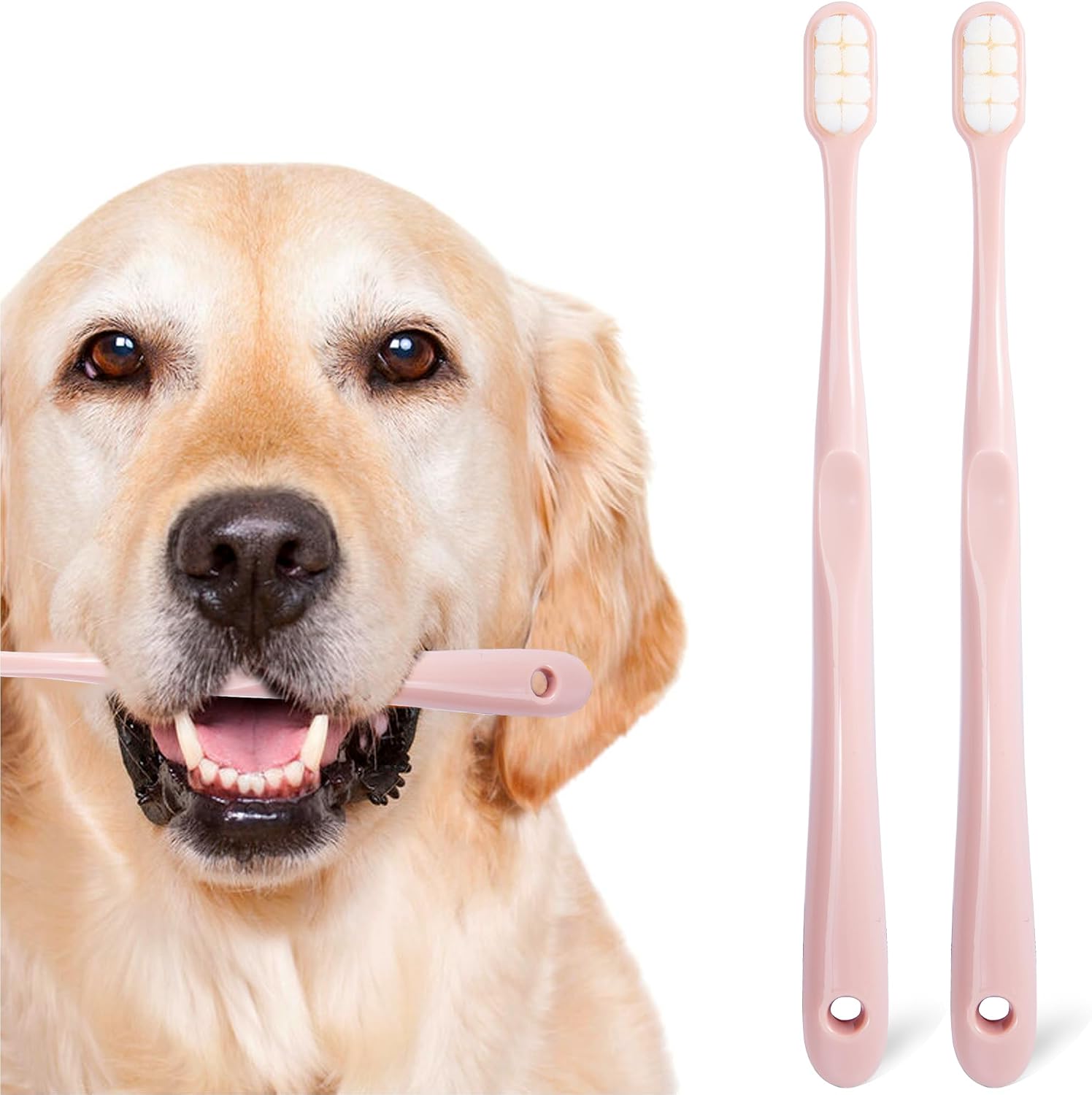
| Pack quantity | 2 toothbrushes |
|---|---|
| Intended size | Medium to Large Dogs & Cats |
| Bristle type | Ultra soft micro bristles (approx. 120μm) |
This two-pack of ultra-soft pet toothbrushes is built around very fine micro bristles intended to be gentle on sensitive gums while still reaching plaque in hard-to-reach areas. Each brush has a small head and an ergonomic plastic handle so you can maneuver inside larger dog mouths like a Golden Retriever's without forcing a wide brush. The manufacturer highlights nearly 10,000 micro bristles about 120 μm thick, which creates more foam and a softer contact surface than standard soft brushes, making daily brushing less likely to irritate tender gum tissue. In practice these brushes work well for routine cleaning and for pets that resist stiffer brushes, though the very fine bristles may feel less aggressive at removing heavy tartar buildup compared with firmer options. The handles are lightweight and shaped for a secure grip, and the set includes two identical brushes so you have a spare or can keep one in different locations. If you want a gentle daily toothbrush that prioritizes comfort over heavy-duty scraping, this kit delivers that balance.
Best for: Owners of large-breed dogs who need a gentle daily toothbrush that reduces gum irritation and is easy to use during routine oral care.
Less Ideal for: People seeking an aggressive tartar-removal tool or a toothbrush that replaces professional descaling should look for firmer-bristled or specialized dental tools instead.
- Extremely fine ultra-soft bristles designed to minimize gum irritation
- Mini head profile that fits medium to large dog mouths for better access
- Ergonomic plastic handle for easier control during brushing
- Two brushes included so you have a spare or travel brush
- Very soft bristles may be less effective on heavy tartar without supplemental tools or professional cleaning
- No interchangeable heads or protective caps included
Verdict: The best soft-bristle toothbrush minimizes gum irritation while still removing plaque, making it ideal for dogs with tender mouths or regular daily use.
Boshel Finger Toothbrush 8-Pack
Best Compact Toothbrush

| Pack quantity | 8 pieces |
|---|---|
| Brush material | Silicone & Nylon |
| Model number | FT-001 |
The Boshel eight-piece finger toothbrush kit includes six silicone and two nylon brushes that slide onto your finger for controlled brushing in tight mouths. It is intended for quick daily touch-ups and routine plaque removal, with soft bristles that reduce gum irritation while reaching along the gumline and between teeth. The mix of silicone and nylon heads gives some versatility: silicone brushes are flexible for sensitive areas and nylon brushes offer firmer scrubbing where tartar builds. Because these are finger-mounted, they work well for dogs that resist full-size brushes and for accessing back teeth or narrow corners in a Golden Retriever's mouth. The small, compact form also makes them easy to pack for travel or to keep by the sink for daily use. Limitations are that finger brushes cover less surface per stroke than a full-handled brush and require manual dexterity and patience to clean an entire mouth thoroughly, so they are best as a supplement to periodic deeper cleaning rather than a standalone solution for heavy tartar.
Best for: Owners who need a compact, easy-to-use toothbrush for quick daily brushing, travel, or to reach narrow areas in a large-breed mouth.
Less Ideal for: People seeking a primary tool to remove heavy tartar or for full-mouth deep cleaning should choose a full-sized brush or professional dental care instead.
- Comes with both silicone and nylon heads for gentle and firmer cleaning needs
- Finger-mounted design gives precise control in tight spaces and along the gumline
- Compact and lightweight, easy to pack for travel or quick touch-ups
- Soft bristles reduce irritation and are suitable for dogs that dislike rigid brushes
- Covers less tooth surface per stroke than a full-sized toothbrush, so brushing takes longer
- Not intended to replace professional cleanings for heavy tartar buildup
Verdict: The best compact toothbrush fits easily into smaller mouths and tight spaces, and is convenient for travel and quick touch-up cleanings.
Jasper 360 Dog Tooth Brushing Kit
Best Premium Toothbrush

| Flavor | Bacon |
|---|---|
| Formulation | Enzymatic with papain and bromelain |
| Intended use | Daily oral brushing for dogs |
| Manufacturer | Jasper |
This kit pairs a dual-enzyme, bacon-flavored toothpaste with a 360-degree brush intended to make daily brushing easier for medium to large dogs like Golden Retrievers. The toothpaste uses natural ingredients including papain and bromelain enzymes, hydrated silica and cultured skim milk to help break down plaque while coconut oil and calendula aim to freshen breath and soothe gums. Use involves applying a pea-sized amount to the finger or 360 brush and brushing the outer surfaces and gum line for 30 seconds to one minute, ideally every day. The flavoring and enzymatic formula make compliance simpler for dogs that resist brushing, and the kit emphasizes gentle cleaning without harsh chemicals. Limitations are that it is formulated for topical oral use rather than ingestion and contains dairy, so it is not suitable for dogs with dairy allergies; daily use still requires consistent owner effort to control plaque below professional cleaning levels. For Golden Retrievers this kit is a practical, premium-feeling daily option that focuses on convenience and natural ingredients rather than advanced clinical whitening or tartar removal alone.
Best for: Owners who prioritize a premium, easy-to-use daily brushing routine and want a natural, highly palatable toothpaste that improves compliance for a large-breed dog like a Golden Retriever.
Less Ideal for: Owners seeking veterinary-strength tartar control or whitening treatments, or those whose dogs have known dairy allergies or require prescription dental products.
- Enzymatic formula with papain and bromelain to help break down plaque
- Natural ingredients like coconut oil and calendula to freshen breath and soothe gums
- Bacon and chicken flavors increase pet acceptance and make brushing easier
- Includes a 360-degree brush for easier coverage of outer tooth surfaces
- Contains cultured skim milk and dairy-derived ingredients, unsuitable for dogs with dairy allergies
- Not intended for ingestion and not a substitute for professional dental cleanings
Verdict: The best premium toothbrush is for owners willing to invest in superior materials, refined ergonomics, and extras that improve longevity and brushing performance.
Choosing the Right Toothbrush Golden Retriever: Key Factors to Consider
Brush Head Size and Shape
A toothbrush head that fits a Golden Retriever's mouth is essential. Too small a head forces many extra passes and misses wide surfaces on molars and premolars, reducing cleaning effectiveness. Too large a head can be awkward to maneuver into the back of the mouth and may cause more resistance from the dog.
Look for heads that are slightly elongated or tapered to reach between teeth and around the cheek line. Angled or contoured heads help you access rear teeth without forcing the mouth open wide, which reduces stress during brushing sessions. Consider whether the head shape works with the way you hold the brush and the angle you naturally use when brushing your dog.
Bristle Firmness and Material
Bristle firmness affects both plaque removal and gum comfort. Medium-soft bristles are generally most appropriate for adult Golden Retrievers: they remove buildup without abrading the gums. Very stiff bristles can irritate tender gum tissue, while very soft bristles may not dislodge tartar effectively when used briefly.
Material matters too. Nylon bristles are common because they hold shape and resist mildew. Silicone or soft rubber bristles are gentler and easier to clean but may perform differently on heavy tartar. Choose a bristle type that balances cleaning power with gentleness based on your dog's gum sensitivity and the condition of their teeth.
Handle Ergonomics and Grip
A good handle reduces fatigue and improves control when brushing a large dog. Long, non-slip handles give you leverage to reach the back of the mouth and keep your hand steady if the dog moves. Thicker, rubberized grips are easier to hold securely, especially when working with a strong or wriggly dog.
Consider the handle length relative to your arm and the size of the dog. If you regularly brush with one hand while stabilizing the dog with the other, a balanced weight distribution and comfortable grip are particularly important to maintain steady strokes and avoid accidental slipping.
Angle and Reach
An angled head or extended neck helps you access rear molars without forcing the jaw. Many Golden Retrievers have deep cheeks and wide muzzles, so a straight short brush can make reaching the back teeth awkward. Angled designs let you work along the natural line of the tooth surface with fewer passes.
Reach also affects how intrusive brushing feels. Better reach means less time with your hand deep in the mouth, which reduces stress for many dogs and makes for quicker, more consistent routines.
Durability and Cleanability
Regular brushing exposes tools to moisture and biological residue, so materials should be washable and resist breakdown. Brushes that are easy to rinse and dry discourage bacterial growth and extend the product's usable life. Look for construction that withstands frequent use without fraying bristles or loosening parts.
Removable heads or fully washable one-piece designs make maintenance straightforward. Avoid materials that trap water or have hard-to-reach crevices, since they require more effort to sanitize properly and may shorten the tool's lifespan.
Stress-reduction Features
Designs that reduce stress can make brushing a repeatable routine rather than a struggle. Features like built-in angled tips, softer contact points, or flexible necks can make cleaning more comfortable for dogs and simpler for owners. Some brushes have shapes that let you clean multiple surfaces with a single motion.
Ease of use also includes how the brush feels to the dog. Smooth edges, rounded heads, and non-abrasive materials help dogs accept brushing more readily. When a dog tolerates brushing, consistency improves and so does oral health over time.
How Often Should I Brush a Golden Retriever's Teeth?
Daily brushing is ideal for controlling plaque and slowing tartar formation, but even a few times per week offers meaningful benefits. Frequency depends on your dog's individual tartar tendency and how tolerant they are of brushing.
If daily brushing is not realistic, aim for consistent, shorter sessions multiple times a week rather than occasional long sessions. Regularity conditions the dog to tolerate brushing and keeps buildup from escalating between sessions.
- Daily: best for plaque control and gum health
- Several times weekly: good compromise for busy owners
- Weekly: better than nothing, but allows more tartar accumulation
What Technique Cleans Most Effectively Without Stressing a Golden?
Use gentle, short strokes at a 45-degree angle to the gum line, focusing on the outer surfaces where plaque accumulates most. Start with the front teeth and work toward the back, speaking calmly and rewarding the dog to keep the experience positive.
If your dog resists, break brushing into short sessions and work on gradual desensitization. Use a slow, steady approach rather than forcing access to the rear teeth; an angled brush head or extended handle can let you reach back surfaces with less intrusion.
- Aim for 10 to 20 strokes per tooth surface when possible
- Prioritize molars and premolars where tartar builds fastest
- Reward and pause to create positive associations
Can Softer Silicone Brushes Be as Effective as Bristled Brushes?
Silicone brushes are gentler and easier to keep clean, which helps if your dog has sensitive gums. They are effective at dislodging fresh plaque and are useful for regular maintenance.
However, for heavier tartar removal, nylon bristles typically provide more mechanical scraping action. Combining a gentler silicone brush for daily use with periodic more abrasive cleaning methods can balance comfort and effectiveness.
- Silicone: gentle, easy to clean, good for sensitive gums
- Nylon bristles: better mechanical removal of stubborn buildup
- Consider alternating types based on your dog's needs
How to Introduce Brushing to a Nervous or Uncooperative Dog
Start slowly. Let the dog sniff the brush and lick a small treat-safe paste from your finger so the tool becomes familiar. Gradually move from touching the lips to lifting the lip and then making brief contact with teeth, rewarding calm behavior throughout.
Keep sessions short and predictable. Consistent positive reinforcement and a calm environment reduce anxiety and help the dog accept longer sessions over time. If progress stalls, break the task into smaller steps and repeat those steps until the dog is comfortable.
- Begin with a reward-based desensitization routine
- Use short, calm sessions and increase duration gradually
- Stay patient and consistent; pressure usually worsens resistance
When Should I Replace a Toothbrush for My Golden?
Replace the brush when bristles fray, the head warps, or if cleaning becomes less effective. For brushes used frequently, inspect them monthly to ensure bristle integrity and hygiene.
Also replace if the brush becomes damaged or shows signs of mildew. Proper rinsing and drying after each use helps extend life, but no brush should be kept indefinitely if its cleaning performance declines.
- Inspect bristles monthly for fraying
- Replace if the head deforms or accumulates buildup
- Keep brushes clean and dry between uses to prolong life
How We Chose the Best Toothbrush Golden Retriever
We evaluated toothbrush options against criteria that matter specifically for Golden Retrievers and other large-breed dogs. Our primary filters focused on brush head size and shape to ensure good reach across molars and premolars, bristle firmness and material to balance plaque removal with gum comfort, and handle ergonomics for secure control during independent or assisted brushing. We also considered construction quality and water resistance so brushes hold up to regular use and cleaning, plus any design features that simplify brushing large mouths, such as angled heads or extended handles. Products were excluded if they were clearly intended only for very small dogs or cats, lacked washable construction, or relied solely on single-use materials that do not provide consistent cleaning. We prioritized options that support repeated use, are easy to maintain, and reduce stress for both dog and owner. The resulting list reflects those practical tradeoffs rather than popularity alone.
Our full evaluation process is outlined in our review methodology.
FAQ
Is toothbrushing safe for a golden that hates having its mouth touched?
Yes, but it requires gradual desensitization. Start by rewarding calm acceptance of touch around the mouth, then progress to brief contact with the brush and short, positive brushing sessions. Patience and consistency usually improve tolerance over weeks.
What toothpaste should I use with a golden retriever?
Use a pet-formulated toothpaste that is safe to swallow and palatable to dogs. Human toothpastes are not appropriate. Flavored pastes made for dogs can make the process easier and encourage cooperation.
Can I clean a golden's teeth without a toothbrush?
Some alternatives include dental wipes, rubber dental toys, and enzymatic dental gels, which can help reduce plaque. These methods usually do not replace mechanical brushing entirely but can supplement a routine when brushing is not possible.
How long before I should see improvement after starting brushing?
You may notice fresher breath and reduced soft plaque within a few weeks of consistent brushing. Hard tartar already present will not disappear quickly and usually requires professional attention, but regular brushing helps slow further buildup.
Are angled heads necessary for large-breed mouths?
They are not strictly necessary, but angled heads often make reaching rear molars easier in dogs with wide muzzles. For many owners, an angled design reduces the need to open the mouth widely, which lowers stress during brushing.
Final Verdict
Focus on tools and techniques that make brushing simple and consistent for both you and your Golden Retriever. Prioritize a brush head that reaches the back teeth, bristles that balance cleaning power with gum comfort, and a handle that lets you maintain control during short sessions. Accept that there are tradeoffs: gentler tools improve tolerance but may require more frequent use, while firmer bristles clean more aggressively but need careful handling around gums. With a practical routine and the right brush for your dog's mouth and temperament, you can keep teeth healthier and reduce the need for more invasive care.

