

At two months, puppies are exploring everything with a mix of curiosity and a developing bite. Choosing the right toys matters because proper toys support teething, mental stimulation, and safe play habits during a critical socialization window. The wrong toy can frustrate a puppy or present a hazard, while the right one helps redirect chewing, encourages gentle play, and builds confidence. This guide covers seven well-chosen toys that suit 2-month-old puppies and explains the selection criteria used. We focus on safety features, developmental benefits, and practical use so you can pick toys that match your puppy's energy level and teething stage.
Top Picks at a Glance
| Best Overall Toy for 2-Month-Old Puppies A well-rounded pick that suits most young puppy needs | LOYEE Puppy Squeaky Toys 8-Pack |  |
| Best Budget Toy for 2-Month-Old Puppies An inexpensive option that still entertains and holds up | Nylabone Puppy Chew Teething Ring Bone X-Small |  |
| Best Teething Toy Designed to soothe sore gums and withstand puppy chewing | KONG Puppy Binkie Small |  |
| Best Durable Toy Built to survive rough mouthing and repeated play sessions | KONG Ring Small/Medium |  |
| Best Interactive Toy Engages curiosity with movement, sounds, or simple puzzles | DR CATCH Dog Puzzle |  |
| Best Plush Toy Soft, cuddly option suited for gentle play and comfort | Multipet Lamb Chop Plush Toy 6" |  |
| Best Washable Toy Easy-to-clean construction for hygiene after messy play | XIUGOAL No-Stuffing Dog Toy 3-Pack |  |
LOYEE Puppy Squeaky Toys 8-Pack
Best Overall Toy for 2-Month-Old Puppies

| Pet Toy Type | Chew Toy |
|---|---|
| Breed Recommendation | Small Breeds |
| Unit Count | 8 Count |
| Additional Features | Squeaker |
| Recommended Uses For Product | Teething, Playing, Anxiety Relief |
This 8-piece LOEYEE set mixes plush squeaky frogs, rope tug toys, and soft rubber chews to cover the typical play needs of small dogs like chihuahuas. The plush pieces include built-in squeakers and crinkly tentacles for attention-grabbing play while the rope toys provide tug and gentle flossing action for teeth. The rubber chew toys and treat-ball style pieces add variety for solo enrichment and teething relief. Reinforced double-stitched seams and an inner lining improve durability compared with thin plush, but the materials are still aimed at puppies and light to moderate chewers rather than power chewers. Use these toys for supervised fetch, short tug sessions, and mental stimulation by stuffing treats into the interactive ball; remove any toy that becomes damaged. The set is compact and sized for small mouths, so it suits chihuahuas' bite and play style, though owners of very aggressive chewers should consider more heavy-duty options.
Best for: Owners of chihuahuas who want a compact, mixed toy set that provides teething relief, variety, and interactive play while under normal supervision.
Less Ideal for: People whose chihuahuas are aggressive, power chewers or who need fully waterproof toys for rough outdoor use should choose heavier-duty alternatives.
- Varied 8-piece assortment covers chewing, tugging, fetching, and treat-dispensing play
- Small-sized pieces suited to tiny mouths and puppy play patterns
- Squeakers and crinkle elements boost engagement and mental stimulation
- Reinforced double-stitched seams and inner lining improve longevity over basic plush toys
- Not designed for heavy or aggressive chewers and may tear with prolonged hard chewing
- Not water resistant so outdoor wet play can reduce lifespan
Verdict: The best overall toy for 2-month-old puppies balances safe materials, appropriate size, gentle stimulation, and durability for everyday supervised play.
Nylabone Puppy Chew Teething Ring Bone X-Small
Best Budget Toy for 2-Month-Old Puppies

| Pet Toy Type | Chew Toy |
|---|---|
| Breed Recommendation | Small |
| Recommended Uses For Product | Anxiety Relief |
| Scent Name | Chicken |
| Material Type | Polyurethane |
This Nylabone Puppy Chew Teething Ring is a small, flavored polyurethane chew aimed at teething puppies and indoor use. It has ridges and nubs that massage sore gums and help clean teeth, and the toy can be chilled for extra teething relief. The soft material is intended for non-aggressive, young chewers and is lightweight and easy for tiny mouths to carry and chew during training or downtime. Practical benefits include a washable, freezer-safe design and an all-over chicken flavor that encourages puppies to chew this instead of furniture. Limitations are that the material is not meant for powerful chewers or older dogs with adult teeth, and it will wear faster under heavy chewing, so frequent inspection and replacement are necessary. For its price and focus on teething relief, it is a convenient, low-risk option to introduce healthy chewing habits.
Best for: Puppy owners seeking an inexpensive, soothing teething aid to redirect mouthing and establish healthy chewing habits during the teething phase.
Less Ideal for: Owners of strong chewers or dogs that already have adult teeth who need a heavy-duty, long-lasting chew toy.
- Soft, textured surface soothes gums and supports teething comfort
- Freezer-friendly design for chilled pain relief
- Chicken flavor infused throughout to encourage chewing
- Washable and lightweight for easy handling and cleaning
- Not durable enough for aggressive or adult chewers
Verdict: The best budget toy for 2-month-old puppies provides safe, age-appropriate engagement and basic durability at a lower price for cost-conscious owners.
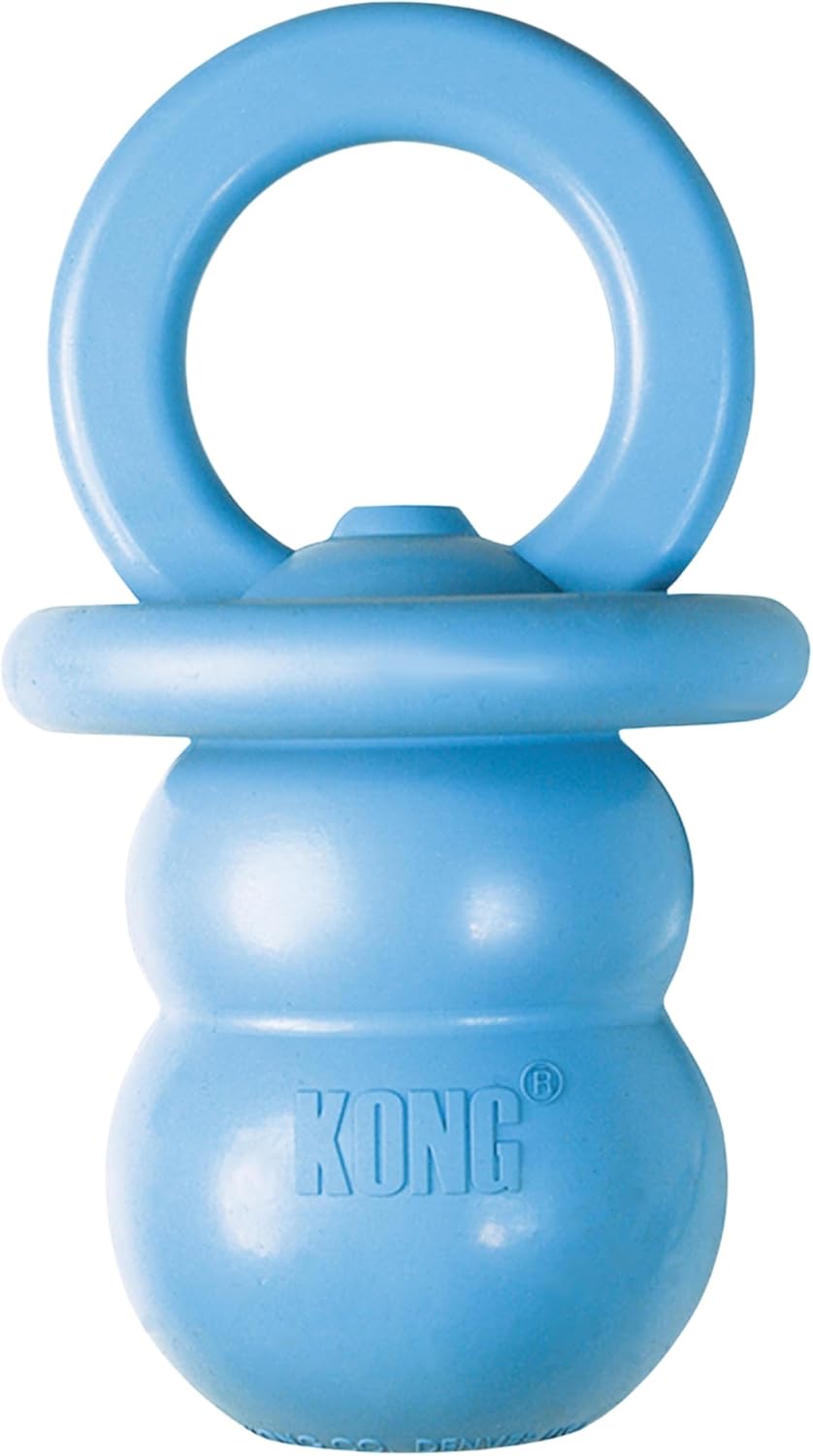
KONG Puppy Binkie Small
Best Teething Toy
| Breed Recommendation | Small |
|---|---|
| Pet Toy Type | Chew Toy |
| Material Type | Rubber |
| Indoor Outdoor Usage | Indoor |
| Additional Features | Stuffed |
The KONG Puppy Binkie is a compact, pacifier-shaped chew toy made from soft natural rubber designed to soothe teething puppies and encourage appropriate chewing. It is typically used during supervised short play or travel sessions and can be stuffed with kibble, peanut butter, or KONG Puppy Snacks to prolong engagement and introduce light treat-dispensing challenge. The hollow center and soft rubber profile make it easy for small mouths to grip and gnaw, helping relieve aching gums while promoting independent play. It is dishwasher-safe for simple cleaning and small enough to toss into a travel bag. Important limitations are that the soft puppy rubber is not meant for heavy or power chewers and should be discarded if damaged, and very determined chewers may require a firmer or larger KONG line. For everyday teething relief and portable play, the Binkie balances gentle durability with ease of use.
Best for: Buyers with small-breed puppies or owners who need a lightweight, portable teething toy for travel and short supervised play sessions.
Less Ideal for: Owners of larger breeds, strong chewers, or those wanting a toy for unsupervised heavy chewing should choose a tougher, larger KONG model or reinforced chew toy.
- Soft natural rubber formula soothes teething gums for small puppies
- Hollow center accepts treats to extend play and encourage problem-solving
- Compact pacifier shape is easy for small mouths to hold and carry
- Dishwasher-safe for quick, hygienic cleaning
- Not suitable for power chewers or aggressive gnawing
- Not water resistant so not designed for water play
Verdict: The best teething toy is made from safe, chew-resistant materials and shaped to massage gums and relieve discomfort during the teething phase.
KONG Ring Small/Medium
Best Durable Toy

| Pet Toy Type | Chew Toy |
|---|---|
| Breed Recommendation | Small/Medium |
| Indoor Outdoor Usage | Indoor, Outdoor |
| Material Type | rubber |
| Scent Name | Unscented |
The KONG Ring is a durable natural rubber chew designed to keep small and medium dogs engaged while supporting oral activity. It is typically used as a solo chew or toss toy during supervised play; dogs gnaw the textured ring to satisfy chewing drives and the raised nubs help massage gums. Made from KONG natural red rubber the toy is built for long-lasting sessions and is lightweight enough to carry or fetch indoors and outdoors. Practical benefits include enrichment for teething pups, a shape that encourages repetitive chewing, and a firm but slightly yielding rubber that resists quick shredding. Important limitations are that it is not indestructible so very aggressive chewers may damage it over time and it is not water resistant for prolonged wet use. Follow safety guidance and supervise play, replacing the ring if chunks or deep cuts appear.
Best for: Buyers looking to reduce teething discomfort and promote healthier chewing habits in small to medium puppies through a durable, textured toy.
Less Ideal for: Owners of large breed or highly aggressive chewers who need heavy-duty or specifically indestructible chew solutions should consider alternative products.
- Durable natural rubber construction for extended chew sessions
- Textured surface and nubs that help massage gums during chewing
- Lightweight and portable for indoor and outdoor play
- Designed specifically for small to medium breed chewing behavior
- Not fully resistant to very aggressive or power chewers
- Not intended for continuous exposure to water
Verdict: The best durable toy prioritizes robust construction and long-lasting materials for puppies that mouth and chew aggressively while still being safe.
DR CATCH Dog Puzzle
Best Interactive Toy

| Pet Toy Type | Puzzle |
|---|---|
| Breed Recommendation | Small |
| Recommended Uses For Product | Mental Health, Training |
| Material Type | Polyvinyl Chloride |
The DR CATCH Dog Puzzle is a round PVC puzzle and slow-feed toy that challenges puppies to slide pieces and uncover kibble or treats, helping to slow eating and provide mental enrichment. It is used by placing small portions of food or treats into the compartments, then letting a curious puppy nudge or paw the sliders to access rewards. The lightweight, portable design makes it easy to move around the house and suitable for supervised indoor play or feeding sessions. Practical benefits include engaging problem-solving play to reduce boredom, a slower mealtime pace to aid digestion, and a compact footprint that fits small-breed routines. Important limitations are that it is intended for small dogs and puppies only, the PVC material is not water resistant so it is not a bath-safe toy, and it is not indestructible so supervision is required and damaged pieces should be removed. For energetic, food-motivated puppies this toy adds short bursts of challenge and focus but it is not a heavy-duty chew toy for power chewers.
Best for: Owners wanting a food-motivated training tool to keep an Australian Shepherd puppy mentally engaged and reduce boredom through puzzle play and slower feeding.
Less Ideal for: People seeking a durable chew toy for strong-jawed dogs or a waterproof puzzle for messy outdoor use should look for sturdier alternatives.
- Provides mental stimulation through sliding puzzle mechanics
- Doubles as a slow feeder to reduce gulping and aid digestion
- Lightweight and portable for easy indoor use or travel
- Simple design that works with small kibble or treats
- Not water resistant so cannot be submerged or easily cleaned with soaking
- Designed for small dogs and puppies, not suitable for larger breeds
- Made of PVC and not meant for unsupervised heavy chewing
Verdict: The best interactive toy encourages mental stimulation and short bursts of focused play to help develop a young puppy’s attention and problem-solving skills.
Multipet Lamb Chop Plush Toy 6"
Best Plush Toy

| Pet Toy Type | Chew Toy |
|---|---|
| Breed Recommendation | Small |
| Recommended Uses For Product | Playing |
| Indoor Outdoor Usage | Indoor |
| Made In America | True |
The Multipet Lamb Chop plush is a simple, 6-inch squeaky toy made from soft polyester designed for gentle play and cuddling. It contains a single squeaker inside the stuffing and is sized and recommended for small dogs and indoor use. In everyday use it works well for fetch, light chewing sessions, and as a comfort toy because the plush is soft and the lamb design is appealing to many dogs. The advantages are obvious: it is lightweight, machine-friendly for gentle cleaning, and presents minimal risk of scratching or damaging household surfaces. Limitations are its plush construction and single small squeaker, which mean it will not hold up to powerful chewers or heavy daily tugging and can be destroyed by persistent chewing. For buyers prioritizing value, this toy delivers low-cost entertainment but is best kept for supervised play or infrequent use rather than as a heavy-duty chew option.
Best for: Value-minded owners looking for an inexpensive, cute plush toy to entertain small or gentle dogs during supervised indoor play.
Less Ideal for: Owners of power chewers, heavy tuggers, or dogs that routinely destroy plush toys should choose a more durable chew-specific toy.
- Soft, cuddly plush good for snuggling and gentle play
- Includes a built-in squeaker to keep dogs engaged
- Compact 6-inch size suits small dogs and indoor play
- Lightweight and easy to carry for fetch or travel
- Not designed for strong or persistent chewers
- Single small squeaker and plush stuffing can be punctured and removed
Verdict: The best plush toy is soft and appropriately sized for small puppies, offering comforting snuggles and light play while using reinforced seams for safety.
XIUGOAL No-Stuffing Dog Toy 3-Pack
Best Washable Toy

| Unit Count | 3 Count |
|---|---|
| Pet Toy Type | Chew Toy |
| Recommended Uses For Product | Boredom Buster, Chewing, Playing, Teething |
| Indoor Outdoor Usage | Indoor, Outdoor |
| Material Type | Polyester |
These XIUGOAL toys are a set of three no-stuffing plush animals (bunny, duck, frog) made for interactive play with small and medium dogs. Each toy includes a squeaker and crinkle paper to grab attention during fetch, tug, and solo play, while the bumpy soft texture can help soothe gums for teething dogs. The no-stuffing construction reduces choking risk and household mess, and reinforced seams aim to resist routine chewing better than basic plush toys. They are lightweight and fine for indoor or outdoor use, but the product is explicitly not intended for heavy aggressive chewers, so dogs that destroy toys quickly may still rip them open. Expect good engagement and safer indoor play for most small and medium breeds, but plan to supervise enthusiastic chewers and rotate toys to extend lifespan.
Best for: Buyers wanting an engaging, safer plush toy set for small to medium dogs that play hard but are not destructive, prioritizing interactive features and reduced mess.
Less Ideal for: Owners of dogs that habitually shred toys or are lone heavy chewers should choose a tougher rubber or reinforced chew-specific product instead.
- No-stuffing design reduces choking hazards and household mess
- Includes squeaker and crinkle paper for strong play engagement
- Reinforced seams and construction for better durability than standard plush toys
- Soft textured surface can soothe gums and support teething
- Not suitable for heavy, aggressive chewers who can destroy plush toys
Verdict: The best washable toy is machine- or easy-hand-washable and dries quickly so owners can keep puppy playthings sanitary without degrading the toy’s function.
Choosing the Right Toy 2 Month Old Puppy: Key Factors to Consider
Material and Texture
Soft, nonabrasive materials protect a puppy's developing teeth and tender gums. Look for flexible rubber or plush fabrics labeled as bite-safe and free of small internal parts that can become exposed. Different textures serve different purposes: a slightly textured rubber can soothe teething, while short-pile plush offers comfort and cuddle value.
Avoid hard plastics or brittle components that can chip. Materials that are washable and quick-drying reduce bacterial buildup, which is especially important for young puppies with immature immune systems. If a toy has adhesive seams or glued-on features, make sure those elements are firmly secured and not easy to peel away.
Size and Mouth Fit
Proper sizing prevents choking and ensures the puppy can grip and carry the toy comfortably. A toy too small can be swallowed; a toy too large will frustrate the pup and be ignored. For 2-month-old puppies, choose items sized for small hands and mouths but not so small that they could be entirely taken into the throat.
Consider the toy's shape as well. Rings, small balls, and soft bones should allow the puppy to grasp with front teeth while still letting airflow around the toy. Inspect openings and cavities: if a puppy can fit a paw or part of the snout inside a hollow toy, it may create an entrapment risk. Measure against your puppy's mouth when possible before regular play.
Safety Features and Construction
Secure stitching, overmolded parts, and one-piece construction reduce failure points. For plush toys, reinforced seams and double-layered fabric help prevent ripping and exposure of internal stuffing. For molded toys, rounded edges and embedded parts that cannot separate are safer than glued components.
Avoid toys with long strings, ribbons, or small decorations. Squeakers can be fine if they are internally secured and not easily removed; otherwise they become choking hazards. Check regularly for wear. Toys that are inexpensive but fall apart quickly are more dangerous than durable, slightly more costly items that remain intact.
Developmental Benefit and Play Type
Different toys serve different developmental goals. Chew toys help satisfy teething and reduce unwanted chewing on household items. Interactive toys that make soft noises or have variable textures encourage curiosity and early problem-solving. Tug toys introduce gentle social play and bite inhibition training when used carefully by owners.
Choose toys that match your puppy's current behavior: very active pups need short-duration fetch and chase items, while more reserved pups benefit from comfort toys and slow interactive play. Rotate toys to maintain novelty and stimulate different skills, such as retrieving, chewing, and gentle tugging.
Cleanability and Hygiene
Young puppies explore with their mouths, so toys will be exposed to saliva and debris. Washable toys that tolerate machine or hand washing reduce the risk of bacterial growth. Materials that dry quickly and resist moisture retention are preferable because damp stuffing can harbor mold or mildew.
Inspect toys for hidden cavities that trap food or moisture. Replace or quarantine any toy that becomes heavily soiled, torn, or retains odors despite cleaning. Regular cleaning is part of routine puppy care and helps protect both the animal and household members.
Weight and Durability Relative to Puppy Strength
Materials should be matched to the bite strength of a 2-month-old puppy, which is typically much lower than an adult dog. Lightweight construction prevents jaw fatigue and encourages sustained gentle play. Overbuilt, heavy toys can be awkward and discourage interaction, while underbuilt items that tear easily create risks.
Durability should be assessed with the understanding that 2-month-old puppies are still learning bite control. A toy that withstands nibbling and mouthing without breaking is ideal. However, very durable items designed for adult chewers may be too hard for teething puppies' gums.
What Types of Toys Help with Teething at Two Months?
Teething toys for two-month-old puppies should offer gentle pressure and soothing textures. Soft rubber rings, lightly textured teething bones, and short-pile plush toys with internal crinkle panels can provide relief and engage interest without being abrasive.
Rotate a couple of teething options so your puppy can choose what feels best on different days. Offer items chilled briefly in the refrigerator if you want additional soothing, but avoid freezing solid items that could damage delicate gums.
- Look for soft, flexible materials that compress under pressure
- Avoid hard nylon or metal items until the puppy is older
- Consider toys that are easy to clean after teething sessions
How Can I Introduce Interactive Play Without Overwhelming a Young Puppy?
Start with short sessions of two to five minutes several times a day to match a young puppy's attention span. Use low-effort games like gentle fetch with a soft ball or short tug sessions using a small, soft tug rope. Keep interactions positive and end on a calm note so the puppy learns to transition out of play easily.
Watch body language closely. If the puppy shows signs of overstimulation—panting, hard mouthing, or avoidance—pause the game and offer a calming chew toy instead. Gradually increase session length as the puppy matures.
- Use a calm voice and predictable cues
- Reward gentle play and discourage hard mouthing with time-outs
- Mix in quiet, comforting toys after active sessions
Are Soft Squeakers or Crinkle Toys Okay for a 2-Month-old Puppy?
Soft squeakers and crinkle materials can be very engaging for young puppies because they provide immediate feedback. If you choose these toys, prioritize options where the sound element is securely enclosed and not easily removed. Squeakers that detach or internal components that can be accessed pose choking risks.
Monitor play with sound-producing toys and retire them if the puppy begins to tear seams or isolate hidden parts. Use crinkle toys as short-duration enrichment rather than unsupervised comfort objects.
- Ensure sound components cannot be extracted
- Limit unsupervised access until the toy's durability is proven
- Combine with chew toys to help satisfy teething needs
How to Rotate and Store Puppy Toys to Keep Interest High
Rotate a small selection of toys every few days to maintain novelty. Store off-rotation toys in a sealed bin or closet so they smell unfamiliar when reintroduced. This simple practice encourages renewed interest without buying additional items.
Keep a designated set for teething and another for comfort or fetch. Inspect stored toys before reuse and launder or disinfect them as needed to keep hygiene standards high.
- Cycle 3 to 5 toys at a time to avoid overstimulation
- Wash toys before returning them to play rotation
- Keep a chew-only set separate from plush comfort toys
When Should I Retire a Toy and Replace It?
Retire any toy that shows tearing, loose stitching, exposed stuffing, or detached components. Even small holes can quickly become larger hazards as a puppy continues to chew. If a toy retains a foul odor after cleaning or feels spongy from moisture buildup, replace it promptly.
As the puppy grows, reassess toy size and hardness. Items that were appropriate at eight weeks may become too small or too soft as the puppy's mouth develops, so regular checks are important for safety.
- Check toys weekly for damage
- Discard toys that cannot be repaired securely
- Replace toys that no longer match your puppy's size
Safe Ways to Supervise Solo Play
When you cannot directly interact, provide single-purpose toys that are less likely to fragment, such as one-piece soft chews or sturdy plush with reinforced seams. Place these in a supervised area like a play pen where you can periodically check on the puppy. Avoid leaving sound-producing or heavily treat-filled toys unattended until you are sure they hold up to your puppy's mouthing.
Create a routine where you swap supervised interactive play for short periods of solo play, reducing the chance of boredom and keeping safety top of mind.
- Use a confined, safe area for unsupervised sessions
- Limit unsupervised time to short intervals for very young puppies
- Perform a quick safety check before each solo session
How We Chose the Best Toy 2 Month Old Puppy
Our editorial selection prioritized features that matter for very young puppies and the household realities of raising them. We screened options for soft, nonabrasive materials and secure construction to reduce choking and ingestion risks. Size and shape were assessed to ensure toys are easy for small mouths to grasp but not small enough to be swallowed. We considered textures and materials that soothe emerging teeth and gums while avoiding harsh or splinterable components. Play value and developmental benefit were evaluated by looking at how each toy encourages natural behaviors: gentle chewing, light tugging, fetching practice, and interactive exploration. Durability was judged relative to a typical 2-month-old puppy's bite force rather than adult chewers. Cleanability and drying time were included because hygiene matters for young immune systems. Safety exclusions removed toys with small detachable parts, hard brittle plastics, loose strings, or embedded electronics that could break into dangerous pieces. In short, products were kept if they combined soft, chew-friendly materials, secure construction, appropriate sizing, and clear developmental benefits. Options that failed basic safety or hygiene criteria were excluded from consideration.
Our full evaluation process is outlined in our review methodology.
FAQ
What size ball is safe for a 2-month-old puppy?
Choose a ball that is large enough not to be swallowed but small enough for the puppy to pick up and carry. Generally, a soft, small-size ball designed for puppies works best; avoid hard, dense balls that could harm developing teeth.
Can teething puppies use rope toys?
Short, tightly woven rope toys can be useful for gentle tug and chewing, but they should be used under supervision. Replace rope toys if strands start to fray, since loose fibers can be swallowed and cause intestinal issues.
Are treat-dispensing toys suitable for very young puppies?
Treat-dispensing toys can provide mental stimulation, but choose ones with simple mechanisms that a young puppy can operate. Avoid complex puzzles or very hard dispensers that require adult-level problem solving or excessive biting force.
How often should I clean my puppy's toys?
Clean frequently used toys at least once a week, and wash any toy that has been soiled immediately. Plush toys can often be laundered, while rubber or silicone toys should be cleaned with hot, soapy water and rinsed thoroughly.
Is it okay to give a puppy a stuffed toy for comfort?
A plush toy can provide comfort and help with crate training if it is reinforced and free of small parts. Supervise initial interactions and remove the toy if the puppy begins to shred it or pull out stuffing.
Final Verdict
Choose toys that prioritize safety, gentle durability, and developmental benefit. Focus on soft, bite-friendly materials, appropriate sizing, and secure construction that match a 2-month-old puppy's limited bite force and short attention span. Rotate toys to maintain interest and check them regularly for wear. Balance active play items with soothing chews and comfort toys, and err on the side of supervision for anything with internal components. By prioritizing these factors, you can select toys that support teething, early social play, and healthy exploration while minimizing hazards.

