

If you want reliable snacks for training, rewards, or everyday enrichment, choosing the right Trader Joe s dog treat matters. Treats vary widely in ingredients, texture, and portion size, and picking the wrong type can make training harder or add unnecessary calories. This guide highlights the top five Trader Joe s treats we shortlisted for different uses, with attention to ingredient transparency, palatability, and suitability for common dog sizes and ages. Below you will find concise buying guidance and the evaluation criteria used to select these options, so you can match treats to your dog s needs with confidence.
Top Picks at a Glance
| Best Overall Trader Joe S Treat The top all-around Trader Joe s treat that fits most dogs | Trader Joe's Salmon Jerky Dog Treats |  |
| Best Budget Trader Joe S Treat A low-cost Trader Joe s treat that still satisfies and performs | Trader Joe's Peanut Butter & Banana Treats 10.6 oz |  |
| Best Premium Trader Joe S Treat A higher-end Trader Joe s treat with superior ingredients or feel | Trader Joe's Pumpkin Dog Treats 1 lb Pack of 2 |  |
| Best Low-Calorie Trader Joe S Treat Lower-calorie treats suited for training and weight management | Trader Joe's Freeze-Dried Just Salmon Treats |  |
| Best Variety Pack Trader Joe S Treat A mixed assortment offering several flavors or textures to try | Trader Joe's Dog Treats Variety Pack |  |
Trader Joe's Salmon Jerky Dog Treats
Best Overall Trader Joe S Treat

| Flavor | Salmon |
|---|---|
| Item Form | Stick |
| Unit Count | 8 Ounce |
| Number of Items | 2 |
Trader Joe's Salmon Jerky Dog Treats are smoked salmon sticks packaged as a two-pack and meant for use as snacks or training rewards. Made from salmon raised without antibiotics and smoked over natural hardwood, the sticks can be given whole to larger dogs or broken into smaller pieces for training sessions. The fish-forward single-ingredient approach means a strong salmon aroma and chewable texture that most dogs find highly motivating, and the reclosable bag helps preserve freshness between uses. Because the treats are simple and free of added flavorings, they are a good option for owners prioritizing ingredient quality and short ingredient lists. On the downside the firm, jerky-like texture may be too tough for very small or older dogs with dental issues, and the salmon scent is strong enough to leave lingering smells on hands and surfaces. These treats work best as an occasional high-value reward rather than a daily bulk biscuit for calorie-conscious pets.
Best for: Buyers who want a high-quality, simple-ingredient treat that serves as a flavorful training reward or occasional snack for medium to large dogs and who value ingredient transparency over novelty flavors.
Less Ideal for: Owners of very small breeds, puppies with baby teeth, or senior dogs with dental issues should choose softer, smaller-format treats instead.
- Single-ingredient salmon sourced from Northern Scotland raised without antibiotics
- Smoked over natural hardwood for a genuine salmon flavor and aroma
- Reclosable bag preserves freshness between uses
- Can be broken into pieces for training or given whole as a hearty chew
- Firm jerky texture may be too hard for small or senior dogs with dental sensitivity
- Strong salmon smell can linger on hands and surfaces
Verdict: The best overall Trader Joe s treat for most pet owners, balancing flavor, ingredient quality, texture, and everyday appeal to a wide range of dogs.
Trader Joe's Peanut Butter & Banana Treats 10.6 oz
Best Budget Trader Joe S Treat

| Flavor | Banana, Peanut Butter |
|---|---|
| Unit Count | 10.6 Ounce |
| Age Range Description | All Life Stages |
| Item Form | Grain |
These Trader Joe's Peanut Butter & Banana dog treats are a small, grain-free snack bag aimed at everyday rewards and training. They come as bite-sized biscuits made from chickpeas, peanut butter, dehydrated bananas and coconut flour, which gives them a firm texture dogs can hold and owners can portion easily. The ingredients list avoids common grains and includes recognizable items rather than long synthetic additives, which will appeal to owners looking for simpler formulations. In practice the treats are convenient for short training sessions or casual rewarding because the bag is portable and the pieces are modestly sized. Limitations include a relatively small 10.6-ounce pack that may not stretch far for frequent training or multi-dog households, and the firmness could be less suitable for very small puppies or dogs with dental sensitivity. Scent and flavor appear appealing to most dogs, but buyers expecting soft training treats or bulk economy sizing should look elsewhere.
Best for: Cost-conscious dog owners who want an affordable, recognizable-ingredient treat for occasional training and everyday rewards.
Less Ideal for: Owners needing soft training treats, large bulk packs for frequent reinforcement, or specialized veterinary diets should consider other options.
- Grain-free recipe using recognizable ingredients like chickpeas, peanut butter and bananas
- Small, bite-size pieces suitable for quick rewards and training
- Portable bag that's easy to store and carry for outings
- Small 10.6-ounce bag is not ideal for heavy use or multiple dogs
- Firm texture may be too hard for very young puppies or dogs with dental issues
Verdict: The best budget Trader Joe s treat for cost-conscious owners who want an affordable option that still delivers decent ingredient quality and pet acceptance.
Trader Joe's Pumpkin Dog Treats 1 lb Pack of 2
Best Premium Trader Joe S Treat

| Flavor | Pumpkin |
|---|---|
| Item Form | biscuits |
| Unit Count | 32 Ounce |
| Number of Items | 2 |
| Age Range Description | Adult |
These pumpkin dog treats are baked biscuits designed for training, rewards, or occasional snacking and come as two 1-pound boxes. The recipe centers on real pumpkin and excludes corn and soy, which makes them a sensible choice for dogs with sensitivities to those common allergens. Ingredients like wheat flour, pumpkin, cane molasses, canola oil, and a touch of cinnamon give the treats a bakery-style flavor profile that most dogs find appealing. The biscuits are firm enough to use for short training sessions without crumbling immediately, yet breakable for smaller dogs or finer rewards. Because they contain wheat and molasses they are not grain-free or suitable for dogs with wheat allergies, and the ingredient list shows preservatives and oils some buyers may avoid. Packaging and the 32-ounce total quantity make this a good pantry staple for owners who prefer limited-ingredient, pumpkin-forward treats and want a larger supply on hand.
Best for: Buyers who prioritize higher-quality, limited-ingredient treats with real pumpkin and want a larger, pantry-ready pack for training or rewards.
Less Ideal for: Owners seeking grain-free or wheat-free options, or those avoiding added oils and preservatives, should consider alternative formulations.
- Made with real pumpkin, offering a natural pumpkin flavor and potential digestive support
- Formulated without corn or soy to reduce exposure to common allergens
- Sold as two 1 lb boxes for a substantial 32-ounce total supply
- Firm biscuit texture works well for training yet can be broken into smaller pieces
- Contains wheat and cane molasses, so not suitable for dogs with wheat or sugar-sensitive diets
- Includes preservatives and canola oil which some buyers may wish to avoid
Verdict: The best premium Trader Joe s treat for owners willing to pay more for higher-quality ingredients, better sourcing, or a gourmet-style snack.
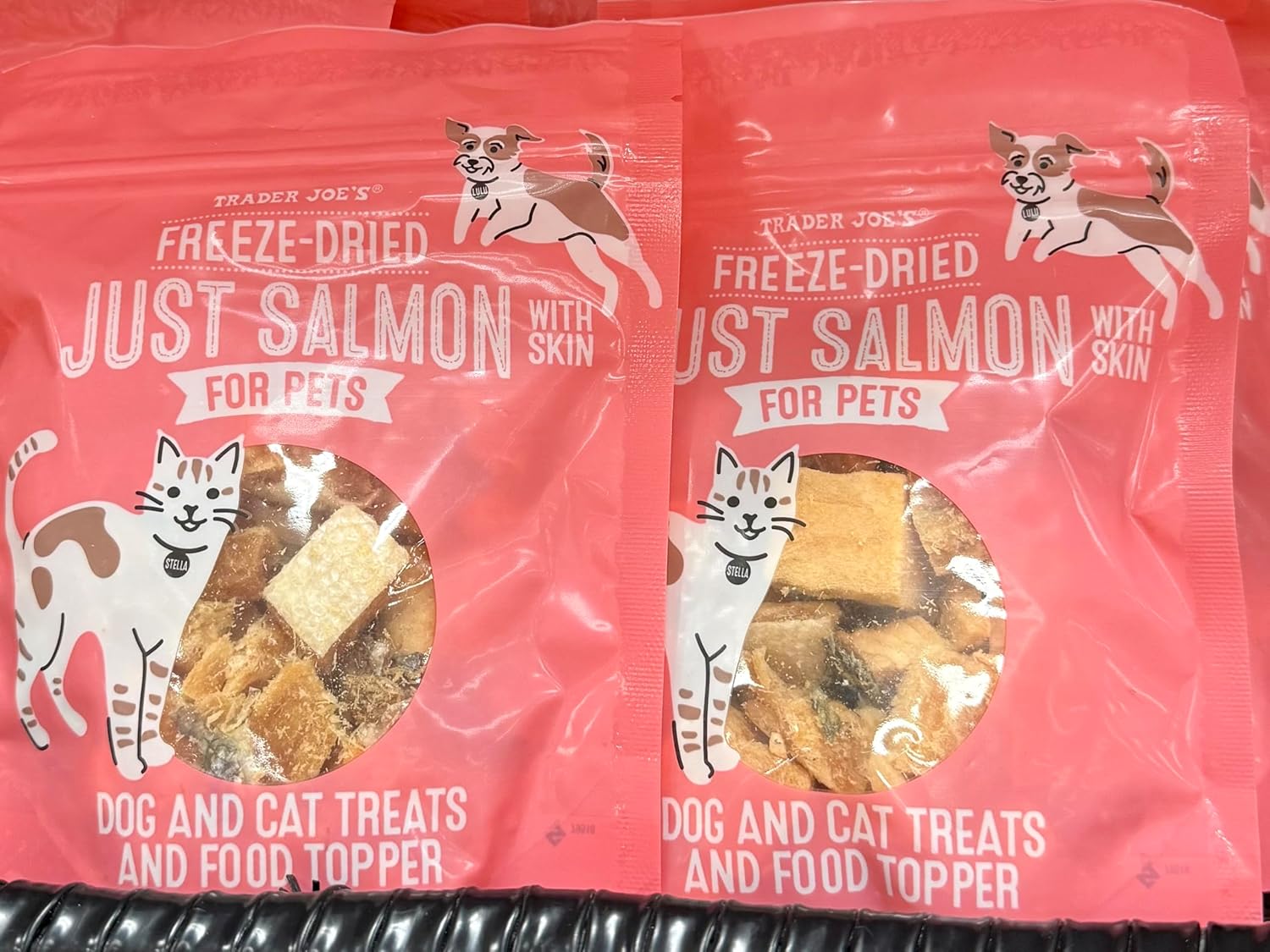
Trader Joe's Freeze-Dried Just Salmon Treats
Best Low-Calorie Trader Joe S Treat
| Unit Count | 4 Ounce |
|---|---|
| Item Form | Freeze-dried Meatballs |
| Flavor | Salmon |
| Age Range Description | All Life Stages |
| Target Species | Dog |
These freeze-dried salmon treats are single-ingredient, low-calorie snacks intended for dogs (and cats) that work well as training rewards or a nutrient-dense topper. The skin-on salmon is cut into small, round, snack-friendly pieces and freeze-dried to lock in flavor and omega fatty acids without adding preservatives or fillers. The package is resealable which helps maintain freshness between uses, and each piece is very low in calories, making portion control simple during training sessions. Practical limitations are the small 4-ounce bag size, which may not last long for multi-dog households or frequent high-volume training, and the lack of explicit feeding portion guidance beyond a general recommendation to keep treats under 10% of daily calories. Overall, these treats are convenient, minimally processed, and easy to break into tiny pieces for repetition-based training, but buyers should plan to repurchase more often if they use them heavily.
Best for: Pet owners who need a low-calorie, single-ingredient reward for frequent training or as a healthy snack topper and prioritize minimal processing and natural ingredients.
Less Ideal for: Owners who need bulk quantities for multiple dogs or extended training sessions should choose larger or wholesale options, and those who require clearly labeled ingredient sourcing for allergies may prefer explicitly detailed formulas.
- Single-ingredient salmon preserves natural protein and omega fatty acids
- Freeze-dried processing retains flavor and makes treats easy to break into training-sized pieces
- Very low calorie per piece, suitable for frequent rewards without large calorie impact
- Resealable bag helps keep treats fresh between uses
- Small 4-ounce bag may require frequent repurchasing for active trainers
- Product information lists salmon but an ingredients section elsewhere notes beef, which could cause confusion for ingredient-sensitive pets
Verdict: The best low-calorie Trader Joe s treat for pet owners needing a guilt-free training reward or a snack that helps maintain a healthy weight.
Trader Joe's Dog Treats Variety Pack
Best Variety Pack Trader Joe S Treat

| Unit Count | 18 Ounce |
|---|---|
| Number of Items | 3 |
| Flavor | Beef, Chicken, Rice |
| Item Form | Strips |
This three-pack from Trader Joe's bundles one bag each of chicken jerky strips, chicken and brown rice sticks, and beef jerky strips so you can offer different flavors and textures without buying separate full-size bags. The strips and sticks are intended as snack or training rewards and are marketed as natural with organic brown rice and free range chicken listed among ingredients. In practice the mix provides chewy jerky textures alongside firmer rice sticks that keep picky dogs engaged and offer variety during treat time. Bags are small and portable, which is convenient for training sessions or travel, but the package count and individual bag sizes are best suited to owners who want sampling rather than long-term bulk supply. Ingredients emphasize limited additions and organic rice, but the product is still a processed treat so owners monitoring strict diets should check ingredient lists. Overall this assortment is an easy way to rotate flavors and textures to hold a dog's interest without committing to large single-flavor bags.
Best for: Buyers who want a convenient sampler of different flavors and textures to keep a picky or variety-loving dog interested during training and snack time.
Less Ideal for: Owners seeking high-volume bulk treats, prescription or strict elimination-diet treats, or those who need detailed nutritional/calorie information for portion control.
- Three different flavors/textures in one purchase to reduce flavor fatigue
- Uses organic brown rice and lists free range chicken as an ingredient
- Small, portable bags suited for training sessions or travel
- Suitable for all life stages as a general snack or reward
- Individual bag sizes are small so not ideal for owners wanting bulk supply
- No guaranteed analysis or calorie info provided on the listing
Verdict: The best variety pack Trader Joe s treat for owners who want several flavors or textures in one purchase to keep picky dogs interested.
Choosing the Right Trader Joe S Dog Treat: Key Factors to Consider
Ingredient Quality and Transparency
Ingredient lists tell you what you are feeding. Treats with a single identifiable protein source and few additives reduce the chance of unexpected sensitivities and make it easier to manage dietary restrictions.
Look for whole-food ingredients rather than ambiguous terms. Fillers and unidentified meat byproducts can inflate calories without adding nutritional value. If your dog has known allergies, checking for common triggers such as wheat, soy, or certain proteins can prevent adverse reactions.
Texture and Form
Texture determines how you will use a treat. Crunchy biscuits can help scrape plaque and make good training rewards when broken into pieces. Soft chews are easier to portion for small dogs and older pets with dental issues and are more likely to appeal to picky eaters.
Consider the chew time you want. Longer-lasting chews provide entertainment but can be high in calories. For training, smaller, easily consumed pieces that do not interrupt the session work best. Always match the treat size and firmness to your dog s jaw and chewing habits to reduce choking risk.
Calorie Content and Portion Control
Treats contribute to daily caloric intake. High-calorie or large treats can quickly lead to weight gain if given frequently. Look for calorie information per treat or per ounce and plan how many treats fit into your dog s daily allowance.
Portion-controlled packaging or treats designed as small training bites simplify management. If caloric details are not available, prefer smaller or lower-fat options for frequent reward-based training. Adjust main-meal portions to account for extra calories from treats when needed.
Digestibility and Allergy Considerations
Some treats are formulated to be easily digestible, using limited ingredients and gentle proteins. For dogs with sensitive stomachs, treats made with single proteins and minimal fillers are less likely to cause loose stools or vomiting.
If your dog has food sensitivities, rotating treats and monitoring stool quality after introducing a new option can help identify tolerated varieties. Avoid treats with multiple new ingredients at once to accurately assess tolerance.
Packaging and Storage
How treats are packaged affects freshness and convenience. Resealable bags help maintain texture and aroma, while single-serve packs prevent overfeeding. Packaging size also matters for storage space and frequency of purchases.
Proper storage maintains palatability and reduces spoilage. If you travel with your dog or use treats for training classes, compact, durable packaging that closes securely will be more practical than oversized bags that leave treats exposed.
Use Case and Training Suitability
Match the treat type to its intended use. High-value, soft treats are excellent for teaching new behaviors or for dogs that are easily distracted. Lower-value crunchy bites work for intermittent rewards or general reinforcement without disrupting concentration.
Consider how motivating the treat is for your dog. A treat that works well at home may be less effective in distracting environments. Have a range of textures and flavors on hand so you can escalate reward value when needed without changing overall portioning strategy.
Which Treat Textures Work Best for Puppies and Senior Dogs?
Puppies typically need small, soft treats that are easy to chew and swallow, since their teeth and jaws are still developing. Soft training bites are ideal for rapid rewards during housebreaking and early obedience sessions.
Senior dogs often have dental wear or missing teeth, so soft, moist treats that do not require vigorous chewing are safer and more comfortable. For both age groups, portion size is important to avoid overfeeding; choose treats that break cleanly into appropriately small pieces.
- Puppies: soft, small pieces that crumble easily
- Seniors: low-hardness chews that can be swallowed whole or softened slightly
- Avoid hard, brittle biscuits for dogs with fragile teeth
How to Use Treats Effectively During Training Sessions
For efficient training, use small, high-value bites that the dog can eat within a few seconds so you can return to the next repetition quickly. Keep treats in a reachable pouch and switch to lower-value rewards once a behavior is learned to avoid over-reliance on high-calorie snacks.
Vary the reward schedule as the dog progresses: continuous rewards for new behaviors, then intermittent reinforcement to maintain performance. Also consider splitting larger treats into multiple levels of reward value to keep sessions dynamic without increasing calories.
- Start with frequent, immediate rewards for new behaviors
- Transition to intermittent reinforcement for maintenance
- Carry a small supply of high-value treats for distractions or setbacks
Are There Treats That Help with Dental Health?
Crunchy treats can help reduce plaque buildup by providing a mechanical scrubbing action, though they are not a substitute for regular dental care. Look for firm textures that are still safe for your dog s teeth and that are intended for chewing rather than crumbling instantly.
For dogs prone to tartar, pairing occasional crunchy biscuits with daily tooth brushing and veterinary dental checks yields the best results. Always supervise chew sessions and choose sizes that prevent swallowing whole.
- Use crunchy treats as a supplement to, not a replacement for, brushing
- Prefer appropriately sized chews to avoid choking
- Monitor for excessive wear in dogs with fragile teeth
Managing Treats for Dogs with Sensitivities
Introduce one new treat at a time and observe stool consistency and energy levels for several days. If you see gastrointestinal upset, stop the new treat and return to a previously tolerated option before trying a different ingredient profile.
Choose treats with limited, recognizable ingredients and avoid those with multiple novel proteins or common allergens if your dog has a known sensitivity. Rotating single-ingredient treats can help identify which proteins are best tolerated.
- Test new treats in small amounts for at least three days
- Favor single-protein or limited-ingredient formulas for sensitive dogs
- Keep a record of reactions to quickly identify problem ingredients
Storing and Portioning Treats for Everyday Use
Store treats in a cool, dry place and reseal packaging to preserve texture. For households using treats daily, consider portioning a week s worth into small containers to control feeding and make training sessions quicker.
If treats are used during long outings or classes, transfer a practical number to a portable, resealable pouch to keep them fresh and accessible. Mark portions if multiple people are involved in rewarding the dog to maintain consistency.
- Reseal bags after each use to preserve freshness
- Pre-portion daily training rewards to manage calories
- Use clear containers so you can see remaining supply
How We Chose the Best Trader Joe S Dog Treat
We used a focused set of criteria to shortlist the five Trader Joe s dog treats included in this guide. First, ingredient clarity and sourcing mattered: we prioritized treats with short ingredient lists, identifiable protein sources, and minimal artificial additives. Second, texture and form were evaluated for common use cases: bite-sized crunchy pieces for dental benefit and small training pieces, soft chews for older dogs and picky eaters, and larger chewable shapes for longer engagement. Third, suitability across life stages and sizes was considered, including choking risk, portion control, and caloric density. Fourth, digestibility and common allergen profiles were weighed to favor options that are less likely to cause stomach upset for sensitive dogs. Fifth, packaging and portioning convenience were noted for owners who need resealable bags or pre-portioned treats. We excluded novelty items and treats marketed primarily as seasonal or limited-edition, and we did not include treats with unclear ingredient labeling. Our final picks reflect a balance of ingredient quality, practical use, and broad suitability rather than uncommon or specialty niche products.
Our full evaluation process is outlined in our review methodology.
FAQ
How often can I give my dog Trader Joe s treats?
Frequency depends on the treat s calorie density and your dog s daily calorie needs. For frequent training, use small, low-calorie pieces and adjust meal portions to account for extra calories. Treats intended for chewing or enrichment should be given less often to avoid excess calories.
Can I use these treats for crate training and long sessions?
Use longer-lasting chew-style treats or low-moisture options for supervised crate enrichment, but avoid leaving small, easily swallowed pieces unattended. For long sessions, rotate to lower-calorie choices to prevent weight gain.
What should I do if my dog has a mild stomach upset after a new treat?
Pause the new treat and return to a previously tolerated option. If symptoms are mild, give a bland diet and observe. If vomiting or diarrhea persists beyond 24 to 48 hours or worsens, consult your veterinarian.
Are soft training treats better than crunchy ones?
Soft training treats are usually better for quick consumption and high-value rewards, while crunchy treats can be useful for intermittent rewards and light dental benefit. Choose based on your dog s preference, training context, and dental health.
How do I choose a treat size for my small dog?
Pick treats that break into appropriately sized pieces or are specifically labeled as small bites. Small dogs need smaller portions to avoid overfeeding and choking. Always supervise chewing and adjust the number of treats to stay within calorie goals.
Final Verdict
Prioritize treats that match your dog s age, chewing style, and dietary needs. Balance ingredient quality, texture, and portion size when selecting treats so rewards support training without unwanted weight gain or digestive upset. Use high-value soft treats for learning, crunchy options for occasional dental benefit, and single-ingredient choices for dogs with sensitivities. With these priorities in mind, you can choose treats that keep your dog motivated and healthy.

