

Picking the right training harness for a large dog matters more than you might think. A well-chosen harness can reduce pulling, protect your dog's neck and shoulders, and make walks and training sessions easier and safer for both of you. Large dogs place different stresses on fastenings, straps, and attachment points, so the features that work for small breeds often do not scale reliably. This guide presents six shortlisted training harnesses chosen specifically with large dogs in mind. We evaluated each option for fit, strength, comfort, and ease of use so you can find the best match for your dog's size and behavior. Read on to see the priorities we used and which design attributes matter most when training big dogs.
Top Picks at a Glance
| Best Overall Training Harness for Large Dogs A reliable, well-rounded harness that suits most large-dog training needs | rabbitgoo No Pull Dog Harness Large |  |
| Best Budget Training Harness for Large Dogs A low-cost option that still provides basic control and decent durability | PHOEPET No Pull Dog Harness Large |  |
| Best Heavy-Duty Training Harness Built for strong pullers with reinforced webbing and tougher hardware | AUROTH Tactical Dog Harness XL |  |
| Best No-Pull Training Harness Designed to reduce pulling with front-clip control and behavior-focused fit | tobeDRI No Pull Dog Harness Large |  |
| Best Reflective Training Harness High-visibility materials and reflective trim for safer low-light outings | ICEFANG Tactical Dog Harness GN1 Large |  |
| Best Adjustable Training Harness Multiple adjustment points for a customized, secure fit on large dogs | rabbitgoo Dog Harness Large |  |
rabbitgoo No Pull Dog Harness Large
Best Overall Training Harness for Large Dogs

| Dog Breed Size | Large |
|---|---|
| Weight Range | 15-45 kg |
| Closure Type | Buckle |
| Material Type | Polyester |
| Size | Large |
The rabbitgoo No Pull Dog Harness is a step‑over vest-style harness built for everyday walks and basic training with medium to large breeds. It uses a front chest clip to help redirect forward motion when a dog lunges and a rear D-ring for casual walking or jogging, plus two metal leash attachments for versatile control. The harness is made from polyester oxford with padded air-mesh lining to reduce chafing and keep dogs cooler during activity, and reflective strips improve visibility in low light. Four adjustable straps and quick-release buckles let you fine-tune the fit, while a top handle gives instant lift or extra control getting in and out of vehicles. Practical limits are its non-chewproof construction and that very strong pullers may need a more specialized training harness or head halter; accurate sizing is important because the vest design can shift on dogs with unusual body shapes. For most owners seeking a comfortable, durable, and easy-to-adjust no-pull option for everyday walks, this covers the essentials well.
Best for: Owners of medium to large active dogs who want a comfortable, easy-to-adjust harness that provides reliable no-pull control for daily walks and light training.
Less Ideal for: People who need a heavy-duty, chewproof restraint or handlers working with extremely strong pullers who require professional training tools.
- Front chest clip redirects forward momentum for basic no-pull control
- Padded air-mesh lining offers breathable comfort and reduces rubbing
- Two metal leash attachments (front and back) for training and everyday use
- Multiple adjustment points and quick-release buckles make fitting and removal fast
- Reflective strips and top handle add safety and short-term lift/control
- Not designed to resist chewing or heavy abrasion
- May not fully stop very strong, sustained pullers without additional training
Verdict: The best overall training harness for large dogs that balances fit, control, comfort, and durability for everyday training and walks.
PHOEPET No Pull Dog Harness Large
Best Budget Training Harness for Large Dogs
| Material Type | Breathable Air Mesh with Padded Cushion, Durable Oxford Surface, Metal D-Ring, Nylon, Plastic |
|---|---|
| Closure Type | Buckle |
| Dog Breed Size | Large |
| Product Care Instructions | Hand Wash Only |
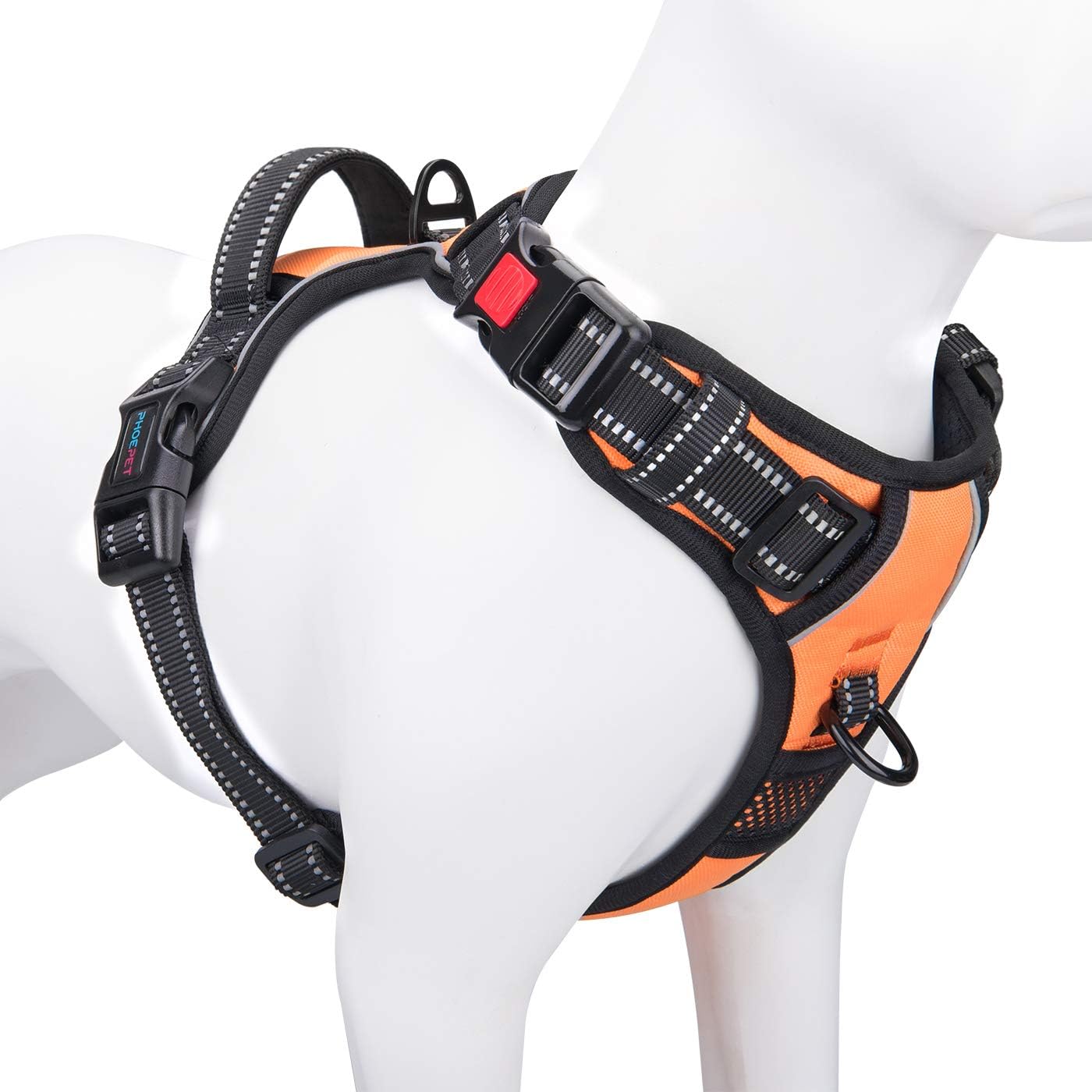
The PHOEPET No Pull Dog Harness is a padded vest-style harness designed for everyday walks and control with a focus on visibility and durability. It slips on without going over the head thanks to three quick-release buckles including a lockable neck buckle, and it uses breathable air mesh with a durable Oxford outer to stand up to regular use. Two metal D-rings let you choose a front or back leash attachment for no-pull training or routine walking, and a soft padded handle on the back gives short-range control and helps lift dogs into a vehicle. Reflective trim improves nighttime visibility and the harness is hand-washable for easy maintenance. The harness is well suited to active large dogs, but the padded mesh and multiple buckles add bulk compared with minimalist straps and it requires correct adjustment to avoid chafing on long hikes. Construction and features favor safety and control rather than ultralight travel.
Best for: Buyers who prioritize nighttime visibility and robust construction for larger, active dogs that need extra control during walks and training.
Less Ideal for: Owners who want an ultralight or minimalist harness for travel or fast hikes should consider simpler strap-style options instead.
- Reflective trim for improved nighttime visibility
- Two sturdy metal leash rings for front or back attachment
- Padded breathable mesh with durable Oxford outer for comfort and durability
- Back handle provides short-range control and assists lifting
- Three quick-release buckles including a lockable neck buckle for easy on/off
- Bulkier and heavier than minimalist strap harnesses
- Hand wash only care may be less convenient for frequent cleaning
Verdict: The best budget training harness for large dogs for owners who need an affordable, functional option that still offers reasonable fit and control.
AUROTH Tactical Dog Harness XL
Best Heavy-Duty Training Harness

| Size | XL (Neck:20-31", Chest:26-42"), 75-135 lbs |
|---|---|
| Material Type | Breathable Air Mesh with Soft Padded Cotton Cushion, Nylon |
| Closure Type | Buckle |
| Care | Machine Wash |
This harness is built for active, strong dogs and frequent outdoor use. It combines breathable air mesh padding with durable nylon Oxford and reinforced stitching to stand up to pulling and rough conditions. Two quick-release buckles and four adjustable points let you get a snug fit, while a reinforced top handle and two metal leash rings (front and back) give you control for training and everyday walks. The Molle-style panels let you add small pouches or ID patches, and reflective trim improves low-light visibility. Practical benefits include reduced neck strain from a chest attachment point, easy on/off using the buckles, and machine-washable materials for cleanup after hikes. Expect a harness that is substantial in feel and tailored to large breeds, but note that heavier hardware and padding add bulk that may be unnecessary for calm or very small dogs, and correct sizing is important to avoid rubbing or restricted movement.
Best for: Buyers who need a rugged, control-oriented harness for large, strong dogs that accompany them on hikes, training, or frequent outdoor activities and who prioritize durability and functional features over minimal weight.
Less Ideal for: Owners of small, low-energy dogs or anyone looking for an ultra-light, minimalist harness for short casual walks should consider simpler, lighter options.
- Durable nylon Oxford construction with reinforced stitching for heavy use
- Two metal leash attachment points (front and back) for training and casual walks
- Padded breathable air mesh for comfort during long outings
- Quick-release buckles and multiple adjustment points for a secure, customizable fit
- Molle panels and Velcro patch area for carrying small gear or ID patches
- Bulkier and heavier than minimalist harnesses, which may be overkill for calm dogs
- Requires accurate measurement and sizing for large breeds to prevent chafing
Verdict: The best heavy-duty training harness for large dogs that need extra-strength construction and hardware to handle powerful pullers and rugged use.
tobeDRI No Pull Dog Harness Large
Best No-Pull Training Harness
| Material Type | Neoprene, Nylon, Plastic, Polyester |
|---|---|
| Closure Type | Buckle |
| Dog Breed Size | Large |
| Included Components | dog leash |
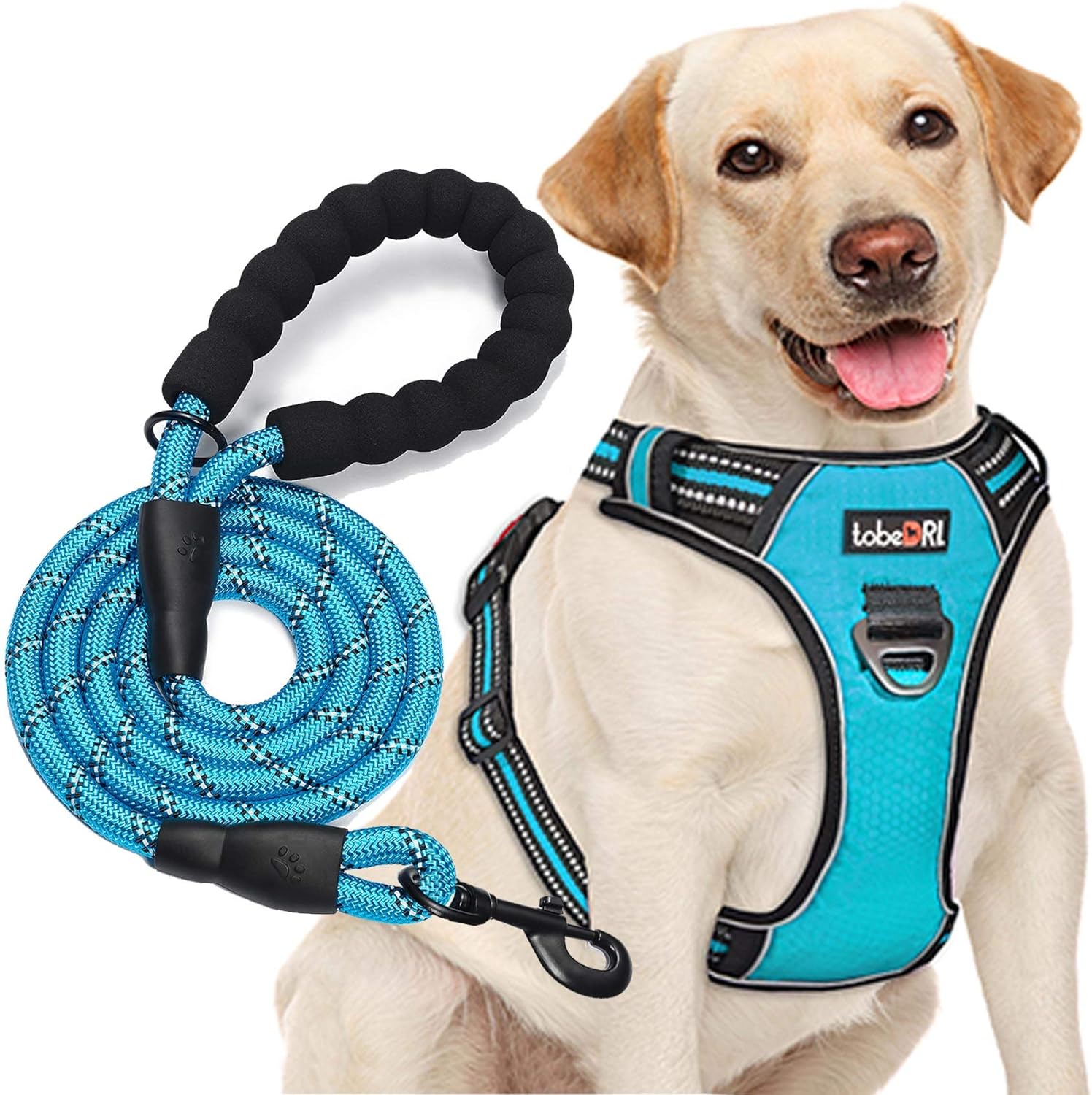
This tobeDRI harness is built for everyday walks with large dogs and emphasizes control and visibility. It uses two metal delta rings—one front clip to discourage pulling and one back clip for relaxed walking—so you can switch attachment points depending on training or leash-walking needs. The harness fastens with quick snap buckles that include a locking feature to reduce accidental release, and four adjusters let you fine-tune fit around the neck and chest. Materials combine breathable mesh and high-density nylon oxford with neoprene padding for comfort, and reflective stitching improves visibility during low-light walks. It is machine washable and comes with a heavy-duty 5ft leash, while metal hardware is described as rust-proof. Limitations are that fit depends on accurate sizing for large breeds and the harness does not list heavy-duty reinforcement ratings for very strong pullers, so very powerful dogs may still require a dedicated training system or harness rated for high loads.
Best for: Owners of medium to large dogs who prioritize improved visibility and a no-pull option for dawn, dusk, or night walks and want a comfortable, adjustable harness for regular outdoor use.
Less Ideal for: People looking for a harness with a certified load or professional-grade training hardware for very strong pullers should consider purpose-built training harnesses instead.
- Front and back metal delta rings let you switch between no-pull control and relaxed walking
- Reflective stitching increases visibility for dawn, dusk, and nighttime walks
- Neoprene padding and breathable mesh improve comfort for long wear
- Locking snap buckles and multiple adjusters provide a secure, customized fit
- Machine washable with rust-proof metal hardware for easy maintenance
- Sizing must be accurate for large breeds to ensure effectiveness
- Not specified or rated for extreme pulling forces from very powerful dogs
Verdict: The best no-pull training harness for owners focused on correcting leash pulling by combining a front-clip placement and stability-focused design.
ICEFANG Tactical Dog Harness GN1 Large
Best Reflective Training Harness

| Item model number | GN1 |
|---|---|
| Material Type | Nylon |
| Closure Type | Buckle |
| Dog Breed Size | Large |
| Features | Control Handle, Front Hook, 2 Leash Clips, MOLLE Panel |
This ICEFANG GN1 harness is a heavy-duty vest-style harness built for control, utility, and everyday walks or training with large dogs. It fastens with two metal buckles at the neck and plastic buckles at the chest, offers five adjustment points for a snug fit, and includes a padded handle for short-term lifting or extra control. The harness has both a back leash ring for normal walking and a front D-ring to discourage pulling, plus sewn MOLLE/PALS strips and loop panels so you can add patches or small gear for hiking or working tasks. The nylon construction and reinforced seams give a rugged feel suited to active dogs, and the harness is hand-washable for upkeep. It is not intended for tie-out use and the fit requires measuring carefully to avoid chafing or restriction. The MOLLE features and multiple attachment points make it more of a utility/training harness than a minimalist daily slip-on, so expect a bit more bulk and a short break-in period as your dog adapts.
Best for: Owners who prioritize nighttime visibility and control during low-light walks and who want a rugged harness that can carry small gear and accept reflective patches for added safety.
Less Ideal for: People seeking an ultra-lightweight, minimalist harness for short casual walks or dogs that dislike heavier, tactical-style vests.
- Front anti-pull D-ring plus back V-ring provide both training control and regular leash attachment
- Reinforced seams and mix of metal and plastic buckles for durable, secure fastening
- Padded handle and MOLLE/PALS panels let you lift briefly and attach gear for hikes or work
- Multiple adjustment points and sewn loop panels allow a snug fit and custom patches
- Bulkier and heavier than minimalist harnesses, which can feel cumbersome for some dogs
- Not suitable for tie-out use and may require careful sizing to prevent chafing
Verdict: The best reflective training harness for owners who prioritize safety during dawn, dusk, or nighttime walks by improving visibility to drivers and cyclists.
rabbitgoo Dog Harness Large
Best Adjustable Training Harness

| Size | Large |
|---|---|
| Material Type | Polyester |
| Closure Type | Buckle |
| Dog Breed Size | Large |
This rabbitgoo harness is built for fast, fuss-free fitting and control on walks. It uses three quick-release buckles so you can open the harness, slip it onto a wiggly dog and snap it closed without forcing a head entry, which saves time for busy routines or handlers with limited mobility. The vest combines breathable mesh and soft padding for all-day comfort, and reflective strips improve visibility on evening walks. Two metal leash attachments give options: a front clip to reduce pulling and a back clip for casual walking or jogging, while a reinforced top handle offers extra control for lifting or quick restraint. Practical details include four adjustable straps for a tailored fit, sturdy metal hardware, and a lockable neck buckle to discourage accidental release. Limitations to note are the polyester construction is not chew-proof and the harness must be hand-washed per care instructions, so it may need more upkeep than simpler nylon straps.
Best for: Owners who need the quickest, least-fussy harness to get a wriggly or impatient dog ready for a walk, or handlers who value easy on/off and speed when gearing up.
Less Ideal for: People whose dogs habitually chew gear or who want a completely machine-washable harness should consider different heavy-duty or washable options.
- Three quick-release buckles enable very fast on/off without slipping the harness over the head
- Front and back metal leash clips let you switch between anti-pull control and regular walking
- Soft padded mesh vest with breathable lining for comfort on longer outings
- Reflective strips increase nighttime visibility
- Top handle and sturdy metal hardware provide secure short-term restraint and lifting support
- Not chew-proof, so unsuitable if your dog constantly nibbles gear
- Requires handwashing rather than machine wash for care
Verdict: The best adjustable training harness for large dogs that need precise fit adjustments to prevent chafing and ensure secure control during training sessions.
Choosing the Right Training Harness Large Dog: Key Factors to Consider
Fit and Adjustability
A correct fit is the single most important factor for training harnesses on large dogs. Harnesses need multiple adjustment points so you can tailor the fit across the chest, girth, and neck; large dogs vary widely in proportions even within the same weight class. Poor fit allows the dog to twist out of the harness, concentrates pressure on vulnerable points, or creates rubbing zones that lead to sores.
Look for harnesses with wide range adjustment, clear sizing guides, and adjustment buckles that stay put once set. Consider how easy it is to tighten or loosen straps while the dog is standing; harnesses that require removing the dog to adjust are less practical for on-the-fly training corrections.
Strength and Hardware Quality
Large dogs exert much higher forces on harness components than small dogs, so materials and hardware must be robust. Reinforced stitching at stress points, metal or heavy-duty polymer D-rings for leash attachment, and solid buckles reduce the risk of breakage during pulls or sudden lunges.
Assess the webbing width and ply, the type of stitch pattern used at junctions, and whether attachment points are bar-tacked or boxed for reinforcement. Hardware that resists corrosion and deformation extends service life, especially if the harness will be used outdoors or in wet conditions.
Comfort and Padding Distribution
Comfort influences how willingly a dog will accept a harness and how long you can keep it on during training or outings. Large dogs benefit from broader straps and generous padding across the chest and sternum to spread load and minimize pressure points. The location of padding matters: shoulder and chest coverage helps prevent straps from digging in when the dog pulls.
Choose breathable materials and padding that stay cushioned over time rather than compressing into hard contact surfaces. Consider the harness shape as well; designs that allow free shoulder rotation reduce gait interference and long-term joint strain.
Attachment Configuration and Control
Different training goals call for different leash attachment options. Front-clip attachments help reduce pulling by redirecting the dog's forward momentum, while back-clip attachments are useful for casual walking and pairing with additional control tools. Some harnesses provide multiple points to clip a leash or dual-ring systems that let you switch quickly between training modes.
Think about the behavioral outcomes you want: a front-clip or martingale-style tether is better for reducing pulling, whereas a solid rear attachment may be fine for well-trained dogs. The strength and placement of these points also affect leverage, so prioritize harnesses where attachment hardware is reinforced and positioned for predictable response.
Ease of Putting on and Taking Off
Training often requires quick transitions between commands, walks, and play. Harnesses that are cumbersome to don and doff add friction to training routines and may reduce consistency. Side-clip buckles, step-in designs, and top-open closures each have tradeoffs: step-in styles can be faster for some dogs but harder for others that will not stand still.
Evaluate how many buckles and straps need adjustment each time and whether a handler can operate them single-handedly. Fast, repeatable securement encourages consistent use, which supports better training outcomes.
Durability and Maintenance
Large dogs often subject harnesses to heavier abrasion and dirt exposure. Materials that resist fraying, rinsing easily, and retain shape after washing prolong useful life. Consider harnesses with replaceable components or where padding is sewn in a way that resists bunching after repeated cleaning.
Check whether cleaning instructions are straightforward and whether common contaminants like mud and salt can be removed without weakening fabrics or fading reflective trims. Durable finishes and reinforced seams make daily use sustainable for active large dogs.
How Do Front-clip and Back-clip Attachments Change Training Outcomes?
The placement of the leash attachment influences the direction of force when the dog moves. A front-clip attachment redirects forward motion toward you, which can interrupt the forward pull and help a dog learn to walk beside you. This makes front-clip setups useful for initial leash training and for dogs that pull strongly.
Back-clip attachments keep force centered over the dog's spine and are better for handlers who prefer a neutral walking setup or for dogs that already walk politely. Some harnesses offer both options, allowing you to switch attachment points as the dog's skills change.
- Use front-clip during teaching phases to reduce momentum and reinforce loose-leash walking.
- Switch to back-clip for general walks once the dog is more consistent.
What Sizing Pitfalls Should Owners of Large Dogs Watch For?
Common sizing errors include relying only on weight rather than actual girth and chest measurements. Two dogs can weigh the same but have very different chest depths and neck circumferences. Always measure the widest part of the ribcage behind the front legs and compare against the manufacturer's range.
Also note that coat thickness affects fit. Allow extra room if your dog has a dense undercoat, and recheck adjustment after seasonal coat changes. A harness that fits snugly but allows two fingers of space at key points is generally a good starting rule.
- Measure chest girth, neck circumference, and consider coat thickness.
- Confirm adjustability at multiple points rather than relying on a single strap.
Can a Harness Protect a Dog's Neck and Shoulders During Training?
Yes, a properly fitted harness distributes force away from the trachea and concentrates it on broader chest and shoulder areas. For large dogs that tend to lunge or pull, this reduces the risk of neck injury compared with collar-only systems. Padding and wide straps further soften force transmission and lower localized pressure.
However, improper fit or narrow straps can still create harmful pressure points. The harness should allow natural shoulder movement while keeping pressure across the sternum and upper chest rather than the throat.
- Prioritize broad straps and胸 padding for pressure distribution.
- Check shoulder range of motion while the dog walks to ensure freedom of movement.
How to Introduce a Training Harness to a Large Dog
Introduce the harness gradually: let the dog sniff the gear, reward calm behavior, and practice short sessions of wearing it indoors before going on long walks. Start with very brief on-off cycles paired with treats so the dog builds a positive association.
Once the dog tolerates the harness indoors, use short, low-distraction outdoor walks and keep training sessions focused on basic cues like heel and sit. Incrementally extend the duration and complexity as the dog shows comfort and engagement.
- Use positive reinforcement during initial introductions.
- Increase duration slowly and practice in quiet environments first.
When Is a Martingale-style or Anti-escape Design Useful?
Some large dogs are adept at backing out of standard harnesses, especially those with looser neck openings. Martingale-style closures or harnesses with escape-prevention straps provide a secondary restraint that tightens subtly if the dog attempts to back out, reducing the risk of escape without choking.
These designs are particularly helpful for anxious or highly motivated dogs that try to wriggle free, or when walking in busy areas where an escape could be hazardous.
- Consider escape-prevention features for dogs with a history of slipping harnesses.
- Ensure any tightening elements still allow comfortable breathing and do not create pressure points.
How We Chose the Best Training Harness Large Dog
We focused on the attributes that matter most when recommending training harnesses for large dogs. Primary evaluation criteria included structural strength and hardware quality to ensure the harness withstands sustained pulling and daily use without failure. We also prioritized fit range and adjustability so owners can get a secure, customized fit across broad chest and neck measurements common in large breeds. Comfort was assessed through design features such as padding distribution, strap width, and pressure points to reduce chafing and shoulder strain during longer walks or training sessions. Ease of use was another key factor, covering how quickly the harness can be put on and removed and how intuitive adjustments are. Finally, we considered control features and leash attachment options that support different training methods, like front-clip vs back-clip stabilization and multi-attachment systems. We excluded harnesses intended primarily for small or toy breeds, lightweight fashion harnesses that do not provide robust control, and any product lacking clear sizing guidance or user-adjustable points. Our shortlist reflects durable, adjustable harnesses that strike a practical balance between restraint and comfort for large dogs in everyday training scenarios.
Our full evaluation process is outlined in our review methodology.
FAQ
Will a training harness stop my large dog from pulling entirely?
A harness can significantly reduce pulling by changing how force is applied and by giving you better leverage, but it is not a substitute for training. Pairing the right harness with consistent reinforcement of loose-leash behaviors typically yields the best results.
How tight should a harness be on a large dog?
Aim for a snug fit that allows two fingers of space between the strap and the dog at key points. The harness should not shift excessively when the dog moves, but it should not compress the chest or restrict breathing or shoulder movement.
Is padding necessary for large dog harnesses?
Padding helps distribute pressure and reduces chafing, which is more important on larger dogs because of greater forces. However, padding must be durable and breathable; overly thick, nonbreathable padding can trap moisture and cause discomfort over time.
Can I use a training harness for everyday walks?
Yes, many training harnesses are designed for daily use, but consider the attachment configuration and comfort features. If you plan frequent long walks, choose a harness that balances control with padding and breathable materials to avoid irritation.
How do I know when to replace a harness?
Replace a harness if webbing shows fraying, hardware bends or cracks, stitching comes loose, or padding loses integrity. Regularly inspect high-stress areas and test buckles and rings for deformation to ensure continued safety.
Final Verdict
When choosing a training harness for a large dog, prioritize secure fit, robust hardware, and comfort. These factors determine how effectively the harness supports training goals and how safe and comfortable your dog will be during walks. Expect to trade off some ease of use for greater durability and control when your dog is strong or highly driven. Focus on adjustable designs that let you fine-tune fit, reinforced attachment points for predictable control, and padding that protects shoulders and chest without restricting movement. With those priorities in mind, you can choose a harness that improves training outcomes and stands up to the demands of a large, active dog.

