

Training treat choice matters more than many new owners expect. For a rottweiler puppy, the right treats make sit, stay, and recall training faster and help you avoid overfeeding while keeping motivation high. This guide covers seven shortlisted training treats selected for rottweiler puppies, focusing on palatability, nutrient balance, and ease of use during frequent training sessions. Below you will find practical notes on why each pick made the list, plus buying factors that matter for rottweiler puppies and tips for using treats effectively in everyday training.
Top Picks at a Glance
| Best Overall Training Treat for Rottweiler Puppy A balanced all-around treat ideal for everyday puppy training sessions | Pupford Freeze Dried Training Treats 4 oz |  |
| Best Budget Training Treat for Rottweiler Puppy A low-cost option that still motivates and holds up to repetition | Blue Buffalo Baby BLUE Training Treats 4 oz |  |
| Best High-Protein Training Treat Higher-protein bites to support growth and active puppy energy needs | Bully Max High Protein Dog Treats 400g |  |
| Best Soft Training Treat Tender, easy-to-chew treats suited to sensitive puppy mouths | Zuke’s Puppy Naturals Salmon Treats 5 oz |  |
| Best Long-Lasting Training Treat More durable chews that engage attention during longer training or distractions | ASMPET Chicken Jerky Rings 11oz |  |
| Best Low-Calorie Training Treat Small, lower-calorie rewards for high-frequency reinforcement without extra weight | BIXBI Pocket Trainers Peanut Butter |  |
| Best Premium Training Treat A higher-end option emphasizing quality ingredients and superior sourcing | Pupford Freeze Dried Training Treats Meat Bundle |  |
Pupford Freeze Dried Training Treats 4 oz
Best Overall Training Treat for Rottweiler Puppy

| Flavor | Beef |
|---|---|
| Item Form | Pellet |
| Unit Count | 4 Ounce |
| Ingredients | Beef Liver, Beef Heart, Mixed Tocopherols (Natural Antioxidant) |
These freeze-dried beef liver treats are made from just a few natural ingredients and are built for everyday training. The pellets are bite-sized and lightweight so you can give multiple rewards in a short session without overfeeding, and the dry texture keeps hands and treat pouches clean during walks, classes, or clicker work. Because they are essentially meat, they are highly motivating for most dogs and work well for shaping behaviors, recall practice, and reward-based training. The simple ingredient list and low calorie profile also make them a reasonable choice for dogs with sensitive stomachs or owners tracking intake. Limitations include the small 4 ounce pouch, which will be used up quickly with frequent sessions, and the single-flavor profile may not suit dogs that need stronger variety to stay interested long term.
Best for: Trainers who want a simple, highly motivating everyday reward that stays mess free and supports frequent, low-calorie reinforcement.
Less Ideal for: People looking for large bulk quantities or multiple flavor mixes for long-term variety should consider larger or multi-flavor packs.
- Single-ingredient, natural meat formula that boosts motivation
- Freeze-dried, low-odor pellets that do not make hands or pockets messy
- Small, bite-sized pieces suitable for rapid repetition during training
- Low calorie so you can reward frequently without large calorie load
- Small 4 oz pouch can be depleted quickly with heavy training use
- Only one flavor option in this listing limits variety for picky dogs
Verdict: The best overall training treat for a Rottweiler puppy that balances palatability, size, nutrition, and ease of use for frequent reinforcement during learning.
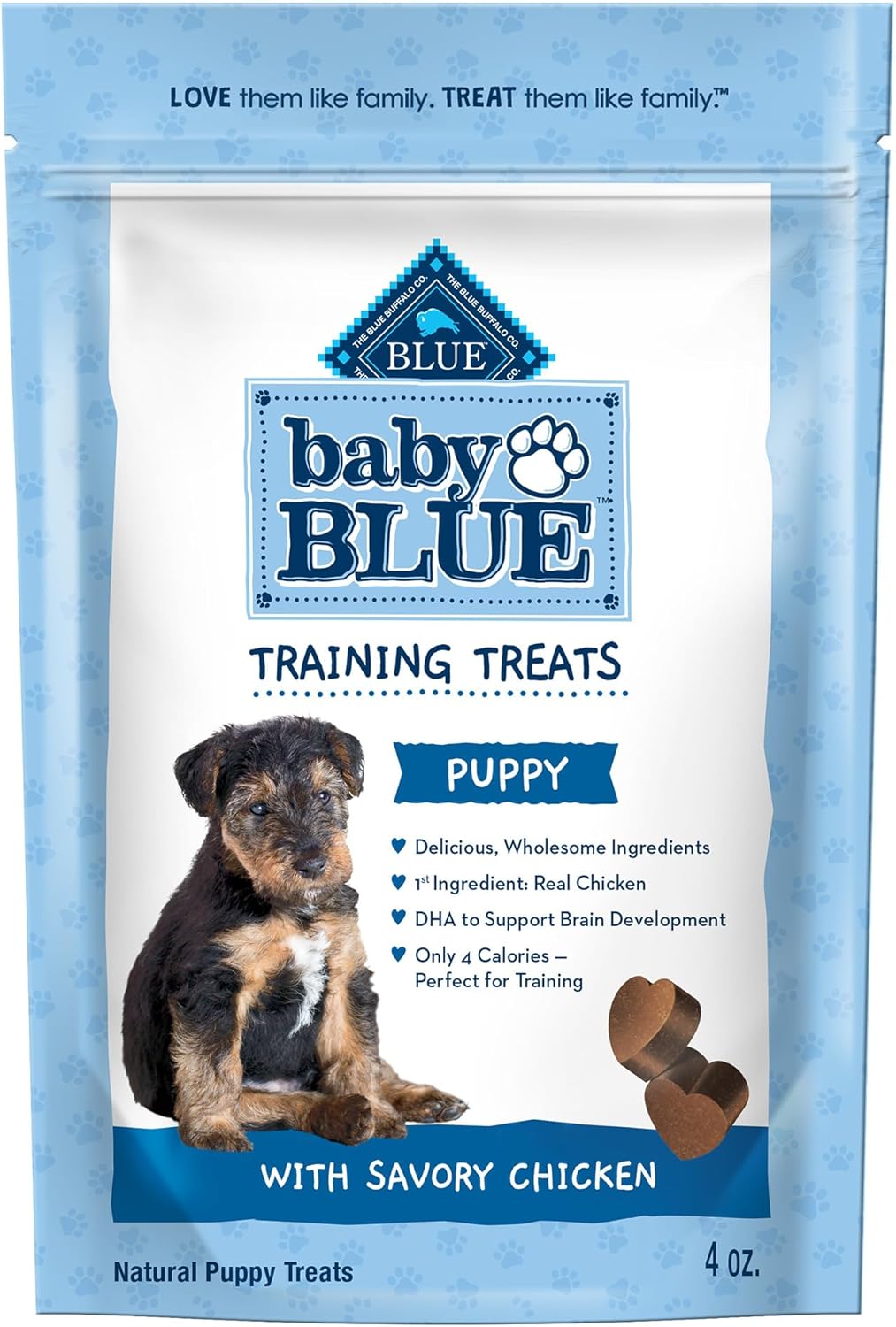
Blue Buffalo Baby BLUE Training Treats 4 oz
Best Budget Training Treat for Rottweiler Puppy
| Flavor | Chicken |
|---|---|
| Age Range Description | Puppy |
| Item Form | Semi Moist |
| Unit Count | 4 Ounce |
| Allergen Information | Corn-Free, Soy Free, Wheat Free |
These Baby BLUE Savory Chicken training treats are soft, bite-sized morsels designed for puppy training and intermittent rewards. Made with real chicken as the first ingredient and a semi-moist texture, they are easy to break or feed quickly during multi-step training sessions. The formula includes DHA for cognitive development and omega fatty acids to support skin and coat, while LifeSource-inspired nutrients and no corn, wheat, or soy aim to reduce common allergens. In practice the treats are highly palatable to most puppies and the small pieces minimize interruptions during repetitious drills. The 4-ounce bag is convenient for short outings or a training class, but frequent trainers may find the pack small and need to replenish often. Nutritional specs show modest protein and fat levels appropriate for treats rather than meal replacement, so they work best as rewards rather than primary food. Overall these treats balance taste and puppy-friendly texture, though the small package size limits how long one bag lasts for heavy training schedules.
Best for: Puppy owners focused on efficient, frequent reward-based training who want a tasty, soft treat that is easy to portion and gentle on young digestive systems.
Less Ideal for: People who run long, intensive daily training sessions or need bulk packaging for many repetitions should consider larger multi-pack options.
- Real chicken listed as the first ingredient for strong palatability
- Soft, semi-moist texture is easy to break and quick to deliver during training
- Includes DHA and omega fatty acids to support cognitive development and skin and coat
- Free of corn, wheat, soy and artificial colors or preservatives
- Small 4-oz bag may not be economical for heavy daily trainers
- Treat nutrient levels are modest so they should not replace regular food
Verdict: The best budget training treat for a Rottweiler puppy that provides good taste and consistent reward value without breaking the bank.
Bully Max High Protein Dog Treats 400g
Best High-Protein Training Treat

| Flavor | Beef |
|---|---|
| Protein | 32% Protein |
| Item Form | Biscuits |
| Container Type | Resealable, stand-up pouch |
| Item Weight | 400 g |
These Bully Max High Protein Dog Treats are crunchy, beef-liver–first biscuits designed as a high-protein reward for training and daily feeding. Each treat contains about 32% protein and added amino acids such as lysine and methionine, which makes them useful for supporting muscle maintenance and recovery in growing or active dogs. The firm texture encourages chewing that can help everyday dental hygiene, while the resealable stand-up pouch keeps biscuits fresh between sessions. Ingredients list real beef liver plus fruits, vegetables, egg and targeted nutrients including taurine, vitamin C and mixed tocopherols. Practical uses include structured training rewards, meal toppers to boost calorie and protein intake, or post-exercise snacks for working puppies. Limitations to consider are that these are calorie-dense treats so portions should be adjusted for weight management, and the formula contains pea protein and oats which some owners avoid in elimination diets. Overall they work best when used as a controlled supplement to a balanced feeding plan rather than a meal replacement for growing puppies.
Best for: Owners of Cane Corso puppies and other active, growing dogs who need easily delivered extra protein and nutrients to support muscle development and recovery during training and growth.
Less Ideal for: Dogs on calorie-restricted or strict elimination diets where ingredients like peas or oats must be avoided, or owners seeking soft, very small training treats for frequent rapid rewards.
- High protein content (32%) to support muscle growth and recovery.
- Real beef liver listed as the first ingredient for strong palatability.
- Includes targeted amino acids (lysine, methionine) and taurine for muscle and heart support.
- Crunchy texture that can aid everyday dental hygiene.
- Resealable stand-up pouch for easier storage and freshness.
- Calorie-dense formula requiring portion control to avoid excess weight gain.
- Contains ingredients (pea protein, oats) that may not suit strict elimination diets.
Verdict: The best high-protein training treat for owners who want extra protein to support a growing Rottweiler puppy’s muscle development and activity level.
Zuke’s Puppy Naturals Salmon Treats 5 oz
Best Soft Training Treat

| Flavor | Salmon & Chickpea |
|---|---|
| Unit Count | 5 Ounce |
| Item Form | Pellet |
| Age Range Description | Puppy |
| Special Ingredients | all-natural |
Zuke's Puppy Naturals Salmon treats are soft, pellet-style rewards designed for puppy training and on-the-go snacks. Each treat is chewy and low in calories, making it easy to deliver multiple rewards during short training sessions without overfeeding, and the soft texture is gentle on teething mouths and sensitive gums. The recipe lists real salmon first and includes fish oil to supply DHA and EPA intended to support brain development, while the formula excludes corn, wheat, and soy. The pouch is resealable for freshness and convenient to carry on walks or hikes. On the downside, the treats contain cane sugar and malted barley extract, so owners monitoring added sugars or grain derivatives may prefer alternatives, and the 5 oz pouch is relatively small for heavy trainers. In practice these work well as a high-value, easy-to-chew option for puppies that need frequent, palatable reinforcement, especially during early training and socialization.
Best for: Puppy owners who need a truly soft, highly palatable treat for frequent training rewards or for puppies with sensitive or teething mouths.
Less Ideal for: Owners seeking grain-free or zero-sugar veterinary therapeutic treats or those who need bulk quantities for extended pro-level training sessions should consider other options.
- Soft, chewy texture suitable for teething puppies and sensitive mouths
- Made with real salmon and fish oil providing DHA and EPA for brain support
- Small, low-calorie pellets allow frequent rewards without excess calories
- Resealable pouch for freshness and easy portability
- Free from corn, wheat, and soy
- Contains added sugars and malted barley extract which some owners may avoid
- 5 oz pouch is a small quantity for intensive training sessions
Verdict: The best soft training treat for Rottweiler puppies that need gentle, easy-to-chew rewards that break apart quickly during frequent training.
ASMPET Chicken Jerky Rings 11oz
Best Long-Lasting Training Treat

| Flavor | Chicken |
|---|---|
| Unit Count | 11 Ounce |
| Item Form | Flake |
| Age Range Description | All Life Stages |
| Animal Food Diet Type | Limited Ingredient |
These chicken jerky rings are thin, ring-shaped training treats made from 100% natural chicken with no grains or artificial colors, packaged in an 11 ounce resealable bag. They are intended as high-protein, low-fat rewards that are easy to break into smaller pieces for training or given whole for longer chewing; the ring shape makes them convenient to hold and delivers a bit more chew time than brittle bits. Typical use is as a training reward or occasional snack to support digestion and coat condition, and the resealable zip bag keeps portions handy on walks or during sessions. Practical benefits include a limited-ingredient formula suited to dogs with simple diets, portability for field training, and a texture that can engage a strong-mouthed breed while still being breakable for frequent reinforcement. Limitations are that these are flake/form treats rather than dense chew sticks, so very prolonged durability is modest compared with hard chews, and portion control is important with an energetic large-breed puppy to avoid overfeeding during long sessions.
Best for: Owners running extended training sessions with a Rottweiler puppy who want a high-protein, limited-ingredient treat that is portable and can be broken into small rewards on the fly.
Less Ideal for: Owners seeking a very long-lasting chew for heavy adult chewers or for unsupervised, long-term chewing should choose a sturdier chew product instead.
- Made from 100% natural chicken with no artificial colors or grains
- Ring shape that is easy to break for small training rewards
- Resealable zip bag for portability and freshness
- High protein, low fat formula supports energy and coat condition
- Not as long-lasting as hard chews or bully sticks for heavy chewers
- Portion size can add up during long training sessions
Verdict: The best long-lasting training treat for sessions where you need a longer-lasting reward to keep a Rottweiler puppy focused or occupied.
BIXBI Pocket Trainers Peanut Butter
Best Low-Calorie Training Treat

| Flavor | Peanut Butter |
|---|---|
| Unit Count | 6 Ounce |
| Item Form | Grain |
| Animal Food Diet Type | Veterinary Diet |
BIXBI Pocket Trainers are small, moist peanut butter treats designed specifically for training and frequent rewarding. Sold in a 6 ounce pouch, the soft bites fit easily in a pocket and contain under 4 calories each, so you can deliver many repetitions without excessive calorie load. The recipe is grain-free and made without artificial preservatives or flavors, using chickpea flour and peanut butter as primary ingredients, which helps dogs with grain sensitivities tolerate them better than typical wheat-based treats. The bagged format is shelf-stable and convenient for on-the-go sessions, and the treats are marketed as gentle on sensitive stomachs. Limitations include the small pouch size if you train often and the presence of peanuts, which means they are unsuitable for dogs with peanut allergies; also they are not a complete food so should be used strictly as training rewards. For owners seeking a flavorful, low-calorie, grain-free option for frequent reinforcement, these treats are a practical choice.
Best for: Dog owners who prioritize grain-free ingredients and need a low-calorie, highly palatable treat for frequent reinforcement during training or behavior work.
Less Ideal for: Owners of dogs with peanut allergies or those who need larger bulk quantities for very frequent daily training sessions.
- Grain-free formula suitable for dogs with grain sensitivities.
- Low calorie per treat (under 4 calories) for high-repetition training.
- Soft, moist texture and pocket-sized shape for easy handling during sessions.
- Made without artificial preservatives or flavors and produced in the USA.
- Contains peanuts, so not appropriate for dogs with peanut allergies.
- Small 6 oz pouch may require frequent repurchasing for heavy trainers.
- Not a complete or balanced food and intended only as a treat or training aid.
Verdict: The best low-calorie training treat for owners who want to reward a Rottweiler puppy frequently while managing daily calorie intake and weight.
Pupford Freeze Dried Training Treats Meat Bundle
Best Premium Training Treat

| Flavor | Meat Bundle |
|---|---|
| Age Range Description | All Life Stages |
| Item Form | Bite |
| Unit Count | 8 Ounce |
These Pupford freeze-dried meat treats are bite-sized, low-calorie rewards intended for frequent training sessions and on-the-go reinforcement. The Meat Bundle packs four 2 oz pouches (chicken, beef liver, salmon, rabbit) so you can test flavors and rotate proteins for variety and motivation. Because each formula lists only the animal protein plus mixed tocopherols, the treats are very simple and suitable for limited-ingredient diets or dogs with sensitive stomachs. Their freeze-dried texture makes them lightweight and low-mess, so you can carry many pieces without greasy hands and dole out quick, high-value rewards during repetitive drills. The package recommends feeding up to about 10 treats per day depending on size, which is realistic for short training sessions, though you should track daily calories for a rapidly growing Rottweiler puppy. For buyers prioritizing premium, single-ingredient sourcing and high palatability, these deliver strong practical benefits; if you need calorie-dense training kibble-style treats or large-format chews for extended chewing, this is not that product.
Best for: Owners of Rottweiler puppies who prioritize premium, simple-ingredient treats and want highly motivating, low-calorie rewards for frequent training and behavior work.
Less Ideal for: People looking for long-lasting chew rewards or high-calorie treats to supplement a growing large-breed puppy’s diet should consider other formats.
- Single-ingredient primary proteins for straightforward, limited-ingredient feeding
- Freeze-dried texture is ultra low-mess and lightweight for carrying many rewards
- Bundle includes four different flavors so you can find the most motivating protein
- Bite-sized pieces and low calories make them suitable for frequent training reinforcement
- Small pouch sizes mean you may need to repurchase more often for large-breed puppies
- Freeze-dried pieces are fragile and can produce crumbs if crushed
Verdict: The best premium training treat for owners willing to pay more for top-quality ingredients, better sourcing, and superior flavor for their Rottweiler puppy.
Choosing the Right Training Treat Rottweiler Puppy: Key Factors to Consider
Palatability and Aroma
A rottweiler puppy often responds best to strong-smelling, savory treats that stand out against environmental distractions. Higher palatability leads to faster engagement during training, which reduces session length and increases the number of successful repetitions.
When choosing treats, consider both scent intensity and immediate flavor payoff. Hard-to-chew or bland items force longer handling times and reduce the number of repetitions you can do in a short session. Also evaluate whether the puppy shows consistent preference across multiple uses rather than a single initial reaction.
Size and Texture
Treats should be small and easy to swallow quickly so you can deliver frequent rewards without interrupting flow. Soft, moist bites are useful for complex behaviors because they are consumed almost instantly; harder treats can work for low-distraction settings but slow down high-speed drills.
Think about breakability: a treat that can be split into several micro-rewards lets you reinforce many repetitions while controlling calories. Texture also affects dental wear and choking risk, so choose a format appropriate for a puppy's developing teeth and chewing habits.
Nutritional Profile for Growing Large-breed Puppies
Rottweiler puppies have specific growth needs and are prone to rapid weight gain if treats are too calorie-dense. Look for higher-protein, lower-fat options with limited fillers. A balanced treat supports muscle development without contributing excessive calories that can stress developing joints.
Also consider ingredient quality: single-protein or limited-ingredient treats reduce the risk of digestive upset. Avoid treats with excessive sugars or artificial additives that provide temporary excitement but little nutritional value.
Ingredient Transparency and Allergen Awareness
Clear labeling helps you avoid common allergens and identify if a treat contains undesirable fillers. Rottweiler puppies may show sensitivities to certain proteins or grains; choosing treats with explicit ingredient lists and simple recipes simplifies troubleshooting.
If your puppy has a known sensitivity, select a treat that lists the protein source up front and avoids ambiguous terms like "meat meal". Transparent sourcing and minimal processing also tend to correlate with more consistent palatability and fewer gastrointestinal surprises.
Portion Control and Calorie Tracking
Because training requires many repetitions, controlling calorie intake is essential. Use small, low-calorie treats or break larger treats into micro-portions so you can reward frequently without adding too many daily calories.
Calculate treat calories into your puppy's daily allowance and adjust meal sizes accordingly on high-training days. Packaging that lists calories per piece or per gram makes this process far easier and reduces the risk of accidental overfeeding.
Practical Handling and Storage
Treats need to perform in real-world conditions: outdoors, in pockets, or in training pouches. Moist treats may be more enticing but can crumble in warm conditions or require refrigeration after opening. Dry bite-sized pieces are often more durable for on-the-go work.
Check resealable packaging, shelf life after opening, and how the treat behaves when carried in a pouch. Ease of access during rapid drills and minimal mess are important for maintaining training momentum and reducing cleanup after sessions.
How Many Treats Should I Give During a Single Training Session?
Short, frequent rewards work best for puppies learning new behaviors. Aim for many small treats rather than a few large ones so you can reinforce repeated trials without long pauses.
A practical target is 10 to 20 micro-rewards in a 10- to 15-minute session, depending on the treat size and your puppy's calorie needs. If using larger bites, split them so each successful repetition receives only a fraction of the piece.
- Keep sessions short to maintain focus and prevent fatigue.
- Pause training if the puppy becomes uninterested; resume later.
- Adjust meal portions that day to account for treat calories.
When Should I Switch to Lower-value Rewards?
Start with high-value treats for new or challenging behaviors, then gradually transition to lower-value rewards as the puppy reliably performs the behavior. This fading process keeps the behavior durable and reduces treat dependency.
Use praise, petting, or play as intermittent rewards once a behavior is established, reserving high-value treats for reinforcement in high-distraction environments or when shaping complex steps.
- Reduce treat frequency gradually but unpredictably to maintain behavior.
- Save highest-value rewards for proofing around distractions.
Are Single-ingredient Treats Better for Sensitive Stomachs?
Single-ingredient or limited-ingredient treats are often easier to diagnose when digestive upset occurs. They eliminate many potential triggers and make it simpler to identify the offending ingredient if your puppy has a reaction.
If you suspect sensitivity, trial a new single-protein treat for several days while watching stool quality and energy levels. Consult your veterinarian before long-term changes if symptoms persist.
- Introduce one new treat at a time over several days.
- Monitor stool consistency and appetite during the trial period.
How to Use Treats for Leash Training and Impulse Control
Treats are powerful tools for shaping calm behavior when the leash is novel or distractions are present. Deliver small, frequent rewards for brief moments of calm focus or for orienting attention to you rather than the stimulus.
Pair treat delivery with clear cues and consistent timing so the puppy links calm behavior with positive outcomes. Gradually increase the challenge by adding distance, duration, or more distracting environments while maintaining reward predictability.
- Reward attention to you before the puppy becomes reactive.
- Increase distance or duration slowly to build impulse control.
Storing and Transporting Treats for Outdoor Sessions
Choose packaging and formats that survive being carried in pockets or pouches during walks. Resealable bags and hard-sided treat tins protect soft treats from crushing and keep dry treats crisp.
For very hot days, avoid moist treats that may spoil. Consider carrying a small, insulated pouch or switching to stable dry options to prevent mess and maintain treat integrity while you train outside.
- Use resealable containers to keep scent contained and fresh.
- Rotate treats regularly to avoid stale batches that lose appeal.
How We Chose the Best Training Treat Rottweiler Puppy
We applied breed-appropriate and puppy-focused filters to narrow choices suitable for rottweiler puppies. Key evaluation criteria included palatability under distraction, protein source and digestibility, treat size and texture for small-mouth delivery during short sessions, macronutrient balance to support growth, and ingredient transparency to reduce allergy risk. We also checked ease of portion control for frequent repetitions, shelf stability for multi-session use, and whether the treat form supports scent-based motivation without excessive fat or fillers. Exclusions: we excluded treats formulated solely for adult dogs, supplements marketed as meals, and any options with unclear ingredient sourcing or unbalanced calories for a growing large-breed puppy. Final selections emphasized options that enable rapid reinforcement, safe growth, and practical handling during walks and indoor lessons.
Our full evaluation process is outlined in our review methodology.
FAQ
Can I use my puppy's regular kibble as training treats?
Often you can if the kibble is small and the puppy finds it motivating. For rottweiler puppies, kibble may be too low-value in distracting settings, so reserve it for low-distraction practice or mix small kibble pieces with higher-value morsels.
How do I prevent my rottweiler puppy from getting overweight from treats?
Track treat calories and reduce meal portions on high-training days. Use micro-rewards and low-calorie options where possible, and distribute treats across multiple short sessions rather than long ones to maintain activity without excess calories.
What treats are safest for teething puppies?
Soft, easily chewable treats that do not require heavy biting are safer during teething. Avoid very hard chews that can stress emerging adult teeth, and monitor chewing closely to prevent choking or splintering.
How soon can I start training with treats after bringing a puppy home?
You can begin basic reward-based training immediately. Start with simple cues like name recognition, sit, and focus, using soft, high-value treats to build positive associations while the puppy adjusts to its new home.
Are freeze-dried single-protein treats a good option?
Freeze-dried single-protein treats often offer strong aroma and high palatability with minimal processing. They can be very effective as high-value rewards, but check portion sizes and handle storage carefully since they can be calorie-dense by weight.
Final Verdict
Prioritize small, high-value, and nutritionally appropriate treats when training a rottweiler puppy. Balance palatability with calorie control and choose formats that let you deliver many quick rewards without interrupting the flow of a session. Consider ingredient simplicity if your puppy shows sensitivity, and use treat-based reinforcement strategically while you fade to intermittent nonfood rewards. Focus on consistent timing, portion control, and gradual increases in challenge to build reliable behaviors while protecting healthy growth. With the right treats and a clear plan, you can accelerate learning without compromising nutrition or long-term habits.

