

Picking the right treat-dispensing toy for a puppy matters because these toys shape early chewing habits, encourage learning, and extend playtime safely. The wrong toy can be boring, unsafe, or too hard for developing teeth. This guide highlights six top picks selected for durability, appropriate challenge levels, and easy cleaning so you can match a toy to your puppy's age and activity level. Below you will find the shortlist and clear notes on what to expect from each style, plus practical buying guidance to help you find a toy your puppy will enjoy and you can feel confident using.
Top Picks at a Glance
| Best Overall Treat The top all-around pick that suits most puppies | West Paw Zogoflex Toppl Small |  |
| Best Budget Treat A low-cost option that still delivers reliable reward value | ZHIERDE Treat Dispensing Ball Small |  |
| Best Premium Treat A higher-end choice with superior ingredients or craftsmanship | Potaroma Dog Puzzle Feeder |  |
| Best Slow-Dispensing Treat Formulated to release slowly for longer engagement and enrichment | Fanosy Duck Slow Feeder |  |
| Best Compact Treat Small, space-saving options ideal for travel or small spaces | Outward Hound Lil' Snoop 3.9" |  |
| Best Easy-Clean Treat Designed for minimal mess and straightforward cleanup after use | KONG Puppy Stuff'N Small |  |
West Paw Zogoflex Toppl Small
Best Overall Treat

| Pet Toy Type | Puzzle |
|---|---|
| Recommended Uses For Product | Chewing, Playing, Treat Dispensing |
| Indoor Outdoor Usage | Indoor, Outdoor |
| Material Type | Plastic |
The West Paw Zogoflex Toppl is a premium treat-dispensing puzzle that converts snack time into focused play. Its bowl-like design and interior rubber prongs hold kibble, soft fillings, or freezable mixtures so dogs must work to extract rewards, which promotes problem-solving and slows fast eaters. Made from West Paw's Zogoflex material, the Toppl is lightweight, water resistant, floatable, and dishwasher safe for easy cleaning, and the manufacturer highlights recyclable, non-toxic construction. In practice the small Toppl is best for light to moderate chewers and toy-motivated dogs that enjoy manipulating pieces to reach food; it is portable for indoor or outdoor use and works well for supervised solo play or food-based training. Important limits are its intended size and chew tolerance — truly aggressive chewers may damage it over time and the small size holds a relatively modest amount of food compared with larger puzzles. For owners prioritizing longevity, safe materials, and a toy that can accept wet or frozen fillings, the Toppl is a top-tier option that encourages longer engagement than basic dispensers.
Best for: Buyers who want a high-quality, safe puzzle toy that uses premium materials and supports longer, more complex food-based enrichment sessions for their dog.
Less Ideal for: Owners seeking a large-capacity slow feeder or an indestructible option for power chewers should consider different products.
- Holds kibble, wet food, or freezable mixes for longer-lasting engagement
- Made from BPA-free, non-toxic Zogoflex that is dishwasher safe and recyclable
- Design includes internal prongs to slow food release and increase challenge
- Floats and is water resistant so it can be used outdoors or near water
- Lightweight and portable for indoor or outdoor supervised play
- Small size holds only a modest amount of food compared with larger puzzle toys
- Not intended for heavy or determined chewers who may damage the toy
Verdict: The best overall treat for puppies that balances engagement, safety, ease of use, and broad appeal for everyday training and play.
ZHIERDE Treat Dispensing Ball Small
Best Budget Treat
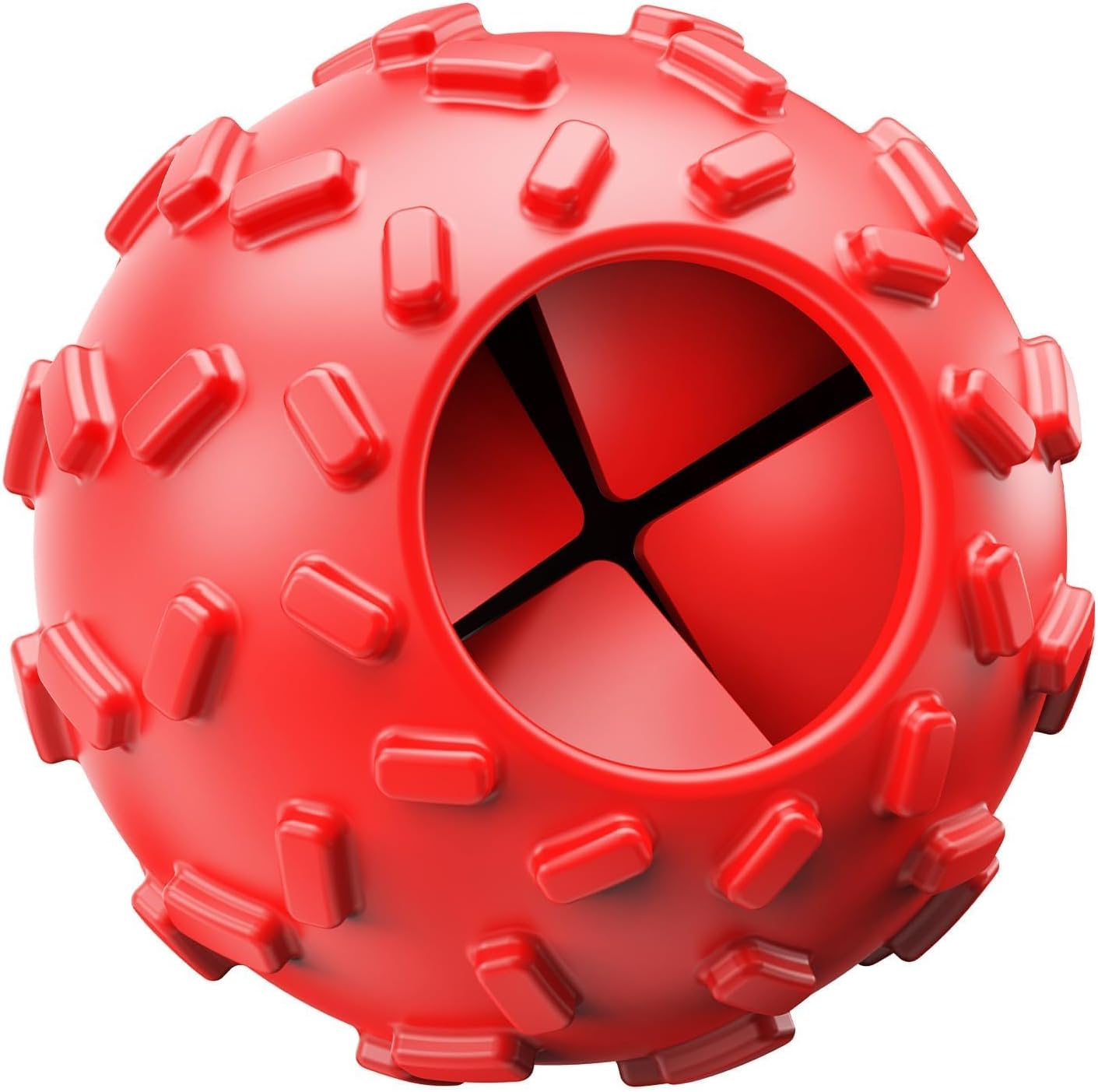
| Material Type | Natural Rubber |
|---|---|
| Pet Toy Type | Treat Dispenser Toy |
| Breed Recommendation | Small |
| Indoor Outdoor Usage | Indoor, Outdoor |
This compact treat-dispensing ball turns snacks into an interactive puzzle that keeps small dogs and puppies occupied. Fill the hollow core with kibble or small treats, then let the dog nudge, roll, and paw the ball to release rewards; flexible inner flaps can be trimmed to slow or speed dispensing so the challenge grows with the dog. The textured natural rubber surface gives grip for rolling and fetch, floats for water play, and is easy to rinse clean after use. Its small 2.7-inch size and 3.2-ounce weight make it easy to stash in a travel bag or crate and suitable for apartment play without taking much space. It is not intended for aggressive chewers or continuous heavy gnawing, so expect limited lifespan if a dog chews destructively. Scented options add extra interest but do not change function. For short supervised solo sessions, training, or slow-feeding enrichment, this ball is a practical, portable solution.
Best for: Owners who need a compact, travel-friendly enrichment toy to occupy small dogs or puppies in crates, apartments, or on the go and prioritize portability and adjustable challenge over chew resistance.
Less Ideal for: Households with powerful chewers or dogs that destroy toys quickly should choose a heavier-duty chew toy instead.
- Small, lightweight and highly portable for travel or crate use
- Adjustable inner flaps let you control treat flow for longer-lasting engagement
- Made from natural rubber with a textured surface for grip and easy rinsing
- Floats for versatile indoor, outdoor, or water play
- Not meant for aggressive chewers so durability is limited under heavy chewing
- Small opening limits treat size to kibble or small treats only
Verdict: The best budget treat for owners who need an affordable, safe, and palatable option for frequent training without extra frills.
Potaroma Dog Puzzle Feeder
Best Premium Treat
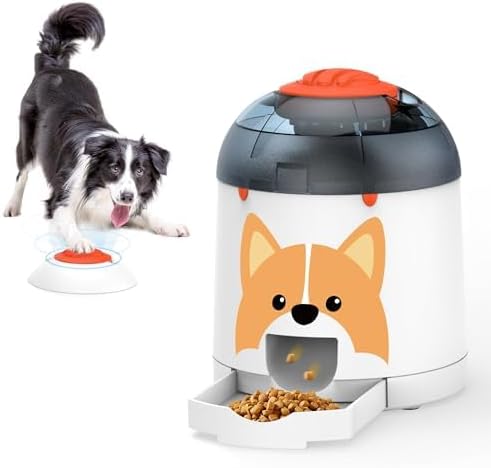
| Capacity | 280 ml |
|---|---|
| Operation Mode | Automatic |
| Material Type | Acrylonitrile Butadiene Styrene |
| Product Care Instructions | Hand Wash Only |
The Potaroma Dog Puzzle Feeder is a remote-controlled, USB-rechargeable puzzle toy that combines slow-feeding with interactive training. It holds dry kibble or treats in a 280 ml container and dispenses adjustable portions while offering nine preset sounds plus one recordable message to call your pet. Use it for supervised training or independent enrichment: place it indoors or take it outside within the remote's 80-foot range to encourage paw coordination and problem solving. The unit's ABS/PC and food-grade PP construction aims for durability and hand-wash care makes cleaning straightforward but not dishwasher-safe. Practical benefits include extended engagement through automated dispensing and customizable audio cues, while limitations are its modest capacity for large or multi-dog households and the need to hand wash parts. The feeder is best when used as a premium single-pet enrichment and training tool rather than a bulk food dispenser.
Best for: Buyers who want a well-made, feature-rich enrichment feeder that emphasizes longevity and refined engagement for single dogs and who prioritize durability and training functionality over high capacity.
Less Ideal for: Households feeding multiple large dogs or those who need a high-capacity automatic feeder for unattended long-term dispensing should consider larger-capacity alternatives.
- Adjustable dispensing lets you control portion size for training or slow feeding
- Remote control with an 80-foot range enables outdoor or distance play
- Recordable sound plus nine presets increase engagement and recall
- USB rechargeable design removes the need for frequent battery replacement
- Durable food-grade plastics designed for repeated use and hand washing
- 280 ml capacity is small for large dogs or multiple pets
- Not dishwasher safe so cleaning requires manual effort
Verdict: The best premium treat for owners willing to spend more for higher-quality ingredients, better sourcing, or specialty formulations.
Fanosy Duck Slow Feeder
Best Slow-Dispensing Treat

| Material Type | Plastic |
|---|---|
| Operation Mode | Manual |
| Included Components | Lid |
| Recommended Uses For Product | Dry Food, Indoor, Outdoor |
| Target Species | Dog |
The Fanosy Duck Slow Feeder is a battery-free puzzle toy that dispenses dry kibble or small treats when a pet presses the duck's tail, combining slow-feeding and interactive play. It is used by pouring kibble into the removable chamber, selecting one of three outlet sizes to match pellet diameter, and letting the pet nudge the tail to release food intermittently. Practical features include a non-slip base for added stability, food-grade ABS construction that is washable, and a detachable lid and chamber for easier cleaning. The adjustable openings let you tune how quickly kibble comes out, which helps extend play and reduce gulping for curious puppies. Limitations are its small capacity and manual operation, so it needs frequent refills for longer sessions and some puppies require training to activate the dispenser reliably; heavy chewers or very active dogs can tip or damage the plastic. For supervised, short play-and-treat sessions it encourages foraging behavior and slows feeding, but it is not a replacement for larger timed feeders or indestructible chew toys.
Best for: Puppy owners who want a simple, supervised treat toy that extends reward-driven play and encourages problem-solving during short training or snack sessions.
Less Ideal for: Owners seeking an unattended large-capacity feeder, an indestructible chew toy, or a device that dispenses wet food should look elsewhere.
- Interactive tail-activated dispenser encourages foraging and mental engagement
- Three adjustable outlet sizes accommodate different kibble diameters
- Detachable chamber and lid make cleaning straightforward
- Non-slip base improves stability during play
- Made from food-grade ABS and requires no batteries
- Small internal capacity requires frequent refills for longer sessions
- Manual dispensing means pets may need training to trigger food reliably
- Not designed for heavy chewers and can be tipped by very active dogs
Verdict: The best slow-dispensing treat for extending play and mental stimulation by encouraging puppies to work longer for each reward.
Outward Hound Lil' Snoop 3.9"
Best Compact Treat

| Pet Toy Type | Treat Dispenser Toy |
|---|---|
| Breed Recommendation | Small-Medium Breeds |
| Indoor Outdoor Usage | Indoor, Outdoor |
| Water Resistance Level | Water Resistant |
The Lil' Snoop is a compact treat-dispensing ball made for small dogs and puppies that encourages foraging and slows fast eaters. You fill the translucent, squishy cavity with kibble or small treats, close it, and let your pup nudge and paw to release rewards; the toy's size and 1/4-cup capacity make it easy to use in crates, carriers, or small living rooms. It is made from a flexible Orbee-Tuff TPE-like material that the brand describes as durable for treat play and is mint-scented to help freshen breath. Cleaning is straightforward — fill with warm soapy water, shake, rinse, and air dry. Important limitations are that it is not intended as a chew toy and should be used under supervision, and very determined chewers may still damage it. For casual puzzle play, slow feeding, and short supervised sessions in confined spaces, the Lil' Snoop makes treat time more engaging without taking up much room.
Best for: Puppy and small-dog owners who need a compact, portable treat toy for crates, travel, or small living spaces and want to add short supervised enrichment sessions.
Less Ideal for: Owners of aggressive chewers or dogs that play destructively should choose a sturdier, chew-specific toy instead.
- Sized for puppies and small dogs so it fits in crates and small spaces
- Treat-dispensing design encourages mental stimulation and slows fast eaters
- Mint-infused material helps freshen breath during play
- Translucent, squishy construction makes it easy to see and retrieve treats
- Simple cleaning method with warm soapy water
- Not a chew toy and requires supervision during use
- May be damaged by heavy or persistent chewers
Verdict: The best compact treat for owners who need portable, low-volume rewards that are easy to carry, store, and use on the go.
KONG Puppy Stuff'N Small
Best Easy-Clean Treat
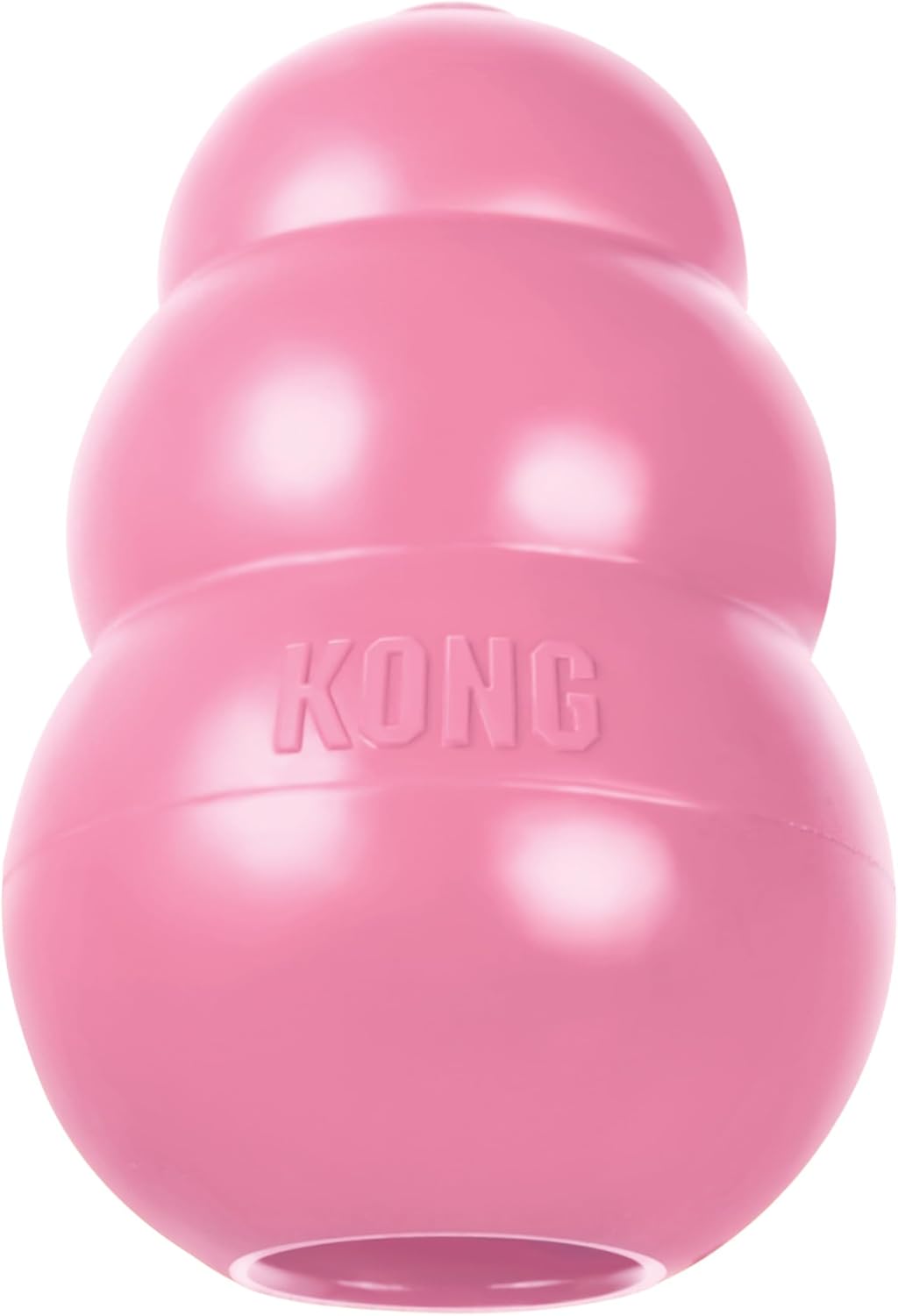
| Pet Toy Type | Chew Toy |
|---|---|
| Breed Recommendation | Small |
| Recommended Uses For Product | Chewing |
| Indoor Outdoor Usage | Indoor |
| Material Type | Rubber |
The KONG Puppy Stuff'N is a soft natural rubber chew toy made specifically for small puppies to soothe baby teeth and encourage interactive play. Its hollow center accepts kibble, Easy Treat, or paste to turn short chewing sessions into longer enrichment activities, which helps with crate training and boredom. The rubber compound is gentler than adult KONG formulas, so it cushions puppies' developing teeth while still offering a resilient, erratic bounce that makes fetch more engaging. It is intended for supervised indoor chewing and is not water resistant, so cleaning is straightforward but requires attention to any stuck debris in the cavity. The toy is lightweight and shaped for easy pickup by small mouths, but it is not aimed at power chewers and should be retired if damaged. Supervision is advised and larger or older dogs should use a firmer KONG line for heavy chewing.
Best for: Buyers who want a gentle, enrichment-focused teething toy that soothes puppy gums while doubling as a treat-stuffer and play fetch toy.
Less Ideal for: Do not choose this for older dogs or power chewers who need a firmer, more durable chew option.
- Soft, puppy-specific natural rubber formula gentle on baby teeth
- Hollow center for stuffing treats to extend play and aid training
- Erratic bounce suitable for fetch and interactive play
- Lightweight shape sized for small puppy mouths
- Made with materials sourced and assembled to KONG quality standards
- Not designed for power chewers or aggressive chewing
- Not water resistant which can complicate deep cleaning if heavily soiled
Verdict: The best easy-clean treat for busy households that want minimal residue and quick cleanup after feeding or play sessions.
Choosing the Right Treat Dispensing Toy Puppy: Key Factors to Consider
Safety and Material Suitability
Puppies have developing teeth and explore with their mouths, so materials matter for both health and durability. Choose toys made from non-toxic, chew-resistant compounds that resist tearing and do not shed small bits that could be swallowed.
Consider smooth, rounded edges and securely attached components to prevent accidental ingestion. For very young puppies, softer rubber or thermoplastic elastomers reduce bite pressure while still allowing interactive play. As puppies grow, higher durometer materials may be appropriate, but start with safer, softer options and move up as tooth maturity increases.
Appropriate Challenge Level
Treat-dispensing toys should offer a reward through problem solving but not frustrate a puppy. A toy that releases treats too easily will bore the puppy, while one that is too complex can lead to avoidance or destructive chewing.
Look for adjustable difficulty or progressive challenge designs that you can simplify during training sessions and increase as your puppy learns. Simpler puzzles help build confidence early, and graduated complexity supports ongoing engagement without needing constant replacement.
Size and Shape for Puppy Mouths
Size directly affects safety and usability. A toy that is too large is awkward for a puppy to manipulate, while a toy that is too small creates choking hazards. Match toy dimensions to your puppy's current muzzle size and consider that rapid growth may require buying different sizes over time.
Shapes that allow easy pawing and nosing encourage independent play, while elongated or irregular shapes can be harder for a puppy to pick up. Avoid narrow cavities that trap tiny tongues or teeth and choose openings that the puppy can reach without overworking its jaws.
Ease of Cleaning and Hygiene
Puppies drool and soil toys quickly, so hygiene is a major practical concern. Toys with sealed cavities that cannot be opened are often harder to clean and may harbor bacteria; designs that disassemble or are dishwasher-safe speed cleaning and extend the toy's useful life.
Consider materials that resist staining and odors, and prefer toys with simple interior geometries that rinse clean. Regular cleaning reduces gastrointestinal risks from bacteria and keeps treat residues from attracting pests or creating bad smells in the home.
Treat Compatibility and Dispensing Control
Not all treats work well in every dispenser. Some toys accept small kibbles, others require soft or paste-like fillings. Choose a toy that matches the treats you want to use, whether dry kibble for casual reward or spreadable pastes for training sessions.
Also consider how much control the toy gives you over treat flow. Adjustable openings or insert plates allow you to calibrate difficulty and reward size, which helps manage calories while keeping the puppy motivated.
Durability Versus Replaceability
Durability is important because puppies can be hard on toys, but overly rigid items may damage teeth. Look for a reasonable balance: robust construction that tolerates chewing without being indestructible to the point of harming the puppy's mouth.
Also think about modular or replaceable parts. Toys with replaceable inserts or refillable elements can be refreshed without replacing the entire toy, which is often more economical and reduces waste over time.
How Do I Introduce a Treat-dispensing Toy to a Young Puppy?
Start with short, supervised sessions to build positive associations. Show the puppy the toy and let it sniff a visible treat before placing treats inside so the puppy understands the reward concept.
Begin on the easiest setting or with a toy that dispenses treats quickly. Praise and offer additional rewards by hand at first so the puppy connects interaction with the toy to a reliable payoff. Gradually increase challenge as the puppy learns to nudge, paw, or roll the toy to obtain treats.
- Demonstrate by rolling or nudging the toy so the puppy sees how treats come out.
- Limit sessions to 5–10 minutes to prevent frustration and chewing fatigue.
- Supervise every session until you are confident the puppy handles the toy safely.
Which Treats Work Best in Dispensing Toys for Puppies?
Choose treats that match the dispenser's opening size and internal design. Dry kibble or small training treats are often the easiest option for most toys. Softer chews or mashed treats can work in some models but may clog certain mechanisms or make cleaning harder.
Also consider calorie density and break treats into smaller pieces to reduce overfeeding. Using a mix of normal kibble and higher-value pieces makes the toy useful for both enrichment and training without excessive calories.
- Dry kibble: low mess, predictable dispensing.
- Soft training treats: high motivation but more residue to clean.
- Spreadable pastes: good for slow licking toys but not for rolling dispensers.
How Often Should I Clean a Treat-dispensing Toy?
Clean after heavy use or whenever visible residue builds up. For toys used daily, a weekly deep clean is a good baseline; rinse and inspect more frequently if your puppy drools a lot or uses wet treats.
Follow manufacturer instructions for disassembly and dishwasher compatibility when available. If a toy cannot be fully cleaned, rotate it out regularly to avoid bacterial buildup and odors.
- Rinse with hot water after each session to remove loose crumbs.
- Use mild dish soap and a brush for interiors; rinse thoroughly.
- Air-dry completely before refilling to prevent mold growth.
What Training Benefits Do Treat-dispensing Toys Offer?
These toys encourage independent problem solving and help burn mental energy, which is especially useful in young puppies with short attention spans. They can reinforce basic commands by rewarding focused interaction and patience.
They also support impulse control training because the puppy must work for the reward rather than receiving it immediately. Regular use can reduce boredom-related behaviors and provide constructive chewing alternatives during teething.
- Use them during solo play to reduce attention-seeking behavior.
- Pair with brief obedience drills to reinforce commands with a tangible reward.
- Rotate toys to maintain novelty and training effectiveness.
When Should I Replace a Treat-dispensing Toy?
Replace a toy if it shows visible damage such as large tears, deep gouges, or broken parts that expose internal mechanisms. Small surface wear is normal, but anything that creates sharp edges or loose pieces is a safety risk.
Also replace toys that retain persistent odors or staining despite cleaning, or that the puppy has outgrown because of size or durability needs. Regular inspection is a simple way to catch problems before they become hazards.
- Inspect weekly for signs of damage during cleaning.
- Retire toys with missing or loose components immediately.
- Have multiple toys on hand so you can rotate and replace without interrupting enrichment routines.
How We Chose the Best Treat Dispensing Toy Puppy
We focused on features that directly affect a puppy's safety, engagement, and long-term value. Our selection filters prioritized chew resistance appropriate for puppy teeth, toy sizes that reduce choking risk, and dispensing mechanisms that reward learning without causing frustration. We also weighed cleaning and maintenance since puppy toys get soiled quickly, and considered whether a toy's parts are easy to disassemble for washing. Additional editorial criteria included materials that are non-toxic and free of small detachable pieces, visibly stable constructions that withstand rough play, and design variations that suit different energy and skill levels. Excluded from the list were toys designed exclusively for adult dogs, items with complex electronics unsuitable for teething puppies, and any products with unclear safety information. The result is a group of toys that balance challenge and accessibility, with clear differences in how they deliver treats, how easy they are to clean, and how durable they are for early-life chewing behavior.
Our full evaluation process is outlined in our review methodology.
FAQ
Are treat-dispensing toys safe for teething puppies?
Often they are safe if designed for puppies and made from softer, non-toxic materials. Choose toys labeled for puppy use and monitor chewing to ensure the material is not breaking into small pieces.
Can I leave a treat-dispensing toy with my puppy unsupervised?
It depends on the toy and the puppy's behavior. Supervise initial sessions until you are sure the toy holds up and the puppy does not try to dismantle it. Some toys are suitable for short unsupervised play once confidence is established.
How do I prevent a puppy from eating too many treats from a dispenser?
Control portion size by using small kibbles or breaking treats into pieces and limiting session length. You can also reserve a portion of the puppy's daily food for use in the toy to avoid extra calories.
What if my puppy gets frustrated and chews the toy aggressively?
Stop the session and switch to an easier reward method to rebuild confidence. Offer supervised guided practice with visible treats and reduce difficulty until the puppy reliably succeeds without excessive chewing.
Do treat-dispensing toys help with separation anxiety?
They can help reduce boredom and provide a distraction, which may ease mild separation-related behaviors. However, they are not a standalone treatment for true separation anxiety, and training or behavior support may be necessary.
Final Verdict
When choosing a treat-dispensing toy for a puppy, prioritize safety, appropriate challenge, and ease of cleaning. Match toy size and material to your puppy's current mouth and chewing behavior, and prefer designs that let you control treat flow so you can manage calories and motivation. Expect to rotate toys as your puppy grows and to replace items showing damage. Focus on toys that build confidence through solvable challenges and that are easy to sanitize; that balance will deliver the most consistent training and enrichment benefits for a growing puppy.

