

Choosing the right treats for a 3-month-old puppy matters for training, teething comfort, and digestive health. At this age puppies are still developing their teeth, gums, and stomach tolerance, so treats should be small, soft, and made from limited, gentle ingredients. This guide shortlists the top treats suited to puppies at three months and explains why each type made the list. We evaluated texture, ingredient safety, and portioning to find options that support early training and healthy growth. Read on to see the criteria we used and the factors to consider when picking treats for your young puppy.
Top Picks at a Glance
| Best Overall Treat for 3-Month-Old Puppies The most well-rounded choice for nutrition, texture, and palatability | Blue Buffalo Baby BLUE Training Treats 4 oz |  |
| Best Budget Treat for 3-Month-Old Puppies An affordable puppy-friendly option that still meets basic quality needs | Milk-Bone Flavor Snacks Small |  |
| Best Soft Treat Gentle, easily chewed treats ideal for young puppy mouths and training | Pupford Soft & Chewy Training Treats 5 oz |  |
| Best Training Treat Tiny, high-value bites designed for repeated rewards during learning sessions | Zuke's Mini Naturals Peanut Butter & Oats 16 oz |  |
| Best Small-Bite Treat Compact pieces sized for tiny mouths and controlled portioning | Blue Buffalo BLUE Bits Chicken 4 oz |  |
| Best Grain-Free Treat A simple-ingredient option without grains for sensitive pups | Wellness CORE Brainiac Puppy Treats 5 oz |  |
| Best Premium Treat Higher-end treats with superior ingredients and thoughtful sourcing | Vital Essentials Beef Liver Treats 2.1 oz |  |
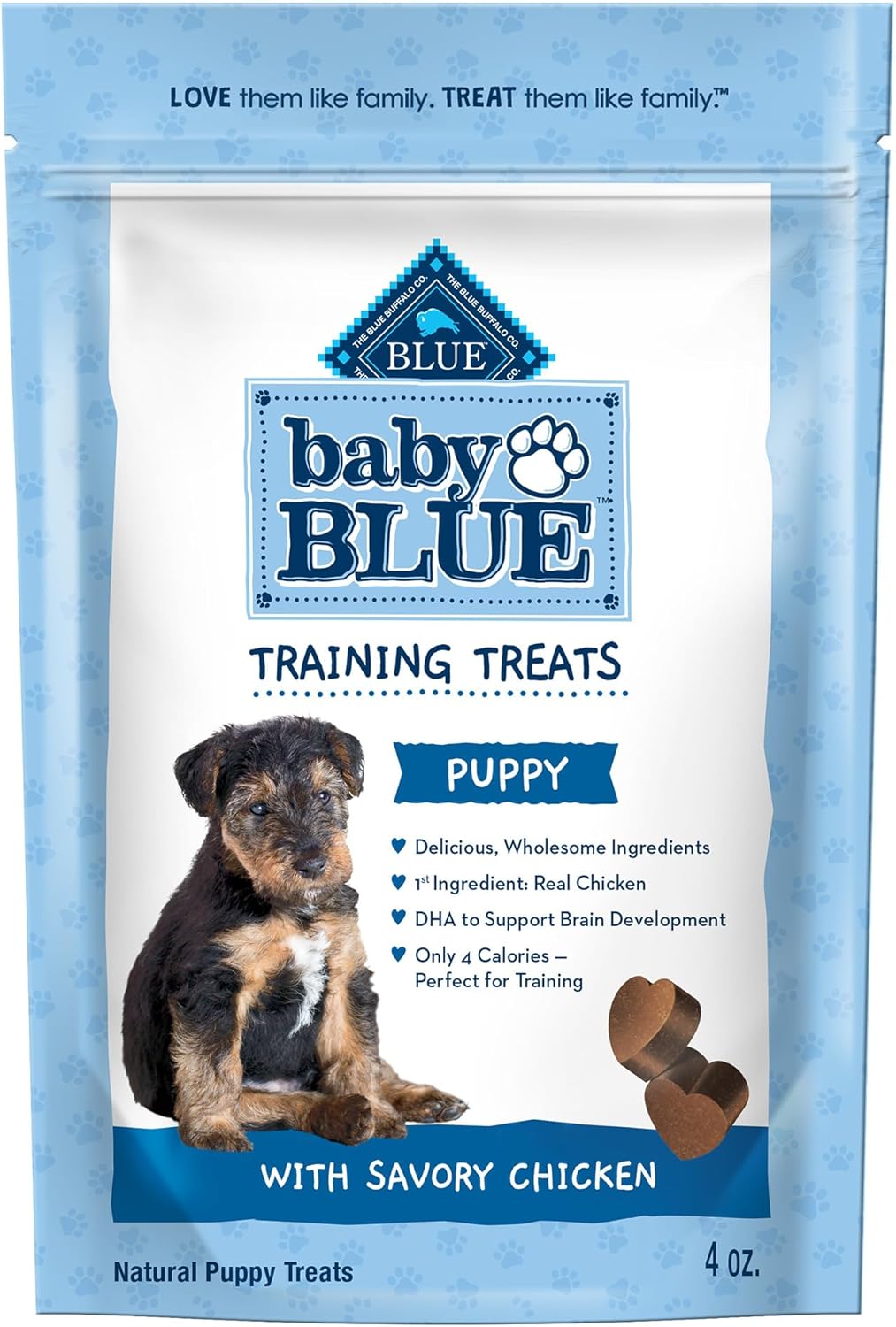
Blue Buffalo Baby BLUE Training Treats 4 oz
Best Overall Treat for 3-Month-Old Puppies
| Flavor | Chicken |
|---|---|
| Age Range Description | Puppy |
| Item Form | Semi Moist |
| Unit Count | 4 Ounce |
| Allergen Information | Corn-Free, Soy Free, Wheat Free |
These Baby BLUE Savory Chicken training treats are soft, bite-sized morsels designed for puppy training and intermittent rewards. Made with real chicken as the first ingredient and a semi-moist texture, they are easy to break or feed quickly during multi-step training sessions. The formula includes DHA for cognitive development and omega fatty acids to support skin and coat, while LifeSource-inspired nutrients and no corn, wheat, or soy aim to reduce common allergens. In practice the treats are highly palatable to most puppies and the small pieces minimize interruptions during repetitious drills. The 4-ounce bag is convenient for short outings or a training class, but frequent trainers may find the pack small and need to replenish often. Nutritional specs show modest protein and fat levels appropriate for treats rather than meal replacement, so they work best as rewards rather than primary food. Overall these treats balance taste and puppy-friendly texture, though the small package size limits how long one bag lasts for heavy training schedules.
Best for: Puppy owners focused on efficient, frequent reward-based training who want a tasty, soft treat that is easy to portion and gentle on young digestive systems.
Less Ideal for: People who run long, intensive daily training sessions or need bulk packaging for many repetitions should consider larger multi-pack options.
- Real chicken listed as the first ingredient for strong palatability
- Soft, semi-moist texture is easy to break and quick to deliver during training
- Includes DHA and omega fatty acids to support cognitive development and skin and coat
- Free of corn, wheat, soy and artificial colors or preservatives
- Small 4-oz bag may not be economical for heavy daily trainers
- Treat nutrient levels are modest so they should not replace regular food
Verdict: The best overall treat for 3-month-old puppies balances appropriate size, soft texture, puppy-safe ingredients, and appealing taste for everyday rewards and bonding.
Milk-Bone Flavor Snacks Small
Best Budget Treat for 3-Month-Old Puppies

| Unit Count | 24 Ounce |
|---|---|
| Flavor | Beef, Chicken, Turkey, Bacon & Sausage – Small |
| Item Form | Stick |
| Age Range Description | All Life Stages |
Milk-Bone Flavor Snacks are crunchy small-size biscuits sold in a 24-ounce box and meant for everyday rewarding and snacking. The bag contains a mix of beef, chicken, turkey, bacon and sausage flavors and is vitamin-fortified with about 15% protein plus added vitamins and minerals, so it doubles as a treat and a small nutritional boost. The crunch helps freshen breath and reduce tartar when used regularly, and the stick-like shape is easy to break into smaller pieces for tiny mouths and training sessions. Because these are wheat-based and include meat and by-product meals, they are best for dogs without grain sensitivities. The large box gives a lot of servings, which keeps per-treat cost low, but bulk quantity means treats can get stale if not resealed and they are not the softest option for dogs with sensitive teeth. For owners who need an affordable, flavorful bite-sized treat to use frequently during training or daily rewards, these deliver predictable taste and portion control.
Best for: Buyers who want a very affordable, flavorful small-biscuit treat for frequent rewards and short training sessions with tiny dogs.
Less Ideal for: Owners looking for grain-free, single-ingredient, or soft training treats for dogs with dental sensitivity should consider alternatives.
- Small, breakable biscuit size suitable for tiny mouths and training rewards
- Five mixed savory flavors that appeal to picky eaters
- Vitamin-fortified formula with added protein and minerals
- Crunchy texture that can help freshen breath and reduce tartar
- Large 24-ounce box offers a low per-treat cost for frequent use
- Contains wheat and by-product meals so not suitable for grain-sensitive dogs
- Bulk packaging can lose freshness if not stored airtight
- Crunchy texture may be hard for older dogs with dental issues
Verdict: The best budget treat for 3-month-old puppies offers safe, appropriately sized rewards and decent ingredient quality for owners who prioritize cost without sacrificing puppy suitability.
Pupford Soft & Chewy Training Treats 5 oz
Best Soft Treat

| Flavor | Chicken |
|---|---|
| Item Form | Bite-Sized Treat |
| Unit Count | 5 Ounce |
| Special Ingredients | Chicken, Sweet Potato |
| Animal Food Diet Type | Limited Ingredient |
Pupford Soft & Chewy Training Treats are bite-sized, chicken-flavored rewards designed for frequent use during training and enrichment. The treats come in a small pouch and have a soft, chewy texture that makes them easy to break into pieces or feed whole to young pups and dogs with sensitive teeth. Each treat is made from a short ingredient list that includes chicken and sweet potato and is free from artificial colors and fillers, which supports use with dogs that benefit from limited-ingredient snacks. With under 2 kcal per treat and a high protein claim, these are useful for extended training sessions without adding excess calories. They are intended for one-bite rewards, which helps keep sessions moving and reduces crumb mess. Limitations: the pouch is a 5 ounce size, so power users or trainers who reward very frequently may need to buy multiple packs, and the product information does not list guaranteed analysis values beyond general claims so buyers with strict allergy concerns should check ingredients closely.
Best for: Puppy owners and trainers seeking a soft, hypoallergenic-style reward for teething pups or dogs with sensitive mouths who need frequent, low-calorie treats during sessions.
Less Ideal for: Households that reward constantly or train multiple dogs at once and need bulk quantities or complete nutrient breakdowns for strict medical diets.
- Soft, easily chewable texture suitable for teething puppies and senior dogs
- Limited ingredient recipe focused on chicken and sweet potato, reducing exposure to fillers
- Low calorie per treat (<2 kcal) for frequent rewarding without weight gain
- Bite-sized pieces that minimize crumbs and keep training sessions fast
- Small 5 oz pouch may be insufficient for heavy trainers or multi-dog households
- Nutrient details are summarized by claims rather than full guaranteed analysis on the listing
Verdict: The best soft treat is formulated to be very easy for small puppy teeth and gums to chew, making it ideal for frequent training rewards and tender mouths.
Zuke's Mini Naturals Peanut Butter & Oats 16 oz
Best Training Treat

| Flavor | Peanut Butter & Oats |
|---|---|
| Unit Count | 16 Ounce |
| Item Form | Tender, Bites, Bits |
| Special Ingredients | Chicken |
| Recommended Uses For Product | Dog Training, On-the-go Rewards |
Zuke's Mini Naturals Peanut Butter & Oats are tiny, soft training treats formulated for frequent rewarding during training sessions or outings. Each treat is low in calories so you can give multiple rewards without dramatically increasing daily calorie intake, and the soft texture makes them easy to break up or quickly deliver during repetitions. The recipe highlights real ingredients like peanut butter, oats, and cherries and excludes corn, wheat, and soy, which helps with simple dietary needs and palatability. A resealable bag keeps the treats fresh for hikes or pockets, and the tender bite suits small and medium dogs that need quick, high-value reinforcement. Limitations include the peanut-forward formula, which is unsuitable for dogs with peanut allergies, and the bagged format can be less convenient than small training tins for some handlers. For weight-conscious owners who need many small, tasty rewards, these treats strike a good balance between flavor and low calories per piece.
Best for: Owners who need a small, low-calorie reward to give many repetitions while managing their dog’s daily calorie intake and reinforcing behavior frequently.
Less Ideal for: People seeking single-ingredient or hypoallergenic treats for dogs with multiple ingredient sensitivities or handlers who prefer compact training tins for pocket carry.
- Low calorie per piece suitable for frequent rewards during training
- Soft, tender texture that is easy to break and quickly deliver
- Made with real ingredients like peanut butter, oats, and cherries
- Resealable bag for portability and freshness on the go
- Peanut-forward recipe is not appropriate for dogs with peanut allergies
- Bag format can be bulkier than dedicated training treat tins or pouches
Verdict: The best training treat is small, highly palatable, and low in calories so owners can give many rewards during short training sessions without overfeeding a young puppy.
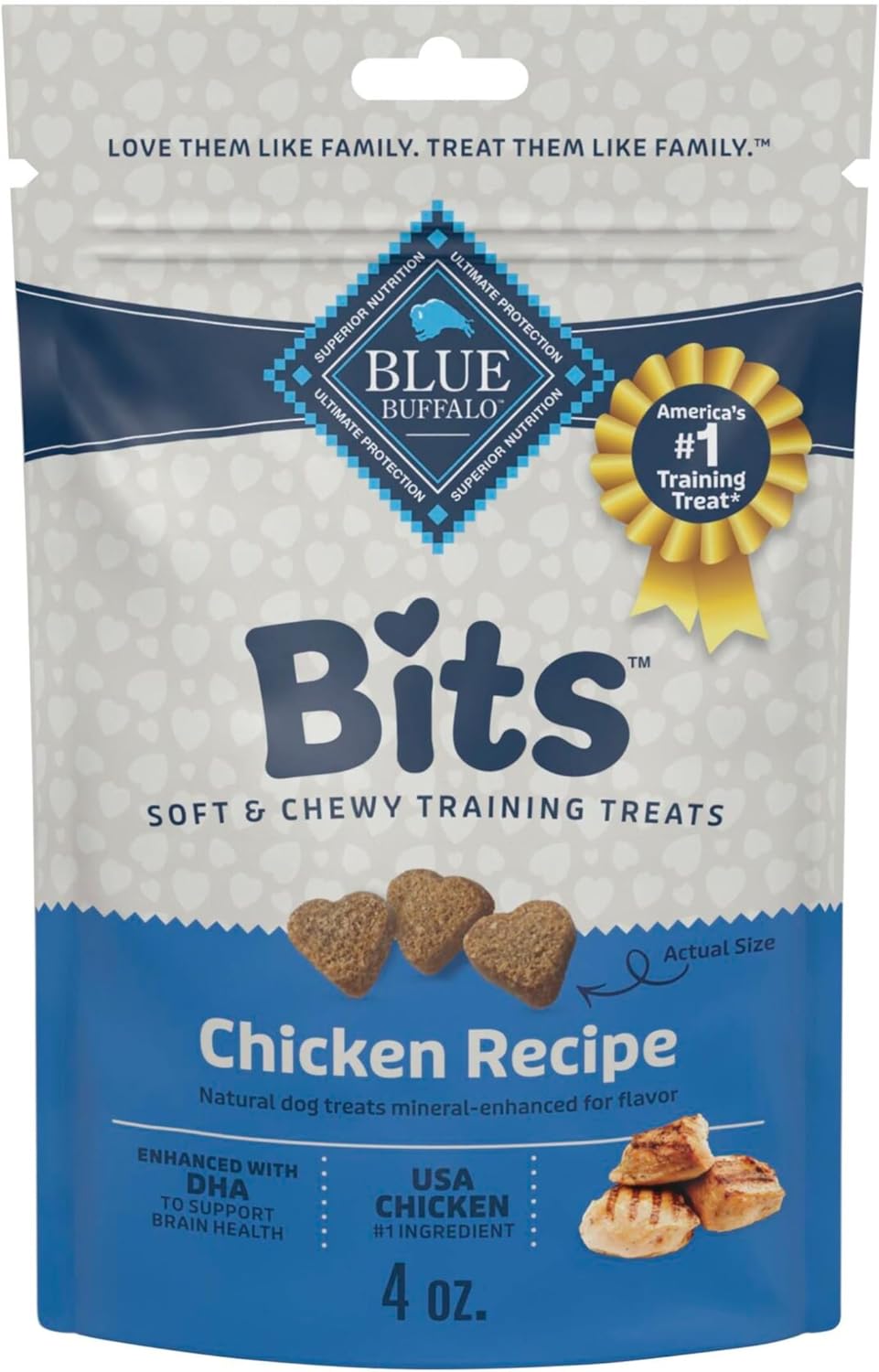
Blue Buffalo BLUE Bits Chicken 4 oz
Best Small-Bite Treat
| Flavor | Chicken |
|---|---|
| Item Form | Semi Moist |
| Unit Count | 4 Ounce |
| Allergen Information | Corn-Free, Soy Free, Wheat Free |
BLUE Bits are soft, heart-shaped training treats made with real chicken as the first ingredient and sized for quick rewards during sessions. They are semi-moist and very small, which makes them easy to break into even tinier pieces for frequent reinforcement without overfeeding. The formula includes DHA and omega fatty acids aimed at cognitive and coat support, and the ingredient list avoids corn, wheat, soy, and poultry by-product meals. In practice these treats work well for short, repetitive training rounds and for puppies or small-breed dogs that need bite-sized rewards. Packaging is a simple resealable bag that keeps morsels accessible, though the 4-ounce size means heavy trainers will go through it quickly. Nutritionally they are treats intended for intermittent feeding rather than a meal replacement. If you need larger quantities for long daily sessions, consider buying multiple bags or a larger format from the same line.
Best for: Owners who train frequently on a budget and need soft, easily portioned rewards for very small dogs or Yorkies in particular.
Less Ideal for: People who run very long or high-volume daily training sessions and prefer bulk packs or fully dry treats with longer shelf life.
- Small, bite-sized morsels ideal for quick rewards
- Real chicken is the first ingredient for palatability
- Soft, semi-moist texture is easy for puppies and small mouths
- Free from corn, wheat, soy and poultry by-product meals
- Contains DHA and omega fatty acids for cognitive and skin/coat support
- Small 4-ounce bag may not last for owners who train frequently
- Semi-moist treats can be less shelf-stable than fully dry biscuits
Verdict: The best small-bite treat is portioned into tiny pieces that fit a puppy’s mouth and make calorie control and frequent rewarding simple and safe.
Wellness CORE Brainiac Puppy Treats 5 oz
Best Grain-Free Treat

| Flavor | Beef & Turkey |
|---|---|
| Age Range Description | Puppy |
| Unit Count | 5 Ounce |
| Item Form | Chunk |
| Allergen Information | Grain-Free |
These soft, bite-sized treats are designed for training and everyday rewarding of puppies and are formulated without wheat, corn, soy, or artificial colors. They use beef and turkey as primary proteins and include salmon oil to provide DHA and omega fatty acids aimed at supporting brain development and skin and coat health. At roughly 6 calories per piece they are convenient for repeated reinforcement during sessions, and the tender texture makes them easy for young mouths to chew. The ingredient list also contains chickpeas, vegetables, fruit inclusions like blueberries and apples, and natural preservatives such as mixed tocopherols and rosemary extract. Limitations to note are that the recipe still includes ingredients like potato and molasses and is not suitable as a balanced meal replacement since it is intended for intermittent or supplemental feeding only. For puppies with diagnosed food allergies, buyers should verify specific intolerances with their veterinarian even though the product is grain-free.
Best for: Puppy owners looking for a grain-free training treat that is flavorful, easy to chew, and formulated to support early brain development while used as a reward during training.
Less Ideal for: Owners seeking a complete or daily diet replacement for puppies or those whose dogs have confirmed allergies to listed ingredients such as potato or certain proteins should consider alternatives or consult a vet.
- Grain-free formula removes common fillers like wheat, corn, and soy
- Soft, bite-sized texture ideal for training and young puppies
- Includes salmon oil to supply DHA and omegas for brain and skin support
- Made in the USA with recognizable protein-first ingredients
- Intended only for supplemental feeding and not a complete food
- Contains other ingredients (potatoes, molasses) that may bother some sensitive pups
Verdict: The best grain-free treat is suited for puppies with grain sensitivities or owners who prefer grain-free recipes, providing digestible ingredients in puppy-appropriate textures and sizes.
Vital Essentials Beef Liver Treats 2.1 oz
Best Premium Treat

| Item Form | Freeze Dried |
|---|---|
| Flavor | Beef |
| Special Ingredients | 100% Raw Freeze Dried Beef |
| Unit Count | 2.1 Ounce |
| Allergen Information | Grain-Free, Corn-Free, Gluten Free, Soy Free, Wheat Free |
These bite-sized freeze-dried beef liver treats deliver strong aroma and concentrated meat flavor that keeps dogs focused during training sessions. Each piece is made from 100% beef liver with no fillers or artificial additives, making them an easy single-ingredient reward for dogs with sensitivities. The freeze-drying process preserves nutrients and creates a lightweight, shelf-stable snack that is simple to carry and portion into multiple tiny rewards during repetition-heavy sessions. Because they are dense in protein and low in calories per piece, you can reward frequently without overfeeding, and the texture provides enough interest for picky eaters. Limitations include the small 2.1 ounce bag size, which may run out fast for heavy trainers, and the strong smell that some owners may find intense when opened. These treats are best used as high-value training rewards, meal toppers for picky dogs, or short-session incentives.
Best for: Trainers and pet owners who need a reliably enticing, single-ingredient reward for repeated short training intervals or to motivate picky eaters.
Less Ideal for: People who give large-volume treats during long training sessions, those who prefer low-odor rewards, or households needing bulk quantities for multiple dogs.
- Single-ingredient formula (100% beef liver) suitable for dogs with food sensitivities
- Freeze-dried to retain aroma, flavor, and nutrients for strong training appeal
- Small, bite-sized pieces that are easy to portion for frequent reinforcement
- Shelf-stable and lightweight for easy storage and on-the-go training
- Small 2.1 oz bag may be insufficient for frequent trainers or multi-dog households
- Very strong aroma that can be off-putting to some owners
Verdict: The best premium treat is for owners willing to pay more for higher-quality proteins, cleaner ingredient lists, and careful formulations tailored to young puppies' nutritional and textural needs.
Choosing the Right Treat 3 Month Old Puppy: Key Factors to Consider
Texture and Chewability
Young puppies have puppy teeth and developing jaws, so treat texture matters for safety and comfort. Soft, moist treats or very small bite-sized pieces are easier to chew and less likely to splinter or break into sharp fragments. A treat that can be broken into smaller portions lets you control caloric intake and pace rewards during training.
If a treat is marketed as freeze-dried or dehydrated, check that pieces rehydrate or crumble easily; some dried forms can still be too hard for a three-month-old. Avoid long-lasting hard chews that demand sustained gnawing, because puppy teeth can be damaged and the puppy may become frustrated. In short, choose textures that match a puppy's dental development and the intended use—quick training rewards versus occasional soothing chews.
Ingredient Simplicity
Puppy digestive systems are still maturing and can be sensitive to rich formulas or novel proteins. Treats with a short ingredient list and recognizable whole-food sources reduce the chance of stomach upset. Single-protein treats or those explicitly formulated for young puppies make it easier to identify and eliminate potential allergens.
Also watch for additives such as artificial colors, flavors, and unnecessary preservatives. While some preservatives extend shelf life safely, many owners prefer minimally processed treats for puppies to reduce exposure to compounds that may irritate the gut. Prioritizing simple, high-quality ingredients helps support digestion and steady growth during early life stages.
Calorie Control and Portioning
Treats should not make up a large portion of a puppy's daily calories because overfeeding can interfere with balanced growth and lead to excess weight. Look for treats that are low in calories per piece or that can be easily split into multiple micro-rewards for training sessions.
Frequent short training sessions benefit from very small treats that provide reinforcement without upsetting daily calorie targets. If a treat is calorically dense, reserve it for occasional use rather than frequent training. Clear calorie labeling and portion guidance help you manage intake relative to your puppy's age, weight, and activity level.
Digestive Tolerance and Allergens
Many puppies show sensitivity to rich or novel ingredients, which can cause loose stools or vomiting. Choose treats formulated for sensitive tummies or those with limited, single-source proteins if you suspect allergies. Probiotic or easily digestible formulations can be helpful, but they should not replace veterinary advice if your puppy shows persistent issues.
Introduce any new treat gradually and observe stool quality and appetite. If your breeder or veterinarian has recommended avoiding certain proteins, strictly adhere to that guidance when selecting treats. Products with clear manufacturing practices and quality-control statements reduce the risk of contamination that might provoke digestive reactions.
Size and Training Suitability
Training at three months often involves many short repetitions, so treats need to be appropriately sized for quick chewing and immediate reinforcement. Tiny, aromatic treats that can be eaten in one or two bites keep training sessions moving and maintain the puppy's focus.
Consider how easy a treat is to break into smaller pieces without crumbling excessively. Treats that produce a strong scent can be motivating for puppies, but be mindful that very smelly or messy options may soil hands or training gear. Choose portionable treats that match your training style and session length.
Safety Labeling and Manufacturing Standards
Because young puppies are especially vulnerable to contaminants and inconsistencies, look for treats from manufacturers that disclose testing, sourcing, and safety practices. Clear labeling about ingredient origins, batch testing, and storage instructions signals transparency and helps you assess product reliability.
Avoid treats without an ingredient statement or with vague descriptions like "natural flavors" without clarification. Proper packaging that preserves freshness and prevents moisture ingress also helps avoid spoilage and mold growth, which can be harmful to puppies. Prioritizing safety reduces the risk of adverse reactions during a sensitive developmental window.
How Should I Introduce New Treats to a 3-Month-old Puppy?
Introduce new treats slowly and in small amounts to monitor your puppy's reaction. Start by offering a single small piece and watch for any signs of digestive upset, such as loose stools, decreased appetite, or lethargy in the following 24 to 48 hours.
If the puppy tolerates a single serving, gradually increase frequency over several days while keeping an eye on stool consistency and energy. During this period, maintain regular feeding times and portion control so treats do not replace balanced meals. When in doubt, consult your veterinarian about specific ingredients or if you notice persistent issues.
- Offer one small piece initially and observe for 24–48 hours
- Increase frequency gradually while monitoring stool and behavior
- Keep treats as supplemental calories, not meal replacements
Which Treat Forms Are Best for Teething and Soothing Gums?
Soft chewables and refrigerated wet treats can soothe tender gums without requiring forceful chewing. Products that are safe to chill in the refrigerator can provide extra relief when cool, but ensure they remain soft and do not harden into a choking hazard.
Avoid very hard chews or long-lasting nylon-type toys at this age because they can stress puppy teeth or present breakage risks. Short-duration, soft formats let puppies gnaw a little and then finish the treat without prolonged stress on their developing mouths.
- Soft, moist formats for gentle chewing
- Chillable treats for added gum relief if they stay soft
- Avoid hard, prolonged chews until adult teeth are present
How to Use Treats Effectively During Training Sessions
For training, use tiny, highly palatable pieces that the puppy can eat in one or two quick bites. This keeps sessions fast and focused and makes it easier to link the reward to the desired behavior. Keep treats in a pocket or waist pouch for easy access and use a neutral hand to deliver the treat immediately after the correct response.
Plan training sessions in short bursts of two to five minutes several times a day for young puppies. Break larger treats into smaller pieces so each successful repetition gets immediate reinforcement without adding too many calories.
- Use micro-rewards to maintain momentum
- Deliver treats immediately after the behavior
- Limit session length to avoid fatigue and overstimulation
Signs a Treat Is Not Agreeing with Your Puppy
Watch for digestive changes such as loose stools, diarrhea, vomiting, or decreased appetite after introducing a new treat. Mild, short-lived changes may resolve as the puppy adapts, but persistent or severe symptoms warrant stopping the treat and checking with a veterinarian.
Other signs of sensitivity include excessive gas, skin irritation, or unusual lethargy. If symptoms appear, remove the suspect treat, reintroduce previous tolerated foods, and consult your veterinarian for guidance on allergy testing or diet adjustments.
- Monitor stool consistency and frequency
- Stop the treat if symptoms persist more than 48 hours
- Consult a veterinarian for severe or prolonged reactions
Storing Treats Safely for Freshness and Safety
Proper storage keeps treats fresh and prevents mold or rancidity, both of which can harm a young puppy. Follow packaging instructions; many soft treats require refrigeration after opening while others should be kept in a cool, dry place in an airtight container.
Avoid leaving treats exposed to heat or direct sunlight, and discard any that develop off smells, visible mold, or a changed texture. Rotating through smaller batches helps ensure you use products while they are freshest.
- Use airtight containers and keep in cool, dry locations
- Refrigerate opened perishables as directed
- Discard treats with off smells, mold, or texture changes
How We Chose the Best Treat 3 Month Old Puppy
We evaluated treats specifically for 3-month-old puppies using criteria that reflect the physical and nutritional needs of very young dogs. Primary factors included texture and size, since soft, easily chewed pieces reduce choking risk and are gentler on developing teeth. Ingredient simplicity was another key filter; we favored recipes with limited, recognizable ingredients and no common gastrointestinal irritants. Nutrient profile and caloric density mattered because treats should not displace balanced meals or contribute to excessive weight gain during rapid growth. Safety and manufacturing standards were considered to reduce risk from contaminants and ensure consistent quality. Finally, training suitability was assessed by how well a treat can be portioned, its smell and palatability for quick reinforcement, and whether it can be offered frequently without upsetting digestion. We excluded any treats intended for adult-only dogs, hard chews that require mature teeth, and high-calorie treats unsuitable for frequent use. Products that failed to provide clear ingredient lists or that presented obvious choking hazards for a three-month-old puppy were also omitted.
Our full evaluation process is outlined in our review methodology.
FAQ
Can I give human food as treats to a 3-month-old puppy?
Some plain human foods like small pieces of cooked lean meat or plain cooked pumpkin are sometimes used as treats, but many human foods can upset a puppy's digestion or be toxic. Always avoid ingredients known to be harmful and introduce any new human food cautiously and in tiny amounts.
How many treats can a 3-month-old puppy have each day?
Treats should be a small percentage of daily calories, often under 10 percent, but exact amounts depend on the puppy's weight and activity level. Use small pieces for training and account for treat calories within the puppy's overall feeding plan.
Are freeze-dried treats OK for very young puppies?
Freeze-dried treats can be suitable if they crumble or rehydrate easily and are soft enough for quick chewing. Avoid large, dense freeze-dried pieces that require strong chewing or risk choking for a three-month-old.
When should I avoid certain proteins in treats?
If your puppy has known food sensitivities or your breeder/veterinarian advised avoiding specific proteins, skip treats containing those ingredients. When trying a new protein for the first time, introduce it slowly and monitor for any adverse reactions.
Are training treats different from teething treats?
Training treats are usually very small and calorie-light for frequent rewards, while teething treats focus on soothing gums and may be slightly larger or chilled. Choose based on your immediate need and ensure teething options remain safe and soft for a young mouth.
Final Verdict
Selecting treats for a 3-month-old puppy means balancing safety, digestion, and training effectiveness. Prioritize soft, small, and easily portioned treats with simple ingredients that reduce the risk of digestive upset. Watch calorie intake and introduce any new treat gradually while monitoring stool and energy. Focus on treats that suit the puppy's dental stage and training style. By emphasizing texture, ingredient transparency, and portion control, you can reward and comfort your puppy without compromising growth or health.

