

Picking the right treats for a Boston terrier matters more than you might expect. Because these dogs are small, energetic, and prone to sensitive stomachs and dental issues, the wrong treat can lead to choking hazards, digestive upset, or excess calories. This guide highlights seven top treats chosen for size, texture, and ingredient quality so you can find options that work for training, everyday rewards, or occasional dental support. Each shortlisted treat was evaluated for palatability, safety for small mouths, and how well it fits into a balanced feeding routine.
Top Picks at a Glance
| Best Overall Treat for Boston Terriers A versatile, balanced treat that suits most Boston Terrier needs | Blue Buffalo BLUE Bits Chicken 11-oz |  |
| Best Budget Treat for Boston Terriers An affordable option that still offers decent nutrition and taste | Blue Buffalo BLUE Bits Chicken 4 oz |  |
| Best High-Protein Treat Treats with elevated protein for active or muscular dogs | Vital Essentials Beef Liver Treats 2.1 oz |  |
| Best Small-Bite Treat Tiny, low-calorie pieces ideal for training and frequent rewards | Old Mother Hubbard P-Nuttier Mini Dog Biscuits |  |
| Best Soft Treat Gentle, easy-to-chew treats for sensitive teeth or older pets | Shameless Pets Meaty Tenders Bacon 8oz |  |
| Best Grain-Free Treat A grain-omitting formula for dogs with sensitivities or preferences | Charlee Bear Grain Free Treats 8 oz |  |
Blue Buffalo BLUE Bits Chicken 11-oz
Best Overall Treat for Boston Terriers

| Flavor | Chicken |
|---|---|
| Unit Count | 11 Ounce |
| Item Form | Semi Moist |
| Age Range Description | All Life Stages |
| Allergen Information | Corn-Free, Soy Free, Wheat Free |
BLUE Bits are soft, heart-shaped training treats that use real chicken as the first ingredient and are sold in an 11-ounce bag intended for intermittent or supplemental feeding. They are bite-sized and moist, which makes them easy to break into smaller rewards for frequent reinforcement during training or for puppies who need gentler textures. The formula highlights wholesome ingredients like oatmeal, brown rice, flaxseed and fish oil for DHA, and it avoids corn, wheat, soy and poultry by-product meals. In practice these treats are convenient for clicker work, session-based training, and everyday rewards because dogs find them highly palatable and they are easy to handle by hand or in a treat pouch. Nutrition-wise they have modest protein and fat levels and a higher moisture content than crunchy biscuits, so they are more filling per piece and better for small repetitive rewards. The main limitation is the 11-ounce bag size for high-frequency use in multi-dog households and that semi-moist treats can stick together if not stored carefully.
Best for: Buyers who need an easy-to-use, lower-calorie soft treat for frequent reinforcement and want a recognizable, widely accepted option that supports weight-management goals.
Less Ideal for: Owners who need large bulk quantities for heavy daily use or who prefer crunchy, long-lasting chew treats should look elsewhere.
- Soft, bite-sized pieces ideal for frequent training rewards
- Real chicken as the first ingredient with added DHA from fish oil
- Free from corn, wheat, soy and poultry by-product meals
- Moist texture is easy to break and highly palatable for most dogs
- 11-oz bag may be small for heavy trainers or multi-dog homes
- Semi-moist texture can clump or stick together if not resealed properly
Verdict: The best overall treat for Boston Terriers, offering the right balance of flavor, size, nutrition, and texture for everyday rewards and bonding.
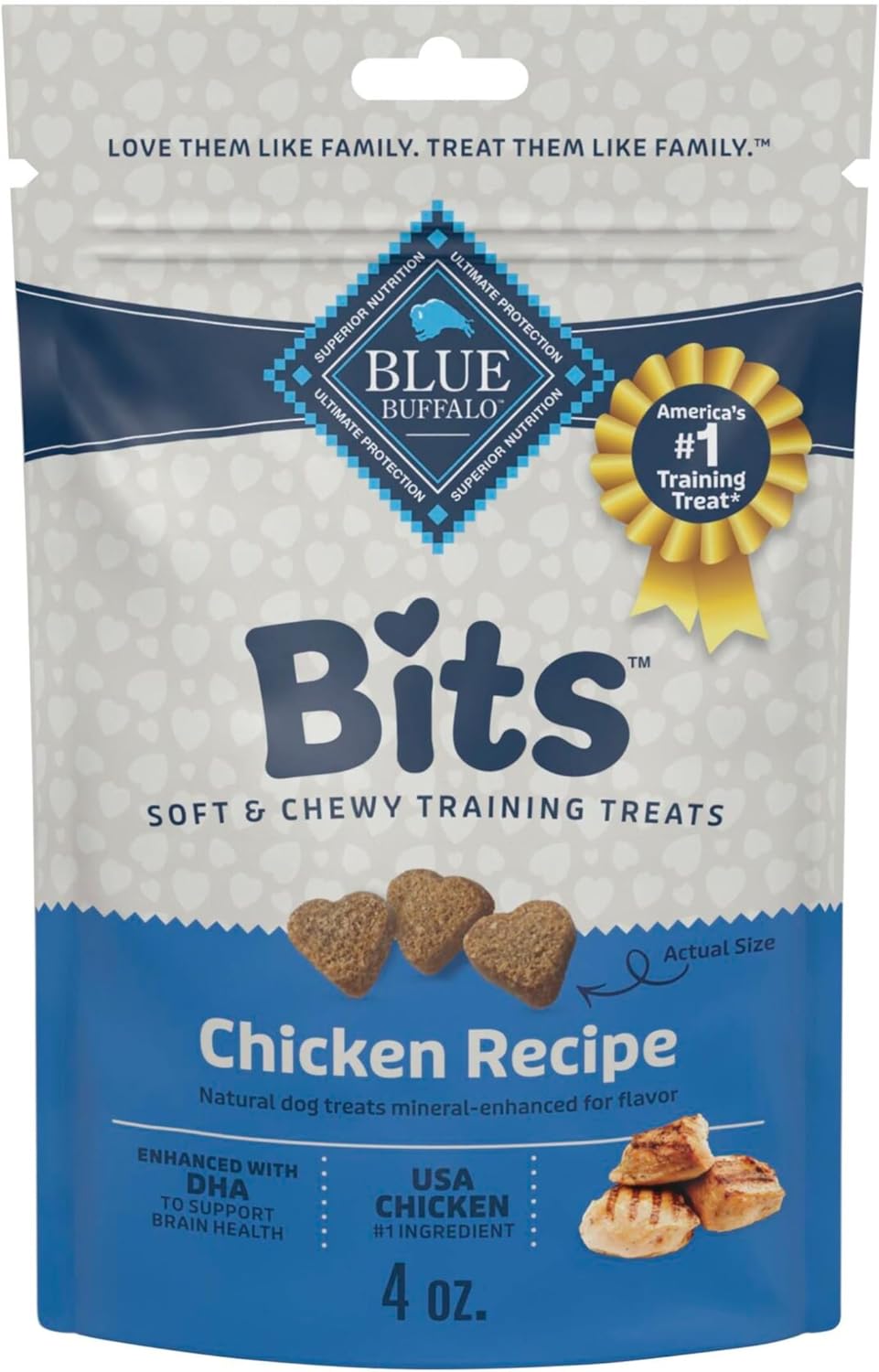
Blue Buffalo BLUE Bits Chicken 4 oz
Best Budget Treat for Boston Terriers
| Flavor | Chicken |
|---|---|
| Item Form | Semi Moist |
| Unit Count | 4 Ounce |
| Allergen Information | Corn-Free, Soy Free, Wheat Free |
BLUE Bits are soft, heart-shaped training treats made with real chicken as the first ingredient and sized for quick rewards during sessions. They are semi-moist and very small, which makes them easy to break into even tinier pieces for frequent reinforcement without overfeeding. The formula includes DHA and omega fatty acids aimed at cognitive and coat support, and the ingredient list avoids corn, wheat, soy, and poultry by-product meals. In practice these treats work well for short, repetitive training rounds and for puppies or small-breed dogs that need bite-sized rewards. Packaging is a simple resealable bag that keeps morsels accessible, though the 4-ounce size means heavy trainers will go through it quickly. Nutritionally they are treats intended for intermittent feeding rather than a meal replacement. If you need larger quantities for long daily sessions, consider buying multiple bags or a larger format from the same line.
Best for: Owners who train frequently on a budget and need soft, easily portioned rewards for very small dogs or Yorkies in particular.
Less Ideal for: People who run very long or high-volume daily training sessions and prefer bulk packs or fully dry treats with longer shelf life.
- Small, bite-sized morsels ideal for quick rewards
- Real chicken is the first ingredient for palatability
- Soft, semi-moist texture is easy for puppies and small mouths
- Free from corn, wheat, soy and poultry by-product meals
- Contains DHA and omega fatty acids for cognitive and skin/coat support
- Small 4-ounce bag may not last for owners who train frequently
- Semi-moist treats can be less shelf-stable than fully dry biscuits
Verdict: The best budget treat for Boston Terriers that keeps costs low while providing acceptable ingredients, palatability, and portioning for frequent training or rewards.
Vital Essentials Beef Liver Treats 2.1 oz
Best High-Protein Treat

| Item Form | Freeze Dried |
|---|---|
| Flavor | Beef |
| Special Ingredients | 100% Raw Freeze Dried Beef |
| Unit Count | 2.1 Ounce |
| Allergen Information | Grain-Free, Corn-Free, Gluten Free, Soy Free, Wheat Free |
These bite-sized freeze-dried beef liver treats deliver strong aroma and concentrated meat flavor that keeps dogs focused during training sessions. Each piece is made from 100% beef liver with no fillers or artificial additives, making them an easy single-ingredient reward for dogs with sensitivities. The freeze-drying process preserves nutrients and creates a lightweight, shelf-stable snack that is simple to carry and portion into multiple tiny rewards during repetition-heavy sessions. Because they are dense in protein and low in calories per piece, you can reward frequently without overfeeding, and the texture provides enough interest for picky eaters. Limitations include the small 2.1 ounce bag size, which may run out fast for heavy trainers, and the strong smell that some owners may find intense when opened. These treats are best used as high-value training rewards, meal toppers for picky dogs, or short-session incentives.
Best for: Trainers and pet owners who need a reliably enticing, single-ingredient reward for repeated short training intervals or to motivate picky eaters.
Less Ideal for: People who give large-volume treats during long training sessions, those who prefer low-odor rewards, or households needing bulk quantities for multiple dogs.
- Single-ingredient formula (100% beef liver) suitable for dogs with food sensitivities
- Freeze-dried to retain aroma, flavor, and nutrients for strong training appeal
- Small, bite-sized pieces that are easy to portion for frequent reinforcement
- Shelf-stable and lightweight for easy storage and on-the-go training
- Small 2.1 oz bag may be insufficient for frequent trainers or multi-dog households
- Very strong aroma that can be off-putting to some owners
Verdict: The best high-protein treat for Boston Terriers that need extra animal-based protein to support activity, lean muscle, and a meat-forward diet.
Old Mother Hubbard P-Nuttier Mini Dog Biscuits
Best Small-Bite Treat

| Flavor | Peanut Butter |
|---|---|
| Unit Count | 20 Ounce |
| Item Form | Treat |
| Breed Recommendation | All Breed Sizes |
Old Mother Hubbard P-Nuttier Mini biscuits are small, oven-baked crunchy treats designed for frequent training use and everyday snacking. The mini size makes them easy to break or feed whole during repetition-heavy sessions, and the crunchy texture can help reduce surface tartar as dogs chew. The recipe lists familiar ingredients like whole wheat flour, oatmeal, peanut butter, apples and carrots and excludes artificial preservatives, which supports a simpler ingredient profile for owners prioritizing wholesome treats on a budget. They are sold in a 20-ounce bag, so you get a substantial volume for training without needing constant repurchasing. Limitations include the grain-containing formula, so these are not suitable for dogs requiring grain-free diets, and very small or calorie-restricted dogs will need portion control because the bag is large. Packaging does not indicate detailed calorie counts on the product details here, so owners tracking calories precisely may need to check the label directly. For owners who want an affordable, familiar-flavored biscuit for repeated rewards, these perform well.
Best for: Owners who need an affordable, everyday training reward made from recognizable, mostly simple ingredients and want a biscuit that is easy to portion and use repeatedly.
Less Ideal for: Caregivers managing grain-free or specific ingredient-allergy diets, or those who must feed strictly measured low-calorie treats for weight management.
- Mini size suited to rapid training rewards and easy to break into smaller pieces
- All-natural ingredient list with no added artificial preservatives noted
- Crunchy texture may help clean teeth during chewing
- Large 20-ounce bag provides good value for frequent use
- Contains wheat and grains, so not appropriate for grain-free or certain allergy-sensitive dogs
- Large bag size can make portion control harder for calorie-restricted dogs
Verdict: The best small-bite treat for owners who need low-calorie, easy-to-handle pieces for rapid reinforcement during training sessions.
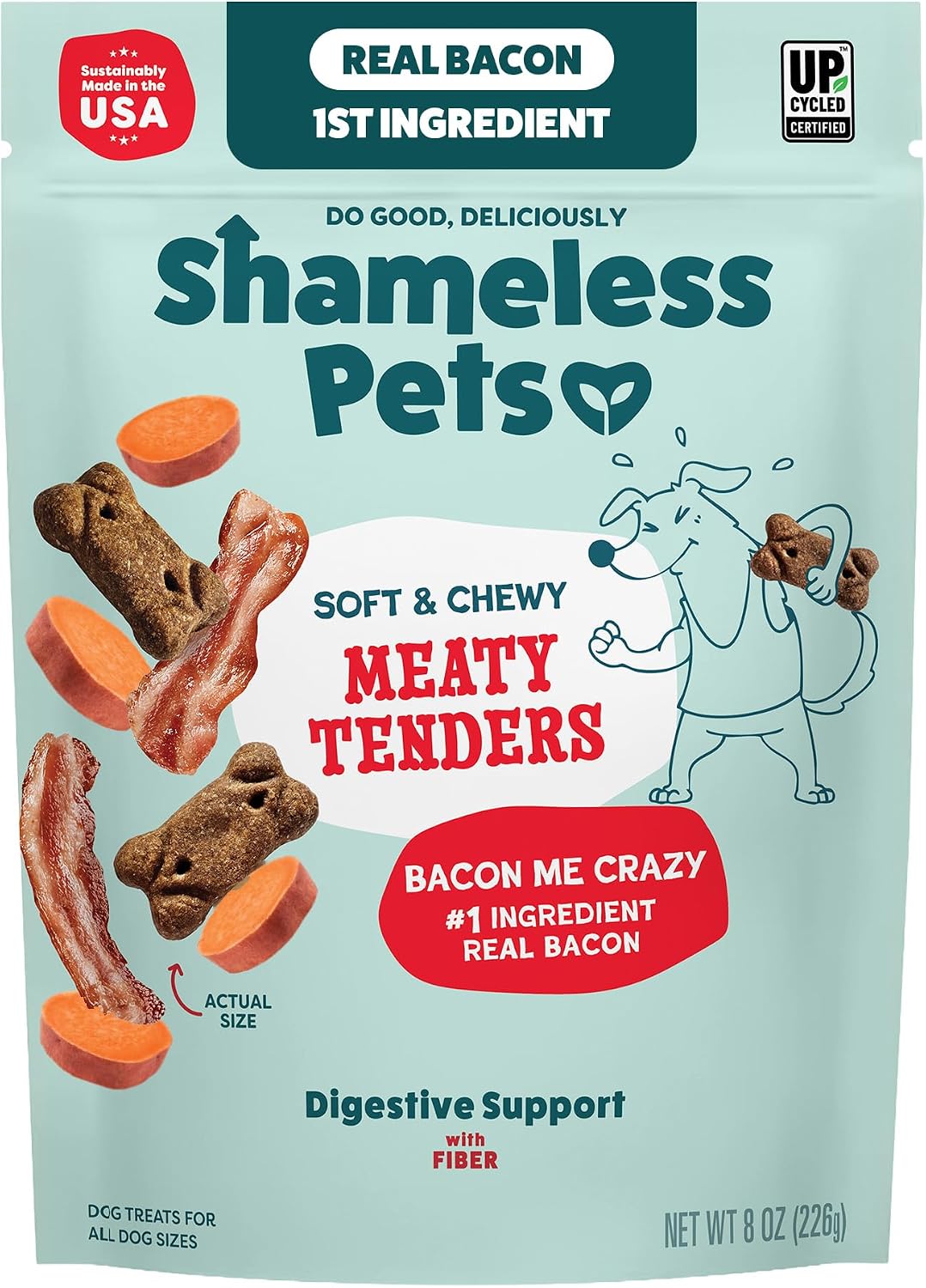
Shameless Pets Meaty Tenders Bacon 8oz
Best Soft Treat
| Flavor | Bacon |
|---|---|
| Unit Count | 8 Ounce |
| Item Form | Chunk |
| Age Range Description | All Life Stages |
| Animal Food Diet Type | Limited Ingredient |
Shameless Pets Meaty Tenders Bacon are soft, chewy training treats made with real bacon as the first ingredient and a mix of sweet potato, chickpea and pea protein for added fiber and protein. They are intended for intermittent or supplemental feeding and come in an 8 ounce resealable bag, which makes them convenient for reward-based training, slow dispensing, or giving multiple small rewards during short sessions. The texture is deliberately tender, so they are easy for puppies, senior dogs, and dogs with dental sensitivity to chew without crumbling into dust. The recipe is grain-free, contains no artificial flavors, and includes upcycled sweet potato and flaxseed for digestive benefits, though dogs with specific ingredient sensitivities should check the full ingredient list. Portion guidance is printed on the package for different weight ranges, but because each piece is small you may give several per session when training. The product balances palatability with functional claims like digestive and skin support, but buyers should treat these as supplemental treats rather than a complete food.
Best for: Owners seeking a tender, highly palatable soft treat for small breeds, puppies, or older dogs that need easily chewed rewards during training and everyday reinforcement.
Less Ideal for: People looking for single-ingredient limited-ingredient treats for dogs with specific legume or potato allergies should choose a different formula.
- Real bacon is the first ingredient for strong palatability
- Soft, chewy texture suitable for puppies, seniors, and dogs with dental sensitivity
- Grain-free formula with upcycled sweet potato and flaxseed for added fiber
- Resealable 8 ounce bag sized for training sessions and frequent rewards
- Contains chickpea and pea protein which may not suit dogs with legume sensitivities
Verdict: The best soft treat for Boston Terriers with dental sensitivity, puppies, or older dogs that require tender, easily chewed rewards.
Charlee Bear Grain Free Treats 8 oz
Best Grain-Free Treat

| Flavor | Bacon & Blueberry |
|---|---|
| Item Form | Wafer |
| Unit Count | 8 Ounce |
| Allergen Information | Corn-Free, Grain-Free, Preservative-Free, Soy Free, Wheat Free |
| Made in | USA |
Charlee Bear Grain Free Dog Treats are pocket-sized crunchy wafers intended for frequent training rewards and everyday snacking. They are made with limited ingredients like peas, chickpeas, dehydrated pork liver, egg and dried blueberries and come in an 8 oz resealable bag to preserve crunch. In practice these treats work well for short, repeatable rewards because each piece is low in calories and easy to carry without leaving grease or strong odors in a pocket or pouch. The grain-free recipe and absence of common allergens like corn, wheat and soy make them suitable for dogs with sensitivities, and the crunchy texture is appealing to many dogs. Limitations include the wafer form, which is not a soft high-value treat for dogs that prefer meaty textures, and the bag size may run out quickly for heavy trainers. Overall they are a convenient, low-calorie grain-free option for reinforcing commands and using in puzzle or dispensing toys.
Best for: Owners of Boston Terriers looking for a compact, grain-free training reward to use during frequent short training sessions or in treat-dispensing toys who prioritize simple, limited-ingredient recipes.
Less Ideal for: Owners who need soft, high-value meat-texture treats for picky dogs or who do very high-volume training and want larger bulk bags.
- Grain-free, limited-ingredient recipe suitable for dogs with common grain sensitivities
- Low calorie per piece so you can reward frequently without adding much to daily intake
- Resealable 8 oz bag preserves crunch and makes these pocket-friendly for training sessions
- Made in the USA by a family-owned brand with simple recognizable ingredients
- Crunchy wafer texture may not be enticing for dogs that prefer soft or meatier treats
- 8 oz bag is relatively small for owners who do extensive daily training
Verdict: The best grain-free treat for Boston Terriers whose owners prefer or need formulas without grains due to allergies, sensitivities, or dietary choices.
Choosing the Right Treat Boston Terrier: Key Factors to Consider
Size and Portion Control
For Boston terriers, treat size directly affects safety and training utility. Small, single-bite pieces let you deliver many repetitions during a session without overfeeding. Treats that can be broken into consistent portions make it easier to control calories and track daily intake.
Portion control also reduces choking risk. Choose treats designed for small breeds or those that crumble easily when pressed. If you plan to use treats for multiple short training sessions, look for options with low calories per piece so you can reward frequently without exceeding daily energy targets.
Texture and Chewability
Texture matters for both enjoyment and safety. Softer treats are gentler on small teeth and good for puppies or adult dogs with worn teeth. Firmer chews may help with minor tartar control but can pose a risk if pieces are too large or brittle.
Consider how quickly a treat is consumed. Treats that dissolve or compress in the mouth reduce choking hazards. If you choose a harder treat, ensure it is appropriately sized and monitor initial chewing to confirm your dog handles it well.
Ingredient Quality and Digestibility
Boston terriers can be prone to sensitive stomachs, so ingredient simplicity often pays off. Treats with a single named meat source or limited whole-food inclusions are easier to digest and make adverse reactions simpler to trace. Avoid treats with long lists of chemical-sounding additives or vague terms that hide ingredient origins.
Digestibility also affects how well a dog tolerates repeated rewards during training. Highly processed treats with heavy fillers may work for occasional rewards but could cause loose stools if given frequently. Look for treats with recognizable, minimally processed ingredients when possible.
Calorie Count and Weight Management
A Boston terrier's small size means treats can quickly add up in daily calories. Understanding calories per piece helps you fit rewards into your dog's overall diet without promoting weight gain. Low-calorie options are useful for long or intensive training sessions, while higher-calorie treats can be reserved for special rewards.
When precise calorie data is not available, default to smaller portions and reduce meal size accordingly. Account for treats when calculating total daily food to maintain a healthy weight and energy level.
Palatability and Scent
Even the safest, most nutritious treat is useless if your dog will not eat it. Palatability depends on flavor, fat content, and aroma. For picky Boston terriers, stronger-scented or meat-forward treats usually perform better, but richer treats may be higher in calories.
If your dog is selective, keep a few highly palatable options on hand for training and use milder, lower-calorie treats for routine reinforcement. Rotate flavors sparingly to maintain interest without upsetting digestion.
Special-diet and Allergy Considerations
Some Boston terriers have food sensitivities or allergies. If your dog shows signs of intolerance, select treats formulated for limited ingredients or specifically labeled for sensitive digestion. Hypoallergenic treats often use a single novel protein or rely on plant-based ingredients to minimize reactions.
Always introduce a new treat gradually and monitor for skin, ear, or gastrointestinal changes. When in doubt, consult your veterinarian for guidance on safe protein rotations and elimination strategies.
How Often Should I Give Treats to a Boston Terrier During Training?
Use treats as short, frequent rewards during training but keep total daily calories in mind. For intensive short sessions, opt for small, low-calorie treats so you can offer multiple reinforcements without adding too many calories.
Structure training into many brief repetitions with one to three tiny pieces per successful behavior. For longer sessions, intersperse praise or play as low-calorie rewards to reduce reliance on food and maintain interest.
- Aim for treats to make up no more than 10 to 15 percent of daily calories during heavy training periods.
- Break larger treats into multiple pieces to extend the number of rewards.
- Use nonfood rewards like a quick play or petting to vary reinforcement.
Are Soft Training Treats Better than Crunchy Ones for Boston Terriers?
Soft training treats are often the best choice for Boston terriers because they are easy to chew and swallow, enabling rapid repetition. They tend to be highly palatable and are convenient for puppies or older dogs with dental wear.
Crunchy treats can help with mild tartar control but may be harder to portion and could present a choking risk if the pieces are large. Choose crunchy options specifically sized for small mouths and monitor your dog the first few times.
- Use soft treats for high-frequency training.
- Reserve crunchy pieces for occasional dental support or longer-lasting chewing.
- Always check breakability and supervise when offering firmer treats.
How to Introduce a New Treat Without Upsetting Digestion
Introduce new treats gradually by offering a single piece for several days while observing stool consistency, energy, and skin condition. If you see signs of intolerance, stop the new treat and consult your veterinarian.
Pair new treats with familiar foods or use them in small quantities at first to reduce the chance of digestive upset. Keep a simple log of new treats and any reactions so you can identify culprits if problems arise.
- Start with one small piece per day for the first three days.
- Avoid multiple new treats at once to isolate any sensitivities.
- Note any changes in appetite, stool, or behavior during the trial.
Can Treats Help with Dental Health for Small Breeds?
Some treats are designed to assist with dental hygiene by encouraging chewing that scrapes plaque. For Boston terriers, look for products specifically formulated for small mouths so the texture and size provide benefit without excessive force on teeth.
Dental benefits from treats are supplemental and should not replace regular brushing or professional dental care. Use dental treats as part of an overall oral-health routine and check your dog's mouth regularly for changes.
- Choose dental treats sized for small breeds to ensure proper contact with teeth.
- Limit frequency of crunchy dental treats if your dog has brittle or worn teeth.
- Combine treats with brushing and periodic dental checks.
What to Do if Your Boston Terrier Is a Picky Eater
If your dog is selective, try rotating flavors and textures in small amounts until you find a few reliable favorites. Warm or lightly moistened treats can sometimes be more enticing because they release aroma.
Use the most appealing treats selectively for proofing new behaviors or particularly important training moments and use milder, lower-calorie options for everyday reinforcement to avoid overreliance on rich snacks.
- Offer tiny samples of new flavors before buying in bulk.
- Combine dry kibble with a small treat to build positive associations.
- Reserve high-value treats for high-difficulty commands.
Storage and Shelf-life Considerations
Store treats as recommended on the package to maintain freshness and safety. Many soft treats require airtight containers to prevent drying out, while natural or minimally processed treats may have shorter shelf lives once opened.
Check expiration dates and discard treats that show mold, rancid odors, or texture changes. Proper storage also helps preserve palatability so treats remain enticing for your dog.
- Keep treats in a cool, dry place away from sunlight.
- Use resealable bags or airtight containers after opening.
- Label containers with opening dates if shelf life is short.
How We Chose the Best Treat Boston Terrier
We used a focused set of criteria tailored to Boston terriers to narrow a crowded market to a short list of reliable treats. First, we prioritized safe portioning and texture that suits small jaws: bite-sized pieces or easily breakable treats reduce choking risk and help with training repetition. Second, ingredient quality was a major filter; we favored treats with recognizable protein sources, limited fillers, and minimal artificial additives to reduce chances of digestive upset. Third, we considered calorie density and macronutrient balance so treats can be used frequently without derailing weight management. Fourth, we evaluated palatability using owner reports and product descriptions indicating consistency and aroma appropriate for selective eaters. Fifth, special-needs suitability informed selections, including options appropriate for dogs with mild sensitivities or dental concerns. We excluded novelty items with unpredictable sizes, treats marketed primarily as toys, and snacks with long ingredient lists of unnamed byproducts. Items that require specialized preparation or refrigeration were also filtered out to keep the list practical for everyday use. The final picks reflect a balance between safety, ingredient transparency, and real-world usefulness for Boston terrier owners.
Our full evaluation process is outlined in our review methodology.
FAQ
How many treats can a Boston terrier eat per day?
It depends on the treat calories and your dog's daily calorie needs, but treats should generally account for no more than 10 to 15 percent of total daily calories. For many Boston terriers, that translates to several small pieces spread through training and rewards rather than a few large snacks.
Are single-ingredient treats better for sensitive stomachs?
Often yes. Single-ingredient treats make it easier to identify and avoid triggers and are typically easier to digest. However, tolerance varies by dog, so introduce any new single-ingredient treat gradually and monitor for reactions.
Can I use human food as treats for a Boston terrier?
Some plain human foods like cooked lean meats or small pieces of certain fruits and vegetables are safe in moderation, but many human foods are unsafe. Always confirm that a specific food is safe for dogs and keep portion sizes tiny to avoid digestive upset or excessive calories.
What should I do if my dog chokes on a treat?
If you see choking, stay calm and try to dislodge the object if it is visible and reachable without pushing it further down. If the dog is in severe distress, unable to breathe, or unconscious, seek emergency veterinary care immediately. Familiarize yourself with basic pet first aid and avoid offering treats that pose clear choking risks.
Do dental treats replace tooth brushing?
No. Dental treats can help reduce plaque accumulation but do not replace regular tooth brushing or professional dental care. Use them as an adjunct within a comprehensive oral-health routine.
Final Verdict
Choosing the right treats for a Boston terrier is about balancing safety, nutrition, and usefulness. Prioritize appropriately sized, low-calorie pieces or easily breakable treats for frequent training, and select ingredient lists that suit your dog's digestive tolerance. Consider texture needs for dental support or tooth sensitivity and reserve higher-value treats for breakthrough training moments. Overall, focus on portion control and ingredient transparency so you can reward good behavior without compromising health.

