

If you own a French bulldog, the treats you choose matter for training, dental health, and digestive comfort. Frenchies often have sensitive stomachs and breathing-related exercise limits, so a treat that is easy to chew, low in common irritants, and nutritionally sensible makes daily rewards simpler and safer. This guide shortlists the top seven treats that fit those needs, explaining how we judged ingredient quality, size and texture, and digestibility. Below you will find clear criteria and practical notes to help you pick treats that keep training effective without upsetting your dog.
Top Picks at a Glance
| Best Overall Treat for French Bulldogs A well-rounded pick that suits most Frenchie tastes and needs | Milk-Bone MaroSnacks Small Dog Treats |  |
| Best Budget Treat for French Bulldogs An inexpensive option that still pleases picky eaters and stays safe | Milk-Bone Flavor Snacks Small |  |
| Best Premium Treat Higher-end ingredients and formulation for owners wanting quality | Pur Luv Chicken Jerky Treats 16 oz |  |
| Best Soft Treat Tender, easy-to-chew treats that work for short snouts and teeth | Bocce's Bakery PB & Banana Soft Treats |  |
| Best Low-Calorie Treat Fewer calories per piece for weight control and frequent training rewards | Fruitables Baked Dog Treats 12oz |  |
| Best Training Treat Small, quick-reward bites sized for repeated reinforcement during sessions | Zuke's Mini Naturals Beef 6 oz |  |
| Best Limited-Ingredient Treat Simple recipes with fewer components for sensitive stomachs or allergies | Smart Cookie Wild Boar & Sweet Potato Treats 5 oz |  |
Milk-Bone MaroSnacks Small Dog Treats
Best Overall Treat for French Bulldogs

| Flavor | Beef |
|---|---|
| Item Form | Treats |
| Dog Breed Size | Small |
| Unit Count | 40 Ounce |
| Calories per Treat | 10 calories |
Milk-Bone MaroSnacks are crunchy, bite-sized dog biscuits with a real bone marrow center designed for small dogs and training rewards. Each treat runs about 10 calories, making them easy to portion for frequent rewarding without blowing daily calorie targets, and the canister format keeps a large supply on hand. The texture is a crunchy outer biscuit with a meaty center, which most dogs find palatable and helps deliver a satisfying chew when used for training or casual rewards. Ingredients include wheat flour, meat and bone meal, cooked bone marrow, and beef fat, so they provide a meaty flavor but are not limited to single-protein formulations. Practical downsides are the presence of common fillers and preservatives and that the size and crunch may not suit dogs with sensitive teeth. For owners prioritizing convenience, consistent bite size, and low-calorie treats to use multiple times per day, these deliver a straightforward, familiar option.
Best for: Owners who need an everyday training treat for small dogs that is low in calories, easy to portion, and broadly palatable for repeated rewards.
Less Ideal for: People looking for single-source, limited-ingredient treats for dogs with food sensitivities or for dogs with fragile teeth should consider alternative softer or novel-protein options.
- Consistent small, bite-sized pieces suitable for training rewards
- Low calorie per treat (~10 calories) for frequent use
- Crunchy shell with a meaty bone marrow center that many dogs find appealing
- Large 40-ounce canister provides a long-lasting supply
- Contains wheat and meat-and-bone meal rather than single-source whole protein
- Includes preservatives and added colors listed in ingredients
- Crunchy texture may be too hard for dogs with dental sensitivity
Verdict: The best overall treat for French Bulldogs that balances palatability, size, texture, and nutrition for daily rewarding and occasional snacking.
Milk-Bone Flavor Snacks Small
Best Budget Treat for French Bulldogs

| Unit Count | 24 Ounce |
|---|---|
| Flavor | Beef, Chicken, Turkey, Bacon & Sausage – Small |
| Item Form | Stick |
| Age Range Description | All Life Stages |
Milk-Bone Flavor Snacks are crunchy small-size biscuits sold in a 24-ounce box and meant for everyday rewarding and snacking. The bag contains a mix of beef, chicken, turkey, bacon and sausage flavors and is vitamin-fortified with about 15% protein plus added vitamins and minerals, so it doubles as a treat and a small nutritional boost. The crunch helps freshen breath and reduce tartar when used regularly, and the stick-like shape is easy to break into smaller pieces for tiny mouths and training sessions. Because these are wheat-based and include meat and by-product meals, they are best for dogs without grain sensitivities. The large box gives a lot of servings, which keeps per-treat cost low, but bulk quantity means treats can get stale if not resealed and they are not the softest option for dogs with sensitive teeth. For owners who need an affordable, flavorful bite-sized treat to use frequently during training or daily rewards, these deliver predictable taste and portion control.
Best for: Buyers who want a very affordable, flavorful small-biscuit treat for frequent rewards and short training sessions with tiny dogs.
Less Ideal for: Owners looking for grain-free, single-ingredient, or soft training treats for dogs with dental sensitivity should consider alternatives.
- Small, breakable biscuit size suitable for tiny mouths and training rewards
- Five mixed savory flavors that appeal to picky eaters
- Vitamin-fortified formula with added protein and minerals
- Crunchy texture that can help freshen breath and reduce tartar
- Large 24-ounce box offers a low per-treat cost for frequent use
- Contains wheat and by-product meals so not suitable for grain-sensitive dogs
- Bulk packaging can lose freshness if not stored airtight
- Crunchy texture may be hard for older dogs with dental issues
Verdict: The best budget treat for French Bulldogs that delivers good taste and acceptable ingredient quality at a lower price for frequent rewarding.
Pur Luv Chicken Jerky Treats 16 oz
Best Premium Treat

| Unit Count | 16 Ounce |
|---|---|
| Item Form | Stick |
| Age Range Description | All Life Stages |
| Allergen Information | Pea-Free |
Pur Luv Chicken Jerky treats are dehydrated strips made with 100% real chicken breast as the first ingredient plus vegetable glycerin and salt, packaged in a resealable 16 oz bag. They function as everyday rewards for training, high-value incentives during behavior sessions, or occasional chew-worthy snacks to keep dogs engaged. The simple ingredient list and absence of artificial colors, flavors, or preservatives make them easy to understand for pet owners watching diets or ingredient sensitivity. In practice the strips are chewy and easy to portion into small pieces for multiple rewards and the resealable bag helps maintain freshness between sessions. These treats are high in protein and relatively low in fat compared with many soft treats, but because they are meat-based jerky they are more calorie-dense than single-bite low-cal treats and can be messy if given outdoors. Dogs that need very soft or tiny training bites may require you to break pieces down further. Overall they are a straightforward, wholesome option for routine rewarding when you want real meat and minimal extras.
Best for: Buyers who prioritize simple, meat-first ingredients and want a high-protein, everyday reward that is easy to portion for training and bonding.
Less Ideal for: Owners who need ultra-small, calorie-minimal training nibbles or who prefer completely dry, crumb-free treats for outdoor use should consider alternatives.
- Real chicken breast is the first ingredient providing high protein and clear sourcing
- Limited ingredient recipe with no artificial colors, flavors, or preservatives
- Resealable 16 oz bag keeps treats fresher between uses
- Chewy texture satisfies natural chewing behavior and works as a reward or chew alternative
- Jerky strips are thicker than tiny training treats so you may need to break them into smaller pieces
- Can be messier or stickier than dry biscuit-style treats when handled
Verdict: The best premium treat for owners willing to spend more for superior ingredients, careful sourcing, and refined flavor or texture.
Bocce's Bakery PB & Banana Soft Treats
Best Soft Treat

| Flavor | PB + Banana |
|---|---|
| Item Form | Stick |
| Unit Count | 6 Ounce |
| Calories per Treat | 9 |
| Texture | Soft & Chewy |
These soft and chewy 'B' shaped treats are formulated for dogs that need a gentler bite, making them suitable for puppies, seniors, and dogs with sensitive mouths. Each treat is about 9 calories and made from a short ingredient list that includes oat flour, peanut butter, banana and rolled oats, and the texture is noticeably softer than classic biscuits so they break or chew easily. Typical uses are training rewards, everyday treats, or appetite stimulation for picky eaters, and the wheat-free, limited-ingredient recipe reduces exposure to common fillers. They are soft-baked in small batches in the USA and marketed as low fat with 13% protein and 4% fat, which supports frequent rewarding without large calorie loads. Limitations are that the bag is a single 6 ounce size with a modest unit count, so heavy trainers will go through them quickly, and they are stick-shaped which may not suit dogs who prefer chunkier formats. For straightforward, tasty, easy-to-chew rewards these treats perform well, especially when you need a gentle texture and simple ingredients.
Best for: Owners who need an easy-to-chew, low-calorie treat for puppies, seniors, or dogs with dental sensitivity and who prioritize simple, limited ingredients.
Less Ideal for: People who do a lot of high-volume training and need larger bulk bags or handlers who prefer bite-sized or firm-textured chews.
- Soft-baked texture designed for puppies, seniors, and dogs with sensitive mouths
- Short, limited ingredient list including oat flour, peanut butter and banana
- Low calorie per treat (about 9 calories) suitable for frequent rewarding
- Wheat-free formula and no artificial ingredients or preservatives
- Made in small batches in the USA
- Small 6 ounce bag can be used up quickly for frequent training sessions
- Stick-shaped treats may not suit dogs that prefer chunkier or bite-sized pieces
Verdict: The best soft treat for French Bulldogs and other brachycephalic breeds that need gentle textures for easy chewing and minimal jaw strain.
Fruitables Baked Dog Treats 12oz
Best Low-Calorie Treat

| Flavor | Bacon |
|---|---|
| Unit Count | 12 Ounce |
| Item Form | Stick |
| Calorie Content | 8 calories per treat |
| Free From | No artificial flavors, wheat, corn, or soy |
Fruitables Baked Dog Treats are oven-baked crunchy sticks flavored with apple and bacon and formulated to be a low-calorie reward. At about 8 calories per piece they are designed for frequent rewarding during training or daily snacking without adding much to a dog's daily calorie intake. The recipe highlights pumpkin and apple as nutrient-packed ingredients and the bag is free from wheat, corn, soy, and artificial flavors, which can help with common sensitivities. In practice these treats work well as quick, motivating rewards because of their aroma and crisp texture, and the stick form makes them easy to break or hand out during short training sessions. Limitations include a relatively soft crunch that some very small morsels may crumble, and the bag format means you need to monitor portions to avoid over-treating across multiple sessions. For French Bulldogs that need careful portion control, these treats offer a flavorful, low-calorie option that keeps training moving without major calorie cost.
Best for: Owners who need a motivating, low-calorie reward to support frequent training and weight management for a compact, food-motivated dog.
Less Ideal for: Owners seeking single-serve, pre-portioned treats or veterinary therapeutic diets should consider other options.
- Very low calories at about 8 calories per treat, good for portion-controlled rewarding
- Made without wheat, corn, soy, or artificial flavors, suitable for dogs with common sensitivities
- Oven-baked crunchy sticks with strong aroma that motivate dogs during training
- Stick form is easy to break or offer quickly in short training repetitions
- Bag packaging requires owners to track portions to maintain strict calorie control
- Not formulated specifically for brachycephalic breeds so treat size may need adjustment for French Bulldogs
Verdict: The best low-calorie treat for French Bulldogs needing portion-controlled rewards to help manage weight while still being motivating.
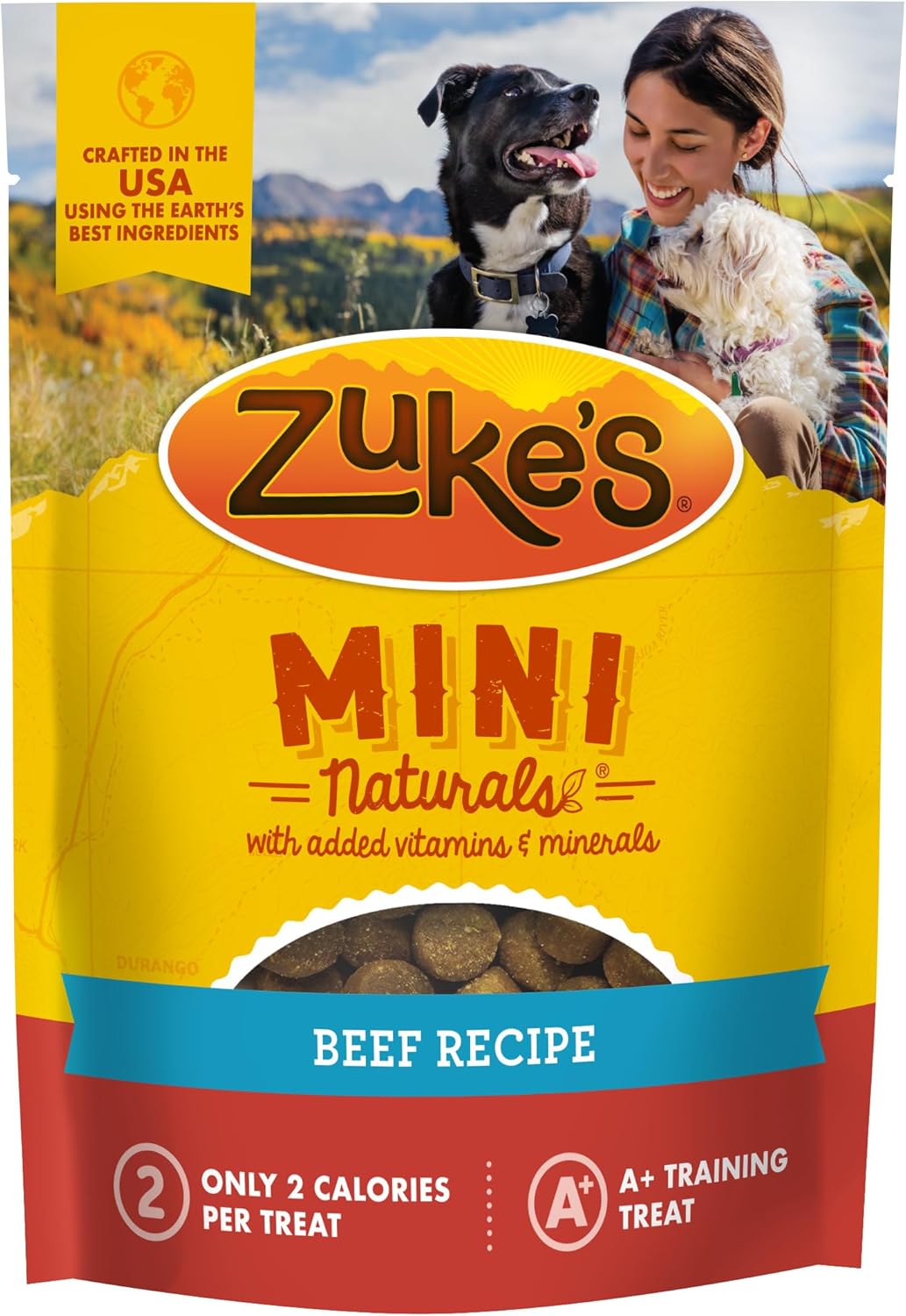
Zuke's Mini Naturals Beef 6 oz
Best Training Treat
| Flavor | Beef |
|---|---|
| Unit Count | 6 Ounce |
| Item Form | Treats |
| Target Species | Dog |
Zuke's Mini Naturals Beef are bite-sized, soft training treats made with real beef as the first ingredient and a few simple additions like cherries and oats. They are designed for frequent rewards during sessions or outings: each treat has about 2 calories, a chewy texture that dogs find easy to eat quickly, and a resealable pouch for on-the-go use. The formula avoids corn, wheat, and soy and lists added vitamins and minerals, which supports using many small rewards without heavily increasing daily calories. Practical strengths are the palatable beef-forward flavor, small portion size for repetitive training, and the convenient pouch. Limitations include a simple ingredient list that contains glycerin and cane sugar, so owners aiming for ultra-low-sugar or single-ingredient options may prefer alternatives, and the 6 oz pouch is modest in volume if you train frequently and need bulk. For routine clicker work, leash training, or high-repetition reward drills these treats deliver tasty, low-calorie reinforcement in a portable package.
Best for: Owners who need many low-calorie, tasty rewards for frequent training sessions and value portability and straightforward ingredients.
Less Ideal for: People seeking single-ingredient, no-sugar treats or bulk packaging for extremely high-volume training should consider other options.
- Real beef listed as the first ingredient for strong palatability
- About 2 calories per treat, suitable for high-frequency training
- Soft, chewy texture dogs can eat quickly during sessions
- Resealable 6 oz pouch keeps treats fresh and is easy to carry
- Contains cane sugar and glycerin, so not a single-ingredient or no-sugar option
- 6 oz pouch may be small for owners who train very frequently or need bulk supplies
Verdict: The best training treat for French Bulldogs that’s small, highly palatable, and easy to handle for many rapid repetitions without overfeeding.
Smart Cookie Wild Boar & Sweet Potato Treats 5 oz
Best Limited-Ingredient Treat

| Flavor | Wild Boar and Sweet Potato |
|---|---|
| Unit Count | 5 Ounce |
| Diet Type | Limited Ingredient |
| Allergen Information | Gluten Free, Soy Free, Wheat Free |
| Item Form | Wafer or Pate |
These Soft & Chewy Wild Boar & Sweet Potato treats are a single novel-protein snack formulated for dogs that react to common proteins. They are typically used as training rewards or daily treats and come in a resealable 5 oz pouch with bite-sized pieces that tear easily for small portions. The ingredient list is short and grain free, using wild boar as the lone meat source plus sweet potato and lentils for digestible carbohydrates and fiber, and the treats are low fat and low calorie so you can give multiple rewards during sessions without overfeeding. The soft texture is gentle for puppies, seniors, and breeds with dental issues, and the product advertises gluten free and human-grade ingredients with natural preservatives. Limitations to consider are the small pouch size if you train frequently and that novel proteins can still cause reactions in some dogs, so introduce them slowly; also treats are handbaked small-batch which can mean slight variability between pouches. For French Bulldogs with known sensitivities who need a minimal-ingredient, easy-to-chew reward, these fit the brief well.
Best for: Owners of French Bulldogs who prioritize a minimal-ingredient, easily digestible training treat for a dog with known sensitivities or picky appetite.
Less Ideal for: Families that need high-volume or bulk treats for frequent long training sessions or those whose dog has a known reaction to wild boar or other novel proteins.
- Single novel protein (wild boar) reduces exposure to common triggers
- Short ingredient list with no corn, wheat, or soy
- Soft, tearable texture suitable for puppies, seniors, and dogs with dental issues
- Low calorie and low fat for frequent training rewards
- Resealable pouch keeps small batches fresher between uses
- Small 5 oz pouch may be insufficient for heavy trainers
- Novel protein still poses allergy risk for dogs previously exposed to wild boar
Verdict: The best limited-ingredient treat for French Bulldogs with food sensitivities or allergies, focusing on minimal components and easy digestibility.
Choosing the Right Treat French Bulldog: Key Factors to Consider
Ingredient Quality
High-quality ingredients reduce the chance of food sensitivities and add nutritional value. Look for named animal proteins near the top of the ingredient list rather than vague terms. Whole-food components such as sweet potatoes, oats, or dehydrated meats can be easier to digest and provide slow-release energy.
Avoid long ingredient chains full of byproducts, artificial colors, or unnecessary fillers. Simpler recipes tend to be gentler on the digestive system, which matters for French bulldogs who can react poorly to abrupt ingredient changes. Ingredient quality also affects calorie density, which is important when portioning treats for small dogs.
Size and Texture
Treats need to be small enough for quick consumption during training and soft enough for short-muzzled dogs to chew without vigorous jaw movement. Small, uniform bite sizes make it easier to reward frequently without overfeeding.
Texture influences safety and acceptance. Soft, moist bites or easily breakable crunchy pieces reduce choking risk. Very hard chews or large chunks are not appropriate for French bulldogs because of their jaw shape and potential dental sensitivity.
Digestibility and Allergens
Digestibility determines whether a treat will sit well with a sensitive stomach. Ingredients like novel proteins, limited-ingredient formulas, or those with added digestive enzymes can help dogs with mild intolerance. Watch for common allergens such as wheat, soy, and certain dairy ingredients if your dog has a history of reactions.
Sudden diet changes can trigger loose stools, so treats that mirror your dog's regular diet or are explicitly labeled for sensitive digestion can reduce trial-and-error feeding. Digestibility also links to calorie absorption, so easy-to-digest treats may require smaller portions to avoid weight gain.
Calorie Count and Portion Control
Because French bulldogs are small, calories add up quickly during training sessions. Check treat calorie density and use appropriately sized pieces to avoid exceeding daily energy needs. Low-calorie options or treats that can be broken into many small pieces make it easier to reward often without extra weight.
Portion control extends beyond calories to frequency. Treats intended for training should be small and tempting so you can give multiple rewards per session while keeping total intake reasonable. Packaging that lists calories per treat or per serving helps with consistent portioning.
Palatability
A treat must be desirable enough to motivate learning and reinforce good behavior. High palatability often comes from strong-smelling proteins or flavor concentrates, but those should not come at the expense of digestibility or ingredient quality.
When introducing a new treat, test it in small quantities during training to confirm your French bulldog responds. Palatability also matters for picky eaters; rotating flavors sparingly can keep interest high without introducing too many new ingredients at once.
Shelf Life and Packaging
Freshness affects texture and smell, both of which influence acceptance. Resealable packaging and reasonable shelf life help maintain softness for moist treats and crunch for baked items. Small resealable bags or portion-controlled containers reduce air exposure and waste.
Packaging that clearly states storage instructions and batch codes also indicates better quality control. For pet owners who buy in bulk, look for properly sealed packs or options that offer smaller internal portions to preserve freshness.
How Do I Introduce a New Treat to a Sensitive French Bulldog?
Introduce new treats gradually over a week by mixing a small amount with your dog's usual treats or food. Start with one or two small pieces during training to check for digestive reaction before increasing frequency.
Monitor stool consistency and energy level for several days. If you notice any vomiting, loose stools, or changes in appetite, pause the new treat and consult your veterinarian. Keep a log of ingredients tried to identify potential sensitivities more quickly.
- Offer small samples at home before using during outings.
- Combine with a familiar treat to ease transition.
- Wait 48 to 72 hours between introducing new treat types.
Which Treat Textures Work Best for Brachycephalic Faces?
Soft, moist bites and thin, easily breakable crunchy pieces are usually best for short-muzzled dogs. These textures require less jaw force and reduce the chance of gagging or choking.
Avoid long, stringy chews or very hard bones that require sustained chewing. Treats that crumble or can be torn into smaller pieces let you control portion size and reduce swallowing effort.
- Favor soft training bites for frequent rewards.
- Use breakable biscuits or freeze-dried pieces for occasional enrichment.
- Avoid rigid chews designed for heavy chewers.
Can Treats Support Dental Health Without Being Abrasive?
Some treats include mild abrasive textures intended to help reduce plaque. For French bulldogs, choose formulations that balance gentle scrubbing action with softness to avoid stressing teeth or gums. Smaller dogs benefit from products explicitly designed for small-breed dental care.
No treat replaces daily tooth brushing and professional dental care, but selecting treats with dental-supporting features can complement a hygiene routine. Look for clear guidance on how often the treat should be used for dental purposes.
- Use dental treats as an occasional supplement, not a sole hygiene method.
- Combine with regular brushing and veterinary dental checks.
- Check texture to ensure it will not splinter or break into sharp pieces.
Are Single-ingredient Treats a Good Choice for Sensitive Stomachs?
Single-ingredient treats can simplify tracking and reduce exposure to common triggers. Options like dehydrated meat or single-source freeze-dried bites often contain no fillers, making them easier to diagnose if a reaction occurs.
However, some dogs may still react to a single protein, so introduce any single-ingredient treat gradually. For training, single-ingredient treats can be very motivating but may need to be mixed with lower-calorie options to manage intake.
- Use single-ingredient treats for elimination testing.
- Break larger pieces into small training-sized portions.
- Rotate proteins only when sure your dog tolerates each one.
How to Use Treats for Weight Management and Training?
For frequent training, use very small, low-calorie treats or break standard treats into many pieces so total calories remain low. Compensate for treat calories by reducing meal portions slightly when you have a heavy training day.
Time training sessions after light activity when your dog is more receptive to food rewards, and prefer high-value treats only for critical training steps. Use praise, play, and attention as alternative rewards to avoid overreliance on food.
- Track daily calories including treats to avoid unintended weight gain.
- Use toys and affection as secondary rewards.
- Limit high-fat or high-calorie treats to occasional use.
Storing and Preserving Treat Freshness
Keep moist treats refrigerated if recommended and use resealable packaging to limit air exposure. For crunchy treats, store in a cool, dry place away from direct sunlight to maintain texture.
If you buy in larger quantities, divide treats into smaller airtight tubs or bags so you open only what you need. Check bags for sell-by or best-by dates to avoid stale treats that can lose palatability.
- Use airtight containers for opened packs.
- Label portions with opening date when dividing bulk purchases.
- Follow storage instructions exactly for refrigerated or frozen items.
How We Chose the Best Treat French Bulldog
We selected products using criteria that matter for small-breed, brachycephalic dogs. First, ingredient transparency and protein source were prioritized to reduce common food sensitivities and ensure the treat contributes meaningful nutrition. Second, texture and size were evaluated for ease of chewing and low choke risk, important for short-muzzled dogs. Third, digestibility and presence of common allergens were considered to lower the chance of gastrointestinal upset. Fourth, preservative and additive profiles were checked to favor simpler formulations with fewer artificial colors and flavors. Fifth, palatability was factored in based on typical small-breed preferences for flavor without excessive fat. Finally, practical packaging and resealability were considered since freshness affects both smell and texture. We excluded treats with vague ingredient lists, excessive artificial additives, or formulations clearly intended for larger breeds. Products were assessed for real-world suitability rather than novelty features. Our filters removed items with known high risk of digestive disruption or unsafe textures. The list reflects items that meet the above dimensions and are appropriate for routine rewarding, training, and occasional enrichment.
Our full evaluation process is outlined in our review methodology.
FAQ
How many treats can I give my French bulldog each day?
It often depends on your dog's size, activity level, and the treat calorie density. For small dogs, treats should generally make up no more than 10 percent of daily calories. Use small pieces for frequent training and adjust meal portions on heavy treat days.
What if my French bulldog gags or coughs when eating a treat?
Stop giving that treat and try a softer texture or smaller piece. Gagging can indicate the treat is too large, too hard, or irritating the throat. If episodes continue, consult your veterinarian to rule out airway or swallowing issues.
Are grain-free treats better for French bulldogs?
Grain-free is not automatically better; benefits depend on your dog's individual sensitivities. Some dogs tolerate grains fine, while others do better on limited-ingredient or novel-protein formulas. Choose based on known reactions rather than marketing claims.
Can I use human food as treats for training?
Some plain human foods like small pieces of cooked chicken or certain vegetables can work, but avoid anything toxic to dogs. Use plain, unseasoned options and offer very small portions to control calories and prevent digestive upset.
How do I rotate treat flavors without causing stomach upset?
Introduce a new flavor slowly alongside familiar treats and wait a couple of days before making further changes. Monitor stool and appetite during rotations and avoid swapping multiple new ingredients at once to make it easier to identify any issue.
Final Verdict
Choose treats that match your French bulldog's chewing ability, digestive sensitivity, and energy needs. Prioritize simple, transparent ingredient lists, appropriate portion sizes, and soft or breakable textures that reduce choking risk. Balance palatability with calorie control so treats can be a reliable training tool without causing weight gain or stomach upset. When in doubt, introduce new treats gradually and focus on portioning and monitoring. By prioritizing ingredient quality, digestibility, and proper sizing, you can reward your dog frequently and confidently while supporting overall health.

