

Picking the right treats for a poodle puppy matters for training, growth, and daily rewards. Small-breed puppies like poodles have different calorie needs, gentler jaws, and a greater tendency toward digestive sensitivity than larger breeds. A well-chosen treat helps you reinforce good behavior without upsetting training routines or adding excess calories. This guide shortlists seven reliable treat options across textures and ingredient profiles that work well for poodle puppies. We evaluated each choice for ingredient quality, size and texture, and how well it supports training and dental health. Read on to find treats that fit your puppy's age, chewing habits, and dietary needs before the product list below.
Top Picks at a Glance
| Best Overall Treat The best all-around choice that balances taste, nutrition, and value | Wellness Soft Puppy Bites 3 oz |  |
| Best Budget Treat A low-cost option that still satisfies puppies and holds up | Blue Buffalo Baby BLUE Training Treats 4 oz |  |
| Best Premium Treat A higher-end option with superior ingredients and thoughtful sourcing | The Honest Kitchen Meaty Littles Puppy Treats |  |
| Best Soft Treat Tender, easy-to-chew treats ideal for small mouths and training | Pupford Soft & Chewy Training Treats 5 oz |  |
| Best High-Protein Treat Protein-forward treats that support growth and muscle development needs | Crumps' Naturals Beef Liver Mini Trainers |  |
| Best Training Treat Small, low-calorie bites made for frequent rewards during training | Zuke's Mini Naturals Chicken 16 oz |  |
| Best Limited-Ingredient Treat Simple-ingredient treats for puppies with sensitivities or picky diets | Portland Pet Food Pumpkin Dog Treats 5 oz |  |
Wellness Soft Puppy Bites 3 oz
Best Overall Treat

| Flavor | Lamb & Salmon |
|---|---|
| Age Range Description | Puppy |
| Item Form | Wafer |
| Unit Count | 3 Ounce |
| Allergen Information | Corn-Free, Grain-Free, Soy Free, Wheat Free |
Wellness Soft Puppy Bites are small, soft training treats formulated for puppies with lamb and salmon as primary ingredients and added DHA for brain development. They are bite-sized and moist, which makes them easy to break into smaller pieces and quick to deliver during repetitive training sessions. The grain-free recipe and inclusion of fruits and vegetables like blueberries and sweet potatoes provide more wholesome ingredients than many discount treats, and the soft wafer texture tends to be highly motivating for puppies that prefer chewy rewards. Because the bag is only 3 ounces, it is best suited for short-term use or as an occasional top-up in a multi-pack rotation rather than long training marathons, and the small pack size also keeps them relatively fresh. If your Shih Tzu puppy responds to soft, fish- or lamb-flavored treats, these offer consistent palatability and easy handling at the clicker or during house training, though buyers doing very high-volume sessions may prefer larger bags for better value.
Best for: Buyers seeking an affordable, puppy-focused soft treat that tastes good and is easy to deliver during frequent short training sessions with a Shih Tzu puppy.
Less Ideal for: Users who do very high-volume training or need bulk bags for long-term daily rewarding should consider larger-size training treat options for better value.
- Soft, bite-sized pieces that are easy to break and deliver quickly during training
- Grain-free formula with real lamb and salmon as primary ingredients
- Contains DHA to support puppy brain development
- Includes fruits and vegetables like blueberries and sweet potatoes for added nutrition
- Small 3 oz bag is not economical for very frequent, high-volume training sessions
Verdict: The best overall treat for poodle puppies that balances palatability, appropriate nutrition and size, and consistent quality for everyday rewarding and training.
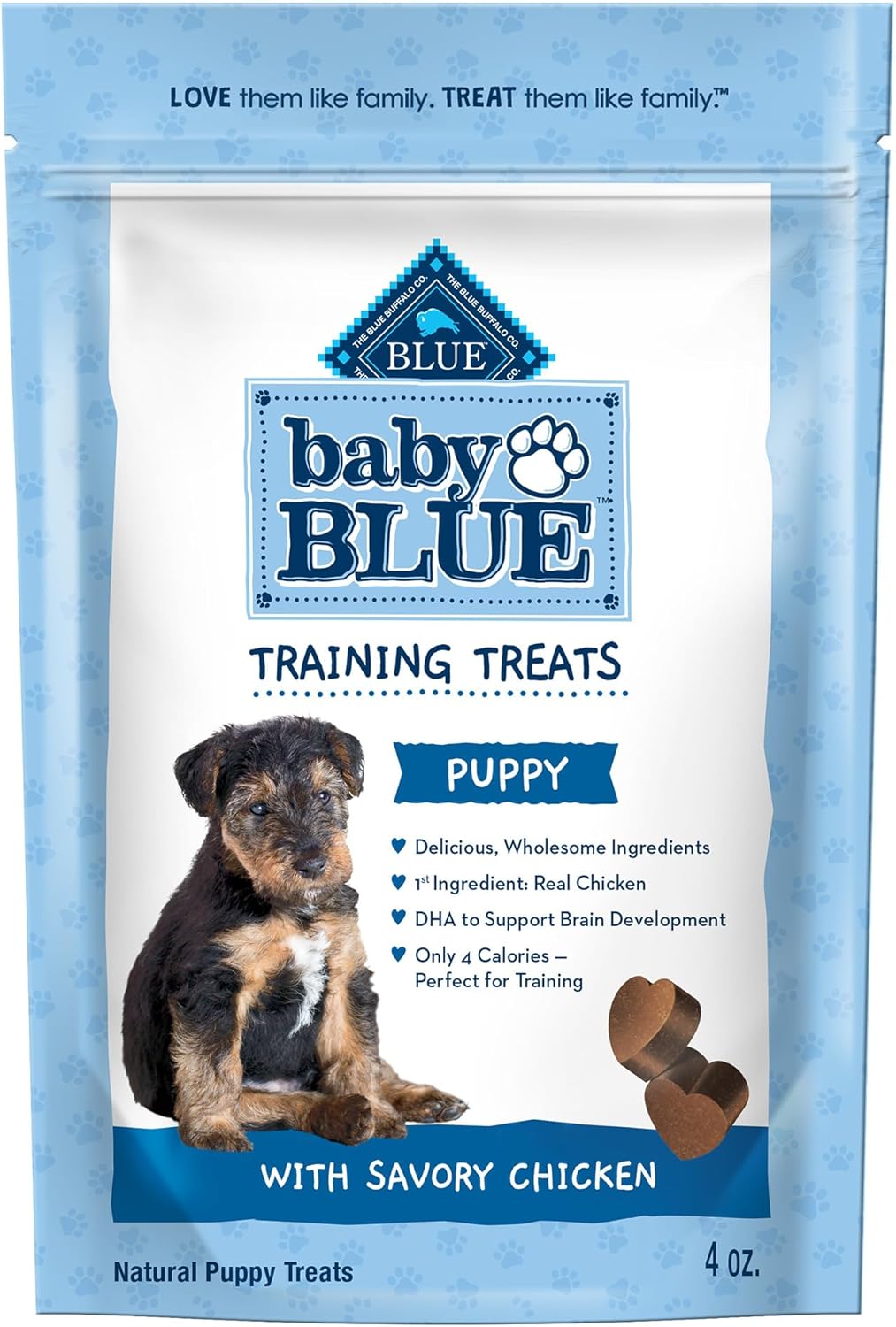
Blue Buffalo Baby BLUE Training Treats 4 oz
Best Budget Treat
| Flavor | Chicken |
|---|---|
| Age Range Description | Puppy |
| Item Form | Semi Moist |
| Unit Count | 4 Ounce |
| Allergen Information | Corn-Free, Soy Free, Wheat Free |
These Baby BLUE Savory Chicken training treats are soft, bite-sized morsels designed for puppy training and intermittent rewards. Made with real chicken as the first ingredient and a semi-moist texture, they are easy to break or feed quickly during multi-step training sessions. The formula includes DHA for cognitive development and omega fatty acids to support skin and coat, while LifeSource-inspired nutrients and no corn, wheat, or soy aim to reduce common allergens. In practice the treats are highly palatable to most puppies and the small pieces minimize interruptions during repetitious drills. The 4-ounce bag is convenient for short outings or a training class, but frequent trainers may find the pack small and need to replenish often. Nutritional specs show modest protein and fat levels appropriate for treats rather than meal replacement, so they work best as rewards rather than primary food. Overall these treats balance taste and puppy-friendly texture, though the small package size limits how long one bag lasts for heavy training schedules.
Best for: Puppy owners focused on efficient, frequent reward-based training who want a tasty, soft treat that is easy to portion and gentle on young digestive systems.
Less Ideal for: People who run long, intensive daily training sessions or need bulk packaging for many repetitions should consider larger multi-pack options.
- Real chicken listed as the first ingredient for strong palatability
- Soft, semi-moist texture is easy to break and quick to deliver during training
- Includes DHA and omega fatty acids to support cognitive development and skin and coat
- Free of corn, wheat, soy and artificial colors or preservatives
- Small 4-oz bag may not be economical for heavy daily trainers
- Treat nutrient levels are modest so they should not replace regular food
Verdict: The best budget treat for owners wanting affordable options that still deliver reasonable ingredients, puppy-appropriate texture, and reliable appeal for frequent use.
The Honest Kitchen Meaty Littles Puppy Treats
Best Premium Treat

| Flavor | Lamb & Salmon |
|---|---|
| Age Range Description | Puppy |
| Item Form | Chewable |
| Unit Count | 4 Ounce |
| Specific Uses For Product | Training |
These Meaty Littles are bite-sized, soft jerky treats made from human-grade lamb and salmon and designed specifically for puppy training and everyday rewarding. They function as low-calorie, high-protein rewards you can hand out repeatedly during short training sessions or use as enrichment on walks because each piece is small and tender enough that you do not need to break it. Key features include added DHA from salmon for brain development, pumpkin for digestion, vitamin E for immune support, and omegas for skin and coat health, along with a limited-ingredient recipe free from corn, wheat, soy, meat meals, and artificial preservatives. The resealable 4 oz bag and chewy texture make them convenient for a training pouch and appealing to picky puppies that prefer meaty flavors. On the downside the package is small for frequent treating and the premium, human-grade sourcing means this is pricier than standard training bites, so it is best used as a high-value reward rather than an everyday bulk treat. For owners prioritizing ingredient quality and flavor, these perform very well in real-world training use.
Best for: Puppy owners who want a gourmet, ingredient-forward training treat and are focused on targeted nutrition and flavor to motivate picky or developing puppies.
Less Ideal for: Buyers who need large quantities for frequent mass-rewarding or who prioritize lowest cost per treat should consider more economical training bite options.
- Human-grade lamb and salmon recipe for strong savory flavor
- Formulated with DHA, pumpkin, vitamin E and omegas for targeted puppy nutrition
- Soft, bite-sized pieces suitable for fast training rewards without breaking
- Limited-ingredient formula without corn, wheat, soy, meat meals, or artificial preservatives
- Resealable 4 oz bag is convenient for training pouches and travel
- Small 4 oz package may run out quickly during heavy training sessions
- Premium human-grade sourcing makes it more expensive than standard training treats
Verdict: The best premium treat for owners willing to pay more for higher-quality ingredients, careful sourcing, and superior texture tailored to sensitive or growing puppies.
Pupford Soft & Chewy Training Treats 5 oz
Best Soft Treat

| Flavor | Chicken |
|---|---|
| Item Form | Bite-Sized Treat |
| Unit Count | 5 Ounce |
| Special Ingredients | Chicken, Sweet Potato |
| Animal Food Diet Type | Limited Ingredient |
Pupford Soft & Chewy Training Treats are bite-sized, chicken-flavored rewards designed for frequent use during training and enrichment. The treats come in a small pouch and have a soft, chewy texture that makes them easy to break into pieces or feed whole to young pups and dogs with sensitive teeth. Each treat is made from a short ingredient list that includes chicken and sweet potato and is free from artificial colors and fillers, which supports use with dogs that benefit from limited-ingredient snacks. With under 2 kcal per treat and a high protein claim, these are useful for extended training sessions without adding excess calories. They are intended for one-bite rewards, which helps keep sessions moving and reduces crumb mess. Limitations: the pouch is a 5 ounce size, so power users or trainers who reward very frequently may need to buy multiple packs, and the product information does not list guaranteed analysis values beyond general claims so buyers with strict allergy concerns should check ingredients closely.
Best for: Puppy owners and trainers seeking a soft, hypoallergenic-style reward for teething pups or dogs with sensitive mouths who need frequent, low-calorie treats during sessions.
Less Ideal for: Households that reward constantly or train multiple dogs at once and need bulk quantities or complete nutrient breakdowns for strict medical diets.
- Soft, easily chewable texture suitable for teething puppies and senior dogs
- Limited ingredient recipe focused on chicken and sweet potato, reducing exposure to fillers
- Low calorie per treat (<2 kcal) for frequent rewarding without weight gain
- Bite-sized pieces that minimize crumbs and keep training sessions fast
- Small 5 oz pouch may be insufficient for heavy trainers or multi-dog households
- Nutrient details are summarized by claims rather than full guaranteed analysis on the listing
Verdict: The best soft treat for poodle puppies who need gentle, easily chewed rewards that break apart quickly for fast training reinforcement.
Crumps' Naturals Beef Liver Mini Trainers
Best High-Protein Treat

| Flavor | beef liver |
|---|---|
| Unit Count | 4.4 Ounce |
| Item Form | Chunk |
| Special Ingredients | grain-free, corn-free, soy-free, wheat-free |
| Target Species | Puppy |
These freeze-dried Beef Liver Mini Trainers are single-ingredient, high-protein treats designed for training and rewarding puppies. In practice they come as very small, lightweight chunks that break easily or can be left whole for tiny mouths, which makes them convenient for multiple short-reward sessions during training or recall practice. Freeze-drying preserves flavor while keeping the treats low in moisture and shelf-stable without added fillers; the product is labeled grain-free, limited-ingredient, and additive-free, so it is simple to introduce into diets focused on animal protein. Because portions are small (about 5–8 mm) they are easy to calorie-manage but a single 4.4 oz bag is relatively small for frequent use, so active owners may prefer larger packs or buying multiple bags. Also the dry texture can create dust and small crumbs, so store in a resealable bag and limit access when unsupervised. For poodle puppies these trainers are useful for focused sessions, scent work, and high-value reinforcement during socialization.
Best for: Puppy owners who prioritize high animal-based protein and need a tiny, highly palatable treat for frequent training or active play reinforcement.
Less Ideal for: Owners who want large-volume, low-cost training rewards or moist chews for slower consumption should consider bigger bags or different treat formats.
- Single-ingredient 100% beef liver provides concentrated animal protein
- Freeze-dried format keeps strong aroma and appeal for picky puppies
- Very small piece size suitable for frequent training rewards
- Grain-free and limited-ingredient formulation reduces exposure to common fillers
- Small 4.4 oz bag may not last long for high-frequency training
- Dry, crumbly texture can produce dust and requires secure storage
Verdict: The best high-protein treat for puppy owners focused on supporting healthy growth and active play with treats formulated to provide extra animal-based protein.
Zuke's Mini Naturals Chicken 16 oz
Best Training Treat

| Flavor | Chicken |
|---|---|
| Unit Count | 16 Ounce |
| Item Form | Bites, Bits, Tender, Soft |
| Specific Uses For Product | Training |
| Allergen Information | Allergen-Free |
Zuke's Mini Naturals Chicken are bite-sized, soft training treats intended for frequent rewards during sessions or short outings. Each treat is low in calories (about 2 calories per piece) and made with real chicken plus fruits and vegetables, which makes them appealing to most puppies and easy to break or carry on long walks. The soft texture and small size let trainers give rapid reinforcement without interrupting flow, and the resealable pouch preserves freshness for on-the-go use. Formulated without corn, wheat, or soy and fortified with added vitamins and minerals, these treats double as a lightweight snack between lessons. Limitations include a simple ingredients list that contains glycerin and cane sugar, so owners managing strict low-sugar or specialized medical diets should consult their vet before regular use. Also the bag is a single 16 ounce size which may be large if you prefer smaller trial packs. For standard puppy training where frequent, desirable rewards are the priority, these treats are a practical choice.
Best for: Puppy owners and trainers who need a highly rewarding, low-calorie treat to use repeatedly during short training sessions and outings.
Less Ideal for: People managing veterinary-prescribed diets that restrict sugars or specific ingredients, or owners who prefer trial-size or single-serve packaging.
- Very small, soft bites suited for frequent training rewards
- Low calorie per treat (about 2 calories) so you can reward often
- Made with real chicken plus fruits and vegetables
- Resealable pouch for freshness and easy portability
- Contains cane sugar and glycerin which may be undesirable for strict low-sugar diets
- Only sold in a single 16 oz bag size which may be more than needed for some puppy owners
Verdict: The best training treat for owners who need tiny, low-calorie, highly palatable bites that reward behavior without disrupting daily calorie goals.
Portland Pet Food Pumpkin Dog Treats 5 oz
Best Limited-Ingredient Treat

| Flavor | Pumpkin |
|---|---|
| Item Form | Treats |
| Unit Count | 5 Ounce |
| Animal Food Diet Type | Vegan |
| Special Ingredients | All Natural |
These pumpkin biscuits are a grain-free, human-grade treat intended for use as training rewards or everyday snacks. Each crunchy biscuit is double-baked and made from a short ingredient list led by garbanzo bean flour, pumpkin puree, peanut butter, molasses, and cinnamon, which keeps the formula simple for dogs with sensitivities. The treats are low calorie at about 12 kcal each and break easily for repeated training repetitions or remain whole as a full reward for larger dogs. The resealable BPA-free pouch helps keep the biscuits fresh during walks, hikes, or pocket storage, and small-batch, USA-made production paired with veterinary input lends confidence to the product's quality. Because they are vegan and free from common additives like preservatives, BHT, BHA, dairy, and chicken, these biscuits suit dogs with specific allergies or owners who prefer limited-ingredient snacks. The main limitation is the size and crunchier texture, which may not be ideal for dogs that require very soft treats or those with severe chewing difficulties, and the bag is relatively small for heavy treat users.
Best for: Owners prioritizing grain-free, limited-ingredient treats for dogs with sensitive stomachs or ingredient sensitivities who still want a human-grade, vet-formulated biscuit for training and everyday rewards.
Less Ideal for: People who need very soft or paste-style rewards for senior dogs with dental issues or owners who go through treats in large quantities without frequent restocking.
- Grain-free, simple five-ingredient recipe suitable for dogs with grain sensitivities
- Human-grade ingredients and made in small batches in the USA
- Low calorie at about 12 kcal per biscuit, good for frequent training rewards
- Resealable BPA-free pouch for freshness and easy on-the-go use
- Crunchy, full-size biscuits may be too hard for dogs that need very soft treats
- 5 oz bag is small for owners who give large volumes of treats regularly
Verdict: The best limited-ingredient treat for puppies with food sensitivities or selective diets, offering a short, transparent ingredient list and minimal common allergens.
Choosing the Right Treat Poodle Puppy: Key Factors to Consider
Ingredient Quality
High-quality ingredients matter because poodle puppies have developing immune and digestive systems that are sensitive to fillers and artificial additives. Look for whole-protein sources named early on the ingredient list and avoid vague terms like meat by-products. Natural preservatives and limited artificial colors or flavorings reduce the risk of allergic or gastrointestinal reactions.
Ingredient sourcing also affects digestibility. Single-protein formulas or limited-ingredient recipes make it easier to identify and eliminate triggers if your puppy shows sensitivities. For training, simple ingredient lists make quick, repeatable rewards safer for daily use without introducing unnecessary calories or additives.
Size and Texture
Treat size and texture should match a poodle puppy's small mouth and developing teeth. Soft, easily breakable treats are ideal for frequent training sessions because they can be split into tiny portions for immediate reinforcement without interrupting a training flow. Hard or oversized chews increase choking risk and can discourage younger puppies from taking the treat.
Texture also affects palatability and dental benefit. Softer textures are gentler on baby teeth, while slightly chewy treats help with teething relief. Avoid excessively brittle treats that shatter into small, sharp pieces and avoid slippery treats that could be a gag risk when given whole.
Calorie Density and Portion Control
Poodle puppies burn energy quickly but are also prone to gaining weight if overtreated. Choosing lower-calorie, nutrient-dense treats lets you reward often during training without exceeding daily calorie needs. Check calorie content per treat and practice breaking treats into smaller pieces for high-repetition sessions.
Portion control is also about frequency. Use micro-rewards for repetitive commands and reserve larger or richer treats for intermittent reinforcement or special occasions. A feeding plan that counts treat calories toward total daily intake helps maintain healthy growth and body condition.
Digestibility and Gastrointestinal Tolerance
Young puppies can show loose stool or vomiting when introduced to rich or unfamiliar treats. Opt for easily digestible proteins and avoid abrupt changes to diet. Grain-inclusive recipes are fine for many puppies, but if your poodle shows gastric sensitivity, limited-ingredient or grain-free options may be easier to tolerate.
Introduce new treats slowly and watch for signs of intolerance such as changes in stool consistency, gas, or reduced appetite. Choosing treats with added digestive supports like pumpkin or probiotics can help, but those ingredients should be used judiciously and under the guidance of your veterinarian if digestive issues persist.
Training Suitability
Treats for training should be highly palatable, quick to consume, and easy to portion. Small training sessions benefit from micro-treats that require no chewing time and deliver immediate reward. Scent and flavor intensity help maintain engagement during distractions, while dry, crumbly formats often break into many pieces for extended sessions.
Consider alternating higher-value treats for challenging behaviors with lower-calorie options for routine commands. Treats that are easy to carry and do not crumble into messy residue make outdoor training more practical.
Safety and Allergen Awareness
Poodle puppies can inherit or develop food sensitivities, so the safety profile of treats is important. Check labels for common allergens and avoid ingredients your puppy has reacted to in the past. Also consider potential choking hazards based on treat shape and firmness.
Packaging that offers resealability and clear expiration dates helps maintain freshness and reduces the risk of spoilage. When in doubt about ingredients or if your puppy has a known sensitivity, consult your veterinarian before introducing new treats.
How Often Can I Give Treats to a Poodle Puppy During Training?
Treat frequency depends on your puppy's age, activity level, and daily calorie allowance. For intensive short sessions with micro-rewards, plan many tiny treats distributed across the day rather than a few large ones. Treat calories should generally stay under 10 to 15 percent of the puppy's daily caloric intake to avoid disrupting growth and weight management.
Use tiny portions for repetitive commands and reserve more substantial treats for new or high-difficulty behaviors. Track how treat calories affect your puppy's overall feeding schedule and adjust meal sizes accordingly to keep total intake consistent.
- Use micro-treats for repetitive training
- Reserve higher-value treats for difficult tasks
- Count treat calories toward daily intake
What Textures Help with Teething and Small Mouths?
During teething, puppies need textures that soothe gums without damaging developing teeth. Soft, slightly chewy treats can provide relief while being easy to bite and swallow. Avoid very hard chews that require heavy pressure, since they can crack immature teeth or be refused.
Freeze-friendly soft treats can double as teething soothers, but monitor chew duration to avoid overconsumption. For very young puppies, consider easily breakable options that can be split into tiny pieces for safety.
- Soft, chewy textures for teething relief
- Avoid hard or brittle chews for young puppies
- Freeze soft treats for soothing options
How to Introduce New Treats Without Upsetting Digestion
Introduce new treats gradually over several days, offering just a few pieces at first while watching stool consistency, appetite, and energy. If you see loose stool or vomiting, stop the new treat and revert to known-tolerated snacks until your puppy stabilizes. Reintroduce slowly afterward if desired.
Mix a small amount of the new treat with familiar food or use one as a training reward while giving the usual treat for the rest of the day. Always ensure fresh water is available, and consult your veterinarian if digestive issues persist beyond a couple of days.
- Start with small amounts for 3 to 7 days
- Monitor stool and appetite closely
- Consult a vet if problems continue
Which Treat Formats Are Best for Travel and Outings?
Choose low-crumb, resealable packs or compact soft treats that are easy to store in a pocket or pouch for walks and classes. Treats that remain intact and do not melt or crumble make outdoor training cleaner and more convenient. Single-ingredient soft chews or small, dense bites are often the most portable.
Avoid large or greasy treats that can stain or create a mess in a trainer's bag. Consider a small, dedicated treat pouch to keep rewards accessible and protected from moisture or heat.
- Use resealable, low-crumb packaging
- Prefer compact soft treats for pockets
- Carry a treat pouch to stay organized
When Should You Avoid Certain Treat Ingredients?
Avoid treats with known personal allergy triggers for your puppy and limit high-fat or highly spiced treats that can provoke digestive upset. Also be cautious with treats containing xylitol or other sweeteners that are toxic to dogs. Excessive salt, garlic, or onion derivatives should be avoided because they offer no nutritional benefit and can be harmful in quantity.
If your puppy has a history of pancreatitis or food sensitivity, choose low-fat, single-protein options and consult your veterinarian before introducing new treat types. Read labels for hidden additives and choose formulations that match your puppy's health profile.
- Avoid artificial sweeteners and excessive spices
- Limit high-fat or rich treats for sensitive puppies
- Choose single-protein options for suspected sensitivities
How We Chose the Best Treat Poodle Puppy
We applied selection filters specific to poodle puppies and small-breed development to create this list. Priority criteria included ingredient quality, ensuring limited fillers and no common puppy irritants; appropriate treat size and texture to suit small mouths and developing teeth; calorie density and portion control to avoid excess weight gain in a small-breed puppy; and digestibility, favoring recipes and formats that are gentle on immature digestive systems. We also considered training suitability, choosing treats that can be broken into small pieces and that offer immediate palatability for positive reinforcement. Safety features such as minimal choking risk and easily chewed textures were important, as were sourcing transparency and clear labeling of protein sources and limited additives. Excluded from consideration were treats formulated for adult dogs, oversized or hard chews unsafe for small mouths, and novelty items that do not provide nutritional value. We filtered out products with unclear ingredient lists or high levels of known irritants. The final choices reflect a balance of nutritional soundness, practical usability in training, and small-breed safety.
Our full evaluation process is outlined in our review methodology.
FAQ
Can I use human food as treats for a poodle puppy?
Some plain human foods are safe in tiny amounts, such as small pieces of cooked lean meat or plain cooked vegetables. Avoid foods that are toxic to dogs like chocolate, grapes, raisins, onion, garlic, and anything with artificial sweeteners. Always serve human food sparingly and check with your veterinarian for safe options.
Are freeze-dried treats okay for young poodle puppies?
Freeze-dried treats can be very palatable and nutrient-dense, which is good for training, but they may be higher in calorie density. Break them into smaller pieces for micro-rewards and introduce them gradually to ensure your puppy tolerates them without digestive upset.
How do I choose between high-value and low-value treats?
High-value treats are best for teaching new or difficult behaviors and maintaining focus in distracting environments. Low-value treats work well for routine commands and high-repetition practice. Alternate types depending on the difficulty of the training task and the puppy's motivation.
When can I switch my poodle puppy to adult treats?
Transition to adult treats typically occurs when your veterinarian confirms that growth has stabilized and the puppy is no longer on a growth-specific diet. This timing varies by individual but often aligns with the end of the rapid growth phase. Consult your veterinarian to determine the right moment for your puppy.
How should I store treats to keep them fresh?
Keep treats in a cool, dry place in resealable packaging or an airtight container to preserve texture and prevent spoilage. For soft or freeze-friendly treats, follow manufacturer guidance and refrigerate or freeze when recommended to extend shelf life.
Final Verdict
When choosing treats for a poodle puppy, prioritize small size, gentle textures, digestible ingredients, and moderate calorie content. Match treat formats to training needs: micro-rewards for repetition, higher-value bites for challenging tasks, and soothing textures for teething. Balance palatability with nutritional sensibility and monitor how treat calories affect your puppy's total daily intake. By focusing on ingredient quality, safety, and portion control, you can reward your poodle puppy effectively without compromising growth or health.

