

If you own a pug puppy, the treats you choose shape training success, dental health, and daily nutrition. Small breeds like pugs have unique needs: small bites, softer textures, and ingredient profiles that avoid common stomach irritants. This guide rounds up seven top picks suitable for pug puppies, shortlisted for their texture, ingredient quality, and practicality during training. Below you will find why those factors matter, what to consider when buying treats for a pug puppy, and concise guidance to help you pick the best option for rewarding good behavior or occasional snacking.
Top Picks at a Glance
| Best Overall Treat for Pug Puppies A balanced, all‑around treat ideal for most pug puppies | Bil-Jac Little-Jacs Soft Training Treats 16oz |  |
| Best Budget Treat for Pug Puppies Low-cost treats that still suit puppy training and chewing needs | Blue Buffalo Baby BLUE Training Treats 4 oz |  |
| Best Premium Treat Higher-end ingredients and formulation for owners seeking quality | Pupford Freeze Dried Training Treats 4 oz |  |
| Best Training Treat Small, low‑mess bites made for frequent training rewards | Wellness Soft Puppy Bites 3 oz |  |
| Best Soft Treat Tender, easy-to-chew options for sensitive puppy teeth and jaws | Cloud Star Tricky Trainers Puppy Lamb |  |
| Best Grain‑Free Treat No-grain recipes for puppies with grain sensitivities or dietary preferences | Wellness CORE Brainiac Puppy Treats 5 oz |  |
| Best Limited‑Ingredient Treat Simple recipes with few components for sensitive stomachs | Pupford Cheese Crunchies 7 oz |  |
Bil-Jac Little-Jacs Soft Training Treats 16oz
Best Overall Treat for Pug Puppies

| Flavor | Liver |
|---|---|
| Unit Count | 16 Ounce |
| Item Form | Chunk |
| Calorie Count | < 3 kcals / treat |
Bil-Jac Little-Jacs are soft, bite-sized liver treats designed specifically for training and frequent rewarding. Packaged in a 16-ounce bag, each morsel is made with real chicken liver as the primary ingredient and contains under 3 calories per treat, which makes them suitable for repeated use during short training sessions. The soft, chewy texture resists crumbling in a pocket and is easy for puppies, seniors, or dogs with sensitive teeth to chew. They are marketed as limited-ingredient, with no poultry by-product meals and added preservatives for shelf stability, so they hold up through multiple training sessions without becoming messy. The strong liver aroma and flavor make them highly motivating for many dogs, though dogs with dietary sensitivities to the listed preservatives or grains should be checked against the ingredient list. The bag format gives plenty of treats for longer courses of training, but portion control is still needed to avoid overfeeding across the day. Overall these treats excel as a moist, low-calorie training reward for dogs that need an easy-to-chew option.
Best for: Dog owners running frequent short training sessions who need a moist, highly palatable reward that is easy for puppies, seniors, or dogs with sensitive teeth to eat.
Less Ideal for: Owners seeking a preservative-free or grain-free treat option for dogs with specific food allergies should look for specialized formulations instead.
- Very low calorie per treat for frequent rewarding (<3 kcals)
- Soft, moist texture that is easy for puppies and senior dogs to chew
- Real chicken liver listed as the first ingredient for strong palatability
- Bagged 16 oz size provides a large supply for extended training sessions
- Contains preservatives and grain ingredients that may not suit dogs with specific allergies
- Strong liver aroma may be too intense for some handlers to carry in pockets
Verdict: The best overall treat for pug puppies that balances size, texture, flavor, and nutrition to work for everyday rewards and bonding.
Blue Buffalo Baby BLUE Training Treats 4 oz
Best Budget Treat for Pug Puppies
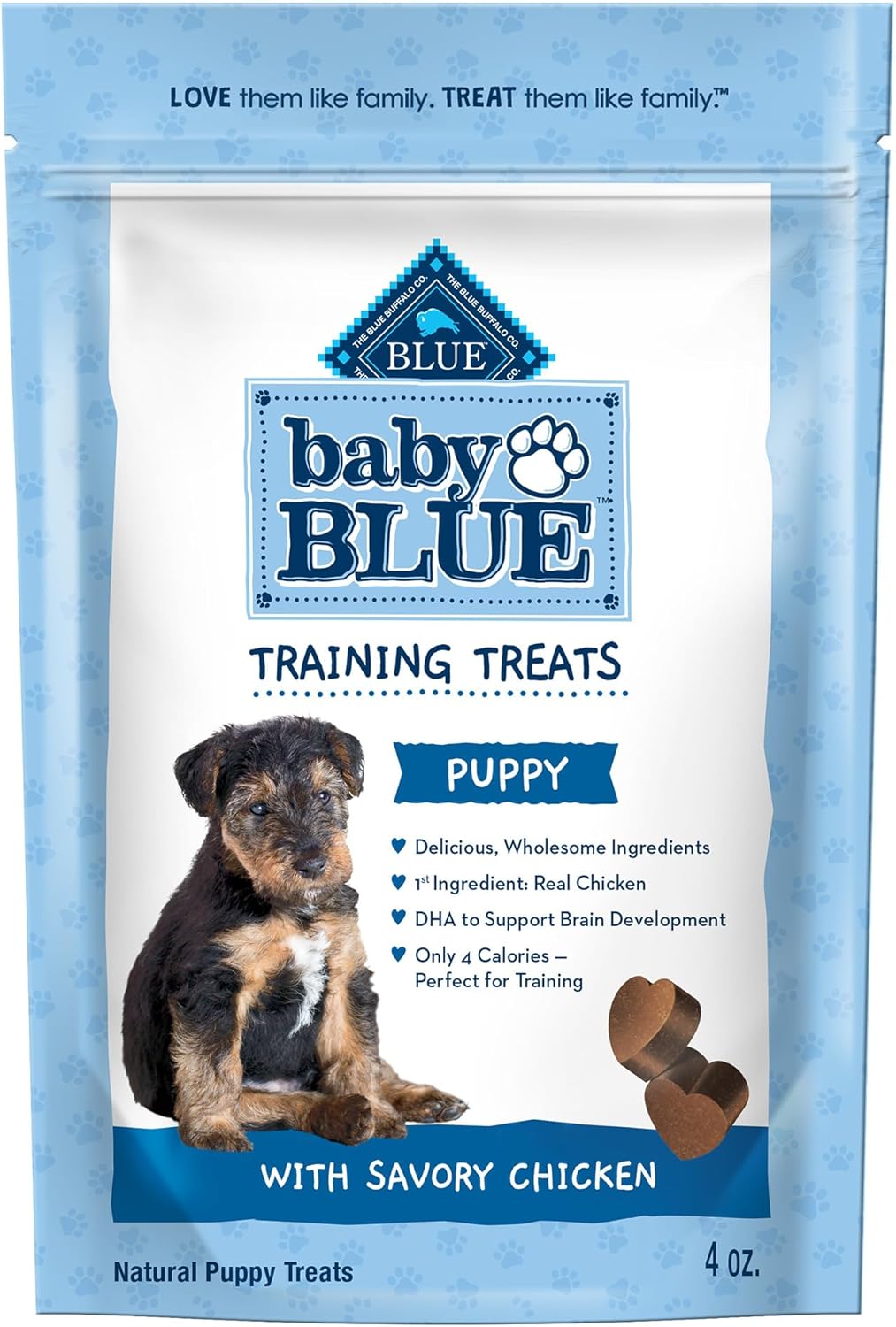
| Flavor | Chicken |
|---|---|
| Age Range Description | Puppy |
| Item Form | Semi Moist |
| Unit Count | 4 Ounce |
| Allergen Information | Corn-Free, Soy Free, Wheat Free |
These Baby BLUE Savory Chicken training treats are soft, bite-sized morsels designed for puppy training and intermittent rewards. Made with real chicken as the first ingredient and a semi-moist texture, they are easy to break or feed quickly during multi-step training sessions. The formula includes DHA for cognitive development and omega fatty acids to support skin and coat, while LifeSource-inspired nutrients and no corn, wheat, or soy aim to reduce common allergens. In practice the treats are highly palatable to most puppies and the small pieces minimize interruptions during repetitious drills. The 4-ounce bag is convenient for short outings or a training class, but frequent trainers may find the pack small and need to replenish often. Nutritional specs show modest protein and fat levels appropriate for treats rather than meal replacement, so they work best as rewards rather than primary food. Overall these treats balance taste and puppy-friendly texture, though the small package size limits how long one bag lasts for heavy training schedules.
Best for: Puppy owners focused on efficient, frequent reward-based training who want a tasty, soft treat that is easy to portion and gentle on young digestive systems.
Less Ideal for: People who run long, intensive daily training sessions or need bulk packaging for many repetitions should consider larger multi-pack options.
- Real chicken listed as the first ingredient for strong palatability
- Soft, semi-moist texture is easy to break and quick to deliver during training
- Includes DHA and omega fatty acids to support cognitive development and skin and coat
- Free of corn, wheat, soy and artificial colors or preservatives
- Small 4-oz bag may not be economical for heavy daily trainers
- Treat nutrient levels are modest so they should not replace regular food
Verdict: The best budget treat for pug puppies that stretches your dollars while remaining appropriately sized, palatable, and safe for frequent rewards.
Pupford Freeze Dried Training Treats 4 oz
Best Premium Treat

| Flavor | Beef |
|---|---|
| Item Form | Pellet |
| Unit Count | 4 Ounce |
| Ingredients | Beef Liver, Beef Heart, Mixed Tocopherols (Natural Antioxidant) |
These freeze-dried beef liver treats are made from just a few natural ingredients and are built for everyday training. The pellets are bite-sized and lightweight so you can give multiple rewards in a short session without overfeeding, and the dry texture keeps hands and treat pouches clean during walks, classes, or clicker work. Because they are essentially meat, they are highly motivating for most dogs and work well for shaping behaviors, recall practice, and reward-based training. The simple ingredient list and low calorie profile also make them a reasonable choice for dogs with sensitive stomachs or owners tracking intake. Limitations include the small 4 ounce pouch, which will be used up quickly with frequent sessions, and the single-flavor profile may not suit dogs that need stronger variety to stay interested long term.
Best for: Trainers who want a simple, highly motivating everyday reward that stays mess free and supports frequent, low-calorie reinforcement.
Less Ideal for: People looking for large bulk quantities or multiple flavor mixes for long-term variety should consider larger or multi-flavor packs.
- Single-ingredient, natural meat formula that boosts motivation
- Freeze-dried, low-odor pellets that do not make hands or pockets messy
- Small, bite-sized pieces suitable for rapid repetition during training
- Low calorie so you can reward frequently without large calorie load
- Small 4 oz pouch can be depleted quickly with heavy training use
- Only one flavor option in this listing limits variety for picky dogs
Verdict: The best premium treat for owners who prioritize superior ingredients, careful sourcing, and richer nutrient profiles for their puppy.
Wellness Soft Puppy Bites 3 oz
Best Training Treat

| Flavor | Lamb & Salmon |
|---|---|
| Age Range Description | Puppy |
| Item Form | Wafer |
| Unit Count | 3 Ounce |
| Allergen Information | Corn-Free, Grain-Free, Soy Free, Wheat Free |
Wellness Soft Puppy Bites are small, soft training treats formulated for puppies with lamb and salmon as primary ingredients and added DHA for brain development. They are bite-sized and moist, which makes them easy to break into smaller pieces and quick to deliver during repetitive training sessions. The grain-free recipe and inclusion of fruits and vegetables like blueberries and sweet potatoes provide more wholesome ingredients than many discount treats, and the soft wafer texture tends to be highly motivating for puppies that prefer chewy rewards. Because the bag is only 3 ounces, it is best suited for short-term use or as an occasional top-up in a multi-pack rotation rather than long training marathons, and the small pack size also keeps them relatively fresh. If your Shih Tzu puppy responds to soft, fish- or lamb-flavored treats, these offer consistent palatability and easy handling at the clicker or during house training, though buyers doing very high-volume sessions may prefer larger bags for better value.
Best for: Buyers seeking an affordable, puppy-focused soft treat that tastes good and is easy to deliver during frequent short training sessions with a Shih Tzu puppy.
Less Ideal for: Users who do very high-volume training or need bulk bags for long-term daily rewarding should consider larger-size training treat options for better value.
- Soft, bite-sized pieces that are easy to break and deliver quickly during training
- Grain-free formula with real lamb and salmon as primary ingredients
- Contains DHA to support puppy brain development
- Includes fruits and vegetables like blueberries and sweet potatoes for added nutrition
- Small 3 oz bag is not economical for very frequent, high-volume training sessions
Verdict: The best training treat designed to be small, highly motivating, and low in calories so you can reward pug puppies repeatedly without overfeeding.
Cloud Star Tricky Trainers Puppy Lamb
Best Soft Treat

| Flavor | Lamb |
|---|---|
| Age Range Description | Puppy |
| Unit Count | 5 Ounce |
| Item Form | Chunk |
| Special Ingredients | DHA |
Cloud Star Tricky Trainers Puppy Lamb are small, soft-and-chewy training treats designed specifically for puppies. Each treat is bite-sized and low in calories, making them easy to use repeatedly during short training sessions without excess calories. The soft texture makes them simple to break into smaller pieces and gentle on developing or teething teeth, while the strong lamb aroma and palatable ingredients help keep young dogs focused and motivated. The formula includes DHA and omega 3 and 6 fatty acids to support cognitive development and coat health, and the bag contains about 250 one-and-a-half-calorie pieces. Ingredients list real lamb and avoids wheat, corn, artificial colors, and preservatives, which may be reassuring for owners watching fillers. Limitations: the bag is small at 5 ounces so frequent trainers will need to rebuy sooner, and the treats contain ingredients like potato flour and cane sugar that some owners may prefer to avoid for puppies on restrictive diets.
Best for: Puppy owners who need a gentle, highly palatable soft treat for frequent training sessions and for puppies with sensitive or developing teeth.
Less Ideal for: Owners seeking large-volume bulk bags or strictly grain-free, no-sugar formulas should consider alternative treat options.
- Soft, easily breakable texture good for teething puppies
- Low calorie at about 1.5 calories per piece for frequent training rewards
- Highly aromatic, palatable lamb flavor that maintains puppy focus
- Includes DHA and omega 3 & 6 to support development and coat health
- Small 5 oz bag means more frequent repurchasing for heavy trainers
- Contains starches and cane sugar which may not suit all restrictive diets
Verdict: The best soft treat for pug puppies that are losing baby teeth or have small mouths and need a gentler texture that's still enticing.
Wellness CORE Brainiac Puppy Treats 5 oz
Best Grain‑Free Treat

| Flavor | Beef & Turkey |
|---|---|
| Age Range Description | Puppy |
| Unit Count | 5 Ounce |
| Item Form | Chunk |
| Allergen Information | Grain-Free |
These soft, bite-sized treats are designed for training and everyday rewarding of puppies and are formulated without wheat, corn, soy, or artificial colors. They use beef and turkey as primary proteins and include salmon oil to provide DHA and omega fatty acids aimed at supporting brain development and skin and coat health. At roughly 6 calories per piece they are convenient for repeated reinforcement during sessions, and the tender texture makes them easy for young mouths to chew. The ingredient list also contains chickpeas, vegetables, fruit inclusions like blueberries and apples, and natural preservatives such as mixed tocopherols and rosemary extract. Limitations to note are that the recipe still includes ingredients like potato and molasses and is not suitable as a balanced meal replacement since it is intended for intermittent or supplemental feeding only. For puppies with diagnosed food allergies, buyers should verify specific intolerances with their veterinarian even though the product is grain-free.
Best for: Puppy owners looking for a grain-free training treat that is flavorful, easy to chew, and formulated to support early brain development while used as a reward during training.
Less Ideal for: Owners seeking a complete or daily diet replacement for puppies or those whose dogs have confirmed allergies to listed ingredients such as potato or certain proteins should consider alternatives or consult a vet.
- Grain-free formula removes common fillers like wheat, corn, and soy
- Soft, bite-sized texture ideal for training and young puppies
- Includes salmon oil to supply DHA and omegas for brain and skin support
- Made in the USA with recognizable protein-first ingredients
- Intended only for supplemental feeding and not a complete food
- Contains other ingredients (potatoes, molasses) that may bother some sensitive pups
Verdict: The best grain-free treat for pug puppies whose diets call for limited or no grains, offering alternative carbohydrate sources and suitable nutrition.
Pupford Cheese Crunchies 7 oz
Best Limited‑Ingredient Treat

| Flavor | Cheddar |
|---|---|
| Unit Count | 7 Ounce |
| Item Form | Chunk |
| Age Range Description | All Life Stages |
Pupford Cheese Crunchies are bite-sized, freeze-dried cheddar treats designed as high-value rewards for training or quick snacks. Each piece is made from a single ingredient, cheddar cheese, which keeps the ingredient list simple and makes the treats easy to break into smaller pieces for repetitive training sessions. The freeze-drying process produces a crunchy texture that dogs find motivating while concentrating protein, calcium, vitamin B12, and vitamin A compared with many baked biscuits. In real use they work well for short training bursts and as an occasional supplement to a balanced diet, but because they are cheese-based they are calorie-dense and should be portioned for small breeds like Pomeranian puppies. The bag format is convenient for pocket storage but does not list resealable features in the product details, so transferring to an airtight container after opening preserves freshness. These Crunchies are a solid choice when you want an unprocessed, recognizable treat ingredient that most pups find irresistible.
Best for: Owners who prioritize minimally processed, recognizable ingredients and need high-value training rewards suitable for very small breed puppies.
Less Ideal for: People looking for low-calorie daily treats or owners whose dogs are lactose intolerant or on a veterinary elimination diet should consider other options.
- Single-ingredient formula (cheddar) that is easy to understand and trust
- Freeze-dried crunch provides high-value texture for training rewards
- Contains concentrated nutrients like protein and calcium from real cheese
- Bite-sized chunks that are easy to break into smaller pieces for small dogs
- Calorie-dense cheese treats require strict portion control for small or young dogs
- No explicit resealable packaging indicated, so freshness depends on storage
Verdict: The best limited-ingredient treat for pug puppies with food sensitivities, focusing on minimal, identifiable ingredients to reduce digestive reactions.
Choosing the Right Treat Pug Puppy: Key Factors to Consider
Size and Portion Control
Treat size and portion control determine how well a snack fits a pug puppy's small mouth and calorie budget. Puppy treats should be small enough to be swallowed easily in one or two bites yet substantial enough to be handled during training. Proper portion control prevents overfeeding, which is especially important for pugs because the breed is prone to rapid weight gain.
Look for treats that can be broken into smaller pieces or that come pre-portioned for puppies. Packaging that allows resealing helps maintain freshness so you are not tempted to give larger portions than intended. Clear feeding instructions and suggested portion counts per day make it easier to keep treats within a healthy daily caloric allowance.
Texture and Chewability
Texture affects how safely and comfortably a pug puppy can eat a treat. Young puppies may not have full dentition, so soft chews, tender morsels, or easily dissolvable treats reduce choking risk and make chewing effortless. Conversely, very hard chews or large, dense pieces can be a hazard for small mouths and developing teeth.
Choose textures that match your puppy's age and chewing stage. For teething puppies, softer, slightly chewy treats soothe gums. For older puppies with more teeth, firmer but still small treats can provide tactile feedback useful in training sessions. Avoid textures that create long-lasting hard fragments a puppy could try to swallow whole.
Ingredient Quality and Digestibility
High-quality, digestible ingredients support growth and reduce digestive upset. Simple, recognizable ingredient lists make it easier to spot potential allergens or fillers that offer little nutritional value. For pug puppies, recipes that avoid excessive fats, artificial colors, and flavors reduce the chance of stomach upset or pancreatitis.
Look for treats with real meat or whole-food bases and limited added sugars. Limited-ingredient or single-protein formulas work well if your puppy shows food sensitivities. Also consider whether the treat includes beneficial additives like omega fatty acids or vitamins geared toward puppy development, but prioritize overall ingredient simplicity over added extras.
Calorie Density and Nutritional Balance
Calorie density matters because small dogs consume more calories per pound of body weight, and pug puppies are susceptible to overeating. A treat should fit into daily caloric needs without displacing balanced meals. Lower-calorie treats or ones designed specifically for training allow frequent rewards without excessive calorie load.
Check the calorie per-treat information and balance treat calories with meal portions. Treats that double as nutritional supplements should be assessed for any overlapping nutrients to avoid excessive daily intake of particular vitamins or minerals. When in doubt, use smaller portions or break treats into pieces to control total calories given during a training session.
Palatability and Variety
Palatability influences how reliably a treat will motivate a puppy during training. Pug puppies can be selective, so a range of flavors and textures helps you identify rewards they prefer. However, highly palatable treats that rely on strong flavors or excessive fats may encourage begging or overconsumption.
Use high-value treats for difficult training tasks and milder options for routine reinforcement. Rotating flavors occasionally prevents flavor fatigue without introducing dietary instability. Keep a mix of soft, moist treats and drier kibble-style rewards to suit different training settings and to provide options for different energy objectives.
Safety, Packaging, and Storage
Safety extends beyond ingredients to how treats are packaged and stored. Resealable packaging, clear expiration dates, and airtight containers preserve freshness and reduce contamination risk. For soft or moist treats, refrigeration or special storage instructions should be easy to follow.
Inspect treats for choking hazards such as small, hard fragments or irregular shapes that could lodge in a small throat. Avoid treats with long, stringy fibers that might wrap around teeth. Also consider travel-friendly packaging for training on the go and single-serve options that simplify portion control when away from home.
How Many Treats Should I Give My Pug Puppy Each Day?
Daily treat allowance depends on age, weight, and overall calorie needs. For pug puppies, treats should generally account for a small percentage of daily calories so that balanced meals remain the primary nutrition source. Frequent short training sessions benefit from very small portions or broken pieces to prevent excess calories.
If you use treats as primary training rewards, choose lower-calorie or training-specific options and factor those calories into the daily total. Monitor your puppy's body condition and adjust treat frequency and size if you notice weight gain or decreased appetite at mealtime.
- Use tiny training bites during obedience sessions.
- Reserve higher-value treats for challenging behaviors or new learning.
- Track daily calories from treats along with meals.
Which Textures Work Best During Leash Training and Socialization?
During active training like leash practice or socialization outings, quick, easy-to-chew treats are best. Soft, pliable morsels that a puppy can eat in one bite let you reward fast without interrupting the activity. Avoid sticky treats that require chewing time or crumbs that create a messy environment.
For outings, consider single-bite, non-greasy treats that do not leave residue on your hands or lap. Pack a variety so you can escalate reward value if the puppy is distracted or nervous during new experiences.
- Soft bite-sized morsels for rapid reinforcement.
- Non-greasy textures to avoid sticky hands during outings.
- Portable resealable packaging for on-the-go training.
Are Dental-friendly Treats Appropriate for Puppies?
Some dental treats are formulated for tartar control in adult dogs and may be too abrasive for puppy teeth. For very young puppies, choose dental options specifically labeled for puppies or rely on gentle chew toys and rinse routines until adult teeth emerge. When a dental-focused treat is puppy-safe, it can help establish good oral habits, but confirm that the texture is not excessively hard.
Introduce dental-style treats gradually and inspect your puppy's teeth and gums for any signs of irritation. If in doubt, use softer dental formulations or consult your veterinarian about timing and suitability.
- Avoid adult-only dental chews for younger puppies.
- Look for puppy-specific dental treats or gentler alternatives.
- Monitor gums and teeth after first uses.
How to Pick Treats for Sensitive Stomachs
If your pug puppy has a sensitive stomach, prioritize limited-ingredient formulas with a single protein source and minimal additives. Sudden diet changes can trigger gastrointestinal upset, so introduce new treats gradually while watching for loose stool, vomiting, or decreased appetite.
Choose treats with easily digestible proteins and avoid high-fat or highly spiced recipes. Probiotics or digestive enzymes in a treat might help some puppies, but such additions should be used with caution and ideally under veterinary advice.
- Introduce new treats over several days to monitor tolerance.
- Prefer single-protein, limited-ingredient options.
- Avoid high-fat, spicy, or heavily seasoned treats.
Using Treats to Manage Weight and Food Motivation
Treats are a powerful training tool but also a common source of extra calories. To maintain healthy weight, use lower-calorie treats, break treats into smaller pieces, or substitute a few kibble pieces during training sessions. Also, try using praise, play, or a short game as an occasional reward to reduce reliance on food.
Balance the puppy's daily energy expenditure with treat intake, adjusting portion sizes as growth slows. Regularly weigh or condition-score your puppy to ensure the reward plan is not contributing to rapid weight gain.
- Break larger treats into multiple smaller rewards.
- Use kibble or low-calorie bites for frequent reinforcement.
- Incorporate non-food rewards to vary motivation.
How We Chose the Best Treat Pug Puppy
To build this list we applied a consistent editorial framework focused on what matters for small-breed puppies. We prioritized ingredient transparency, texture and size appropriate for small mouths, digestibility in young dogs, and formulations designed for training situations. We also considered safety features such as minimal choking risk, absence of common irritants, and clear feeding guidelines for puppies. Our review filters excluded items intended only for adult dogs, products with undisclosed ingredient sources, and treats that require complex preparation at home. Evaluation criteria included ingredient quality and sourcing, texture and size for easy chewing, nutritional suitability for growing puppies, palatability, and packaging that preserves freshness and allows portion control. We also looked at whether the treats offered functional benefits such as dental support or limited-ingredient recipes for sensitive stomachs. The result is a focused list of treats that meet practical needs for pug puppies while minimizing avoidable risks.
Our full evaluation process is outlined in our review methodology.
FAQ
When can I start giving my pug puppy treats?
You can introduce soft, puppy-formulated treats once the puppy is settled on a complete puppy diet and has started basic socialization, usually around 8 weeks. Start with tiny pieces to avoid choking and monitor for any digestive reactions.
What should I do if my pug puppy refuses a treat?
Try offering a milder or different-flavored option, or use a high-value reward only for particularly challenging tasks. If refusal persists, check for dental pain, mouth issues, or recent changes in appetite and consult your veterinarian if needed.
Can treats cause allergies in pug puppies?
Yes, treats with common allergens like certain proteins, dairy, or wheat can trigger reactions. If you suspect an allergy, switch to a limited-ingredient treat with a novel protein and consult your veterinarian for testing and guidance.
Are soft training treats better than crunchy ones?
Soft treats are often better for young puppies and quick training because they are easy to chew and swallow. Crunchy treats can be appropriate for older puppies with mature teeth but may be harder for very young pups to manage.
How do I store puppy treats to keep them fresh?
Keep treats in their original resealable packaging or an airtight container in a cool, dry place. For moist or refrigerated treats, follow package guidance and use within the recommended time once opened.
Final Verdict
Choose treats for a pug puppy by prioritizing size, texture, and ingredient simplicity. Small, soft, low-calorie bites make the best training rewards because they reduce choking risk and let you reward frequently without excessive calories. For puppies with sensitivities, limited-ingredient options and gradual introductions are safer. Balance palatability with nutritional suitability and always monitor body condition and digestive response. With portion control and the right textures, treats can accelerate training and make daily care more rewarding without undermining your puppy's health.

