

Picking the right treats for a small breed dog matters more than it seems. Smaller mouths and faster metabolisms change how much, how often, and what type of snack is appropriate. The wrong texture or calorie density can complicate training, contribute to weight gain, or pose a choking hazard. This guide covers our short list of top treats that suit the physical needs and feeding patterns of small-breed dogs. We evaluated each option for ingredient quality, portion size, texture, and ease of use so you can find snacks that work for training, rewards, and occasional dental care. Read on for the criteria we used and what to consider when choosing treats for your dog.
Top Picks at a Glance
| Best Overall Treat for Small Breed Dogs The top all-around treat choice suited to tiny mouths and tastes | Milk-Bone MaroSnacks Small Dog Treats |  |
| Best Budget Treat for Small Breed Dogs A low-cost, reliable option that still pleases small dogs | Zuke's Mini Naturals Beef 6 oz |  |
| Best High-Protein Treat Higher-protein bites to support muscle and active little dogs | DreamBone Mini Chews Beef |  |
| Best Low-Calorie Treat Fewer calories per piece for weight control and frequent rewards | Fruitables Skinny Minis Pumpkin & Berry 5 oz |  |
| Best Soft Treat Gentle, chewy treats made for sensitive teeth and easy chewing | Bil-Jac Little-Jacs Soft Training Treats 16oz |  |
| Best Grain-Free Treat A grain-free formulation for dogs with sensitivities or restricted diets | Wellness CORE Tiny Trainers Lamb |  |
| Best Long-Lasting Treat More durable chews that keep small dogs engaged longer | Purina Busy Bone Tiny Dog Chews |  |
Milk-Bone MaroSnacks Small Dog Treats
Best Overall Treat for Small Breed Dogs

| Flavor | Beef |
|---|---|
| Item Form | Treats |
| Dog Breed Size | Small |
| Unit Count | 40 Ounce |
| Calories per Treat | 10 calories |
Milk-Bone MaroSnacks are crunchy, bite-sized dog biscuits with a real bone marrow center designed for small dogs and training rewards. Each treat runs about 10 calories, making them easy to portion for frequent rewarding without blowing daily calorie targets, and the canister format keeps a large supply on hand. The texture is a crunchy outer biscuit with a meaty center, which most dogs find palatable and helps deliver a satisfying chew when used for training or casual rewards. Ingredients include wheat flour, meat and bone meal, cooked bone marrow, and beef fat, so they provide a meaty flavor but are not limited to single-protein formulations. Practical downsides are the presence of common fillers and preservatives and that the size and crunch may not suit dogs with sensitive teeth. For owners prioritizing convenience, consistent bite size, and low-calorie treats to use multiple times per day, these deliver a straightforward, familiar option.
Best for: Owners who need an everyday training treat for small dogs that is low in calories, easy to portion, and broadly palatable for repeated rewards.
Less Ideal for: People looking for single-source, limited-ingredient treats for dogs with food sensitivities or for dogs with fragile teeth should consider alternative softer or novel-protein options.
- Consistent small, bite-sized pieces suitable for training rewards
- Low calorie per treat (~10 calories) for frequent use
- Crunchy shell with a meaty bone marrow center that many dogs find appealing
- Large 40-ounce canister provides a long-lasting supply
- Contains wheat and meat-and-bone meal rather than single-source whole protein
- Includes preservatives and added colors listed in ingredients
- Crunchy texture may be too hard for dogs with dental sensitivity
Verdict: The best overall treat for small-breed dogs that balances size, flavor appeal, nutrition, and ease of chewing for everyday rewarding and training.
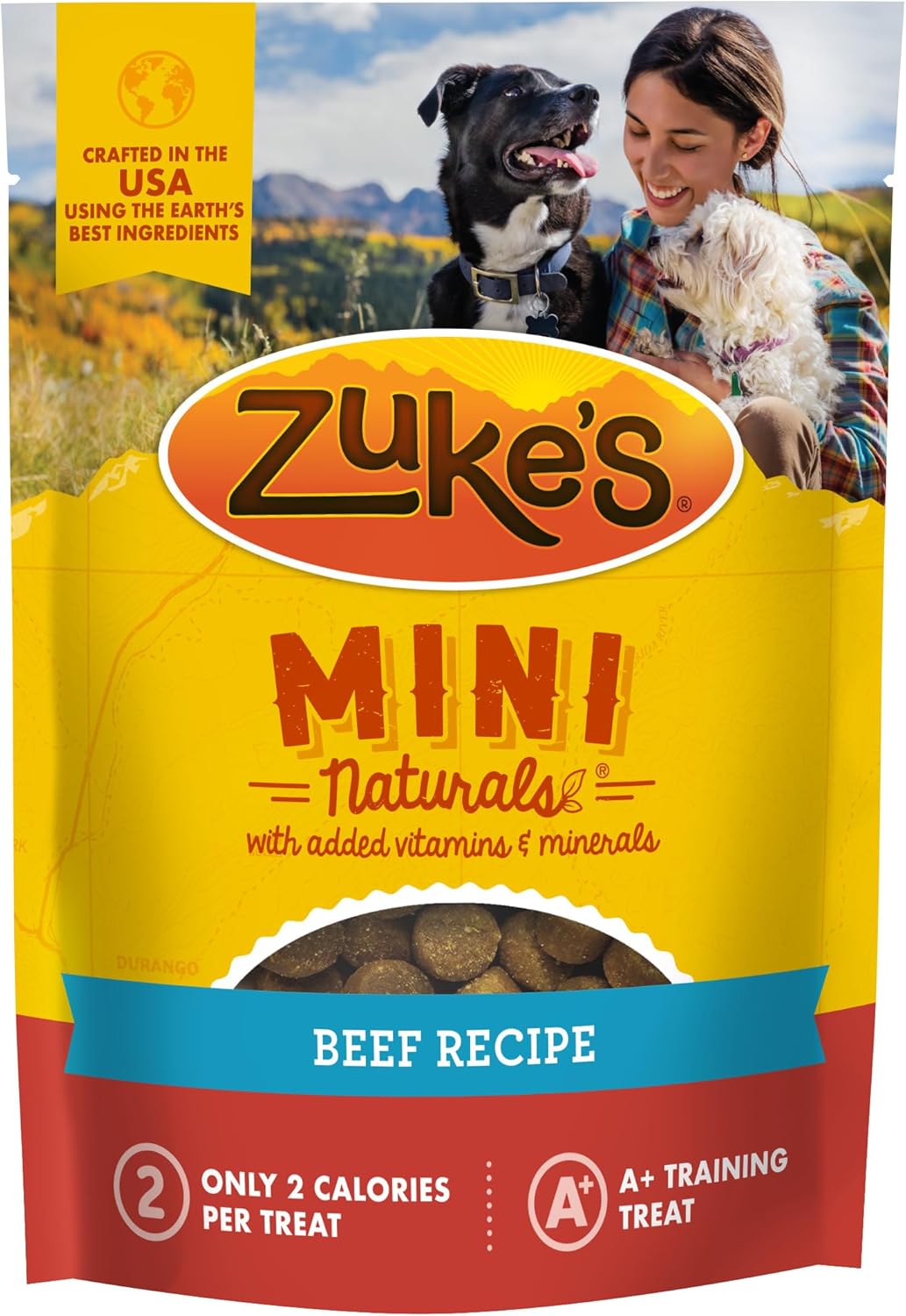
Zuke's Mini Naturals Beef 6 oz
Best Budget Treat for Small Breed Dogs
| Flavor | Beef |
|---|---|
| Unit Count | 6 Ounce |
| Item Form | Treats |
| Target Species | Dog |
Zuke's Mini Naturals Beef are bite-sized, soft training treats made with real beef as the first ingredient and a few simple additions like cherries and oats. They are designed for frequent rewards during sessions or outings: each treat has about 2 calories, a chewy texture that dogs find easy to eat quickly, and a resealable pouch for on-the-go use. The formula avoids corn, wheat, and soy and lists added vitamins and minerals, which supports using many small rewards without heavily increasing daily calories. Practical strengths are the palatable beef-forward flavor, small portion size for repetitive training, and the convenient pouch. Limitations include a simple ingredient list that contains glycerin and cane sugar, so owners aiming for ultra-low-sugar or single-ingredient options may prefer alternatives, and the 6 oz pouch is modest in volume if you train frequently and need bulk. For routine clicker work, leash training, or high-repetition reward drills these treats deliver tasty, low-calorie reinforcement in a portable package.
Best for: Owners who need many low-calorie, tasty rewards for frequent training sessions and value portability and straightforward ingredients.
Less Ideal for: People seeking single-ingredient, no-sugar treats or bulk packaging for extremely high-volume training should consider other options.
- Real beef listed as the first ingredient for strong palatability
- About 2 calories per treat, suitable for high-frequency training
- Soft, chewy texture dogs can eat quickly during sessions
- Resealable 6 oz pouch keeps treats fresh and is easy to carry
- Contains cane sugar and glycerin, so not a single-ingredient or no-sugar option
- 6 oz pouch may be small for owners who train very frequently or need bulk supplies
Verdict: The best budget treat for small-breed dogs for owners who want an affordable, palatable snack that’s appropriately sized and still meets basic ingredient and safety standards.
DreamBone Mini Chews Beef
Best High-Protein Treat

| Flavor | Beef |
|---|---|
| Age Range Description | Adult |
| Item Form | Stick |
| Package Size Name | 24 Count |
DreamBone Mini Chews are small, rawhide-free bone-shaped chews formulated as an easy-to-digest alternative to traditional rawhide. They are intended to be given as daily treats and work by encouraging chewing, which helps reduce plaque buildup and supports dental health when used as part of a routine. The recipe combines real chicken inside with vegetable and beef-flavored exterior plus added vitamins and minerals, so you get a treat that dogs find palatable and that offers some nutritional extras. Because they are soft-textured mini chews, they are suited to petite dogs and are less likely to splinter than hard chews, but supervision is still advised since pieces can be swallowed. The bagged packaging and reseal recommendations make storage straightforward, and the product is explicitly tested for digestibility. Limitations include that these are treats meant to supplement the diet rather than a full dental solution and they contain grains, glycerin, and some artificial colors and preservatives that some owners may prefer to avoid.
Best for: Owners of small or petite adult dogs looking for a bite-sized, rawhide-free chew that encourages safe gnawing and helps with breath and dental maintenance as part of regular care.
Less Ideal for: Dogs with grain allergies, pets on restrictive ingredient diets, or owners seeking a hard chew for heavy power chewers should consider other options.
- Rawhide-free formula safer to digest than rawhide for many dogs
- Small mini size tailored to petite mouths for controlled chewing
- Made with real chicken plus vegetables and added vitamins and minerals
- Soft texture reduces risk of hard splinters while still promoting chewing for dental benefit
- Contains grains, glycerin, artificial colors and preservatives that some owners avoid
- Not a replacement for professional dental care or brushing
Verdict: The best high-protein treat for small-breed dogs that need extra protein for activity or lean-muscle maintenance while remaining small and easily digestible.
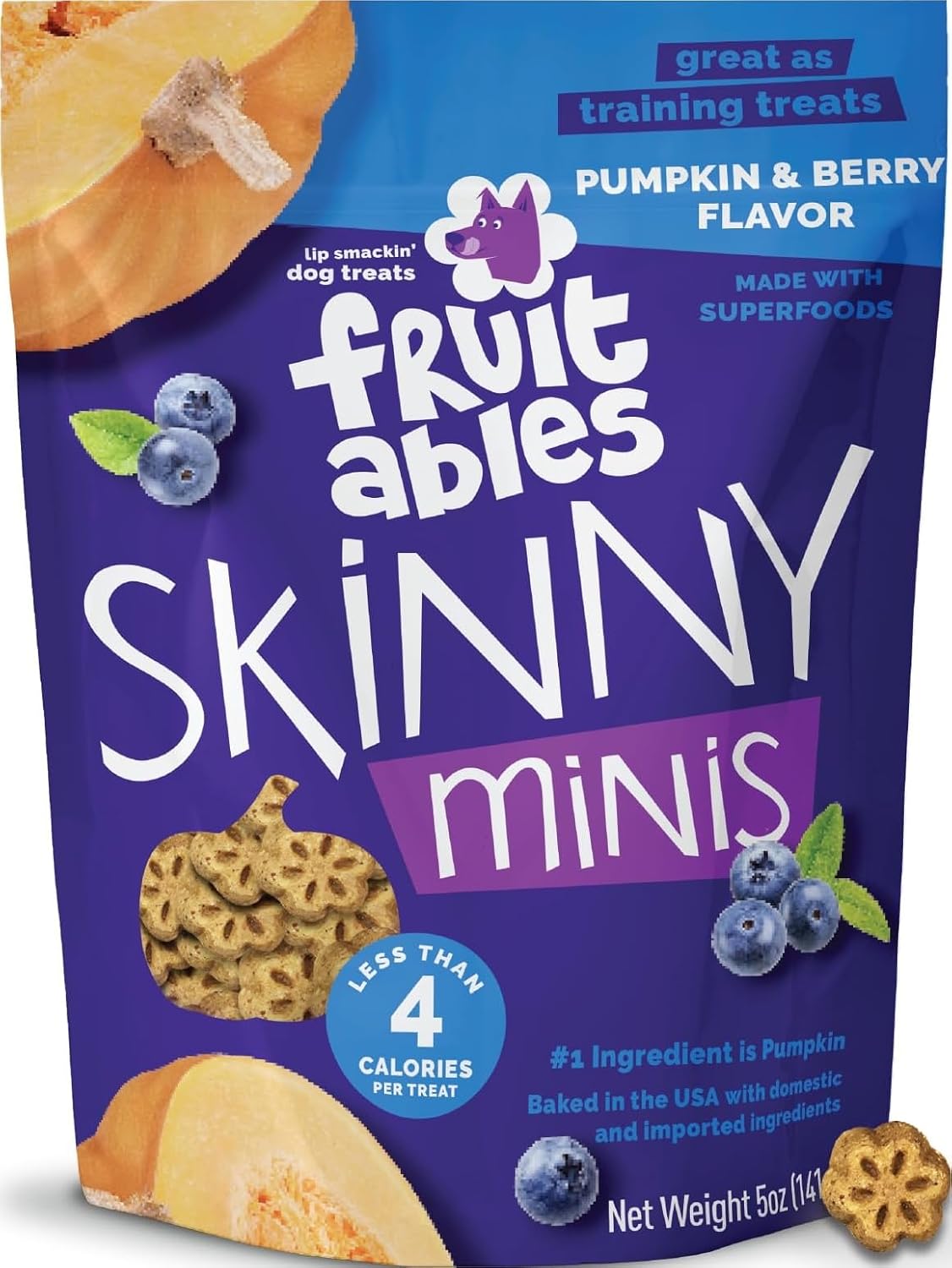
Fruitables Skinny Minis Pumpkin & Berry 5 oz
Best Low-Calorie Treat
| Flavor | Pumpkin |
|---|---|
| Item Form | Stick |
| Unit Count | 5 Ounce |
| Specific Uses For Product | Training |
| Allergen Information | Abalone Free |
Fruitables Skinny Minis are soft, chewy training treats designed for frequent rewards without piling on calories. Each mini is under 4 calories and comes in a small, bite-sized stick form that is easy to break into multiple pieces for rapid reinforcement during puppy sessions. The recipe leans on pumpkin, blueberries, chickpeas, and other vegetable-sourced ingredients rather than wheat, corn, or soy, which can help with ingredient sensitivities and digestion for some dogs. Because they are soft, they work well for puppies and smaller mouths and for indoor training where mess and dry crumbs are a concern. The bag is a single 5 ounce package that is convenient to toss in a treat pouch but is smaller than bulk training tubs, so you may go through multiple bags during intensive training. Also these are formulated as supplemental treats rather than a complete food, so caloric accounting still matters for fast-gaining puppies. For owners who want a tasty, low-calorie, soft treat to reward often, these hit the mark; heavy trainers who prefer larger bulk packs may need to replenish more often.
Best for: Puppy owners who need a flavorful, low-calorie soft treat to reward frequently during training while watching daily calorie intake.
Less Ideal for: Owners who want large bulk quantities for high-volume training sessions or those looking for a complete meal replacement rather than supplemental treats.
- Very low calories per piece (under 4 calories) suitable for frequent rewards
- Soft, chewy texture that is gentle for puppies and small dogs
- Made without wheat, corn, or soy which may suit dogs with common sensitivities
- Contains pumpkin and fruit ingredients aimed at supporting digestion and palatability
- Small 5 ounce bag may require frequent repurchasing during intensive training
- Not marketed as a complete food so must be used as supplemental treats only
Verdict: The best low-calorie treat for small-breed dogs for owners who want to reward often without risking weight gain, offering satisfying taste with minimal calories.
Bil-Jac Little-Jacs Soft Training Treats 16oz
Best Soft Treat

| Flavor | Liver |
|---|---|
| Unit Count | 16 Ounce |
| Item Form | Chunk |
| Calorie Count | < 3 kcals / treat |
Bil-Jac Little-Jacs are soft, bite-sized liver treats designed specifically for training and frequent rewarding. Packaged in a 16-ounce bag, each morsel is made with real chicken liver as the primary ingredient and contains under 3 calories per treat, which makes them suitable for repeated use during short training sessions. The soft, chewy texture resists crumbling in a pocket and is easy for puppies, seniors, or dogs with sensitive teeth to chew. They are marketed as limited-ingredient, with no poultry by-product meals and added preservatives for shelf stability, so they hold up through multiple training sessions without becoming messy. The strong liver aroma and flavor make them highly motivating for many dogs, though dogs with dietary sensitivities to the listed preservatives or grains should be checked against the ingredient list. The bag format gives plenty of treats for longer courses of training, but portion control is still needed to avoid overfeeding across the day. Overall these treats excel as a moist, low-calorie training reward for dogs that need an easy-to-chew option.
Best for: Dog owners running frequent short training sessions who need a moist, highly palatable reward that is easy for puppies, seniors, or dogs with sensitive teeth to eat.
Less Ideal for: Owners seeking a preservative-free or grain-free treat option for dogs with specific food allergies should look for specialized formulations instead.
- Very low calorie per treat for frequent rewarding (<3 kcals)
- Soft, moist texture that is easy for puppies and senior dogs to chew
- Real chicken liver listed as the first ingredient for strong palatability
- Bagged 16 oz size provides a large supply for extended training sessions
- Contains preservatives and grain ingredients that may not suit dogs with specific allergies
- Strong liver aroma may be too intense for some handlers to carry in pockets
Verdict: The best soft treat for small-breed dogs that have delicate teeth, older mouths, or prefer tender textures that are simple to chew and swallow.
Wellness CORE Tiny Trainers Lamb
Best Grain-Free Treat

| Flavor | Lamb |
|---|---|
| Item Form | Chunk |
| Unit Count | 6 Ounce |
| Allergen Information | Grain-Free |
Wellness CORE Tiny Trainers are soft, bite-sized lamb and apple treats designed for frequent training rewards and daily snacking. They come as low-calorie pieces (about 3 calories each) that are soft enough to break or chew quickly, which makes them useful during rapid reinforcement sessions. The formula lists protein first and includes flaxseed for omega-3s to support coat health, while avoiding corn, wheat, soy, and artificial colors. The bag offers a large number of pieces for its 6 oz size, and the tender texture is gentle on small mouths and easy to deliver mid-training without long chewing pauses. On the downside, the ingredient list includes glycerin and cane molasses for texture and palatability, so dogs with very strict ingredient needs or specific sensitivities may need a different option. Also, the small bag size means frequent repurchasing for trainers who go through large volumes of treats quickly.
Best for: Owners who need a low-calorie, palatable treat to reward whippets frequently during training while keeping daily calories controlled.
Less Ideal for: People managing strict ingredient restrictions or dogs with known sensitivities to sweeteners or glycerin should consider an alternative ingredient list.
- Approximately 3 calories per treat, suitable for frequent rewards
- Soft, tender texture that dogs can eat quickly during training
- Grain-free recipe with protein as the first ingredient
- Includes flaxseed and omega-3s to support skin and coat health
- Contains sweeteners and humectants like cane molasses and glycerin which some owners may avoid
- 6 oz bag is relatively small for high-frequency training sessions
Verdict: The best grain-free treat for small-breed dogs for owners managing ingredient sensitivities or preferring grain-free recipes while still offering appealing flavor and texture.
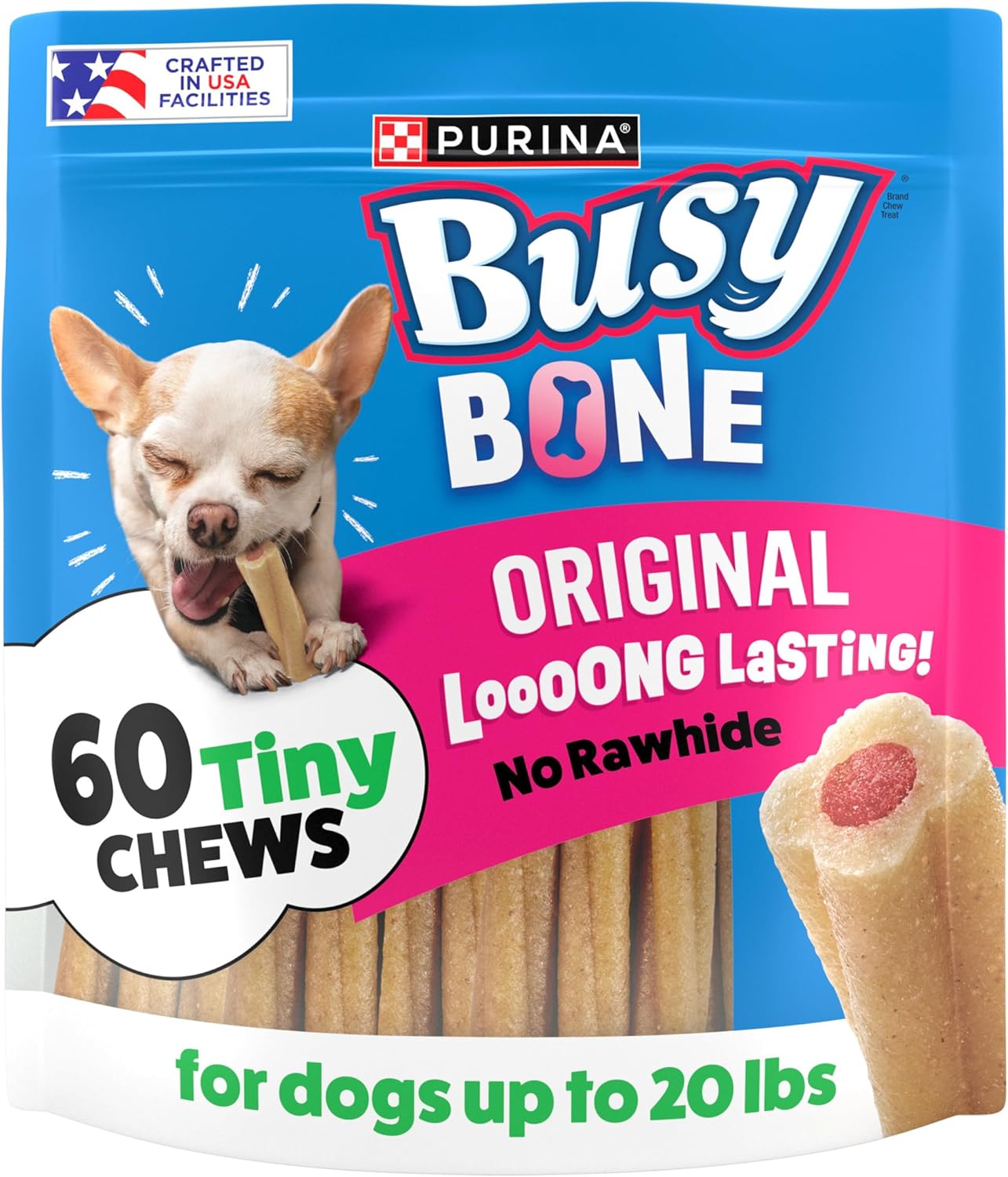
Purina Busy Bone Tiny Dog Chews
Best Long-Lasting Treat
| Flavor | Pork |
|---|---|
| Item Form | Stick |
| Age Range Description | Adult |
| Unit Count | 35.4 Ounce |
| Included Components | One (1) 60-Count Pouch – Tiny |
Purina Busy Bone Tiny are twist-shaped chew treats made for very small adult dogs, with a firm exterior and a real pork center to keep dogs occupied while they chew. They are typically offered as an occasional treat or to occupy a dog during alone time, and the pouch contains multiple single pieces sized for tiny mouths. The product is rawhide-free and formulated to be easily digestible, which reduces concerns some owners have about traditional rawhide chews, and the chewing action can help reduce tartar buildup. Ingredients include grain-based binders and preservatives, so they are not a single-ingredient meat chew and should be given as a treat rather than a meal. Directions note the treats are for adult dogs under about 30 pounds and are not suitable for puppies under one year, and owners should monitor chewing to ensure pieces are adequately broken down before swallowing. If you want a long-lasting, meat-centered chew in a size made for very small dogs, these deliver consistent engagement, but they are a processed treat rather than a whole-food chew alternative.
Best for: Buyers who need a ready-to-serve, long-lasting chew sized for very small adult dogs and who prioritize sustained engagement and dental chewing activity.
Less Ideal for: Owners seeking single-ingredient or minimally processed natural chews, or those looking for treats appropriate for puppies or large breeds.
- Sized specifically for tiny adult dogs so pieces are manageable for small mouths
- Rawhide-free formulation with a real meat center for stronger flavor appeal
- Firm, twisty shape that provides longer chewing engagement than soft treats
- Made in Purina-owned USA facilities and marketed as easily digestible
- Contains multiple preservatives and artificial colors rather than being a single-ingredient natural chew
- Not intended as a meal substitute and not suitable for puppies under one year
Verdict: The best long-lasting treat for small-breed dogs seeking extended engagement and chewing satisfaction without pieces breaking into unsafe small fragments.
Choosing the Right Treat Small Breed Dog: Key Factors to Consider
Size and Portion Control
Treat size is the first practical factor for small-breed dogs because a single oversized treat can deliver an entire snack's worth of calories or create a choking risk. Look for treats that break into several small pieces or come in naturally bite-sized portions that match your dog's mouth and chewing ability.
Portion control also affects daily calorie totals. Because small breeds require fewer calories overall, the per-piece calorie count matters more than with larger dogs. Packaging that lists calories per treat or includes a recommended serving for weight bands makes it easier to reward without overfeeding.
Ingredient Quality and Digestibility
High-quality ingredients reduce the chance of gastrointestinal upset and support overall health. For small breeds that can be prone to sensitive stomachs, limited-ingredient or single-protein treats minimize exposure to common irritants.
Focus on recognizable whole-food ingredients and avoid excessive fillers, artificial colors, and unnecessary additives. Ingredients that are easily digestible and nutrient-dense let you give rewarding bites without loading your dog with empty calories.
Texture and Chewability
Texture determines whether a treat is suitable for young, adult, or senior small-breed dogs. Softer, moist treats are ideal for puppies and older dogs with dental wear, while firmer bites can provide a satisfying chew for adults and help mildly scrape plaque.
Avoid extremely hard treats that require prolonged, forceful chewing, which can stress small jaws or break teeth. Match treat texture to your dog's dental condition and chewing style to keep rewards safe and enjoyable.
Calorie Density and Nutritional Balance
Because small-breed dogs have limited daily calorie budgets, treats should be low in calorie density or used in smaller portions. High-calorie treats are fine occasionally but can quickly cause weight gain when used frequently during training.
Consider treats that offer some nutritional benefit beyond empty calories, such as added protein or functional ingredients like omega fatty acids or probiotics, but prioritize overall balance. Treats should complement, not replace, a balanced diet.
Packaging and Freshness
Packaging that maintains freshness and allows you to dispense single bites supports both hygiene and portion control. Resealable bags, small tubs, or individually portioned pieces make it easier to carry treats during walks and avoid exposing the whole supply to air.
Good packaging also helps you keep track of serving sizes and reduces waste. For people who train frequently, portability and ease of access are practical benefits that make a treat more useful in everyday routines.
Ingredient Sensitivity and Allergy Considerations
Many small breeds are fed limited diets or have identified sensitivities, so treating choices should reflect any known allergies. Choose grain-free options, novel proteins, or single-ingredient treats when working with an elimination diet or when you suspect food sensitivity.
Consult ingredient lists for common allergens and prioritize treats that provide clear labeling. This reduces the risk of accidental exposure and simplifies rotating treats during training without digestive setbacks.
How Often Can I Give Treats to a Small-breed Dog During Training?
Frequent small rewards are often more effective than fewer large ones for shaping behavior. Use tiny, low-calorie bites during high-repetition training sessions so you can reward many correct responses without exceeding daily calorie limits.
Adjust the number of treats based on intensity of exercise and your dog's overall diet. If you use treats heavily, reduce meal portions slightly to keep the day's total calories in range. For pups and seniors, favor softer, easily digestible rewards and keep sessions short to avoid fatigue.
- Aim for very small pieces for clicker or marker training to allow many repetitions.
- Track treat calories and subtract from daily food allowance when needed.
- Use non-food rewards like praise or play to supplement treat-based reinforcement.
Are Crunchy Dental Treats Appropriate for Small Breeds?
Crunchy dental treats can help reduce plaque buildup, but their hardness must match your dog's jaw strength. Mildly abrasive textures are fine for many adult small breeds and can be beneficial when used occasionally. Avoid dense, very hard chews that require intense biting effort or prolonged chewing.
If your dog has dental disease, missing teeth, or is a senior, consult your veterinarian before introducing crunchy dental treats. Those dogs often do better with softer dental-specific products or other oral care measures like brushing and water additives.
- Choose dental treats sized and textured for small mouths.
- Monitor chewing to ensure the treat is broken down safely.
- Use dental treats as part of a broader oral care routine, not the sole method.
How to Read Treat Labels for Small-breed Suitability
Start with serving size and calories per treat. For small breeds, a low-calorie per-piece value or clear guidance on reduced portions is ideal. Next, scan the ingredient list for whole-food proteins and recognizable components rather than vague, broad terms.
Look for statements about intended dog size or age groups, and check for explicit portion recommendations for dogs under 20 pounds. Avoid treats with long lists of artificial additives or preservatives when you plan to use them frequently.
- Prefer treats that list calories per piece.
- Watch for single-protein or limited-ingredient formulations for sensitive dogs.
- Check packaging for recommended serving sizes by weight band.
What to Use for On-the-go Rewarding
Portability matters when you train outside the house. Carry a small container or choose treats that come in resealable, pocket-friendly packs so the treats stay fresh and easy to access. Soft, non-crumbly bites often work best in pockets because they are less likely to make a mess.
For travel, pick options that are stable at a range of temperatures and do not melt or crumble into dust. A compact container also helps you portion treats and avoid giving out too many in public settings.
- Use resealable, small-pack formats for walks and class sessions.
- Avoid crumbly treats that dirty pockets or fall apart.
- Bring a measuring spoon or small scoop to control portions during long outings.
How to Transition a Small-breed Dog to a New Treat
Introduce a new treat gradually to monitor for digestive upset. Start with a few pieces mixed into normal treats or meals and observe stool consistency and appetite. If the dog tolerates the new option, slowly increase usage while reducing an equivalent amount of daily food to maintain calorie balance.
When testing new proteins for possible allergies, use the treat consistently for several days while avoiding other new foods. If itching, vomiting, diarrhea, or other signs occur, stop the treat and consult your veterinarian.
- Begin with small test portions over several days.
- Watch for changes in stool, coat, or behavior.
- Introduce one new treat at a time to isolate reactions.
How We Chose the Best Treat Small Breed Dog
We prioritized criteria that matter for small-breed dogs specifically: treat size and portion control, ingredient transparency and digestibility, texture and ease of chewing, calorie density per treat, and suitability for common small-breed concerns such as dental tartar and sensitive stomachs. Each candidate had to offer clearly listed ingredients and reasonable serving guidance appropriate for dogs under roughly 20 pounds. In practice we filtered out products with ambiguous labeling, excessively large single-piece formats, and treats primarily designed for dental appliances rather than general rewards. We favored options offering low- kcal per bite choices, single-ingredient or limited-ingredient recipes for dogs with sensitivities, and soft-bite textures useful for older or toy breeds. Evaluation also considered packaging that supports portion control and freshness, and whether the treat format works well for frequent training rewards. Products that lacked basic nutritional information or portion guidance were excluded from consideration. The resulting list emphasizes safe, manageable snacks that fit into daily training and feeding routines for small-breed dogs.
Our full evaluation process is outlined in our review methodology.
FAQ
Can small-breed puppies have the same treats as adult small dogs?
Often puppies need softer, easier-to-chew treats and generally lower per-piece calorie counts. Choose treats formulated for puppies or very soft textures until their adult teeth and chewing ability develop.
How many treat calories should I allow per day for a small-breed dog?
It depends on your dog's size and activity level, but treats usually should be a small fraction of daily calories. Track calories per treat and adjust meal portions to avoid overfeeding, especially for less active dogs.
Are single-ingredient treats a good option for sensitive small breeds?
Yes. Single-ingredient or limited-ingredient treats reduce exposure to potential allergens and make it easier to identify triggers during elimination diets. They are often more digestible for sensitive dogs.
What if my small-breed dog tends to inhale treats?
If your dog gulps treats, break them into smaller pieces or use softer textures that encourage chewing. Slow-feeding techniques and hand-feeding during training can also reduce gulping and improve safety.
Should I use treats for every training session with a small-breed dog?
Frequent short sessions with tiny rewards are effective, but you can mix in praise, toys, or play to reduce calorie load. Reserve higher-calorie treats for special achievements and use low-calorie bites for repetition work.
Final Verdict
Choose treats that fit your small-breed dog's mouth, digestive tolerance, and daily calorie needs. Prioritize small or breakable portions, clear ingredient lists, and textures matched to your dog's age and dental health. Packable, resealable formats and explicit calorie-per-piece information make it easier to reward reliably without overfeeding. Balance the benefits of training reinforcement, dental care, and occasional enrichment against calorie impact and ingredient sensitivities. When in doubt, favor low-calorie, easily digestible bites you can use repeatedly during training and scale up to more substantial rewards for exceptional behavior.

