

Finding a harness that fits a dachshund's long back and deep chest matters more than it seems. The wrong shape or adjustment range can rub, slip, or put pressure on the neck and shoulders, making walks uncomfortable for both you and your dog. This guide focuses on short-listed walking harnesses chosen for their fit range, adjustability, and durability specifically for dachshunds. You will see picks that prioritize secure leash attachment, freedom of movement, and materials that resist wear. Below are the top options we shortlisted with the traits to look for and practical advice to help you pick the right harness for your dachshund's body and walking style.
Top Picks at a Glance
| Best Overall Walking Harness The top all-around harness balancing comfort, control, and fit | rabbitgoo Dog Harness Small |  |
| Best Budget Walking Harness A low-cost harness that still performs for daily walks | Petank Step In Dog Harness |  |
| Best No-Pull Walking Harness Designed to reduce pulling with front-clip control and leverage | PetSafe Easy Walk Harness Medium/Large |  |
| Best Step-In Walking Harness Easy on/off design for fuss-free fitting and quick outings | Voyager Step-In Air Harness Small |  |
| Best Reflective Walking Harness High-visibility materials and trim for safer low-light walks | Huntboo Escape Proof Dog Harness Small |  |
| Best Heavy-Duty Walking Harness Reinforced construction and stronger hardware for tough use | Ruffwear Front Range Dog Harness Small |  |
| Best Lightweight Walking Harness Breathable, low-profile build for comfort during active walks | EcoBark Teacup Dog Harness XXS |  |
rabbitgoo Dog Harness Small
Best Overall Walking Harness

| Closure Type | Buckle |
|---|---|
| Dog Breed Size | Small |
| Material Type | Polyester |
| Included Components | Harness |
The rabbitgoo Dog Harness is a step-in style no-pull vest designed for small dogs and puppies that need a secure, adjustable fit. It slips over the head and secures with two quick-release buckles while four adjustable straps let you fine-tune chest and girth sizing as puppies grow. Two leash attachment points give you options for training or casual walks: a front clip to discourage pulling and a back clip for relaxed walking or jogging. Soft padding and breathable mesh reduce rubbing during longer outings, and reinforced buckles plus a padded top handle provide confident control for traffic or crowded situations. Reflective strips improve low-light visibility for early morning or evening walks. Limitations include that it is not chew-proof and the manufacturer advises it is not intended for all-day wear, so very active chewers or dogs that need continuous confinement may require a different solution. Overall, it is a practical, adjustable harness that balances comfort and control for growing puppies and small breeds.
Best for: Buyers who need a harness that can be repeatedly adjusted as a puppy grows and who prioritize ease of fitting, comfort, and training control during daily walks.
Less Ideal for: Owners looking for a chew-resistant, all-day wearable restraint or those who need a harness for very large or powerful dogs should consider heavier duty alternatives.
- Multiple adjustment points for chest and girth to accommodate growth
- Front and back leash clips for training and casual walks
- Soft padded design with breathable mesh to reduce chafing
- Padded top handle and reinforced buckles for quick control and security
- Reflective strips for improved visibility in low light
- Not chew-proof so unsuitable for heavy chewers
- Manufacturer recommends against all-day continuous wear
Verdict: The best overall walking harness is the top pick for most owners who want a comfortable, well-fitting harness that offers reliable control and everyday durability.
Petank Step In Dog Harness
Best Budget Walking Harness

| Included Components | dog harness and leash set |
|---|---|
| Material Type | Mesh |
| Closure Type | Buckle, Velcro |
| Dog Breed Size | Small |
| Weight Range | 3-6 LB |
The Petank Step In Dog Harness is a breathable, lightweight step-in harness packaged with a 4.92 ft leash for everyday walks and training with small dogs. It uses jacquard air-mesh for quick-drying comfort and nylon straps with plastic buckles plus metal D-rings for leash attachment, and a high-viscosity Velcro panel to fine-tune fit. The step-in design makes outfitting squirmy Toy Poodles fast, and reflective trim improves visibility on low-light walks. It is machine-washable and advertised as durable through repeated laundering, which helps with puppy messes and frequent outdoor use. On the downside the XXS sizing and Velcro-based adjustment mean careful measuring is required for a truly snug, escape-resistant fit and very strong pullers may prefer a harness with reinforced hardware and wider straps. For easy on/off daily walking, training, and short hikes with small, calm dogs this harness delivers a lot of practical features in a very lightweight package.
Best for: Buyers who want a fast, low-fuss step-in harness that fits petite breeds and makes daily walks and quick outings easier to manage.
Less Ideal for: Owners who regularly walk strong, heavy pullers or need a heavy-duty, reinforced harness for advanced training or restraint.
- Step-in design that speeds putting the harness on and taking it off
- Breathable jacquard air-mesh is lightweight, quick-drying and comfortable for all-day wear
- Includes a 4.92 ft leash with anti-tangle clip so you get a ready-to-use set
- Reflective striping increases visibility for early morning or evening walks
- Machine-washable construction holds up through repeated cleaning
- Adjustment relies partly on Velcro which needs careful sizing to prevent slippage
- Very lightweight materials and plastic buckles may not suit strong pullers
Verdict: The best budget walking harness gives value-minded owners a functional, safe option that covers basics like secure attachments and reasonable comfort without extra frills.
PetSafe Easy Walk Harness Medium/Large
Best No-Pull Walking Harness

| Material Type | Nylon |
|---|---|
| Closure Type | Snap |
| Included Components | Easy Walk Harness, Quick Start Guide |
| Dog Breed Size | Large |
The PetSafe Easy Walk Harness is a front‑clip, martingale‑style harness designed to reduce pulling by applying gradual, shoulder pressure when a dog lunges. You put the shoulder strap over the dog's head, snap the belly strap, and fine‑tune fit with sliding adjusters; the contrasting belly strap and quick‑snap make on/off fast for daily walks. Because the leash attaches at the chest and the martingale loop tightens as the dog pulls, the harness redirects forward momentum without putting pressure on the throat, which helps prevent gagging and choking. The harness uses a slim, low‑coverage profile and nylon webbing, so it stays lightweight and breathable for active dogs and hikers, and metal sliders and O‑rings give durable adjustment points. Its simpler coverage means less rubbing on hot days, but it does not offer the padding or full‑body support of larger, padded harnesses and may be less suited to dogs that need two‑point control or heavy load support. For everyday walks with a dog that pulls, it balances control, comfort, and durability effectively.
Best for: Buyers who want a dependable everyday no‑pull solution that is simple to fit, lightweight for regular walks and hikes, and effective at redirecting a dog’s forward pull without stressing the throat.
Less Ideal for: Owners who need a heavily padded harness for long carrying tasks, two‑point control for reactive dogs, or maximum restraint for very strong pullers should consider alternative harness types.
- Front‑clip martingale loop redirects pulling without putting pressure on the neck
- Lightweight, low‑coverage nylon design stays breathable for active use
- Quick‑snap belly strap and contrasting color make fitting and donning fast
- Durable metal sliders and O‑rings for reliable adjustment and leash attachment
- Proven design used by trainers and recommended since 2004
- Minimal padding and coverage so it offers less support than full‑body padded harnesses
- May not provide sufficient control for very large, extremely strong pullers or for working tasks
Verdict: The best no-pull walking harness is for owners who need effective pulling control, using a front-clip or anti-pull design to discourage lunging while remaining comfortable for the dog.
Voyager Step-In Air Harness Small
Best Step-In Walking Harness
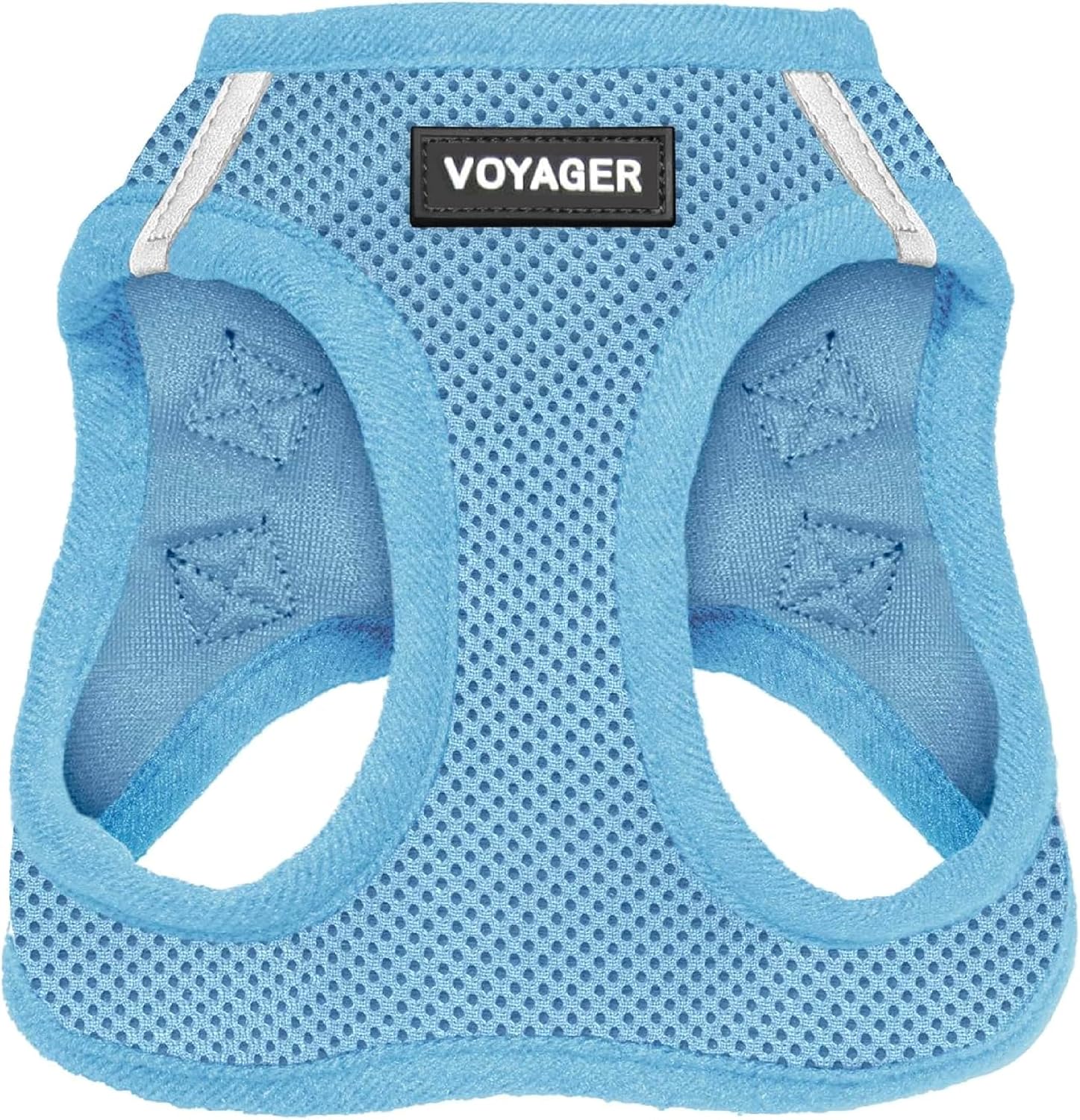
| Material Type | Air mesh |
|---|---|
| Closure Type | Buckle, Double Ring, Hook & Loop |
| Machine Washable | Yes |
| Reflective | Reflective Bands |
| Size (example) | S (Chest: 14.5 – 16") |
The Voyager Step-In Air is a minimal-feel vest harness built from breathable air mesh that aims to keep small dogs comfortable on everyday walks. It is a step-in design with a buckle, hook-and-loop fastener, and double D-rings for leash attachment, so you get a very light package without sacrificing secure connection points. The mesh construction is fast-drying and machine washable, which makes it practical after wet or muddy outings, and reflective bands improve visibility in low light. Because it is targeted at small and medium breeds and lists a narrow weight and chest range, the harness is especially easy to fit on tiny or delicate dogs when you follow the sizing guide. The limitation is that the thin, lightweight mesh and simple hardware are not meant for very strong pullers or large dogs, so expect comfort-focused performance rather than heavy-duty control. For owners who prioritize a barely-there feel with dependable attachment options, this harness is a solid everyday choice.
Best for: Owners of small or delicate dogs who want a barely-there, breathable harness for everyday walks and easy on/off use.
Less Ideal for: People who need a heavy-duty no-pull solution for strong or large dogs should choose a more robust harness with reinforced structure.
- Very lightweight air mesh construction for breathable, all-season comfort
- Step-in design and simple closures make it quick and easy to put on
- Reflective bands increase visibility during low-light walks
- Machine washable and fast-drying material for easy cleaning
- Double D-rings plus buckle and hook-and-loop provide redundant leash attachment
- Not designed for strong pullers or heavy-duty restraint
- Sizing must be measured carefully since sizes are focused on small chest ranges
Verdict: The best step-in walking harness suits owners who prioritize easy, fast fitting and removal—ideal for squirmy dogs or busy households needing a straightforward harness.
Huntboo Escape Proof Dog Harness Small
Best Reflective Walking Harness

| Size | Small(Pack of 1) |
|---|---|
| Closure Type | Buckle |
| Material Type | Lining: Air Mesh, Padding: Soft Cushion, Polyester |
| Dog Breed Size | Small |
| Product Care Instructions | Machine Wash |
This Huntboo Escape Proof Dog Harness is built as a secure, reflective walking harness for standard dachshunds and similar small breeds. It uses a full-body reflective surface and reflective strips for improved low-light visibility, a padded lift handle for quick control or assistance, and a metal back D-ring rated for high pull force to attach a leash securely. The vest style has breathable air-mesh lining and soft cushioning for longer walks, and five adjustment points plus four quick-release buckles make it straightforward to fit and remove. In practice it works well for steady walkers and dogs that try to back out of simple strap harnesses because the belly strap and multiple adjustment points reduce slipping. Expect a slightly bulkier feel from the larger buckles and more fabric compared with minimalist harnesses, and owners who need ultra-lightweight gear for tiny puppies may prefer a simpler strap harness. Machine washable materials simplify cleaning after hikes or rainy walks.
Best for: Owners who walk dachshunds or other small, long-bodied dogs in dawn, dusk, or nighttime conditions and prioritize visibility and a secure, escape-resistant fit for regular outdoor walks and light hikes.
Less Ideal for: People looking for the absolute lightest possible harness for very tiny or frequent indoor-only use should consider a more minimal strap-style harness instead.
- Full-body reflective material and strips increase visibility during low-light walks
- Padded handle gives immediate lift and assist control for obstacles or emergencies
- Five adjustment points and four quick-release buckles enable a customized, escape-resistant fit
- Breathable air-mesh lining and soft cushioning improve comfort on longer outings
- Bulkier than minimal strap harnesses due to wider vest panels and larger buckles
- May be heavier than ultra-light harnesses preferred for very small or very young puppies
Verdict: The best reflective walking harness is aimed at owners who walk in low light and want enhanced visibility and safety through reflective panels or bright trim.
Ruffwear Front Range Dog Harness Small
Best Heavy-Duty Walking Harness

| Leash attachment points | Back V-ring + Chest webbing |
|---|---|
| Adjustment points | 4 Points |
| Material Type | Polyester |
| Closure Type | Pull On |
The Ruffwear Front Range harness is a well-built, comfortable everyday harness that combines a back V-ring and a reinforced chest webbing attachment for redirecting pullers. It is foam padded across the chest and belly to reduce chafing during longer outings and includes four adjustment points plus side-release buckles for a secure, tunable fit. The harness also has reflective trim and a dedicated loop for an accessory light to improve visibility on early morning or evening walks, and an ID pocket for small tags. In practice it performs as a reliable daily-walk harness that eases leash control without harsh pressure on the throat, and the padding and adjustment options make it pleasant for hikes or extended wear. Trade-offs are that it is a basic halter-style configuration rather than a specialized front-clip no-pull system with mechanical leverage, and the polyester construction requires hand washing to stay clean. For owners who value build quality, fit, and comfort in a premium package, this harness delivers a durable, user-friendly option.
Best for: Owners who prioritize premium construction, refined fit, and extra comfort for daily walks, hikes, and longer wear and are willing to pay more for those qualities.
Less Ideal for: People who need a mechanical front-clip leverage system specifically for strong, persistent pullers or who prefer a harness that is machine washable.
- Two leash attachment points (aluminum back V-ring plus reinforced chest webbing) for versatile control and training
- Closed-cell foam padding on chest and belly to reduce chafing during long wear
- Four adjustment points and side-release buckles enable a customized, secure fit
- Reflective trim and light loop increase low-light visibility
- Not a specialized leverage front-clip no-pull design so very strong pullers may need an alternative
- Requires hand wash care rather than being machine washable
Verdict: The best heavy-duty walking harness is intended for strong, active dogs or rough outdoor use, offering reinforced stitching, sturdy buckles, and tougher materials for long-term durability.
EcoBark Teacup Dog Harness XXS
Best Lightweight Walking Harness

| Size | XXS – 4 to 5 lbs – Chest Up to 11 in |
|---|---|
| Material Type | Trinity Air Mesh |
| Closure Type | Buckle, Hook & Loop |
| Included Components | dog harness |
The EcoBark Teacup Dog Harness is a lightweight step-in vest made from Trinity Air Mesh with double padding to keep tiny dogs comfortable on walks. It fastens with a buckle and hook-and-loop closure and uses a heavy-duty D-ring on the back for leash attachment, so it behaves like a standard walking harness while staying low-profile. The breathable mesh and minimal bulk suit warm-weather outings or longer strolls where ventilation and freedom of movement matter, and the design avoids narrow straps that can pinch sensitive skin or tracheas. Sizing targets very small dogs (about 4 to 5 pounds) so you get a snug fit for toy breeds, and the harness is machine washable for easy cleaning after outdoor use. Limitations are straightforward: this is aimed at tiny, low-pull dogs and is not built for strong pullers or larger breeds, and buyers must measure chest circumference carefully since the size range is narrow.
Best for: Owners seeking a minimal, breathable harness that keeps tiny, active dogs cool and comfortable on longer walks and everyday outings.
Less Ideal for: People with strong-pulling dogs, larger breeds, or those who need a front-clip/control harness for training should look elsewhere.
- Very lightweight, breathable Trinity Air Mesh construction for longer outings
- Step-in design with double padding for comfort and easy on/off
- Back heavy-duty D-ring provides a secure leash attachment
- Machine washable for simple cleaning after walks
- Sized specifically for very small toy or teacup dogs and not suitable for larger dogs or heavy pullers
- No front-clip option for walkers who prefer head-harness style control
Verdict: The best lightweight walking harness fits owners looking for a minimal, breathable option that reduces bulk and keeps active or small dogs comfortable on longer outings.
Choosing the Right Walking Harness Dachshund: Key Factors to Consider
Fit and Sizing Range
A dachshund's conformation—short legs, long spine, and a deep chest—means standard small-dog harnesses often miss at least one critical measurement. Look for harnesses with a broad adjustment range around the chest and girth and a low-profile belly panel that does not ride up the abdomen. Clear, multiple-point adjustment (neck, chest, and sometimes belly) lets you shape the harness to your dog's unique proportions and prevents slipping or pinching.
Measure the widest part of the chest and the base of the neck before choosing a size. A harness that fits well distributes leash force across the chest and shoulders instead of concentrating it on the throat, which reduces the risk of coughing or neck strain. Remember that a snug, checked fit is safer than a loose harness that a determined dog can back out of.
Attachment Style and Control
Where the leash attaches affects how easily you control direction and pull. Back-clip attachments are simple and comfortable for calm walkers because they follow the dog's natural direction. Front-clip designs offer more steering control and can help redirect pulling, but they must be positioned so they do not encourage uncomfortable twisting across the chest.
Convertible harnesses that provide both front and back attachment points let you tailor control to training needs and walking conditions. For dachshunds, ensure the front clip sits low enough to steer without contacting the throat, and that any hardware is robust and well-stitched to prevent failure during sudden tugs.
Padding and Seam Placement
Padding reduces pressure points and prevents chafing during longer walks. However, padding that is bulky or poorly placed can interfere with fit, especially on a narrow dachshund torso. Look for smooth, flat padding along the chest plate and under the belly rather than pronounced rolls that may press into the armpits.
Seams and edge binding should be located away from high-contact zones. Reinforced stitching at strap junctions and around hardware reduces the likelihood of rubbing or premature failure. Breathable padding materials are preferable because they wick moisture and lower friction during active play.
Adjustability and Ease of Use
A harness that is simple to put on and adjust will be used more consistently. Quick-release buckles are convenient but must be sturdy and positioned so they cannot accidentally open while the dog moves. Multiple adjustment points allow you to fine-tune the fit as your dachshund grows, gains, or loses weight.
Designs that allow a one-step slip-over versus a two-strap wrap can speed preparation for daily walks. Also consider whether the harness requires loosening for passage over the head; for anxious or wriggly dogs, a design with side buckles may be easier to fit securely.
Material Durability and Maintenance
Dachshunds can be active and often brush against rough surfaces that abrade fabric. Durable webbing, corrosion-resistant hardware, and strong stitch points extend the life of a harness. Materials that tolerate repeated washing without losing shape or color are more practical for everyday use.
Choose fabrics that dry quickly and resist odors. Removable covers or liners are an advantage because they allow deeper cleaning. Hardware should be rated for the expected load and resist rusting from outdoor exposure.
Freedom of Movement and Biomechanics
A harness should allow natural shoulder and forelimb movement so the dog can walk and trot without restriction. The chest plate must sit low enough to avoid restricting the shoulder blades but high enough to distribute force away from the throat. For dachshunds, ensuring the harness does not press on the lower ribcage or restrict spinal motion is important because of their elongated torso.
Observe your dog walking in the harness to confirm a full, comfortable stride. Designs that impede the forelimbs or cause the back to arch are poorly suited to long-term use and can contribute to muscle compensation or discomfort.
How Do I Measure My Dachshund for the Best Fit?
Measure three areas for the most reliable sizing: the neck base where a collar normally sits, the widest point of the chest just behind the front legs, and the girth around the ribcage. Use a flexible tape measure and allow one finger's width of slack for comfort.
Compare those numbers to each harness's size chart rather than relying on generic size labels. If the chest and neck measurements fall into different size bands, choose the size that accommodates the chest comfortably and use adjustment points to refine the neck area.
- Measure while the dog is standing for accurate chest width.
- If between sizes, opt for the larger size and tighten adjustment straps for a secure fit.
- Record measurements to track changes over time or when ordering replacement harnesses.
Will a Harness Prevent Pulling on Walks?
A harness can reduce pulling by giving you better leverage and a safer point to attach the leash. Front-clip options redirect the dog toward you when they lunge, which helps during training. However, no harness eliminates pulling without consistent training and reinforcement.
Pairing a well-fitted harness with positive reinforcement techniques and short training sessions is the most effective approach. For persistent pullers, using a harness that offers both front and back clips lets you switch styles depending on training progress and walking environment.
- Use short, frequent training sessions to teach loose-leash walking.
- Combine leash handling techniques with harness attachment choices for best control.
Which Harness Styles Are Best for Short Outings Versus Active Hikes?
For short, everyday walks, a lightweight harness with breathable padding and quick-release buckles is usually more comfortable and convenient. These designs minimize bulk while providing adequate control for neighborhood outings.
For longer hikes or more active sessions, choose a harness with reinforced stitching, stronger hardware, and slightly thicker padding to distribute load and endure rough terrain. Also consider harnesses with reflective trim for low-light conditions and attachment points for a lightweight handle if you need to help the dog over obstacles.
- Short outings: prioritize low weight and easy on/off.
- Active hikes: prioritize durability, secure hardware, and additional control features.
How to Check and Adjust the Harness Once It's On
After fastening the harness, perform a two-finger check at multiple points: behind the front legs and at the neck. The harness should be snug but not tight. Watch for any pinching when the dog moves and adjust straps to eliminate rubbing at the armpits.
Observe the dog walking for a full minute and listen for breathing that sounds restricted. Reposition any strap or pad that sits over a high-movement area and tighten only as needed to prevent slipping. Periodic rechecks are important because straps can shift with activity.
- Two-finger rule: allows comfortable movement without excess looseness.
- Check straps and buckles regularly for wear and proper function.
Are There Harness Features That Help with Dachshund Back Health?
Because dachshunds are predisposed to spinal issues, a harness that spreads load across the chest and shoulders rather than the neck helps reduce strain. Avoid designs that pull the dog into an upward arch or force excessive rotation around the ribcage. Padding that supports but does not compress the lower ribs is preferable.
Handle features can be useful for short lifts or for steadying the dog without tugging on the leash. If you have concerns about spine health, consult your veterinarian on harness use alongside any medical management plan.
- Prefer chest-distributing designs over neck-only restraints.
- Use handles sparingly and only to assist, not to lift the dog frequently.
How We Chose the Best Walking Harness Dachshund
We focused on features that directly affect comfort, control, and longevity for dachshunds. Evaluation began with sizing and fit: harnesses had to offer measurements and adjustment range suitable for a long-backed, deep-chested silhouette. Restraint design was next, favoring front-clip, back-clip, or convertible attachment options that provide safe steering without stressing the neck. Durability and materials were assessed for abrasion resistance, stitching quality, and hardware strength. We prioritized padding and seam placement to avoid chafing along the ribs and under the armpits. Ease of use was also critical: harnesses needed intuitive buckles, quick on/off, and clear adjustment points so owners can achieve a snug, secure fit. Comfort-related details such as breathable liners, weight, and flex at motion points were part of our criteria. Finally, we considered cleaning and maintenance: washable constructions and materials that dry quickly scored higher. We excluded products without clear size charts, adjustable features, or lacking sturdy attachment points. The resulting list reflects items that best match these practical, dachshund-specific standards.
Our full evaluation process is outlined in our review methodology.
FAQ
How tight should a dachshund harness be?
A harness should be snug but not compressive. You should be able to slide two fingers under the straps at the chest and behind the front legs. Too loose allows slipping; too tight can restrict breathing or movement.
Can I leave a harness on my dachshund all day?
It is usually best to remove the harness when your dog is unsupervised or resting for long periods. Continuous wear can cause chafing and trap heat. For short supervised periods, a well-fitting harness is generally fine.
Will a front-clip harness damage my dachshund's shoulders?
A properly fitted front-clip harness should not damage the shoulders. Problems arise when the harness restricts shoulder blade movement or is improperly positioned. Ensure the front clip sits low enough to steer without pressing on the shoulder joints.
How often should I replace my dachshund's harness?
Replace a harness when you see frayed webbing, cracked hardware, or stitches coming loose. Also update sizing if the dog's body shape changes. Regular inspection ensures safety during walks.
Is a padded harness better than a webbing-only harness?
Padded harnesses offer more comfort for longer walks because they distribute pressure and reduce chafing. Webbing-only harnesses are lighter and dry faster, which can be advantageous for active or water-prone dogs. Choose based on walking habits and tolerance for bulk.
Final Verdict
Prioritize fit, adjustability, and material quality when choosing a walking harness for a dachshund. A harness that distributes force across the chest and shoulders, offers multiple adjustment points, and uses thoughtful padding will keep walks comfortable and reduce neck strain. Expect tradeoffs between lightweight convenience and rugged durability; pick the style that matches your typical walking routine and training needs. Focus on measured fit, a secure attachment point that supports your control strategy, and construction that withstands regular use. With those priorities in mind, you can choose a harness that helps your dachshund walk safely and comfortably every day.

