

As dogs age, their metabolism, activity level, and nutrient needs change. Choosing the right weight management dog food for a senior helps control body fat while preserving lean muscle and supporting joint health. The right formula can reduce strain on joints, improve mobility, and make it easier to keep your dog at a healthy weight without feeling hungry. This guide covers five shortlisted weight management foods for seniors and explains the evaluation criteria we used, including calorie density, protein quality, and ingredient choices. Read on to find the options that best match your dog's age, activity level, and health priorities.
Top Picks at a Glance
| Best Overall Weight Management Food for Seniors A balanced choice targeting senior dogs' calorie control and nutrition | Purina Pro Plan Weight Management Senior |  |
| Best Budget Weight Management Food for Seniors A low-cost formula that still supports senior weight-control goals | Purina Pro Plan Adult 7+ Weight Management 6 lb |  |
| Best High-Protein Weight Management Food Higher-protein recipes that preserve lean muscle during weight loss | NutriSource Weight Management Dry Dog Food 26 lb |  |
| Best Wet Weight Management Food Canned or pouched diets offering higher moisture and palatability | Evanger's Heritage Classics Senior |  |
| Best Limited-Ingredient Weight Management Food Simplified recipes for dogs with food sensitivities or picky palates | Open Farm Healthy Weight Dry Dog Food 4lb |  |
Purina Pro Plan Weight Management Senior
Best Overall Weight Management Food for Seniors

| Flavor | Chicken & Rice Shredded Blend |
|---|---|
| Age Range Description | Senior |
| Item Form | Dry Kibble |
| Unit Count | 288 Ounce |
| Package Size Name | 18 lb |
Purina Pro Plan Weight Management 7 Plus Shredded Blend is a dry kibble aimed at dogs age 7 and older that reduces calorie density while keeping protein as the lead ingredient to help preserve muscle during weight loss. You feed it like any everyday dry food and the formula is intended as a direct replacement for an adult diet after a 7 to 10 day transition. Notable features include real chicken first on the ingredient list, 15 percent less fat than a comparable Pro Plan shredded formula, added glucosamine and EPA for joint support, prebiotic fiber for digestive health, and omega-6 plus vitamin A for skin and coat. In practice this makes it suitable for seniors that need to lose or maintain weight without sacrificing lean mass, and it supports mobility and digestion common priorities for older dogs. Ingredients do include poultry by-product meal and several grain ingredients, so owners seeking grain-free or novel-protein recipes will need alternatives, and the calorie reduction is moderate rather than extreme, so strict veterinary therapeutic weight-loss plans may require additional portion control or vet-prescribed diets.
Best for: Buyers who want a palatable, senior-focused weight management kibble that balances reduced calories with joint and digestive support for everyday feeding.
Less Ideal for: Owners seeking a veterinary prescription weight-loss diet, a grain-free formula, or a novel single-protein recipe should consider other specialized options.
- High-protein formula with real chicken first to help preserve muscle during weight loss
- 15% reduced fat versus comparable Pro Plan shredded formula to lower calorie intake
- Includes glucosamine and EPA to support joint health and mobility in seniors
- Prebiotic fiber and antioxidants to aid digestion and immune support
- Omega-6 fatty acids and vitamin A to help maintain skin and coat condition
- Contains poultry by-product meal and common grains, not suited to grain-free or novel-protein needs
- Calorie reduction is moderate and may require strict portioning for significant weight loss
Verdict: The best overall weight management food for seniors that balances reduced calories, senior-specific nutrients, and palatability to support healthy aging and weight loss.
Purina Pro Plan Adult 7+ Weight Management 6 lb
Best Budget Weight Management Food for Seniors

| Package size | 6 lb |
|---|---|
| Flavor | Chicken & Rice Shredded Blend |
| Age range | Senior (7+) |
| Primary benefits | Weight Management; Joint Health Support; Digestive Support; Skin & Coat Health |
Purina Pro Plan Adult 7+ Weight Management Shredded Blend is a senior dry dog food designed to help older dogs lose or maintain weight while preserving muscle. It is typically fed as a primary diet for dogs age 7 and up and is used much like other complete kibble formulas, with gradual transition guidance included. The formula lists real chicken first, contains 15 percent less fat than the comparable Complete Essentials shredded formula, and adds glucosamine and EPA to support joint health and mobility, which is useful for less active seniors. Prebiotic fiber aids digestion and omega-6 plus vitamin A support skin and coat condition. In practice this means you can reduce calorie density without sacrificing protein levels that help maintain lean mass during weight loss. On the downside the ingredient panel includes several grain and by-product meals rather than an all-meat or limited-ingredient approach, so dogs with specific sensitivities may need a different formula. For owners prioritizing a cost-conscious senior weight program, this delivers focused nutrition and practical benefits without premium pricing.
Best for: Owners seeking an affordable, senior-focused weight management kibble that still provides protein, joint support, and digestive aids for everyday feeding.
Less Ideal for: Owners who need a limited-ingredient, grain-free, or single-protein diet for food-sensitive dogs should consider specialized formulas instead.
- Formulated for seniors with glucosamine and EPA to support joint health and mobility
- 15 percent less fat than the comparable Pro Plan shredded chicken and rice formula to aid weight control
- Real chicken is the first ingredient to help maintain muscle mass during weight loss
- Includes prebiotic fiber for digestive support and omega-6 plus vitamin A for skin and coat health
- Contains poultry by-product meal and several grain meals, which may be undesirable for dogs with ingredient sensitivities
- Available package size here is 6 lb which may be less economical per pound than larger bulk options
Verdict: The best budget weight management food for seniors for owners who need an affordable option that still delivers lower calories and adequate senior-focused nutrition.
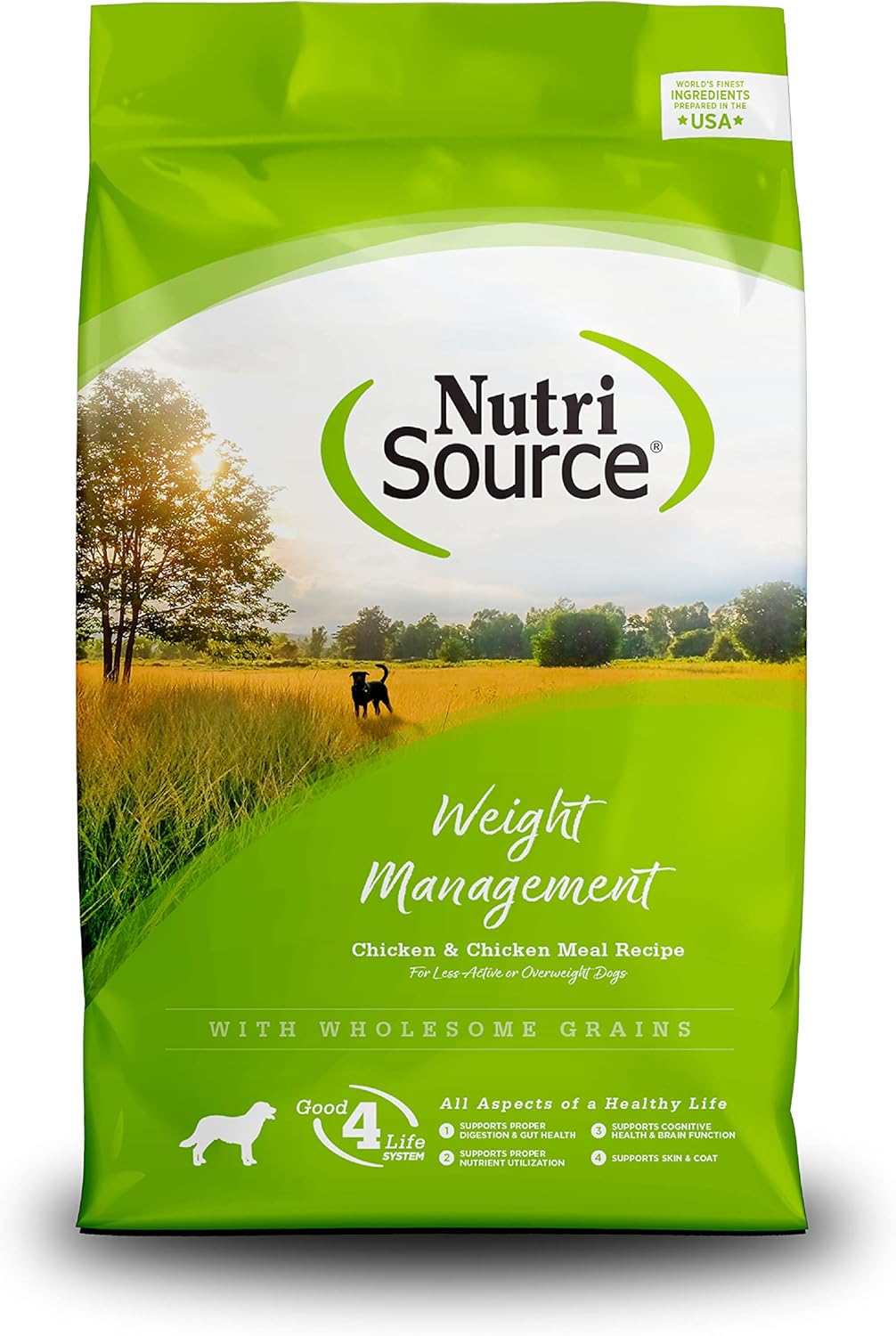
NutriSource Weight Management Dry Dog Food 26 lb
Best High-Protein Weight Management Food
| Flavor | Chicken & Rice |
|---|---|
| Item Form | Dry Kibble |
| Age Range Description | All Life Stages |
| Special Ingredients | Barley, Flaxseed, Peas, Prebiotic, Probiotic |
| Item Weight | 26 pounds |
NutriSource Weight Management is a dry kibble formulated to help dogs lose or maintain weight while supporting digestion and overall health. It uses chicken and chicken meal as primary protein sources and includes fiber-rich ingredients like pea fiber and beet pulp plus added L-carnitine to support lean muscle and energy balance. The formula includes prebiotics and probiotics, glucosamine and chondroitin for joint support, and balanced omegas for skin and coat, making it suitable for seniors who need joint and digestive care alongside calorie control. Practical use is straightforward: feed per the package guidance adjusted for age, activity, and target weight and ensure fresh water is available. Limitations are that it is a grain-inclusive recipe and contains multiple plant-based ingredients like peas and barley, which some dogs with specific sensitivities may not tolerate, and portion control and monitoring remain necessary to achieve weight goals. Packaging is a large 26 pound bag intended for regular home feeding rather than small-sample trials.
Best for: Owners prioritizing preserved lean muscle and satiety during calorie reduction who want a complete, digestible weight-management formula that also supports joints and gut health.
Less Ideal for: Owners whose dogs require grain-free, single-protein, or elimination-diet feeding for diagnosed food sensitivities should consider a targeted veterinary diet instead.
- Chicken and chicken meal as primary protein to support lean muscle maintenance
- Includes L-carnitine to help metabolize fat while preserving muscle during weight loss
- Prebiotics and probiotics to support digestive health and stool quality
- Added glucosamine and chondroitin for joint support useful for senior dogs
- Formulated for all life stages so transitions for older dogs are simple
- Grain-inclusive formula and multiple plant proteins may not suit dogs with specific ingredient sensitivities
- Large 26 lb bag is less convenient for trialing a new diet or for owners with limited storage
Verdict: The best high-protein weight management food for owners focused on maintaining their dog's lean muscle and satiety while reducing overall calories.
Evanger's Heritage Classics Senior
Best Wet Weight Management Food

| Flavor | Senior |
|---|---|
| Item Form | Wet |
| Animal Food Diet Type | Veterinary Diet |
| Number of Items | 12 |
Evanger's Heritage Classics Senior is a canned, meat-based wet food formulated for older, overweight, or less active dogs that need lower-calorie, easily digestible meals. It is typically fed as a complete daily meal or as part of a rotation and is easy to portion because it comes in single cans; the smooth texture makes it suitable for dogs with dental sensitivities. The recipe emphasizes real chicken, brown rice, added vitamins and chelated minerals, and L-carnitine to help maintain muscle tone while supporting weight control and joint function. It is free from added salt, artificial preservatives, corn, soy, and fillers, which helps pets with ingredient sensitivities adapt more readily to a grain-free or simplified ingredient list. Practical benefits include senior-targeted nutrient support, digestibility for sensitive stomachs, and recyclable BPA-free cans for environmentally minded buyers. Limitations are that calorie content per can is not listed on the product page and the formula may still include brown rice, so strict grain-free seekers should verify ingredient lists for the specific variant they purchase.
Best for: Senior dog owners who prioritize a lower-calorie, easy-to-digest wet diet with recognizable meat-first ingredients and targeted nutrient support for mobility and weight control.
Less Ideal for: Owners who require a strictly grain-free formula or need precise calorie-per-serving labeling for therapeutic feeding should consider alternatives with explicit grain-free claims and detailed caloric information.
- Formulated specifically for seniors to support weight management and joint health
- Meat-based recipe with real chicken and added vitamins and chelated minerals
- Free from added salt, artificial preservatives, corn, soy, and fillers
- Smooth, easy-to-chew texture suitable for dogs with dental sensitivities
- Prepared in the USA and packaged in BPA-free recyclable cans
- Calorie-per-can information is not provided on the product page
- Contains brown rice so may not meet strict grain-free requirements for all owners
Verdict: The best wet weight management food for dogs that benefit from increased moisture, easier chewing, and often greater palatability during a calorie-restricted plan.
Open Farm Healthy Weight Dry Dog Food 4lb
Best Limited-Ingredient Weight Management Food

| Flavor | Healthy Weight |
|---|---|
| Age Range Description | All Life Stages |
| Item Form | Pellet |
| Unit Count | 64 Ounce |
Open Farm Healthy Weight is a dry kibble formulated to help dogs lose or maintain weight while preserving lean muscle. It is typically fed as a complete diet using the gradual transition schedule on the packaging and daily portion guidance for weight-loss or maintenance. The formula emphasizes lean animal protein sources and includes L-carnitine, prebiotic fiber and fructooligosaccharides to support metabolism and gut health, plus natural omega-3s for joint support—useful for senior dogs with weight and mobility concerns. Ingredient sourcing is traceable and the recipe excludes common fillers like corn, wheat, soy, peas, legumes and artificial flavors, which simplifies elimination for dogs with sensitivities. On the downside, the ingredient list still includes multiple grain sources and several named fish meals, so it is not a single-protein limited-ingredient diet and may not suit dogs that require very strict minimal-ingredient formulas. Expect the usual kibble feeding routine and to monitor body condition and intake to reach weight goals.
Best for: Seniors and adult dogs that need a weight-management diet and whose owners prefer a cleaner, vet-formulated recipe without common fillers but do not require a single-protein limited-ingredient product.
Less Ideal for: Dogs that must eat a strictly limited-ingredient or single-protein diet for allergy diagnosis or those on grain-free regimens should consider alternative formulas.
- Formulated by veterinarians for weight management with added L-carnitine
- Includes prebiotic fiber and fructooligosaccharides to support gut health
- Natural omega-3 sources to help joint health and mobility in seniors
- Made with traceable, responsibly sourced ingredients and excludes common fillers and artificial flavors
- Not a true limited-ingredient single-protein formula due to multiple fish and grain ingredients
- Contains grains which some owners seeking grain-free or very simplified diets will want to avoid
Verdict: The best limited-ingredient weight management food for owners who need a simpler formula to reduce potential triggers while still supporting controlled weight.
Choosing the Right Weight Management Dog Food Senior: Key Factors to Consider
Calorie Density and Portion Guidance
Calorie density determines how much food you can feed while keeping daily energy intake in check. Seniors often need fewer calories but may struggle to eat large volumes, so a moderately lower calorie density that still allows reasonable portion sizes helps prevent hunger-related behaviors. Clear portion guidance on the label or manufacturer feeding charts is useful for adjusting intake based on current weight and activity.
When assessing calorie numbers, compare calories per cup or per kilogram and consider how treats and table scraps will add to daily totals. For dogs with very low appetites, extremely low-calorie kibble can be problematic because it forces very large meal volumes; choose a formula that balances calorie reduction with manageable portion sizes.
Protein Quality and Quantity
Maintaining lean muscle mass is essential for senior dogs, so a weight management food must still provide sufficient high-quality protein. Look for named animal protein sources listed near the top of the ingredient panel and a guaranteed minimum crude protein appropriate for older dogs. Protein supports mobility and metabolic health even while calories are reduced.
Too little protein accelerates muscle loss during weight reduction, while the right amount helps preserve functional strength. Consider your dog's current condition: underweight seniors recovering from illness may need higher protein levels, while overweight dogs should get enough protein to protect muscle during gradual weight loss.
Joint-support and Functional Nutrients
Older dogs commonly have joint stiffness and arthritis, so weight management foods for seniors should ideally include joint-supporting nutrients. Ingredients such as glucosamine and chondroitin or omega-3 fatty acids can help maintain joint comfort while weight loss reduces load on joints. Antioxidants and vitamins can support overall cellular health and immune function in aging dogs.
While these additions are not a substitute for veterinary therapies, they complement weight loss by making movement easier, which encourages activity and helps sustain weight control. Check guaranteed analysis for omega-3 content and look for added joint supplements when joint health is a concern.
Digestibility and Gastrointestinal Tolerance
Senior dogs may have more sensitive digestion, so highly digestible formulas reduce stool volume and improve nutrient uptake. Ingredients such as cooked grains, purified starches, or well-processed legumes can be easier to digest than coarse fillers. Probiotics, prebiotic fiber, and moderate fiber levels help regulate stool consistency and support gut health.
Rapid diet changes can upset a senior's stomach, so choose foods with a straightforward ingredient list and transition slowly over one to two weeks. If your dog has a history of pancreatitis or sensitive fat digestion, monitor fat content and choose formulas designed for gentle digestion.
Palatability and Appetite Considerations
Loss of appetite is common in senior dogs due to dental issues, reduced smell, or medical conditions. Weight management foods must be palatable enough that a dog will eat the reduced-calorie portion. Look for foods formulated with appealing textures and natural flavor enhancers rather than relying on high-fat coatings.
If your dog is a picky eater, consider wet options or mixers compatible with a weight management plan. Small, fragrant kibble and incremental changes can improve acceptance. The feeding regimen should keep the dog interested while still supporting gradual, sustainable weight loss.
Ingredient Transparency and Avoidable Fillers
Transparent labeling helps you assess whether a formula meets senior needs. Avoid vague ingredients such as unspecified meat by-products or unnamed grains that make it hard to evaluate protein quality. Low-value fillers can increase stool volume and reduce overall nutrient density, which complicates calorie-controlled feeding.
Prefer formulas that list specific, named ingredients and provide a complete nutritional analysis. This clarity helps you monitor macronutrient ratios and make informed adjustments for health issues like kidney disease or food sensitivities.
How Quickly Should a Senior Dog Lose Weight Safely?
Safe weight loss for senior dogs is usually gradual. A common recommendation is targeting around 1 to 2 percent of body weight per week, but pace depends on starting weight, age, and health conditions. Rapid weight loss can lead to muscle loss or metabolic issues, so a conservative plan is best.
Work with your veterinarian to set a realistic weekly target, then use the food's calorie guidance and regular weigh-ins to track progress. If weight plateaus for several weeks, small reductions in daily calories or increased activity can help, but avoid aggressive cuts that could compromise lean mass.
- Aim for gradual reduction: roughly 1–2% body weight per week as a starting point.
- Weigh your dog every 2–4 weeks to monitor progress and adjust portions.
- Increase low-impact activity like short walks to complement dietary changes.
Can I Mix a Weight Management Kibble with Wet Food or Toppers?
Yes, but do so with care. Mixing in wet food or toppers can improve palatability and hydration, but it also adds calories. Choose low-calorie, nutrient-dense toppers and account for those calories when calculating daily intake.
Use small amounts of wet food or a low-calorie gravy to encourage eating during the transition. Measure all components precisely so the total daily calories still align with your weight-loss plan.
- Measure portions and include topper calories in the daily total.
- Prefer low-fat, low-sugar toppers formulated for seniors.
- Gradually reduce toppers as the dog accepts the new kibble to avoid long-term calorie creep.
What Role Do Treats and Snacks Play in a Weight Plan?
Treats can quickly undermine calorie control if not managed. Replace high-calorie treats with low-calorie training bits, vegetable sticks approved for dogs, or portioned pieces of the regular diet. Treats should make up a small percentage of daily calories, typically less than 10 percent.
Using part of your dog's daily allotment of kibble as training rewards is an effective way to control extra calories while reinforcing behavior and maintaining engagement during weight-loss training.
- Limit treats to under 10% of daily calories.
- Use kibble from the daily ration as rewards when possible.
- Choose low-calorie, high-appeal options for training and enrichment.
How to Handle Concurrent Health Issues Like Arthritis or Dental Problems
Addressing comorbidities is essential when managing a senior dog's weight. For dogs with arthritis, prioritize formulas with joint-supporting nutrients and consider low-impact exercise to boost mobility without stressing joints. For dental issues, softer textures or soaked kibble can improve intake without increasing calories dramatically.
Always coordinate dietary changes with veterinary care when other health problems are present. Some conditions require special nutrient adjustments that affect calorie and protein targets, so individualized plans are safer and more effective.
- Soak kibble or choose softer formulations for dental sensitivity.
- Incorporate joint-support nutrients and gentle exercise into the plan.
- Consult your veterinarian to align weight goals with medical treatments.
When Should You Switch Formulas or Consult Your Veterinarian?
If your dog refuses the food, loses weight too quickly, shows muscle wasting, or develops digestive upset, it is time to reassess the diet. Any concerning changes in energy, coat condition, or stool quality warrant veterinary input. A planned formula change should be gradual and monitored.
Consult your veterinarian before switching to a drastically different macronutrient profile or therapeutic diet, especially for seniors with chronic conditions such as kidney disease or diabetes. Your vet can recommend appropriate adjustments and monitoring.
- Re-evaluate the diet if appetite, weight, or stool quality worsen.
- Make formula switches gradually over 7–14 days to reduce digestive upset.
- Seek veterinary guidance before major dietary changes in seniors with chronic illness.
How We Chose the Best Weight Management Dog Food Senior
We applied senior-specific criteria to identify weight management dog foods that balance calorie control with adequate nutrition for older dogs. Our selection focused on formulas with clear calorie-per-serving information, higher-quality lean protein sources to help preserve muscle mass, and ingredients that support joint and digestive health common in senior pets. We prioritized foods formulated for lower calorie density without sacrificing essential amino acids, and we looked for soluble and insoluble fiber blends to promote satiety. Digestibility and ingredient transparency were key: highly digestible carbohydrate sources and named meat proteins ranked higher than generic fillers. We also considered added joint-support nutrients and antioxidants that can benefit aging dogs. Exclusions included maintenance or puppy diets, products lacking clear nutrient analysis, and formulas without senior-specific guidance. We filtered out foods with overly vague ingredient lists or missing calorie data, and we excluded therapeutic clinical diets that require veterinary prescription unless explicitly labeled for senior weight control. The final picks reflect a balance of nutrition, senior needs, and practical feeding guidance.
Our full evaluation process is outlined in our review methodology.
FAQ
How many calories should a senior dog eat to lose weight?
Calorie needs vary by size, activity, and health. A typical approach is to start with the maintenance calorie estimate for the dog and reduce it by about 10–20 percent, then monitor weight weekly. Your veterinarian can calculate a tailored target and adjust based on progress.
Is high protein safe for older dogs trying to lose weight?
Higher-quality protein is usually beneficial to protect lean mass during weight loss. For most healthy seniors, moderate to high protein levels are safe, but dogs with specific kidney conditions may need tailored protein management under veterinary supervision.
Can senior dogs eat weight management wet food?
Yes. Wet foods can aid hydration and palatability and may be easier for dogs with dental issues to eat. Ensure you include wet food calories in the daily total and choose formulations appropriate for seniors that still support protein and nutrient needs.
How long should I try one food before deciding it is not working?
Allow at least 4 to 8 weeks for a food to show its effect on weight and digestion, after a proper transition. Track weight, appetite, energy, and stool quality. If there is no progress or if adverse effects appear, consult your veterinarian and consider an alternative.
What if my senior dog has a decreased appetite during weight loss?
Loss of appetite can be managed by warming food, adding low-calorie toppers, offering smaller more frequent meals, or checking for dental or medical causes. If appetite loss persists, seek veterinary evaluation to rule out underlying illness.
Final Verdict
Prioritize steady, sustainable weight loss that preserves lean muscle and supports joint health when choosing weight management foods for seniors. Focus on calorie control, high-quality protein, digestibility, and palatability to keep your dog comfortable and active during the process. Work with your veterinarian to set realistic goals, monitor progress regularly, and adjust portions or formulas as needed. Aim for gradual improvement in mobility and body condition rather than rapid weight loss to ensure the best long-term outcome.

