

Choosing the right wet food for a Labrador puppy matters for healthy growth, digestive comfort, and establishing good eating habits. Puppies have different calorie and nutrient needs than adult dogs, and Labradors often benefit from wet formulas that are nutrient-dense and easy to chew. This guide shortlists seven top wet food options chosen for nutrient balance, protein quality, digestibility, and texture suited to large-breed puppy appetites. Below we outline what we evaluated and which factors matter most so you can pick a feeding plan that supports your puppy through rapid early development.
Top Picks at a Glance
| Best Overall Wet Food A well-rounded choice that suits most Labrador puppies' needs | Purina Pro Plan Puppy Pate 13 oz |  |
| Best Budget Wet Food A low-cost option that still meets basic puppy nutrition needs | Strongheart Puppy Chicken & Beef 13.2oz |  |
| Best Premium Wet Food Higher-end formulations with superior ingredients and manufacturing standards | ORIJEN Puppy Poultry & Fish Pate |  |
| Best Grain-Free Wet Food Formulas without grains for puppies with grain sensitivities or preferences | Instinct Original Puppy Wet Food 13.2 oz |  |
| Best High-Protein Wet Food Higher-protein recipes to support growing muscle and active puppies | Blue Buffalo Wilderness Puppy Wet Food |  |
| Best Large-Can Wet Food Larger can sizes for multi-puppy households or less frequent shopping | Royal Canin Large Puppy Wet Food 13 oz |  |
| Best Easy-Digest Wet Food Gentle formulas designed for sensitive stomachs and smoother digestion | Hill's Science Diet Puppy Sensitive Stomach & Skin |  |
Purina Pro Plan Puppy Pate 13 oz
Best Overall Wet Food
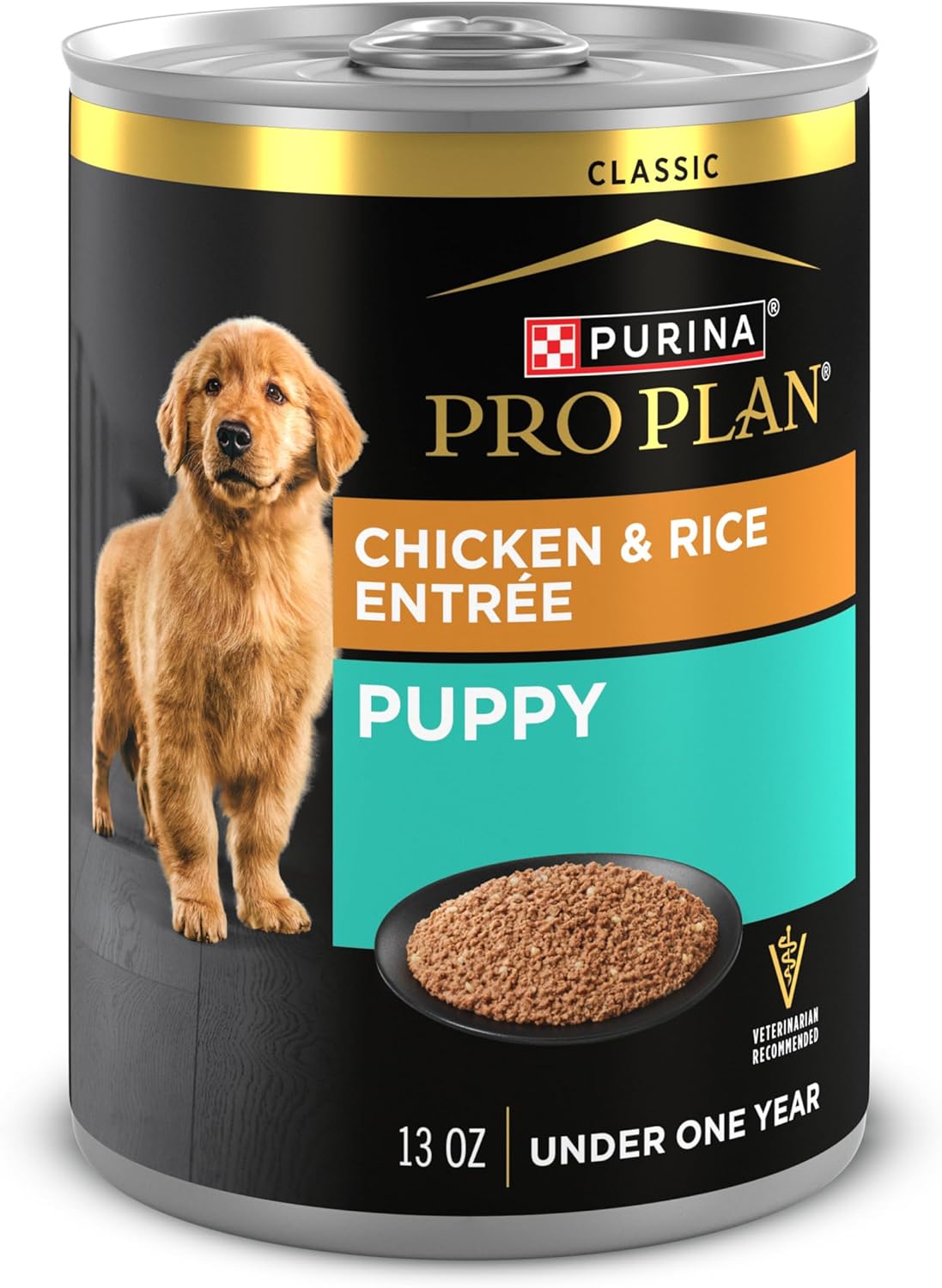
| Flavor | Chicken & Rice |
|---|---|
| Age Range Description | Puppy |
| Item Form | Wet |
| Container Type | Can |
| Unit Count | 156 Ounce |
Purina Pro Plan Development Chicken & Brown Rice Entree is a high-protein wet puppy pate meant to be fed as part of a daily ration for puppies up to about one year (longer for larger breeds). It uses real chicken as the first ingredient and provides DHA, vitamins, minerals, and antioxidants to support brain and vision development, immune function, and skin and coat health. The pate texture makes it easy to spoon, mix with dry kibble, or use for weaning and picky eaters, and the formula contains no artificial colors, flavors, or preservatives. Practical benefits include a nutrient-dense canned option that replaces about 1 cup of dry Pro Plan per 13 oz can and a feeding schedule that divides portions for young puppies. Limitations are that the ingredient list includes meat by-products and typical canned fillers, so buyers seeking single-source or limited-ingredient recipes may prefer specialty formulas, and the product is targeted to puppies specifically rather than adult maintenance feeding.
Best for: Buyers who want a widely available, nutrient-dense wet puppy food that supports growth, brain development, and easy feeding transitions for typical puppies during their development.
Less Ideal for: Owners seeking limited-ingredient, single-protein, or hypoallergenic wet diets or those who need a long-term adult maintenance canned food.
- Real chicken as the first ingredient for high-quality protein
- Includes DHA plus 23 vitamins and minerals to support brain and vision development
- 100 percent complete and balanced for puppy growth and development
- No artificial colors, flavors, or preservatives
- Pate texture mixes easily with dry food and helps with weaning or picky eaters
- Contains meat by-products and typical canned fillers rather than single-source proteins
- Formulation is puppy-focused and not intended as an adult maintenance diet
Verdict: The best overall wet food balances complete nutrition, appealing texture, ingredient quality, and consistent digestibility for most Labrador puppies.
Strongheart Puppy Chicken & Beef 13.2oz
Best Budget Wet Food

| Unit Count | 158.4 Ounce |
|---|---|
| Number of Items | 12 |
| Package Size Name | Pack of 12 |
| Flavor | Chicken & Beef Dinner |
| Age Range Description | Puppy |
This 12-pack of 13.2 oz A Strong Heart Puppy Chicken & Beef cans is a straightforward, calorie-dense wet food option for growing puppies, especially useful for large-breed litters or individual puppies with higher intake needs. Real chicken is listed first with beef and animal liver as additional animal protein sources, and the pate-style formula in a meaty broth makes it easy to serve as a full meal or mixed into dry kibble to boost palatability. The product is formulated to meet AAFCO growth profiles and includes added vitamins and minerals to support bone and coat development, while fish oil preserved with mixed tocopherols supplies fatty acids without synthetic preservatives. The larger 13.2 oz cans offer better food-per-can value than smaller puppy cans, which can reduce feeding hassle and packaging waste for multi-puppy households. Ingredients include meat by-products and some plant-based fillers, so buyers seeking single-source or premium whole-food ingredient lists should look elsewhere, but for budget-conscious owners of large-breed puppies this delivers complete nutrition and convenience without obvious safety red flags.
Best for: Budget-minded owners of large-breed puppies who need a complete, calorie-dense wet food that can serve as full meals or a palatability topper and prefer larger cans to reduce feeding frequency and packaging.
Less Ideal for: Owners looking for single-protein, grain-free, or limited-ingredient puppy diets or buyers who prioritize premium whole-food ingredient lists over cost.
- Formulated to meet AAFCO growth and reproduction nutrient profiles for puppies
- Real chicken is the primary ingredient with added beef and liver for palatability
- Larger 13.2 oz cans provide more food per can, convenient for large-breed feeding needs
- Includes added vitamins, minerals, and fish oil preserved with mixed tocopherols
- Contains meat by-products and plant-based fillers rather than only whole muscle ingredients
- Not geared for buyers wanting limited-ingredient or single-protein diets
Verdict: The best budget wet food provides complete puppy nutrition and acceptable ingredient quality at a lower price for owners prioritizing cost.
ORIJEN Puppy Poultry & Fish Pate
Best Premium Wet Food

| Flavor | Puppy Poultry & Fish Recipe Pâté |
|---|---|
| Item Form | Pate |
| Age Range Description | Puppy |
| Number of Items | 12 |
| Unit Count | 153.6 Ounce |
ORIJEN Puppy Poultry & Fish Pate is a grain-free wet food built around a WholePrey concept, using a high proportion of poultry, fish and organ meats to deliver a nutrient-dense, high-protein diet for growing puppies. It is typically fed as a complete meal or used as a topper for dry puppy kibble to add moisture and palatability; feeding guidelines cover age and weight ranges and recommend gradual transitions. Notable features include approximately 95 percent animal ingredients, inclusion of organs and bone broths for natural nutrient variety, and high moisture content that supports hydration. The pate format makes it easy to portion and serve at room temperature, and the recipe lists recognizable ingredients such as chicken, mackerel, eggs, and vegetables rather than long synthetic blends. Limitations to consider are the single-can size per serving which may require refrigeration of leftovers and the grain-free, high-animal-protein profile that may not suit every puppy or veterinary prescription; buyers should follow portion guidance for different growth stages. For owners focused on a biologically appropriate, ingredient-forward wet option, this delivers on premium sourcing and concentrated nutrition.
Best for: Puppy owners who prioritize premium, ingredient-transparent wet food and want a high-protein, nutrient-dense recipe to support growth and digestibility.
Less Ideal for: Owners seeking budget wet food, dogs on a prescribed clinical diet, or those preferring lower-protein or grain-inclusive formulas should consider alternatives.
- High animal-ingredient content with poultry, fish and organs for concentrated protein and natural nutrients
- WholePrey approach includes organs and bone broths that supply varied, bioavailable nutrients
- High moisture pate supports hydration and can be used alone or as a topper for kibble
- Clearly listed real-food ingredients without long synthetic descriptors
- Grain-free, very high-protein formula may not be appropriate for puppies with specific medical needs
- Single-can serving requires refrigeration of unused portions which can be less convenient for travel or multi-dog households
Verdict: The best premium wet food is for owners willing to pay more for higher-quality ingredients, stricter sourcing, and enhanced nutrient profiles for growth.
Instinct Original Puppy Wet Food 13.2 oz
Best Grain-Free Wet Food

| Flavor | Puppy |
|---|---|
| Item Form | Wet Dog Food |
| Special Ingredients | Chicken |
| Unit Count | 79.2 Ounce |
| Number of Items | 6 |
Instinct Original Puppy Wet Food is a grain-free canned puppy formula built around real animal proteins and added fruits and vegetables for balanced nutrition. It is typically served as a complete meal or used as a high-moisture topper for dry kibble; the smooth loaf texture makes it easy for small and medium breed puppies to chew and swallow. The recipe highlights chicken, beef liver, and salmon for protein and includes natural DHA to support brain and eye development, while avoiding common fillers like corn, wheat, potato, and soy. Practical benefits include strong palatability for picky eaters, added hydration compared with dry food, and no artificial colors or by-product meals. Limitations are that the product is formulated specifically for small and medium breeds and is not intended for large-breed puppies with adult weights of 70 lb or more, and some buyers may need to transition gradually to avoid digestive upset. As a wet, grain-free option it fits feeding scenarios where extra moisture and easier chewing are priorities, but feeding amounts should follow the label to match a puppy's age and activity level.
Best for: Puppy owners who prioritize a grain-free, high-moisture diet and want an easy-to-eat, palatable wet food to support growth and development in small to medium breeds.
Less Ideal for: Owners of large-breed puppies that will exceed 70 pounds as adults or those seeking a lower-cost, dry-only feeding plan.
- Grain-free formula with real chicken, beef liver, and salmon for high-quality animal protein
- Includes natural DHA to support brain and eye development in puppies
- Smooth loaf texture and high moisture improve palatability and ease of eating
- Free from common fillers and artificial colors or preservatives
- Suitable as a complete meal or a meal topper to increase hydration
- Formulated for small and medium breed puppies and not suitable for large-breed puppies 70 lb or more as adults
- Canned wet food requires refrigeration after opening and may be more expensive per feeding than dry food
Verdict: The best grain-free wet food is suited to Labrador puppies needing or preferring diets without grains while still delivering balanced nutrition.
Blue Buffalo Wilderness Puppy Wet Food
Best High-Protein Wet Food

| Flavor | Turkey & Chicken |
|---|---|
| Age Range Description | Puppy |
| Item Form | Pate |
| Special Ingredients | grain-free, protein-rich |
| Unit Count | 150 Ounce |
This Blue Buffalo Wilderness wet puppy food is a protein-forward, grain-free pate formulated to support growth and development in young dogs. It is typically served as a complete meal or used as a topper for dry food, and the soft, high-moisture texture suits puppies that need extra hydration or prefer softer food. The recipe lists deboned turkey and chicken broth up front and includes DHA and added omega fatty acids to support cognitive development and a healthy coat, while avoiding poultry by-product meals, corn, wheat, soy, artificial flavors, and preservatives. Practical benefits include a palatable texture for picky eaters, convenient can sizes for portioning, and a formulation created by nutritionists and veterinarians. Important limitations are that it is calorie-dense and intended for growing puppies so feeding guidelines must be followed to avoid overfeeding, and grain-free wet diets may not be necessary for every puppy depending on health and vet recommendations.
Best for: Puppy owners who want a natural, high-moisture wet food to support growth, encourage hydration, or entice picky eaters with a soft, palatable pate.
Less Ideal for: Owners seeking a grain-inclusive or adult maintenance formula or those whose vets advise against grain-free diets for specific health reasons.
- High protein content (37 g per 12.5 oz can) supports muscle growth in puppies
- Grain-free formula with no poultry by-product meals, artificial flavors, or preservatives
- Includes DHA and omega fatty acids to support cognitive development and skin and coat health
- Soft pate texture and high moisture content improve palatability and hydration
- Formulated specifically for puppies so not suitable as an adult maintenance diet
- Can be calorie-dense, requiring careful portion control per feeding chart
Verdict: The best high-protein wet food is formulated with elevated protein levels to support muscular development and higher activity in Labrador puppies.
Royal Canin Large Puppy Wet Food 13 oz
Best Large-Can Wet Food
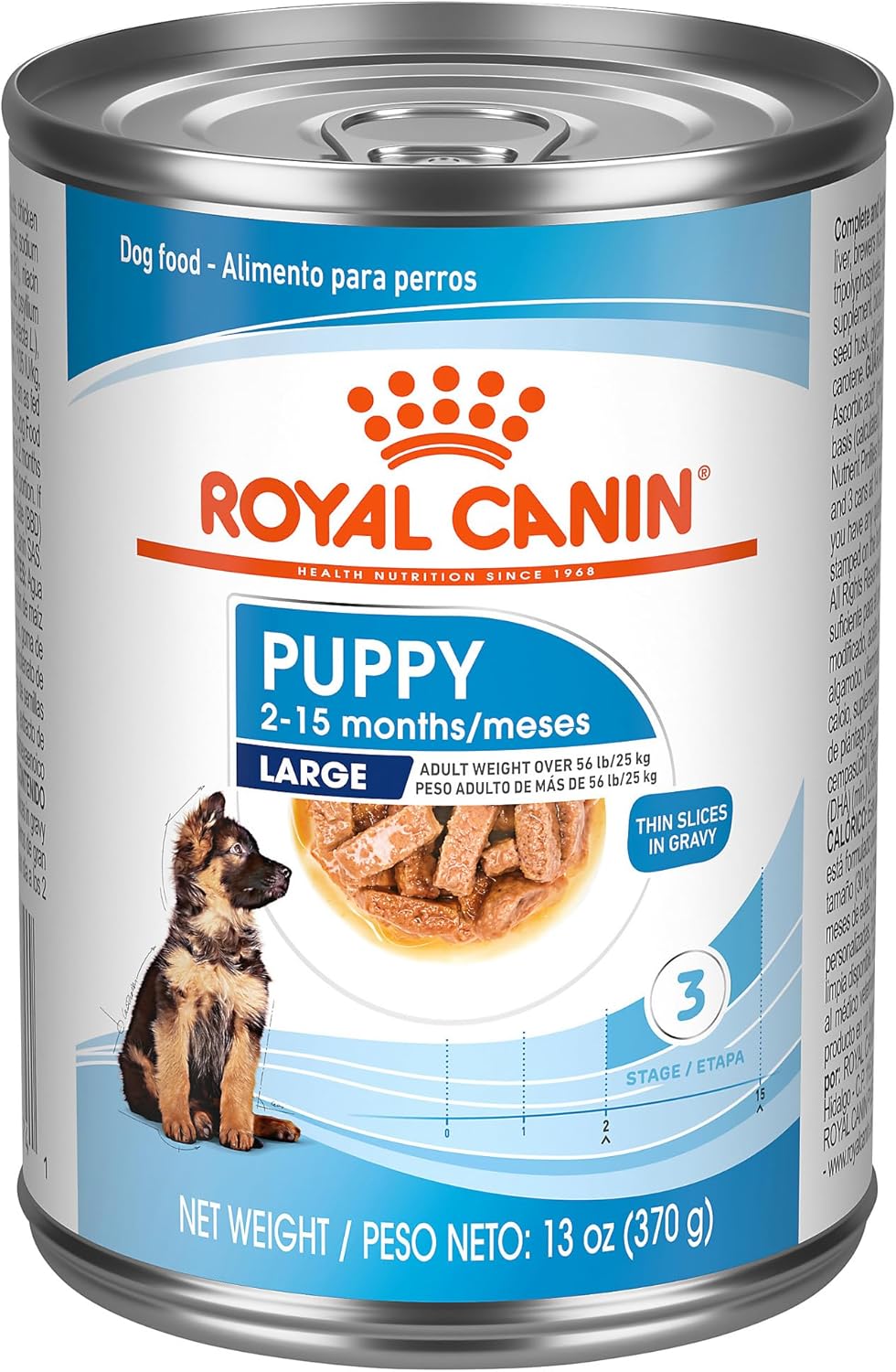
| Flavor | Chicken |
|---|---|
| Age Range Description | Puppy |
| Item Form | Pate |
| Dog Breed Size | Large |
| Unit Count | 156 Ounce |
Royal Canin Large Puppy Wet Dog Food is a canned puppy formula designed for large-breed puppies (2 to 15 months) and is typically fed as a primary wet diet or combined with dry kibble to increase moisture and variety. The formula features thin slices in gravy and includes highly digestible proteins plus prebiotics to support stool quality and gut bacteria balance, making it easier on sensitive stomachs during rapid growth. It also contains clinically proven antioxidants and added DHA to support immune development and brain function, and its soft texture is convenient for puppies that struggle with dry kibble. Practical benefits include easier palatability for picky eaters, simpler portioning when mixed with dry food, and nutrients targeted for hip and joint support important to large breeds. Limitations are that canned feeding alone can be more expensive than dry-only feeding and that owners will need to follow the recommended transition guidance to avoid digestive upset when switching diets. Packaging is multi-can, so storage and refrigeration after opening are considerations for daily feeding routines.
Best for: Buyers who want a wet formula tailored to the nutritional needs of growing large-breed puppies and who value higher moisture, palatability, and targeted support for digestion, immunity, and brain development.
Less Ideal for: Owners seeking the lowest-cost long-term feeding solution or those who prefer feeding only dry kibble without mixed-feeding strategies should consider other options.
- Formulated specifically for large-breed puppies from 2 to 15 months
- Soft thin slices in gravy improve palatability and are easy for puppies to eat
- Includes prebiotics and highly digestible proteins to support digestive health and stool quality
- Contains DHA and antioxidants to support brain development and immune function
- Suitable for mixed feeding to increase moisture and meal variety
- Canned wet food alone is typically costlier than dry-only feeding
- Requires refrigeration after opening and can be less convenient for multi-meal feeding schedules
Verdict: The best large-can wet food is ideal for homes that want fewer purchases and larger portions while maintaining freshness when stored properly.
Hill's Science Diet Puppy Sensitive Stomach & Skin
Best Easy-Digest Wet Food

| Flavor | Salmon & Vegetalbe Stew |
|---|---|
| Age Range Description | Puppy |
| Item Form | Wet Food |
| Unit Count | 150 Ounce |
| Number of Items | 12 |
Hill's Science Diet Sensitive Stomach & Skin Salmon & Vegetable Stew is a wet puppy formula designed to reduce occasional digestive upsets while also supporting skin and coat health. It is used as a primary meal or mixed with kibble during dietary transitions and contains prebiotic fiber to support a balanced gut microbiome, plus vitamin E and omega fatty acids for skin. The formula lists highly digestible ingredients and added DHA from fish oil for brain and eye development, making it practical for growing puppies that tend to have loose stools or sensitive skin. Packaging comes as a multi-can case intended for regular feeding rather than single-serve trials. Practical benefits include easy digestibility, immune support from antioxidants, and flavors puppies accept, but buyers should introduce it gradually over about a week and monitor portion sizes for weight management. For dogs with severe or persistent diarrhea you should consult a veterinarian since dietary change alone may not address underlying medical causes.
Best for: Buyers needing a gentle, palatable wet puppy food to reduce occasional digestive upset while supporting skin health and growth, and who plan to feed consistently rather than test single cans.
Less Ideal for: Puppies with chronic or severe gastrointestinal disease that requires prescription therapeutic diets or direct veterinary supervision.
- Formulated for sensitive stomachs with prebiotic fiber to support digestion
- Includes omega-6s and vitamin E to nourish skin and coat
- Contains DHA from fish oil to support brain and eye development
- Wet texture that is palatable and mixes easily with dry food
- Sold as a multi-can case which may be bulky for first-time trials
- Not a veterinary prescription diet despite 'Veterinary Diet' label in metadata, so serious GI disease may need vet-prescribed formulas
Verdict: The best easy-digest wet food is designed for Labrador puppies with sensitive tummies, using gentle ingredients and simpler formulas to minimize digestive upset.
Choosing the Right Wet Food Labrador Puppy: Key Factors to Consider
Nutrient Profile and Growth Balance
A Labrador puppy needs a growth-focused nutrient balance that supports skeletal development, lean muscle gain, and healthy organ function. Look for foods labeled for growth or puppy life stages with guaranteed analyses that show adequate protein, fat, calcium, and phosphorus for large-breed puppies. While calories are important for energy needs, calorie density should be balanced so you can control portions and avoid excessive weight gain during rapid growth.
The right nutrient profile helps prevent growth-related orthopedic problems in large breeds. Seek formulas that list the roles of specific nutrients, such as omega-3 fatty acids for brain and vision development and controlled calcium-to-phosphorus ratios to support proper bone formation. Avoid relying on ingredient pictures alone; the guaranteed analysis and feeding guidelines are the most reliable indicators of growth suitability.
Protein Quality and Source
Protein supports muscle development and overall growth in puppies, so the source and digestibility of protein matter. Whole-meat or named animal proteins are generally easier to assess for quality than vague meat byproducts. Check ingredient order to see if a quality animal protein appears near the top of the list and whether complementary protein sources are included for amino acid balance.
Higher protein content is not always better if the protein is low quality or poorly digestible. For Labrador puppies, efficient protein sources help build lean mass without excess caloric load. Also consider whether the formula includes novel or limited protein options if your puppy has shown sensitivity, but prioritize complete amino acid coverage for growth first.
Digestibility and Gastrointestinal Support
Puppies often have sensitive stomachs while transitioning to solid food, and poor digestibility can lead to loose stools, flatulence, or reduced nutrient uptake. Ingredients that promote digestibility include well-cooked proteins, easily digestible carbohydrates like rice or cooked oats, and added digestive aids such as prebiotics or probiotics.
Pay attention to fiber type and amount; moderate soluble fiber helps stool quality while excessive indigestible fiber can reduce nutrient absorption. A formula with digestive support can make mealtimes more comfortable for a Labrador puppy and reduce the risk of gastrointestinal upset during growth.
Calorie Density and Portion Control
Large-breed puppies require careful calorie management to prevent overly rapid growth, which can stress developing joints. Wet foods vary in calorie density, so compare feeding guidelines and calculate how wet meals fit into your puppy's daily caloric targets. If a wet food is particularly calorie-dense, you may need to adjust portion sizes or supplement with lower-calorie meals to maintain proper growth pace.
Consistent portion control and regular weight checks are essential. Many wet formulas are meant to be fed alongside dry kibble or in mixed feeding plans, so ensure you can measure and adjust serving sizes accurately to meet recommended daily calories for your Labrador puppy's age and activity level.
Texture, Palatability, and Transition Ease
Texture affects how readily a puppy accepts wet food and how easily they can eat it. Pate-style wet food, shredded meat in gravy, or chunk-in-sauce textures all have different appeal depending on the puppy. Softer textures are often easier for very young puppies or those still developing chewing skills, while chunkier options can encourage chewing and mimic whole protein textures.
Palatability matters for establishing consistent feeding routines. Look for foods with natural flavor sources and avoid unnecessary flavor enhancers that could mask poor ingredient quality. Consider how the wet food will be introduced alongside dry food if you plan mixed feeding; some textures mix better and reduce separation issues.
Joint and Developmental Support
Because Labradors are a large-breed with potential for joint issues, formulas that include nutrients supporting joint health can be beneficial during growth. Ingredients such as appropriate levels of omega-3 fatty acids, and sometimes glucosamine and chondroitin, can support healthy tissue development and joint function. However, these should complement, not replace, a balanced growth nutrient profile.
Ensure any claims about joint support are matched by appropriate overall nutrient balances and feeding recommendations. Over-supplementing certain minerals or calories in pursuit of joint health can create tradeoffs that negatively affect growth, so integrate these features into a holistic feeding plan.
How Much Wet Food Should I Feed My Labrador Puppy at Each Stage?
Feeding amounts change rapidly as puppies grow. Use the wet food's feeding chart as a starting point, but adjust portions based on your puppy's body condition, activity level, and growth rate. For large-breed puppies, aim for steady, controlled weight gain rather than rapid increases.
Weigh your puppy weekly during the first months and compare with healthy growth percentiles rather than fixed portion volumes. If you mix wet and dry food, calculate total daily calories and divide into multiple small meals to avoid digestive upset and encourage steady nutrient absorption.
- Puppies under 12 weeks typically need more frequent meals, often 3 to 4 per day.
- Between 3 and 6 months you can usually reduce to 3 meals daily.
- After about 6 months most puppies move to 2 meals per day, but monitor growth for large breeds.
Can Wet Food Help with Picky Eating or Transition From Milk?
Wet food can be useful for weaning and for puppies that are picky because the aroma and texture are more enticing than dry kibble. Start by mixing a small amount of wet food with the previous diet or moistened dry food and gradually increase the wet proportion as acceptance improves.
If a puppy refuses new food, try warming a small portion slightly to enhance aroma, but avoid additives like human food. Consistent meal timing and a short window for eating can also help encourage acceptance without creating a negative feeding dynamic.
- Mix wet food with formula or soaked kibble during weaning for a gentler transition.
- Introduce one formula at a time over 7 to 10 days to monitor tolerance and acceptance.
How to Read Labels for Puppy-specific Guarantees and Portions
Look for labels that explicitly state the diet is complete and balanced for growth or for puppies. The guaranteed analysis provides crude protein, fat, fiber, and moisture percentages; use these to compare nutrient concentration across wet options. Also check feeding guidelines, which often present daily totals by weight or age.
Because wet food contains more moisture, nutrient ratios need to be interpreted on a dry matter basis if you want an exact comparison. For most buyers, comparing guaranteed analysis and following the feeding chart will be sufficient to ensure the food meets growth needs without overfeeding.
- Check for a clear puppy-growth statement and a feeding guide by age/weight.
- Consider calculating dry matter basis for precise nutrient comparisons if you combine multiple foods.
What to Do if Your Labrador Puppy Has a Sensitive Stomach
If your puppy shows signs of digestive upset such as loose stool, gas, or vomiting, first rule out abrupt diet changes and feeding schedule issues. Consider switching to a wet formula designed for sensitive digestion that lists easily digestible proteins and includes prebiotics or probiotics.
Make diet changes gradually over several days, and monitor stool quality and energy levels. If gastrointestinal symptoms persist or are severe, seek veterinary guidance to rule out infections, parasites, or food intolerances before trying additional diets.
- Introduce new wet food gradually over 5 to 10 days.
- Monitor stool consistency and appetite; persistent problems warrant veterinary evaluation.
How to Combine Wet Food with Dry Kibble Safely
Many owners use wet food to increase palatability or moisture intake while relying on dry kibble for dental support. When combining, plan total daily calories to avoid overfeeding and follow a consistent ratio so your puppy expects the same texture at mealtimes. Measure both wet and dry portions precisely using a kitchen scale or the feeding guide.
If mixing for a single meal, combine shortly before feeding to prevent sogginess. Observe how your puppy chews and digests the mixed texture and adjust the proportion if you see digestive upset or rapid eating that risks choking.
- Use a feeding chart to calculate combined calories and adjust serving sizes accordingly.
- Mix small portions and observe acceptance before making the combination a permanent routine.
How We Chose the Best Wet Food Labrador Puppy
We focused on criteria that directly affect growth, digestion, and long-term health for Labrador puppies. Primary evaluation points included complete and balanced nutrient profiles tailored for growth, the presence and quality of protein sources, digestibility markers such as easily digestible carbohydrates and added digestive aids, and appropriate calorie density for controlled large-breed growth. We also prioritized texture and mouthfeel suitable for puppies that are transitioning from milk and softening solids, as well as formulas that support joint health with appropriate nutrient ratios for large-breed development. Palatability and ingredient transparency were considered to ensure the food is both acceptable to fussy eaters and clear about sources of key nutrients. Packaging format and portioning convenience were evaluated for practical home feeding. We excluded formulas intended only for adult or senior dogs, as well as veterinary prescription-only diets. Products that lacked complete feeding guidelines for puppies or did not list core nutrient guarantees were not considered. The result is a focused list of wet puppy foods that meet growth-stage needs and practical household feeding requirements.
Our full evaluation process is outlined in our review methodology.
FAQ
When should I start feeding wet food to a Labrador puppy?
You can introduce wet food during weaning, typically around three to four weeks old, by mixing small amounts with milk replacer or moistened dry food. Transition gradually over several days to a full puppy-appropriate wet or mixed diet as the puppy accepts solids.
Is wet food better than dry for large-breed puppies?
Wet food provides moisture and can be easier to chew, which helps some puppies, but it is not inherently better. Consider wet food for palatability or hydration and manage calorie density carefully to control growth in large-breed puppies.
How do I know a wet food provides enough calcium without risking over-supplementation?
Choose formulas labeled for growth with guaranteed analyses and large-breed considerations. Proper calcium and phosphorus ratios will be included for growth-stage diets; follow feeding guidelines and consult your veterinarian if you are unsure about supplements or combined feeding plans.
Can I keep a Labrador puppy on wet food long term?
Many puppies can be fed complete and balanced wet diets long term, but you should monitor dental health, weight, and overall condition. Discuss long-term feeding plans with your veterinarian to ensure continued nutrient balance as the puppy matures.
How quickly should I switch wet food if my puppy shows mild digestive upset?
Make any diet change gradually over 5 to 10 days, reducing the old food while increasing the new. If mild upset continues after a gradual transition, pause further changes and consult a veterinarian to rule out underlying causes.
Final Verdict
Choose wet food for a Labrador puppy by prioritizing a balanced growth nutrient profile, high-quality protein, and digestibility. Manage calorie density and portion sizes to support steady, controlled growth and monitor weight and stool quality regularly. Weigh the tradeoffs between palatability and nutrient concentration, and favor formulas that offer clear puppy growth guarantees and appropriate joint-support nutrients. With consistent portion control and routine monitoring, you can select a wet feeding plan that supports healthy development and keeps your Labrador puppy thriving.

