

If you have an underweight puppy or one that needs to add lean mass after illness, choosing the right wet food can speed healthy weight gain without upsetting digestion. Wet puppy formulas designed for weight gain focus on higher calorie density, digestible protein, and balanced fats so puppies build muscle and energy stores rather than just packing on empty calories. This guide covers seven top-rated wet puppy foods shortlisted for that goal and explains the criteria we used to evaluate them. Read on to compare calorie and nutrient profiles, ingredient quality, and palatability so you can pick the best option for steady, safe growth.
Top Picks at a Glance
| Best Overall Wet Puppy Food for Weight Gain A balanced, effective choice to help healthy weight gain in puppies | Bully Max Wet Puppy Food 2 lb |  |
| Best Budget Wet Puppy Food for Weight Gain An affordable, calorie-dense option that supports gains on a budget | Amazon Basics Puppy Chopped Ground Dinner 13.2oz |  |
| Best High-Calorie Wet Puppy Food Formulated for extra calories to help underweight or fast-growing pups | Solid Gold High Calorie Chicken Wet Dog Food 6-Pack |  |
| Best High-Protein Wet Puppy Food Higher protein content to support muscle development during growth | ORIJEN Poultry and Fish Puppy Pate Case |  |
| Best Grain-Free Wet Puppy Food A grain-free recipe for owners avoiding grains in puppy diets | Purina Pro Plan Development Turkey Puppy Loaf |  |
| Best Limited-Ingredient Wet Puppy Food Simpler recipes with fewer ingredients for sensitive puppies | Zignature Puppy Formula Wet 13oz Can (Case of 12) |  |
| Best Premium Wet Puppy Food Higher-end ingredients and formulations for owners seeking top quality | Open Farm Puppy Chicken & Salmon Pate 12.5 oz |  |
Bully Max Wet Puppy Food 2 lb
Best Overall Wet Puppy Food for Weight Gain

| Flavor | Chicken |
|---|---|
| Item Form | Dehydrated Puppy Food |
| Unit Count | 32 Ounce |
| Age Range Description | Puppies (all breeds and sizes) |
Bully Max Wet Puppy Food is a dehydrated chicken-based formula designed to be mixed with water to create a soft, high-calorie meal for growing puppies. It delivers an energy-dense profile (advertised as 592 calories per cup and 26% protein) that supports muscle development and steady weight gain, and its soft texture makes it easy to feed during weaning or for puppies with sensitive teeth or digestion. The formula lists real chicken as the first ingredient and includes omega sources like flaxseed and salmon oil plus vegetables and vitamins for immune and coat support. Practical benefits include shelf-stable convenience, simple prep (mix 1:1 with warm water), and a palatable chicken-and-vegetable flavor that encourages intake in picky or high-energy pups. Limitations to note are that exact feeding volumes must be adjusted by weight and activity and that owners managing fat-restricted growth plans or specific veterinary prescriptions should consult their vet before switching, since this product is calorie- and protein-dense compared with standard puppy foods.
Best for: Buyers who want a palatable, high-calorie wet-style option to encourage intake and support steady weight and muscle gain in growing puppies.
Less Ideal for: Owners whose puppies require a veterinary prescription diet, strict fat restriction, or precise rationing for medical conditions should look for veterinarian-prescribed alternatives.
- High calorie density and 26% protein to support healthy weight gain and muscle development
- Rehydrates quickly into a soft, easy-to-eat wet meal suitable for weaning and sensitive mouths
- Real chicken as the first ingredient with added omegas and vitamins for coat and immune support
- Shelf-stable dehydrated format that does not require refrigeration before mixing
- Calorie-dense formula may require careful portion control to avoid overfeeding
- Not tailored to veterinary prescription diets or puppies that need low-fat growth plans
Verdict: The best overall wet puppy food for weight gain balances high-calorie density, quality protein, digestibility, and palatability to support steady, healthy growth in puppies.
Amazon Basics Puppy Chopped Ground Dinner 13.2oz
Best Budget Wet Puppy Food for Weight Gain
| Flavor | Chicken and Beef |
|---|---|
| Age Range Description | Puppy |
| Item Form | Ground |
| Unit Count | 158.4 Ounce |
| Number of Items | 12 |
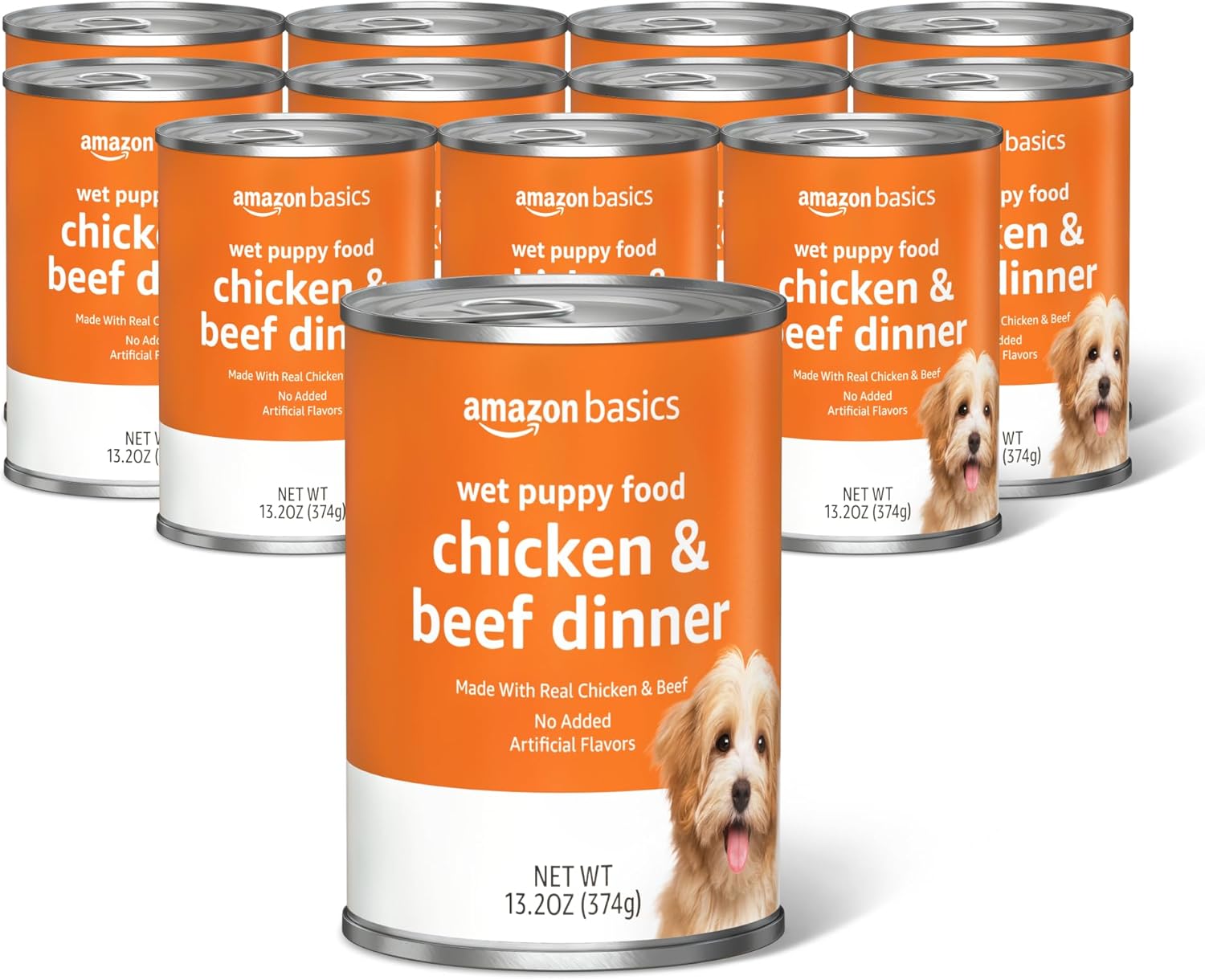
This 12-can pack of Amazon Basics Puppy Chopped Ground Dinner is a budget-focused wet food made for puppies, combining chicken and beef in a ground, canned formula intended to support growth. You use it as a complete meal or mixed with dry kibble to boost palatability and calorie density; the ground texture and gravy-like moisture make it easy for young puppies to eat. The ingredient list includes real chicken and beef plus meat by-products, egg product and added vitamins and minerals to meet growth needs, and the formula is marketed without wheat, corn, or soy and with no added artificial flavors. Practical benefits are its puppy-specific formulation, convenience of single-can feeding, and the low per-can cost when bought in the 12-pack. Limitations are that it contains by-products and added colors rather than premium single-protein or novel-ingredient sources, and owners seeking high-calorie therapeutic diets or strict limited-ingredient formulas may prefer a specialized product from a veterinary or premium brand.
Best for: Owners prioritizing cost-effectiveness who want a puppy-formulated wet food to add calories and palatability at each meal.
Less Ideal for: Owners seeking a veterinary therapeutic high-calorie weight-gain formula or those who need limited-ingredient or single-protein diets for food sensitivities.
- Formulated specifically for puppies with added vitamins and minerals for growth support
- Contains real chicken and beef as primary named ingredients
- Ground, moist texture is easy for young puppies to eat and mix with kibble
- Sold in a 12-can pack that reduces per-can cost for budget-conscious buyers
- Includes meat by-products and added color rather than only whole muscle meats
- Not formulated as a high-calorie therapeutic weight-gain diet for underweight puppies
Verdict: The best budget wet puppy food for weight gain provides extra calories and acceptable ingredient quality at a lower price for owners prioritizing cost-effectiveness.
Solid Gold High Calorie Chicken Wet Dog Food 6-Pack
Best High-Calorie Wet Puppy Food

| Flavor | Chicken & Liver |
|---|---|
| Item Form | Pate |
| Life Stage | All Life Stages |
| Special Uses For Product | Digestive Health |
| Unit Count | 79.2 Ounce |
Solid Gold High Calorie Chicken wet dog food is a pate-style canned formula that combines chicken, chicken liver and whole grains into a moist meal you can serve as a complete feed or a topper. It is typically used for daily feeding or as a nutrient-dense supplement for dogs that need extra calories or easier-to-eat wet food, and the product is sold as a 6-can pack. Notable features include cage-free chicken as the lead ingredient, fiber-rich brown rice and barley for gut health, and added omega fatty acids and probiotics intended to support skin, coat and digestion. In practice this means the cans provide a soft, palatable texture that puppies and picky eaters will often accept without needing much added food volume, and the extra protein and fats can help increase calories per meal compared with many low-moisture diets. Important limitations are that calorie-per-can numbers are not listed on the product page and the formula contains grains, so owners seeking grain-free high-calorie options or exact calorie density for tight weight-gain plans may need to consult the label or a veterinarian first.
Best for: Buyers who need a palatable, protein-forward wet formula to boost meal calories for growing or underweight puppies and who value digestive support from whole grains and probiotics.
Less Ideal for: Owners who require a grain-free high-calorie diet or precise calories-per-serving for a medical weight-gain program should consider alternate formulas or consult their veterinarian.
- Cage-free chicken listed as the first ingredient for concentrated animal protein.
- Includes brown rice and barley to add fiber that supports digestion.
- Contains omega 3 and 6 sources for skin, coat and developmental support.
- Pate texture is soft and easy for puppies or dogs with reduced appetite to eat.
- Exact calories per can are not provided on the product page, which complicates precise high-calorie feeding plans.
Verdict: The best high-calorie wet puppy food delivers elevated calories per serving and supportive fats to help puppies gain weight without excessive portion increases.
ORIJEN Poultry and Fish Puppy Pate Case
Best High-Protein Wet Puppy Food

| Flavor | Chicken |
|---|---|
| Age Range Description | Puppy |
| Unit Count | 153.6 Ounce |
| Item Form | Stick |
| Breed Recommendation | Large Breeds |
ORIJEN Poultry and Fish Puppy Pate is a high‑protein wet diet formulated for growing puppies, using mostly fresh or raw poultry and fish inclusions plus organs and bone to mirror a WholePrey approach. It is typically served as a standalone meal or spooned over ORIJEN puppy kibble to boost moisture and calories; the pate texture is palatable and convenient from the carton. Key practical benefits include a very high proportion of animal ingredients for lean muscle support, added moisture to aid hydration during weight gain, and a mix of organs and bone that increases nutrient density without relying on fillers. The product is delivered in multi‑serving cartons intended for refrigerated or frozen fresh ingredients prior to packing, so plan storage and portioning for puppies of different sizes. Trade-offs are that a high‑protein, nutrient‑dense wet food can be richer and more calorically concentrated than generic puppy cans, which may require gradual introduction and portion control for puppies new to rich diets, and the case format may be more than a single‑puppy household needs at once.
Best for: Buyers seeking a protein-forward wet puppy food to support lean muscle development and healthy weight gain for growing puppies who want a high-quality, nutrient-dense option.
Less Ideal for: Owners who need small single-can quantities, have puppies with sensitive stomachs that cannot tolerate rich diets, or who prefer budget low-protein puppy formulas.
- Very high percentage of animal ingredients to support lean muscle growth
- Includes organs and bone for nutrient density beyond muscle meat
- Wet pate adds moisture to support hydration during weight gain
- Suitable as a complete meal or as a topper to increase calories
- Rich, nutrient-dense formula may need gradual introduction for some puppies
- Case pack size may be more than needed for single-puppy households
Verdict: The best high-protein wet puppy food emphasizes quality animal proteins to support lean muscle development while contributing to healthy weight gain.
Purina Pro Plan Development Turkey Puppy Loaf
Best Grain-Free Wet Puppy Food

| Flavor | Turkey |
|---|---|
| Age Range Description | Puppy |
| Container Type | Can |
| Unit Count | 156 Ounce |
| Number of Items | 12 |
This Purina Pro Plan Development Grain-Free Puppy Classic Turkey Entree is a canned wet puppy food designed to deliver complete nutrition during a puppy's first year. Presented as a soft loaf, the formula lists real turkey first and includes added DHA, omega-6 fatty acids, and high protein to support brain and vision development, lean muscle growth, and a healthy skin and coat. It is grain-free and excludes corn, wheat, soy, artificial colors, flavors, and preservatives, making it a straightforward wet option to mix with dry kibble or serve as a primary wet food. Practical benefits include easy portioning from a 13 oz can, palatable texture for picky eaters, and nutrient density that can help puppies gain healthy weight when fed according to the mixing and feeding directions. Limitations are that guaranteed analysis shows moderate crude protein and fat relative to some high-calorie puppy formulas, so owners wanting rapid weight gain may need to increase feeding frequency or combine with high-calorie dry food under guidance from a veterinarian.
Best for: Owners who want a grain-free wet puppy food that supports normal growth and development while being easy to mix with dry food or feed alone.
Less Ideal for: Owners seeking an ultra-high-calorie wet formula for fast weight gain or puppies requiring a specially prescribed therapeutic diet should consider veterinary alternatives.
- Real turkey as the first ingredient for quality animal protein
- Includes DHA and omega-6 fatty acids to support brain, vision, and skin health
- Grain-free recipe with no corn, wheat, soy, or artificial colors/flavors/preservatives
- Soft loaf texture that mixes easily with dry food or is palatable on its own
- Packaged in 13 oz cans convenient for portioning and mixing directions provided
- Crude protein and fat levels are moderate compared with some higher-calorie puppy formulas intended for rapid weight gain
- Single-flavor option may limit variety for sensitive puppies
Verdict: The best grain-free wet puppy food is formulated without grains for owners who prefer grain-free diets while still offering the calories and nutrients puppies need to gain weight.
Zignature Puppy Formula Wet 13oz Can (Case of 12)
Best Limited-Ingredient Wet Puppy Food

| Unit Count | 156 Ounce |
|---|---|
| Number of Items | 12 |
| Flavor | Puppy Formula |
| Item Form | Pate |
Zignature Puppy Formula wet food is a canned, limited-ingredient puppy formula built around turkey, whitefish and added probiotics to support digestion while delivering concentrated calories for growing dogs. It is typically used as a daily meal or as a high-calorie topper during transitions or when extra weight gain is desired, and feeding guidelines are provided by weight and age. Notable features include a short ingredient list without grain, potato, or chicken, added DHA and omegas for brain and skin development, and probiotics for stool consistency and digestive support. In practice the pate texture is easy to serve at room temperature and appeals to picky eaters, and the can format makes portion control and mixing with kibble straightforward. Limitations are that the product is sold in a multi-can case which may be bulky for single-puppy households and that canned diets can be more calorie-dense per serving so monitoring portions is needed to avoid overfeeding once target weight is reached. For puppies needing a focused, limited-ingredient wet option to support steady weight gain and digestive tolerance, this formula is a practical choice.
Best for: Buyers who prioritize a short ingredient list and digestive tolerance for puppies that need concentrated calories and steady weight gain.
Less Ideal for: Those looking for single-can purchases, extremely low-calorie maintenance diets, or owners who prefer exclusively dry food plans should consider alternatives.
- Short, limited ingredient list reduces common dietary triggers
- Includes added probiotics to support digestive health during diet transitions
- Contains omega-3, omega-6 and DHA to support brain and skin development
- Pate texture and canned format make it easy to serve, mix with kibble, or use as a topper
- Case pack may be more than needed for single-puppy owners
- Canned food requires portion monitoring due to calorie density
Verdict: The best limited-ingredient wet puppy food uses a short ingredient list to reduce digestive triggers while providing concentrated calories and essential nutrients for weight gain.
Open Farm Puppy Chicken & Salmon Pate 12.5 oz
Best Premium Wet Puppy Food
| Flavor | Chicken and Salmon (For Puppies) |
|---|---|
| Item Form | Toppers |
| Age Range Description | Puppy |
| Animal Food Diet Type | Limited Ingredient |
| Unit Count | 150 Ounce |
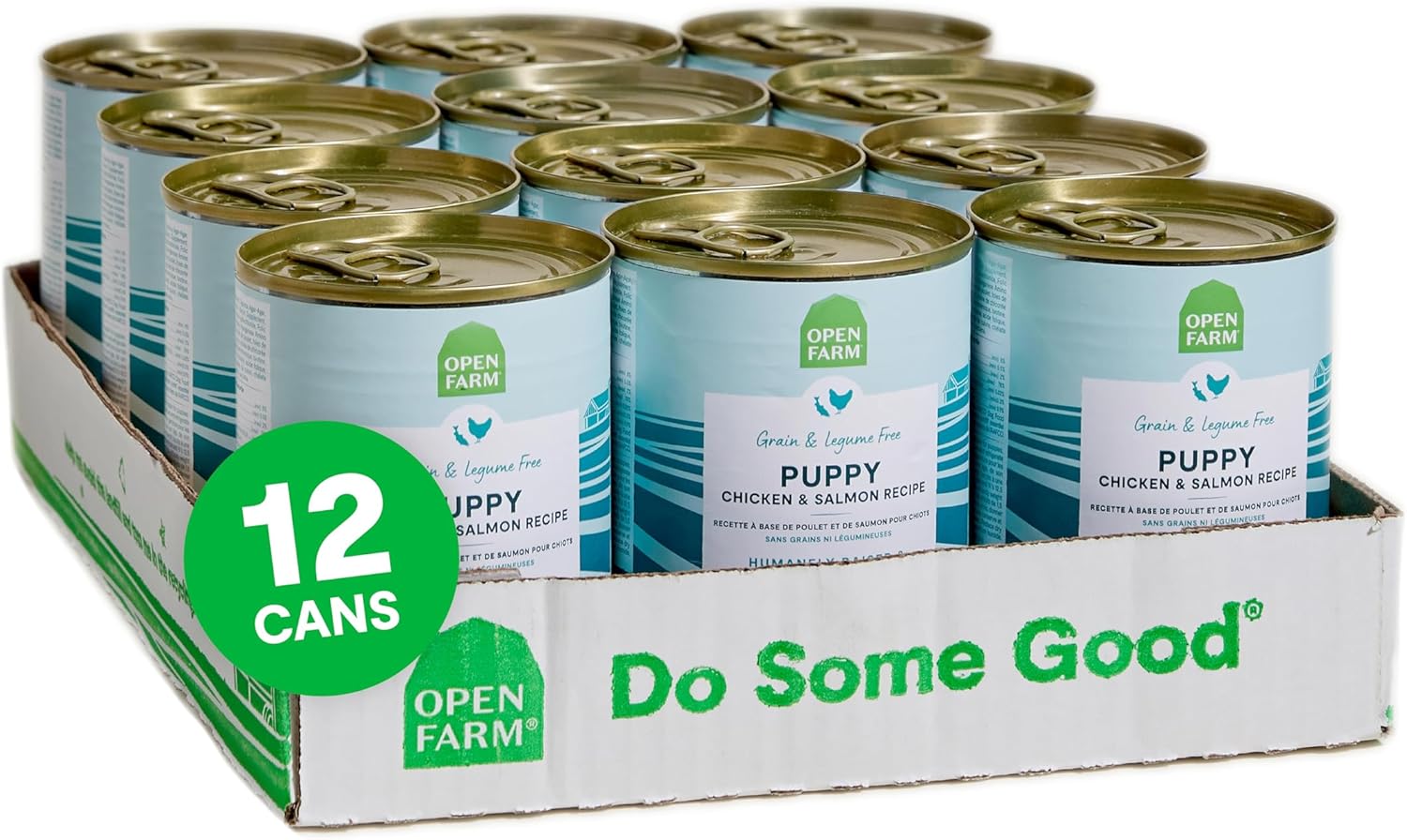
Open Farm Chicken & Salmon Pate is a meat-first canned puppy food that can be used as a complete meal or a topper to boost calorie and nutrient intake during growth. The recipe lists humanely raised chicken and wild-caught salmon up front and includes non-GMO vegetables and added DHA to support brain development, which makes it a nutrient-dense option for young dogs. Its velvety pate texture is easy for picky eaters and small mouths to manage, and the grain- and legume-free formula avoids common fillers. Practical benefits include convenient single-can portions for mixing with dry food, fridge-friendly leftovers guidance, and ethically sourced ingredient sourcing for owners who prioritize provenance. Important limitations are that the label emphasizes limited-ingredient and puppy-focused nutrition rather than explicit high-calorie formulation for aggressive weight gain, so owners targeting rapid weight increase may need to pair it with higher-calorie kibble or caloric toppers and monitor portions closely.
Best for: Buyers seeking a premium, meat-forward wet food for puppies who value ethically sourced ingredients and a nutrient-dense canapé to support steady growth or to use as a meal topper.
Less Ideal for: Owners whose primary goal is rapid or clinical weight gain for underweight puppies without adding extra calorie sources should consider veterinary-formulated high-calorie diets instead.
- Meat-first recipe with chicken and wild-caught salmon as leading ingredients.
- Includes DHA and non-GMO vegetables aimed at puppy growth and development.
- Smooth pate texture that works well as a complete meal or a topper for picky puppies.
- Grain- and legume-free formulation that avoids common filler ingredients.
- Responsibly sourced proteins with traceability for ethically minded buyers.
- Not explicitly formulated as a high-calorie weight-gain diet, so may need pairing with higher-calorie food to increase weight.
- Sold in 12.5 oz cans which may require refrigeration of leftovers after opening.
Verdict: The best premium wet puppy food offers superior ingredient sourcing, nutrient density, and formulation aimed at supporting healthy weight gain for owners willing to invest more.
Choosing the Right Wet Puppy Food Weight Gain: Key Factors to Consider
Calorie Density
Calorie density determines how many calories a puppy gets per ounce or gram of food, and it has a big effect when trying to increase weight without drastically increasing meal volume. Puppies have limited stomach capacity, so a denser wet food lets them consume more calories in the same serving size. Higher calorie density can come from fats and concentrated proteins, but the source of those calories matters for body composition.
When evaluating calorie density, look for foods that list calories per can or per 100 g and consider how many meals you will realistically feed. Very high calorie density is useful for puppies that struggle to consume enough, but pairing density with digestibility ensures those calories translate into healthy weight rather than gastrointestinal distress.
Protein Quantity and Quality
Protein supplies the amino acids needed for muscle development; when gaining weight, you want a higher proportion of calories from protein to support lean mass rather than fat accumulation. Protein quality is about digestibility and amino acid completeness. Animal-based proteins typically provide more bioavailable amino acids for growing puppies.
Examine guaranteed analysis where available, and favor formulas that report crude protein and list whole-muscle meat or named meat meals toward the top of the ingredient list. Balance is important: protein should be adequate but paired with calories and fat so the puppy actually gains weight rather than burning protein for energy.
Fat Content and Fatty Acid Profile
Fat is the most concentrated calorie source in pet foods, so fat content is a key lever for weight gain. Healthy fats also support skin, coat, brain development, and energy. Look for sources of long-chain omega-3s and omega-6s as part of the overall fat profile.
Too much low-quality fat can cause loose stool, so evaluate fat alongside ingredient quality and digestibility. A balanced fat level that increases calorie density while maintaining stool quality is ideal. Consider how fat interacts with the rest of the macronutrient profile to encourage steady weight gain.
Digestibility and Gastrointestinal Tolerance
A food that is highly digestible ensures puppies absorb the extra calories and nutrients you intend them to gain. Poorly digestible ingredients can lead to loose stools, reduced nutrient uptake, and reluctance to eat, all of which sabotage weight gain efforts.
Choose wet foods with simple, recognizable carbohydrate sources or limited fillers, and protein types known for puppy tolerance. If your puppy has a history of sensitive digestion, gradual transitions and monitoring stool quality are essential when increasing caloric intake.
Palatability and Texture
Even the most nutritious formula will not help if a puppy refuses to eat it. Palatability includes aroma, flavor, and texture. Wet foods often score better for picky eaters because they release aroma more readily and provide moisture that makes chewing easier for young mouths.
Consider texture relative to your puppy's dental stage. Very young puppies may prefer pate or finely shredded options, while older puppies might accept chunkier stews. Rotate flavors cautiously to find a consistently accepted option without upsetting digestion.
Feeding Practicality and Portioning
Feeding practicality covers how easy it is to serve precise portions, store opened cans, and integrate wet food into regular feeding schedules. For weight gain plans you may be feeding more frequently or combining wet and dry components, so predictable portion sizes and clear serving guidelines make it simpler to track calorie intake.
Look for formats that allow accurate measurement and do not require complex preparation. Consider how leftovers are stored and how many meals per day the product's can size can support while keeping food fresh and palatable.
How Quickly Should a Puppy Gain Weight on a Targeted Wet Feeding Plan?
Weight gain pace depends on the puppy's age, breed maturity rate, and starting condition. Small-breed puppies and large-breed puppies have very different healthy growth trajectories, so target rates should be discussed with a veterinarian familiar with your puppy.
A gradual increase — such as a few percent of body weight over several weeks — is usually safer than rapid gains. Sudden, excessive weight gain can strain developing joints and lead to excess fat rather than muscle. Monitor body condition score along with absolute weight so you can judge whether the gains are predominantly lean tissue.
- Weigh the puppy weekly at the same time of day for consistent tracking.
- Adjust portion sizes slowly, increasing calories over several days to a week.
- Combine calorie-dense wet food with regular activity to encourage muscle build.
Should You Mix Wet Food with Dry Food to Encourage Weight Gain?
Mixing wet and dry can be effective because it increases palatability and calorie-per-meal volume while preserving the convenience of dry kibble. If you mix, ensure the combined serving provides the targeted calories and nutrients for the puppy's weight-gain plan.
Take care with portion calculations to avoid underfeeding or exceeding recommended nutrient ratios. Introduce mixtures slowly and watch for changes in stool quality or appetite; adjust the wet-to-dry ratio if digestive upset occurs.
- Measure combined meals by calories when accurate weight gain is the goal.
- Serve slightly warmed wet food to enhance aroma and acceptance if the puppy is picky.
- Keep water available even when feeding wet food; hydration still matters.
What to Do if Your Puppy Has a Low Appetite During a Weight-gain Effort
A reduced appetite is common when puppies are stressed, ill, or going through growth plateaus. First, rule out medical causes with a veterinary checkup. If the puppy is healthy, try increasing palatability with higher-fat, aromatic wet options in small increments.
Offer smaller, more frequent meals rather than large portions. Sometimes splitting the daily ration into three or four feedings improves intake. If appetite remains poor, seek veterinary guidance before adding supplements or dramatically changing macronutrient ratios.
- Try hand-feeding or placing food in favorite bowls for a short period to stimulate interest.
- Avoid sudden diet changes; rotate flavors slowly if needed.
- Consider appetite-stimulating strategies under veterinary supervision only.
How to Transition a Puppy Onto a Higher-calorie Wet Formula
Transition gradually over 7 to 10 days to minimize digestive upset. Start by replacing a small portion of the current meal with the new wet formula and increase the ratio each day while observing stool consistency and appetite. Rapid switches can cause diarrhea or reduced acceptance.
Track weight and body condition as you transition. If stool becomes loose, slow the transition and consider a formula with simpler carbohydrates or different protein sources. Keep the feeding routine consistent to reduce stress and encourage steady intake.
- Day 1–3: 25% new wet food mixed with 75% current food.
- Day 4–6: 50% new wet food.
- Day 7–10: 75–100% new wet food if well tolerated.
Signs That Weight Gain Is Healthy Versus Excessive
Healthy gain typically shows as a gradual increase in muscle mass with a maintained or improved body condition score. Puppies remain active, have a glossy coat, and produce well-formed stools. Excessive gain often appears quickly and is accompanied by lethargy, difficulty moving, or a rounded body and thick neck.
Regular veterinary checks can distinguish normal developmental fat from unhealthy overconditioning. Adjust calorie intake if gains accelerate beyond recommended targets or if activity levels drop as weight increases.
- Monitor coat quality, activity level, and stool consistency as part of overall health checks.
- Use body condition charts suitable for puppies to track composition, not just weight.
- Seek professional advice before using supplements intended to force rapid weight gain.
How We Chose the Best Wet Puppy Food Weight Gain
We selected entries based on factors directly tied to safe, sustainable weight gain in puppies. First, calorie density per serving was a primary filter because higher calories make it easier for puppies to meet increased energy needs without excessive feeding volume. Second, protein digestibility and grams of protein per calorie were used to identify foods that support lean tissue development rather than fat-only gain. Third, fat quality and the ratio of omega fatty acids were considered for energy density and healthy weight accrual. Fourth, ingredient transparency and the presence of digestible carbohydrate sources helped predict gastrointestinal tolerance. Fifth, palatability evidence such as ingredient format and typical acceptance by puppies guided choices for real-world feeding. We also checked texture and moisture levels to ensure the foods were appropriate for varying dental development stages. We excluded products that primarily target adult maintenance, supplements that require mixing rather than complete foods, and formulas lacking basic guaranteed analysis information. The shortlist favors complete wet puppy foods with clear calorie and macronutrient data, manageable feeding portions, and ingredient profiles that reduce the risk of digestive upset while promoting weight gain.
Our full evaluation process is outlined in our review methodology.
FAQ
How many calories should I increase to help my puppy gain weight?
It often depends on the puppy's current condition, age, and activity level, but a modest increase of 10 to 20 percent above maintenance needs is a common starting point. Adjust gradually while monitoring weight and body condition; larger changes should be guided by a veterinarian.
Is wet food better than dry food for putting weight on a puppy?
Wet food can be more effective because it is often more calorie-dense per bite and more palatable, making it easier for underweight puppies to eat enough. However, dry food can also be used if the calorie content and macronutrient balance meet the targeted goals.
Can I add oils or toppers to increase calories safely?
Adding small amounts of healthy oils can raise calorie density, but it must be done cautiously because excess fat can cause diarrhea and unbalanced nutrient ratios. Consult your veterinarian to choose tolerated additions and to ensure overall nutrient needs remain met.
How long should I feed a higher-calorie wet food for weight gain?
Feed until your puppy reaches a healthy target weight and body condition, then transition back to a maintenance plan. This may take weeks to months depending on how underweight the puppy was. Ongoing monitoring ensures gains are appropriate and sustainable.
Will feeding higher-calorie wet food make my puppy gain fat instead of muscle?
If the extra calories are paired with adequate protein and normal activity, most gains will include lean tissue. Excess calories without sufficient protein or with very low activity levels may lead to more fat accumulation, so balance and monitored feeding are important.
Final Verdict
When seeking healthy weight gain for a puppy, prioritize a wet food that combines higher calorie density with quality, digestible protein and balanced fats. Focus on gradual increases, monitor body condition and stool quality, and adjust feeding frequency or portion sizes rather than making abrupt, large changes. Work with your veterinarian if the puppy has underlying health issues or if gains stall. Choosing a nutritionally complete, palatable wet puppy food and managing transitions carefully will give you the best chance of steady, lean weight gain while minimizing digestive problems and long-term health tradeoffs.

