

If you want a doorbell that signals you without frightening or overstimulating your dog, choosing the right wireless option matters. A well-chosen wireless doorbell can reduce barking, help you respond calmly to visitors, and integrate with the way you train or manage your pet at the front door. This guide covers seven vetted wireless doorbells that suit homes with dogs, highlighting chime types, volume control, signal range, and installation ease so you can pick a solution that fits your household. Below are the top shortlisted options and what we evaluated to determine which ones work best for dog owners.
Top Picks at a Glance
| Best Overall Wireless Doorbell A reliable, well-rounded pick that works for most households | EverNary Dog Door Bell GM03 |  |
| Best Budget Wireless Doorbell A low-cost option that covers the basics without extras | BLUETREE Dog Doorbells |  |
| Best Premium Wireless Doorbell A higher-end model with superior build, sound, and extras | Mighty Paw Smart Bell 2.0 |  |
| Best Long-Range Wireless Doorbell Extended transmitter-to-receiver range for larger homes and yards | TECKNET Wireless Doorbell HWD01878 |  |
| Best Compact Wireless Doorbell A small-footprint unit that fits tight spaces and discreet spots | Yoiilifee Dog Doorbell 1 Button |  |
| Best Weatherproof Wireless Doorbell Built to withstand rain, snow, and outdoor exposure reliably | TECKNET Dog Door Bell TK-WD040 |  |
| Best Easy-Install Wireless Doorbell Designed for fast, tool-free setup and straightforward configuration | AVANTEK CB-11 Wireless Doorbell |  |
EverNary Dog Door Bell GM03
Best Overall Wireless Doorbell

| Item model number | GM03 |
|---|---|
| Batteries | 2 12V batteries required (included) |
| IP rating | IP55 |
| Ringtones | 52 chimes |
| Volume range | 0 to 110dB |
This EverNary kit pairs a single plug-in receiver with two waterproof touch transmitters so dogs can signal when they need to go out. Transmitters mount with tape or screws and activate with a light touch from a paw or nose, sending one of 52 selectable ringtones to the receiver, which plugs into any AC outlet. The receiver offers adjustable volume up to 110 dB and a flashing LED to help notice rings in noisy rooms or for hearing-impaired household members. Transmitters are IP55-rated for outdoor exposure and include preinstalled 12V batteries for instant use. Setup and pairing are straightforward and the kit works at long distances in open areas, making it suitable for yards and multi-room homes. Limitations include reliance on a plug-in receiver rather than battery backup and potential interference or reduced range indoors depending on walls and layout, so placement may require trial and error.
Best for: Pet owners who want a simple, feature-rich wireless bell for potty training and clear door alerts across a yard or multi-room home.
Less Ideal for: Users who need a battery-operated chime or guaranteed whole-house coverage without trying receiver locations and testing range.
- Waterproof IP55 transmitters suitable for outdoor placement
- Wide selection of 52 ringtones and volume up to 110 dB with LED flash
- Long operating range claimed for open areas, useful for yards and large homes
- Easy wireless pairing and simple stick-or-screw mounting for transmitters
- Receiver must be plugged into AC power and has no internal battery backup
- Actual indoor range can be reduced by walls or interference
Verdict: The best overall wireless doorbell balances sound clarity, reliable range, easy setup, and useful features to suit most pet owners' needs.
BLUETREE Dog Doorbells
Best Budget Wireless Doorbell

| Manufacturer | BLUETREE |
|---|---|
| Date First Available | June 21, 2021 |
| Item Weight | 5.3 ounces |
The BLUETREE Dog Doorbells are a simple, low-tech training aid that hangs on a door or wall so dogs can ring metal bells to request going outside. Installation is as easy as looping the adjustable nylon strap through one of three snap positions to set the hanging length for small to large dogs, then attaching the strap to a door or wall with adhesive or a hook. The bells are large, thick-walled metal pieces that produce a loud, clear chime aimed to be audible in most homes, and the heavy-duty nylon strap and multiple snap options increase durability and fit a range of door heights. This set is best for owners who want an inexpensive, no-fuss way to teach potty signaling without electronics or batteries. The main limitations are that it is entirely mechanical so it requires training consistency and the sound may be too bright in very small or echoing rooms, and the strap attachment depends on your door or wall surface for long-term hold. For an affordable, durable training bell that does not need power, this is a practical choice.
Best for: Owners who want an inexpensive, no-electronics solution to teach their dog to signal for outdoor breaks and who prefer straightforward setup over smart features.
Less Ideal for: People seeking a remote chime, adjustable volume settings, or integration with home automation should consider electronic wireless doorbells instead.
- Adjustable three-snap nylon strap fits a wide range of door heights and dog sizes
- Large, thick-walled metal bells produce a loud, clear chime that is easy to hear
- Durable construction with heavy-duty nylon belt and metal bells for longer use
- No power or electronics required so there are no batteries or pairing steps
- Requires consistent training since it is a mechanical signaling tool
- Attachment relies on adhesive or a hook and may not hold well on all surfaces
Verdict: The best budget wireless doorbell gives dependable chimes and simple installation at a low price for owners who prioritize affordability over advanced features.
Mighty Paw Smart Bell 2.0
Best Premium Wireless Doorbell

| Power Source | Corded Electric |
|---|---|
| Maximum Range | 1000 feet |
| Mounting Type | Wall Mount |
| Number of Batteries | AA batteries required. |
The Mighty Paw Smart Bell 2.0 is a simple wireless doorbell system that teaches dogs to signal when they need to go out by pressing a touch-activated activator mounted near a door and sending a chime to a plug-in receiver up to 1000 feet away. Installation is quick using adhesive or included screws and the activator is sized and shaped for easy paw or nose presses, which makes it practical for puppies and adult dogs learning a routine. The system includes training guidance, a receiver chime audible around the house, and a long advertised wireless range that suits apartments and larger homes. Practical limitations are that it relies on the receiver being plugged into power rather than offering battery backup, the advertised audible noise spec is minimal so in very noisy environments you may need to place the receiver near living areas, and advanced premium features like multiple chime tones, smartphone alerts, or weatherproofing are not part of this basic kit. For someone who values dependable, low-friction training hardware and clear in-home alerts, the Smart Bell delivers a straightforward, durable solution.
Best for: Buyers who want a robust, easy-to-use dog doorbell that focuses on reliable in-home audio alerts and straightforward installation to support potty training and daily routines.
Less Ideal for: People seeking a smart-enabled doorbell with mobile alerts, multiple chime options, or outdoor weatherproof activators should consider alternatives with those premium connectivity features.
- Touch-activated activator designed for easy paw or nose presses
- Wireless connection with up to 1000 foot maximum range
- Simple installation with adhesive or screws for versatile mounting
- Includes receiver chime so alerts can be heard in other rooms
- Comes with a training guide to speed up potty training
- Receiver requires mains power and has no battery backup option
- Does not include smartphone notifications or advanced chime customization
Verdict: The best premium wireless doorbell is for owners who want top-tier audio quality, durable construction, and extra convenience features even at a higher price.
TECKNET Wireless Doorbell HWD01878
Best Long-Range Wireless Doorbell

| Power Source | Corded Electric |
|---|---|
| Audible Noise | 120 db |
| Control Method | Push Button |
| Maximum Range | 600.5 meters |
| Mounting Type | Door Mount |
The TECKNET HWD01878 is a simple wireless doorbell kit built around long-range transmission and outdoor durability. It pairs a single battery-powered push button with a plug-in receiver that uses an enhanced antenna to claim roughly 1,970 feet of range, making it practical for larger yards, workshops, or multi-room homes where signals must penetrate walls and doors. The button is IP65 rated for outdoor installation and is designed for low power draw with an advertised multi-year battery life, while the receiver offers 60 selectable chimes and five volume levels up to 120 dB so you can tailor alerts to different household needs. Setup is straightforward with adhesive or screw mounting and no WiFi or wiring required, and the receiver remembers your last melody and volume after power loss. Limitations include a single-button kit (no extra transmitters included) and reliance on a plug-in receiver rather than a portable chime, so coverage in areas without nearby outlets may require additional receivers sold separately.
Best for: Buyers who need a straightforward, battery-operated outdoor transmitter that reliably reaches distant receivers across large yards or through multiple walls and want many selectable chimes and volume control.
Less Ideal for: People who need portable, battery-powered receivers or multi-button systems included in the box should consider multi-unit bundles or models with mobile app support.
- Very long wireless range (~1,970 ft) suitable for large properties or buildings with interior walls
- IP65 waterproof transmitter designed for outdoor mounting in varied weather
- Wide sound options with 60 chimes and 5 volume levels up to 120 dB
- Easy, no-wires setup with memory of last melody and volume after power loss
- Kit includes only one transmitter and one plug-in receiver, so extra coverage requires buying add-ons
- Receiver must be plugged into an outlet which limits placement flexibility in some areas
Verdict: The best long-range wireless doorbell is designed for properties where transmitter signal must travel farther, ensuring reliable alerts across larger indoor and outdoor spaces.
Yoiilifee Dog Doorbell 1 Button
Best Compact Wireless Doorbell
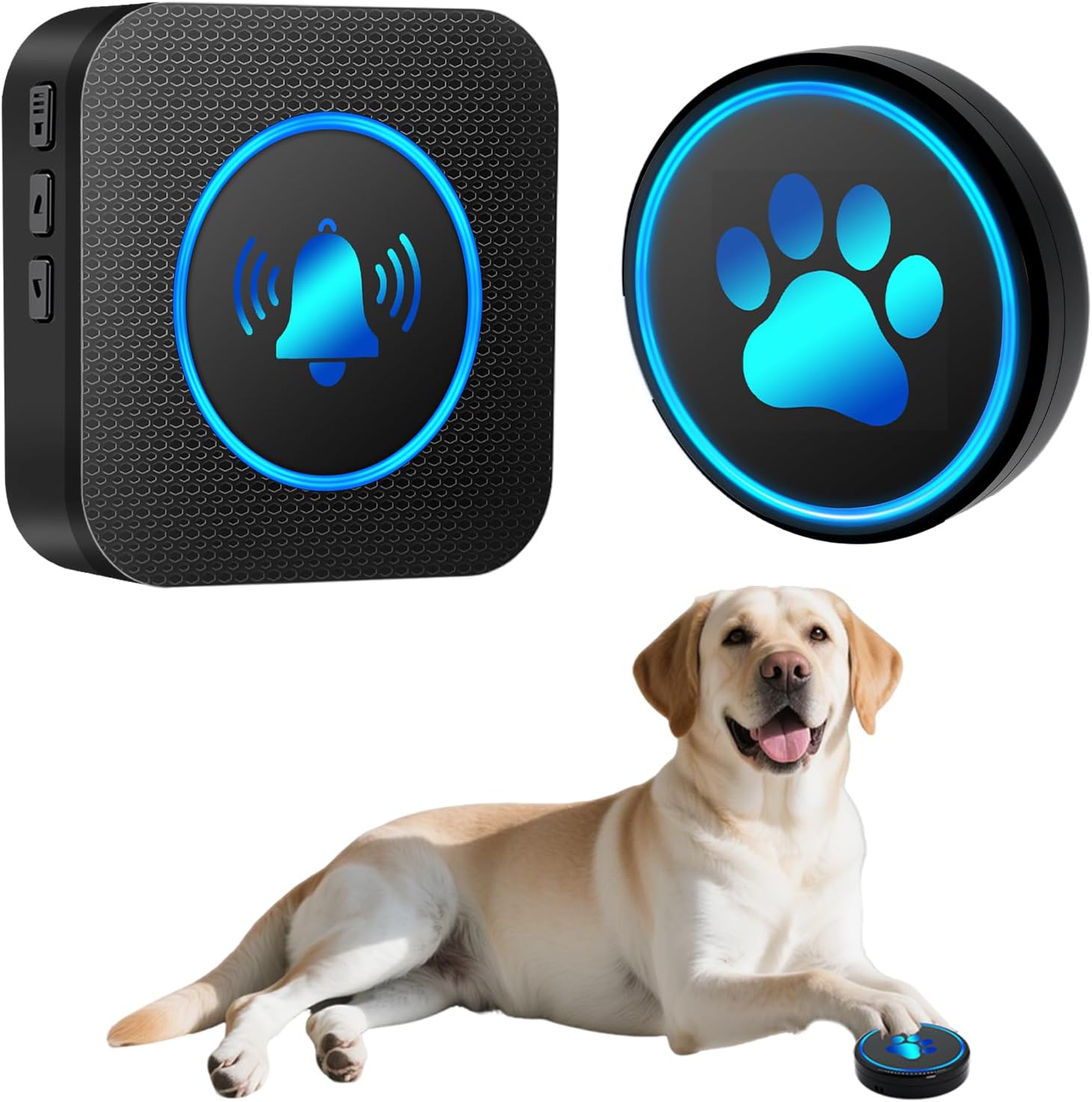
| Ringtones | 60 |
|---|---|
| Volume levels | 5 (0–110 dB) |
| Range | Up to 1000 feet |
| Waterproof rating | IP65 |
This small wireless dog doorbell provides a simple way for pets to signal when they need to go outside. The transmitter is a super-light touch button that pets can activate without hard pressing, and the receiver offers 60 ringtone choices plus five volume levels so you can match sound and loudness to your home. It pairs over an advertised long range up to 1000 feet, which should cover most houses and yards, and the transmitter is IP65 rated for outdoor exposure so it can be mounted on an exterior door or near a doggie door. Installation is tool-free with reusable Velcro and battery access is straightforward. Practical limitations include a single-button kit (no multi-button zoning) and reliance on wireless range that can be reduced by thick walls or interference, so placement matters. For owners wanting a compact, weatherproof signal button that is easy for pets to use, this is a capable, no-frills option.
Best for: Buyers who prioritize a small, unobtrusive transmitter and simple, reliable pet activation for potty signaling or exit requests around the house.
Less Ideal for: Homes that need multiple transmitters, zoned alerts, or guaranteed performance through multiple thick masonry walls should consider multi-button or hardwired solutions instead.
- Very light, low-force touch button suitable for small or elderly pets
- Adjustable volume and 60 ringtone options let you find a clear, recognizable chime
- IP65 waterproof transmitter supports outdoor mounting in mixed weather
- Long advertised wireless range (up to 1000 feet) for larger homes and yards
- Tool-free installation with reusable Velcro makes setup and relocation easy
- Single-button kit only so you cannot assign multiple access points or users
- Wireless range can be affected by building materials and interference
Verdict: The best compact wireless doorbell suits owners who need a discreet, space-saving transmitter and receiver without sacrificing sound clarity or basic reliability.
TECKNET Dog Door Bell TK-WD040
Best Weatherproof Wireless Doorbell

| Range | 1000 ft |
|---|---|
| Melodies | 55 |
| Volume levels | 5 (0-120 dB) |
| Waterproof rating | IP65 |
| Transmitters / Receiver | 2 transmitters, 1 receiver |
The TECKNET Dog Door Bell is a plug-and-play wireless kit designed to let dogs signal when they need to go out or when visitors arrive. It includes one indoor receiver and two transmitters that mount with reusable Velcro or tape, and the transmitters register a sensitive touch so dogs of any size can press them. The receiver supports up to a 1000 foot range in open space and offers 55 melodies with five volume settings including mute, plus the ability to assign different tones to each transmitter for multi-dog households. IP65 weather resistance and a claimed outdoor rating mean the transmitters stand up to rain and snow for yard or patio mounting. Setup is quick with no wiring required, and the receiver retains custom tone and volume settings after power loss. Limitations to note are typical wireless sensitivity in dense homes where range can be reduced, and the system relies on mains power for the receiver while transmitters use batteries, so you should plan for battery replacements over time.
Best for: Buyers who need a weatherproof wireless doorbell system for outdoor mounting and want simple installation plus distinct tones for multiple pets.
Less Ideal for: People who need purely battery-powered operation for the receiver or who require guaranteed full-range performance through many solid walls should consider other options.
- IP65-rated transmitters suitable for outdoor mounting
- 1000 ft wireless range useful for large or multi-story homes
- 55 ringtone options and separate tone assignment for each transmitter
- Five volume levels including mute to fit different household noise preferences
- Tool-free installation with reusable Velcro or double-sided tape
- Range can be reduced by walls and heavy construction, so real-world distance may be less than 1000 ft
- Receiver requires mains power while transmitters use batteries that will need occasional replacement
Verdict: The best weatherproof wireless doorbell is meant for outdoor mounting and frequent exposure to the elements while maintaining consistent performance and protection.
AVANTEK CB-11 Wireless Doorbell
Best Easy-Install Wireless Doorbell

| Wireless range | 1000 feet |
|---|---|
| Ringtones | 52 |
| Volume levels | 5 levels, up to 115 dB |
| Power source | AC plug-in receiver + CR2032 transmitter battery |
| Waterproof rating | IP55 |
The AVANTEK CB-11 is a simple plug-and-play wireless doorbell kit designed for homeowners who want a no-fuss installation. The kit includes a battery-powered, weather-resistant transmitter that mounts at your exterior door and a compact plug-in receiver that fits into a standard outlet inside the house. It operates up to about 1,000 feet in open space, offers 52 melody choices, five volume levels up to 115 dB, and a bright LED flash so you can both hear and see alerts. Setup requires no wiring, apps, or pairing steps beyond plugging in the receiver and mounting the button, and the unit remembers your last melody and volume after power loss. For dog owners the loud chime and visual flash help catch attention when pups trigger the button or when a delivery arrives, but the maximum volume can be very loud in small rooms and the receiver must stay near an outlet so placement is somewhat constrained.
Best for: Buyers who want a fast, tool-light setup so their household can start using a reliable wireless doorbell immediately, especially where both sound and visual alerts help when pets are present.
Less Ideal for: People who need a fully portable receiver placement or fine-grained installation control across many rooms without available outlets should consider alternatives.
- True plug-in receiver with no wiring or apps required for very quick installation
- Long wireless range suitable for multi-level homes and yards
- Loud 115 dB maximum plus LED flash for audible and visual alerts
- IP55-rated transmitter designed to withstand rain and temperature extremes
- Memory function preserves chosen chime and volume after power outages
- Receiver must be plugged into an outlet so exact placement is limited
- Very loud maximum volume may be too strong in small rooms or close to sleeping areas
Verdict: The best easy-install wireless doorbell appeals to owners who want a fuss-free setup with minimal wiring or technical steps so their pet-aware household is ready quickly.
Choosing the Right Wireless Doorbell Dog: Key Factors to Consider
Chime Tone and Sound Profile
The character of the chime affects how your dog reacts. High-pitched, sudden tones are more likely to trigger barking or anxiety, while softer, melodic, or lower-frequency tones tend to be less startling.
Look for doorbells that offer multiple tone choices and sampleable audio so you can pick a sound your dog tolerates. Some units provide progressive or gentle chimes that ramp up rather than starting at full volume, which can be helpful during training or when introducing a new alert. A chime with a clear but non-jarring profile improves human response without creating repeated stress for the pet.
Volume Control and Minimum Decibel Level
Being able to set a low minimum volume is important in homes where small sounds already upset a dog. Volume range matters as much as maximum loudness: you want fine-grained steps or continuous control so you can find a setting that notifies people but stays below a distress threshold for the animal.
Some receivers include mute or vibrate modes and night modes that automatically reduce volume at specified hours. Verify that minimum settings remain audible to you in typical background noise conditions while remaining comfortable for the dog, particularly if the receiver is placed in a room where the pet spends most time.
Signal Range and Consistency
Wireless range determines where you can mount the push button and where the receiver can sit inside the house. Walls, metal structures, and distance all reduce signal strength, so declared range figures are best treated as ideal conditions.
For dog owners who place receivers in bedrooms or basements to avoid disturbing pets, look for systems with proven penetration and consistent pairing behavior. Dual-antenna designs, line-of-sight range tests, and clear pairing procedures reduce the chance of missed alerts that could lead to visitors arriving without notice.
Alert Modality Alternatives
Not all homes rely solely on loud chimes; alternative alert methods can be kinder for noise-sensitive pets. Visual alerts such as LED flashes, tactile receivers with vibration, or push-button-linked smart notifications allow customizable response strategies.
Consider multi-mode systems when household members have different hearing needs or when you want a silent option for late-night use. These alternatives can also be used in training to pair a non-auditory cue with visitor arrival, helping your dog learn calmer behavior over time.
Installation, Placement, and Mounting
Where and how you mount the button and receiver affects both function and the dog's reaction. A button placed within the dog's line of sight may provoke curiosity or barking, while a receiver hidden near you can deliver alerts without drawing the pet's attention.
Choose lightweight receivers that are easy to relocate during training, and push buttons with flexible mounting options so you can place them at a height and distance that minimizes accidental activation by pets. Weatherproofing and tamper resistance also matter for outdoor placements exposed to curious animals.
Power Options and Battery Life
Battery reliability affects whether a system will notify consistently. Units that use replaceable batteries should offer long life between changes, and those with rechargeable receivers should provide predictable run times. Battery failures can create gaps that confuse both owners and dogs.
Assess whether the push button uses common battery types and whether the receiver provides low-battery indicators. Hardwired or plug-in receivers remove battery uncertainty but may constrain placement, so weigh tradeoffs between placement flexibility and continuous power.
How Do I Introduce a New Doorbell to a Dog Without Causing Anxiety?
Introduce the new sound gradually and pair it with predictable, calm responses so the dog learns the chime means normal activity rather than a threat. Start by playing the chime at very low volume while offering a treat or performing a familiar, calming cue so the dog associates the sound with positive outcomes.
Over several days increase volume very slightly while keeping interactions low-key. Place the receiver away from the dog's resting area during the introduction period, then slowly move it to its final location as the dog becomes comfortable. Consistency and short sessions reduce the chance of overstimulation.
- Start at lowest volume and pair with treats or calm praise
- Keep initial sessions short and predictable
- Avoid sudden full-volume tests in the dog's presence
Which Chime Types Tend to Be Least Disruptive for Most Dogs?
Single, lower-pitched tones or soft melodies are generally less likely to trigger reactive barking than sharp, high-pitched beeps. A gentle harmonic chime or subdued bell sound often blends into background noise more smoothly.
Options that allow you to test tones before committing are preferable because dogs vary in sensitivity. If possible, choose a tone family and volume that remain audible to humans but fall below the dog's startle threshold.
- Prefer mellow or melodic tones over high-frequency beeps
- Test multiple tones at low volume before finalizing
Can Visual or Vibration Alerts Replace Audio Entirely?
Visual and vibration alerts can work well in many households, especially where noise is a concern. Bright LED indicators or tactile receivers are effective for owners who spend time in the same room as their pet and can observe the non-auditory cue.
However, entirely replacing audio may not suit every situation; visitors outside may not have alternative ways to notify you if the receiver is out of sight. Consider a hybrid approach that uses silent modes at night and audio during the day, or train the dog to respond calmly to a visual cue paired with the visitor arrival routine.
- Use visual/vibration modes for night or sensitive pets
- Combine modalities to ensure visitors can still alert you
How Should I Place the Receiver to Minimize Canine Reactivity?
Position the receiver where you can hear it easily but the dog cannot easily see or reach it. Bedrooms, hallways, or other locations that keep the alert out of the dog's direct line of sight reduce attention-seeking behaviors.
Avoid placing the receiver on the floor or at the dog's eye level, and test different rooms to find a balance between audibility and minimal engagement from the pet.
- Keep receiver visible to you but out of the pet's direct view
- Test placement during different household routines to confirm effectiveness
What Maintenance Should I Plan for to Keep a Wireless Doorbell Reliable?
Regularly check batteries for the push button and receiver and replace or recharge before levels get low. Inspect outdoor buttons for moisture or debris that could affect the switch, and clean contacts if they appear corroded or sticky.
Test the system periodically by having someone press the button while you observe receiver behavior. Re-pair devices if you notice intermittent misses and keep spare batteries on hand to avoid unexpected downtime.
- Perform monthly battery checks for active households
- Clean and inspect outdoor buttons seasonally
How We Chose the Best Wireless Doorbell Dog
We focused on features that specifically affect households with dogs and the typical challenges owners report. Our evaluation prioritized a combination of audio options, adjustable volume, transmission reliability, and ease of installation because these directly influence whether a device startles, alarms, or reliably notifies. We also considered alternative alert modes, such as visual cues or silent notifications, for homes where sound sensitivity is an issue. Contributing criteria included chime tone variety, minimum and maximum decibel range, wireless range across typical house layouts, battery life and power options for both button and receiver, and ease of mounting or placement to avoid startling a pet. Durability and weather resistance for outdoor push buttons were checked to ensure consistent operation. We excluded devices that lack any volume control, have very short wireless range claims, or rely solely on intermittent mobile notifications without a local chime option. The shortlist reflects products that balance consistent performance with pet-friendly alert options and practical installation.
Our full evaluation process is outlined in our review methodology.
FAQ
Will a wireless doorbell scare my dog?
It often depends on the dog and the chime. Many dogs are unsettled by sudden high-pitched tones, while softer melodic chimes are less likely to provoke fear. Introducing the sound slowly and using low volume reduces the chance of scaring a pet.
Can I use a wireless doorbell if my home has thick walls?
Usually yes, but thick walls and building materials reduce wireless range. Look for systems with longer rated range or plan receiver placement to avoid signal loss. In challenging layouts, test before final mounting or choose a receiver location with better line of communication.
Is a plug-in receiver better than a battery-powered one for dog-friendly placement?
Plug-in receivers offer continuous power and remove battery-change worries, but they limit where you can place the unit. Battery-powered receivers are flexible and easier to relocate during training, which can help find a spot that minimizes the dog's reaction.
Should I choose a doorbell with multiple tones?
Multiple tones are helpful because they let you select a sound that is less startling to your dog. Being able to change tones also allows you to adapt if the dog becomes conditioned to a particular sound in the future.
How do I prevent my dog from pawing or activating the outdoor button?
Mount the button out of reach at a height likely above the dog's nose and use a recess or protective cover to deter pawing. Training the dog to ignore the door area and rewarding calm behavior when visitors arrive also reduces accidental activations.
Final Verdict
Focus on chime character, volume control, and reliable range when choosing a wireless doorbell for a home with a dog. Prioritize devices that offer softer tones, fine-grained volume adjustment, and alternative alert modes if noise sensitivity is a concern. Balance placement and power options to keep alerts audible to you while minimizing attention for the pet. With those tradeoffs in mind, you can choose a system that notifies consistently without creating stress, making arrivals calmer for everyone.

