

Choosing the right zap collar for dog training can make the difference between quick, consistent results and confusing, unreliable corrections. You need a collar that provides predictable feedback, fits securely, and includes safety features that protect your dog while supporting humane training. This guide shortlists the top zap collars for dogs and explains the practical criteria used to evaluate each option. Below you will find our top picks plus focused buying guidance that emphasizes range, safety controls, and wearability to help you select the best collar for your training needs.
Top Picks at a Glance
| Best Overall Zap Collar A reliable, well-rounded choice that suits most training needs | Dogtra iQ Plus Training Collar |  |
| Best Budget Zap Collar An affordable option that still handles basic training reliably | DDZ Shock Collar P21 |  |
| Best Premium Zap Collar Higher-end construction, advanced features, and improved durability | Garmin Sport PRO Training Collar |  |
| Best Rechargeable Zap Collar Built-in batteries and USB charging for frequent use | Bousnic RS2 Dog Training Collar |  |
| Best Long-Range Zap Collar Extended remote range for off-leash recall and outdoor work | PAWPRO Dog Shock Collar Ultimate |  |
| Best Compact Zap Collar Smaller, lighter units that suit small dogs and travel | UbaNinva Ultra Compact Dog Shock Collar Small |  |
| Best Waterproof Zap Collar Water-resistant design for wet conditions and easy cleaning | MrSpark Shock Collar HQ01 |  |
Dogtra iQ Plus Training Collar
Best Overall Zap Collar

| Breed Recommendation | Small to Medium |
|---|---|
| Included Components | transmitter, receiver, charger, splitter cable, manual, belt clip, test light |
| Animal Collar Type | Electronic Training Collar |
| Batteries | 1 A battery required (included) |
The Dogtra iQ Plus is a compact remote e-collar aimed at small dogs and short-range training sessions. It combines tone, vibration (pager), and 100 levels of stimulation selectable via a front-facing rheostat dial for one-handed adjustments, making it straightforward to find an appropriate setting during active training. The receiver is small and low-profile so it sits comfortably on dogs around 10 pounds and up, and the transmitter can be expanded to control a second receiver for two-dog sessions. It is rechargeable, built to durable standards, and carries IPX9K-grade waterproofing on related Dogtra lines, which supports use in wet conditions with reasonable care. Practical limits are its short advertised range suitable for yard and obedience work rather than long-distance field trials, and the higher correction spectrum may be more than casual owners need. The collar is best used for focused obedience, boundary reinforcement, and professionals or experienced owners who need precise, one-handed control and a compact receiver for small breeds.
Best for: Buyers who want a versatile, trainer-grade vibrating collar that balances precise control, compact fit for small dogs, and expandability for two-dog sessions.
Less Ideal for: Owners who need very long-range training equipment or those who prefer purely non-stimulation methods should consider alternatives.
- Compact, low-profile receiver suitable for small dogs
- One-handed rheostat dial with 100 levels for fine-tuned corrections
- Expandable transmitter supports a second receiver for two-dog training
- Includes tone and pager vibration modes in addition to static stimulation
- Rechargeable design and durable, professional-grade construction
- Shorter effective range intended for yard and obedience work rather than long-distance field use
- Some users may find the 100-level stimulation spectrum complex to initially dial in
Verdict: The best overall zap collar balances effective stimulation options, reliable build and battery life, comfortable fit, and straightforward controls for everyday dog training.
DDZ Shock Collar P21
Best Budget Zap Collar

| Range | 2000 ft |
|---|---|
| Waterproof rating | IPX7 |
| Fit range | 15–120 lb |
| Power | Rechargeable batteries |
This DDZ P21 shock collar is a budget-focused remote training system that provides beep, vibration, and adjustable static stimulation across multiple intensity levels plus a built-in flashlight and security lock. In everyday use the handheld remote and receiver pair quickly and the wide claimed 2000 ft range is useful for yard or park training; the collar is rechargeable and the vendor states long standby life so it needs less frequent charging than disposable-battery units. The IPX7 waterproof receiver makes it usable in wet weather and outdoor play, and multiple contact point lengths and silicone caps help fit a range of coat types. Practical limitations to expect are a basic feature set compared with higher-end systems and a learning curve dialing in safe stimulation levels for each dog. For owners focused on straightforward correction and recall work without premium extras, this collar covers the essentials at a low price point.
Best for: Owners seeking an inexpensive, no-frills remote collar that reliably provides basic safety controls and adjustable stimulation for routine outdoor training.
Less Ideal for: People who need advanced tracking, multi-dog telemetry beyond four channels, or professional-level customization and logs should consider higher-end systems instead.
- IPX7 waterproof receiver suitable for rain and wet conditions
- Rechargeable batteries with long standby time to reduce frequent charging
- Includes beep, vibration, and adjustable static modes for graduated training
- 2000 ft claimed remote range useful for open-area training
- Comes with multiple contact point lengths and silicone caps for better fit
- Basic feature set without advanced safety/telemtry found on premium models
- Intensity control requires careful adjustment and user judgment for safety
Verdict: The best budget zap collar provides dependable performance and safety features at a lower price for owners prioritizing cost without sacrificing core training functionality.
Garmin Sport PRO Training Collar
Best Premium Zap Collar
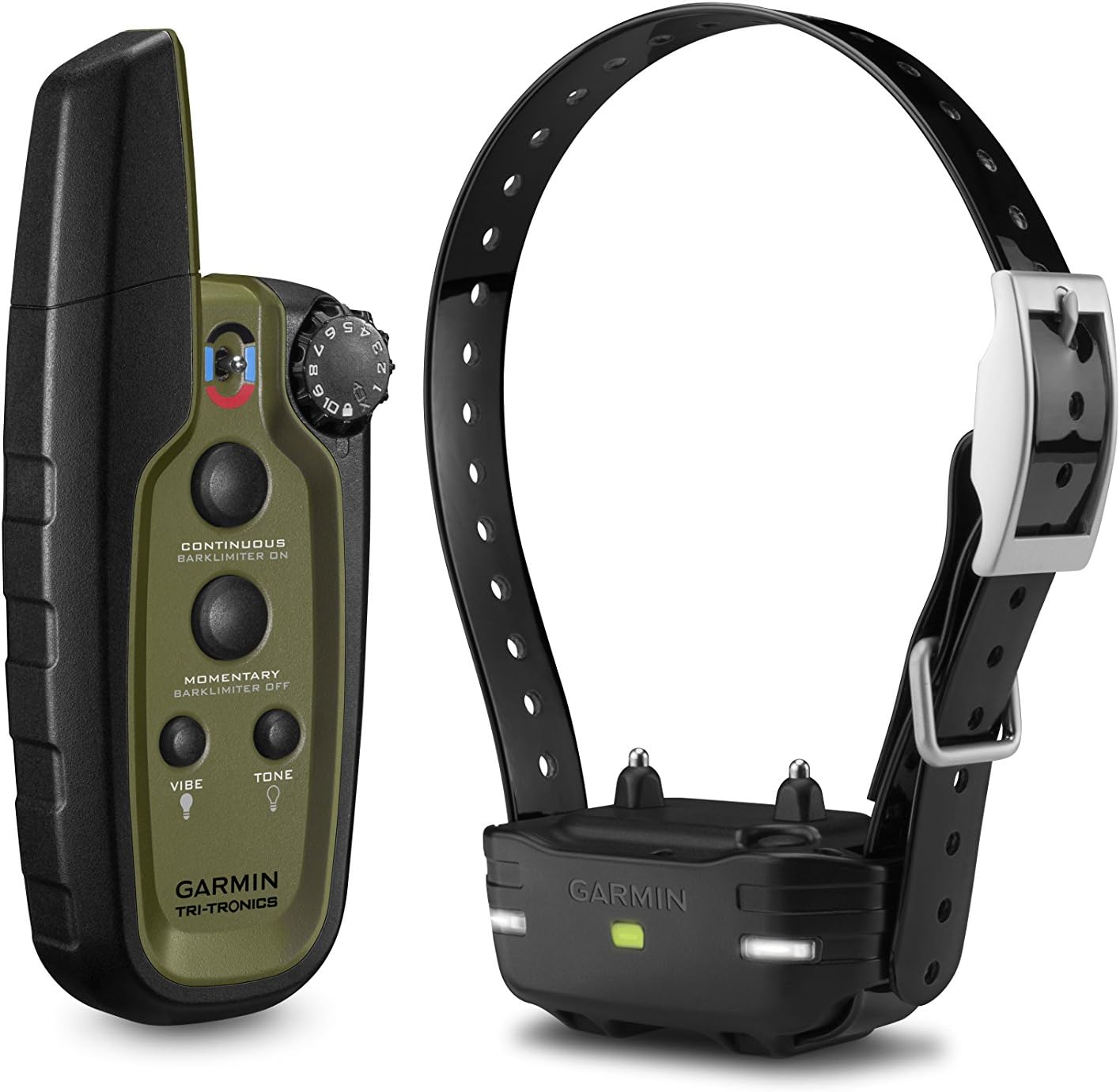
| Range | 3/4 mile |
|---|---|
| Training modes | Tone, Vibration, 10 stimulation levels |
| Dog capacity | Up to 3 dogs |
| Handheld battery life | Up to 60 hours |
| Handheld water rating | IPX7 |
The Garmin Sport PRO bundle pairs a one-handed handheld transmitter with a rechargeable dog device to deliver tone, vibration and 10 levels of static stimulation for training at distances up to three quarters of a mile. The handheld is ergonomically shaped for one-handed, no-look operation and uses a quick-turn dial with positive clicks to step through stimulation levels and auxiliary functions, while four buttons provide momentary and continuous corrections plus vibration and tone. Built-in LED beacon lights help locate a dog in low light and a settable BarkLimiter offers automatic barking control. Both units use rechargeable lithium-ion batteries and the handheld floats, adding practical durability for field use. The dog device accepts long and short stainless steel contact points for wet conditions and the system is rated water-resistant for rugged outdoor use. Limitations include no GPS tracking or advanced smartphone integration and the dog device water rating is lower than the handheld, so fully submerged use is limited.
Best for: Buyers who need a rugged, easy-to-operate remote trainer for active outdoor work and want reliable controls and durable contact hardware for strong, energetic dogs.
Less Ideal for: If you require GPS tracking, smartphone integration, or full waterproofing for underwater use, consider alternatives with those specific features.
- One-handed ergonomic handheld with quick-turn dial for easy level changes
- Up to 3/4 mile range suitable for open-field training
- Rechargeable, user-replaceable lithium-ion batteries for long runtimes
- Interchangeable long and short stainless steel contact points for wet use and durability
- Built-in LED beacon lights and settable BarkLimiter for locating and barking control
- Dog device has lower water rating than the handheld, limiting submerged use
- No GPS location tracking or smartphone app integration
Verdict: The best premium zap collar is for owners willing to pay more for superior materials, refined controls, additional features, and long-term durability.
Bousnic RS2 Dog Training Collar
Best Rechargeable Zap Collar

| Remote range | 3300 Feet |
|---|---|
| Waterproof rating | IP67 |
| Suitable dog weight | 5-120lbs |
| Training modes | Beep, Vibration, Shock |
| Battery | Rechargeable (receiver ~15 days, remote ~1 month) |
The Bousnic RS2 is a rechargeable e-collar built for everyday home and outdoor training, offering beep, vibration, and adjustable static stimulation across multiple levels. It is typically used with the handheld remote to reinforce recall, boundary, and obedience commands at distances up to about 3300 feet, and the dual-channel remote can control two receivers for training two dogs. Notable features include an IP67 waterproof receiver for wet conditions, a wide shock level range and many vibration/beep intensities for fine-tuning, and long battery life that the brand claims can keep the receiver running for up to two weeks and the remote for over a month. In practice the long range and robust battery make it convenient for off-leash work at parks or on hikes, while the many levels let an experienced trainer step intensity up or down for different dogs. Limitations include the need to keep the remote dry and the lack of automatic bark-detection or fence features, so it requires manual operation and consistent handler timing to be effective.
Best for: Owners who want a single, versatile Bousnic collar for both yard and off-leash outdoor training and value long battery life and range for typical home and recreational use.
Less Ideal for: People who need an automatic bark collar, a wireless containment system, or a fully waterproof remote should consider other solutions.
- Long 3300 ft remote range suitable for off-leash training
- Three modes (beep, vibration, adjustable shock) provide flexible correction options
- IP67 waterproof receiver lets the collar be used in rain or mud
- Rechargeable units with extended battery life for the receiver and remote
- Dual-channel remote supports training two dogs from one transmitter
- Remote is not waterproof and must be kept dry
- No automatic bark detection or wireless fence function
- Large number of shock levels may require careful adjustment to avoid overcorrection
Verdict: The best rechargeable zap collar is ideal for frequent trainers who want the convenience and lower running cost of built-in rechargeable batteries and quick charging.
PAWPRO Dog Shock Collar Ultimate
Best Long-Range Zap Collar

| Range | Up to 4 miles (open terrain) |
|---|---|
| Stimulation levels | Beep 1–8, Vibration 1–16, Static 1–99 |
| Waterproof rating | IPX7 |
| Battery life | Up to 15 days (per listing) |
The PAWPRO Dog Shock Collar is built for long-distance off-leash training, pairing a dual-channel remote with an advertised 4-mile open-terrain range. You use the remote to deliver beep, vibration, or adjustable static stimulation and to activate a built-in LED for low-light visibility; the unit supports two dogs with the dual-channel function. Practical features include an IPX7 waterproof receiver, hypoallergenic adjustable strap, multiple contact points for size tuning, and a 30-day step-by-step training guide to help beginners start gently. The controls offer fine-grained adjustment across beep, vibration and 99 static levels so you can find an appropriate response for different dogs and distractions. Battery life and fast charging are convenient for multi-day outings, and the collar is made to handle rain and trails. The main compromises are that real-world effective range depends on terrain and obstacles, and static stimulation requires careful, informed use so you can train safely and humanely. For owners who need extended remote control, this package gives versatile modes and practical outdoor readiness.
Best for: Owners who need dependable remote control across large open areas and want a feature-rich collar that balances long range with adjustable stimulation and outdoor durability.
Less Ideal for: People who only train indoors or in small fenced yards where extreme range is unnecessary, or those unwilling to learn responsible use of static stimulation methods.
- Very long advertised open-terrain range up to 4 miles for wide-area recall and off-leash training
- Multiple stimulation modes with wide adjustment (beep, vibration, 1–99 static) for precise responses
- IPX7 waterproof receiver and reflective adjustable strap for outdoor use in wet conditions
- Dual-channel remote supports training two dogs with a single transmitter
- Includes step-by-step 30-day training guide and multiple contact points for fit and beginner support
- Effective range will be reduced by trees, buildings, and terrain so 4-mile performance is situational
- Static stimulation requires careful, informed use and gradual introduction to avoid misuse
Verdict: The best long-range zap collar fits owners who need reliable remote control at greater distances for off-leash training and outdoor activities.
UbaNinva Ultra Compact Dog Shock Collar Small
Best Compact Zap Collar

| Fit range | 6-22 inches |
|---|---|
| Training modes | Sound, vibration, shock |
| Levels | 99 adjustable levels |
| Waterproof rating | IPX7 |
| Signal range | 1300 ft |
This ultra compact collar is built for small dogs and puppies who need a low-profile training solution. The receiver is extremely light and compact, attaches to an adjustable woven strap, and offers sound, vibration, and shock across 99 intensity levels so you can tailor corrections precisely. It includes a handheld remote for on-leash or off-leash use and a safety lock to prevent accidental shocks. Practical benefits include IPX7 waterproofing for wet-weather use and a claimed 1300 ft signal for working at distance, plus a rechargeable battery the listing says lasts up to 15 days after a 2-hour charge. The collar leans toward precision and minimal bulk, so it stays comfortable on tiny necks, but the very small contacts and high level range mean careful introduction and conservative level selection are essential. Also, because it is optimized for small breeds, buyers should confirm fit and contact placement for their individual dog before training full correction levels.
Best for: Buyers looking specifically for a minimal, low-bulk training collar for small dogs or puppies who need something comfortable for daily wear and precise level control.
Less Ideal for: Owners of medium or large breeds, dogs with heavy coats that prevent consistent contact, or people who prefer non-stimulation training methods should consider other options.
- Extremely compact and lightweight receiver suited to tiny necks
- Wide range of 99 intensity levels plus sound and vibration for precise training
- IPX7 waterproof rating allows use in rain and easy cleaning
- Long standby/runtime with quick 2-hour recharge reported by the listing
- Safety lock on shock function reduces accidental activations
- Very small contact points require careful fit and may not suit thick or long coats
- High maximum level options demand cautious introduction to avoid overcorrection
Verdict: The best compact zap collar is designed for smaller dogs or frequent travel, offering a lightweight, low-profile fit without unnecessary bulk.
MrSpark Shock Collar HQ01
Best Waterproof Zap Collar

| Range | 4500ft |
|---|---|
| Waterproof Rating | IP68 |
| Modes | Beep, Vibration, Shock |
| Receiver Runtime | Up to 20 days |
| Remote Runtime | Up to 90 days |
The MrSpark HQ01 is a full-featured training collar designed for outdoor use where water and mud are a concern. It pairs a waterproof receiver (IP68) with a military-spec RF remote rated to about 4,500 feet and offers three correction modes—beep, vibration and adjustable shock—so you can scale intensity through 16 vibration/shock levels and multiple beep settings. The receiver includes replaceable metal prongs with silicone covers, a three-stage buckle for a snug fit, and a built-in safety light for visibility at night. Battery life is strong: the receiver is claimed to last up to 20 days per charge and the remote up to 90 days, with a two-hour fast charge. Practical benefits include reliable signal in complex environments thanks to frequency hopping, easy rinsing after muddy sessions, and accessory parts for different coat depths. Limits to expect are typical for this class: metal-contact prongs require good skin contact on thick or very long fur so you may need longer probes, and owners sensitive to using stimulation should plan to start at low levels and use the beep/vibration options first.
Best for: Owners who train outdoors in wet or muddy conditions and need a rugged, water-resistant collar that maintains consistent remote response during long-range work.
Less Ideal for: People who want a no-stimulation-only solution or those unwilling to monitor and adjust probe length and contact for dogs with very dense or matted coats.
- IP68 waterproof receiver for submersion and easy rinsing after muddy use
- Long transmission range with adaptive frequency hopping for fewer dropouts outdoors
- Multiple modes and wide level range for graduated, controllable corrections
- Long battery life and fast two-hour recharge reduce downtime
- Replaceable prongs and silicone covers plus adjustable buckle help fit different coat types
- Effectiveness depends on good skin contact so very thick or matted coats may require longer probes
- Uses stimulation so requires careful, experienced application and gradual level setting
Verdict: The best waterproof zap collar is built to handle rain, splash and accidental wetting while maintaining reliable electronics and easy maintenance.
Choosing the Right Zap Collar Dog: Key Factors to Consider
Range and Remote Reliability
Range determines how far you can be from your dog while still delivering a reliable correction. Longer range is useful for field training, off-leash work, and open areas, while shorter range may be adequate for yard or on-leash use.
Remote reliability matters more than headline distance numbers. Look for consistent signal performance with obstructions and repeated use. Intermittent connectivity or latency can confuse the dog and undermine training, so prioritize systems that specify tested range and list measures to reduce interference.
Intensity Levels and Safety Shutoffs
Multiple intensity settings let you start with the lowest effective level and step up only if needed. Fine-grained control helps you find the minimum stimulus that gets the desired response without causing distress.
Automatic safety shutoffs and timed stimulation limits prevent prolonged output from being applied accidentally. These features reduce the risk of overcorrection during long sessions or if a button gets stuck, making them essential for responsible use.
Contact Design and Fit
Good contact design ensures the electrodes maintain consistent skin contact without pinching or sliding. Short, rounded probes or flexible contacts can improve conductivity across different coat types while minimizing discomfort.
Adjustable straps and a secure fastening system are key to a stable fit. A collar that shifts will deliver inconsistent stimulation and require constant readjustment, so prioritize models with reliable adjustment ranges that accommodate your dog's neck size and coat thickness.
Battery Life and Charging Convenience
Battery life affects how often you need to recharge and whether the collar is reliable on multi-hour outings. Longer runtimes reduce interruptions during longer training sessions and travel.
Fast charging or easy battery replacement is useful when time is limited. Indicator lights or battery percentage readouts let you monitor remaining power so you are not caught out during an important session.
Build Quality and Weather Resistance
Durable construction resists damage from chewing, drops, and general wear. Robust housings and quality fastenings increase the collar's usable life and reduce the need for frequent replacements.
Water resistance lets you train in wet conditions without worry. Look for collars with sealed buttons and rated ingress protection or explicit water resistance claims to ensure the electronics are protected during rain or splash exposure.
Control Features and User Feedback
Clear, intuitive controls on the remote reduce accidental corrections and speed up learning for the handler. Tactile buttons, labeled functions, and an ergonomic layout help you operate the device reliably under stress.
Built-in feedback such as vibration, LED indicators, or a test button helps you confirm the collar is working before using full stimulation. Visual or audio cues for channel selection and battery status improve day-to-day usability.
How Do Zap Collars Affect Dog Behavior and Training Outcomes?
When used correctly, a zap collar can provide a clear, repeatable stimulus that signals an unwanted behavior and helps shape alternatives. The key is consistent timing and reinforcement so the dog associates the stimulus with a specific action rather than with people or the environment.
Poor timing, excessive intensity, or inconsistent use can create anxiety or confusion. Use corrections sparingly, combine them with clear verbal cues and positive reinforcement for correct responses, and always avoid relying on the collar as the only training method.
- Use the lowest effective intensity and increase only when necessary.
- Pair corrections with a command and reward desired behaviors.
- Keep sessions short and consistent to prevent stress.
What Fit and Contact Setup Works Best for Different Coat Types?
Coarse or long coats can interfere with electrode contact, so choose a contact style that penetrates the coat without irritating skin. Shorter probes or contacts positioned on flexible pads can improve contact for many dogs. Regularly check fit to ensure the collar sits snugly against the skin at the contact points.
For thin-coated or sensitive-skinned dogs, use the gentlest contact arrangement and monitor the skin for signs of redness or chafing. Rotate contact positions slightly over time and keep the area clean to minimize irritation.
- Check contact points after initial sessions for any skin reactions.
- Trim excessive fur only if necessary and done safely.
- Reposition and retighten the collar between sessions for consistent contact.
When Is Vibration or Tone Mode Preferable to Zap Output?
Vibration or tone modes are good first steps for training because they allow you to cue the dog without using stimulation. Many dogs respond to these gentler cues, making them useful for teaching basic commands and recall before introducing zap output.
Reserve zap output for situations where lower-level cues have not produced the desired response. Using a graduated approach reduces stress and gives the dog a chance to learn the cue-reward association with minimal discomfort.
- Start with tone or vibration during initial training sessions.
- Use zap output only when other cues are ineffective and always at the lowest necessary level.
How to Maintain the Collar for Reliable Long-term Use
Keep the collar and contacts clean and dry after use. Wipe contacts with a damp cloth and inspect for corrosion or buildup that could reduce conductivity. Replace worn electrodes or straps promptly to maintain consistent performance.
Store the remote and collar in a dry, cool place and avoid prolonged exposure to sunlight or heat. Regular battery checks and timely charging preserve longevity and prevent unexpected failures during training.
- Inspect contacts and strap condition weekly during heavy use.
- Follow the manufacturer guidance for cleaning and battery care.
- Keep spare contact pads or straps on hand if you train frequently.
How to Introduce a Zap Collar to a Dog Safely
Introduce the collar gradually. Let the dog wear the collar unactivated first so it gets used to the feel. Use low-distraction environments for initial training and pair the collar with familiar cues and rewards.
Test the lowest stimulation level and watch the dog's body language for signs of discomfort or stress. If the dog shows clear distress, stop and reassess fit, intensity, and whether an alternative training method is appropriate.
- Begin with short sessions and positive reinforcement.
- Monitor for avoidance behaviors and adjust accordingly.
- Document the settings that produced the best responses for future reference.
How We Chose the Best Zap Collar Dog
We prioritized features and design elements that matter for safe, effective zap collar use. Our evaluation focused on range and remote performance, intensity control and safety cutoffs, contact and fit systems that ensure reliable stimulation, battery life and recharge convenience, and build quality and water resistance to suit real-world use. We also considered user controls such as visual or auditory cues, channel selection, and the clarity of feedback so handlers can deliver consistent corrections. We excluded collars that lacked basic safety features such as multiple intensity levels or automatic shutoff, as well as units with poor contact designs that risk inconsistent stimulation. We favored products with clear documentation and features intended to reduce accidental overcorrection, such as step-down intensity options and lock modes. Durability, replaceable accessories, and straightforward charging were additional deciding factors. Finally, we filtered out collars that did not offer adequate range for common training situations or that had known reliability issues based on product specifications and user-reported performance.
Our full evaluation process is outlined in our review methodology.
FAQ
Are zap collars safe for all dogs?
Safety depends on correct fit, appropriate intensity, and responsible use. Many dogs tolerate low, timed stimulation without issue, but dogs with certain medical conditions or very small dogs may be more sensitive. Consult your veterinarian if you have health concerns.
How long should a training session with a zap collar last?
Sessions are usually short, often under 15 minutes, with frequent breaks. Focused, consistent exercises with clear cues work better than long sessions that can stress the dog or reduce responsiveness.
Can zap collars be used for recall and off-leash training?
They can be used for recall when combined with consistent training and clear verbal cues. Ensure the system has reliable range for off-leash scenarios and practice in controlled settings before relying on it in open areas.
How do I check that electrodes are making good contact?
Fit the collar snugly so the electrodes touch the skin at the contact points, and observe the dog while delivering a brief test signal at a low level. Look for consistent physical responses and inspect the contact pads for even wear.
Is vibration a good alternative to zap output?
Vibration is a useful, less aversive cue for many training tasks and is often effective for attention and recall. Use vibration or tone modes first and reserve zap output for when those cues are ineffective.
Final Verdict
Prioritize safety features, reliable range, and a secure contact design when choosing a zap collar dog owners can rely on. Balance the need for effective correction with the gentlest settings that produce consistent responses, and always introduce the device gradually with positive reinforcement. Focus on durable construction, clear controls, and practical battery life so the collar performs in real training conditions. With careful selection and responsible use, a zap collar can be an effective tool for shaping specific behaviors while minimizing stress for you and your dog.

