

If you have a staffy that pulls on walks, picking the right harness makes daily outings calmer, safer, and more comfortable for both of you. A harness designed for strong, muscular dogs redirects force away from the neck, lowers the chance of injury, and gives you better leverage to manage sudden lunges without stressing the dog. This guide shortlists the top harnesses for staffies that pull and explains the features that matter most, including fit, attachment points, padding, and durability. Below you will find our top picks for staffy pulling harnesses and the evaluation criteria used to choose them, so you can find an option that matches your dog's size and pulling style.
Top Picks at a Glance
| Best Overall Harness for Staffy That Pulls Balanced performance pick for most Staffies that tend to pull | rabbitgoo No Pull Dog Harness Large |  |
| Best Budget Harness for Staffy That Pulls A low-cost option that still tames pulling and fits well | Annchwool No Pull Dog Harness Large |  |
| Best No-Pull Harness Designed specifically to reduce forward pulling and redirect motion | PetSafe Easy Walk Harness Medium/Large |  |
| Best Padded Harness Extra cushioning for comfort during longer walks and training | Embark Adventure Dog Harness Large |  |
| Best Heavy-Duty Harness Built for strong dogs with reinforced hardware and materials | KNK Heavy Duty Dog Harness |  |
| Best Adjustable Harness Multiple adjustment points for a customized, secure fit | JSXD Dog Vest Harness M |  |
| Best Reflective Harness High-visibility features for safer early-morning or evening walks | tobeDRI No Pull Dog Harness Large |  |
rabbitgoo No Pull Dog Harness Large
Best Overall Harness for Staffy That Pulls

| Dog Breed Size | Large |
|---|---|
| Weight Range | 15-45 kg |
| Closure Type | Buckle |
| Material Type | Polyester |
| Size | Large |
The rabbitgoo No Pull Dog Harness is a step‑over vest-style harness built for everyday walks and basic training with medium to large breeds. It uses a front chest clip to help redirect forward motion when a dog lunges and a rear D-ring for casual walking or jogging, plus two metal leash attachments for versatile control. The harness is made from polyester oxford with padded air-mesh lining to reduce chafing and keep dogs cooler during activity, and reflective strips improve visibility in low light. Four adjustable straps and quick-release buckles let you fine-tune the fit, while a top handle gives instant lift or extra control getting in and out of vehicles. Practical limits are its non-chewproof construction and that very strong pullers may need a more specialized training harness or head halter; accurate sizing is important because the vest design can shift on dogs with unusual body shapes. For most owners seeking a comfortable, durable, and easy-to-adjust no-pull option for everyday walks, this covers the essentials well.
Best for: Owners of medium to large active dogs who want a comfortable, easy-to-adjust harness that provides reliable no-pull control for daily walks and light training.
Less Ideal for: People who need a heavy-duty, chewproof restraint or handlers working with extremely strong pullers who require professional training tools.
- Front chest clip redirects forward momentum for basic no-pull control
- Padded air-mesh lining offers breathable comfort and reduces rubbing
- Two metal leash attachments (front and back) for training and everyday use
- Multiple adjustment points and quick-release buckles make fitting and removal fast
- Reflective strips and top handle add safety and short-term lift/control
- Not designed to resist chewing or heavy abrasion
- May not fully stop very strong, sustained pullers without additional training
Verdict: The best overall harness for a Staffy that pulls, offering the right mix of no-pull control, comfort, fit adjustability, and durable construction for everyday walks.
Annchwool No Pull Dog Harness Large
Best Budget Harness for Staffy That Pulls

| Material Type | Nylon |
|---|---|
| Closure Type | Buckle |
| Dog Breed Size | Large |
| Product Care Instructions | Hand Wash Only |
The Annchwool No Pull Dog Harness is a budget-focused vest harness built to reduce forward lunging while keeping daily walks comfortable. It uses a front chest strap to discourage pulling and offers both an O-ring and D-ring on the back for leash attachment or accessories, plus a padded handle for short control corrections. The interior padding and breathable nylon shell make it comfortable for regular walking, jogging, and basic training, and reflective stitching improves visibility on evening outings. Sizing follows a chest-girth chart and the harness includes a quick-release buckle for easy on/off and two velcro patches for simple personalization. Expect solid value for routine use, but do not expect heavy-duty hardware or the highly refined fit and load distribution of premium no-pull models; very strong or highly reactive dogs may still require firmer training tools or a sturdier harness for consistent control.
Best for: Buyers needing an affordable, everyday no-pull harness for regular walks and basic training who prioritize cost and comfort over high-end durability or advanced fit features.
Less Ideal for: Owners of very large, extremely strong, or highly reactive hunting or working dogs who need a heavy-duty harness or specialized training equipment should consider more robust alternatives.
- Front chest strap and dual rings provide an effective no-pull option and versatile leash attachment.
- Padded inner lining and breathable nylon make it comfortable for regular walks and light activity.
- Reflective stitching improves low-light visibility.
- Quick-release buckle and padded handle make it easy to put on/off and regain short-term control.
- Includes velcro patch area with two patches for identification or personalization.
- Not designed as a heavy-duty tactical harness so hardware and strap strength are modest.
- Fit depends on correct sizing; inaccurate measurements can reduce anti-pull effectiveness.
Verdict: The best budget harness for a Staffy that pulls, delivering effective leash control and a secure fit at a lower price for owners on a tighter budget.
PetSafe Easy Walk Harness Medium/Large
Best No-Pull Harness
| Material Type | Nylon |
|---|---|
| Closure Type | Buckle |
| Included Components | 1 PetSafe Easy Walk Harness |
| Pet Type | Dog |
| Dog Breed Size | Medium |
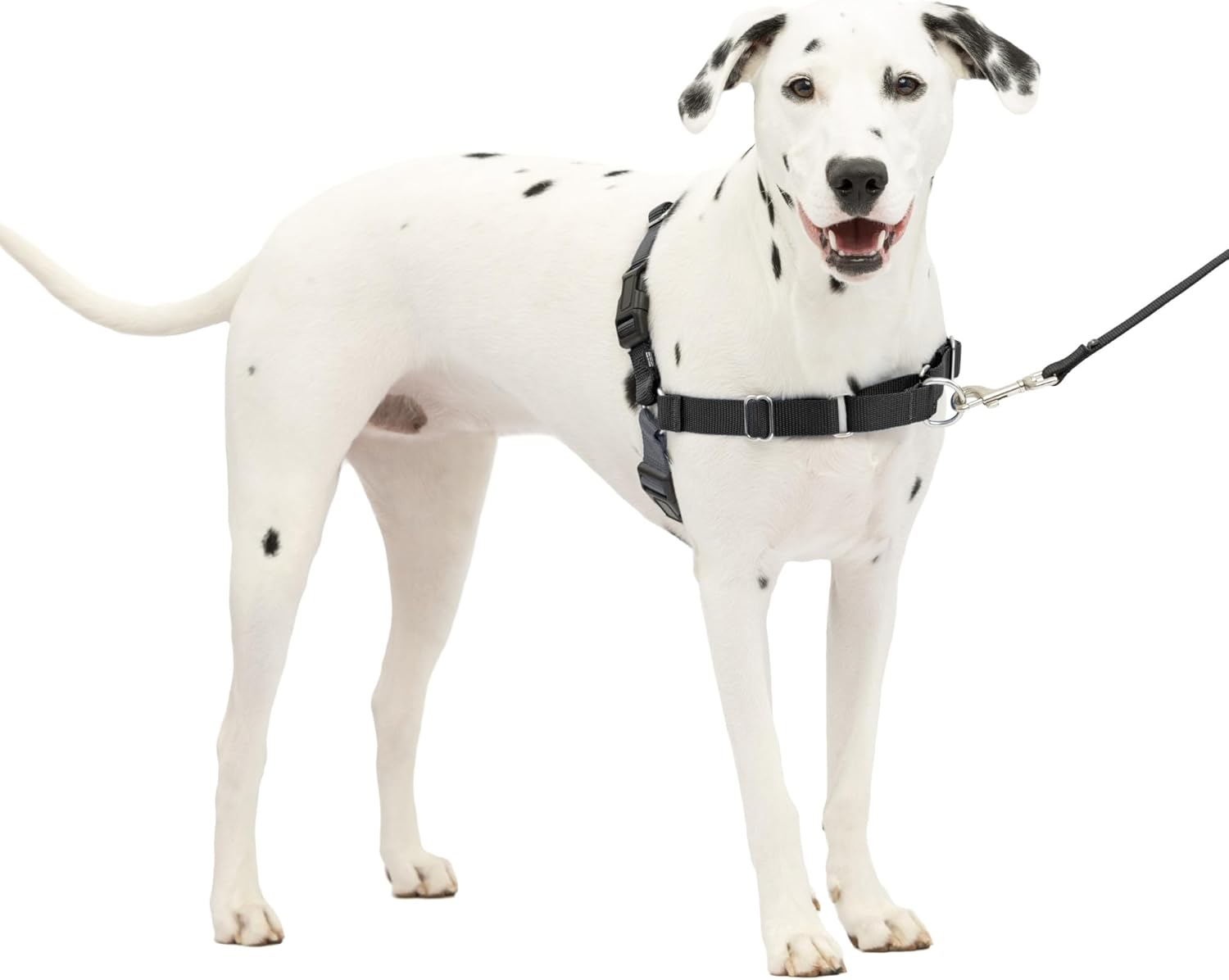
The PetSafe Easy Walk Harness is designed to reduce pulling by routing the leash to a front-chest attachment and using a patented martingale loop that tightens across the shoulders when a dog lunges. You use it by slipping the shoulder strap over the dog, fastening the contrasting belly strap, and adjusting the metal sliders so the O-rings sit above and behind the front legs. In practice the lightweight, low-coverage nylon construction makes it breathable for longer walks and hikes, and the front-clip placement gives you direct leverage to redirect a reactive dog without pressure on the throat. The quick-snap buckle and contrasting belly strap make it straightforward to put on and check fit, and the harness is built for repeated outdoor use. Limitations are that it is not heavily padded and offers less overall restraint than thicker, full-coverage harnesses, so very strong pullers or dogs that need more control-related features may prefer a sturdier step-in or dual-clip model; accurate measuring is important to get the martingale centered and effective.
Best for: Buyers who want a balance of control and comfort for a reactive or pull-prone dog and value a breathable, easy-to-fit harness for regular walks and hikes.
Less Ideal for: Owners who need maximum restraint, heavy padding, or integrated safety features for very large or extremely strong dogs should consider more heavy-duty control harnesses.
- Front-chest leash clip with martingale loop redirects pulling without neck pressure
- Lightweight, low-coverage design increases breathability and comfort on long walks
- Quick-snap belly buckle and contrasting strap make the harness easy to put on and verify fit
- Durable nylon construction suited for frequent outdoor use
- Minimal padding may be uncomfortable for dogs that prefer cushioned harnesses
- Less overall coverage and restraint than heavy-duty control harnesses for very strong pullers
Verdict: The best no-pull harness for owners who need maximum leash control, using front-clip or anti-pull geometry to discourage lunging without causing discomfort.
Embark Adventure Dog Harness Large
Best Padded Harness
| Material Type | Nylon |
|---|---|
| Closure Type | Buckle |
| Dog Breed Size | Large |
| Product Care Instructions | Machine Wash |
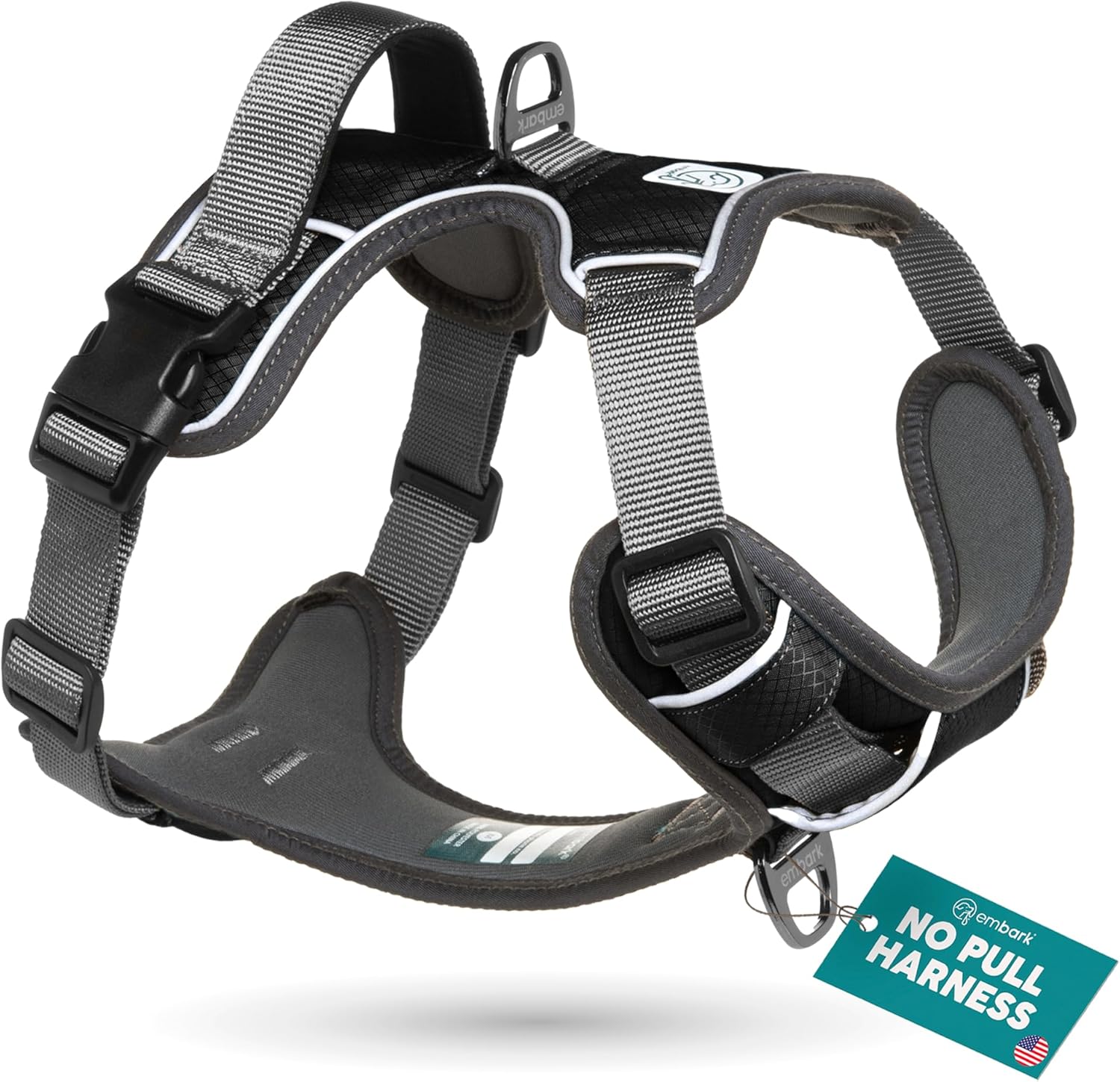
The Embark Adventure harness is a front-clip capable vest designed to give handlers more steering control while protecting a dog's neck. It uses military-grade rip-stop nylon with reinforced double stitching and both front and back D-rings so you can attach a leash to the chest for no-pull steering or to the back for relaxed walking. The harness includes a soft padded chest and neck area, an easy on/off buckle design with longer adjustable straps, and a gel-lined handle for short-term lift or extra control. High-visibility 360° reflective trim improves nighttime safety and the materials are machine washable for easy cleaning. Expect a very durable harness that resists tearing and distributes pressure across the chest rather than the throat, but be prepared for the bulk common to padded vest designs which can be warm in summer and add some weight for smaller handlers to manage when lifting a large dog. Sizing accuracy matters for the front-clip to work well, so measure chest girth and use the adjustable straps to achieve a snug, two-finger fit.
Best for: Handlers who need straightforward front-clip steering and greater control of strong, large-breed dogs during walks and training sessions.
Less Ideal for: Owners who prioritize minimal, ultralight gear or live in very hot climates where a bulky padded vest would increase overheating risk.
- Front and back D-rings let you use the chest clip for immediate no-pull steering or the back clip for casual walks
- Military-grade rip-stop nylon and reinforced stitching for high pull strength and durability
- Padded chest and neck protect the trachea and spread pressure away from the throat
- Built-in handle and gel grip give quick additional control when needed
- 360° reflective trim improves visibility in low light and the harness is machine washable
- Padded vest style is bulkier and may feel warm in hot weather
- Large harnesses add weight that can be awkward to lift for some handlers
Verdict: The best padded harness for Staffies that pull and benefit from added chest and belly cushioning to prevent chafing and distribute pressure more comfortably.
KNK Heavy Duty Dog Harness
Best Heavy-Duty Harness

| Size | Medium, Large and Extra Large |
|---|---|
| Closure Type | Buckle, Clip |
| Material Type | Metal, Polyester, Webbing |
| Neck Girth | 24" to 34" |
| Chest Girth | 29" to 45" |
This KNK harness is built for powerful, active dogs and translates its heavy-duty claims into practical control and durability. It uses 2-inch ultra-strong webbing, welded D-rings and O-rings, and metal adjusters so the hardware resists bending or slipping during strong pulls, while a padded chest panel spreads pressure for comfort. The front-clip no-pull attachment helps redirect pulling without locking shoulder movement, and a rear D-ring gives a standard leash option for regular walks. The step-in design and quick buckles make it easy to don and adjust, and the locking-style adjusters keep straps from loosening on the move. Expect a sturdy feel that suits training, hiking, and high-activity days, though the harness is optimized for medium to XXL sizes and may be bulkier than lighter everyday harnesses. It requires hand washing and air drying to preserve materials. For English Bulldogs that need reinforced hardware and rugged construction, this harness provides the strength and control those dogs demand while keeping comfort in mind.
Best for: Buyers of English Bulldogs who need a reinforced, no-pull harness that stands up to strong pulling and frequent high-activity use and who prioritize hardware strength and durability.
Less Ideal for: Owners seeking an ultra-lightweight or minimalist harness for short, casual walks or those who prefer machine-washable textile gear should consider other options.
- Welded metal D-rings and O-rings for high-strength leash attachment
- Ultra-strong 2-inch webbing and reinforced one-piece strap design resist tearing
- Padded chest panel distributes pressure and reduces neck strain
- Front-clip no-pull plus rear leash attachment offers training flexibility
- Locking metal adjusters keep fit secure during activity
- Designed for medium to extra-large sizes and may be bulky on compact builds
- Requires hand wash and air dry care rather than machine cleaning
Verdict: The best heavy-duty harness for powerful Staffies that pull, constructed with tougher webbing and hardware to withstand frequent force without failing.
JSXD Dog Vest Harness M
Best Adjustable Harness

| Material Type | Nylon+Sponge |
|---|---|
| Closure Type | Buckle |
| Dog Breed Size | Medium |
| Product Care Instructions | Machine Wash |
This JSXD vest harness is built for control and daily outdoor use. It slips over the head, secures with a quick-release buckle and offers slide adjusters at both neck and chest so you can tighten the fit to reduce slipping on a strong, short-backed breed like a Staffy. A reinforced metal D-ring provides a secure leash anchor and a padded back handle gives an extra point of control for close handling or lifting. The nylon shell with sponge padding and breathable mesh lining balances durability with comfort, and 3M reflective straps improve visibility on evening walks. The harness is machine washable and comes in multiple sizes so you can size up if your dog is between measurements. Limitations: the design concentrates control at the back D-ring rather than a dedicated front-clip no-pull point, so it helps distribute pressure but will not eliminate heavy forward lunging without training or a front-clip option, and fit still depends on accurate neck and chest measurements for a Staffy's stocky build.
Best for: Owners who need a harness they can fine-tune across neck and chest to keep a pulling Staffy from slipping out while retaining a comfortable, padded fit for daily walks and outdoor activities.
Less Ideal for: Owners seeking a dedicated front-clip training harness or a solution that actively redirects heavy pulling without additional training should consider a front-clip model instead.
- Adjustable neck and chest straps for a more precise fit
- Reinforced metal D-ring and sturdy back handle for secure control
- Breathable mesh lining with sponge padding for comfort on longer walks
- 3M reflective straps increase visibility in low light
- Machine washable nylon construction for easy cleaning
- No dedicated front-clip attachment for maximum no-pull correction
Verdict: The best adjustable harness for owners who need precise fitting across chest and neck to prevent slipping and ensure comfort for a Staffy that pulls.
tobeDRI No Pull Dog Harness Large
Best Reflective Harness
| Material Type | Neoprene, Nylon, Plastic, Polyester |
|---|---|
| Closure Type | Buckle |
| Dog Breed Size | Large |
| Included Components | dog leash |
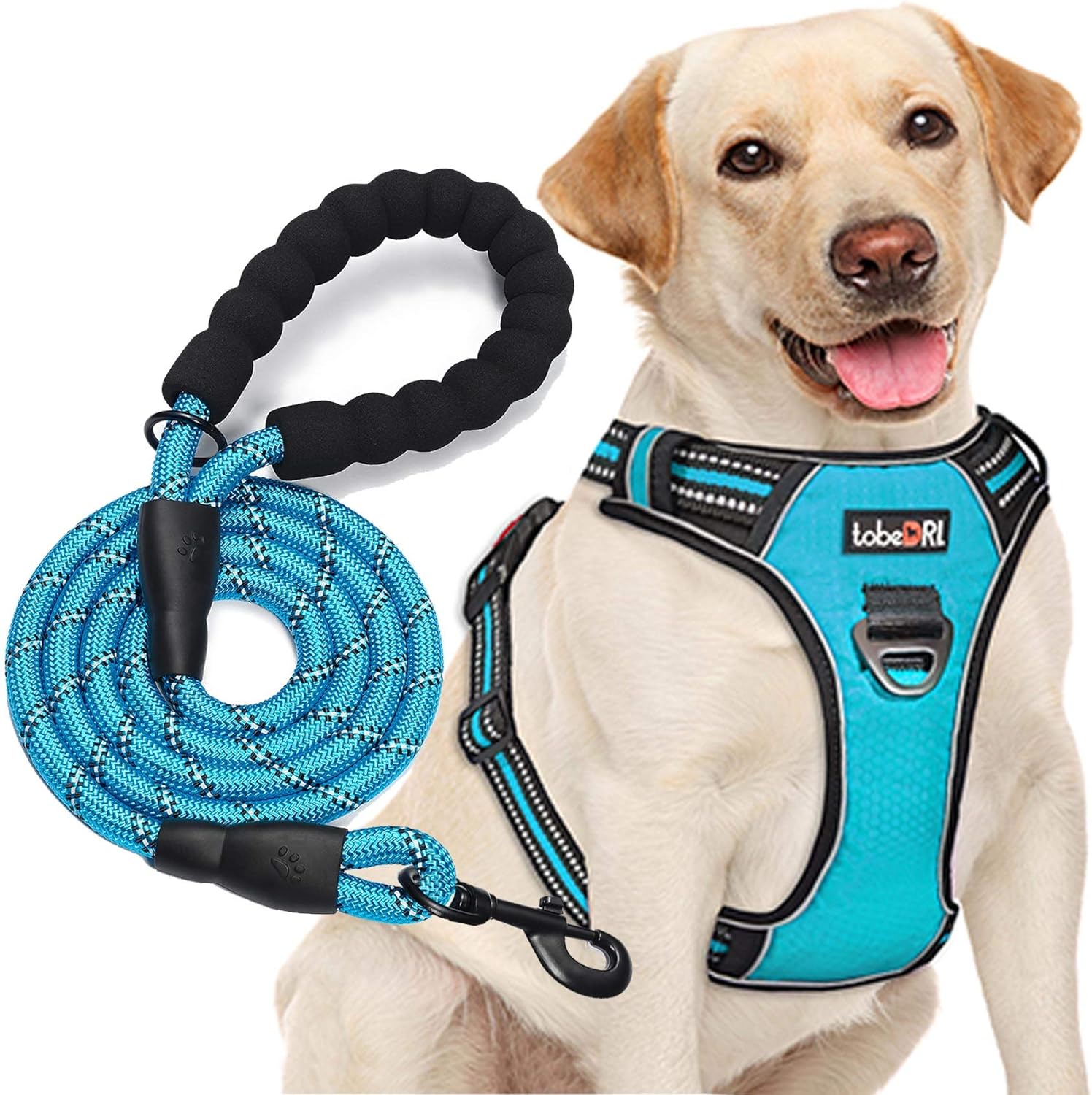
This tobeDRI harness is built for everyday walks with large dogs and emphasizes control and visibility. It uses two metal delta rings—one front clip to discourage pulling and one back clip for relaxed walking—so you can switch attachment points depending on training or leash-walking needs. The harness fastens with quick snap buckles that include a locking feature to reduce accidental release, and four adjusters let you fine-tune fit around the neck and chest. Materials combine breathable mesh and high-density nylon oxford with neoprene padding for comfort, and reflective stitching improves visibility during low-light walks. It is machine washable and comes with a heavy-duty 5ft leash, while metal hardware is described as rust-proof. Limitations are that fit depends on accurate sizing for large breeds and the harness does not list heavy-duty reinforcement ratings for very strong pullers, so very powerful dogs may still require a dedicated training system or harness rated for high loads.
Best for: Owners of medium to large dogs who prioritize improved visibility and a no-pull option for dawn, dusk, or night walks and want a comfortable, adjustable harness for regular outdoor use.
Less Ideal for: People looking for a harness with a certified load or professional-grade training hardware for very strong pullers should consider purpose-built training harnesses instead.
- Front and back metal delta rings let you switch between no-pull control and relaxed walking
- Reflective stitching increases visibility for dawn, dusk, and nighttime walks
- Neoprene padding and breathable mesh improve comfort for long wear
- Locking snap buckles and multiple adjusters provide a secure, customized fit
- Machine washable with rust-proof metal hardware for easy maintenance
- Sizing must be accurate for large breeds to ensure effectiveness
- Not specified or rated for extreme pulling forces from very powerful dogs
Verdict: The best reflective harness for Staffies that pull when visibility matters, combining reflective trim and secure control features to improve safety during low-light outings.
Choosing the Right Harness Staffy Pulling: Key Factors to Consider
Fit and Adjustability
A correct fit is essential for both safety and control. Staffies have broad chests and muscular shoulders, so a harness with multiple adjustment points—around the neck, chest, and ribcage—lets you fine-tune the fit to prevent slipping or rubbing. Proper adjustment keeps the harness from shifting when your dog pulls, which reduces hotspots and chafing during longer walks.
Adjustability also affects leash geometry. Being able to raise or lower attachment points changes how force is distributed, which can make front-clip options more effective at discouraging pulling. Look for clear size guides and reachable straps that you can tighten while your dog is standing.
Leash Attachment Type and Placement
Attachment design determines how much leverage you have and how a dog's momentum is redirected. Front-clip attachments work by turning the dog toward you during a pull, which helps interrupt the behavior. Back-clip attachments are more comfortable for calm walking but offer less immediate control when a staffy lunges.
Some harnesses provide dual-attachment systems or removable training rings so you can switch between front and back depending on the situation. Choose an attachment that matches your training approach and the intensity of pulling you expect to manage.
Material Durability and Hardware Strength
Staffies are strong and can put a lot of force through a harness. Heavy-duty webbing, reinforced stitching, and metal hardware reduce the risk of failure under load. Look for rust-resistant D-rings and strong buckles with locking mechanisms for secure closure.
Durable materials also resist abrasion and weathering, which extends service life. Reinforced connection points where the leash rings attach are especially important because those areas take concentrated stress during a pull.
Padding and Comfort
Padding protects the skin and reduces chafing when a dog pulls or when the harness shifts. Soft, breathable padding along the chest plate and straps helps distribute pressure evenly and prevents rubbing on sensitive areas. For staffies, ensure padding does not bunch up or restrict movement around the shoulders.
Comfortable harnesses make training easier because a dog is less likely to resist wearing the gear. Look for materials that wick moisture and hold shape rather than collapsing into folds that can rub the coat.
Secure Fastenings and Ease of Use
Harnesses must be easy to put on and take off while remaining secure during use. Front-clip training designs often require a step-in or overhead entry; choose the style you can fit consistently. Quick-release buckles and well-routed straps speed adjustments, but they must be robust enough to stay fastened under sudden loads.
Test how the harness fits when the dog is standing and moving. If fastening requires awkward threading or intense manipulation, you may avoid adjusting straps regularly and end up with a poorly fitted harness.
Range of Sizes and Clear Sizing Guidance
Because staffies vary from lean to heavily muscled builds, a useful harness line offers a broad size range and clear measurement instructions. Good sizing charts list neck and chest girth plus how the harness should sit on the body. Some manufacturers include fits for deep-chested dogs specifically; those notes make it easier to choose the right size.
A harness that comes in limited sizes or lacks guidance increases the chance of a fit problem that undermines both comfort and control.
How Does a Front-clip Harness Reduce Pulling for a Staffy?
A front-clip harness attaches the leash near the dog's chest instead of on the back, which changes the direction of force when the dog lunges. Instead of allowing forward momentum to continue, the leverage created by a front clip encourages the dog to pivot toward you, breaking the forward drive.
For a staffy, whose shoulder and chest muscles are strong, that turning effect helps interrupt the pulling behavior without applying pressure to the neck. This makes front-clip options a practical first step for leash correction combined with consistent training cues.
- Front-clip geometry redirects force to steer rather than stop
- Effective for interrupting sudden lunges without neck pressure
- Works best when fitted so the clip sits near the center of the chest
When Should You Use a Dual-attachment or Back-clip Setup?
Dual-attachment systems let you use a front clip for training and a back clip for everyday walks when your dog is calmer. Choose a back-clip configuration for relaxed outings because it offers more natural movement and is easier to handle for casual strolls.
If your staffy pulls only occasionally, the ability to swap attachment points gives flexibility. For heavier or habitual pulling, keep the front clip engaged during training sessions and switch to back-clip only once the dog responds reliably to leash cues.
- Use front clip for active training and immediate control
- Switch to back clip for comfortable, relaxed walks
- Dual systems are versatile for changing behavior over time
How to Measure Your Staffy for the Right Harness Size
Measure neck girth at the base where a collar would sit and chest girth at the widest point just behind the front legs. Use a soft cloth tape measure and record measurements while the dog is standing naturally. Compare both numbers to the manufacturer's chart and choose the size that leaves room for adjustment without excessive slack.
Also check how the harness sits on the shoulders: you want freedom of movement without the chest plate riding up or the straps cutting into the armpits. If your dog is between sizes, opt for the larger size only if additional adjustment is available to tighten the fit securely.
- Measure neck and chest girth with the dog standing
- Ensure straps do not rub the armpits or limit shoulder movement
- If between sizes, prefer options with extra adjustment points
Training Tips for Reducing Pulling While Using a Harness
Combine the right harness with consistent training techniques. Start indoors or in a quiet area, reward your dog for loose-leash behavior, and use short training sessions to reinforce turning and attention cues. The harness helps manage force externally, but behavior change comes from repetition and positive reinforcement.
Gradually increase distractions and duration, and switch attachment points only as the dog demonstrates reliable response to cues. Avoid using the harness as a substitute for training; think of it as a tool that makes training safer and more effective for a strong dog.
- Start training in low-distraction environments
- Reward loose-leash walking consistently
- Increase difficulty progressively as behavior improves
Common Mistakes Owners Make when Fitting a Staffy Harness
A frequent error is leaving straps too loose, which lets the harness shift and concentrate friction on sensitive areas. Tighten straps enough to secure the harness but leave comfortable breathing room. Another mistake is choosing a harness with thin, unpadded straps that dig into the coat under load.
Also avoid relying solely on back-clip attachments for a dog that consistently pulls; this reduces control and can make training take longer. Finally, do not skip a short trial walk after fitting to observe how the harness behaves and make immediate adjustments if needed.
- Do not leave straps overly loose — test for shifting
- Avoid thin, unpadded straps on strong pulling dogs
- Always test fit with a short walk and adjust as needed
How We Chose the Best Harness Staffy Pulling
We selected options that address the unique needs of staffies that pull—stocky, strong dogs with deep chests and powerful shoulders. The shortlist was built by applying practical filters that matter for everyday use and safety. Evaluation criteria included fit and adjustability to accommodate broad chests and strong necks; leash attachment design and placement to improve control and reduce forward momentum; material durability and hardware strength to withstand repeated force; padding and construction to prevent chafing and distribute pressure evenly; and sizing range plus clear adjustment points so the harness can be tuned for a secure, comfortable fit. We also prioritized harnesses with stable back or dual attachment options for behavior training. Excluded were lightweight fashion-only harnesses, designs intended solely for small breeds, and products lacking sufficient adjustment or sturdy hardware. Choices that relied on unprotected thin straps or plastic-only buckles were not considered because they do not meet the demands of a staffy that pulls.
Our full evaluation process is outlined in our review methodology.
FAQ
Can a harness stop a staffy from pulling immediately?
A harness can reduce the mechanical advantage of pulling right away, especially front-clip designs that redirect momentum. However, lasting change usually requires consistent training and reinforcement alongside the harness.
Is it safe to use a front-clip harness every day?
Yes, front-clip harnesses are generally safe for everyday use when fitted correctly and padded. They are particularly useful during training phases, and many owners leave them on for regular walks once the dog is comfortable.
How tight should a harness be on a staffy?
Straps should be snug enough to prevent the harness from shifting but loose enough to allow one to two fingers between the strap and your dog's body. Check movement at the shoulders and ensure the chest plate does not ride up when the dog walks or turns.
Will extra padding make a harness more effective for a pulling staffy?
Padding improves comfort and reduces rubbing, which helps keep the dog willing to wear the harness. Padding does not directly reduce pulling but it allows for a more durable, comfortable fit so training can proceed without irritation.
Should I use a harness with a handle for a staffy that pulls?
A handle can be helpful for close control in crowded areas or for lifting the dog over obstacles. It should be used as an occasional control aid, not as the primary means to restrain a strong pulling dog during walks.
Final Verdict
Choose a harness that balances secure fit, strong hardware, and the right attachment geometry for training and control. For a staffy that pulls, prioritize adjustable fit around the chest and shoulders, sturdy leash rings, and padding that prevents chafing. Expect to combine the harness with short, consistent training sessions to produce lasting behavior change. Focus on controlled, progressive training and a harness that lets you confidently manage force without causing discomfort. That approach yields safer, more pleasant walks and a more responsive dog over time.

