

Keeping a husky's teeth clean protects against tartar buildup, gum disease, and bad breath. Because sled-type breeds often have dense fur and active mouths, the right toothbrush makes daily brushing simpler, less stressful, and more effective. This guide shortlists the top options for husky, focusing on tools that suit larger mouths, reach molars, and minimize gag reflexes. Below are our top picks for brushes suited to husky dental needs, along with practical buying guidance and the evaluation criteria used to choose them.
Top Picks at a Glance
| Best Overall Toothbrush for Husky A balanced pick that cleanly removes tartar and is easy to use | Pet Republique Dual-Head Toothbrush Set |  |
| Best Budget Toothbrush for Husky A low-cost option that still gets the job done reliably | Arm & Hammer Complete Care Dog Dental Kit |  |
| Best Electric Toothbrush Powered cleaning for easier plaque removal and faster brushing sessions | Penn-Plax 360° Electric Pet Toothbrush |  |
| Best Soft-Bristle Toothbrush Gentle bristles that protect gums while cleaning effectively | Pets First Dual-Ended Dog Toothbrush |  |
| Best Long-Handle Toothbrush Extra reach for larger mouths and easier maneuvering in back teeth | Duke's Two-Piece Dog Toothbrush Set |  |
| Best Compact Toothbrush Smaller head for more precise access to tight spots in the mouth | MoonyMars Small Pet Toothbrush 2-Pack |  |
Pet Republique Dual-Head Toothbrush Set
Best Overall Toothbrush for Husky

| Package count | 6 toothbrushes |
|---|---|
| Model number | FBA_Pet-3330 |
The Pet Republique set includes six dual-headed toothbrushes that pair a small brush head and a larger head on opposite ends, letting you switch quickly when cleaning front and back teeth. Handles are narrow and about 8.5 inches long, which helps reach deeper into a pet's mouth and gives extra leverage when working around tight jaws like a dachshund's. Bristle firmness is factory-controlled to balance cleaning power with gentleness, and having multiple brushes in two colors makes it easy to assign one per pet or rotate replacements. This pack is practical for owners who plan to brush regularly because it supplies several spares. The brushes are manual only and require patience and basic training for many dogs to accept, and they do not replace professional scaling for heavy tartar. For small-mouthed breeds the small head is especially useful, while the large head is handy for incisors and canines.
Best for: Dog owners who want a single, versatile toothbrush that switches between small and large heads for thorough at-home cleaning, especially useful for small-mouthed breeds.
Less Ideal for: Owners looking for an electric solution or a tool to remove heavy tartar without professional care should look at other options.
- Dual-headed design provides both small and large brush heads for different parts of the mouth
- Six brushes in the pack offers good value and spares for regular use
- Long, narrow handle helps reach deep into the mouth and improves control
- Bristle hardness is tested to reduce risk of harming gums while removing grime
- Manual toothbrushes require training and patience for many dogs to tolerate
- Not effective for removing heavy tartar that needs professional cleaning
Verdict: The best all-around toothbrush for a Husky, balancing effective plaque removal, comfortable bristles, and a handle design that works well with a larger breed's mouth.
Arm & Hammer Complete Care Dog Dental Kit
Best Budget Toothbrush for Husky

| Toothpaste size | 2.5 fl oz (67.5 g) |
|---|---|
| Intended age | Dogs 6 months and older |
| Flavor | Chicken |
| Formula highlights | Enzymatic baking soda with added calcium |
This Complete Care kit is a travel-friendly dog toothbrushing set that combines a 2.5 fl oz tube of enzymatic, baking soda toothpaste with a long-handled dual-ended toothbrush and a finger brush. It is designed for owners who want to maintain brushing routines away from home or while traveling because the small toothpaste tube and two brush options pack compactly and are simple to use. The chicken flavor makes initial training easier and the finger brush is helpful for nervous or sensitive dogs, while the dual-ended brush covers larger mouths. The formula includes baking soda and added calcium aimed at freshening breath and supporting tartar control when used regularly. Limitations to note are the modest 2.5 oz tube size, which may not last long for multi-dog households or extended trips, and it is intended for dogs six months and older. For travel use it is low-mess and easy to store in a toiletry bag, but you should plan resupply for longer journeys.
Best for: Owners who prioritize a compact, easy-to-pack dental kit to keep up a regular brushing routine while traveling or on short trips.
Less Ideal for: Those who need large-volume toothpaste for multiple dogs or extended travel without resupply should consider larger tubes or bulk options.
- Compact 2.5 fl oz toothpaste tube suitable for packing in a travel bag
- Two brush options (dual-ended toothbrush and finger brush) cover different dog sizes and training needs
- Enzymatic baking soda formula targets fresh breath and supports tartar control
- Chicken flavor helps make brushing more appealing for many dogs
- Toothpaste tube is small and may run out quickly for multiple dogs or long trips
- Not formulated for puppies under 6 months
Verdict: The best inexpensive toothbrush for Husky owners who want decent cleaning performance and durability without spending a lot.
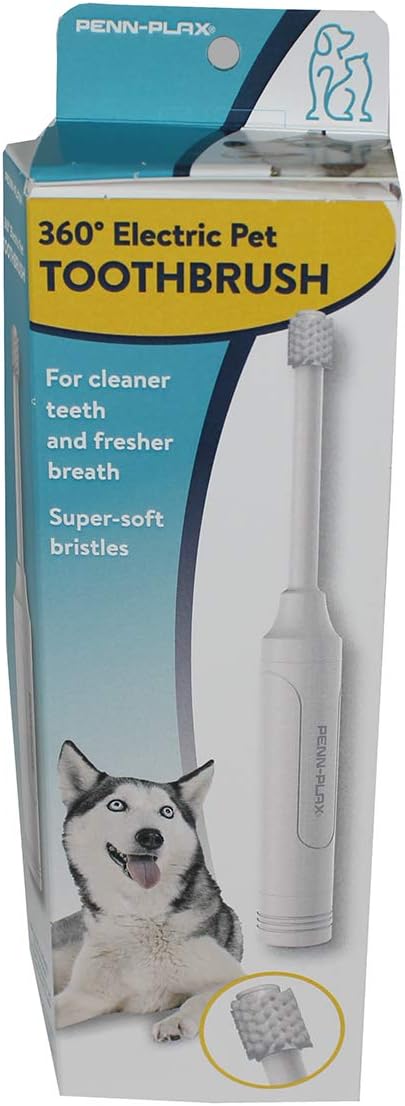
Penn-Plax 360° Electric Pet Toothbrush
Best Electric Toothbrush
| Power Source | Battery Powered |
|---|---|
| Bristle Material | Nylon |
| Brush Head Shape | Round |
| Number of settings | 1 |
| Included Components | Electric Toothbrush for Pets |
The Penn-Plax 360° Electric Pet Toothbrush is a compact, battery-operated brush that uses a rotating round head to clean pet teeth from multiple angles. It is typically used with a small amount of pet toothpaste while the animal is seated comfortably, and the 360-degree design shortens the time you need to keep a pet still by contacting more tooth surfaces in a single pass. The soft nylon bristles and long neck aim to reduce gum irritation and keep your hands away from teeth, which is helpful for anxious or fidgety pets. Operation is simple with a single automatic setting and one AA battery required, making it an easy grab-and-go tool for daily or several-times-weekly brushing. Important limitations are modest feature set and basic battery power rather than rechargeable operation, and some users may find the single speed less effective on heavy tartar compared with higher-torque models. For budget-minded owners wanting a straightforward electric option that reduces brushing time and handles both dogs and cats, this toothbrush delivers practical value.
Best for: Cost-conscious pet owners who want an easy-to-use electric brush that shortens brushing time and is gentle enough for dogs and cats.
Less Ideal for: Owners seeking a rechargeable brush, multiple speed settings, or a tool aimed at removing heavy, long-established tartar should consider higher-end models.
- 360-degree round brush head reaches multiple angles for quicker cleaning
- Super soft nylon bristles reduce risk of gum irritation
- Simple single-setting operation is easy to use during short sessions
- Long neck and ergonomic handle keep hands clear of the pet’s mouth
- Battery powered with non-rechargeable AA operation
- Single speed may struggle with heavy tartar buildup
Verdict: The best electric toothbrush for pet owners who prefer powered brushing to remove plaque more efficiently and reduce time spent cleaning a dog’s teeth.
Pets First Dual-Ended Dog Toothbrush
Best Soft-Bristle Toothbrush

| Item model number | PF-4200S |
|---|---|
| Pack quantity | 2 brushes |
| Handle length | Extra long (approx 9–10 inches) |
| Brush heads | Dual-ended (large + small) |
The Pets First Dual-Ended Dog Toothbrush is a long-handled, two-pack toothbrush built to make daily brushing easier for both dogs and cats. Each brush has two heads—a larger head for general plaque removal and a smaller head for tight spots—on an ergonomic, extra-long handle that helps reach the back teeth without overextending your hand. The soft, flexible bristles are the product's standout feature and are intended to be gentle on sensitive gums while still loosening buildup. In practice this makes the brush a good fit for nervous or mouth-sensitive dogs and for owners who want a straightforward tool for daily maintenance. The plastic handle is lightweight and easy to maneuver, and getting into smaller crevices is simpler with the small head. Limitations are that it is a manual brush so effectiveness depends on technique and consistency, and the simple plastic construction lacks any antimicrobial or replaceable-head options that some higher-end pet brushes offer.
Best for: Owners who need a gentle, easy-to-use toothbrush for dogs with sensitive gums or early gum disease and who prioritize comfort over advanced features.
Less Ideal for: People seeking an electric toothbrush, replaceable brush heads, or clinical-grade tools for severe dental disease should consider other options.
- Dual-ended heads cover large surfaces and small hard-to-reach areas with one tool
- Extra-long handle and ergonomic angle make reaching rear teeth easier
- Very soft, flexible bristles designed to minimize gum irritation
- Sold in a two-pack so you have a spare or can keep one for travel
- Manual brush requires consistent technique and regular use for best results
- No replaceable heads or antimicrobial handle features
Verdict: The best soft-bristle toothbrush for dogs with sensitive gums or early gum disease, providing effective cleaning without irritating the mouth.
Duke's Two-Piece Dog Toothbrush Set
Best Long-Handle Toothbrush

| Handle length | 8.5 inches |
|---|---|
| Brush style | Double-sided |
| Bristle type | Super soft |
This two-piece toothbrush set from Duke's Pet Products pairs long 8.5-inch handles with double-sided brush heads to help reach molars and the back of a larger dog's mouth. The longer handles keep the user's fingers away from the pet's teeth and provide extra reach for deep cleaning of premolars and molars, while the super soft bristles are gentler on gums for routine brushing. The double-sided design offers a narrower side for tight spots and a wider side for broader surfaces, making it easy to adapt technique during a single session. It is intended for twice-daily brushing and is lightweight for maneuverability during short sessions, but the plastic handle and non-interchangeable heads mean durability and head replacement options are limited. The set works well for maintaining daily oral hygiene but may not replace professional scaling when heavy tartar buildup is present.
Best for: Owners of larger dogs who need extra reach to comfortably clean back teeth and who prioritize an easy-to-use, gentle toothbrush for regular at-home brushing.
Less Ideal for: People seeking a heavy-duty or replaceable-head system for long-term use or owners whose dogs have severe tartar buildup that requires professional dental care.
- Long 8.5-inch handles provide extra reach to access rear teeth
- Double-sided heads offer narrow and wide brushing surfaces for different areas
- Super soft bristles reduce irritation on gums during daily brushing
- Lightweight design makes handling and maneuvering easier during use
- Plastic construction limits long-term durability compared with heavier-duty toothbrushes
- Brush heads are not replaceable or adjustable for different wear levels
Verdict: The best long-handle toothbrush for owners of larger dogs who need extra reach to clean molars and hard-to-access areas comfortably.
MoonyMars Small Pet Toothbrush 2-Pack
Best Compact Toothbrush

| Quantity | 2 brushes |
|---|---|
| Material (bristles) | PBT ultra-soft bristles |
| Intended pets | Cats and small dogs |
These two micro-head toothbrushes are built for pets with small mouths or owners who need a compact brush to target back teeth and narrow gaps. Each brush has a dense, rectangular mini head with ultra-soft bristles that glide between teeth to remove plaque and tartar without irritating gums, which makes them suitable for pets new to brushing or with sensitive mouths. The ergonomic plastic handles give a comfortable grip for one-handed control during quick home cleanings, and the PBT bristles are described as durable and resistant to moisture. Because the heads are very small and the bristles soft, brushing feels gentle but may require more time on heavily soiled teeth compared with firmer or larger professional tools. The pack of two lets you keep a spare on hand or rotate brushes between uses. These are practical, easy-to-use brushes for focused, gentle cleaning of hard-to-reach teeth, but owners dealing with heavy tartar buildup may still need veterinary scaling or firmer brushes for deeper cleaning.
Best for: Owners who need a very small-headed toothbrush to access back teeth and narrow areas in a dog's mouth and who prioritize gentle, low‑stress home brushing.
Less Ideal for: Those seeking a firmer brush for removing heavy tartar or owners of large-breed dogs where head size and bristle firmness are primary concerns.
- Very small micro head reaches back teeth and tight spaces
- Ultra-soft, dense bristles are gentle on sensitive gums
- Ergonomic handles offer secure, easy control during brushing
- Pack of two provides a spare or allows rotation between uses
- Soft bristles may be less effective on heavy tartar without professional cleaning
- Designed for small mouths so not suited for large-breed dogs
Verdict: The best compact toothbrush for owners who need a smaller brush head to target back teeth and tight spaces in a dog's mouth.
Choosing the Right Toothbrush Husky: Key Factors to Consider
Brush Head Size and Shape
Brush head dimensions determine whether you can reach a husky's back molars and scrape plaque without forcing the mouth open. A head that is too small will increase brushing time because you must make extra passes to cover each surface. Too-large heads can trigger gagging and make it hard to access tight angles near the premolars.
Look for heads shaped to follow tooth contours and long enough to clear cheek tissue while still allowing precise strokes. Angled or multi-surface heads help cover tops and sides of teeth with fewer repositionings, which is valuable when working with a larger, energetic breed.
Bristle Type and Stiffness
Bristles should be soft to medium for husky because stiff bristles can abrade enamel or irritate gum tissue, especially if the dog resists and you end up applying extra pressure. Softer bristles are better at getting under the gumline gently, while medium bristles can lift more surface plaque when used correctly.
Consider rounded bristle tips and multi-level tufting that conform to tooth surfaces. Materials that dry quickly and resist bacterial growth are preferable for hygiene. Avoid harsh, wirelike bristles or textures that could cause microtrauma with repeated brushing.
Handle Ergonomics and Control
A well-designed handle reduces hand fatigue and improves control during brushing sessions, which is important when working with a strong, squirming husky. Look for non-slip grips, adequate length for two-handed control when needed, and a balance that lets you make small, accurate strokes without wrist strain.
Handles with a slight angle or finger grooves let you hold the brush steady while maneuvering around the mouth. Consider models that accommodate both left- and right-handed users, and those that let you maintain consistent pressure without forcing the brush into the mouth.
Durability and Materials
Because huskies are active and may chew on grooming tools, durability is important. Brushes made from resilient plastics or elastomers withstand regular use and occasional bites. Solid construction prevents brittle bits or seams that could break off during a session.
Materials should also tolerate frequent rinsing and air-drying without warping. Nonporous materials reduce lingering odors and bacterial growth. If a brush includes replaceable heads, check that replacements are readily available and simple to swap to extend the tool's useful life.
Ease of Cleaning and Maintenance
A brush that is easy to rinse, dry, and disinfect helps keep brushing hygienic between sessions. Designs with minimal nooks and smooth transitions between handle and head are less likely to trap toothpaste residue and saliva. Dishwasher-safe components or materials that tolerate mild disinfectants are convenient.
Consider how quickly bristles dry and whether the head can be removed for a thorough clean. Brushes that become moldy or retain stubborn residue will require more frequent replacement and can introduce odor or bacterial concerns.
Tolerance and Training Friendliness
How a husky tolerates a brush affects whether you can maintain a consistent routine. Brushes that require minimal mouth opening, offer softer contact, and allow short, positive sessions are easier to introduce to a wary dog. Some designs work well with gradual desensitization because they allow you to brush only a few teeth at a time.
Look for tools that pair well with praise and treats and that do not demand full restraint. Consider whether the brush encourages calm behavior rather than triggering defensive chewing or snapping, and whether it integrates into short daily sessions that build tolerance over weeks.
How Often Should I Brush My Husky's Teeth?
Ideally you should brush a husky's teeth daily to prevent plaque buildup and maintain gum health. Daily brushing gives the best protection against tartar and reduces the frequency of more intensive cleanings.
If daily brushing is not possible, aim for at least three times per week. Consistency matters more than occasional long sessions because plaque begins to harden within a few days.
- Daily brushing: best for preventing tartar and gum disease
- Three times per week: reasonable minimum if daily is not achievable
- Short, consistent sessions work better than infrequent long ones
What Is the Simplest Way to Introduce a Toothbrush to a Husky?
Start slowly by letting the dog sniff and lick toothpaste from your finger, then from the brush. Use positive reinforcement like treats and calm praise to associate the tool with a pleasant experience.
Begin with a few seconds on front teeth and gradually increase duration and reach over several sessions. Keep early sessions brief and reward calm behavior to build trust.
- Let the dog inspect the brush first
- Use soft toothpaste designed for dogs or a tasteless training paste if needed
- Increase time and coverage gradually across multiple short sessions
Finger Brush Versus Traditional Handle Brush: Which Works Better for Husky?
Finger brushes can be useful for very shy or small-mouthed dogs because they offer more tactile control and gentle pressure. For a husky with a larger mouth, however, finger brushes often lack the reach and brush area needed for molars.
Traditional handle brushes provide better leverage and longer reach, making it easier to access back teeth on a larger breed. If your husky tolerates a handle brush, it will usually clean more efficiently with fewer repositionings.
- Finger brush: good for short introductory sessions and very tolerant dogs
- Handle brush: better reach and control for larger mouths and molars
- Consider trying both during training to see which the dog accepts more readily
Can Ultrasonic or Powered Cleaners Replace Brushing?
Powered cleaners can help remove surface debris, but they do not replace mechanical brushing for thorough plaque removal. Many powered devices are not designed specifically for dog mouths and may be uncomfortable or ineffective on hard plaque.
For regular at-home care, a mechanical toothbrush combined with appropriate toothpaste remains the most reliable method. Powered options can supplement brushing but should not be relied on as the sole cleaning method.
- Use powered devices as a supplement, not a replacement
- Mechanical brushing still required to remove plaque from gumline
- Always ensure any device is comfortable and safe for canine use
What Features Help Reach the Back Teeth Without Stressing the Dog?
An angled head, slim neck, and offset bristles help you reach premolars and molars with minimal jaw opening. Short strokes and turning the head slightly can clean surfaces without forcing wide mouth positions.
A brush with a narrow profile and gentle bristles reduces the chance of triggering a gag reflex. Combining ergonomic handle control with calm restraint techniques reduces stress and makes reaching back teeth safer for both of you.
- Angled head: improves access to back teeth
- Slim neck: allows insertion without stretching cheek tissue
- Short, targeted strokes work better than long sweeping motions
How to Maintain Oral Hygiene Between Brushings
In addition to brushing, use chew items and dental toys that promote mechanical abrasion of plaque. Choose items appropriate for a husky's strong bite to avoid oversized, fragile toys that could break apart.
Dental rinses and water additives can help reduce bacteria levels, but they are most effective when combined with routine brushing and physical plaque removal. Monitor chew items for wear and replace them when they become small or damaged.
- Dental chews: support mechanical cleaning when used safely
- Water additives: help reduce oral bacteria but do not remove tartar
- Regular veterinary checks ensure larger issues are caught early
How We Chose the Best Toothbrush Husky
We prioritized tools that make routine dental care manageable for both owners and huskies. Selection criteria included brush head size and shape to reach back teeth, bristle composition to clean effectively without irritating gums, handle ergonomics for sustained control during brushing, and build quality for regular use. We also considered how easily a brush adapts to a husky's typical mouth opening and chewing behavior, plus how simple it is to rinse and dry between sessions. Safety was a core filter: any item with hard edges, rough seams, or unstable construction was excluded. We favored designs that suit large, wolf-like jaws and varied temperaments, including options for dogs that resist full-mouth brushing. Excluded items were single-use wipes, excessively tiny heads intended for toy breeds, and unconventional devices lacking clear cleaning mechanics. Final choices reflect tools that reliably reach molars, reduce plaque with appropriate bristle action, and feel secure in the handler's hand for steady, calm sessions.
Our full evaluation process is outlined in our review methodology.
FAQ
Can I use a human toothbrush on a husky?
You can use a human toothbrush in a pinch, but human brushes are sized and angled for human mouths and may not reach a husky's molars effectively. Human toothpaste can also contain ingredients unsafe for dogs, so use a pet-safe paste or plain water with a human brush if needed.
How long should each brushing session last?
Aim for about two minutes of total brushing, but start with much shorter intervals if your husky is new to brushing. You can split the session across different areas if that makes the dog more comfortable.
What if my husky resists having its mouth handled?
Go slowly and build tolerance with brief, positive sessions that reward calm behavior. Practice gently touching and lifting the lips before introducing a brush, and use treats to create positive associations. If resistance continues, break sessions into very short frequent attempts.
How do I know if the brush is hurting my dog's gums?
If you see persistent bleeding, swollen or receding gums, or the dog yelps during gentle brushing, stop and reassess technique and bristle stiffness. Soft bristles and light pressure are usually sufficient; consult a veterinarian if you suspect injury or infection.
Are replaceable brush heads worth it?
Replaceable heads can be convenient because they let you keep a familiar handle while swapping worn or soiled heads. Ensure replacements match the original head size and bristle profile and that they are easy to change without forcing parts apart during training.
Final Verdict
Prioritize a toothbrush that fits a husky's larger mouth, uses soft to medium bristles, and feels secure in your hand. The best choice balances reach, gentle cleaning action, and ease of training so you can brush consistently without stressing the dog. Tradeoffs are typical: smaller, gentler heads are easier to introduce but may take longer to clean molars, while larger heads clean faster but can provoke gagging. Focus on consistent technique, gradual desensitization, and tools that make short daily sessions practical to protect dental health over the long term.

