

If your dog struggles with sensitive or deteriorating teeth, the right toothpaste can make daily care less stressful and more effective. Dogs with bad teeth often have pain, inflamed gums, or difficulty tolerating firm brushing, so products designed for gentler action and safe ingredients matter more than aggressive abrasives. This guide covers seven shortlisted toothpastes chosen for dogs with bad teeth. We evaluate texture, ingredient safety, and how well each formula reduces plaque and soothes irritated mouths to help you pick the gentlest, most practical option for ongoing home care.
Top Picks at a Glance
| Best Overall Toothpaste for Dogs with Bad Teeth Well-rounded formula balancing plaque control, breath help, and palatability | C.E.T. Enzymatic Toothpaste 2.5 oz |  |
| Best Budget Toothpaste for Dogs with Bad Teeth An affordable option that still targets plaque and bad-breath causes | Arm & Hammer Complete Care Dog Dental Gel 2.5 oz |  |
| Best Enzymatic Toothpaste Contains enzymes to break down plaque and reduce bacterial buildup | Petrodex Enzymatic Dog Toothpaste Poultry 6.2oz |  |
| Best Tartar-Control Toothpaste Formulated specifically to slow tartar formation and hard deposits | Arm & Hammer Tartar Control Toothpaste 2.5 oz |  |
| Best Sensitive-Teeth Toothpaste Gentle, low-irritant formula for dogs with sore gums or exposed roots | Arterra Remineralizing Dog Toothpaste 3oz |  |
| Best Natural Ingredient Toothpaste Uses plant-based or minimal-ingredient formulas with fewer additives | RADIUS USDA Organic Canine Toothpaste 3 oz |  |
| Best Premium Toothpaste Higher-end formulas with advanced actives and clinical-grade ingredients | Petsmile Teeth Brushing Kit 2.5 oz |  |
C.E.T. Enzymatic Toothpaste 2.5 oz
Best Overall Toothpaste for Dogs with Bad Teeth

| Net weight | 2.5 oz |
|---|---|
| Flavor | Vanilla Mint |
| Manufacturer | Virbac |
| Item model number | CET103 |
C.E.T. Enzymatic Toothpaste uses a dual-enzyme system to work with a pet's saliva to reduce plaque and tartar while being safe to swallow, which makes it suitable for daily at-home oral care. It is typically applied with a soft pet toothbrush or rubbed on the teeth and gums with a finger or gauze for animals that resist brushing. The formula contains glucose oxidase and lactoperoxidase plus mild abrasives to help cut plaque without foaming agents, and it comes in a pet-friendly vanilla-mint flavor that encourages acceptance. Practical benefits include veterinarian recommendation, a long track record of use, and ingredients intended to limit calculus buildup when used consistently. Limitations are that enzymatic paste helps more as part of a routine—severe tartar or advanced periodontal disease will still require professional cleaning—and results depend on frequency of use and the pet's tolerance for application. For owners who want a safe, swallowable toothpaste their dog will accept, this is a straightforward, clinic-backed choice.
Best for: Pet owners who need a clinic-backed, swallow-safe toothpaste to reduce plaque in animals that resist full mechanical brushing and who will use it regularly as part of home care.
Less Ideal for: Owners seeking a one-time fix for heavy tartar or those wanting a toothpaste replacement for professional dental treatment should consider veterinary cleaning or adjunctive products instead.
- Enzymatic dual-enzyme formula targets plaque and works with saliva
- Safe to swallow due to no foaming agents so daily use is practical
- Veterinarian-recommended brand with decades of use
- Pet-friendly vanilla-mint flavor improves acceptance
- Not a substitute for professional dental cleaning for heavy tartar or periodontal disease
- Effectiveness depends on consistent daily application and pet compliance
Verdict: The best overall toothpaste for dogs with bad teeth balances plaque and tartar reduction, breath improvement, and palatability so most owners see measurable dental benefits with regular use.
Arm & Hammer Complete Care Dog Dental Gel 2.5 oz
Best Budget Toothpaste for Dogs with Bad Teeth

| Net weight | 2.5 oz |
|---|---|
| Flavor | Chicken |
| Formulation | Baking soda enhanced, enzyme formula |
| Fluoride | Fluoride free |
Arm & Hammer Complete Care Dental Gel is a chicken-flavored, baking soda–enhanced toothpaste sold in a 2.5 oz tube and intended for regular at-home brushing of adult dogs. It is used by squeezing a pea-sized amount onto a dog toothbrush or finger brush, letting the dog lick a bit to accept the taste, then brushing along the gumline 2–3 times per week or as recommended by your vet. The formula lists enzymes and added calcium to support enamel while remaining fluoride free, non-toxic, and dye free, so it is safe for dogs when used as directed. Practical benefits include an appealing flavor that helps dogs tolerate brushing, baking soda for odor control, and a compact tube that is easy to store. Limitations are the small tube size for multi-dog households and that the product is labeled for adult dogs only, so it is not meant for puppies; it also requires a brushing routine to deliver tartar control rather than providing instant plaque removal on its own.
Best for: Owners on a tight budget who want a vet-safe, enzyme-containing toothpaste that makes brushing easier through a palatable flavor and familiar baking soda cleaning action.
Less Ideal for: Households that need large-volume or frequent-use toothpaste for multiple dogs or those seeking a one-step product that removes heavy tartar without brushing should look elsewhere.
- Chicken flavor improves acceptance for reluctant dogs
- Baking soda enhanced formula helps neutralize breath odors
- Fluoride free and non-toxic formulation suitable for dogs
- Contains calcium and enzymatic ingredients aimed at supporting enamel and cleaning
- Small 2.5 oz tube may run out quickly for frequent brushing or multiple dogs
- Formulation requires consistent brushing to see tartar control benefits rather than offering immediate removal
Verdict: The best budget toothpaste for dogs with bad teeth delivers effective daily plaque control and breath improvement at a lower price point for cost-conscious owners.
Petrodex Enzymatic Dog Toothpaste Poultry 6.2oz
Best Enzymatic Toothpaste

| Flavor | Poultry |
|---|---|
| Net weight | 6.2oz |
| Formula type | Enzymatic, non-foaming |
| Usage recommendation | Brush 2-3 times per week |
Petrodex Advanced Dental Care Poultry Toothpaste is an enzymatic, non-foaming paste designed for routine toothbrushing to help control plaque, tartar buildup, and bad breath. You use a small dab on a finger brush or toothbrush and brush the gumline with short back-and-forth strokes a few teeth at a time, which makes it easy to introduce to dogs that dislike full brushing sessions. The poultry flavor is formulated to be palatable for picky dogs and can encourage repeat acceptance, helping owners brush 2 to 3 times per week as recommended. Its no-rinse formula is safe if swallowed and the patented enzymes do the heavy lifting on debris without foaming, so you do not need to rinse the mouth. Limitations include that consistent brushing and frequency are required to have measurable tartar reduction and that it is part of a broader oral care routine rather than a standalone cure for advanced dental disease.
Best for: Dog owners who struggle to get picky or flavor-sensitive dogs to accept brushing and want a savory-flavored paste to make a regular brushing routine easier.
Less Ideal for: Owners seeking a single-treatment solution for heavy tartar or advanced dental disease should consult a veterinarian for professional cleaning instead.
- Enzymatic formula targets plaque and tartar when used regularly
- Poultry flavor increases acceptance in dogs that prefer savory tastes
- No-foam, no-rinse formula is safe if swallowed and simplifies use
- Works with finger brushes or toothbrushes for gradual training
- Requires regular brushing to be effective against tartar buildup
Verdict: The best enzymatic toothpaste uses activating enzymes to help break down dental biofilm and reduce bacterial buildup, making it a strong choice for dogs with existing dental issues.
Arm & Hammer Tartar Control Toothpaste 2.5 oz
Best Tartar-Control Toothpaste

| Net weight | 2.5 oz |
|---|---|
| Flavor | Beef |
| Intended use | Tartar control, enzymatic formula |
| Manufacturer | Fetch for Pets |
This Arm & Hammer enzymatic tartar control toothpaste is built for regular home brushing to reduce plaque and slow tartar formation. The gel combines natural enzymes and baking soda to help break down plaque on contact and neutralize odor-causing bacteria, and the beef flavor makes it easy to introduce hesitant dogs to brushing. Use it by applying a small amount to your finger so the dog can lick it, then progress to brushing the gum line with a toothbrush or finger brush two to three times per week for visible benefit. Practical advantages include the enzymatic action for chemical breakdown of plaque and the deodorizing effect of baking soda, which together support healthier gums between professional cleanings. Limitations are the small 2.5 oz tube that will run out quickly for multi-dog homes and that visible tartar already calcified for long periods may still require a vet cleaning; this product is best used as an ongoing preventive step rather than a one-time cure.
Best for: Buyers who want an active, enzyme-boosted toothpaste to integrate into a regular brushing routine focused on minimizing mineral buildup over time.
Less Ideal for: Owners seeking a one-time solution for heavy, calcified tartar or those who need larger quantities for multiple dogs should consider professional treatments or bulk options instead.
- Enzymatic formula helps break down plaque on contact
- Baking soda enhances odor neutralization for fresher breath
- Beef flavor encourages acceptance from picky dogs
- Clear directions for gradual training from licking to brushing
- Small 2.5 oz tube may not last long for frequent brushing or multiple dogs
- Not a substitute for professional dental scaling for heavy, long-standing tartar
Verdict: The best tartar-control toothpaste is specially formulated to inhibit mineral buildup and slow tartar formation, which helps dogs with bad teeth avoid worsening calcified deposits.
Arterra Remineralizing Dog Toothpaste 3oz
Best Sensitive-Teeth Toothpaste

| Net weight | 3 ounces |
|---|---|
| Flavor | Peanut Butter |
| Formulation | Fluoride-free, plant-based |
| Active ingredient | Nano-Hydroxyapatite |
Arterra's remineralizing toothpaste is built around nano-hydroxyapatite, a mineral-based ingredient intended to repair early enamel damage while cleaning and freshening. You use it like any dog toothpaste: apply a pea-sized amount to a dog toothbrush or finger brush and brush daily to reduce plaque buildup and tartar formation. The paste is fluoride-free, plant-based, and sweetened with sorbitol and stevia, which helps make brushing a positive experience for dogs without using peanut allergens despite the peanut butter flavor. In practice the formula promises gradual stain reduction and stronger enamel rather than instant whitening, so expect improvement over weeks of consistent use. The product is veterinarian-grade and made in the U.S., but the tube is small at 3 ounces so frequent brushers or multi-dog households will go through it quickly. For owners focused on gentle, science-backed enamel repair and fresher breath, this toothpaste delivers a convenient daily option with a dog-friendly taste.
Best for: Owners who want a gentle, dog-safe toothpaste that focuses on enamel repair and gradual stain reduction using vet-backed ingredients and a flavor dogs like.
Less Ideal for: People seeking fast, dramatic whitening results or a bulk supply for multiple dogs should consider stronger whitening treatments or larger-volume options.
- Contains nano-hydroxyapatite to help remineralize enamel and address early-stage decay
- Fluoride-free, plant-based, and hypoallergenic formulation suitable for daily use
- Peanut butter flavor (peanut-free) that many dogs accept, making brushing easier
- Veterinarian-formulated and made in the USA
- Small 3 oz tube may require frequent replacement for daily use or multiple dogs
- Results are gradual—not an instant whitening solution
Verdict: The best sensitive-teeth toothpaste provides reduced-irritant cleaning and soothing ingredients to clean effectively without aggravating sore gums or tooth sensitivity in dogs.
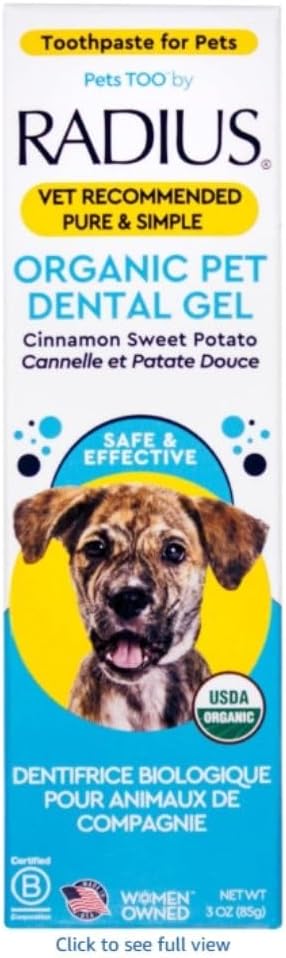
RADIUS USDA Organic Canine Toothpaste 3 oz
Best Natural Ingredient Toothpaste
| Net weight | 3 oz |
|---|---|
| Manufacturer | RADIUS |
| Xylitol | Free |
This USDA organic canine gel toothpaste is designed for routine toothbrushing and freshening breath using a plant-based ingredient list rather than synthetic chemicals. You apply a small amount to a dog toothbrush and brush as you would with human toothpaste; the formulation includes coconut oil, sweet potato and cinnamon plus peppermint and thyme oils to help control bacteria and mask odor. It is xylitol-free and marketed for daily use on puppies through seniors, so it is suitable for sensitive mouths and owners seeking a gentle, minimally processed option. The gel texture and pet-friendly flavor profile make brushing easier for many dogs who resist minty pastes, and the travel-sized 3 oz tube is convenient for trips. Expect natural breath improvement and gradual plaque control with consistent use, but this product is not a substitute for professional dental cleanings and lacks clinical claims for tartar reversal. For owners prioritizing organic ingredients and low synthetic exposure, this paste offers a practical daily-care solution with a pleasant taste dogs are likely to accept.
Best for: Pet owners who prioritize organic, minimally processed ingredients and want a gentle, natural daily toothpaste for dogs with sensitive mouths.
Less Ideal for: Families looking for a large, long-lasting supply or those wanting a toothpaste with explicit clinical studies proving tartar removal should consider other options.
- USDA certified organic ingredients and no xylitol or synthetic preservatives
- Formulated with coconut oil, sweet potato and natural oils to freshen breath and reduce bacteria
- Safe for daily use across life stages including puppies and seniors
- Gel texture and pet-friendly flavor increase acceptance during brushing
- Travel-friendly 3 oz tube that is easy to pack
- Not a replacement for professional dental cleanings and does not claim clinical tartar removal
- Smaller 3 oz size will require frequent repurchasing for multi-dog households
Verdict: The best natural ingredient toothpaste relies on plant-derived or simplified ingredients to clean and freshen while minimizing artificial additives for owners who prefer gentler formulations.
Petsmile Teeth Brushing Kit 2.5 oz
Best Premium Toothpaste

| Flavor | Rotisserie Chicken |
|---|---|
| Includes | Toothpaste & Toothbrush |
| Volume | 2.5 ounces |
| VOHC | Accepted |
This Petsmile Teeth Brushing Kit combines a VOHC-recognized Calprox toothpaste formula with a dual-angle, 45° soft-bristle toothbrush to make daily pet oral care practical and effective. The tube uses a human-grade ingredient list and a proprietary Calprox system that helps dissolve the biofilm where plaque and tartar start, while supplying minerals to support enamel. The included angled brush is designed to reach below the gumline and the brand recommends letting pets lick the paste first then working up to brushing; that approach plus the chicken flavor makes it easier to build a routine. In real-world use the kit is best for owners who want a premium, clinically oriented toothpaste and a purpose-built brush in one box—daily application or brushing is straightforward and suitable for puppies through seniors. Limitations: the 2.5 ounce tube is a starter size that may require repurchasing more frequently for multi-pet households, and results depend on consistent daily use and basic brushing technique rather than being a one-time fix for heavy tartar.
Best for: Owners who prioritize a premium, vet-recognized toothpaste and are committed to a daily brushing routine to improve long-term oral health.
Less Ideal for: People looking for a bulk or long-lasting supply for multiple pets or those unwilling to perform regular brushing sessions.
- VOHC-accepted Calprox formula for plaque and tartar control
- Human-grade ingredients and veterinarian-recommended formulation
- 45° angled toothbrush designed to reach below the gumline
- Flavoring that encourages pets to accept toothpaste and simplifies habit building
- Small 2.5 oz tube is a limited supply for multi-pet homes
- Effectiveness requires daily use and some brushing skill from the owner
Verdict: The best premium toothpaste offers advanced active ingredients, improved palatability, and clinical-grade formulations for owners willing to invest more in targeted dental care for dogs with bad teeth.
Choosing the Right Toothpaste Dog Bad Teeth: Key Factors to Consider
Ingredient Safety and Sensitivity
Dogs with bad teeth often have inflamed gums, exposed dentin, or oral sores, so ingredient safety is paramount. Avoiding irritants like alcohol, peroxide, and xylitol reduces the risk of pain or systemic harm. Look for mild detergents and nonabrasive polishing agents that clean without scraping softened enamel or inflamed tissue.
Soothing additives such as certain enzymes or mild anti-inflammatory botanical extracts can reduce discomfort during brushing. If your dog has known allergies or a tendency to gag, choose products with minimal fragrances and single-ingredient flavoring to lower the chance of a negative reaction.
Texture and Application Method
The texture of the toothpaste affects both comfort and effectiveness. Gels and creamy pastes that spread easily are usually better tolerated than gritty powders or highly abrasive pastes. A smoother viscosity helps you apply the product with minimal pressure, which matters when brushing sensitive areas.
Also consider packaging and applicators. Tube pastes that accept finger application or small brushes and pump dispensers that deliver a controlled dose can reduce handling time and stress. Applicator brushes that are soft and flexible help you reach problem areas without causing additional pain.
Plaque Control Approach
For dogs with compromised teeth, plaque control should rely on chemistry and gentle enzymatic action rather than aggressive scrubbing. Enzymes that break down biofilm or mild antimicrobial agents can reduce bacterial load and slow plaque buildup without risking further enamel erosion.
Consistent, gentle use often yields better results than infrequent aggressive cleaning sessions. Choose products whose active approach supports daily maintenance and complements whatever professional care your veterinarian recommends.
Flavor and Palatability
Palatable formulas increase the likelihood your dog will tolerate brushing, which is critical for animals already in discomfort. Mild, familiar flavors such as poultry or beef are usually better accepted than strong minty or medicinal tastes that can trigger gagging or resistance.
However, flavor must be balanced with safety. Avoid human sweeteners that are toxic to dogs, and prefer natural flavor sources with limited additional ingredients to reduce the chance of oral irritation or gastrointestinal upset if some is swallowed.
Compatibility with Veterinary Care
Toothpaste for dogs with bad teeth should fit into any ongoing veterinary plan. If your dog is receiving treatment for periodontal disease, oral antibiotics, or pain management, the toothpaste should not interfere with those therapies or contain agents that complicate healing.
Consulting your veterinarian about the chosen formula is advisable, especially when the dog has active infections, loose teeth, or postoperative oral sensitivities. The right daily product should support, not replace, professional dental interventions.
Ease of Routine and Stress Reduction
Daily oral care for a dog with bad teeth must be sustainable. Products that simplify the routine—through pleasant texture, minimal dosing steps, and forgiving application methods—help you maintain consistency. Short, low-stress sessions that the dog tolerates will do more for oral health than longer, infrequent attempts that increase resistance.
Consider tools and strategies that make application quick, such as finger brushes, flavored gels that do not require rinsing, or no-spit formulas that allow you to focus on comfort rather than cleanup.
How Do You Tell when a Toothpaste Is Right for a Dog with Sensitive or Damaged Teeth?
Check the ingredient list for gentle, nonabrasive components and avoid known irritants. A suitable toothpaste will list mild surfactants or enzymatic agents rather than harsh whitening abrasives.
Assess texture by touch when possible; a smooth gel or soft paste is easier to spread and less likely to aggravate sores. Look for user-friendly packaging and applicators that let you control the amount applied and reduce handling time.
- Prefer enzyme-based or low-abrasion formulas
- Avoid alcohol, peroxide, and strong flavorings
- Choose soft applicators and controlled-dispense packaging
What Is the Safest Way to Introduce Toothbrushing to a Dog in Pain?
Start slowly and pair the routine with positive reinforcement. Let the dog taste a small amount of the toothpaste to build acceptance before attempting brushing. Keep sessions very brief at first—just a few seconds of gentle rubbing—and gradually increase time as tolerance improves.
Use a soft finger brush or a small, gentle toothbrush to minimize pressure. If the dog shows signs of severe pain, stop and consult your veterinarian before continuing at home.
- Begin with finger application, not brushing
- Short sessions and calm rewards work best
- Stop and seek veterinary advice if pain is acute
Can Toothpaste Alone Improve Dental Health for Dogs with Bad Teeth?
Toothpaste helps control plaque and freshen breath, but it is not a cure for advanced dental disease. For dogs with loose teeth, deep periodontal pockets, or infection, professional veterinary treatment is often necessary. Toothpaste supports maintenance and may slow progression when used consistently.
Think of toothpaste as part of a broader care plan: it reduces bacterial load and aids daily hygiene, but it should complement veterinary assessments, possible cleanings, and any prescribed medical therapies.
- Supports maintenance but does not replace veterinary care
- Best used as a daily, consistent practice alongside professional treatment
How to Manage Gagging, Drooling, and Swallowing During Application
Use small amounts of paste and apply near the front teeth first to minimize gag reflex. Allow your dog to swallow freely if the formula is safe to ingest; most dog-targeted pastes are designed for accidental swallowing. If gagging persists, switch to milder flavors and reduce session length.
Keep sessions calm and paced. Position yourself so you can gently lift the lip and work with minimal facial manipulation. If excessive drooling or vomiting occurs, discontinue use and consult a veterinarian.
- Apply minimal amounts to the front teeth initially
- Choose no-spit formulas and mild flavors
- Pause and consult a vet for persistent gagging or vomiting
When Should You Consult a Veterinarian About a Dog's Oral Condition?
Schedule a veterinary exam if you notice loose or discolored teeth, persistent bad breath despite home care, bleeding gums, reluctance to eat, facial swelling, or visible pus. These signs may indicate advanced periodontal disease or infection that requires professional intervention.
Early veterinary assessment helps identify problems that toothpaste and at-home care alone cannot resolve. Your veterinarian can recommend appropriate treatments and advise whether a particular toothpaste is suitable during healing.
- Look for loose teeth, bleeding, swelling, or persistent halitosis
- Vet visits are necessary for treatment of infections or loose teeth
How We Chose the Best Toothpaste Dog Bad Teeth
We selected toothpastes based on criteria that matter specifically for dogs with compromised dental health. First, ingredient safety was prioritized: we favored formulas without harsh abrasives, xylitol, or known irritants and those that include soothing or nonirritating components. Second, texture and viscosity were evaluated because softer gels or pastes that rinse easily are easier to apply to sensitive mouths and reduce discomfort during brushing. Third, plaque control potential mattered: we looked for formulations with clinically supported anti-plaque agents or enzymes that help break down biofilm without aggressive scrubbing. Fourth, palatability and scent were considered since a mildly flavored product increases acceptance and makes routine care sustainable. Fifth, packaging and applicator options earned attention when they improved ease of dosing and reduced stress for both dog and caregiver. We excluded products that rely on harsh mechanical action or contain ingredients contraindicated for dogs with oral inflammation. Final selections balance safety, ease of use, and plausible benefits for dogs with bad teeth rather than aggressive whitening or cosmetic claims.
Our full evaluation process is outlined in our review methodology.
FAQ
Is human toothpaste safe for dogs with bad teeth?
Human toothpaste often contains ingredients that irritate dogs or are unsafe if swallowed. For dogs with bad teeth, use products formulated for canine use that avoid toxic sweeteners and harsh abrasives.
How often should I brush a dog that already has dental disease?
Daily brushing is ideal when tolerated, but even several times per week can help. Adjust frequency to what your dog accepts without causing additional stress; consistency matters more than occasional intensive sessions.
What if my dog refuses to let me brush because of pain?
Start with tastings and brief, gentle rubs to build tolerance. If pain prevents any handling, consult your veterinarian to address underlying issues and to get guidance on safe home-care alternatives.
Are enzyme-based toothpastes better for dogs with bad teeth?
Enzyme-based formulas can help break down plaque gently and are often well tolerated. They are a sensible option for dogs that cannot withstand vigorous mechanical cleaning, though they are not a substitute for professional care when disease is advanced.
Can toothpaste reduce bad breath caused by dental disease?
Toothpaste can temporarily reduce odor by lowering bacterial load and neutralizing food residue, but persistent bad breath often signals underlying disease that requires a veterinary exam and possible treatment.
Final Verdict
When a dog has bad teeth, prioritize gentle, safe daily care that reduces bacterial buildup without causing further irritation. Focus on ingredient safety, soft textures, and application methods that your dog tolerates so you can maintain a consistent routine. Balance home care with veterinary oversight: toothpaste and regular brushing are useful maintenance tools but will not replace professional treatment for loose teeth, deep pockets, or infection. Choose a formula that fits the dog's tolerance and complements any veterinary plan for the best long-term outcome.

