

If you own a Maltese, choosing the right dental chew can make everyday oral care far easier. these small dogs have compact mouths and a tendency toward dental plaque, so a chew that fits their bite, removes soft plaque, and is safe for daily use matters. This guide shortlists seven top dental chews suited to Maltese, evaluated for texture, ingredient safety, and portion sizing. You will find products that address tartar control, breath improvement, and ease of chewing without forcing you to become a daily brusher. Below are the top picks and a clear explanation of what to prioritize when picking dental chews for a Maltese.
Top Picks at a Glance
| Best Overall Dental Chew A well-rounded pick that balances cleaning power and pet appeal | Greenies Teenie Dental Treats 43ct |  |
| Best Budget Dental Chew An affordable option that still provides decent dental benefits | Pedigree Dentastix Small & Toy 24ct |  |
| Best Soft Dental Chew Gentler texture made for small mouths or sensitive teeth | Ark Naturals Soft Brushless Toothpaste Chews 70ct |  |
| Best Natural-Ingredient Dental Chew Made with recognizable, simpler ingredients and fewer additives | Whimzees Brushzees Small |  |
| Best Large-Size Dental Chew Bigger chews that suit larger mouths or longer chew times | Milk-Bone Brushing Chews Large |  |
| Best Premium Dental Chew Higher-end chews with advanced formulas or superior materials | OraVet Dental Chews Small Dogs |  |
Greenies Teenie Dental Treats 43ct
Best Overall Dental Chew

| Flavor | Original |
|---|---|
| Unit Count | 43 Count |
| Age Range Description | Adult |
| Breed Recommendation | Extra Small |
Greenies Teenie are daily dental chews designed for small dogs (5–15 lb) that combine a chewy, toothbrush-like texture with a recipe of natural ingredients, vitamins, and minerals. You give one chew per day from the tub; the flexible bone-shaped stick is made to bend instead of snap so it is easier for small mouths to chew and less likely to create sharp fragments. The manufacturer cites clinical data showing reduced tartar and plaque in 28 days, and the treat is accepted by veterinary groups for plaque and tartar control. Practical benefits include a treat dogs usually find palatable, clear feeding guidance by weight, and a convenient tub for storage. Important limitations are that these are sized for small breeds only, contain wheat and other common ingredients some dogs may be sensitive to, and owners must supervise chewing because any edible chew can pose a choking risk if swallowed whole. Overall this is a straightforward, vet-recommended daily option if you want a palatable chew that supports routine oral care for small adult dogs.
Best for: Owners of small adult dogs who want an easy, daily chew that actively supports plaque and tartar control and is likely to be eaten willingly as a regular part of oral care.
Less Ideal for: People with dogs that have wheat allergies, known ingredient sensitivities, or dogs that gulp treats whole rather than chew them thoroughly.
- Designed to clean down to the gumline with a toothbrush-like texture
- Clinically supported reduction in tartar and plaque with daily use
- Formulated for small dogs with a bendable, rawhide-free texture
- Vet recommended and accepted by veterinary dental authorities
- Comes in a resealable tub with clear daily-feeding guidance by weight
- Contains wheat and other common ingredients that may trigger sensitivities
- Sized only for dogs 5–15 lb so not appropriate for larger dogs
- Requires supervision while feeding to ensure the chew is adequately chewed
Verdict: The best all-around dental chew that cleans teeth effectively, is palatable to most dogs, and suits everyday use for small-breed pet owners.
Pedigree Dentastix Small & Toy 24ct
Best Budget Dental Chew

| Flavor | Bacon & Chicken |
|---|---|
| Item Form | Bone |
| Target Species | Dog |
| Breed Recommendation | Small Breeds |
| Unit Count | 5.08 Ounce |
Pedigree Dentastix Small & Toy are daily dental chews sized for dogs 7 to 22 lb that use an X-shaped, chewy design to mechanically scrape plaque while the dog chews. They are intended to be given once per day as part of a regular oral care routine and are VOHC accepted for tartar control, which supports their claimed cleaning benefit. The treats come in a dual bacon and chicken flavor most small dogs find palatable and are developed with Waltham Science input. Practical benefits include easy daily dosing, tangible plaque-scraping action from the X-shape, and formulation without added sugar. Important limitations are that the product is a treat rather than a substitute for brushing and it is sized and dosed only for adult small breeds, so it is not appropriate for puppies or very small dogs under the recommended weight. Ingredient list includes common grains and preservatives, so owners seeking grain-free or limited-ingredient options will want alternatives. For buyers prioritizing a low-cost daily dental aid, these deliver decent cleaning performance and wide availability.
Best for: Budget-conscious owners of adult small or toy breeds who want an affordable, daily dental treat that provides measurable plaque and tartar control as part of a regular oral care routine.
Less Ideal for: Owners seeking grain-free or limited-ingredient treats, or those who need a chew sized for puppies, very small dogs under 7 lb, or larger breeds.
- X-shape and chewy texture designed to scrape plaque from hard-to-reach tooth surfaces
- VOHC accepted for tartar control, supporting its dental benefit claims
- Formulated with no added sugar and flavored with real chicken for palatability
- Convenient once-a-day dosing sized specifically for small and toy adult dogs
- Contains grains, artificial colors, and preservatives that some owners avoid
- Not suitable for puppies or dogs under the recommended weight range
Verdict: The best low-cost dental chew that delivers useful plaque and tartar reduction without a high price, ideal for owners watching their budget.
Ark Naturals Soft Brushless Toothpaste Chews 70ct
Best Soft Dental Chew
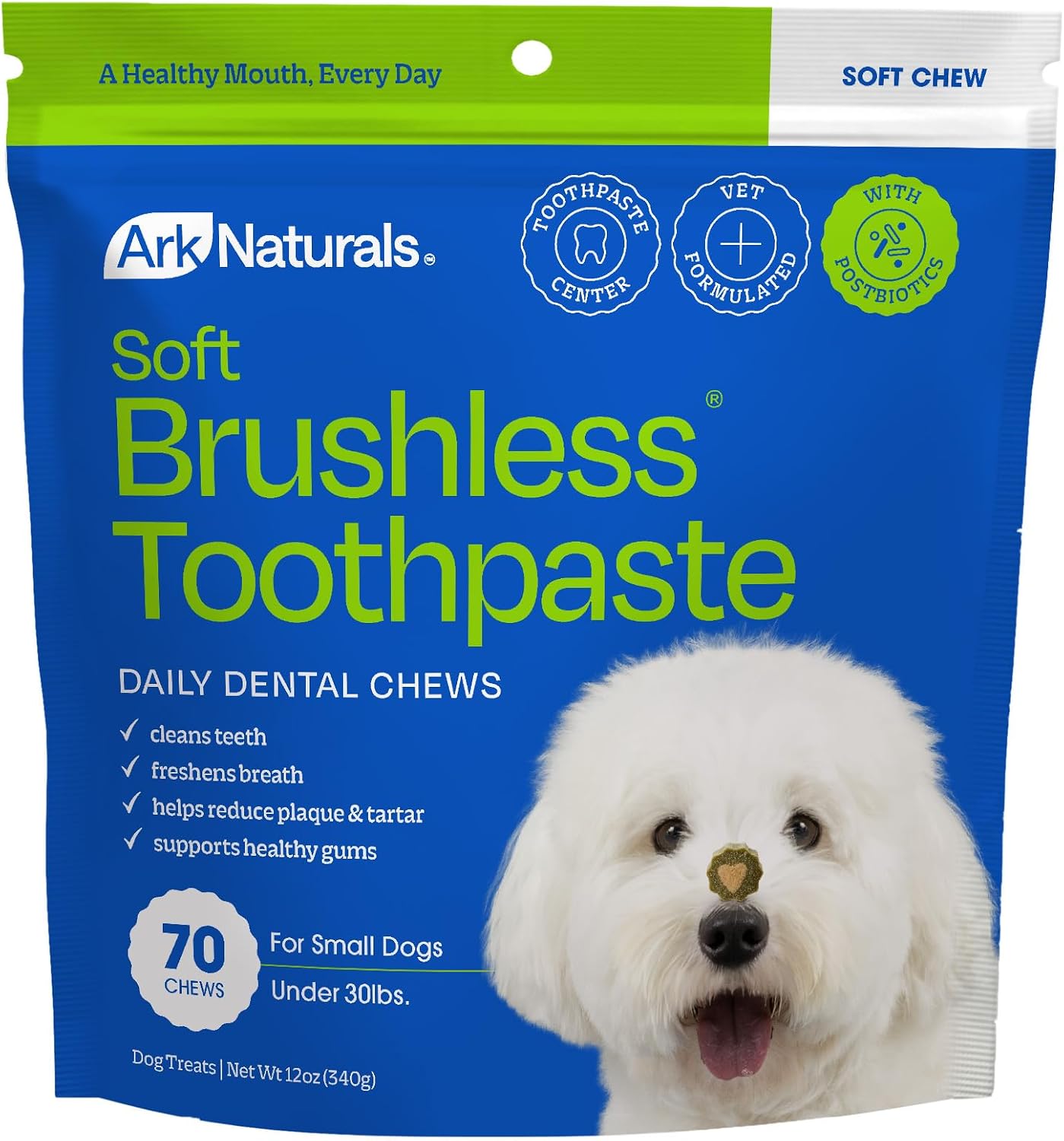
| Count | 70 ct |
|---|---|
| Recommended age | 1 month and up |
| Usage | 1–2 chews per day |
| Made in | USA |
Ark Naturals Soft Brushless Toothpaste chews are soft baked dental treats that combine a textured exterior with a chewy toothpaste center to help clean teeth without brushing. Intended for daily use, the ridged outer texture scrapes along the gumline while the toothpaste core polishes tooth surfaces, and aromatic spices aim to freshen breath. The recipe uses recognizable ingredients like long grain rice, honey, chicken and added probiotics and sodium hexametaphosphate to support plaque and tartar control. Because they are soft, these chews are easier on sensitive teeth and appropriate for gentle chewers and small dogs that struggle with hard chews. Limitations include that they are still a caloric treat so you should account for them in daily feeding, and results depend on regular use rather than replacing professional dental care. Directions recommend one to two chews daily for dogs 12 weeks and older.
Best for: Owners of small or sensitive-chewing dogs who want a gentler daily dental chew that still reduces plaque and helps freshen breath.
Less Ideal for: Dogs that require veterinary dental treatment for heavy tartar or advanced gum disease, or pet owners seeking a zero-calorie dental solution.
- Soft baked texture is gentle on sensitive teeth and suitable for small dogs
- Chewy toothpaste center that helps polish tooth surfaces during chewing
- Ridged outer texture that helps clean along the gumline
- Formulated to freshen breath with aromatic spices and can be given daily
- Not a substitute for brushing or professional dental care
- Contains calories and flavors so should be included in daily feeding calculations
Verdict: The best soft dental chew for small breeds or dogs with sensitive teeth that need gentle abrasion rather than hard chewing.
Whimzees Brushzees Small
Best Natural-Ingredient Dental Chew

| Package size | 24 Count |
|---|---|
| Flavor | Dental Small |
| Special Ingredients | grain-free |
| Target Species | Dog |
Whimzees Brushzees are firm, shaped dental treats made to mechanically scrub teeth as a dog chews, with a design that encourages longer chew time and reaches crevices with nubs and ridges. They are intended for daily use as a complement to brushing and veterinary care, with the manufacturer recommending one chew per day for dogs between 15 and 25 pounds and advising supervision. The chews are grain-free, use a short ingredient list (potato starch, glycerin, powdered cellulose and plant-based meals), and carry Veterinary Oral Health Council acceptance, which supports their plaque- and tartar-reducing claims. In practice they offer a convenient, low-effort option to help freshen breath and provide a brushing-like action without toothpaste or a brush. Limitations are that sizing and age guidelines must be followed closely, they are not suitable for very small dogs or puppies under recommended ages, and any hard chew can still pose a choking or swallowing risk if not monitored.
Best for: Pet parents who prioritize simple, naturally derived ingredients and want a daily, low-effort dental chew that supports plaque and tartar control for small adult dogs.
Less Ideal for: Owners of very small dogs, puppies below the recommended age range, or dogs that gulp treats without chewing should consider alternative dental options.
- VOHC accepted formulation with veterinarian recommendation for dental benefits
- Grain-free recipe and short ingredient list suitable for dogs with some sensitivities
- Firm, textured shapes and ridges provide extended chew time for mechanical cleaning
- Daily single-treat serving makes at-home dental care simple and low-effort
- Sized and age-restricted so not suitable for all dogs
- Requires supervision to prevent swallowing large pieces
Verdict: The best natural-ingredient dental chew for owners who prioritize minimal processing and transparent ingredient lists while still supporting oral health.
Milk-Bone Brushing Chews Large
Best Large-Size Dental Chew

| Flavor | Chicken |
|---|---|
| VOHC Accepted | Yes |
| Unit Count | 25 Count |
| Recommended Weight | Dogs 50 lbs. and up |
Milk-Bone Brushing Chews are daily dental treats sized for large dogs (50 lb and up) that combine a twist design, nubs and ridges, and a crunchy texture to mimic scrubbing action as dogs chew. They are typically used once per day as a simple alternative to manual tooth brushing and are VOHC-accepted for tartar reduction when fed daily. The chews are fortified with calcium and made without artificial flavors, so they also act as a treat while supporting teeth and bone health. Practical benefits include easy integration into a daily routine, a chicken flavor most dogs accept, and a resealable bag that helps keep the chews fresh. Limitations are that they are intended for large dogs only and are not a substitute for regular veterinary dental care or daily brushing recommended by vets; dogs that gulp or bolt treats should be supervised. For owners prioritizing an affordable, routine supplement to oral care, these chews provide measurable cleaning action, but they are not a complete dental solution by themselves.
Best for: Owners who want an inexpensive, easy daily dental aid for large dogs and prioritize simple, treat-based oral maintenance over time-consuming brushing routines.
Less Ideal for: Pet owners seeking a complete dental treatment plan or a chew suitable for small or young dogs should consider other products or veterinary options.
- VOHC-accepted design shown to reduce tartar and freshen breath when fed daily
- Twist shape with nubs and ridges provides scrubbing action during chewing
- Formulated for large dogs with chicken flavor most dogs find palatable
- Fortified with calcium and made without artificial flavors
- Resealable bag keeps 25-count supply fresher between uses
- Designed specifically for dogs 50 lb and up so not suitable for smaller breeds
- Not a replacement for regular tooth brushing or professional dental care
Verdict: The best large-size dental chew for dogs that prefer a bigger chew or for households that need longer-lasting, sizeable options.
OraVet Dental Chews Small Dogs
Best Premium Dental Chew

| Flavor | Chicken |
|---|---|
| Special Ingredients | delmopinol |
| Unit Count | 30 Count |
| Breed Recommendation | Small Dogs |
OraVet Dental Chews are daily, individually wrapped sticks sized for small dogs (10–24 lb) that combine mechanical cleaning from chewing with the active ingredient delmopinol to help reduce plaque and tartar. You give one chew per day as part of an at-home oral care routine; the chew is designed to be highly dissolvable and palatable with a poultry flavor and vanilla aroma so most small dogs will accept it. The delmopinol coating forms a protective barrier on teeth to limit bacterial buildup, which complements the physical abrasion as the dog chews down to the gumline. Practical benefits include easy single-serve dosing, a month-long supply in a 30-count bag, and formulation choices targeted to breed sizes so the pieces are appropriately scaled. Important limitations are that this is an adjunct to professional dental care rather than a replacement, dogs with sensitivities to listed ingredients like pork, wheat, or soy may react, and owners should monitor consumption to avoid any choking risk even with small-breed sizing.
Best for: Owners of small-breed dogs who want a daily, vet-formulated chew that is sized and textured to clean teeth gently while fitting into an easy at-home oral care routine.
Less Ideal for: Pet owners seeking a complete dental treatment in place of veterinary cleanings or those whose dogs have allergies to pork, wheat, or soy should consider alternatives or consult a vet.
- Contains delmopinol, an ingredient that helps form a barrier against plaque-forming bacteria
- Sized and formulated specifically for small dogs with individually wrapped chews for easy daily dosing
- Clinically shown to reduce plaque and tartar when used as directed
- Palatable poultry flavor with vanilla aroma increases acceptance in picky eaters
- Contains common allergens such as pork protein, wheat, and soy which may not suit dogs with sensitivities
- Not a substitute for professional dental cleanings and veterinary care
Verdict: The best premium dental chew for owners willing to pay more for enhanced cleaning technology, higher-quality ingredients, or specialty manufacturing.
Choosing the Right Dental Chew Maltese: Key Factors to Consider
Size and Shape
A chew that fits a Maltese mouth is essential. if a chew is too large or too wide the dog cannot get a proper purchase and will either swallow pieces whole or gnaw ineffectively. conversely, very small or brittle chews can break into sharp fragments that risk oral injury or choking. look for chews explicitly sized for small breeds with contours that allow a front or side bite.
Shape also affects how the chew contacts different tooth surfaces. ridged or grooved shapes are better at scraping the sides of teeth and reaching interdental spaces in a small mouth. consider both the chew length and cross-section when assessing whether it will engage the teeth that most commonly develop tartar in Maltese.
Texture and Abrasive Action
Texture determines whether a chew can actually remove soft plaque. chews that are too soft compress without scrubbing, while extremely hard chews risk enamel damage, especially on small teeth. aim for a product with a balanced firm-but-yielding texture that provides mechanical abrasion without excessive force.
Textured surfaces, such as ridges or knobbly patterns, increase contact area with tooth surfaces and help dislodge plaque. products that combine mechanical abrasion with enzymatic action can be effective because enzymes target plaque biochemical bonds while texture provides physical scrubbing.
Ingredient Safety and Digestibility
Maltese are small and sometimes sensitive to rich or unfamiliar ingredients. select chews with transparent ingredient lists and avoid items with excessive artificial colors, flavors, or controversial additives. digestibility matters because chews meant to be swallowed in pieces should break down safely in a small digestive system.
Look for chews formulated for small-breed digestion and consider any known food sensitivities your dog has. natural, single-source protein bases and familiar carbohydrate binders reduce digestive surprises. if your dog has a history of stomach upset, discuss new chews with your veterinarian before regular use.
Portion Control and Feeding Frequency
Because dental chews often contain concentrated flavors and calories, portion size and recommended frequency matter for a small dog. a chew that is appropriate as a once-daily treat may be too calorically dense if given multiple times per day. check manufacturer guidance on serving size and adapt to your dog's daily calorie needs.
Smaller chews or break-apart formats allow you to control portions more precisely. consistent short-duration chews given daily can deliver better dental benefit than occasional long-lasting chews that are used irregularly.
Breath Control and Enzyme Content
Many dental chews include breath-freshening components like mint, parsley, or enzymatic systems. these ingredients can reduce odor-causing bacteria temporarily, but they vary in effectiveness. enzymes added to the chew may help break down plaque molecules while herbal breath agents mask or neutralize odors.
Consider whether your priority is fresh breath, tartar reduction, or both. enzyme-containing chews are generally more focused on biochemical plaque reduction, whereas breath-flavoring agents primarily improve odor. for a Maltese with noticeable halitosis, a product combining both approaches can be preferable.
Safety Labeling and Veterinary Guidance
Safety information such as age recommendations, chew hardness indications, and a clear caution about supervision should factor into your choice. small-breed dogs can be at higher risk for choking or swallowing large fragments, so chews with explicit small-breed guidance and instructions for adult supervision are preferable.
If your Maltese has dental disease, missing teeth, or prior tooth fracture, consult a veterinarian before adding chews to the routine. products marketed for daily home use are not a substitute for professional dental care but can be a helpful adjunct when used correctly and safely.
How Often Should I Give Dental Chews to a Maltese?
Frequency depends on the chew type and your dog's overall dental health. many manufacturers recommend once daily for best plaque control, which fits well with the size and calorie considerations of a small dog. shorter, milder chews can sometimes be given more often, but monitor total daily calories.
If your Maltese already has established tartar or gingivitis, chews are an adjunct, not a replacement for professional cleaning. start with a single chew per day while watching for digestive changes, and adjust based on your dog's tolerance and effectiveness you observe.
- Use once daily for most routine plaque control.
- Increase veterinary dental care if tartar or gum disease is present.
- Monitor stool and appetite after introducing a new chew.
What to Do if My Maltese Refuses Chews or Chews Poorly?
Some Maltese are picky or have little chewing drive. if your dog refuses chews, try a different texture or a smaller format that is easier to pick up. breaking a chew into smaller pieces or moistening it slightly can help entice a hesitant chewer.
For dogs that chews poorly due to dental pain or missing teeth, consult your veterinarian. a chewer that avoids chewing may need a dental exam to rule out discomfort, and the vet can recommend safer alternatives such as enzymatic gels or tooth wipes.
- Try varied textures: softer versus firmer formulations.
- Offer chews after a short play session when the dog is more engaged.
- Seek veterinary advice if refusal coincides with signs of oral pain.
Are Enzymatic Chews Better than Abrasive Chews for Small Breeds?
Enzymatic and abrasive actions serve different purposes and are often complementary. enzymatic chews target the biochemical bonds in plaque, which helps reduce soft biofilm, while abrasive chews physically scrub surfaces. for Maltese, combining a mild abrasive texture with enzymatic ingredients can provide balanced cleaning without risking enamel stress.
If your dog has fragile or previously injured teeth, prioritize enzymatic options or softer textured chews that minimize mechanical force. otherwise, a moderate texture with enzymatic support is a practical compromise.
- Enzymes work on plaque chemistry; abrasion removes debris.
- Combine both actions when possible for small-breed needs.
- Choose gentler abrasives to protect small teeth.
How to Introduce a New Dental Chew Safely
Introduce new chews gradually and under supervision. start with a short session so you can observe chewing behavior and watch for excessive fragmenting. limit the initial offering to the recommended serving size and check stool for signs of poor digestion over the next 24 to 48 hours.
Keep an eye on wear patterns and any signs of oral irritation after the first uses. if you notice persistent coughing, gagging, vomiting, or visible tooth damage, discontinue the product and consult your veterinarian.
- Supervise the first few chewing sessions.
- Offer one chew and inspect fragments and stool afterward.
- Stop use immediately if you see signs of oral injury or digestive upset.
How to Combine Chews with Brushing and Professional Cleanings
Dental chews are a supplemental tool and work best alongside tooth brushing and periodic professional cleanings. brushing with a dog-formulated toothpaste several times per week directly removes plaque from tooth surfaces that chews might miss. chews can help reduce daily plaque buildup between brushings, making maintenance easier.
Schedule routine dental exams with your veterinarian. chews are not a replacement for professional scaling when significant tartar or periodontal disease is present, but they can reduce the rate of new buildup and support long-term oral health when used as part of a complete care plan.
- Use chews as a daily adjunct to brushing.
- Maintain regular veterinary dental checkups.
- Adjust chew use after a professional cleaning based on vet advice.
How We Chose the Best Dental Chew Maltese
We applied a focused editorial framework to identify dental chews suitable for Maltese. our first priority was chew size and shape designed for small mouths so the product is easily gripped and chewed without forcing large bites. second, we evaluated chewing texture and abrasive action that can remove soft plaque without being so hard that it risks tooth fracture in a small dog. third, ingredient safety and digestibility were assessed, favoring formulations with clear, pronounceable ingredients and minimal synthetic additives. fourth, palatability and chew engagement were considered to ensure the dog will actually use the chew long enough to receive cleaning benefit. fifth, breath-control effectiveness was weighed, based on commonly used breath-freshening agents and the presence of tartar-reducing mechanisms. We excluded items that are essentially hard rawhide without plaque-scouring texture, and we filtered out chews advertised primarily for long-lasting boredom relief where cleaning action was unproven. the final list prioritizes appropriate sizing, effective abrasive or enzymatic cleaning action, and ingredient profiles that reduce digestive risk for small-breed dogs.
Our full evaluation process is outlined in our review methodology.
FAQ
Can dental chews prevent tartar entirely on a Maltese?
Dental chews can reduce plaque and slow tartar formation but they rarely prevent tartar completely. consistent brushing and periodic professional care are needed to manage tartar that forms below the gumline or on hard-to-reach surfaces.
Is it safe for a Maltese to eat pieces of dental chews?
Many dental chews are designed to be partially consumable, but safety depends on the product and portion size. supervise chewing, follow feeding recommendations, and choose chews with digestible ingredients suited to small breeds.
What signs indicate a dental chew is too hard for my dog?
Signs include avoiding the chew, visible tooth chipping, or sudden reluctance to gnaw. if you notice changes in chewing behavior or signs of oral pain, stop the chew and consult your veterinarian.
Can puppies receive the same dental chews as adult Maltese?
Puppies have developing teeth and different dietary needs, so not all adult chews are appropriate. look for products labeled safe for puppies and follow age recommendations. when in doubt, ask your veterinarian for age-appropriate options.
How should I store dental chews to keep them fresh?
Store chews in a cool, dry place in a sealed container to prevent moisture and contamination. follow any shelf-life guidance on the packaging and discard chews that show mold, off-odors, or unusual texture changes.
Final Verdict
When choosing dental chews for a Maltese, prioritize appropriate size and a balanced texture that cleans without risking tooth damage. consider ingredient transparency and portion guidance to protect digestion and daily caloric intake. Use chews as a consistent supplement to brushing and regular veterinary dental care. weigh the tradeoffs between enzymatic versus abrasive actions, and favor products that fit your dog's chewing style and health status for the best results.

