

When your dog needs to avoid licking or chewing a wound, the usual plastic cone can feel bulky and stressful. Choosing an alternative that still protects surgical sites or injuries while reducing anxiety and improving mobility makes everyday care easier for both you and your pet. This guide brings together the top shortlisted options in the dog cone alternative category, selected for their balance of comfort, coverage, and durability. Below we outline each top pick and the evaluation criteria used so you can choose an option that fits your dog's size, recovery needs, and behavior.
Top Picks at a Glance
| Best Overall Cone The best all-around cone that fits most dogs and situations | BENCMATE Inflatable Dog Collar Medium |  |
| Best Budget Cone A low-cost cone that provides basic protection and decent fit | Loflaze Inflatable Dog Cone Collar |  |
| Best Soft-Edge Cone A padded or fabric-edged cone for gentler contact with skin | Joypig Soft Lined Dog Cone L |  |
| Best Adjustable Cone A cone with easy size adjustments and flexible fit options | ZuxZuce Soft Adjustable Dog Cone L |  |
| Best Lightweight Cone A low-profile, lightweight design that’s easier for pets to wear | Didopet Inflatable Donut Dog Cone Medium |  |
BENCMATE Inflatable Dog Collar Medium
Best Overall Cone

| Material Type | Polyvinyl Chloride (PVC) |
|---|---|
| Closure Type | Zipper |
| Fit Type | Snug Fit |
| Neck Size | 12 inches |
The BENCMATE inflatable dog collar replaces bulky Elizabethan cones with a soft, donut-shaped barrier that protects surgical sites, rashes, and other injuries while letting pets see, eat, and move more freely. It is used by slipping the everyday collar through the inner loop, then inflating the PVC air bladder to a comfortable firmness and securing the outer cover with the zipper and hook-and-loop closure. Key features include a plush or anti-stick outer fabric option, an inner fixation strap to prevent slipping, and a zipper for removing the cover for cleaning. In practice the collar is much less intrusive than a rigid cone and is easier for most dogs to tolerate during recovery, and deflates for compact storage when not in use. Limitations are that very flexible dogs or those with long snouts may still reach extremities, the PVC bladder can lose air in extreme temperature changes, and it does not offer rigid, full-face protection for dogs that persistently try to remove barriers.
Best for: Buyers who want a comfortable, low-stress recovery collar that balances protection with the pet's ability to eat, sleep, and move during healing.
Less Ideal for: Owners whose pets repeatedly try to bite or reach wounds despite soft barriers or who need a completely rigid, full-face shield for aggressive chewers should consider a hard cone alternative.
- Comfortable soft donut design that preserves vision and mobility
- Inner loop/strap allows use with the pet's regular collar to prevent slipping
- Removable outer cover and zipper make cleaning easier
- Inflatable bladder deflates for compact storage and transport
- May not fully block access to paws or long-snout pets
- Air bladder can be affected by temperature-related pressure changes
Verdict: The best overall cone that balances fit, comfort, durability, and ease of use for most pet owners needing a reliable recovery collar.
Loflaze Inflatable Dog Cone Collar
Best Budget Cone
| Closure Type | Zipper |
|---|---|
| Fit Type | Custom Fit |
| Water Resistance Level | Not Water Resistant |
| Material Type | Cotton |
| Neck Size | 8 inches |
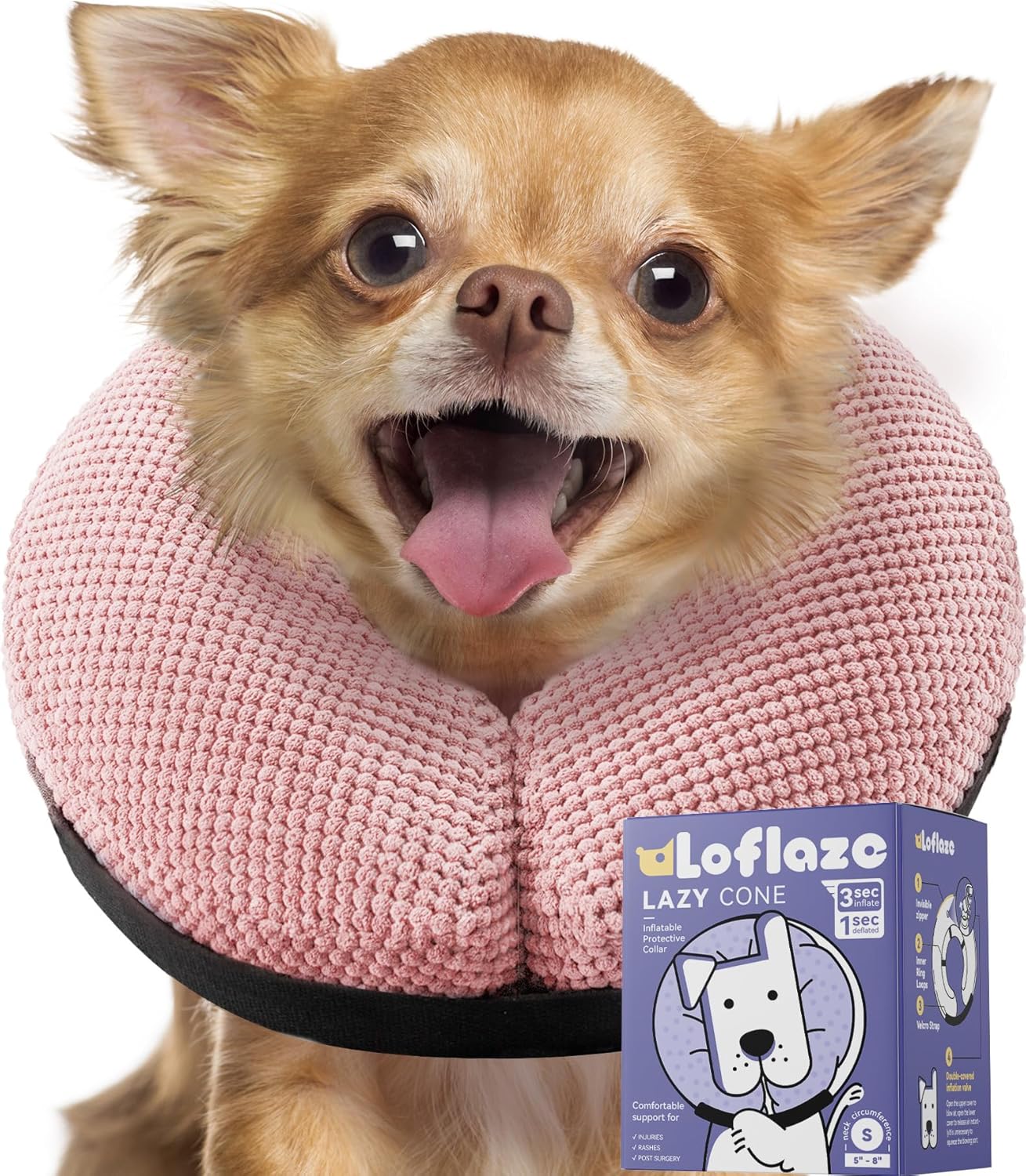
The Loflaze inflatable dog cone is a low-profile, donut-style recovery collar designed to keep dogs and cats from licking or biting wounds after neuter surgery. It inflates to create a cushioned ring around the neck and secures with a zipper cover and Velcro-adjustable strap so you can fine-tune the fit and air volume. The outer cover is a soft 3D cotton fabric that unzips for machine washing, which helps with post-op cleanliness. Because it does not block forward vision or impede eating and drinking, pets can move, rest, and play more naturally than with a rigid Elizabethan cone. Important limitations are that it is not water resistant and the inflatable bladder can be punctured by sharp teeth or rough surfaces, so it requires supervision and occasional reinflation. The collar is best used for preventing access to the neck and torso after routine neuter recovery rather than for protecting larger flank or abdominal areas that need a wide rigid barrier.
Best for: Owners who want a comfortable, low-profile post-neuter collar that minimizes stress and lets their pet move, eat, and rest more normally while preventing licking.
Less Ideal for: Pets that chew aggressively, unsupervised outdoor dogs, or cases needing a wide rigid barrier for abdominal protection should choose a sturdier cone alternative.
- Low-profile donut shape preserves forward vision and lets pets eat and drink normally
- Soft 3D fabric cover unzips for machine washing to keep the collar sanitary
- Adjustable air volume and Velcro strap allow a custom, cushioned fit
- Inner high-density air bladder reduces leaks and provides padding compared with rigid cones
- Not water resistant so it should not be used for bathing or outdoor wet conditions
- Inflatable design can be punctured by sharp teeth or rough surfaces and needs monitoring
Verdict: The best budget cone for owners who need effective post-op protection on a tight budget without extra features.
Joypig Soft Lined Dog Cone L
Best Soft-Edge Cone

| Target Species | Dog |
|---|---|
| Dog Breed Size | Large |
| Closure Type | Hook & Loop |
| Fit Type | Custom Fit |
The Joypig soft-lined dog cone is a breathable mesh recovery collar meant as a lightweight alternative to rigid plastic cones. It uses a conical mesh body and soft inner liner to block access to surgical sites, wounds, or irritated skin while still allowing airflow and visibility so pets feel less confined. Hook-and-loop straps let you adjust fit quickly and the mesh material is machine-friendly for fast drying after cleaning. In practice this cone works well for calm to moderately active dogs that need gentle protection without the bulk or noise of a traditional Elizabethan collar. It is not as rigid as hard plastic cones, so very determined chewers or dogs that push into narrow spaces may still reach paws or bandages. The design prioritizes comfort and reduced anxiety, but buyers should confirm the size fits their dog's neck and the cone provides adequate coverage for the treated area before relying on it for supervised recovery.
Best for: Pet owners seeking a comfortable, low-stress recovery collar for dogs that react badly to hard plastic edges and need gentle protection during post-surgery or wound healing.
Less Ideal for: Dogs that chew through fabric or require rigid, full-coverage protection from paws and hard contact should use a sturdier cone or alternative protective device.
- Soft inner liner reduces rubbing and irritation on sensitive skin
- Breathable mesh keeps airflow and maintains visibility to lower anxiety
- Lightweight construction is easier for dogs to carry than rigid cones
- Hook-and-loop closure provides quick, adjustable fit and secure fastening
- Mesh cleans and dries quickly for repeat use
- Less rigid than plastic cones so may not block access for extremely persistent chewers
- Large dogs with very low-set wounds may need a longer or more structured cone for full coverage
Verdict: The best soft-edge cone for pets that need protective coverage but have sensitive skin or dislike rigid plastic edges.
ZuxZuce Soft Adjustable Dog Cone L
Best Adjustable Cone

| Size | L (Neck: 14.17-16.54") |
|---|---|
| Total Depth | 11.6" |
| Material | Inner Mesh; Outer PVC |
| Closure | Wide hook-and-loop with drawstring stopper |
| Included Components | Dog Cone |
This soft recovery cone is designed to keep dogs from licking or scratching wounds while offering more comfort than a rigid plastic e-collar. It uses a double-layer construction — an inner soft mesh layer against the neck and an outer waterproof PVC shell — so the cone keeps shape while remaining wipe-clean. The detachable zipper extension lets you add or remove length for better coverage of specific wounds or for easier mealtimes, and a wide hook-and-loop strap plus an adjustable drawstring stopper provide a broad circumference range and a snug fit. A soft fabric edge protects the cervical area and an elastic band lets you thread the dog's collar through for extra security. Practical benefits include light weight for less neck strain, reflective trim for low-light visibility, and simple surface cleaning. Limitations are that depth and neck-size suitability must be checked carefully before ordering, and very determined chewers may still damage the zipper or outer PVC layer if left unsupervised.
Best for: Owners who need a cone with flexible sizing and fastening options to get a snug, secure fit across different breeds or as a pet’s recovery needs change.
Less Ideal for: Pets that are heavy chewers or destructive with soft hardware should use a more rugged, chew-resistant cone or a rigid protective option instead.
- Detachable zipper extension for customizable length and easier mealtimes
- Double-layer design with soft inner mesh for comfort and PVC outer shell for durability
- Wide-range hook-and-loop plus drawstring stopper for a secure, adjustable fit
- Soft padded edge protects the neck and reduces rubbing
- Waterproof outer surface wipes clean quickly
- Zipper and PVC outer layer can be chewed through by determined dogs
- Requires careful measurement of neck girth and nose-to-neck length to ensure proper coverage
Verdict: The best adjustable cone for owners who need a customizable fit that accommodates growth, bandages, or different breeds.
Didopet Inflatable Donut Dog Cone Medium
Best Lightweight Cone
| Size guide | M (Neck 8"-11") |
|---|---|
| Closure type | Buckle, Hook & Loop, Zipper |
| Fit type | Adjustable |
| Water resistance | Water Resistant |
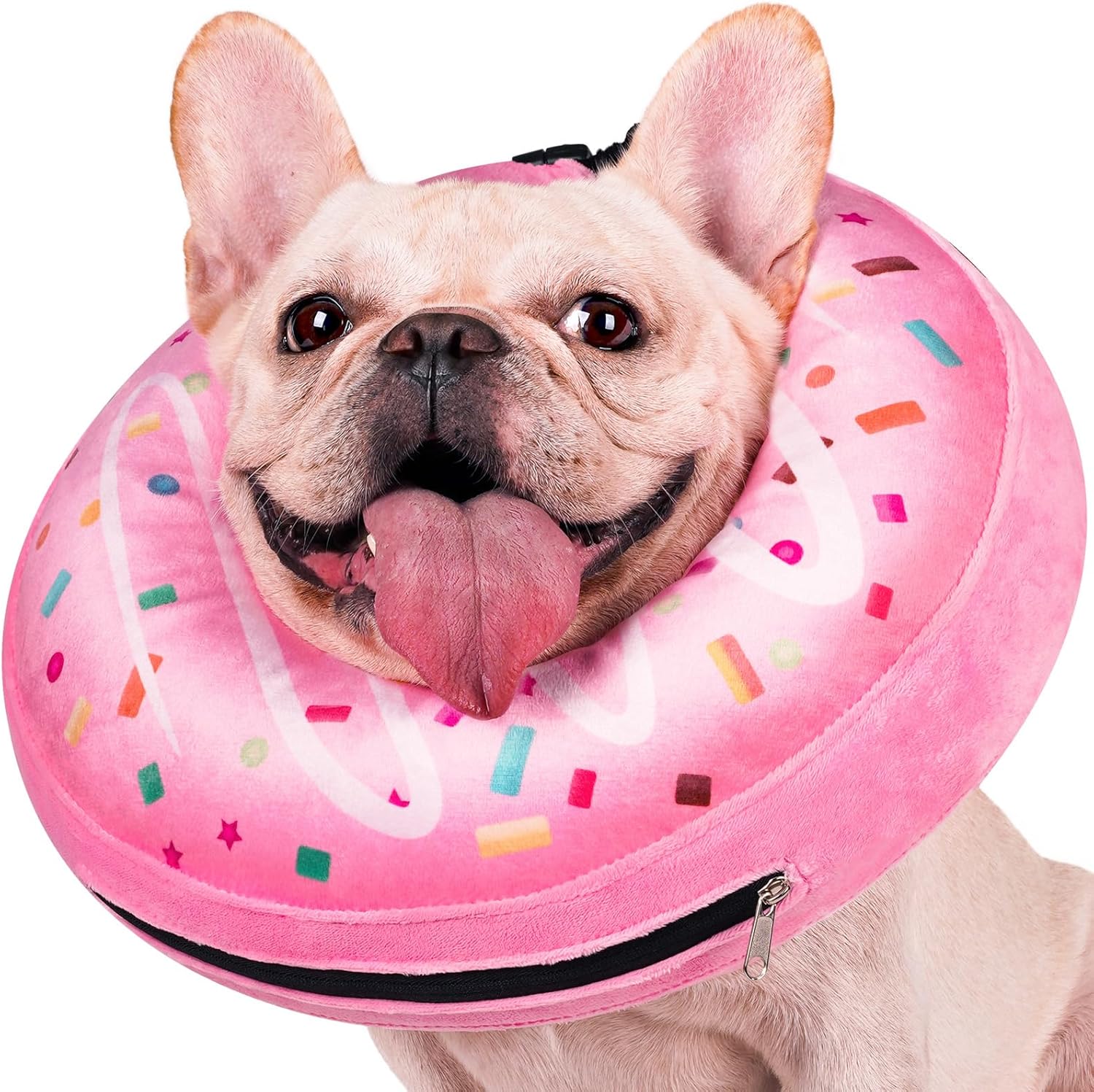
This inflatable donut collar replaces a hard Elizabethan cone with a soft, lightweight ring that keeps a dog from reaching wounds while allowing normal activities like eating and playing. Made of velvet with an internal air bladder, it inflates to provide a cushioned barrier and can be adjusted with a buckle, hook-and-loop, and zipper closure for a secure fit; five elastic loops let you attach it to the dog's regular collar for extra security. The design is aimed at pug-faced and other short-muzzled breeds and doubles as a neck pillow when not in active recovery use. Practical benefits include easier mobility and less stress for sensitive or small pets, machine-washable cover after deflating, and water resistance for quick cleaning. Important limitations are breed fit: it is not suitable for long-snouted or long-bodied breeds, and very determined chewers can still damage or bypass the collar, so supervision is required.
Best for: Pet owners who need a lightweight, low-stress recovery option for small or short-muzzled dogs that still prevents access to surgical sites while letting the animal move and eat normally.
Less Ideal for: Owners of long-snouted, large, or very powerful dogs that can reach wounds despite a donut collar or may chew through an inflatable design should choose a more substantial, rigid protector.
- Low-profile inflatable design reduces weight and improves mobility compared with rigid cones
- Velvet cover and air cushioning double as a comfortable neck pillow during recovery
- Multiple closures (buckle, hook & loop, zipper) and elastic loops help secure fit and prevent escapes
- Machine-washable cover and water resistant construction make cleaning straightforward
- Not suitable for long-nosed or long-bodied breeds by manufacturer guidance
- Can be damaged or bypassed by determined chewers, so it requires supervision
Verdict: The best lightweight cone for pets that get tired or stressed by bulky collars and need a less obtrusive recovery option.
Choosing the Right Dog Cone Alternative: Key Factors to Consider
Coverage and Protection
How much of the head and neck the device blocks determines whether your dog can reach the wound. Full circular coverage reduces access for chewing and licking but can restrict peripheral vision and movement. Partial or directional barriers focus protection on a target area, which can be useful for localized wounds or bandages while allowing more freedom elsewhere.
Match the coverage to the injury: surgical sites on the torso may need guarding from frontal reach, while facial or paw injuries require a design that blocks the specific target. Consider whether the alternative provides a physical barrier or simply discourages the dog; physical barriers are more reliable for determined chewers.
Comfort and Material
Soft, breathable materials reduce irritation over prolonged wear and help prevent rubbing or chafing at the neck and face. Foam, fabric, and padded edges are more comfortable than rigid plastics but must still maintain shape enough to prevent access to the wound. Breathability also helps with temperature regulation during warm weather or long recovery periods.
Look for hypoallergenic or moisture-wicking fabrics if your dog has sensitive skin. Removable, washable covers let you keep the device clean without replacing the whole unit, which matters for hygiene when wounds are present.
Fit and Adjustability
A secure but comfortable fit prevents the device from slipping or allowing the dog to push it away. Adjustable straps, multiple size settings, and clear measurement charts help you pick the right size for your dog's neck and head shape. A poor fit either permits access to the wound or causes discomfort and stress.
Consider whether the product has easy on/off features for administering medications and for eating or drinking breaks. Fastenings should stay secure during normal activity but should not be so complicated that you avoid using the device when needed.
Visibility and Mobility
Alternatives that allow a wide field of view reduce anxiety and help dogs navigate the home without bumping into furniture. Designs that maintain peripheral vision and hearing let dogs behave more normally, which supports better rest and reduces stress-related behaviors.
Mobility also matters for toileting and exercise: the device should not impede walking or getting into a familiar resting spot. If mobility is significantly reduced, the dog may become frustrated or try to force the device off.
Durability and Maintenance
Materials need to withstand normal use, including light chewing, scratching, and repeated cleaning. Look for construction with reinforced seams, durable fasteners, and fabrics that tolerate machine or hand washing without losing shape. Durable materials extend the useful life of the device across multiple recovery events.
Maintenance instructions should be clear; some fabrics may require air drying to retain structure while others are machine washable. Consider how easy it will be to keep the product sanitary between uses.
Safety and Breathing
Any alternative must allow uninterrupted airflow and should not press on the throat or block the nose. Designs that sit away from the airway or that provide rigid support in non-pressing areas reduce the risk of breathing interference. Reflective trim or soft padding around closures can also prevent accidental tightening or abrasion.
Assess how the device behaves if your dog becomes highly active: it should remain secure without shifting position into a dangerous configuration. If the device allows pawing at the face in a way that could entangle the animal, that model is less suitable.
How Do Inflatable Collars Compare to Rigid Cones for Daily Life?
Inflatable collars create a padded barrier that limits forward reach while preserving peripheral vision and mobility. They are lighter and often more tolerable for relaxed activity such as sleeping and moving around the house.
However, inflatables can be vulnerable to punctures from sharp nails or determined chewing, and they may not prevent access to wounds on the sides of the head. They are a good choice for dogs who dislike solid cones and need moderate protection without the stress of a large device.
- Best for frontal protection with improved comfort
- May be punctured by sharp objects or chewing
- Easier for dogs to eat and drink while wearing
When Is a Soft Fabric Collar a Better Option?
Soft fabric collars wrap around the neck and reduce reach without creating a rigid obstruction. They are often breathable and less noisy, which helps anxious dogs remain calm during recovery.
These collars are less effective against persistent chewers and may allow access to wounds on the face or paws. Choose fabric collars for short-term use or for dogs that need reassurance and minimal interference with daily routines.
- Comfortable and low-stress for most dogs
- Not ideal against determined chewing
- Often machine washable and lightweight
Are Neck Braces or Protective Shirts Useful for Certain Injuries?
Neck braces limit head turning and can prevent dogs from reaching wounds on the back or sides of the body without covering the face. Protective shirts and recovery suits cover the torso and limbs to protect surgical incisions and topical treatments while allowing free head movement.
These options are particularly useful when the wound is on the body rather than the head. They let dogs retain better vision and reduce stress while still guarding bandaged areas, though they do not prevent paw-to-face access.
- Best for torso or limb wounds
- Less helpful for facial or paw injuries
- Can be combined with a mild collar for extra protection
What Should You Consider About Your Dog's Behavior and Activity Level?
Assess whether your dog is calm while wearing a restraint or prone to vigorous pawing and chewing. High-energy or anxious dogs may find soft options ineffective and could damage inflatable collars. Conversely, a sensitive or older dog may become distressed by a rigid cone and refuse to rest.
Match the device to behavior: choose more robust barriers for persistent chewers and softer, more comfortable options for dogs that need reassurance and low interference with daily life.
- Monitor first few hours of wear to check fit and tolerance
- Expect different needs for puppies versus senior dogs
- Consider temporary combinations for high-risk dogs
How to Measure Your Dog for the Right Alternative
Measure neck circumference at the widest comfortable point and record head width if specified by the product. Many alternatives require both neck and head measurements to ensure the device sits correctly and blocks access without constriction.
Follow sizing charts carefully and err on the side of a snug but not tight fit. If in doubt, choose adjustable models or those with multiple padding options to fine-tune comfort.
- Measure the widest point of the neck
- Note head width and length when applicable
- Check adjustment range before purchase
Tips for Acclimating Your Dog to a Cone Alternative
Introduce the device gradually by letting your dog sniff and explore it before fastening. Reward calm behavior with treats and short practice sessions to build positive associations.
Start with short wearing periods while supervising and increase duration as your dog becomes comfortable. Ensure food and water remain accessible and modify feeding setups if necessary to reduce frustration.
- Use treats and praise during initial fittings
- Supervise the first wears and watch for chafing
- Adjust collar height or padding for comfort
How We Chose the Best Dog Cone Alternative
We prioritized options that balance reliable protection with comfort and wearability. Our selection focused on products that limit access to wounds while allowing normal behaviors like eating and resting. We assessed construction quality, including materials that are washable and resistant to chewing, and we favored designs that minimize pressure points and skin chafing. Fit and sizing range were crucial; we selected options that offer clear size guidance and adjustable closures to suit a wide range of neck and head shapes. Ease of maintenance was another filter: washable or wipeable surfaces and materials that dry quickly ranked higher. Safety features such as soft edges, secure fastenings that do not tighten unintentionally, and designs that maintain airway access were required. We excluded items that rely solely on immobilization without providing coverage or those with materials likely to cause irritation. Products that lacked clear sizing information or durable construction were also removed. Final picks balance protection, comfort, and real-world practicality for pet owners managing short-term recovery.
Our full evaluation process is outlined in our review methodology.
FAQ
Will a dog cone alternative prevent my dog from licking surgical stitches?
It depends on the design and the wound location. Alternatives that provide full circular coverage or a sturdy barrier are more likely to prevent licking, while softer or partial-coverage options may allow access to certain areas. Match the design to the wound and monitor closely.
Can my dog eat and drink with an inflatable or fabric alternative?
Most inflatable and fabric alternatives allow easier access to food and water than rigid cones. However, depending on the model and fit, you may need to raise bowls or remove the device briefly under supervision for meals.
How long should my dog wear a cone alternative after surgery?
Typically wear time follows veterinary guidance, often until stitches are removed or the wound is fully healed. Many dogs need protection for 7 to 14 days, but duration depends on the procedure and your veterinarian's instructions.
Are cone alternatives safe for puppies and senior dogs?
They can be, but age affects tolerance and risk. Puppies may chew or try to remove the device more often, while seniors may have trouble with mobility if the device is bulky. Choose options sized appropriately and monitor wear closely.
What if my dog keeps getting the alternative off?
Reassess fit and fastening security first. Adjustable straps and secondary fastenings help. If the device is consistently removed, a different style that offers more secure coverage or temporary supervision during high-risk periods may be necessary.
Final Verdict
Choose an option that balances protection with your dog's comfort and behavior. For wounds on the face or head, prioritize designs that block direct access; for torso or limb injuries, recovery shirts or protective suits can be less intrusive while still guarding the site. Expect tradeoffs: softer alternatives increase comfort but may offer less resistance to determined chewing, while sturdier barriers provide more reliable protection at the cost of some mobility. Measure carefully, follow veterinary guidance on wear time, and be prepared to switch styles if your dog struggles with the initial choice. Prioritize safety, breathing access, and a secure fit so your dog heals with the least stress possible.

