

When your dog needs to avoid licking or chewing a wound, the right cone collar makes recovery easier and safer. You want something that blocks access to the affected area without making daily life miserable for your dog. This guide collects seven carefully shortlisted cone collars that prioritize secure fit, durable construction, and comfort during wear. We evaluated each option for fit range, material, and ease of use so you can pick a collar that suits your pet and the type of injury or post-op care required. Read on to see the top picks and the criteria used to vet them.
Top Picks at a Glance
| Best Overall Cone The all-around best choice that fits most dogs and needs | BENCMATE Inflatable Dog Collar Large |  |
| Best Budget Cone A low-cost option that still protects and fits reliably | Andiker Pet Recovery Cone Small |  |
| Best Compact Cone A smaller, low-profile design for confined spaces and travel | Loflaze Inflatable Dog Cone Collar |  |
| Best Inflatable Cone A cushioned, inflatable alternative that’s softer and low-profile | BENCMATE Inflatable Dog Collar Medium | |
| Best Soft-Padded Cone A fabric-lined, cushioned cone that reduces rubbing and chafing | ZuxZuce Soft Adjustable Dog Cone L |  |
| Best Heavy-Duty Cone A rugged, chew-resistant option built for determined chewers | Total Pet Health Elizabethan Collar Medium |  |
| Best Premium Cone A higher-end pick with better materials, fit, and features | ZenPet Recovery Cone Medium |  |
BENCMATE Inflatable Dog Collar Large
Best Overall Cone

| Closure Type | Zipper |
|---|---|
| Fit Type | Snug Fit |
| Water Resistance Level | Waterproof |
| Neck Size | 18 inches |
| Material Type | Fabric, Polyvinyl Chloride (PVC) |
The BENCMATE inflatable dog collar is a soft, donut-style alternative to hard Elizabethan cones that cushions the neck while blocking most access to surgical sites and wounds. It inflates through a simple valve and secures with a zipper and inner loop that accepts the pet's regular collar for extra hold; the manufacturer recommends measuring neck circumference and sizing up for long-snout or long-limbed dogs. Because the collar keeps the pet's field of vision clear, dogs can eat, drink, sleep, and move more naturally than with rigid cones, and the plush or scratch-resistant outer covers unzip for cleaning or replacement. Practical benefits include lighter weight, improved comfort for resting, and easier storage when deflated. Limitations are that very flexible or determined dogs may still reach paws or extremities, and temperature changes can affect air pressure so occasional reinflation may be needed.
Best for: Pet owners who want a lightweight, low-stress recovery option that cushions the neck and lets dogs move, eat, and rest more comfortably during healing.
Less Ideal for: Owners of highly determined chewers or dogs that can reach surgical sites despite a donut collar should choose a more restrictive rigid cone or consult their vet.
- Soft, cushioned alternative to hard cones that preserves peripheral vision
- Inner loop accepts daily collar to reduce slipping
- Available in multiple fabric options with removable outer cover for cleaning
- Lightweight and packs down when deflated for easy storage
- May not fully prevent access to extremities for dogs with long snouts or high flexibility
- Air inflation can require occasional topping up, especially with temperature changes
Verdict: The best overall cone for most pet owners, balancing comfort, fit, durability, and ease of use for everyday recovery and injury protection.
Andiker Pet Recovery Cone Small
Best Budget Cone

| Closure Type | Snap |
|---|---|
| Fit Type | adjustable |
| Water Resistance Level | Not Water Resistant |
| Target Species | Cats Dogs |
This Andiker recovery cone is a basic, low-cost Elizabethan collar intended to stop cats and small dogs from reaching wounds or surgical sites. It is made from clear ABS-style plastic so pets can still see while wearing it, and a flannelette padded edge helps reduce neck irritation. Size adjustments are handled by snap closures and alternate buckles, and the cone folds for compact storage. In everyday use it works well for short-term post-op protection, allowing eating and playing without much obstruction. Expect it to be light and simple rather than heavy-duty; the plastic is thin and the snaps can feel basic, so it is best for short recovery periods or occasional use rather than constant wear over many weeks. It is not water resistant and offers minimal structural stiffness compared with thicker cones, but its comfort-focused edge and transparency make it easier for stressed pets to tolerate than rigid models.
Best for: Buyers who need an inexpensive, comfortable cone for short-term post-op protection and prefer something lightweight that pets tolerate easily.
Less Ideal for: Owners seeking a heavy-duty, long-term recovery collar or a fully waterproof option should consider sturdier models instead.
- Transparent plastic preserves peripheral vision for less stress
- Padded flannelette edge reduces chafing against the neck
- Adjustable snap closure and alternate buckles for a customizable fit
- Lightweight and foldable for easy storage and transport
- Thin plastic and basic snaps are less durable for long continuous use
- Not water resistant so it can be harder to clean when soiled
Verdict: The best budget cone for owners who need basic post-op protection and a reliable fit without extra features or higher cost.
Loflaze Inflatable Dog Cone Collar
Best Compact Cone
| Closure Type | Zipper |
|---|---|
| Fit Type | Custom Fit |
| Water Resistance Level | Not Water Resistant |
| Material Type | Cotton |
| Neck Size | 8 inches |
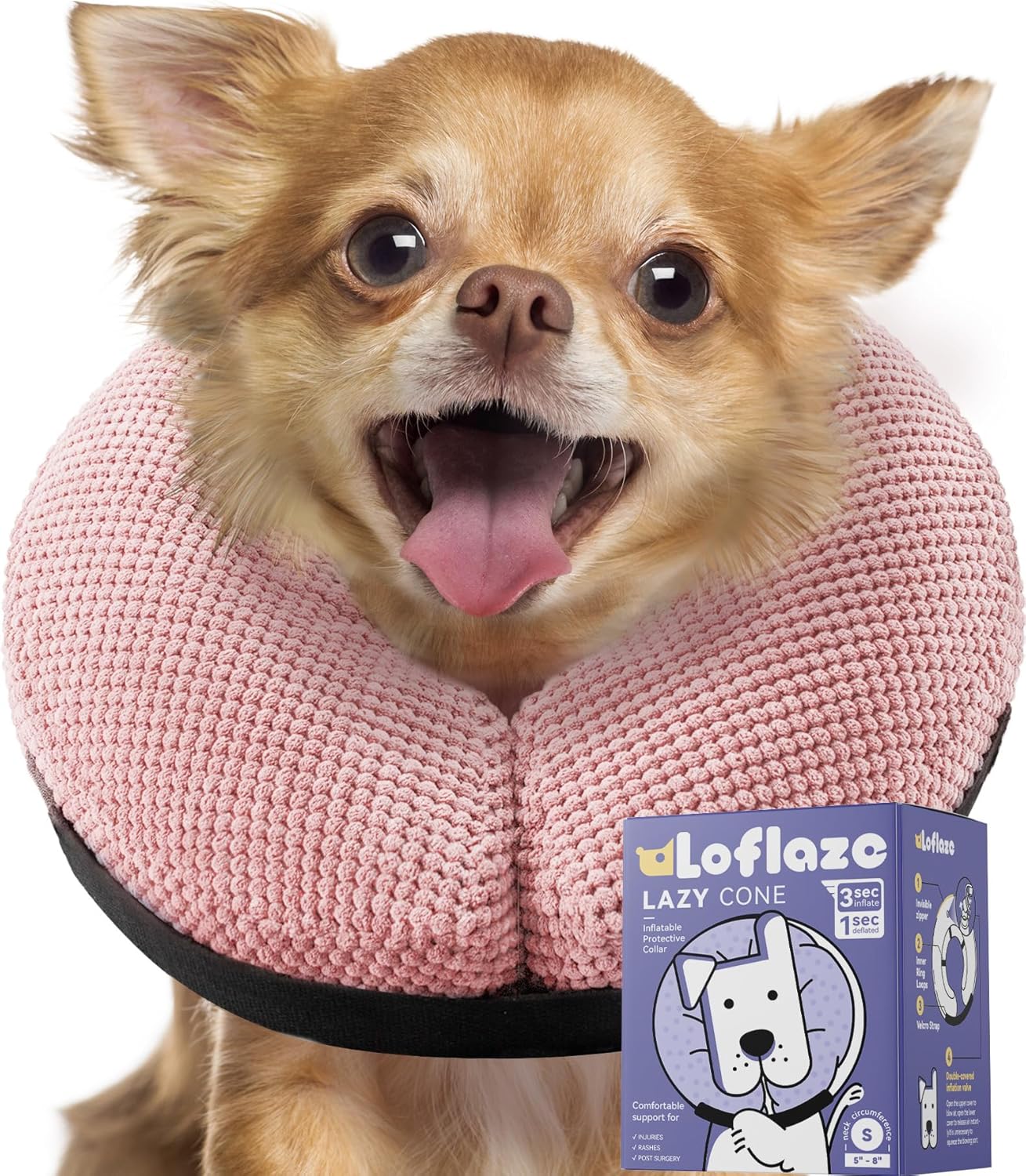
The Loflaze inflatable dog cone is a low-profile, donut-style recovery collar designed to keep dogs and cats from licking or biting wounds after neuter surgery. It inflates to create a cushioned ring around the neck and secures with a zipper cover and Velcro-adjustable strap so you can fine-tune the fit and air volume. The outer cover is a soft 3D cotton fabric that unzips for machine washing, which helps with post-op cleanliness. Because it does not block forward vision or impede eating and drinking, pets can move, rest, and play more naturally than with a rigid Elizabethan cone. Important limitations are that it is not water resistant and the inflatable bladder can be punctured by sharp teeth or rough surfaces, so it requires supervision and occasional reinflation. The collar is best used for preventing access to the neck and torso after routine neuter recovery rather than for protecting larger flank or abdominal areas that need a wide rigid barrier.
Best for: Owners who want a comfortable, low-profile post-neuter collar that minimizes stress and lets their pet move, eat, and rest more normally while preventing licking.
Less Ideal for: Pets that chew aggressively, unsupervised outdoor dogs, or cases needing a wide rigid barrier for abdominal protection should choose a sturdier cone alternative.
- Low-profile donut shape preserves forward vision and lets pets eat and drink normally
- Soft 3D fabric cover unzips for machine washing to keep the collar sanitary
- Adjustable air volume and Velcro strap allow a custom, cushioned fit
- Inner high-density air bladder reduces leaks and provides padding compared with rigid cones
- Not water resistant so it should not be used for bathing or outdoor wet conditions
- Inflatable design can be punctured by sharp teeth or rough surfaces and needs monitoring
Verdict: The best compact cone for owners who need a low-profile, space-saving option that still prevents pets from reaching wounds or surgical sites.
BENCMATE Inflatable Dog Collar Medium
Best Inflatable Cone
| Material Type | Polyvinyl Chloride (PVC) |
|---|---|
| Closure Type | Zipper |
| Fit Type | Snug Fit |
| Neck Size | 12 inches |
The BENCMATE inflatable dog collar replaces bulky Elizabethan cones with a soft, donut-shaped barrier that protects surgical sites, rashes, and other injuries while letting pets see, eat, and move more freely. It is used by slipping the everyday collar through the inner loop, then inflating the PVC air bladder to a comfortable firmness and securing the outer cover with the zipper and hook-and-loop closure. Key features include a plush or anti-stick outer fabric option, an inner fixation strap to prevent slipping, and a zipper for removing the cover for cleaning. In practice the collar is much less intrusive than a rigid cone and is easier for most dogs to tolerate during recovery, and deflates for compact storage when not in use. Limitations are that very flexible dogs or those with long snouts may still reach extremities, the PVC bladder can lose air in extreme temperature changes, and it does not offer rigid, full-face protection for dogs that persistently try to remove barriers.
Best for: Buyers who want a comfortable, low-stress recovery collar that balances protection with the pet's ability to eat, sleep, and move during healing.
Less Ideal for: Owners whose pets repeatedly try to bite or reach wounds despite soft barriers or who need a completely rigid, full-face shield for aggressive chewers should consider a hard cone alternative.
- Comfortable soft donut design that preserves vision and mobility
- Inner loop/strap allows use with the pet's regular collar to prevent slipping
- Removable outer cover and zipper make cleaning easier
- Inflatable bladder deflates for compact storage and transport
- May not fully block access to paws or long-snout pets
- Air bladder can be affected by temperature-related pressure changes
Verdict: The best inflatable cone for pets that dislike rigid collars and need a softer, more flexible barrier for light protection and comfort.
ZuxZuce Soft Adjustable Dog Cone L
Best Soft-Padded Cone

| Size | L (Neck: 14.17-16.54") |
|---|---|
| Total Depth | 11.6" |
| Material | Inner Mesh; Outer PVC |
| Closure | Wide hook-and-loop with drawstring stopper |
| Included Components | Dog Cone |
This soft recovery cone is designed to keep dogs from licking or scratching wounds while offering more comfort than a rigid plastic e-collar. It uses a double-layer construction — an inner soft mesh layer against the neck and an outer waterproof PVC shell — so the cone keeps shape while remaining wipe-clean. The detachable zipper extension lets you add or remove length for better coverage of specific wounds or for easier mealtimes, and a wide hook-and-loop strap plus an adjustable drawstring stopper provide a broad circumference range and a snug fit. A soft fabric edge protects the cervical area and an elastic band lets you thread the dog's collar through for extra security. Practical benefits include light weight for less neck strain, reflective trim for low-light visibility, and simple surface cleaning. Limitations are that depth and neck-size suitability must be checked carefully before ordering, and very determined chewers may still damage the zipper or outer PVC layer if left unsupervised.
Best for: Owners who need a cone with flexible sizing and fastening options to get a snug, secure fit across different breeds or as a pet’s recovery needs change.
Less Ideal for: Pets that are heavy chewers or destructive with soft hardware should use a more rugged, chew-resistant cone or a rigid protective option instead.
- Detachable zipper extension for customizable length and easier mealtimes
- Double-layer design with soft inner mesh for comfort and PVC outer shell for durability
- Wide-range hook-and-loop plus drawstring stopper for a secure, adjustable fit
- Soft padded edge protects the neck and reduces rubbing
- Waterproof outer surface wipes clean quickly
- Zipper and PVC outer layer can be chewed through by determined dogs
- Requires careful measurement of neck girth and nose-to-neck length to ensure proper coverage
Verdict: The best soft-padded cone for pets with sensitive skin or anxiety who benefit from extra cushioning and gentler contact around the neck.
Total Pet Health Elizabethan Collar Medium
Best Heavy-Duty Cone
| Target Species | Dog |
|---|---|
| Dog Breed Size | Medium |
| Material Type | Polypropylene plastic |
| Closure Type | Hook, Loop |
| Fit Type | adjustable |
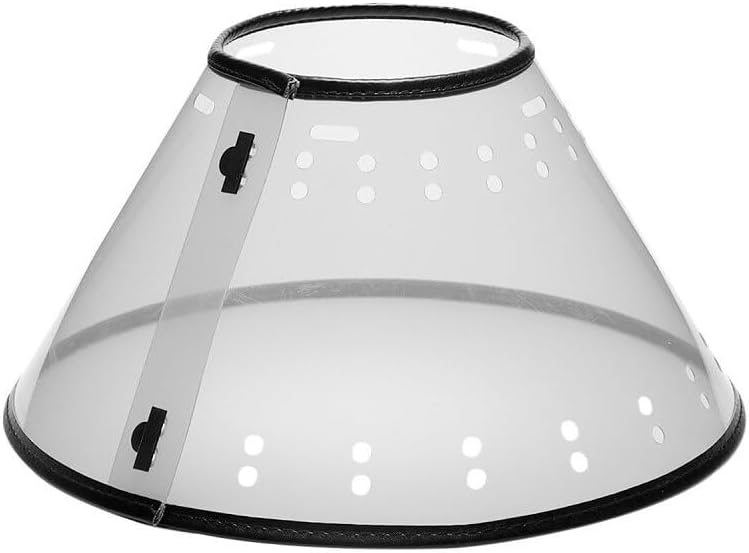
This Total Pet Health Elizabethan collar is a basic clear plastic cone that keeps pets from reaching wounds while they heal. It is made from polypropylene with plastic snaps and oval holes so you can secure it to a pet collar or thread gauze or string for added fastening. Typical use is short-term post-op or wound protection for dogs and cats; the collar lets animals see to the side while restricting reach to the body. The adjustable fit range and simple snap closure make it quick to size for many pets, and the low-profile clear material reduces visual obstruction compared with opaque cones. Important limitations for the heavy-duty use case are that the cone is thin, not water resistant, and uses plastic snaps rather than reinforced hardware, so very determined chewers or strong dogs that pull relentlessly may be able to bend or dislodge it. Cleaning is easy with a damp cloth but the lightweight construction trades off durability for comfort and lightness.
Best for: Buyers who prioritize a simple, lightweight cone for short-term wound protection and who want an easy-to-fit, low-visibility option for medium pets.
Less Ideal for: Owners needing a reinforced, chew-proof cone for dogs that aggressively remove collars or for long-term use should choose a sturdier, heavy-duty model with stronger hardware.
- Adjustable fit with multiple sizing ranges to suit medium pets
- Clear polypropylene lets pets see to the side and reduces visual stress
- Simple snap and hole system allows quick on/off and extra tie-down options
- Lightweight construction is more comfortable for short-term wear
- Thin plastic construction is not reinforced against heavy chewing
- Not water resistant so it can soften if soaked
Verdict: The best heavy-duty cone for dogs that try to remove collars or are strong chewers, offering tougher materials and reinforced construction for secure protection.
ZenPet Recovery Cone Medium
Best Premium Cone

| Closure Type | Hook & Loop |
|---|---|
| Fit Type | Custom Fit |
| Water Resistance Level | Not Water Resistant |
| Target Species | Dog |
The ZenPet Recovery Cone is a soft, fabric e-collar built to keep pets comfortable while preventing access to surgical sites or wounds. It threads onto the pet's regular collar and is shaped into a cone with hook-and-loop closures and three adjustment points for a secure, custom fit. The padded canvas construction keeps the collar lightweight and reduces rubbing against the neck, while the open design preserves visibility so pets can eat, drink, and move more naturally than with a rigid plastic cone. It is machine-washable and made to withstand everyday use, but it is not water resistant so wet environments will require drying after exposure. The cone works well for medium dogs and for cats when sized correctly, and because it relies on the pet's collar for attachment it stays in place without digging into the neck. For owners seeking a premium-feeling soft alternative to the traditional plastic cone, this model blends comfort, adjustability, and durability, though buyers should confirm fit using the neck-to-snout guidance to ensure adequate protection.
Best for: Owners who prioritize comfort and durable materials and are willing to pay for a soft, well-constructed recovery collar with multiple adjustment options.
Less Ideal for: Owners who need a fully waterproof or rigid cone for extremely messy or highly destructive pets should consider alternative styles.
- Padded, lightweight canvas construction reduces neck rubbing and stress during recovery
- Attaches to the pet's everyday collar for a secure fit that stays in place
- Multiple hook-and-loop adjustment points allow a custom fit across sizes
- Open design preserves visibility so pets can eat, drink, and move normally
- Machine-washable materials for easy cleaning after use
- Not water resistant, so it requires drying after exposure to moisture
- Relies on the pet's collar for attachment which may limit standalone stability for very active chewers
Verdict: The best premium cone for owners willing to pay more for superior build quality, advanced comfort features, and a more precise adjustable fit.
Choosing the Right Dog Cone Collar: Key Factors to Consider
Fit and Adjustability
A properly fitting cone collar prevents a dog from reaching the treated area while staying comfortable during wear. Measure neck circumference and consider how the collar length or flare extends past the nose; both dimensions determine blocking effectiveness. Adjustable closures let you fine-tune tension so the collar is snug without choking. For growing or overweight dogs, pick features like multiple fastener positions or flexible inserts to accommodate slight size changes.
Poor fit can lead to rubbing, anxiety, and attempts to remove the collar, which defeats the protective purpose. Look for collars with clear size ranges and easy adjustment systems so you can re-fit the collar quickly if swelling or bandages change after surgery.
Material and Comfort
Material choices affect both comfort and function. Rigid plastics block access reliably but can be noisy and cause chafing at the neck edges. Soft fabric or inflatable collars are gentler and reduce stress but may allow some access to the wound if too pliable. Consider collars with padded neck edges or breathable fabrics to limit sweat and skin irritation, especially for long-term wear.
Comfort influences compliance; a dog that tolerates the collar is less likely to struggle, which reduces the chance of the collar becoming displaced. If your dog has sensitive skin, prioritize hypoallergenic, washable materials that are easy to keep clean between veterinary visits.
Visibility and Stability
A cone that impairs vision or balance forces a dog to move awkwardly, increasing stress and accidental bumps. Collars with low-reflective surfaces and a profile that preserves peripheral vision help dogs navigate the home. Stability features such as reinforced rims or structured panels reduce collapsing when the dog presses against furniture, which maintains the protective barrier.
Stability also matters outdoors; a lightweight yet structured collar is less likely to tip when the dog sniffs or turns quickly. Consider how the collar interacts with your dog's typical environment—tight spaces, stairs, or car travel—and choose a shape that minimizes interference.
Fastening System and Ease of Use
A practical fastener makes putting the collar on and taking it off straightforward, which is important for administering medication and cleaning. Options include quick-release buckles, Velcro straps, or snap closures. Fastening systems that allow single-person application are especially useful for nervous or recovering animals.
Ease of use also extends to cleaning and storage. Collars that collapse or disassemble are easier to store and transport. Avoid designs with fiddly small parts that can be lost or that require tools to adjust, as these add friction to routine care.
Cleanability and Maintenance
Collars can become soiled with discharge, food, or bedding, so the ability to clean the collar quickly matters. Materials that are machine washable or wipeable reduce labor and keep the collar hygienic. Look for collars with removable covers or parts that tolerate soap and water without degrading.
Maintenance also covers how the collar holds up to repeated cleaning. Stitched seams, glued joins, or cheap plastics may fail after several wash cycles, so favor robust construction if the collar will be in use for weeks to months.
Behavioral and Stress Considerations
Some dogs react to cone collars with anxiety, pacing, or attempts to remove the device. Minimizing stress improves recovery and reduces the chance of injury from frantic movements. Soft or padded collars, gradual acclimation steps, and positive reinforcement while fitting the collar can help.
Consider whether the dog is likely to adapt quickly or needs extra behavioral support. If the dog often rubs against furniture or is highly active, choose a design that balances protection with comfort and includes escape-resistant features to avoid repeat attempts at removal.
How Do I Measure My Dog for the Right Cone Collar?
Measure the neck circumference at the widest point and the distance from the base of the neck to the tip of the nose. Many collars list both neck size ranges and cone lengths; use both measurements to ensure the collar extends far enough past the nose to block access.
If the dog has bandages or swelling, measure with those in place to avoid a too-tight fit after surgery. When in doubt between sizes, choose the larger size if the collar has adjustable fasteners or padding that can be tightened for a neater fit.
- Measure neck where a collar would normally sit
- Measure nose distance to determine cone length
- Account for bandages or swelling in measurements
Can a Soft or Inflatable Collar Work Instead of a Rigid Cone?
Soft and inflatable collars can improve comfort and reduce anxiety while still preventing many licking behaviors. They are less intrusive and often allow better peripheral vision, but some soft designs are flexible enough that determined dogs can reach around them.
Use soft or inflatable collars for surface wounds or mild post-op protection when the treated area is not easily accessed by bending. For procedures that require strict prevention of licking or chewing, rigid cones remain the most reliable option.
- Soft collars are more comfortable but may be less restrictive
- Inflatable collars preserve vision and are low-profile
- Rigid cones provide the highest level of access prevention
How Do I Help My Dog Adjust to Wearing a Cone Collar?
Introduce the collar gradually: allow the dog to sniff it, then put it on for short supervised periods while offering treats and praise. Increase wear time incrementally so the dog forms a positive association rather than a stress response.
During the adjustment phase, supervise activities and remove sharp-edged obstacles that the dog might bump into. Keep feeding routines consistent and consider using elevated bowls if the collar prevents the dog from reaching a standard bowl comfortably.
- Start with short supervised sessions and reward calm behavior
- Use a quiet, familiar space to reduce stress during acclimation
- Adjust feeding and sleeping arrangements to accommodate the cone
Are There Common Fit Problems and How Can I Fix Them?
Common problems include a collar that is too tight, causing chafing, or too loose, which allows the dog to back out or reach the wound. If you see red marks or the dog pawing at the neck, re-measure and select a different size or add soft padding around the neck edge.
If the cone tips forward and blocks eating, shorten the cone length if possible or use a support collar that transfers some load away from the neck. For collars that slip, try different fastener positions or anti-slip padding under the collar to increase grip.
- Check for red marks and adjust fit immediately
- Use padding to prevent rubbing at pressure points
- Reset fasteners after swelling subsides post-op
How Long Should My Dog Wear a Cone Collar After Surgery?
Duration depends on the type of procedure and your veterinarian's guidance. Many soft-tissue surgeries require the collar until sutures are removed or the wound shows a strong, dry scab, while other procedures may need longer protection to prevent licking or chewing of healing tissue.
Follow the specific timeline given by your clinic and monitor the wound daily. If you observe persistent licking or signs of infection, extend wear time and consult with your veterinarian rather than removing the collar early.
- Follow veterinary guidance for specific recovery timelines
- Inspect the wound daily for swelling, discharge, or licking
- Extend protection if the dog repeatedly reaches the treated area
How We Chose the Best Dog Cone Collar
We focused on attributes that matter most when selecting a dog cone collar for wound and post-operative protection. Our selection criteria emphasized secure fit and retention so collars stay in place during normal activity, plus material comfort to reduce rubbing and skin irritation. We prioritized simple fastening systems and adjustability so owners can apply and remove collars quickly without risking a poor fit. Durability and ease of cleaning were weighed heavily because collars often get soiled during recovery. We also considered visibility and stability to avoid creating new hazards when a dog navigates doorways or furniture. Excluded from consideration were collars with unverified claims about accelerating healing or those lacking clear sizing ranges. We filtered out accessories that are only decorative and do not prevent access to wounds. The final shortlist reflects products that meet practical safety, comfort, and usability thresholds for typical home recovery scenarios.
Our full evaluation process is outlined in our review methodology.
FAQ
Will a cone collar stop my dog from scratching its ears or face?
It often helps prevent direct access to ears and parts of the face, but effectiveness depends on collar length and shape. For hard-to-reach areas, a cone with sufficient forward extension or an auxiliary barrier may be necessary.
Can my dog still eat and drink with a cone collar on?
Most collars allow eating and drinking, but some long or rigid cones may interfere. If feeding becomes difficult, try elevating bowls or shortening the cone length if safe to do so under veterinary advice.
Are inflatable cones safe for active dogs?
Inflatable cones reduce visual obstruction and are comfortable for many dogs, but highly active dogs may still be able to reach wounds by turning. They are best for calmer dogs or for protecting injuries in areas not easily reached by bending.
How do I clean a cone collar that gets soiled?
Wipe rigid cones with a mild soap and water solution, and launder removable fabric covers according to care instructions. For inflatable collars, check valves and seams for integrity after cleaning and allow thorough drying before reuse.
What signs indicate the collar is causing a problem?
Look for persistent rubbing, raw skin, increased agitation, or avoidance behaviors. If the dog develops sores under the collar or cannot eat and drink normally, remove the collar for a veterinary check and consider alternative protection options.
Final Verdict
Prioritize a cone collar that balances effective restriction with comfort and durability. Accurate measurement and a practical fastening system reduce the chance of displacement, while padded or breathable materials make extended wear more tolerable for the dog. Consider the specific wound location and your dog's activity level when choosing a style, and be prepared to trade off some comfort for greater access prevention when necessary. Ultimately, choose the collar that fits securely, is easy to maintain, and your dog can tolerate for the duration advised by your veterinarian. Those priorities will give you the best chance of a smooth recovery without repeated interruptions.

