

After ear surgery, keeping your dog from pawing or scratching the incision is essential to prevent infection and allow tissues to heal. The right cone makes that task simpler by combining reliable coverage, secure fit, and comfort so your pet is less stressed during recovery. This guide shortlists the top cones suited specifically for ear surgery, focusing on models that minimize interference with hearing and mobility while still preventing access to the operative site. Below you will find our top picks and the criteria we used to evaluate them, along with practical tips for measuring and acclimating your dog.
Top Picks at a Glance
| Best Overall Cone The best all-around cone for most post-surgery needs | BENCMATE Inflatable Dog Collar Large |  |
| Best Budget Cone A low-cost cone that still provides necessary protection | Grand Line Donut Inflatable Collar Small |  |
| Best Premium Cone A higher-end cone with superior materials and build quality | SUNFURA Soft Dog Cone Large |  |
| Best Soft Cone A flexible, padded option that’s gentler on pets' necks | babday Soft Dog Cone Collar Large |  |
| Best Inflatable Cone A compact, inflatable design that’s lightweight and travel-friendly | Didopet Inflatable Donut Dog Cone Medium |  |
| Best Lightweight Cone An ultra-light cone for pets that dislike heavy collars | REOMORE Dog Cone Collar M |  |
BENCMATE Inflatable Dog Collar Large
Best Overall Cone

| Closure Type | Zipper |
|---|---|
| Fit Type | Snug Fit |
| Water Resistance Level | Waterproof |
| Neck Size | 18 inches |
| Material Type | Fabric, Polyvinyl Chloride (PVC) |
The BENCMATE inflatable dog collar is a soft, donut-style alternative to hard Elizabethan cones that cushions the neck while blocking most access to surgical sites and wounds. It inflates through a simple valve and secures with a zipper and inner loop that accepts the pet's regular collar for extra hold; the manufacturer recommends measuring neck circumference and sizing up for long-snout or long-limbed dogs. Because the collar keeps the pet's field of vision clear, dogs can eat, drink, sleep, and move more naturally than with rigid cones, and the plush or scratch-resistant outer covers unzip for cleaning or replacement. Practical benefits include lighter weight, improved comfort for resting, and easier storage when deflated. Limitations are that very flexible or determined dogs may still reach paws or extremities, and temperature changes can affect air pressure so occasional reinflation may be needed.
Best for: Pet owners who want a lightweight, low-stress recovery option that cushions the neck and lets dogs move, eat, and rest more comfortably during healing.
Less Ideal for: Owners of highly determined chewers or dogs that can reach surgical sites despite a donut collar should choose a more restrictive rigid cone or consult their vet.
- Soft, cushioned alternative to hard cones that preserves peripheral vision
- Inner loop accepts daily collar to reduce slipping
- Available in multiple fabric options with removable outer cover for cleaning
- Lightweight and packs down when deflated for easy storage
- May not fully prevent access to extremities for dogs with long snouts or high flexibility
- Air inflation can require occasional topping up, especially with temperature changes
Verdict: The best overall cone balances protection, comfort, fit adjustability, and durability for most dogs recovering from ear surgery.
Grand Line Donut Inflatable Collar Small
Best Budget Cone

| Closure Type | Hook & Loop |
|---|---|
| Fit Type | Custom Fit |
| Water Resistance Level | Not Water Resistant |
| Material Type | PVC, Velvet |
This inflatable donut collar is a soft, low-profile alternative to a rigid Elizabethan cone for post-neuter recovery. It inflates to form a padded ring around the neck that blocks access to surgical sites while leaving the pet's forward view unobstructed, so eating, drinking, and basic movement remain easier. The PVC air bladder is covered in velvet for comfort and simple wiping, and hook-and-loop straps plus three inner tabs let you secure it to the pet's regular collar for a more stable fit. Because it is lightweight and cushioned it is better tolerated by many cats and small to medium dogs than hard cones. Limitations include the lack of water resistance and less protection for pets that paw vertically at their abdomen or have very long snouts, so sizing up or choosing a rigid cone may be needed in those cases. For budget-conscious owners this collar gives effective basic protection with a comfortable, compact design.
Best for: Pet owners seeking a low-cost, comfortable recovery option that still prevents most licking after neuter and prioritizes ease of eating and wearing for small to medium pets.
Less Ideal for: Owners of large, long-snouted dogs or pets that aggressively paw at their abdomen should consider sturdier or full-coverage cones instead.
- Soft, padded donut design improves comfort versus hard plastic cones
- Keeps forward vision and access to food and water for easier daily care
- Adjustable hook-and-loop strap and inner tabs allow a more secure, custom fit
- Velvet cover is pleasant for pets and easy to wipe clean
- Lightweight construction is easier for small and medium pets to wear for longer periods
- Not water resistant so it can be damaged if soaked
- Provides less barrier for long-snouted breeds or pets that can reach wounds by pawing vertically
Verdict: The best budget cone offers reliable post-op protection and a decent fit for owners prioritizing affordability over premium materials.
SUNFURA Soft Dog Cone Large
Best Premium Cone
| Closure Type | Hook & Loop |
|---|---|
| Fit Type | Adjustable |
| Water Resistance Level | Not Water Resistant |
| Target Species | Dog |
| Dog Breed Size | Large |
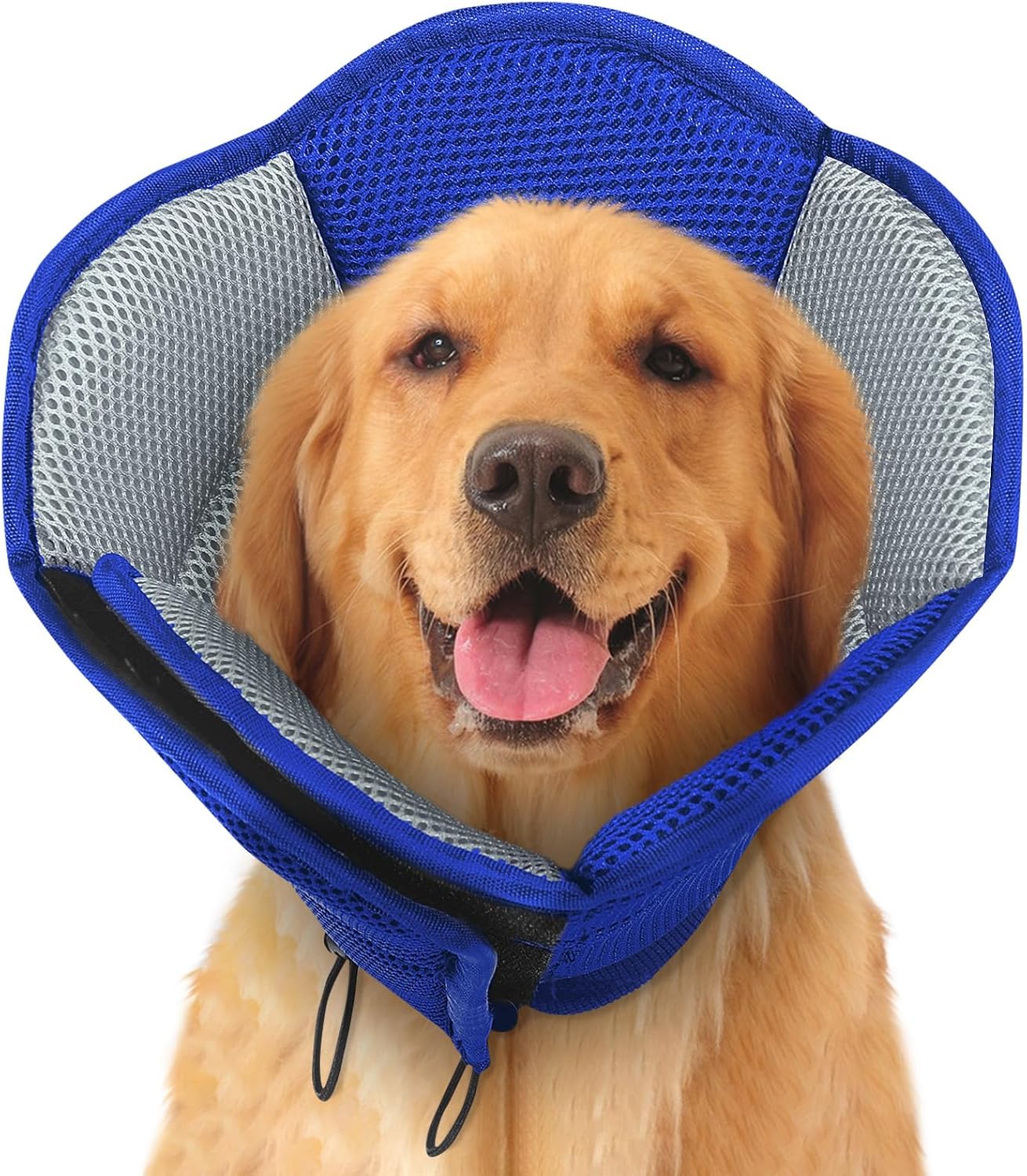
The SUNFURA soft dog cone is a fabric Elizabethan collar built from breathable mesh to reduce rubbing while keeping a protective barrier around the head. It fastens with hook-and-loop closure and includes an adjustable drawstring so you can fine-tune the fit quickly, which makes putting it on and taking it off straightforward for everyday use. The soft construction is lightweight and more comfortable than rigid plastic cones, so dogs can sleep, drink, and move through doorways more easily while still being blocked from reaching wounds. It is marketed for large dogs and intended to prevent licking or biting at incisions or irritated skin. Important limitations are that it is not water resistant and the protection depends on sizing and head length, so it may not stop determined dogs that can reach certain areas or those with long snouts; also fabric cones can show wear faster than molded plastic. For owners who prioritize comfort and thoughtful fastening over harsh rigidity, this collar is a good premium-feeling alternative during recovery care.
Best for: Buyers who want a more comfortable, well-constructed recovery collar and are willing to pay for softer materials and adjustable fit for better day-to-day tolerance during healing.
Less Ideal for: Owners who need a fully waterproof or maximum physical barrier solution for aggressive chewers or dogs with very long snouts should consider a sturdier alternative.
- Breathable mesh fabric reduces skin rubbing and improves comfort
- Adjustable fit with drawstring and hook-and-loop closure for quick on/off
- Soft, lightweight design lets dogs eat, drink, and navigate more easily than rigid cones
- Designed for large dogs so the depth and neck sizing suit bigger breeds
- Not water resistant so it can soak and take longer to dry
- Soft fabric may wear or lose shape faster than rigid plastic cones
Verdict: The best premium cone is aimed at owners who want top-tier comfort, durable construction, and refined fit adjustments for long-term use or frequent recoveries.
babday Soft Dog Cone Collar Large
Best Soft Cone

| Closure Type | Hook & Loop |
|---|---|
| Fit Type | Custom Fit |
| Target Species | Dog |
| Unit Count | 1 Count |
The babday Soft Dog Cone Collar is a fabric recovery collar built from a double-layer breathable mesh and a lightweight foam core to block access to wounds while letting pets move and rest more comfortably. It fastens with a hook-and-loop strap plus a drawstring stopper and reinforcement buckle so you can dial in a snug fit and keep the collar from slipping. In use it functions like a traditional e-collar but with less noise and bumping against furniture, and the curved, flexible shape preserves more peripheral vision so dogs are less disoriented. Practical benefits include easy one-handed adjustments, foldable portability for vet visits, and a design that still provides adequate depth to discourage licking after ear surgery. Limitations are its softer edges can be chewed through more easily than a hard plastic cone and very determined pets or those that can contort may still reach some spots, so sizing and supervision matter for full protection.
Best for: Pet owners who prioritize a gentler, lower-stress recovery option for dogs recovering from ear surgery and want something their dog can eat, sleep, and move around comfortably in.
Less Ideal for: Dogs that frequently try to chew or remove soft collars or dogs that require an absolutely rigid barrier for full protection should consider a sturdier alternative.
- Breathable double-layer mesh keeps pets cooler than rigid cones
- Adjustable hook-and-loop strap with drawstring stopper for a secure custom fit
- Lightweight, foldable design reduces noise and bumping and is travel-friendly
- Curved flexible shape preserves vision and allows more natural movement
- Softer construction can be chewed or damaged by determined chewers
- May not block access fully for highly flexible or small-necked pets
Verdict: The best soft cone is for dogs that need a gentler, more comfortable barrier that reduces rubbing and stress while still preventing ear interference.
Didopet Inflatable Donut Dog Cone Medium
Best Inflatable Cone
| Size guide | M (Neck 8"-11") |
|---|---|
| Closure type | Buckle, Hook & Loop, Zipper |
| Fit type | Adjustable |
| Water resistance | Water Resistant |
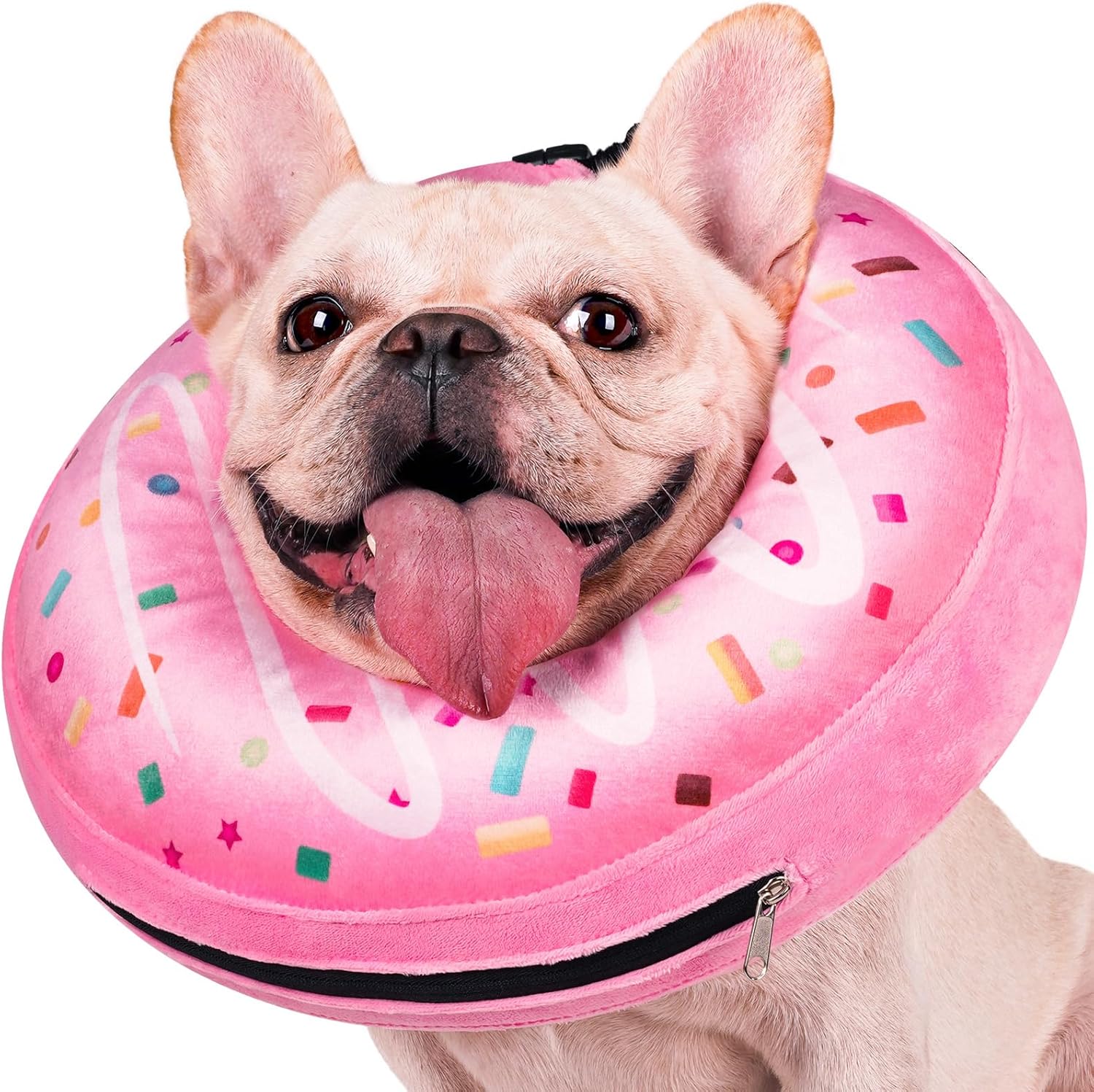
This inflatable donut collar replaces a hard Elizabethan cone with a soft, lightweight ring that keeps a dog from reaching wounds while allowing normal activities like eating and playing. Made of velvet with an internal air bladder, it inflates to provide a cushioned barrier and can be adjusted with a buckle, hook-and-loop, and zipper closure for a secure fit; five elastic loops let you attach it to the dog's regular collar for extra security. The design is aimed at pug-faced and other short-muzzled breeds and doubles as a neck pillow when not in active recovery use. Practical benefits include easier mobility and less stress for sensitive or small pets, machine-washable cover after deflating, and water resistance for quick cleaning. Important limitations are breed fit: it is not suitable for long-snouted or long-bodied breeds, and very determined chewers can still damage or bypass the collar, so supervision is required.
Best for: Pet owners who need a lightweight, low-stress recovery option for small or short-muzzled dogs that still prevents access to surgical sites while letting the animal move and eat normally.
Less Ideal for: Owners of long-snouted, large, or very powerful dogs that can reach wounds despite a donut collar or may chew through an inflatable design should choose a more substantial, rigid protector.
- Low-profile inflatable design reduces weight and improves mobility compared with rigid cones
- Velvet cover and air cushioning double as a comfortable neck pillow during recovery
- Multiple closures (buckle, hook & loop, zipper) and elastic loops help secure fit and prevent escapes
- Machine-washable cover and water resistant construction make cleaning straightforward
- Not suitable for long-nosed or long-bodied breeds by manufacturer guidance
- Can be damaged or bypassed by determined chewers, so it requires supervision
Verdict: The best inflatable cone is ideal for owners wanting a low-profile, travel-ready option that prevents pawing at ears without the bulk of a rigid cone.
REOMORE Dog Cone Collar M
Best Lightweight Cone
| Target Species | Dog |
|---|---|
| Closure Type | Hook & Loop |
| Fit Type | Custom Fit |
| Included Components | dog cone |
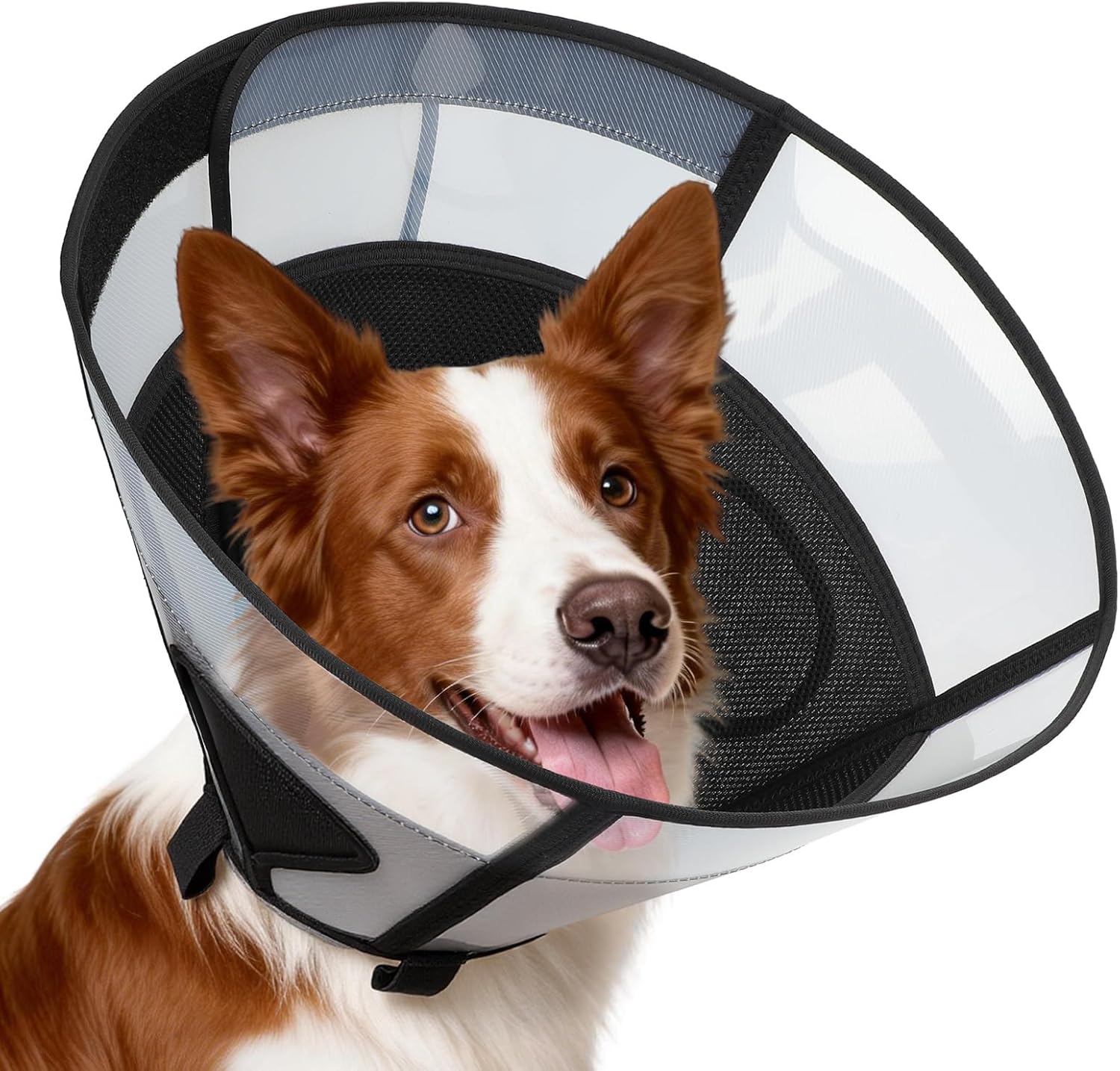
This REOMORE cone is a soft PVC e-collar with a foam inner layer and a wide Velcro closure that aims to keep medium to large dogs from reaching wounds or surgical sites. It is typically used after surgery, dermatology procedures, or anytime a pet must be prevented from licking or biting; the transparent PVC gives clear forward vision while the sturdy PVC body resists folding and chewing. The foam inner layer improves comfort compared with hard plastic cones and the large hook-and-loop strap makes fitting quick and adjustable for different neck girths. Four collar loops let you thread the pet's regular collar through the cone for extra security. On the downside, the PVC construction can trap heat and moisture more than ventilated fabric cones, and the soft design may still allow some dogs to partially reach low facial areas depending on body shape. For eye surgery specifically, its clear front gives visual access and the secure fit options help keep the eye protected, but owners should monitor airflow and comfort during recovery.
Best for: Buyers who need a secure, comfortable recovery cone that balances visibility and stay-put security for typical post-op care, especially where ease of fitting and extra anchoring are priorities.
Less Ideal for: Pets that overheat easily, have severe respiratory sensitivity, or dogs that require a highly ventilated or rigid cone for complete facial restriction should consider other styles.
- Transparent PVC lets the dog see forward which reduces anxiety
- Foam inner layer increases comfort compared with rigid cones
- Wide Velcro closure allows quick, wide-range adjustability for neck girth
- Four collar loops enable threading the pet's collar for added escape prevention
- Sturdy PVC body resists folding and aggressive chewing better than flimsy alternatives
- PVC surface can reduce airflow and become warm or collect moisture
- Soft cone may not fully block access to lower facial areas on some body types
Verdict: The best lightweight cone suits dogs that struggle with heavy gear, giving necessary protection with minimal added weight and better ease of movement.
Choosing the Right Dog Cone Ear Surgery: Key Factors to Consider
Accurate Sizing and Measurement
Getting the right size is the single most important factor for a cone after ear surgery. A cone that is too small will let the dog reach the ear with a paw or muzzle; a cone that is too large can rub the neck, impede rest, or create noisy, stressed behavior. Measure both circumference at the base of the skull and the distance from the nose tip to the base of the skull to choose a length that blocks the ear without extending unnecessarily.
Many dogs fall between standard sizes, so look for cones that offer incremental sizing or adjustable trim lines. If the cone has buckles or straps, make sure they allow micro-adjustments so the fit can be snug without causing pressure points. Accurate fitting reduces the need for repeated adjustments, which can disturb healing tissue and increase infection risk.
Comfort and Material
Comfort determines whether a dog will accept the cone long enough for the incision to heal. Soft or padded edges reduce rubbing at the neck and around the ears, while breathable fabrics help prevent heat and moisture buildup. For ear surgery, a cone that limits pressure around the skull and ear base is preferable because direct pressure can be painful or interfere with sutures.
Consider materials that are both durable and gentle: some soft fabric cones have foam cores that keep shape while cushioning contact points. Also evaluate allergenic potential; dogs with sensitive skin may react to certain plastics or adhesives. Comfort features encourage compliance, reducing the chance a dog will paw at the ear and jeopardize recovery.
Visibility and Hearing Impact
A cone for ear surgery should protect the ear while minimizing disruption to the dog's senses. Opaque, oversized cones can feel disorienting and increase anxiety, particularly in dogs already stressed from a clinic visit. A low-profile design that still blocks access to the ear helps dogs maintain orientation and reduces bumping into furniture.
While cones inevitably alter auditory perception a bit, designs that do not press against or cover the external ear canal excessively will be less disruptive. Choose cones that balance coverage with a geometry that follows the animal's head rather than flattening the ear against the skull.
Fastening Security and Ease of Adjustment
Secure fastening keeps the cone in place during routine activity and when a dog tries to rub or shake. Straps, buckles, or hook-and-loop closures should allow incremental tightening and resist loosening when the dog is active. For postoperative care, a closure that is easy for an owner to adjust while the dog is calm is important; avoid fastenings that require complex tools or two people to operate.
A secure but comfortable closure reduces the risk of the cone slipping and exposing the ear. Also consider whether the fastening can be checked visually without removing the cone, so owners can confirm fit during monitoring and wound checks.
Ease of Feeding, Drinking, and Daily Activity
Cones that prevent normal eating and drinking increase stress and complicate care. For ear surgery, choose designs that allow a dog to access food and water bowls without repeated intervention. Shorter, flared cones or offset neck designs can provide sufficient protection while still permitting access to bowls and crate rest.
Also consider whether the cone allows the dog to lie comfortably without forcing them into awkward positions. If the cone interferes with resting posture, animals may become restless and persistent in trying to remove it, which risks the surgical site.
Cleanability and Durability
Keeping the cone clean helps prevent contamination of the incision area and reduces odor and skin irritation. Materials that resist staining and are simple to wipe down or machine wash are preferable. For ear surgery, any design that traps moisture near the head increases infection risk, so breathable materials and easily rinsed surfaces are advantageous.
Durability matters because some dogs will test the cone by rubbing or rubbing against surfaces. A cone that deforms or loses fastening reliability will fail to protect the surgical site, so look for well-constructed seams and resilient materials that hold shape through repeated cleaning.
How Do I Measure My Dog for an Ear Surgery Cone?
Measure two dimensions: the circumference around the base of the skull just behind the ears, and the straight-line distance from the tip of the nose to the base of the skull. The circumference ensures the collar or strap will secure the cone without slipping, while the nose-to-base distance determines the cone length needed to block the ear.
Use a soft measuring tape and have someone hold the dog calmly if possible. If your dog is between sizes, choose the larger size only if the cone offers reliable micro-adjustment; otherwise opt for the smaller size to avoid excessive flaring that can catch on furniture.
- Measure lying or standing consistently, depending on how your dog will wear the cone.
- Allow room for a couple of fingers under the strap so it is not overly tight.
- Confirm your measurements against the manufacturer size chart before trimming or adjusting.
Can My Dog Eat and Drink Comfortably While Wearing a Cone?
Many cones are designed so dogs can eat and drink with minimal trouble, but some shapes or lengths do limit access. For ear surgery, look for cones with a flared front or shorter length that still protect the ear but allow normal feeding. If the cone prevents eating, you may need to raise shallow bowls or temporarily remove the cone under close supervision.
Test food and water access before leaving your dog unattended. If adjustments are needed, small changes to strap tightness or switching to a different bowl height often resolves issues without compromising protection.
- Try a slightly elevated bowl to improve access.
- Check whether the cone rests on bowl rims and choose wider, shallower dishes if necessary.
How Long Should My Dog Wear the Cone After Ear Surgery?
Wear time depends on the veterinarian's instructions and the type of procedure performed. Many ear surgeries require continuous protection through the initial healing phase, which can range from several days to a few weeks, until sutures are removed or the incision is well sealed.
Follow the clinic's timeline for wound checks and do not remove the cone permanently until healing milestones are confirmed. Short supervised breaks for feeding or medication are acceptable if the incision remains protected and the dog is calm.
- Confirm the expected healing timeline with your veterinarian.
- Perform daily wound checks as instructed and note any increased licking or irritation.
How Do I Help My Dog Adjust to Wearing a Cone?
Introduce the cone gradually: let your dog sniff and investigate it, then hold it near their head for short periods while offering treats. Once comfortable, secure the cone loosely for a few minutes, rewarding calm behavior, and increase wear time incrementally until full required use is tolerated.
Keep routines consistent so the cone becomes associated with normal activities like feeding and rest. If your dog becomes highly distressed, consult the clinic for alternatives or supplemental calming strategies.
- Use positive reinforcement and short sessions when first fitting the cone.
- Distract with favorite toys or chew items that are safe under supervision.
Alternatives and Supplemental Options to Standard Cones
There are supplemental options such as padded collars, inflatable neck pillows, and soft fabric cones. For ear surgery, these alternatives may be appropriate when they prevent access to the ear without applying pressure to the surgical site. Evaluate them carefully for coverage and fastening security before relying on them alone.
Some owners combine alternatives with supervised breaks from the cone to improve comfort while maintaining protection. Any alternative used should be monitored closely to ensure it does not shift and expose the incision.
- Assess whether an alternative allows full access to the ear during typical movement.
- Prefer designs that can be quickly adjusted or removed during supervised care.
How We Chose the Best Dog Cone Ear Surgery
We selected cones based on criteria tied directly to successful post-ear-surgery recovery and everyday usability. Primary considerations included fit accuracy, because an improperly sized cone lets dogs reach the ear or creates chafing; comfort and padding, which affect how long a dog will tolerate the device; and obstruction profile, meaning how the cone sits around the head and ears without compressing or irritating the surgical site. Materials and cleanability were weighed to ensure devices can be kept sanitary after discharge instructions. Fastening reliability was assessed to prevent slippage and repeated adjustments. We also considered whether the design allows dogs to eat and drink normally without removing the cone. We excluded products that prioritize general body coverage over targeted ear protection or that require complex assembly not suited for post-op care. We did not include items intended only as temporary novelty or those lacking secure fastening. The resulting list emphasizes cones that balance protection with low stress, easy maintenance, and dependable fit for post-ear-surgery healing.
Our full evaluation process is outlined in our review methodology.
FAQ
Will a softer cone prevent my dog from reaching the ear as well as a hard cone?
Soft cones can be effective if they maintain shape and length; the key is whether they block the paw and muzzle from reaching the ear. Soft designs that collapse under pressure may allow access, so choose ones with a supportive core or reinforced rim for reliable protection.
Can I trim a cone to fit better after ear surgery?
Trimming is sometimes possible if the cone has marked trim lines and clear instructions. Only trim enough to restore mobility without exposing the ear. When in doubt, consult your veterinarian before altering the cone to avoid compromising coverage.
Is it safe to leave the cone on overnight?
Leaving the cone on overnight is usually safe and often recommended during the initial healing phase to prevent nocturnal licking or scratching. Ensure the cone fit is comfortable and that the dog can change position and breathe easily while lying down.
What should I watch for that indicates the cone is causing a problem?
Watch for signs of chafing, raw skin, swelling around the neck or ears, increased agitation, or reduced eating and drinking. If you notice any of these, adjust the fit or consult the clinic for an alternative that provides protection without causing harm.
Can I use a cone after ear cleaning at home?
Using a cone after home ear cleaning can protect the area while it dries and reduce the chance of immediate recontamination from pawing. If the cleaning was minimal and the dog is calm, short supervised periods without the cone are acceptable, but continuous protection may be necessary if the dog repeatedly scratches.
Final Verdict
Protecting the surgical ear requires a cone that balances secure coverage with comfort and minimal sensory disruption. Prioritize accurate measurements, a comfortable material and padding, and a fastening system you can quickly check and adjust. Be mindful of feeding and resting needs and test any alternative solutions carefully to ensure they do not expose the incision. With the right fit and a gradual acclimation process, you can keep your dog protected while minimizing stress and supporting steady healing.

