

After eye surgery, a properly fitted cone is one of the simplest repairs you can make to prevent a dog from rubbing or scratching a healing eye. The right cone limits access without adding stress, keeps vision unobstructed enough for navigation, and withstands everyday wear during the recovery period. This guide covers six shortlisted cones chosen for eye-surgery recovery and evaluates them on fit, comfort, and protective design. Read on for practical advice to match a cone to your pet's size, temperament, and the specific needs of an ocular repair.
Top Picks at a Glance
| Best Overall Cone for Eye Surgery The best all-around cone optimized for post-eye-surgery protection | REOMORE Dog Cone Collar M |  |
| Best Budget Cone for Eye Surgery An affordable cone that still protects eyes after surgery | BENCMATE Inflatable Dog Collar Large |  |
| Best Soft Cone A padded, flexible cone that maximizes comfort and reduces stress | LH NTGR Soft Dog Cone |  |
| Best Inflatable Cone A lightweight inflatable option that lessens neck strain and discomfort | Supet Inflatable Dog Cone Collar |  |
| Best Rigid Cone A durable, firm cone offering maximum barrier and reliable protection | QIYADIN Pet Recovery Cone S |  |
| Best Low-Profile Cone A slimmer design that reduces interference with eating and movement | Didopet Inflatable Donut Dog Cone Medium |  |
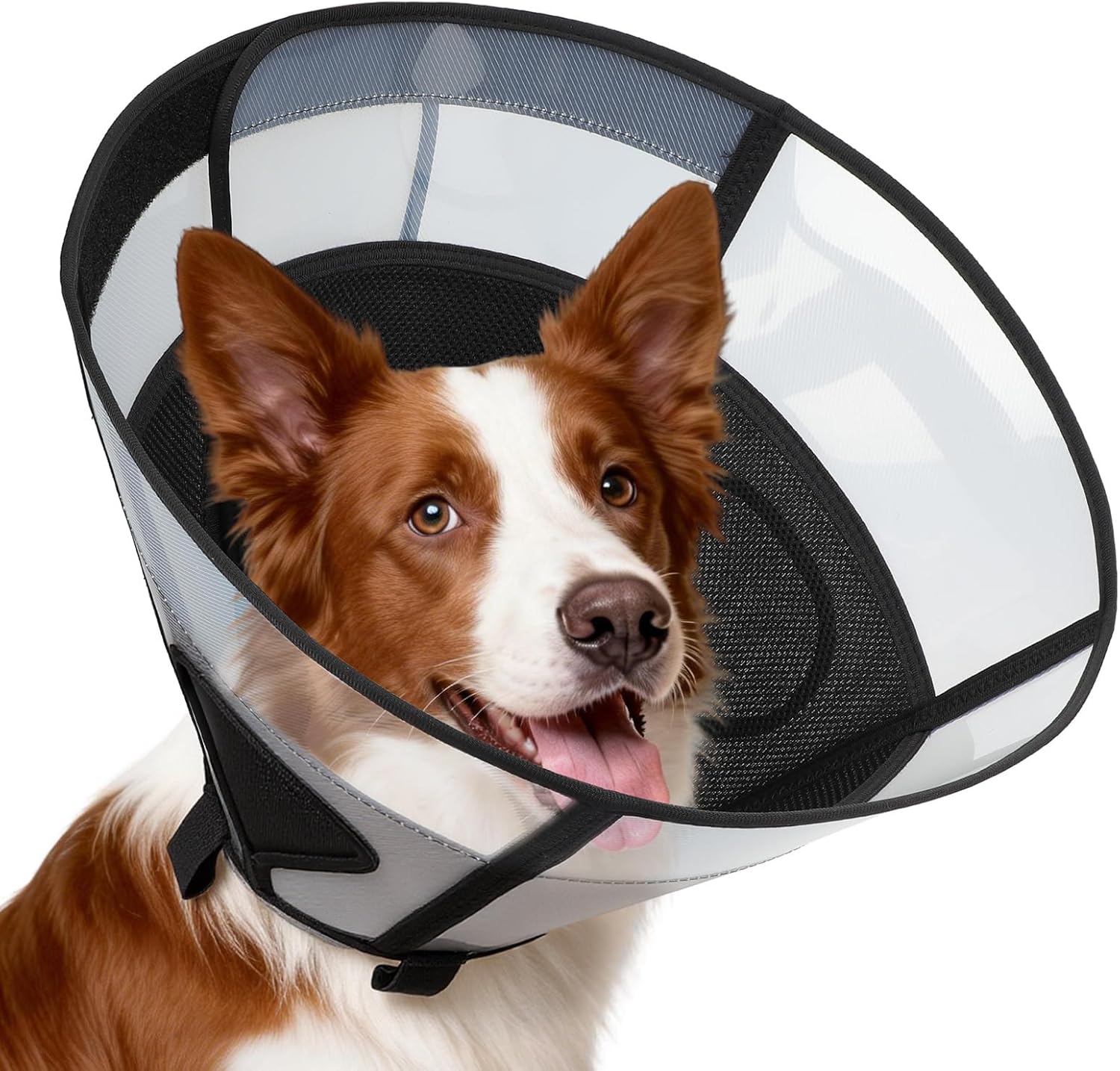
REOMORE Dog Cone Collar M
Best Overall Cone for Eye Surgery
| Target Species | Dog |
|---|---|
| Closure Type | Hook & Loop |
| Fit Type | Custom Fit |
| Included Components | dog cone |
This REOMORE cone is a soft PVC e-collar with a foam inner layer and a wide Velcro closure that aims to keep medium to large dogs from reaching wounds or surgical sites. It is typically used after surgery, dermatology procedures, or anytime a pet must be prevented from licking or biting; the transparent PVC gives clear forward vision while the sturdy PVC body resists folding and chewing. The foam inner layer improves comfort compared with hard plastic cones and the large hook-and-loop strap makes fitting quick and adjustable for different neck girths. Four collar loops let you thread the pet's regular collar through the cone for extra security. On the downside, the PVC construction can trap heat and moisture more than ventilated fabric cones, and the soft design may still allow some dogs to partially reach low facial areas depending on body shape. For eye surgery specifically, its clear front gives visual access and the secure fit options help keep the eye protected, but owners should monitor airflow and comfort during recovery.
Best for: Buyers who need a secure, comfortable recovery cone that balances visibility and stay-put security for typical post-op care, especially where ease of fitting and extra anchoring are priorities.
Less Ideal for: Pets that overheat easily, have severe respiratory sensitivity, or dogs that require a highly ventilated or rigid cone for complete facial restriction should consider other styles.
- Transparent PVC lets the dog see forward which reduces anxiety
- Foam inner layer increases comfort compared with rigid cones
- Wide Velcro closure allows quick, wide-range adjustability for neck girth
- Four collar loops enable threading the pet's collar for added escape prevention
- Sturdy PVC body resists folding and aggressive chewing better than flimsy alternatives
- PVC surface can reduce airflow and become warm or collect moisture
- Soft cone may not fully block access to lower facial areas on some body types
Verdict: The best all-around cone for eye surgery that balances full eye protection, comfort, a secure fit, and easy cleaning for typical post-op recovery.
BENCMATE Inflatable Dog Collar Large
Best Budget Cone for Eye Surgery

| Closure Type | Zipper |
|---|---|
| Fit Type | Snug Fit |
| Water Resistance Level | Waterproof |
| Neck Size | 18 inches |
| Material Type | Fabric, Polyvinyl Chloride (PVC) |
The BENCMATE inflatable dog collar is a soft, donut-style alternative to hard Elizabethan cones that cushions the neck while blocking most access to surgical sites and wounds. It inflates through a simple valve and secures with a zipper and inner loop that accepts the pet's regular collar for extra hold; the manufacturer recommends measuring neck circumference and sizing up for long-snout or long-limbed dogs. Because the collar keeps the pet's field of vision clear, dogs can eat, drink, sleep, and move more naturally than with rigid cones, and the plush or scratch-resistant outer covers unzip for cleaning or replacement. Practical benefits include lighter weight, improved comfort for resting, and easier storage when deflated. Limitations are that very flexible or determined dogs may still reach paws or extremities, and temperature changes can affect air pressure so occasional reinflation may be needed.
Best for: Pet owners who want a lightweight, low-stress recovery option that cushions the neck and lets dogs move, eat, and rest more comfortably during healing.
Less Ideal for: Owners of highly determined chewers or dogs that can reach surgical sites despite a donut collar should choose a more restrictive rigid cone or consult their vet.
- Soft, cushioned alternative to hard cones that preserves peripheral vision
- Inner loop accepts daily collar to reduce slipping
- Available in multiple fabric options with removable outer cover for cleaning
- Lightweight and packs down when deflated for easy storage
- May not fully prevent access to extremities for dogs with long snouts or high flexibility
- Air inflation can require occasional topping up, especially with temperature changes
Verdict: The best budget cone for eye surgery that provides necessary eye protection and acceptable comfort at a low cost for owners on a tight budget.
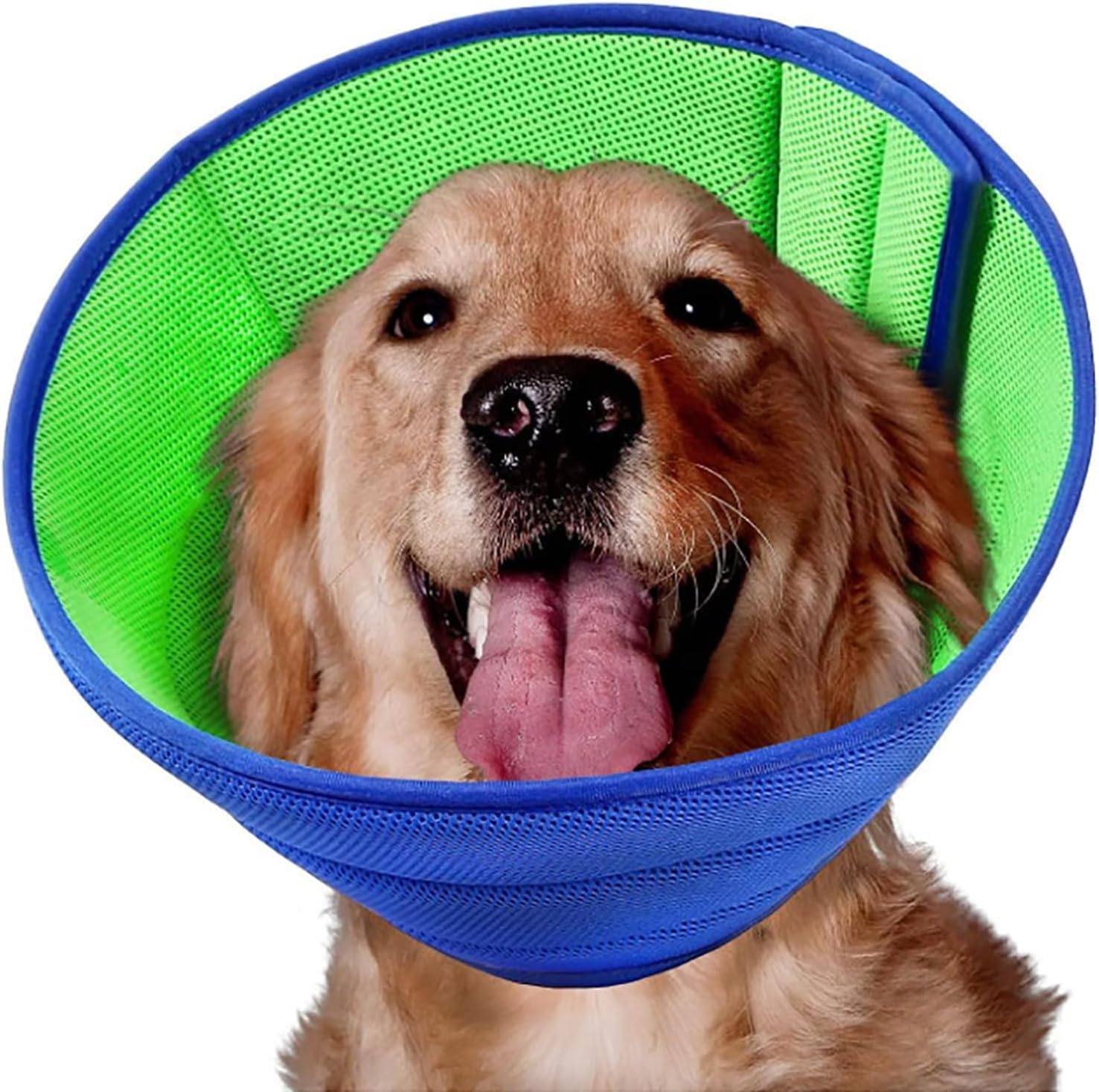
LH NTGR Soft Dog Cone
Best Soft Cone
| Fit Type | Custom Fit |
|---|---|
| Water Resistance Level | Not Water Resistant |
| Target Species | Dog |
| Dog Breed Size | Large, Medium, Small |
The LH NTGR Soft Dog Cone is a fabric-covered, Velcro-adjustable recovery collar intended to stop dogs from reaching wounds or surgical sites while reducing the rubbing and stress associated with hard plastic cones. It comes in multiple sizes and uses a soft but supportive construction with a fabric edge so the collar cushions the neck and avoids sharp impacts when pets bump into objects. Typical use is post-surgery or during healing from skin issues and the cone is secured around the neck with an adjustable Velcro closure to get a snug fit. Practical benefits include breathable, pet-friendly materials that lower anxiety and make eating and resting easier than with stiff cones, plus sufficient depth to block access to the face and eyes. Important limitations are that it is not water resistant and sizing requires careful measurement of neck and head length because the cone must be deeper than the pet's head to be effective; very determined chewers may still be able to damage the soft fabric over time.
Best for: Pet owners seeking a gentler, more comfortable alternative to rigid cones for pets recovering from eye or facial surgery who prioritize minimizing rubbing and stress during healing.
Less Ideal for: Owners of dogs that swim, frequently get wet, or are heavy chewers looking for a fully waterproof or highly chew-resistant barrier should consider different options.
- Soft, fabric-edged design reduces neck rubbing and impact discomfort
- Velcro adjustable fit lets you customize tightness for different pets
- Available in multiple sizes to cover small to large breeds
- Breathable construction that helps lower anxiety and makes eating and resting easier
- Not water resistant so it can soak and take time to dry
- Soft material can be chewed or worn through by persistent chewers
Verdict: The best soft cone for pets who need gentle, flexible protection that minimizes rubbing and discomfort while preventing access to the eyes.
Supet Inflatable Dog Cone Collar
Best Inflatable Cone

| Fit Type | Adjustable |
|---|---|
| Closure Type | Hook & Loop |
| Water Resistance Level | Water Resistant |
| Target Species | Dog |
| Neck Size | 11 inches |
The Supet inflatable dog cone is a donut-shaped recovery collar designed to keep dogs and cats from reaching wounds while staying lightweight and comfortable. It inflates into a cushioned ring and secures with an inner loop system that lets you thread your pet's regular collar through to help prevent slipping, plus an outer hook-and-loop strap for adjustment. The non-stick outer fabric resists hair clinging and can be removed for cleaning, and the water-resistant inner bladder provides neck support without blocking peripheral vision so pets can eat, sleep, and move more naturally than in a hard Elizabethan cone. It is best used for typical post-surgery protection, hotspot care, or to stop persistent licking on body areas the donut can physically block; however, the shape and size mean it is not suitable for breeds with very long noses or extremely long bodies. You will need to measure neck circumference to pick the right size and inflate it properly; very determined chewers may still be able to damage the bladder if left unsupervised.
Best for: Pet owners who want a low-profile, cushioned alternative to rigid Elizabethan collars for routine post-surgery or wound protection and prioritize comfort and mobility for their animal.
Less Ideal for: Owners of very long-nosed or very long-bodied breeds and households with pets that chew persistently should consider a different style of protective collar.
- Soft, cushioned barrier that is gentler than rigid cones
- Inner loops let you thread the pet’s regular collar to reduce slipping
- Outer hook-and-loop strap provides adjustable fit
- Non-stick outer fabric resists pet hair and is removable for cleaning
- Lightweight and water resistant so pets can eat and rest comfortably
- Not suitable for breeds with very long noses, legs, tails, or bodies
- Inflatable bladder can be punctured by determined chewers
Verdict: The best inflatable cone for pets who benefit from a low-profile, cushioned barrier that limits eye contact without the bulk of rigid cones.
QIYADIN Pet Recovery Cone S
Best Rigid Cone

| Material Type | Plastic |
|---|---|
| Closure Type | Velcro |
| Fit Type | adjustable |
| Water Resistance Level | Not Water Resistant |
| Neck Size | 14.2 inches |
This QIYADIN recovery cone is a lightweight, low-cost Elizabethan collar that keeps dogs and cats from licking or biting wounds after surgery. It is made of a flexible translucent plastic that can be rolled into a cone and secured with a wide Velcro strip, so it is quick to fit and easy to adjust for a snug hold. The inner edge is covered with cotton flannel to reduce chafing, and the material is thin enough that most pets can move, eat, and rest without strong obstruction. Because it is plastic, the cone is durable against scratching but not water resistant and should be kept away from heat sources. The offering includes nine sizes from XXXS to XXXL, which helps match small kittens up to large dogs, but sizing relies on careful measurement and the simple construction lacks padding, a rigid support ring, or extras like drainage holes. For someone prioritizing an inexpensive, effective barrier to licking, this cone does the job, though buyers wanting softer, waterproof, or inflatable options should consider alternatives.
Best for: Buyers who need an inexpensive, no-frills barrier to prevent licking or biting and who prioritize price and basic effectiveness over premium materials or extra features.
Less Ideal for: Pet owners who need waterproof, heavily padded, or inflatable collars for extended wear or pets that repeatedly escape simple Velcro closures should look at sturdier alternatives.
- Very lightweight so pets can move and eat more easily
- Wide Velcro closure allows fast, adjustable fit
- Cotton flannel edge reduces neck irritation compared with bare plastic
- Available in nine sizes to cover kittens through large dogs
- Simple plastic construction resists scratching and is easy to clean
- Not water resistant and offers minimal structural support compared with padded or inflatable collars
- Thin plastic can feel flimsy to some owners and may not suit escape-prone pets
Verdict: The best rigid cone for owners who want a sturdy, no-nonsense barrier that consistently prevents pets from reaching surgical sites or eyes.
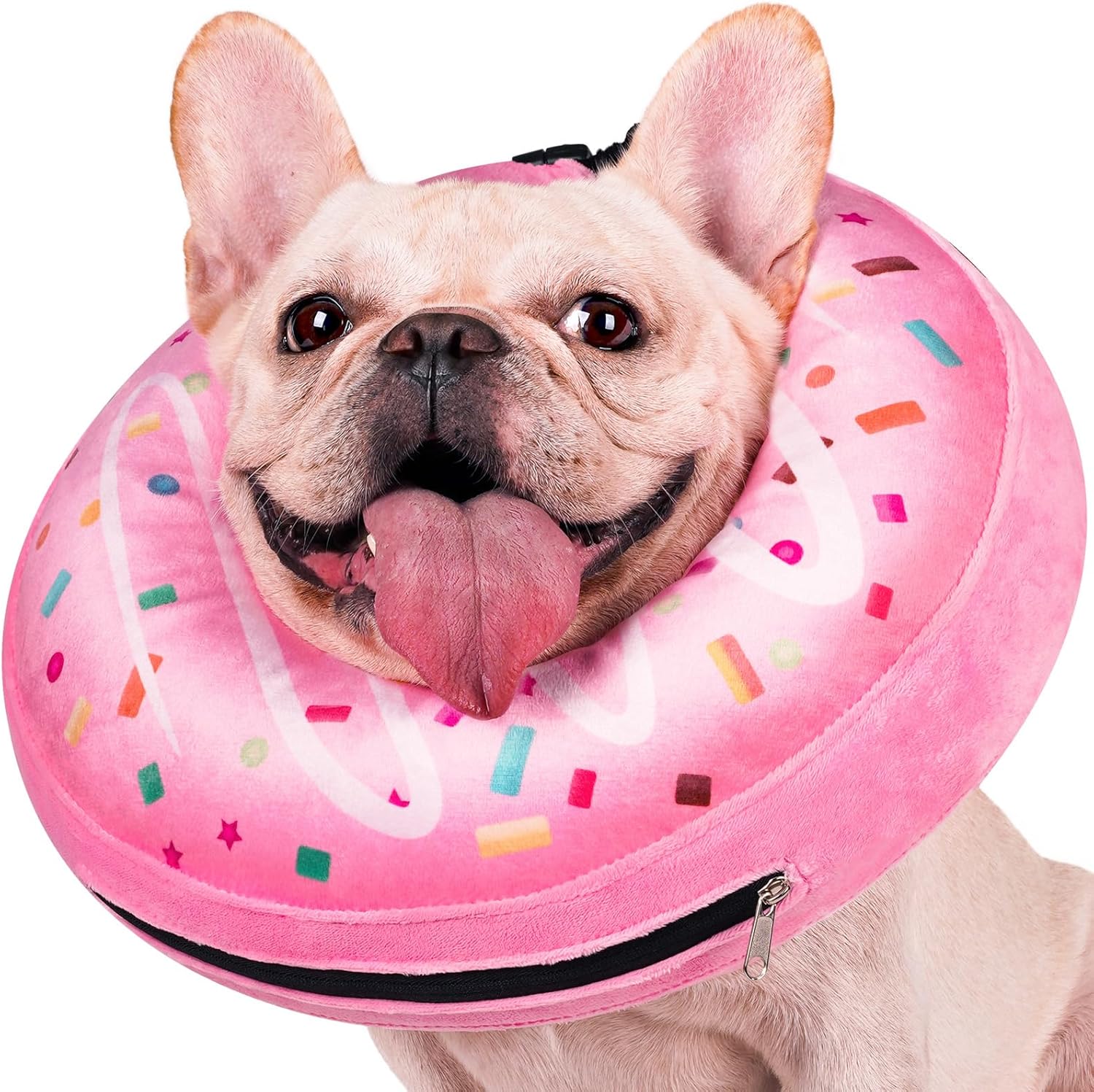
Didopet Inflatable Donut Dog Cone Medium
Best Low-Profile Cone
| Size guide | M (Neck 8"-11") |
|---|---|
| Closure type | Buckle, Hook & Loop, Zipper |
| Fit type | Adjustable |
| Water resistance | Water Resistant |
This inflatable donut collar replaces a hard Elizabethan cone with a soft, lightweight ring that keeps a dog from reaching wounds while allowing normal activities like eating and playing. Made of velvet with an internal air bladder, it inflates to provide a cushioned barrier and can be adjusted with a buckle, hook-and-loop, and zipper closure for a secure fit; five elastic loops let you attach it to the dog's regular collar for extra security. The design is aimed at pug-faced and other short-muzzled breeds and doubles as a neck pillow when not in active recovery use. Practical benefits include easier mobility and less stress for sensitive or small pets, machine-washable cover after deflating, and water resistance for quick cleaning. Important limitations are breed fit: it is not suitable for long-snouted or long-bodied breeds, and very determined chewers can still damage or bypass the collar, so supervision is required.
Best for: Pet owners who need a lightweight, low-stress recovery option for small or short-muzzled dogs that still prevents access to surgical sites while letting the animal move and eat normally.
Less Ideal for: Owners of long-snouted, large, or very powerful dogs that can reach wounds despite a donut collar or may chew through an inflatable design should choose a more substantial, rigid protector.
- Low-profile inflatable design reduces weight and improves mobility compared with rigid cones
- Velvet cover and air cushioning double as a comfortable neck pillow during recovery
- Multiple closures (buckle, hook & loop, zipper) and elastic loops help secure fit and prevent escapes
- Machine-washable cover and water resistant construction make cleaning straightforward
- Not suitable for long-nosed or long-bodied breeds by manufacturer guidance
- Can be damaged or bypassed by determined chewers, so it requires supervision
Verdict: The best low-profile cone for pets and owners who need effective eye protection with less bulk so feeding and normal mobility remain easier.
Choosing the Right Dog Cone Eye Surgery: Key Factors to Consider
Protective Coverage
A cone must reliably block a dog's ability to scratch, paw, or rub the operated eye. Look for a length and diameter that extend past the nose and reach slightly beyond the paw when the dog is sitting or lying down. The angle and rigidity of the cone affect how well a dog can turn its head toward the injured area; a straighter, longer cone generally gives better protection for eye procedures.
Insufficient coverage increases the risk of the dog accessing the surgical site, which can lead to infection or delayed healing. Overly large cones can prevent normal eating and drinking, so aim for a balanced size that both protects and allows basic activities.
Comfort and Rim Design
Because the surgical area around the eye is sensitive, the cone's rim should be soft and nonabrasive. Padded or rolled edges reduce chafing and pressure on the neck and facial fur, lowering the chance the dog will try to remove the cone out of irritation. For dogs with facial sutures or swelling, softer rim materials help avoid additional trauma.
Comfort influences tolerability. A dog that tolerates the cone is less likely to paw at it or shake excessively, which improves compliance during the recovery period. Check how the rim contacts both the neck and near-eye fur to prevent rubbing against incisions.
Fit and Adjustability
Proper fit prevents shifting that could expose the eye or cause discomfort. Adjustable straps, multiple fastener positions, or sizing collars help achieve a snug but not restrictive fit. Measure the dog's neck circumference and the distance from collar to nose to select the right size; many cones list those dimensions as a guide.
Adjustability also matters for changes in swelling or bandaging during recovery. A cone that allows quick, secure re-tightening without full removal lets you manage medications and inspections while keeping the device in place between checks.
Material and Durability
Materials range from rigid plastic to soft fabric and inflatable designs. For eye surgery, the cone needs enough rigidity to prevent the dog from reaching the face, yet durable construction to withstand daily activity and cleaning. Rigid options resist pawing better, while softer cones can be more comfortable but may allow more access if flimsy.
Consider whether the material is easy to clean and whether it tolerates repeated disinfection. Nonporous surfaces and removable/washable covers reduce infection risk after spills or bedding contact. Durable fasteners and seams extend usable life during multi-week recoveries.
Visibility and Mobility
A cone that overly restricts peripheral vision or impairs hearing can make a dog disoriented, increasing stress and the chance of collisions that could harm the surgical site. Look for designs that preserve some peripheral sightlines and do not block the dog's ability to navigate doors and furniture.
Mobility also affects the dog's willingness to wear the cone. Lightweight constructions and tapered shapes that avoid dragging on the ground help maintain normal movement. If a cone is too heavy or cumbersome, the dog may paw at it or refuse to walk, complicating care.
Practical Care and Maintenance
Postoperative recovery involves regular cleaning, feeding adjustments, and medication application. Choose a cone that is easy to remove and reinstall for these tasks, and that can be cleaned without degrading padding or fasteners. Removable covers, machine-washable fabrics, or wipeable plastics simplify upkeep.
Also consider storage and transport if you need to carry a spare for outings to the clinic. Collapsible or foldable designs can be convenient, but ensure foldability does not compromise protective integrity while in use.
How Long Does a Dog Need a Cone After Eye Surgery?
Recovery times vary by procedure and the veterinarian's instructions, but cones typically stay on until the incision or corneal repair is fully healed and the vet clears the dog. Expect a minimum of several days and commonly one to three weeks, depending on the surgery.
Follow-up exams determine readiness to remove the cone because visible healing does not always equal internal recovery. Keep the cone on during unsupervised periods and while sleeping unless the veterinarian gives a specific safe-off protocol.
- Keep the cone on during active healing and unsupervised times.
- Remove only under direct veterinary advice or supervised checks.
How to Measure Your Dog for the Right Cone Size
Measure neck circumference where the collar sits and the distance from the base of the collar to the tip of the nose. Many cones list both dimensions for sizing. Also consider the dog's head shape; deep-muzzled dogs may need different diameters than flat-faced breeds.
If between sizes, choose the larger option for better coverage but account for potential interference with eating. Adjustable fastenings can help fine-tune the fit when measurements are borderline.
- Neck circumference: measure snugly where the collar rests.
- Collar-to-nose length: measure from collar base to nose tip for cone depth.
Tips for Keeping a Dog Calm and Compliant with a Cone
Introduce the cone gradually if time allows: let the dog sniff and wear it briefly with positive reinforcement before the clinic day. Use treats and calm praise to build tolerance. Offer favorite chews or food-dispensing toys to distract during the initial adjustment period.
Ensure basic needs are met while the dog wears the cone: raise food and water bowls if necessary, and check that the dog can lie down comfortably. Monitor for rubbing or attempts to remove the cone and adjust padding or fit to relieve pressure points.
- Use short, supervised practice sessions before long-term wear when possible.
- Modify feeding setup to accommodate cone depth and maintain normal routines.
When an Alternative to a Traditional Cone Makes Sense
Alternatives like soft collars, inflatable devices, or partial face shields can work for certain recovery scenarios when approved by the veterinarian. These options may increase comfort and mobility but can trade off protection if they compress or deflect under paw pressure.
Discuss alternatives with your vet especially if your dog has anxiety or physical limitations that make a rigid cone harmful. Any alternative chosen should still prevent direct contact with the operated eye during unsupervised times.
- Consider alternatives only with explicit veterinary approval.
- Weigh increased comfort against potential reductions in protective coverage.
How to Handle Feeding, Medication, and Grooming with a Cone On
Remove the cone only when the pet is under supervision and you can prevent access to the eye during tasks that require full access, like applying ointments. For feeding, choose shallower bowls or temporarily lift the cone under supervision so the dog can eat comfortably.
Keep grooming minimal around the surgical site until healing is confirmed. Use short, gentle wipes for cleaning and schedule any necessary nail trims or baths with the clinic if you are unsure how to avoid disturbing the eye.
- Perform medication and feedings under supervision to avoid prolonged cone removal.
- Use temporary, supervised adjustments rather than leaving the cone off for extended periods.
How We Chose the Best Dog Cone Eye Surgery
We shortlisted cones specifically for post-eye-surgery recovery by applying selection criteria that reflect real needs after ocular procedures. Primary filters included protective coverage—ensuring designs block paw and face contact with the operated eye—and comfort features such as padded rims or soft materials that reduce rubbing around sensitive surgical sites. Fit and adjustability were next: we prioritized cones with multiple secure fastening options and a range of sizes so the device sits correctly without shifting during activity. Durability and material compatibility mattered because the cone must stay functional for the full healing window; washable or wipeable constructions scored higher. Safety and visibility were also considered; cones that allow peripheral sight and do not cause disorientation were preferred. Finally, we considered ease of everyday use: how readily the cone can be put on and removed for medication, feeding, and supervised rest. We excluded items meant primarily as novelty or costume collars and products without adequate sizing information or clear protective coverage for the eye area.
Our full evaluation process is outlined in our review methodology.
FAQ
Can a dog still eat and drink with a cone on?
Often yes. Many cones allow eating and drinking, but you may need to raise bowls or remove the cone briefly while supervising. Shallow dishes and slow-feeding bowls can help maintain access without prolonged cone removal.
Is a soft cone enough after eye surgery?
It depends on the procedure and the veterinarian's guidance. Soft cones can be more comfortable but may fold under pressure and allow paw access. Use soft options only when they provide adequate coverage and the vet approves.
How do I stop my dog from pawing at the cone?
Ensure proper fit and padding to reduce irritation, then distract with treats, toys, or gentle exercise. If pawing continues, consult your vet because persistent attempts may signal discomfort or insufficient coverage.
Can I leave the cone off while my dog naps?
Only with direct supervision or explicit veterinary approval. Dogs can rub or dislodge dressings during sleep, so unsupervised removal increases risk to the surgical site.
How do I clean a cone that gets dirty during recovery?
Wipe rigid cones with a disinfectant-safe cloth and follow any care instructions for padded or fabric components. Removable covers should be laundered according to their labels to prevent irritation and maintain hygiene.
Final Verdict
Prioritize protective coverage, a comfortable rim, and secure fit when choosing a cone for eye surgery. Expect to balance rigidity for protection with softer features that improve tolerability so your dog will keep the device on for the required healing period. Follow your veterinarian's timeline and check-ups, and be prepared to adjust fit, feeding setup, and cleaning routines to support a smooth recovery. With the right cone and careful monitoring, you can protect the surgical site while keeping your dog as comfortable as possible.

