

When an injury or sudden illness happens, having a well-organized first aid kit for your dog can make the difference between a minor scare and a serious emergency. You want supplies that are easy to find, appropriate for common canine injuries, and sturdy enough to survive outdoor use or car storage. This guide covers seven shortlisted dog first aid kits chosen for everyday pet owners, active families, and travelers who need reliable emergency supplies. We evaluated each kit for contents, durability, and ease of use so you can pick the right one for walks, road trips, or home use. Below are practical details to help you match a kit to your dog's size, lifestyle, and medical needs before the product list that follows.
Top Picks at a Glance
| Best Overall First Aid Kit A well-rounded kit that suits most dog owners' emergency needs | ARCA PET Cat & Dog First Aid Kit |  |
| Best Budget First Aid Kit An affordable kit that covers essential items without extras | rubyloo Dog First Aid Kit Travel |  |
| Best Compact First Aid Kit A small, space-saving kit made for travel and quick storage | Adventure Medical Kits Trail Dog First Aid Kit |  |
| Best Complete First Aid Kit A large kit with an extensive range of wound care and tools | GPUSFAK Pet First Aid Kit 136pc |  |
| Best Travel First Aid Kit Designed for outings, hikes, and car trips with organized compartments | ARCA PET First Aid Kit 100pc |  |
| Best Heavy-Duty First Aid Kit Rugged construction and refillable components for frequent or rough use | North American Rescue K-9 Handler IFAK Kit |  |
| Best Premium First Aid Kit Higher-end materials, advanced tools, and curated medical supplies | PetVet Medic Premium Pet First Aid Kit |  |
ARCA PET Cat & Dog First Aid Kit
Best Overall First Aid Kit

| Item model number | 0612464 |
|---|---|
| Manufacturer | ARCA USA, LLC. |
| Suitable for | Dogs, Cats & Small Animals |
| Suggested use | Home, Car, Camping, Road Trip |
The ARCA PET Cat & Dog First Aid Kit is a travel-ready emergency kit intended for home, car, and outdoor use that groups common pet-care supplies into a hard or water-resistant pouch for quick access. It includes basics you need for minor cuts, ticks, and eye or ear cleaning plus extras such as a muzzle, tick kit, flashlight, and a small detachable mini pouch for short trips. The kit is vet-reviewed and ships with a concise pet care guide, which helps owners follow step-by-step actions when an incident occurs. The high-visibility exterior and organized pockets make it simple to find bandages and antiseptic items under stress, and the compact profile means it stows easily in a car or backpack. Limitations are that it is designed for immediate first response and not as a substitute for veterinary care, and some items have expiration dates that require periodic replacement. For most routine bumps and outdoor mishaps this kit offers a practical, well-arranged set of supplies that keeps owners prepared on the go.
Best for: Pet owners who want a single, ready-to-grab kit that balances thorough contents, clear instructions, and durable storage for everyday travel and outdoor activities.
Less Ideal for: People seeking a veterinary-level trauma kit for surgery-level injuries or users who prefer to assemble customized medical supplies item-by-item.
- Comprehensive selection of items for common pet emergencies including muzzle, tick kit, and mini pouch.
- Vet-reviewed contents and an included pet care guide for step-by-step first aid instructions.
- High-visibility, water-resistant case with organized pockets for fast access during emergencies.
- Compact and portable design suitable for car, home, camping, and hiking use.
- Not a replacement for professional veterinary care and lacks supplies for complex or severe injuries.
- Some consumable items in the kit have expiration dates and will need periodic replacement.
Verdict: The best overall first aid kit balances a comprehensive selection of supplies, ease of use, and durable storage so most dog owners are prepared for common pet emergencies.
rubyloo Dog First Aid Kit Travel
Best Budget First Aid Kit

| Number of Pieces | 39 |
|---|---|
| Item model number | 1005 |
| Manufacturer | rubyloo |
| Recommended Uses For Product | Emergency Preparedness, Hiking, Home, Outdoors, Traveling |
This compact rubyloo kit supplies the essentials a pet owner needs for minor injuries and common outdoor incidents. Packed in a small water-resistant bag with reflective printing, the kit includes vet wrap, tick remover, saline eye and wound wash, non-stick pads, cleansing wipes, scissors, gloves, a thermal blanket, and a step-by-step pet first aid handbook vetted by veterinarians. It is designed for hiking, car trips, camping and everyday travel where space and weight matter, and the soft case fits easily into backpacks or glove compartments. The practical benefits are clear: you get a focused set of field-tested items for stopping bleeding, cleaning wounds, removing ticks, and safely restraining or handling a pet during an emergency. Limitations are its size and scope — this Travel/39-piece version is meant for short-term, external treatment and not for serious trauma or long-term veterinary care, and some users may prefer a larger kit with extra consumables for extended trips. For a low-cost, grab-and-go solution that covers common incidents, this kit is straightforward and thoughtfully organized.
Best for: Pet owners who want an affordable, no-frills emergency kit to handle minor injuries and common outdoor issues while traveling or hiking.
Less Ideal for: Those planning extended backcountry trips or needing a comprehensive home emergency supply should choose a larger, more fully stocked kit or professional veterinary gear.
- Includes core pet-first-aid items like vet wrap, tick remover, saline wash, non-stick pads, scissors, gloves, and a thermal blanket
- Vet-reviewed, step-by-step pet first aid handbook for quick guidance during emergencies
- Compact, lightweight bag with reflective printing that fits in backpacks, glove boxes, and travel gear
- Materials are described as medical-grade and non-toxic, suitable for safe external use on pets
- 39-piece travel kit has limited consumable supplies compared with larger, home-focused kits
- Intended for external, short-term care only and not a substitute for veterinary treatment
Verdict: The best budget first aid kit gives pet owners the essential supplies needed for minor injuries and common incidents at a low price without unnecessary add-ons.
Adventure Medical Kits Trail Dog First Aid Kit
Best Compact First Aid Kit
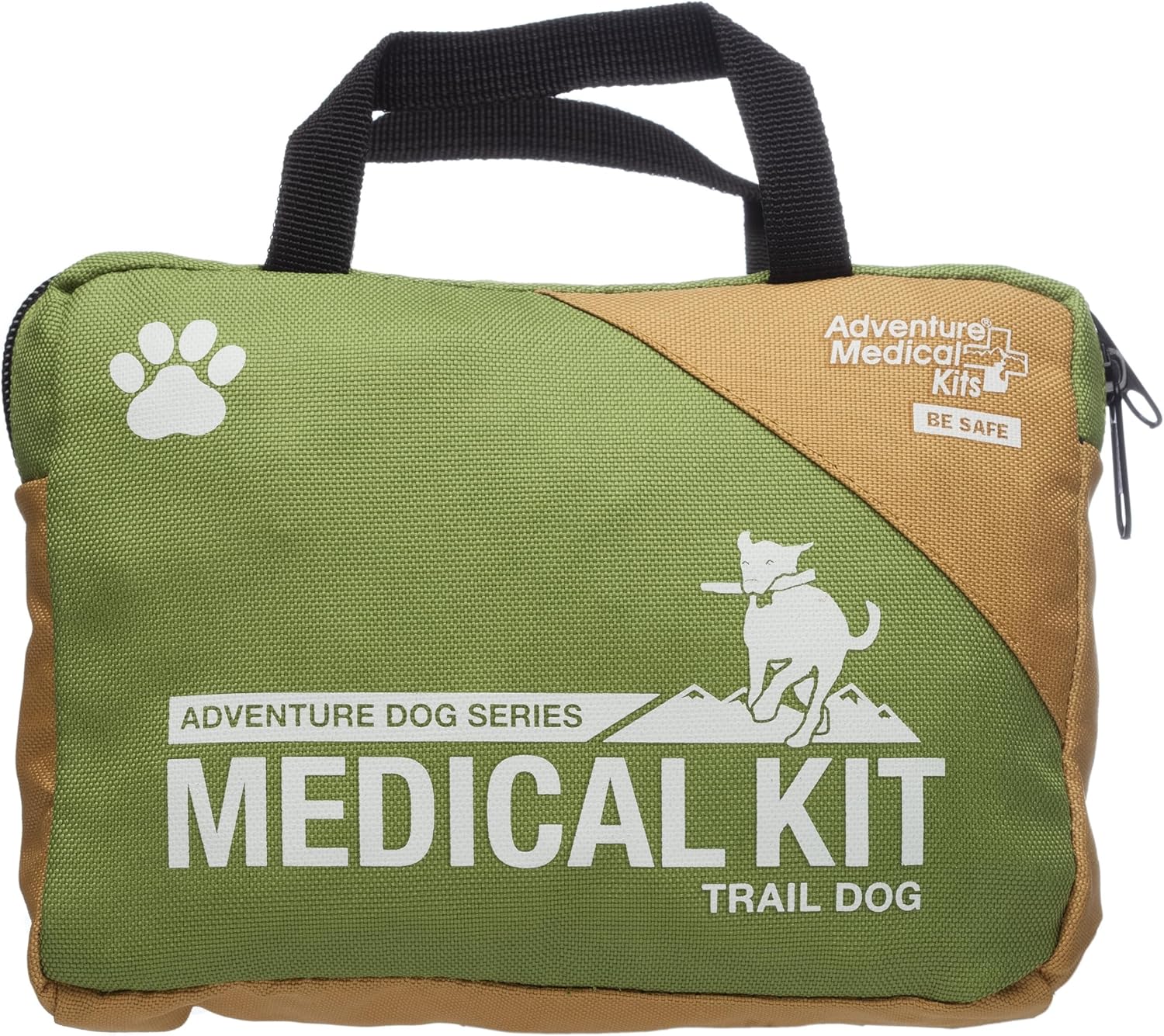
| Included components | Dressings, bandages, tools, pet first aid manual |
|---|---|
| Bag type | Waterproof DryFlex-style bag |
| Material type | Plastic |
| Number of pieces | 1 |
The Adventure Medical Kits Trail Dog First Aid Kit is a lightweight, compact pack designed for treating common canine injuries on the trail. It comes in a waterproof DryFlex-style bag and includes basic wound care items such as sterile gauze and non-adherent dressings, a conforming gauze bandage, cohesive elastic wrap, triple antibiotic ointment, antiseptic wipes, an irrigation syringe and saline, hydrogen peroxide, and forceps that double as a splinter picker and tick remover. A triangular bandage and pet first aid manual explain practical on-the-spot steps, including using the triangle as a muzzle when needed. The kit is sized for portability, so it is easy to stash in a daypack or car, and the selection of items covers cuts, scrapes, sprains, and minor allergic reactions. Because the kit focuses on portability, it does not include larger equipment or high volumes of consumables, so for group outings or extended backcountry trips you may want additional supplies. The inclusion of clear instructions and tick removal tools makes it especially useful for quick response during hikes and road trips.
Best for: Owners who want a lightweight, easy-to-carry kit that covers essential wound care and basic emergencies while hiking, driving, or doing day trips with their dog.
Less Ideal for: People planning long backcountry expeditions, multi-dog trips, or those who want a fully stocked veterinary-level kit.
- Compact, lightweight pack that is easy to carry in a daypack or vehicle
- Waterproof DryFlex-style bag protects contents from moisture
- Includes practical tools like splinter picker/tick remover and irrigation syringe
- Comprehensive basic wound-care items and topical antibiotics for common injuries
- Pet first aid manual with instructions for on-the-spot treatment
- Not intended as a substitute for professional veterinary care
- Limited quantity of consumables makes it less suited for multi-day group outings
Verdict: The best compact first aid kit is ideal for owners who need a lightweight, easy-to-carry set that still contains core items for on-the-go pet emergencies.
GPUSFAK Pet First Aid Kit 136pc
Best Complete First Aid Kit

| Number of Pieces | 136 |
|---|---|
| Material Type | Plastic |
| Material Features | Water Resistant |
| Recommended Uses For Product | Car |
This 136-piece pet first aid kit bundles a broad set of supplies and small instruments into a compact, zippered bag so you can handle common pet injuries and routine care at home or on the road. It includes dressings, cotton balls, scissors and tweezers plus other consumables and is organized with dual zippers and side storage to make items easy to find during a stressful moment. The nylon exterior is water resistant, which helps protect contents when stored in a car or packed for hiking and travel. The kit is meant to meet basic emergency needs and is handy for cleaning minor wounds, removing splinters, and carrying staples for short trips. It does not replace veterinary care for serious trauma or include prescription medications, and buyers should inspect contents and replenish used or expired items to keep the kit ready. For owners wanting a straightforward, portable kit that covers a wide range of everyday pet first aid tasks, this is a practical option.
Best for: Owners who want a well-rounded, ready-to-go kit to treat a variety of everyday pet wounds and minor emergencies at home or while traveling.
Less Ideal for: People seeking a professional-grade trauma kit or those who prefer a kit that includes specific prescription meds should look elsewhere or customize this kit with veterinary-recommended supplies.
- Comprehensive 136-piece contents for treating common pet injuries and routine care
- Water-resistant nylon bag protects supplies during travel and outdoor use
- Dual zipper and side-storage design keeps items organized and accessible
- Includes small instruments such as scissors and tweezers for basic procedures
- Does not include prescription medications or advanced veterinary tools
- Some items may need immediate replacement after use or not be suitable for severe emergencies
Verdict: The best complete first aid kit is for owners who want a thorough selection of supplies—including wound dressings, instruments, and meds—for treating a wide variety of pet injuries at home.
ARCA PET First Aid Kit 100pc
Best Travel First Aid Kit

| Item count | 100+ pieces |
|---|---|
| Includes | Digital thermometer, medicine feeder, slip lead, tick remover |
| Case feature | Reflective zipper and fluorescent lettering |
| Suggested use | Home, Car, Camping, Road Trip |
This ARCA PET first aid kit is built for travel and outdoor emergencies, packing more than 100 items into a water-resistant, high-visibility case with a reflective zipper and fluorescent lettering for easy spotting in low light. It includes practical tools such as a digital pet thermometer, medicine feeder, slip lead, tick remover, cotton swabs, and a small pet hair trimmer, plus a printed first-aid manual that walks through common incidents like bites, wounds, and heat-related issues. The case organizes supplies for quick access while driving, hiking, or camping and the included slip lead and thermometer let you stabilize an animal long enough to get to a vet. Because it is meant for minor, everyday situations, the kit is not a substitute for professional veterinary care and some components (like single-use pads and wipes) will need replacement after use. The bright, reflective exterior and a hardier fabric make it easier to find and keep dry than a plain pouch, which is useful when you are packing other travel gear.
Best for: Pet owners who prioritize a portable, well-organized emergency kit for road trips, hiking, and other outdoor outings where quick access and visibility matter.
Less Ideal for: Owners seeking a comprehensive medical-grade trauma kit for severe injuries or long-term veterinary treatment should look for professional veterinary supplies or consult a veterinarian.
- Comprehensive kit with over 100 travel-ready items including thermometer and medicine feeder
- High-visibility reflective case for easy location in low light
- Water-resistant fabric and organized pockets for quick access on the go
- Includes a printed pet first-aid manual to guide immediate responses
- Compact, travel-oriented contents such as slip lead and tick remover useful for roadside incidents
- Not a replacement for veterinary care and not intended for deep or severe injuries
- Some consumable items are single-use and will require restocking after deployment
Verdict: The best travel first aid kit focuses on portability, weather resistance, and organized packing so pet owners can handle common roadside and outdoor incidents away from home.
North American Rescue K-9 Handler IFAK Kit
Best Heavy-Duty First Aid Kit

| Manufacturer | North American Rescue |
|---|---|
| Date First Available | July 24, 2024 |
| Includes | C-A-T tourniquet, HyFin vent chest seals, ETD dressing, compressed gauze, petrolatum gauze, gloves, surgical tape, digital vet thermometer |
| Attachment | MOLLE/PALS compatible pouch |
The North American Rescue K-9 Handler IFAK Kit is a rugged, field-focused first aid pack sized to attach to MOLLE/PALS gear for immediate access during deployments or outdoor activity. It contains items aimed at major canine trauma and common emergencies such as severe bleeding, chest wounds, bloat, and heat injury, including a C-A-T tourniquet, HyFin vent chest seals, emergency trauma dressing, compressed gauze, petrolatum gauze, alcohol prep pads, surgical tape, nitrile gloves, and a digital veterinary thermometer. Its compact construction and MOLLE-ready layout make it easy to carry on an assault vest or pack and retrieve quickly under stress. The kit is built for repeated use in rugged conditions, so handlers can rely on durable packaging and medically relevant contents tailored to both dogs and humans. Limitations are that it is focused on trauma and immediate stabilization rather than comprehensive veterinary care, so it is intended as a point-of-injury resource until professional treatment is available, and users should restock single-use items after any deployment.
Best for: Buyers who need a tough, field-ready kit to stabilize major injuries for working dogs and handlers during outdoor work or adventures and prioritize quick access and durable construction.
Less Ideal for: Pet owners looking for a comprehensive home veterinary kit or basic first aid set for low-risk, indoor pets should consider a broader-scope kit instead.
- MOLLE/PALS-compatible pouch for secure attachment to vests or packs
- Includes high-impact trauma items like a C-A-T tourniquet and HyFin vent chest seals
- Compact, purpose-built kit focused on canine and handler point-of-injury care
- Durable packaging designed for repeated field access and outdoor use
- Not a full veterinary treatment kit—designed for immediate stabilization only
- Single-use consumables require prompt restocking after deployment
Verdict: The best heavy-duty first aid kit suits owners who need a durable, well-built kit that withstands outdoor use and repeated access during active adventures with their dog.
PetVet Medic Premium Pet First Aid Kit
Best Premium First Aid Kit

| Piece count | 124-piece |
|---|---|
| Manufacturer | PetVet Medic |
| Suitable for | Dogs and cats |
| Bag type | Weather-resistant carrying bag |
This PetVet Medic premium kit supplies a wide selection of veterinary-informed items for handling common pet emergencies at home or on the go. It is organized in a weather-resistant, zippered bag and includes wound washes and hydrogels, hemostatic styptic powder, activated charcoal, sterile gauze, non-adherent pads, cohesive bandage, scissors, stainless tweezers, digital thermometer, hemostatic forceps, splint components, syringe, tick tool, leash, folding bowl and an emergency blanket. A spiral-bound first-aid guide by a veterinarian explains step-by-step care so owners can act calmly while getting professional help. The variety and quantity of bandaging and wound-care consumables make the kit useful for repeated outings, hiking, travel, and vehicle storage. Because it is a comprehensive premium set, some items are single-use and supplies will need replenishing after moderate use, and not every advanced veterinary procedure is covered so you should still seek professional care for serious injuries or poisoning.
Best for: Pet owners who want a more complete, higher-quality emergency kit and are willing to invest in professional-grade supplies for home, travel, and outdoor use.
Less Ideal for: People who only need a very small or budget basic kit for occasional minor scrapes or who prefer to build their own custom supply set.
- Veterinary-informed assortment including wound wash, hydrogel, activated charcoal, and styptic powder
- Comprehensive bandaging supplies and multiple sterile dressings for repeat treatments
- Weather-resistant organized bag for travel, car, or hiking use
- Includes practical tools and diagnostic items such as digital thermometer, scissors, tweezers, and splint components
- Spiral-bound first-aid guide by a veterinarian for step-by-step instructions in an emergency
- Many consumable items are single-use and will require restocking after moderate incidents
- Not a substitute for professional veterinary care for serious injuries or poisoning
Verdict: The best premium first aid kit is for owners willing to invest in higher-quality materials, more specialized tools, and a broader set of professional-grade supplies for comprehensive pet care.
Choosing the Right Dog First Aid Kit: Key Factors to Consider
Kit Contents and Coverage
A comprehensive kit should include items for cleaning and dressing wounds, controlling bleeding, and managing minor burns or insect bites. Look for antiseptic wipes, sterile gauze, adhesive bandages in multiple sizes, non-stick dressings, and a roll of cohesive wrap that stays on fur without adhesives.
Beyond wound basics, include tools such as blunt-tip scissors, tweezers, and a digital thermometer. Kits that provide a basic emergency blanket, tick remover, and disposable gloves increase preparedness. Consider whether the kit supplies small-dose, canine-appropriate options or simply human supplies; the right mix affects how useful the kit will be in real emergencies.
Canine-specific Items and Instructions
Dogs have different needs than people, so kits tailored to canines are more practical. Canine-specific items may include an Elizabethan collar-style muzzle or soft muzzle for safe handling, sterile saline for eye and wound flushing labeled for veterinary use, and dosing charts for common over-the-counter items that are safe for dogs.
Clear, concise instructions that explain when to use each item, and simple first-aid steps for common situations such as bleeding, choking, heatstroke, or poisoning, reduce panic and improve response. Availability of QR codes or laminated quick-reference cards can be particularly helpful when adrenaline is high.
Case Durability and Organization
How a kit is packed matters. A durable, water-resistant case protects supplies from moisture and dirt when stored in a car or taken on hikes. Internal compartments, labeled pockets, or removable pouches make it faster to find critical items in an emergency.
Rigid shells resist crushing in a packed backpack, while softer cases are lighter and more flexible for stowing. Consider how the case closes — a zipper that opens fully or a clamshell design that lays flat simplifies access. Replaceable pouch systems are useful because you can carry a smaller go-bag and leave the full kit at home.
Portability and Storage Options
A kit meant for hiking needs to be compact and lightweight, while a car or household kit can be larger and carry spare supplies. Evaluate how and where you plan to keep the kit: under a seat, in a glove compartment, in a pantry, or in a backpack.
Look for attachment points, belt loops, or MOLLE-style webbing if you want to clip the kit to other gear. Visibility features such as a bright color or reflective trim can speed locating the kit in low light. Balance the number of supplies against the weight you are willing to carry during outdoor activities.
Refillability and Replaceability
First aid supplies are perishable either through use or shelf life. Kits that let you replace individual items afford better long-term value. Check whether common items like bandages, saline, and gloves are standard sizes that are easy to buy separately.
Kits that use standardized packaging and include an inventory list make restocking straightforward. Consider whether the kit contains many single-use packaged items that could be expensive or hard to source later. A simple checklist inside the kit helps you track what has been used and what to reorder.
Ease of Use Under Stress
In an emergency you may be working alone and under stress, so simplicity is vital. Supplies should be clearly labeled, and tools should be safe for nonprofessionals — for example, rounded-tip scissors and easy-grip tweezers. Pre-measured or clearly marked dosing guidance for common nonprescription medications reduces risk.
Instructional cards or brief laminated guides with step-by-step procedures for common incidents increase confidence. Consider kits that separate sterile items from general supplies to prevent accidental contamination when tending to a fresh wound.
What Should I Do First when My Dog Is Injured?
Remain calm and assess the scene for immediate danger before approaching your dog. If your dog is mobile, gently restrain them with a soft muzzle or leash to prevent bites; pain can cause sudden reactions even in friendly pets.
Check airway, breathing, and circulation quickly. For heavy bleeding, apply direct pressure with a clean cloth or sterile gauze while limiting movement. If you suspect a broken limb, try to keep the dog as still as possible and support the injured area without manipulating it.
- Control heavy bleeding with firm pressure and elevation if practical.
- Flush visible debris from wounds with sterile saline where available.
- Avoid giving human medications unless directed by a veterinarian.
How Do I Handle Common Outdoor Emergencies on a Hike?
For cuts, scrapes, and punctures, clean the wound with saline, apply an appropriate dressing, and wrap with cohesive bandage to secure without adhesives that stick to fur. For insect or snake bites, keep your dog calm and restrict activity; mark the bite time and seek veterinary care promptly.
Heat-related issues require immediate cooling: move to shade, apply cool water to the skin, and offer small amounts of water. Watch for signs of heatstroke such as heavy panting, drooling, collapse, or disorientation and act quickly to cool and transport to a clinic if symptoms worsen.
- Pack extra water and a lightweight collapsible bowl.
- Carry a small towel and a compact emergency blanket for shelter or cooling.
Can a First Aid Kit Help with Choking or Airway Blockage?
A properly equipped kit can include tools that aid in assessing and temporarily managing airway emergencies, such as hemostats or long tweezers for removing visible foreign objects reachable from the mouth. However, do not attempt blind probing of the throat where you cannot see the obstruction.
If your dog is choking and cannot breathe, contact emergency veterinary care immediately. Knowing safe handling maneuvers or having an emergency number easily accessible is as important as the tools in the kit because time is critical.
- Only remove visible obstructions if you can see and reach them safely.
- Avoid pushing objects further down the throat with blind attempts.
What Items Make a Compact Travel-ready Kit?
A travel kit should prioritize multipurpose items that handle the most likely problems: antiseptic wipes, small sterile gauze pads, adhesive bandages in several sizes, a small roll of cohesive bandage, disposable gloves, a tick remover, and a thermometer. Include a few bottled saline ampoules for wound and eye flushing.
Also carry a small laminated guide with emergency numbers, personal canine medical information, and brief first-aid steps. Keeping medicines or special supplies in a sealed, labeled pouch protects them from spills and makes them easier to find in a compact kit.
- Choose lightweight, resealable containers to reduce bulk.
- Pack items in clear pouches so you can see contents quickly.
How Often Should I Check and Restock My Dog First Aid Kit?
Inspect your kit at least twice a year and after any use. Check expiration dates on sterile items and medications, and replace consumables like saline, antibiotic ointment packets, and bandages as needed. A routine check after seasonal changes is a simple habit that keeps the kit ready.
After a trip or hike where supplies were used, restock before your next outing. Keep a running inventory list inside the kit and note where replacements can be found so restocking is quick and reliable.
- Set calendar reminders for mid-year and end-of-year checks.
- Swap out any items that show moisture damage, crushed packaging, or missing labels.
How We Chose the Best Dog First Aid Kit
We prioritized kits that offer a complete balance of immediate wound care, basic medications, and tools that nonprofessionals can use safely. Key evaluation criteria included the breadth and usefulness of included supplies, quality and durability of the carrying case, clarity of labeling and organization, and whether the kit includes canine-specific items or guidance for pet owners. We also assessed portability and storage design so kits are practical for hiking, car travel, and home use. Ease of replacement and refillability mattered because single-use kits that are hard to restock are less valuable over time. Instructional materials and simple first-aid guides were counted as positives because they reduce hesitation in emergencies. Kits that focused only on human items or lacked basic wound-care supplies were excluded. We did not include products that were primarily toys or novelty items rather than practical emergency kits. The selected items represent a balance of practical content, durable packaging, and straightforward usability for typical dog-first-aid scenarios.
Our full evaluation process is outlined in our review methodology.
FAQ
What are the most important items to have on hand for a dog emergency?
Prioritize sterile gauze, adhesive bandages, saline for flushing, cohesive bandage, disposable gloves, and a digital thermometer. Also include tools like blunt-tip scissors and tweezers and a basic first-aid instruction card.
Can I use human first aid supplies for my dog?
Many human supplies are usable, but they may not be sized or packaged for canine needs. Ensure any medications or ointments are safe for dogs and follow dosing guidance. Canine-specific instructions and tools reduce the risk of incorrect use.
How do I safely restrain an injured dog to provide first aid?
Use a soft muzzle or a leash to minimize biting risk, and have another person help if possible. Keep the animal as still and comfortable as you can, support injured limbs, and avoid forcing the dog into positions that increase pain.
Should I include medications in my dog first aid kit?
Including a limited set of over-the-counter items that are known to be safe for dogs can be helpful, but only if you have clear dosing guidance. It is better to consult your veterinarian before adding medications and to label any included drugs with dosing instructions and expiry dates.
What should I do if my dog swallows a toxic substance?
If you suspect poisoning, contact your veterinarian or a poison-control resource immediately and follow their instructions. Do not induce vomiting unless specifically directed by a professional; the right response depends on the substance and timing.
Final Verdict
Choose a dog first aid kit that matches how you live with your dog: a compact, lightweight kit for hikers and travelers, or a larger, better-stocked kit for home and car storage. Prioritize essential wound care items, clear instructions, and a durable, well-organized case that you can access under stress. Regularly inspect and restock the kit, and practice basic handling and restraint so you can act confidently when an emergency occurs. Focusing on coverage, durability, and ease of use will help you pick a kit that provides practical protection and peace of mind.

