

You want brushing to be quick, effective, and less stressful for both you and your dog. The right electric toothbrush can remove plaque more efficiently than a manual brush and make regular oral care easier to maintain. This guide collects the top shortlisted options in the electric toothbrush for dogs category and explains how they differ in cleaning action, brush head design, ergonomics, and safety. Read on to understand the specific features that matter for dog dental health and which toothbrush attributes help with handling, comfort, and long-term hygiene. The next sections outline what we considered when selecting these picks and provide practical guidance to help you choose the best fit.
Top Picks at a Glance
| Best Overall Electric Toothbrush The best all-around pick for most dog owners and teeth types | MIAOLLUN Electric Dog Toothbrush |  |
| Best Budget Electric Toothbrush A low-cost option that still provides solid cleaning performance | Penn-Plax 360° Electric Pet Toothbrush |  |
| Best Compact Electric Toothbrush A smaller, travel-friendly model for easy storage and transport | FRIENGOOD Ultrasonic Dog Teeth Cleaner |  |
| Best Long-Battery Electric Toothbrush Extended runtime models that need less frequent charging between uses | kingheroes C2PRO Electric Toothbrush |  |
| Best Quiet Electric Toothbrush Low-noise designs that reduce stress for noise-sensitive pets | Petsie Electric Dog Toothbrush Small |  |
| Best Gentle Electric Toothbrush Softer brush heads and gentler settings for sensitive mouths | QVKHPCL Ultrasonic Dog Teeth Cleaner |  |
MIAOLLUN Electric Dog Toothbrush
Best Overall Electric Toothbrush

| Power Source | Corded Electric (USB) or 2 AA batteries |
|---|---|
| Number of settings | 3 |
| Bristle Material | Silicone |
| Other Special Features of the Product | Brushing Timer |
This MIAOLLUN electric toothbrush is a 360° rotating, corded USB-powered kit designed for routine canine dental care. It includes four soft silicone brush heads — cup, cuspidal, flattop, and a general silicone head — and offers three automatic settings that let you adjust intensity for cleaning, tongue cleaning, and gum massage. The diamond-shaped, soft silicone bristles and gentle rotating motion aim to remove food residue while minimizing gum irritation, and the included brushing timer helps ensure consistent sessions. Power can come from the included USB cable or from two AA batteries when portability is needed, but the manufacturer warns against using both at once and recommends USB power for larger dogs that need stronger performance. The brush is rated IPX3, so avoid submerging the unit or getting the USB port wet. Practical limitations include a recommended monthly head replacement and moderate noise levels reported around 60 to 80 dB, which may bother noise-sensitive pets. For everyday home maintenance this kit provides a good balance of cleaning options and head choices, though buyers should follow the waterproof and replacement guidance to keep it reliable.
Best for: Buyers who want a versatile, everyday electric brush that balances gentle silicone heads with enough cleaning adjustability for regular at-home canine dental care.
Less Ideal for: Owners who need a fully waterproof or silent unit for water-heavy cleaning or very noise-sensitive dogs should consider other models.
- Four different soft silicone brush heads for tailored cleaning tasks
- Three automatic settings including a brushing timer for consistent sessions
- USB power plus battery option for flexible use
- Diamond-shaped rotating head and increased bristle count to reach crevices and remove residue
- IPX3 splash resistance requires care around water and USB port
- Manufacturer recommends replacing brush heads monthly which adds ongoing cost
Verdict: The best overall electric toothbrush balances cleaning power, brush head gentleness, battery life, and durability for everyday canine dental care.
Penn-Plax 360° Electric Pet Toothbrush
Best Budget Electric Toothbrush
| Power Source | Battery Powered |
|---|---|
| Bristle Material | Nylon |
| Brush Head Shape | Round |
| Number of settings | 1 |
| Included Components | Electric Toothbrush for Pets |
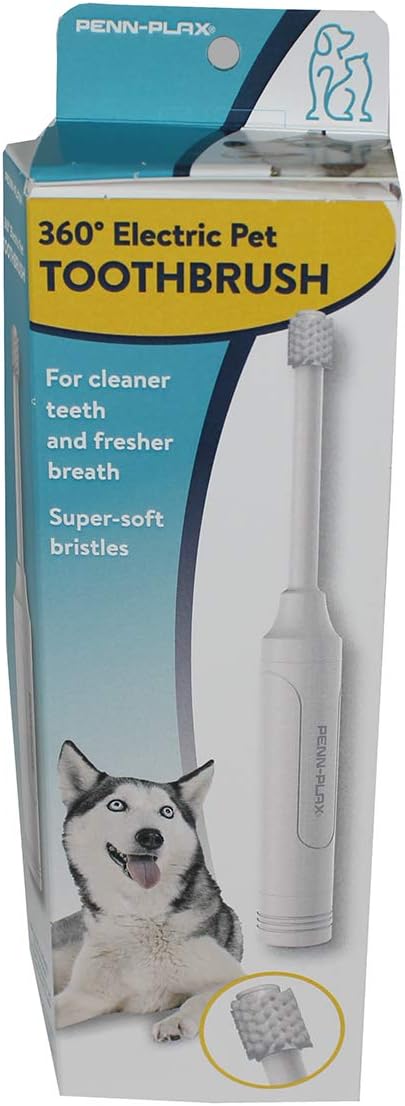
The Penn-Plax 360° Electric Pet Toothbrush is a compact, battery-operated brush that uses a rotating round head to clean pet teeth from multiple angles. It is typically used with a small amount of pet toothpaste while the animal is seated comfortably, and the 360-degree design shortens the time you need to keep a pet still by contacting more tooth surfaces in a single pass. The soft nylon bristles and long neck aim to reduce gum irritation and keep your hands away from teeth, which is helpful for anxious or fidgety pets. Operation is simple with a single automatic setting and one AA battery required, making it an easy grab-and-go tool for daily or several-times-weekly brushing. Important limitations are modest feature set and basic battery power rather than rechargeable operation, and some users may find the single speed less effective on heavy tartar compared with higher-torque models. For budget-minded owners wanting a straightforward electric option that reduces brushing time and handles both dogs and cats, this toothbrush delivers practical value.
Best for: Cost-conscious pet owners who want an easy-to-use electric brush that shortens brushing time and is gentle enough for dogs and cats.
Less Ideal for: Owners seeking a rechargeable brush, multiple speed settings, or a tool aimed at removing heavy, long-established tartar should consider higher-end models.
- 360-degree round brush head reaches multiple angles for quicker cleaning
- Super soft nylon bristles reduce risk of gum irritation
- Simple single-setting operation is easy to use during short sessions
- Long neck and ergonomic handle keep hands clear of the pet’s mouth
- Battery powered with non-rechargeable AA operation
- Single speed may struggle with heavy tartar buildup
Verdict: The best budget electric toothbrush offers reliable plaque removal and acceptable battery life at a lower price for cost-conscious pet owners.
FRIENGOOD Ultrasonic Dog Teeth Cleaner
Best Compact Electric Toothbrush
| Operating Frequency | 30-40KHZ |
|---|---|
| Charging Time | 2-3.5H |
| Power | <3W |
| Waterproof Rating | IPX5 |
| Battery Input | 2A |
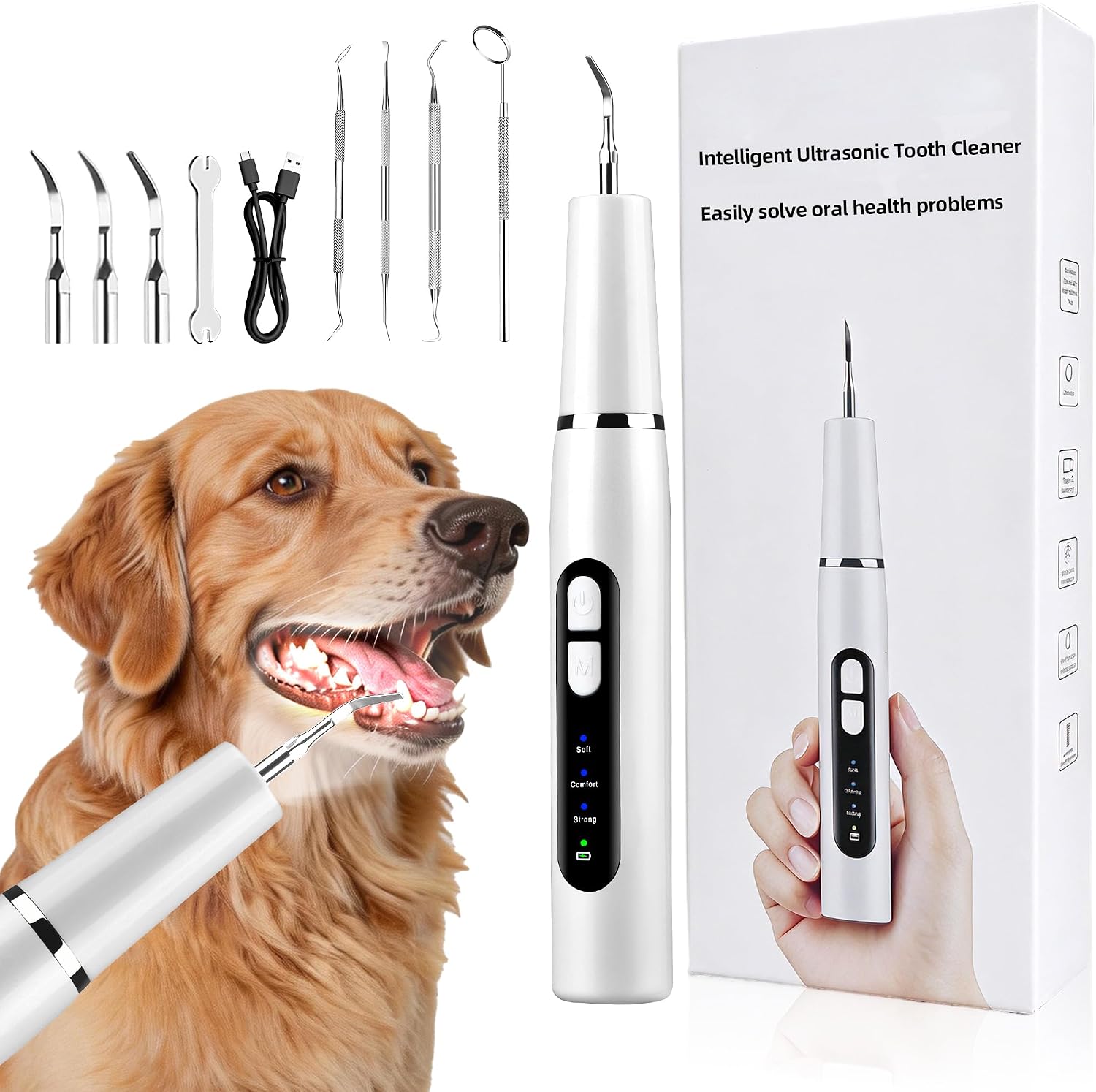
The FRIENGOOD Ultrasonic Dog Teeth Cleaner is a compact, USB‑C rechargeable ultrasonic scaler kit designed for routine at‑home cleaning of pet teeth. It uses 30–40 kHz ultrasonic vibration and several adjustable intensity modes so you can choose a gentler setting for small or sensitive pets and higher power for heavier tartar. A smart contact sensor disables vibration when it touches soft tissue to reduce the chance of gum damage, and a built‑in LED light plus included oral mirror and multiple replaceable tips help you see and reach back teeth. The unit is IPX5 water resistant for easy wipe‑down and charges in about 2–3.5 hours. In practice this device is best for owners who want a portable, travel‑friendly tool to supplement regular brushing and reduce the frequency of professional cleanings; it is not a replacement for veterinary dental procedures or anesthetized scaling. The lightweight handheld form and included accessories make it convenient to use at home or on trips, though careful slow introduction and steady hands are needed for anxious pets.
Best for: Pet owners who want a small, travelable electric dental tool to maintain their dog or cat’s teeth between vet cleanings and prefer a device that is easy to store and carry.
Less Ideal for: Owners looking for a one‑time cure for heavy tartar or who need a professional-grade scaler suitable for anesthetized dental work should seek veterinary services instead.
- Compact, lightweight handheld design for travel and tight storage
- Adjustable ultrasonic modes accommodate sensitive small pets and heavier tartar
- Smart contact sensor stops vibration on soft tissue to help protect gums
- Built‑in LED light and included mirror and multiple tips improve visibility and access
- USB‑C rechargeable battery with IPX5 rating for easy cleaning and portability
- Intended as a home maintenance tool and not a substitute for professional veterinary cleaning
- Requires patient training and steady handling for anxious or uncooperative pets
Verdict: The best compact electric toothbrush is small and lightweight for travel or tight storage while still delivering effective cleaning for dogs on the go.
kingheroes C2PRO Electric Toothbrush
Best Long-Battery Electric Toothbrush

| Motor speed | Up to 42,000 VPM |
|---|---|
| Modes | Clean, Whiten, Soft, Super |
| Brush heads included | 8 |
| Battery runtime | Up to 60 days per charge |
The kingheroes C2PRO is a sonic electric toothbrush kit that delivers high-frequency vibration—advertised up to 42,000 VPM—across four selectable modes (clean, whiten, soft, super) and ships with eight replacement brush heads and a travel case. For routine dog dental care it provides strong plaque removal and brushing consistency thanks to the metal-driven shaft and the range of intensities, letting you pick a gentler setting for sensitive mouths or a higher mode for stubborn tartar. The long battery life is a standout; the claimed 60-day runtime between charges reduces interruptions for frequent users or multi-dog households and makes the unit convenient for travel. Heads arrive individually sealed and can be swapped often without immediate repurchases. Trade-offs include a relatively powerful sonic action that may take an introduction period for noise- or vibration-sensitive pets, and the set uses a single rechargeable battery system so you cannot hot-swap power sources. The included travel case and extra heads make this a practical, low-maintenance option for owners focused on regular at-home dental maintenance for dogs.
Best for: Owners who prioritize long intervals between charges and want a complete kit for regular at-home dog dental care across multiple pets or travel situations.
Less Ideal for: People whose dogs are extremely noise or vibration averse or who need a battery-swappable toothbrush for continuous use without recharging.
- High-frequency sonic vibration up to 42,000 VPM for effective plaque removal
- Four cleaning modes to match sensitivity and cleaning needs
- Very long claimed battery life (up to 60 days per charge) reduces charging frequency
- Includes eight replacement brush heads and a travel case for convenience and travel
- Powerful vibration and sound may unsettle noise-sensitive or anxious dogs
- Relies on internal rechargeable battery without user-replaceable backup
Verdict: The best long-battery electric toothbrush suits owners who want fewer charges and consistent cleaning performance over many sessions or multi-dog households.
Petsie Electric Dog Toothbrush Small
Best Quiet Electric Toothbrush

| Item model number | PETTOOTHBRUSH-L |
|---|---|
| Batteries | 1 Lithium Ion required |
| Manufacturer | Vis Health |
| Date First Available | March 25, 2024 |
This Petsie electric toothbrush is built for low-stress daily brushing of small dogs and uses a vibration-free design with electrolytic technology to break down plaque and tartar without noise or scrubbing. It is used like a conventional powered brush: attach the size-appropriate replaceable head, guide the lit brush along each side of the mouth for the 60-second timed cycle, and track sessions with the companion app. The electrolytic dual-metal beams provide a chemical-free way to loosen buildup, and the quiet operation and built-in light make it easier to brush nervous puppies without fights over toothpaste or loud motors. The included app and reminders help make brushing consistent, and the manufacturer claims the rechargeable battery can last up to a year of daily use between charges, reducing recharge hassle. Limitations to note are that it requires size-matched replacement heads and that the electrolytic method is different from mechanical scrubbing, so owners used to oscillating brushes should expect a different feel and may need to monitor effectiveness on heavy tartar.
Best for: Puppy owners who prioritize a quiet, low-stress daily brushing routine and want an easy-to-use tool that encourages consistency without loud vibration.
Less Ideal for: Owners seeking an aggressive mechanical scrub for existing heavy tartar or those who prefer traditional vibrating/oscillating toothbrush sensations.
- Silent, vibration-free operation reduces stress for anxious or skittish puppies
- Electrolytic technology targets plaque and tartar without toothpaste or aggressive scrubbing
- Built-in 60-second timer, light, and companion app make consistent daily routines easy
- Replaceable, size-specific brush heads let you keep the handle and swap heads as puppy grows
- Long-lasting rechargeable battery designed for up to a year of daily brushing between charges
- Requires purchasing size-specific replacement heads every few months
- Electrolytic cleaning feels different from mechanical brushes and may require monitoring for heavy tartar
Verdict: The best quiet electric toothbrush minimizes vibration and sound to make brushing calmer and easier for anxious or noise-sensitive dogs.
QVKHPCL Ultrasonic Dog Teeth Cleaner
Best Gentle Electric Toothbrush

| Power | Ultrasonic high-frequency vibration |
|---|---|
| Modes | 5 adjustable modes |
| Light | Built-in LED |
| Batteries | 1 12V battery included |
This ultrasonic dog teeth cleaner uses high-frequency vibration to loosen visible plaque, tartar, and surface stains on hard tooth surfaces during at-home dental care. It is used like a small electric scaler: select a low mode, position the cleaning head against the tooth surface so the device activates, and let the ultrasonic action plus gentle motion work while the LED lamp improves visibility in back teeth. The unit includes multiple cleaning heads and a rechargeable plaque remover, and the head is designed to pause on soft tissue to reduce gum contact. Practical benefits include clearer view and targeted cleaning for hard surfaces, five intensity settings for gradual introduction, and guidance for easing anxious dogs into sessions. Important limitations are that this is meant for surface plaque on hard tooth areas rather than deep subgingival cleaning, and it requires careful technique and gentle pressure to avoid gum irritation; dogs that resist handling may still need professional dental care. With cautious use and short, rewarded sessions it can be a useful tool for regular at-home maintenance but does not replace veterinary dental treatments.
Best for: Buyers who prioritize a gentle, adjustable electric cleaner for routine at-home plaque control and want a tool that can be introduced gradually to anxious dogs.
Less Ideal for: Owners seeking a device to remove heavy or below-gum tartar or those who cannot safely restrain or acclimate their dog to a vibrating tool.
- Ultrasonic high-frequency vibration targets visible plaque and surface tartar on hard tooth surfaces
- Five adjustable modes let you start very gently and increase intensity as the dog acclimates
- Built-in LED light improves visibility for back teeth and tight areas
- Interchangeable cleaning heads and rechargeable design support ongoing at-home use
- Not intended to remove deep tartar below the gumline or replace professional dental cleanings
- Requires careful technique and gentle pressure to avoid contacting gums or stressing the dog
Verdict: The best gentle electric toothbrush provides softer bristles and mild modes that clean effectively without irritating sensitive gums or teeth.
Choosing the Right Electric Toothbrush Dog: Key Factors to Consider
Brush Head Size and Shape
Proper brush head sizing is essential because dog mouths vary widely by breed and age. A head that is too large will make it hard to reach molars and can trigger resistance, while a head that is too small may not contact enough tooth surface for efficient cleaning.
Look for options that offer multiple head sizes or a compact rounded head shaped to follow a dog's tooth row. Soft, tapered bristles help reach under the gumline without irritating tissues. Consider how easy replacement heads are to find and whether the brush system allows swapping heads without special adapters.
Cleaning Action and Bristle Design
Different electric toothbrushes use oscillation, rotation, vibration, or sonic action. For dogs, the goal is to dislodge plaque without causing discomfort. Bristle density, length, and stiffness determine how effectively the brush scrubs tartar-prone areas and massages gums.
Choose a brush with gentle but effective action and soft bristles designed for pets. A head that combines short stiffer bristles for surface scrubbing and longer tapered bristles for interdental contact tends to perform well. Avoid overly aggressive motions that can distress your dog or abrade enamel when used frequently.
Ergonomics and Handling
Good ergonomics reduce the time and stress of a brushing session. A comfortable grip, balanced weight, and reachable power controls let you maneuver inside the mouth with one hand while steadying the dog with the other.
Consider the length and contour of the handle and whether the brush feels secure when wet. Smaller, lighter handles may be better for owners with smaller hands or for brushing small dogs. Buttons should be easy to operate without tight pinching, and any indicator lights should be visible without distracting the dog.
Power Settings and Noise Level
Power variability matters because dogs tolerate different intensities. Gentle modes or lower vibration settings help introduce brushing to anxious animals while higher settings can improve cleaning for tolerant dogs. Noise level is equally important since high-frequency sound or vibration can spook sensitive pets.
Select a device with multiple speed settings and a reputation for quiet operation. A gradual ramp-up or a gentler low setting helps desensitize dogs. If the brush includes an on-board timer, a short preset cycle can encourage consistent brushing habits without prolonged stress.
Battery Life and Charging
Battery reliability affects how often you must recharge and whether the brush is available when needed. Long battery life is useful for households that brush multiple pets or for owners who prefer less frequent charging. Rechargeable batteries should hold a charge across many cycles without rapid decay.
Check how the brush charges—USB, dock, or replaceable batteries—and whether it indicates low battery. Fast charging is convenient, but robust run time and the ability to complete multiple brushing sessions on a single charge are more valuable for regular dental care.
Maintenance and Replacement Parts
Hygiene and cost over time depend on how easy it is to clean the brush and find replacement heads. Removable, dishwasher-safe parts or water-resistant designs simplify rinsing after use. Readily available replacement heads in various sizes let you maintain an appropriate fit as your dog ages.
Also consider how simple it is to detach and reattach heads without tools, whether the brush design traps less debris, and whether seals protect internal electronics from moisture. Reliable availability of parts and clear replacement guidance reduce long-term ownership friction.
How Often Should I Brush My Dog with an Electric Toothbrush?
Daily brushing is the ideal standard for controlling plaque buildup, but frequency depends on your dog's oral health and tolerance. For many dogs, three to four times per week with an effective electric toothbrush yields meaningful benefits compared with infrequent brushing.
If your dog resists brushing, start with short sessions focused on accessible teeth and gradually increase duration and coverage. Consistency is more important than long sessions; short daily or every-other-day routines often produce better results than occasional long cleanings.
- Aim for 1–2 minutes total per session, focusing on outer tooth surfaces.
- Increase frequency if a veterinarian notes early tartar buildup.
- Use gentle modes initially to build tolerance before moving to stronger settings.
What Is the Safest Way to Introduce an Electric Toothbrush to a Dog?
Introduce the device gradually to avoid alarming your pet. Let the dog sniff the powered-off brush, reward calm behavior, then briefly turn it on near the animal so they can get used to the sound. Follow with a short, positive brushing attempt on a single tooth or two.
Pair the experience with treats and praise and limit first sessions to a few seconds. Over several days, lengthen the time and cover more teeth as the dog becomes comfortable. Always stop if the dog shows clear distress and retry later at a gentler pace.
- Desensitize to the sound before touching the mouth.
- Use positive reinforcement and short, incremental steps.
- Stop and try again later if the dog becomes highly stressed.
Can Electric Brushes Damage Dog Teeth or Gums?
When used properly with soft bristles and gentle settings, electric toothbrushes are safe and effective for dogs. Damage is more likely from using overly stiff bristles, excessive force, or high-speed modes that abrade enamel or irritate gums.
Follow manufacturer guidance on head selection and avoid prolonged pressure against a single spot. If you notice bleeding, increased sensitivity, or gum recession, pause brushing and consult a veterinarian for an oral health check.
- Choose soft, pet-specific bristles and appropriate head size.
- Use light, sweeping strokes rather than hard scrubbing.
- Seek veterinary advice for persistent bleeding or discomfort.
How to Keep Brush Heads Clean and Sanitary
Rinse heads thoroughly after each use and allow them to air dry on a clean surface. Regular deep cleaning can include soaking heads in a pet-safe antiseptic rinse for the recommended time, then rinsing again before use.
Rotate between multiple heads so each has time to dry fully, and replace heads according to the manufacturer's guidance or sooner if bristles are frayed. Storing heads in a dry, ventilated container reduces microbial growth and keeps brush components in better condition.
- Rinse immediately after brushing and air dry upright.
- Soak periodically in a pet-safe rinse to sanitize.
- Replace heads when bristles splay or every few months if used frequently.
Which Toothbrush Features Help with Senior or Small Dogs?
Senior dogs and small-breed dogs often benefit from the smallest available brush head and the gentlest power settings. Seniors may have thinner enamel and more sensitive gums, so a soft, low-intensity mode reduces the chance of irritation while still removing surface plaque.
Lightweight handles and compact head profiles make it easier to reach tight mouths and back molars. If mobility or jaw strength is limited, a short brushing cycle reduces strain while allowing focused cleaning of problem areas.
- Prefer compact heads and very soft bristles for small mouths.
- Use low-speed settings and short sessions for senior dogs.
- Choose lighter handles for better control when maneuvering in confined spaces.
When Should I Contact a Veterinarian About My Dog's Teeth?
Contact a veterinarian if you notice persistent bad breath, visible tartar that brushing cannot remove, loose teeth, bleeding gums, swollen or receding gums, or if your dog shows pain when eating. These signs can indicate periodontal disease, which requires professional assessment.
Regular professional exams complement at-home brushing. If your veterinarian recommends a cleaning or treatment, follow their timeline for at-home care and any specific brush head or routine adjustments they suggest.
- Watch for chronic halitosis and loose or discolored teeth.
- Seek veterinary evaluation for bleeding or swollen gums.
- Follow professional advice for post-treatment home care routines.
How We Chose the Best Electric Toothbrush Dog
We evaluated candidate electric toothbrushes for dogs using criteria that reflect real-world brushing routines and the challenges owners face. Core evaluation points included: cleaning performance, measured by brush motion and bristle design suited for removing plaque and debris; brush head variety and replacement availability to accommodate different dog mouth sizes and tooth shapes; ergonomics and grip for steady handling during short sessions; power and control options, such as variable speeds or gentle modes, to reduce gagging or resistance; battery life and charging convenience to ensure the tool is ready when needed; and durability and water resistance for easy cleaning and long service life. Exclusions included brushes designed solely for human mouths or models that lack appropriate small-head options for pets. We also excluded items with unclear replacement head availability or insufficient safety features. Final selections prioritized devices that balance effective cleaning with gentle action, reliable components, and practical maintenance needs.
Our full evaluation process is outlined in our review methodology.
FAQ
Is an electric toothbrush better than a manual brush for dogs?
Electric toothbrushes can be more effective at removing plaque because of their motion and consistent stroke. However, effectiveness depends on head fit, brushing frequency, and gentle technique; a well-used manual brush can still help when electric models are not tolerated.
How long should a single brushing session last with an electric toothbrush?
Aim for about one to two minutes total, focusing on accessible outer surfaces. Shorter, consistent sessions every day or every other day are more effective than infrequent long cleanings.
How often should i replace the brush head?
Replace heads when bristles are visibly splayed or every few months if you brush regularly. Frequent use and chewing will shorten head life, so inspect heads often and swap them sooner if wear appears.
Can i use human toothpaste with an electric toothbrush for my dog?
Human toothpaste often contains ingredients that are not safe for dogs, so use a pet-formulated toothpaste. The same electric brush and head designs work with pet-safe pastes to improve cleaning without exposing your dog to harmful flavors or ingredients.
Will my dog learn to accept an electric toothbrush?
Many dogs can acclimate with gradual desensitization and positive reinforcement. Start with short, noninvasive steps, reward calm behavior, and increase exposure to the device over days to weeks. Some dogs may always prefer manual brushing or dental wipes.
Final Verdict
Choosing the right electric toothbrush for dog dental care means balancing effective cleaning with gentle action and good fit. Prioritize head size and bristle softness for your dog's mouth, quiet and adjustable power settings to reduce stress, and a comfortable handle that lets you keep sessions short and controlled. Regular, consistent brushing combined with routine veterinary checks gives the best chance of preventing tartar and gum disease. Focus on features that make daily care practical for you and comfortable for your dog. With the right brush and a gradual introduction plan, most owners can build a sustainable routine that supports long-term oral health.

