

If your dog shows seasonal or chronic itching, choosing the right fish oil can help reduce inflammation and support skin and coat health. Fish oil supplies concentrated omega-3 fatty acids that work alongside your pet's diet and any veterinary treatments to calm irritated skin and promote a healthier coat. This guide shortlists the top fish oil options specifically for dogs with allergy-related skin issues. We evaluated each pick for potency, purity, and how easy it is to dose, so you can find an option that fits your dog's size and routine. Read on for the criteria we used and practical tips for using fish oil safely.
Top Picks at a Glance
| Best Overall Fish Oil for Dog Allergies Balanced formula that reduces allergic reactions and supports skin health | Nutramax Welactin Omega-3 Fish Oil 16oz |  |
| Best Budget Fish Oil for Dog Allergies An affordable option that still targets allergy-related inflammation | Pawsential Omega 3 Fish Oil 8 Fl Oz |  |
| Best High-Potency Fish Oil Higher EPA/DHA concentration for stronger anti-inflammatory effects | Nordic Naturals Omega-3 Pet 8 oz |  |
| Best Liquid Fish Oil Easy-to-dose liquid for mixing into food or picky dogs | Natural Dog Company Wild Alaskan Salmon Oil 16 oz |  |
| Best Chewable Fish Oil Tasty chewable tablets for easy daily dosing and acceptance | Zesty Paws Salmon Oil Soft Chews 90 Ct |  |
| Best Purified Fish Oil Molecularly distilled or tested for low contaminants and toxins | Chew + Heal Norwegian Salmon Oil 8 oz |  |
| Best Sustainably Sourced Fish Oil Marine-verified sourcing with lower environmental impact and traceability | Wonder Paws Wild Alaskan Salmon Oil 8 oz |  |
Nutramax Welactin Omega-3 Fish Oil 16oz
Best Overall Fish Oil for Dog Allergies

| Item Form | Liquid |
|---|---|
| Active Ingredients | omega 3, fatty acids, salmon oil |
| Volume | 0.47 liters |
| Guaranteed Analysis (per 6 mL) | Total Omega-3 1,770 mg; EPA 870 mg; DHA 570 mg |
| Dog Breed Size | Large |
Welactin is a liquid fish oil supplement designed to deliver concentrated long-chain omega-3 fatty acids, primarily EPA and DHA, to support skin and coat health and broader wellness functions. You measure doses with the included scoop and pour the oil over food according to your dog's weight, making it easy to incorporate into daily feeding. The product lists substantial omega-3 levels per 6 mL scoop (total omega-3s 1,770 mg, EPA 870 mg, DHA 570 mg), which supports its positioning as a premium, veterinarian-recommended formula. Quality control and preservative choices such as mixed tocopherols, rosemary, and green tea extract aim to protect oil freshness. Practical benefits include potential improvements in coat sheen and reduced skin irritation for dogs with omega-3 responsive issues, plus ancillary support for joint, heart, and cognitive health. Limitations are that results vary by individual and may take weeks to appear, and liquid oil can be messier to dose and store than chews or capsules. Owners should follow dosing closely for weight-based efficacy.
Best for: Owners prioritizing a research-backed, high-potency omega-3 supplement for persistent skin or coat issues who are willing to use a liquid dosing format and invest in a premium product.
Less Ideal for: Owners who want an immediate or fuss-free chewable or capsule option, or who prefer no-mess single-dose formats for travel and daycare.
- High concentrated EPA and DHA per scoop for strong omega-3 delivery
- Liquid form with measuring scoop allows flexible dosing by weight
- Formulated with antioxidants (mixed tocopherols, rosemary, green tea) to help preserve freshness
- Veterinarian-recommended brand with quality controls beyond basic standards
- Liquid format can be messier to handle and may require refrigeration or careful storage
- Improvements in skin or itching can take several weeks and are not guaranteed for all dogs
Verdict: The best overall fish oil for dog allergies that combines effective omega-3 potency, good purity, and palatability to help reduce inflammation and improve skin and coat in most allergic dogs.
Pawsential Omega 3 Fish Oil 8 Fl Oz
Best Budget Fish Oil for Dog Allergies

| Size | 8 Fl Oz |
|---|---|
| Ingredients | Wild Alaskan Salmon Oil, Pollock Oil, Sardines/Anchovies/Herring/Mackerel oils |
| Dosage | 1 Pump = 2 ml; weight-based pump dosing listed |
| Manufactured in | USA |
This liquid Omega-3 fish oil is a simple, budget-friendly supplement aimed at improving itchy, dry skin and supporting joint mobility for dogs and cats. It is delivered in an 8 oz pump bottle so dosing is convenient — one pump equals about 2 ml and can be mixed directly into food. The formula lists Wild Alaskan salmon oil, pollock oil, and oils from small oily fish, which supply EPA and DHA that can reduce inflammation and help with shedding and skin irritation over a few weeks of daily use. The product is made in the USA and marketed as free from artificial additives, with a 90-day satisfaction promise if you want to try it risk-free. Limitations are that the label provides dosing by pump rather than mg of EPA/DHA per serving, so you cannot precisely compare potency against higher-concentration products, and serious allergy or medical issues should be discussed with a veterinarian before starting supplementation.
Best for: Owners looking for an affordable, easy-to-use daily omega-3 supplement to help reduce mild itching and improve coat condition in dogs and cats while keeping costs low.
Less Ideal for: Pet owners seeking veterinary-strength, precisely quantified EPA/DHA dosing for severe allergies or those who need pharmaceutical-grade purity testing should consider clinical formulations instead.
- Convenient pump dispenser for easy, mess-free dosing and mixing into food
- Blend of wild Alaskan salmon, pollock, and other fish oils supplying EPA and DHA
- Made in the USA and marketed without artificial additives or preservatives
- 8 fl oz size offers multiple weeks of daily dosing for most dogs
- Label gives dosing by pump volume without clear EPA/DHA milligram amounts for direct potency comparison
- Not formulated or labeled for therapeutic-strength dosing needed for severe allergic inflammation
Verdict: The best budget fish oil for dog allergies for owners seeking a low-cost supplement that provides meaningful omega-3 benefits and acceptable purity for routine allergy support.
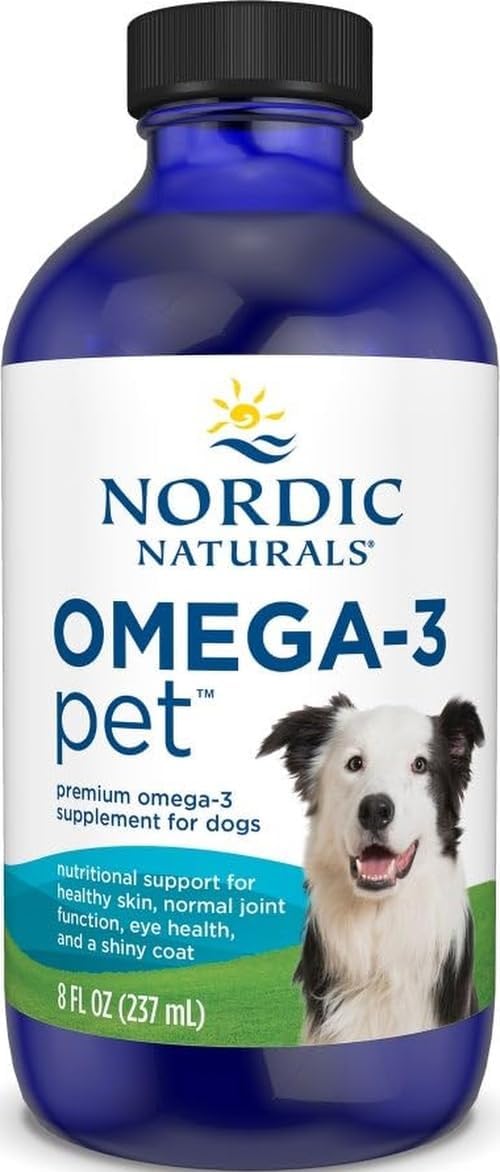
Nordic Naturals Omega-3 Pet 8 oz
Best High-Potency Fish Oil
| Flavor | Unflavored |
|---|---|
| Item Form | Liquid |
| Active Ingredients | Omega-3 Fatty Acids |
| Unit Count | 8 Fluid Ounces |
Nordic Naturals Omega-3 Pet is a concentrated liquid fish oil designed to provide daily EPA and DHA for dogs and cats. It is typically added to food or served directly according to the weight-based dosing on the label and is packaged as an 8-ounce bottle for household use. The formula emphasizes high-quality, triglyceride-form omega-3s from anchovies, sardines, mackerel, and herring and includes d-alpha tocopherol as a natural preservative to maintain freshness and reduce fishy aftertaste. Practical benefits include convenient liquid dosing for pets that refuse pills, broad support claims for heart, skin, coat, eyes, and immune health, and a purity-focused supply chain meant to limit oxidation. Important limitations are that potency must be matched to your pet's needs and overseen by a veterinarian for higher therapeutic dosing, and the unflavored liquid may require mixing into food for picky animals. For owners seeking a high-quality, veterinarian-discussed omega-3 liquid with notable EPA/DHA content per teaspoon, this product is a straightforward option.
Best for: Owners whose veterinarians have recommended increased EPA/DHA for inflammation, skin, coat, or joint support and who prefer a liquid supplement for flexible, weight-based dosing.
Less Ideal for: People who want flavored chewables or pill forms for easy treat-style dosing or owners who prefer premeasured single-dose soft gels.
- High EPA and DHA content delivered in triglyceride form for improved absorption
- Liquid format allows easy dosing and mixing into food for pets that will not take pills
- Produced from a blend of small, omega-rich wild fish with antioxidant preservation to minimize oxidation
- Formulated specifically for pets with no artificial colors, flavors, soy, wheat, corn, or dairy
- Requires veterinary guidance for therapeutic high-dose use rather than one-size-fits-all dosing
- Unflavored liquid may be rejected by some picky pets unless mixed into food
Verdict: The best high-potency fish oil for pet owners who need a concentrated dose of EPA and DHA to more aggressively address inflammation and allergic symptoms under veterinary guidance.
Natural Dog Company Wild Alaskan Salmon Oil 16 oz
Best Liquid Fish Oil

| Volume | 16 fluid ounces |
|---|---|
| Item Form | Oil |
| Active Ingredients | EPA, DHA, OMEGA-3, OMEGA-6 |
| Flavor | Wild Alaskan Salmon Oil |
This Wild Alaskan Salmon Oil is a straightforward liquid omega-3 supplement designed to be pumped onto food or given directly, making daily dosing simple for most households. The formula blends wild-caught salmon and pollock oils to deliver EPA and DHA plus minor tocopherol preservative, which translates to easier absorption than many pill forms and a palatable food topper for picky eaters. Typical use is one to three pumps per day based on dog weight, so it fits into meal routines and can be increased or decreased without measuring spoons. Practical benefits include noticeable coat shine and reduced flakiness for many dogs, plus supplemental support for joints and cardiovascular health thanks to concentrated omega fatty acids. The bottle includes a pump for clean dosing, but because it is a pure oil there is no added vitamin complex or guaranteed EPA/DHA concentration on the label, so precision dosing by fatty-acid content is not possible from the packaging alone. Owners should introduce it gradually and consult their veterinarian if their dog is on blood-thinning medication or has a specific health condition.
Best for: Owners who want a flexible, easy-to-administer omega-3 they can mix into meals or give directly and who prioritize a liquid topper over pills or chews.
Less Ideal for: People looking for exact EPA/DHA milligram dosing per serving or a supplement with added vitamins, minerals, or joint-specific ingredients.
- Liquid pump format makes dosing into food quick and flexible
- Blend of wild-caught salmon and pollock provides naturally occurring EPA and DHA
- Supports skin and coat health and can improve coat shine and reduce flakiness
- Useful across life stages and breed sizes with simple weight-based pump directions
- Label does not provide specific EPA/DHA concentrations for precision dosing
- Pure oil can be messy and may stain if spilled
Verdict: The best liquid fish oil for owners who prefer an easy-to-administer, adjustable-format supplement that mixes into food and suits dogs that struggle with pills.
Zesty Paws Salmon Oil Soft Chews 90 Ct
Best Chewable Fish Oil

| Flavor | Bacon |
|---|---|
| Item Form | Soft Chew |
| Unit Count | 90 Count |
| Active Ingredients | AlaskOmega Fish Oil, Antioxidants, Zinc, Biotin |
These bacon-flavored soft chews deliver salmon oil omega-3s in a treat-like format that most dogs accept easily, making daily dosing straightforward. Each chew combines AlaskOmega fish oil with biotin, zinc and vitamin E so the product targets skin and coat condition while also contributing to joint and immune support. Directions give clear serving guidance by weight and the chews can be split between AM and PM for picky eaters or management of multiple dogs. Ingredients list includes recognizable items like salmon oil, flaxseed and kelp, but also tapioca flour and palm oil as carriers, so buyers who prefer minimal fillers should check the label. Storage guidance asks refrigeration after opening and use within 60 days, which helps freshness but adds a small handling step. For allergy-related coat issues these chews are convenient and palatable compared with liquid oils, though they are a supplement rather than a veterinary treatment and you should consult your vet if symptoms persist.
Best for: Buyers who prioritize a palatable, easy-to-dose omega-3 supplement to support a dog’s skin and coat and who want a treat-style format that most dogs will eat willingly.
Less Ideal for: Owners seeking a pure liquid fish oil with no chew carriers or those who need a veterinary-prescribed formulation for severe allergy or medical conditions.
- Treat-like soft chews improve palatability and simplify daily dosing
- Contains EPA/DHA-rich salmon oil plus biotin and vitamin E for skin and coat support
- Clear dosing chart by weight makes administration easy across dog sizes
- Formulated to support multiple areas: coat, joints and immune health
- Refrigeration guidance helps preserve freshness after opening
- Contains carriers and fillers such as tapioca flour and palm oil rather than pure oil
- Requires refrigeration after opening and use within 60 days which adds handling
Verdict: The best chewable fish oil for dogs when palatability and simple daily dosing matter, offering allergy-supporting omega-3s in a treat-like form most dogs will eat willingly.
Chew + Heal Norwegian Salmon Oil 8 oz
Best Purified Fish Oil

| Flavor | Salmon |
|---|---|
| Item Form | Liquid, Oil |
| Unit Count | 8 Fluid Ounces |
| Specific Uses For Product | Coat |
This 8 oz Norwegian salmon oil is a simple, no-frills liquid omega supplement you add to your dog's food to boost skin, coat, and overall omega intake. It is presented as a cold-water salmon oil rich in omega-3s and made for daily use, which makes dosing straightforward for routine supplementation. The product emphasizes coat shine, reduced shedding, and support for skin comfort, and the liquid format and salmon flavor make it easy to mix into meals for picky eaters. Packaging and branding suggest basic purification and quality controls without extra additives, and the bottle size is typical for trying a supplement before committing to larger quantities. Limitations include a lack of detailed EPA/DHA breakdown on the listing and only one bottle size in the provided data, so buyers seeking precise omega concentrations or larger-volume economy options may need to look elsewhere. For budget-focused shoppers who want a recognizable salmon oil in a convenient liquid form, this offers a practical everyday option.
Best for: Buyers who need an inexpensive, easy-to-use daily omega supplement to support skin and coat health and prefer a flavored liquid that mixes into meals.
Less Ideal for: Shoppers who require exact EPA/DHA dosing, clinical-strength formulas, or larger bulk sizes for long-term supplementation should consider other options.
- Cold-water Norwegian salmon oil formulated for skin and coat support
- Liquid, flavored form that is easy to add to food
- Positioned for daily use as a general wellness supplement
- Made by a pet-focused brand with multiple related products
- Listing does not provide specific EPA/DHA content per serving
- Only one bottle size shown in the product data
Verdict: The best purified fish oil for owners prioritizing minimal contaminants and heavy metals, offering rigorous purification and testing to safely support allergic dogs long term.
Wonder Paws Wild Alaskan Salmon Oil 8 oz
Best Sustainably Sourced Fish Oil

| Unit Count | 8 Ounce |
|---|---|
| Flavor | Salmon |
| Item Form | Oil |
| Dog Breed Size | All |
| Product Benefits | Immune Support, Joint Health, Skin Care |
This Wild Alaskan Salmon Oil from Wonder Paws is a liquid omega-3 supplement intended to be added to a dog's food as a daily topper to improve skin and coat condition and help support hip and joint comfort. It is made from wild-caught sockeye, pink, and coho salmon and comes with an easy pump for dosing, which makes regular use simple for all dog sizes and ages. The product emphasizes high EPA and DHA levels and is NASC certified and sourced from MSC certified fisheries, so buyers who prioritize sustainable sourcing and third-party quality oversight will find that reassuring. In practice it can reduce seasonal itching, flaking and shedding for dogs prone to mild allergy symptoms while also contributing to joint flexibility over time. Limitations: the label directs following feeding directions for dose specifics and results vary by animal and condition, and as a single-ingredient oil it does not replace veterinary treatments for moderate or severe allergies or joint disease.
Best for: Buyers who prioritize sustainably sourced, transparently certified omega-3 supplements for managing mild seasonal allergies and improving skin and coat health in dogs.
Less Ideal for: Owners seeking a broad multi-ingredient allergy treatment, immediate symptom relief, or vet-prescribed medical therapy should look elsewhere or consult their veterinarian.
- 100% wild Alaskan salmon oil providing EPA and DHA for skin, coat, and joint support
- NASC certified and sourced from MSC certified fisheries for traceable sustainable sourcing
- Made in USA in an FDA-registered, GMP certified facility
- Easy-to-use pump dispenser simplifies daily dosing and mixing into food
- Single-ingredient oil requires consistent daily dosing and may take weeks to show benefits
- Not a replacement for veterinary allergy or medical treatments
Verdict: The best sustainably sourced fish oil for buyers who want allergy-supporting omega-3s from fisheries with strong sustainability practices and transparent sourcing information.
Choosing the Right Fish Oil Dog Allergy: Key Factors to Consider
Omega-3 Concentration (EPA and DHA)
EPA and DHA are the active omega-3 fatty acids responsible for anti-inflammatory effects in dogs. A higher concentration per serving means you may need to give less volume to reach an effective therapeutic dose, which is especially helpful for small dogs or dogs who resist taking supplements.
When comparing products, look for explicit EPA and DHA amounts on the label rather than only total omega-3s. Concentration also affects value: a lower milligram count can require multiple capsules or larger liquid doses to match the anti-inflammatory benefit of a concentrated formula. Speak with your veterinarian about target daily EPA/DHA ranges for allergy management so you can choose a product that meets that recommendation without excessive dosing.
Purity and Third-party Testing
Because fish accumulate contaminants, purity matters. Third-party testing or transparent lab reports reduce the risk that your dog will be exposed to heavy metals, PCBs, or other toxins. Brands that publish certificates of analysis or use recognized testing labs provide higher confidence in safety.
Check for batch-level testing, recent analysis dates, and limits that meet recognized safety thresholds. Purity standards are especially important for animals on long-term supplementation, since chronic exposure to low-level contaminants is more concerning than short-term use. If testing information is not clear, assume higher uncertainty and favor options with documented screening.
Formulation Stability and Freshness
Fish oil oxidizes over time, which reduces effectiveness and can produce off flavors or harmful byproducts. Formulas that include appropriate antioxidants, protective packaging, or single-dose capsules help preserve freshness. Dark glass bottles, nitrogen-flushed containers, and airtight capsules are design features that slow oxidation.
Pay attention to expiration dates and storage recommendations. Once opened, liquid fish oil often needs refrigeration and a shorter window of safe use. Freshness affects both safety and the likelihood your dog will accept the supplement; rancid oil can trigger vomiting or refusal.
Dose Form and Administration
Fish oil is sold as liquids, softgels, or chewable tablets. Liquid oils allow flexible dosing for various weights but can be messy and require refrigeration. Softgels are easy to dose but may be difficult for dogs that refuse pills. Chewables can be more palatable but sometimes contain added flavors or fillers that could irritate sensitive dogs.
Consider the size and temperament of your dog when choosing a form. For multi-dog households, a standardized capsule dose can simplify administration, while liquids make it easier to dose very small or very large dogs accurately. Evaluate how each form fits into your daily routine to ensure consistent use, since regular dosing is key to seeing allergy benefits.
Label Transparency and Ingredient Simplicity
Clear labels that list EPA and DHA by milligram, source species, and complementary ingredients help you make informed choices. Products with minimal, recognizable ingredients reduce the risk of reactions to additives, flavorings, or unnecessary carriers. Ingredient simplicity also makes it easier to coordinate with any veterinary-prescribed diets or medications.
Avoid products with vague descriptors like 'proprietary blend' that obscure actual fish oil content. If your dog has multiple sensitivities, the fewer extra ingredients the better, and clarity on the oil source allows you to discuss allergies with your veterinarian.
Veterinary Compatibility and Dosing Guidance
Effective use of fish oil for allergies usually depends on correct dosing relative to a dog's weight and health status. Products that provide clear dosing charts or veterinarian-endorsed guidance help owners apply supplements safely. Consider any special health conditions your dog has, such as blood-clotting disorders or planned surgeries, since omega-3s can affect platelet function in some cases.
If you plan to use fish oil alongside other medications or supplements, look for guidance that addresses interactions or contraindications. When in doubt, consult your veterinarian to establish a starting dose and monitoring plan so you can track improvement and side effects while managing allergy symptoms responsibly.
How Quickly Will Fish Oil Help a Dog with Allergies?
Most dogs show gradual improvement rather than an immediate response. Expect to give a recommended therapeutic dose for at least 6 to 12 weeks before assessing whether itching, redness, or coat condition has meaningfully improved. Anti-inflammatory changes happen over time as membrane composition shifts and systemic inflammation decreases.
Track progress with photos and a simple symptom log so you can compare baseline severity to changes after several weeks. If no improvement is visible after the trial period, consult your veterinarian about adjusting the dose or pursuing other allergy treatments.
- Initial changes may appear in 4 to 6 weeks for some dogs
- A consistent dose over 8 to 12 weeks provides the best assessment of effectiveness
- Document symptoms to evaluate progress objectively
What Dose Should I Give My Dog?
Dosing depends on your dog's weight and the EPA/DHA concentration of the product. Many veterinary recommendations target a specific milligram amount of combined EPA and DHA per kilogram of body weight rather than a volume-based guideline. That means two products with different concentrations will require different capsule or teaspoon amounts to reach the same therapeutic intake.
Start with the label guidance as a baseline, then confirm with your veterinarian for a tailored plan. Monitor for side effects such as loose stools and adjust the dose slowly to balance benefit and tolerance.
- Aim for EPA+DHA amount recommended by your veterinarian
- Adjust slowly if gastrointestinal upset occurs
- Smaller dogs need higher concentration per volume to avoid large doses
Will Fish Oil Interact with My Dog's Medications or Conditions?
Fish oil is generally safe but can affect platelet function and, in rare cases, increase bleeding risk. If your dog is on blood-thinning medications or scheduled for surgery, discuss fish oil use with your veterinarian. Dogs with certain metabolic or liver issues may also require tailored dosing.
Additionally, adding high doses of fish oil to a diet already rich in fats can change caloric intake, so account for supplemental calories to avoid unintended weight gain. A coordinated plan with your veterinarian ensures fish oil is a complementary part of allergy management rather than a source of complications.
- Consult your veterinarian before starting if your dog is on blood thinners
- Factor supplement calories into your dog's daily intake
- Monitor liver and overall health if long-term high-dose use is planned
How to Store and Handle Fish Oil Safely
Protect fish oil from heat, light, and air to maintain freshness. Keep opened liquid bottles refrigerated and use within the manufacturer's recommended window. Store softgels in a cool, dry place away from direct sunlight and heat sources.
Avoid using fish oil that smells strongly of oxidation or feels sticky on the capsule surface. Proper storage reduces the risk of giving rancid oil, which can be less effective and potentially cause digestive upset.
- Refrigerate opened liquid fish oil when recommended
- Use dark, airtight containers when possible
- Discard oil that smells noticeably rancid
How to Introduce Fish Oil to a Picky Dog
Start with small amounts mixed into strongly flavored wet food or a favored treat, then gradually increase to the therapeutic dose. If using capsules, some dogs accept them whole; others may require capsule contents mixed into food. For dogs sensitive to texture or smell, try splitting the dose across multiple meals.
Be consistent and patient. It can take several attempts for a dog to accept a new supplement, and mixing with a regular favorite increases the chance of reliable administration without stress.
- Mix liquid oil into a small portion of palatable wet food
- Break open capsules if necessary and mix contents thoroughly
- Increase dose gradually to monitor tolerance
How We Chose the Best Fish Oil Dog Allergy
We focused on attributes that matter specifically when selecting fish oil for allergy-prone dogs. Key evaluation criteria included omega-3 concentration, especially EPA and DHA levels per serving, because higher active fatty acid content determines anti-inflammatory effectiveness. Purity and testing protocols were required; we prioritized products with third-party testing or transparent contaminant screening for heavy metals and PCBs to reduce risk to dogs. Dose form and ease of administration were assessed to ensure owners can reliably give the right amount for their dog's weight. We examined the stability and formulation, including antioxidant use and encapsulation methods, because oxidized fish oil can be ineffective or harmful. Ingredient clarity and absence of unnecessary additives mattered for dogs with sensitive systems. Finally, manufacturing quality controls and clear labeling were considered so caregivers can match the supplement to veterinary guidance. We excluded products without verifiable testing information, items with ambiguous EPA/DHA amounts, and formulas that mix multiple active supplements in ways that obscure the fish oil contribution. The list focuses on safe, well-documented fish oil choices appropriate for dogs managing allergy-related skin conditions.
Our full evaluation process is outlined in our review methodology.
FAQ
Can fish oil stop my dog's allergic itching completely?
Fish oil often reduces inflammation and can lessen itching, but it is rarely a complete cure on its own. Results depend on the allergy cause, severity, and whether other treatments or environmental controls are in place.
Is it safe to give fish oil to puppies for allergies?
Puppies can receive fish oil, but dosing must be appropriate for weight and developmental stage. Consult your veterinarian for puppy-specific dosing and to confirm there are no contraindications for young animals.
What signs indicate a fish oil supplement is rancid or bad?
Rancid fish oil typically has a strong, unpleasant odor, bitter taste, or a sticky residue on capsules. If the oil smells off or causes sudden digestive upset, stop use and replace it with a fresh, properly stored product.
How long should I try fish oil before expecting results?
Most owners monitor for meaningful improvement over 6 to 12 weeks of consistent dosing. Some dogs show earlier changes, but a full assessment generally requires a multi-week trial.
Can I give fish oil alongside other supplements?
Often yes, but watch total omega-3 intake and interactions. If your dog receives other fatty acid supplements or medications, coordinate with your veterinarian to avoid excessive dosing or unintended interactions.
Final Verdict
When managing allergy-related skin problems, prioritize fish oil formulas that provide clear EPA and DHA amounts, documented purity, and stable packaging. The most important tradeoff is concentration versus volume: higher EPA/DHA reduces the amount you must give, which helps with dosing and acceptance. Start with a veterinarian-informed dose, allow several weeks to evaluate effectiveness, and monitor for digestive upset or other side effects. With consistent use and sensible expectations, fish oil can be a valuable part of a broader allergy management plan.

