

When your dog starts showing stiffness or slower movement, the right fish oil can make daily life more comfortable. Choosing a fish oil focused on joint support matters because not all formulas deliver the same amounts of EPA and DHA, and impurities or unstable oils can reduce effectiveness or cause digestive upset. This guide lists seven carefully shortlisted fish oil options tailored for joint health so you can focus on blends that emphasize omega-3 potency, stability, and digestive tolerance. Below we summarize the evaluation criteria and what to look for before picking the best fit for your dog.
Top Picks at a Glance
| Best Overall Fish Oil Balanced formula combining potency, purity, and palatability for most dogs | Nutramax Welactin Omega-3 Fish Oil 16oz |  |
| Best Budget Fish Oil A low-cost option that still delivers useful omega-3 levels | HEAPETS Wild Alaskan Salmon Oil 8 oz |  |
| Best Premium Fish Oil Higher-end formulas with stronger concentration and superior testing | Wonder Paws Salmon Oil 128 oz |  |
| Best High-Potency Fish Oil Concentrated EPA/DHA formulas for stronger therapeutic doses per serving | LickWell Fish Oil Capsules 100ct |  |
| Best Purified Fish Oil Molecularly distilled or third-party tested for low heavy metals and contaminants | Vetoquinol Triglyceride Omega Fish Oil 60ct |  |
| Best Liquid Fish Oil Liquid format for easy portioning, mixing into food, and adjustable dosing | Natural Dog Company Wild Alaskan Salmon Oil 16 oz |  |
| Best Softgel Fish Oil Gel capsules for convenient, mess-free dosing and picky-eater handling | Nordic Naturals Omega-3 Fish Oil 180 Ct |  |
Nutramax Welactin Omega-3 Fish Oil 16oz
Best Overall Fish Oil

| Item Form | Liquid |
|---|---|
| Active Ingredients | omega 3, fatty acids, salmon oil |
| Volume | 0.47 liters |
| Guaranteed Analysis (per 6 mL) | Total Omega-3 1,770 mg; EPA 870 mg; DHA 570 mg |
| Dog Breed Size | Large |
Welactin is a liquid fish oil supplement designed to deliver concentrated long-chain omega-3 fatty acids, primarily EPA and DHA, to support skin and coat health and broader wellness functions. You measure doses with the included scoop and pour the oil over food according to your dog's weight, making it easy to incorporate into daily feeding. The product lists substantial omega-3 levels per 6 mL scoop (total omega-3s 1,770 mg, EPA 870 mg, DHA 570 mg), which supports its positioning as a premium, veterinarian-recommended formula. Quality control and preservative choices such as mixed tocopherols, rosemary, and green tea extract aim to protect oil freshness. Practical benefits include potential improvements in coat sheen and reduced skin irritation for dogs with omega-3 responsive issues, plus ancillary support for joint, heart, and cognitive health. Limitations are that results vary by individual and may take weeks to appear, and liquid oil can be messier to dose and store than chews or capsules. Owners should follow dosing closely for weight-based efficacy.
Best for: Owners prioritizing a research-backed, high-potency omega-3 supplement for persistent skin or coat issues who are willing to use a liquid dosing format and invest in a premium product.
Less Ideal for: Owners who want an immediate or fuss-free chewable or capsule option, or who prefer no-mess single-dose formats for travel and daycare.
- High concentrated EPA and DHA per scoop for strong omega-3 delivery
- Liquid form with measuring scoop allows flexible dosing by weight
- Formulated with antioxidants (mixed tocopherols, rosemary, green tea) to help preserve freshness
- Veterinarian-recommended brand with quality controls beyond basic standards
- Liquid format can be messier to handle and may require refrigeration or careful storage
- Improvements in skin or itching can take several weeks and are not guaranteed for all dogs
Verdict: The best overall fish oil strikes a balance of clinically useful omega-3 potency, verified purity, and easy dosing so most dog owners see joint-support benefits without extra fuss.
HEAPETS Wild Alaskan Salmon Oil 8 oz
Best Budget Fish Oil
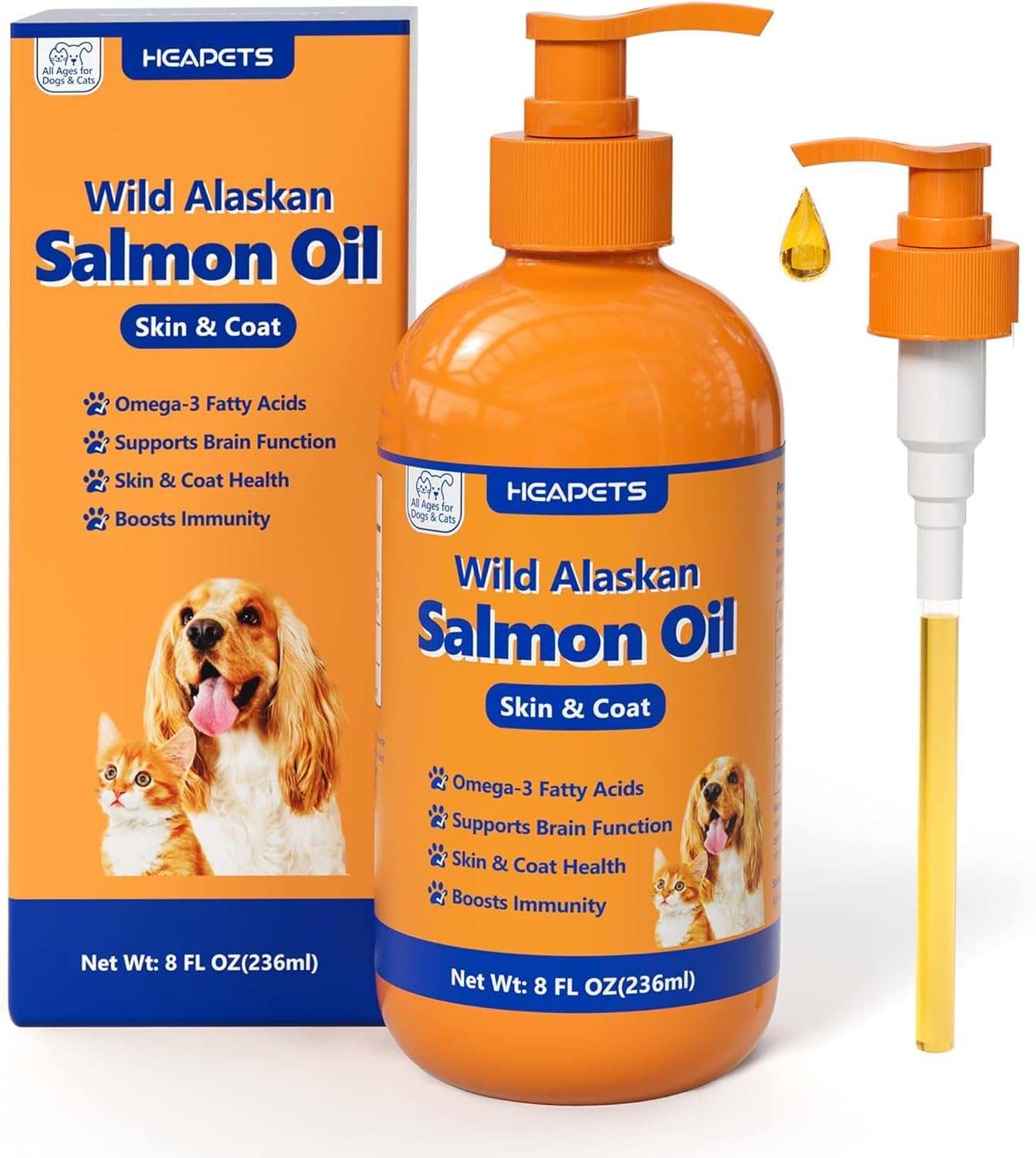
| Item Form | Liquid |
|---|---|
| Active Ingredients | Crude Fat, Omega-3 fatty acids, EPA and DHA |
| Unit Count | 8 Fluid Ounces |
| Target Species | Dog & Cat |
This HEAPETS Wild Alaskan Salmon Oil is a liquid omega-3 supplement supplied in an 8 fl oz bottle with a pump or cap for easy portioning. You add the measured dose to food once daily to boost EPA and DHA intake, which supports skin moisture, reduces itchiness and shedding, and contributes to joint and heart health. The formula is produced in GMP-certified facilities and is described as free from common fillers and soy, with minimal fishy odor so most pets accept it in food. The pump option makes dosing neater than pouring and reduces mess compared with open bottles, and the liquid format lets you adjust amounts for small pets or large dogs. Limitations are that exact EPA/DHA concentrations are not listed on the label copy shown here, so precise dosing by active ingredient is not possible from the provided information, and liquid bottles require refrigeration or careful storage after opening to maintain freshness. For owners prioritizing a fuss-free, food-mixed omega-3 boost for itchy skin and dull coats, the pump bottle is a practical everyday supplement.
Best for: Pet owners who want a convenient, mess-minimizing liquid omega-3 they can mix into meals to help relieve itchy skin and improve coat condition.
Less Ideal for: Owners who need exact milligram dosing of EPA/DHA per serving or prefer chewable/gel formats for on-the-go administration should consider alternatives.
- Pump or cap delivery for cleaner, controlled dosing into food
- Contains EPA and DHA omega-3s to support skin, coat, joints, brain, and heart
- Made in GMP-certified, FDA-registered facilities and third-party tested per brand claims
- Formulated without common fillers and soy and marketed with low fishy odor to aid palatability
- Label information provided does not specify exact EPA/DHA concentrations for precision dosing
- Liquid form requires careful storage after opening to preserve freshness
Verdict: The best budget fish oil provides a cost-conscious source of EPA and DHA at reasonable concentrations and acceptable purity for owners prioritizing price.
Wonder Paws Salmon Oil 128 oz
Best Premium Fish Oil

| Unit Count | 128 Fluid Ounces |
|---|---|
| Item Form | Oil |
| Flavor | Seafood |
| Product Benefits | Joint Health |
| Dog Breed Size | All |
This full‑size 128 ounce salmon oil is a single‑ingredient, Norwegian‑sourced fish oil designed as a daily omega supplement for dogs. It is typically used as a food topper delivered by the included pump with manufacturer dosing guidelines based on dog weight. The product emphasizes high EPA and DHA content from pure salmon oil and carries NASC membership plus manufacturing in a GMP and FDA‑registered facility, which supports stronger quality controls. In practice the oil can improve dry or itchy skin, reduce shedding, and provide hip and joint support when taken consistently, and the large container is convenient for multi‑pet households or long‑term use. Limitations include no explicit EPA/DHA concentration on the listing and the very large 1‑gallon format may be bulky for small households; owners who prefer measured concentrates or refined molecularly distilled human‑grade formulas might want to compare lab values before choosing this product.
Best for: Buyers who prioritize premium sourcing and robust quality assurances and who want a large, single‑ingredient salmon oil supply to add to daily pet food.
Less Ideal for: Owners seeking clearly reported EPA/DHA concentrations, small trial sizes, or a human‑grade refined fish oil formulated for people rather than a veterinary supplement.
- Single‑ingredient 100% salmon oil sourced from Norway
- Large 128 fl oz supply suited for multi‑pet homes or long use
- Includes pump for easier daily dosing
- Manufactured in GMP facility and NASC certified for quality oversight
- Supports skin, coat, hip and joint health as a food topper
- Label does not list exact EPA/DHA concentrations for comparing potency
- Gallon size may be bulkier than needed for single‑pet or trial use
Verdict: The best premium fish oil is for owners willing to pay more for higher omega-3 concentrations, advanced purification, and rigorous third-party testing.
LickWell Fish Oil Capsules 100ct
Best High-Potency Fish Oil
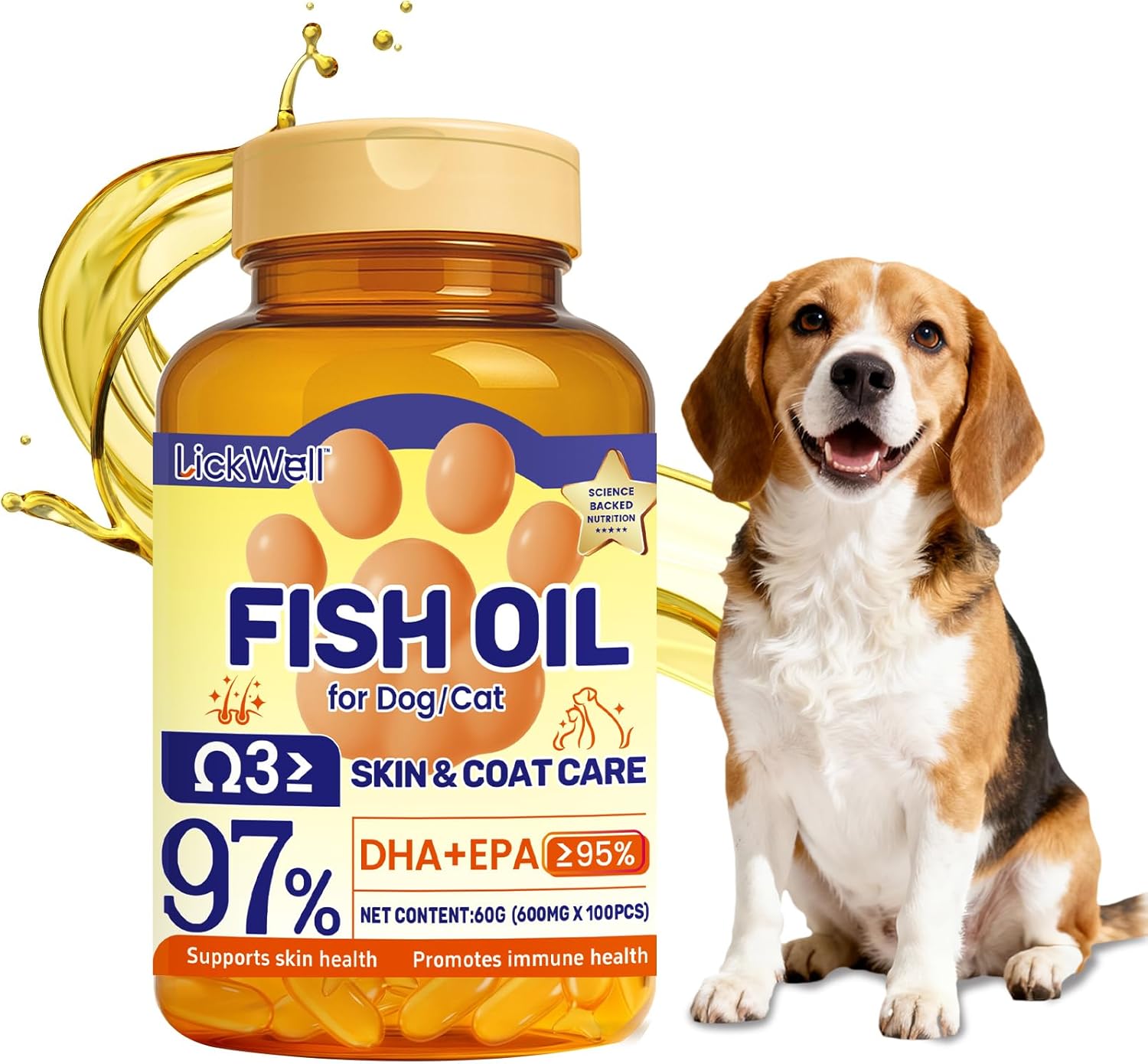
| Unit Count | 100 Count |
|---|---|
| Item Form | Capsule |
| Flavor | Beef |
| Pet Type | Cat, Dog |
LickWell Fish Oil delivers a high-concentration omega-3 supplement in an easy-to-dose capsule format aimed at supporting joints, skin, coat, heart, and cognitive health. Each soft gel is advertised as a 97% omega-3 formulation with elevated EPA and DHA levels, which means you can reach therapeutic joint-support doses with fewer capsules versus lower-potency products. The capsules are convenient for pet owners who prefer portion control and less mess than pump bottles, and the flavoring and capsule size offer options to give whole to larger pets or squeeze onto food for smaller ones. Because the oil is highly concentrated and supplied in single-dose capsules, oxidation risk is reduced versus open liquid containers, improving shelf stability between uses. Limitations include lack of detailed per-capsule EPA/DHA milligram counts on the listing and no explicit dosing chart by weight provided in the product information, so buyers seeking precise therapeutic dosing should consult label details or their veterinarian before starting. For owners focused on higher omega-3 potency in a convenient form, this formula is a practical option.
Best for: Pet owners who want a compact, higher-potency omega-3 option to reach therapeutic joint-support doses with fewer daily capsules and who value convenience over measuring liquid oils.
Less Ideal for: Owners who require exact milligram-level EPA/DHA dosing guidelines or a liquid format for mixing measured doses should consider alternatives with full nutrient breakdowns and dosing charts.
- High reported omega-3 concentration (97%) for stronger EPA/DHA delivery per capsule
- Capsule format reduces mess and oxidation compared with pump-style liquids
- Suitable for both dogs and cats and marketed for all breed sizes
- 100-count bottle provides a multi-week supply for typical dosing
- Listing does not show explicit milligrams of EPA and DHA per capsule
- No clear veterinarian dosing chart by pet weight included in the product information
Verdict: The best high-potency fish oil is chosen when owners want higher EPA/DHA per serving to reach therapeutic joint-support doses with smaller daily volumes.
Vetoquinol Triglyceride Omega Fish Oil 60ct
Best Purified Fish Oil

| Form | Softgel capsules |
|---|---|
| Count | 60 capsules |
| Intended for | Dogs and cats |
| Active source | Fish oil (sardines, mackerel, anchovies) |
Vetoquinol Triglyceride Omega delivers omega-3s in softgel form intended to support skin, coat, immune response, and musculoskeletal health in dogs and cats. The capsules may be given whole or punctured and squeezed onto food, and the label includes weight-based dosing (one capsule daily for 60–80 lb dogs, two for over 80 lb). The formula lists fish oil from Atlantic sardines, mackerel, and anchovies and adds vitamins A, D3, and E for supplemental immune, bone, and antioxidant support. In practice this is a straightforward daily supplement for owners looking to add EPA/DHA to their pet's diet; the softgels are easy to administer and the dosing guidance is clear. The product information emphasizes storage and veterinary consultation, and the label includes safety directions for animals with allergies. Limitations for buyers include relatively broad ingredient listing without on-pack labelling of contaminant testing or specific EPA/DHA amounts, so owners prioritizing verified purification protocols or exact omega ratios for long-term joint dosing may want products with published third-party testing or batch certificates instead.
Best for: Owners who want a simple, veterinarian-oriented daily omega supplement to support skin, coat, and joint health in larger dogs and who value easy-to-administer softgels.
Less Ideal for: People who require documented third-party purification testing or precise EPA/DHA dosing for long-term therapeutic joint regimens should consider products with published certificates of analysis instead.
- Contains omega-3 rich fish oil from sardines, mackerel, and anchovies for EPA/DHA support
- Softgel capsules can be given whole or punctured and squeezed onto food for easy dosing
- Includes vitamins A, D3, and E that complement immune, bone, and antioxidant support
- Clear weight-based dosing guidance for large dogs on the label
- No explicit on-pack statement of contaminant purification or third-party batch testing
- Label does not list specific EPA and DHA amounts per capsule
Verdict: The best purified fish oil is selected for its strict contaminant removal and testing protocols, giving owners confidence about safety when dosing long-term for joint care.
Natural Dog Company Wild Alaskan Salmon Oil 16 oz
Best Liquid Fish Oil

| Volume | 16 fluid ounces |
|---|---|
| Item Form | Oil |
| Active Ingredients | EPA, DHA, OMEGA-3, OMEGA-6 |
| Flavor | Wild Alaskan Salmon Oil |
This Wild Alaskan Salmon Oil is a straightforward liquid omega-3 supplement designed to be pumped onto food or given directly, making daily dosing simple for most households. The formula blends wild-caught salmon and pollock oils to deliver EPA and DHA plus minor tocopherol preservative, which translates to easier absorption than many pill forms and a palatable food topper for picky eaters. Typical use is one to three pumps per day based on dog weight, so it fits into meal routines and can be increased or decreased without measuring spoons. Practical benefits include noticeable coat shine and reduced flakiness for many dogs, plus supplemental support for joints and cardiovascular health thanks to concentrated omega fatty acids. The bottle includes a pump for clean dosing, but because it is a pure oil there is no added vitamin complex or guaranteed EPA/DHA concentration on the label, so precision dosing by fatty-acid content is not possible from the packaging alone. Owners should introduce it gradually and consult their veterinarian if their dog is on blood-thinning medication or has a specific health condition.
Best for: Owners who want a flexible, easy-to-administer omega-3 they can mix into meals or give directly and who prioritize a liquid topper over pills or chews.
Less Ideal for: People looking for exact EPA/DHA milligram dosing per serving or a supplement with added vitamins, minerals, or joint-specific ingredients.
- Liquid pump format makes dosing into food quick and flexible
- Blend of wild-caught salmon and pollock provides naturally occurring EPA and DHA
- Supports skin and coat health and can improve coat shine and reduce flakiness
- Useful across life stages and breed sizes with simple weight-based pump directions
- Label does not provide specific EPA/DHA concentrations for precision dosing
- Pure oil can be messy and may stain if spilled
Verdict: The best liquid fish oil fits owners who prefer flexible dosing and easy mixing into meals to customize joint-support amounts for dogs of different sizes.
Nordic Naturals Omega-3 Fish Oil 180 Ct
Best Softgel Fish Oil

| Item Form | Soft Gel |
|---|---|
| Active Ingredients | Eicosapentaenoic Acid, Docosahexaenoic Acid |
| Flavor | Unflavored |
| Unit Count | 180 Count |
Nordic Naturals Omega-3 Pet soft gels deliver concentrated EPA and DHA in an easy-to-give capsule designed for medium to large dogs or for mixing into food for smaller pets. Each soft gel provides 165 mg EPA and 330 mg DHA per capsule, which the brand positions as a triglyceride-form fish oil for better absorption and minimal fishy aftertaste. In practice these soft gels are convenient for daily supplementation: larger dogs can swallow the capsules whole, while owners of smaller or picky pets can puncture a gel and squeeze the oil onto food. The product emphasizes purity and sourcing from anchovies, sardines, mackerel, and herring with no artificial flavors, common allergens, or unnecessary additives. Dosing guidance is simple (one soft gel per 20 lbs), so achieving a higher omega-3 intake with fewer pills is straightforward. The main limitations are the soft-gel format for very small dogs or cats that may require liquid or mini-gels and that potency per gel may still require multiple capsules for very large breeds with high EPA/DHA needs.
Best for: Buyers who want a higher EPA/DHA dose in a compact, easy-to-administer form for routine daily supplementation and who prefer a purified, human-grade sourcing approach for their pet.
Less Ideal for: Owners seeking tiny chewable doses or liquid formulas for very small or pill-averse pets should consider liquid or mini-gel alternatives instead.
- Concentrated EPA+DHA per soft gel (165 mg EPA + 330 mg DHA) for easier dosing
- Triglyceride-form fish oil for improved absorption and reduced fishy aftertaste
- Clear dosing guidance (one soft gel per 20 lbs) simplifies daily use
- Formulated without common allergens and without artificial colors or flavors
- Large unit count (180 soft gels) reduces refill frequency
- Soft-gel size and format may be hard to dose for very small dogs or cats
- May require multiple capsules for extremely large dogs to reach very high EPA/DHA targets
Verdict: The best softgel fish oil is ideal for owners who want precise, grab-and-give dosing and minimal smell or mess when supporting their dog's joints.
Choosing the Right Fish Oil Dog Joint: Key Factors to Consider
Omega-3 Potency (EPA and DHA)
The combined amounts of EPA and DHA determine how effective a fish oil is at reducing joint inflammation and supporting cartilage health. Look for clear labeling that lists milligrams of EPA and DHA per serving rather than only total omega-3s, because total values can hide low therapeutic doses.
Higher EPA and DHA concentrations let you reach effective dosing with smaller volumes, which is especially helpful for picky eaters or dogs that resist oral supplements. Be aware that some products use very low-concentration oils that require large daily doses to be effective.
Purity and Third-party Testing
Fish accumulate environmental contaminants, so products should show testing for heavy metals, PCBs, and dioxins. Third-party certificates or batch-specific test results give confidence the oil meets safety thresholds and reduces long-term risk of contaminant exposure.
Also check for oxidation testing, such as peroxide or anisidine values, because rancid oil can be harmful and loses anti-inflammatory benefits. Transparent suppliers provide accessible test reports or specify testing standards they follow.
Oil Stability and Packaging
Omega-3 fats oxidize quickly when exposed to air, heat, or light, which diminishes potency and creates off-flavors. Packaging that minimizes air exposure, such as dark glass bottles, pump dispensers, or individual liquid doses, helps preserve freshness.
Storage recommendations and the presence of antioxidants like vitamin E can further protect the oil. Check the product's shelf-life and whether it needs refrigeration after opening to maintain stability.
Molecular Form and Bioavailability
EPA and DHA are delivered in different molecular forms that affect how well a dog absorbs them. Triglyceride and re-esterified triglyceride forms generally show better absorption than ethyl esters, which can matter for dogs that need therapeutic dosing.
Higher bioavailability means less total oil is required to reach an effective dose, which can reduce the risk of digestive upset and make dosing easier across different dog sizes.
Dosing Flexibility and Palatability
Joint dosing varies by dog weight and condition, so a product should allow accurate portioning. Liquid oils with measuring pumps or droppers, and soft chews with clear per-piece EPA/DHA amounts, let you tailor the dose precisely.
Palatability affects compliance. Some dogs readily take flavored oils or treats, while others need oils mixed into food. Choose a format your dog accepts without causing food aversion or digestive issues.
Digestive Tolerance and Added Ingredients
Some dogs experience reflux, fishy breath, or loose stool from fish oil. Formulas that include probiotics, digestive enzymes, or citrus-flavored masking may reduce these effects. Likewise, microencapsulation or enteric-coated formats can improve tolerance.
Avoid products with unnecessary fillers or strong flavors that can cause stomach upset. Check whether the manufacturer lists common allergens and how to gradually introduce the oil to monitor tolerance.
How Much Fish Oil Should I Give My Dog for Joint Support?
Dosing depends on your dog's weight and the EPA+DHA concentration in the product. Instead of relying on volume, calculate the daily target milligrams of combined EPA and DHA, then match that to the product label to determine how many milliliters or capsules are needed.
Start at the lower end of recommended therapeutic ranges and monitor mobility and stool quality for several weeks before adjusting. For dogs with chronic joint issues, a veterinarian can advise on maintenance dosing and whether higher short-term doses are appropriate.
- calculate dose from EPA+DHA, not total oil volume
- introduce gradually over 5–7 days to check tolerance
- reassess after 6–12 weeks to judge benefit
Can Fish Oil Interact with Other Medications or Supplements?
Fish oil has mild blood-thinning properties at high doses and can interact with anticoagulant medications or supplements with similar effects. If your dog is on prescription blood thinners or has clotting disorders, consult a veterinarian before starting fish oil.
Also consider additive effects when combining multiple supplements that target joints, such as glucosamine or NSAIDs. A vet can help coordinate a safe, effective regimen that avoids duplicating active mechanisms unnecessarily.
- ask your vet if your dog is on anticoagulants
- review all joint supplements to avoid overlap
- monitor for unusual bruising or prolonged bleeding
How to Introduce Fish Oil to Picky Eaters
Mix small amounts of oil into a favored wet food or add it to a treat to mask the fishy taste. Start with a low dose and gradually increase to the target amount over several days to reduce the chance of rejection or digestive upset.
If mixing is not tolerated, try a palatable soft chew format or a micronized powder added to food. Rotate delivery methods if your dog becomes resistant to a single approach.
- gradually increase dose over several days
- use strong-smelling wet food or a small treat to disguise flavor
- consider alternate formats if mixing fails
Signs a Fish Oil Is Working for Joint Mobility
Improvement is usually gradual. Over 6 to 12 weeks you may notice smoother gait, more willingness to climb stairs, and less stiffness after rest. Many owners report subtle changes first, like longer play sessions or quicker recovery after exercise.
Track progress with short mobility tests and photos or videos to compare movement over time. If no improvement appears after a consistent trial period, reassess dose, formulation, or consult a veterinarian for additional diagnostics.
- expect measurable change in 6–12 weeks
- use short walk tests or play sessions to monitor progress
- consult a vet if mobility does not improve
Storage and Handling Best Practices
Store fish oil in a cool, dark place and follow the manufacturer's guidance about refrigeration after opening. Minimize air exposure by resealing tightly and using the provided pump or dropper to limit oxidation.
Discard oil past its recommended shelf-life. Rancid oil smells sharp or bitter and can cause digestive upset, so never continue using a product that smells off.
- keep away from heat and direct light
- refrigerate if recommended after opening
- check smell and discard if oil smells rancid
How We Chose the Best Fish Oil Dog Joint
We prioritized formulations and factors that directly affect joint outcomes and safety for dogs. Key evaluation criteria included omega-3 content per serving, specifically EPA and DHA levels tied to anti-inflammatory effects; molecular form and bioavailability, such as triglyceride or phospholipid forms that influence absorption; purity and testing, including third-party screening for heavy metals, PCBs, and oxidation markers; antioxidant inclusion and packaging that protect oil stability; dosing flexibility to match dog size and joint needs; and digestive tolerance or added digestive aids to reduce the chance of reflux or loose stool. We excluded oils with unclear labeling, missing omega-3 breakdowns, or no evidence of purity testing. We also filtered out products that rely solely on vague "fish oil" claims without specifying source or processing standards. The resulting shortlist focuses on clear potency, demonstrable purity, proper packaging to limit oxidation, and options that allow accurate dosing for small and large dogs.
Our full evaluation process is outlined in our review methodology.
FAQ
How long until I see joint improvement after starting fish oil?
You will often see gradual improvement within 6 to 12 weeks, with subtle gains in mobility and reduced stiffness. Individual response varies with dose, baseline joint condition, and consistency of administration.
Is more EPA+DHA always better for severe joint issues?
Higher doses can provide stronger anti-inflammatory effects but may increase the risk of digestive side effects or interact with medications. Work with a veterinarian to balance therapeutic benefit and safety when considering higher dosing.
Can puppies take fish oil for joint support?
Puppies can receive omega-3s, and they support healthy development, but dosing should be appropriate for size and life stage. Consult a veterinarian to confirm suitability and proper dosing for growing dogs.
Are plant-based omega-3s as effective for canine joint health?
Plant-based sources supply ALA, which dogs convert inefficiently into EPA and DHA. For joint inflammation, marine-derived EPA and DHA are typically more effective than plant-based omega-3s.
What if my dog gets loose stool after starting fish oil?
Loose stool can indicate sensitivity or too-fast dose escalation. Reduce the dose, introduce the oil more gradually, and consider switching to a more concentrated or enteric-coated formula. If diarrhea persists, consult your veterinarian.
Final Verdict
When choosing a fish oil for joint support, prioritize products that clearly list EPA and DHA amounts, demonstrate third-party purity testing, and use stable packaging to prevent oxidation. Consider molecular form and dosing flexibility to match your dog's size and tolerance, and introduce supplements gradually while monitoring mobility and stool quality. Balance potency against digestive tolerance and medication interactions. Use the criteria above to pick an option that delivers therapeutic omega-3s safely, then reassess progress after a consistent trial period to decide whether to continue, adjust the dose, or seek veterinary guidance.

