

If your dog struggles with allergic reactions, choosing the right probiotic can help reduce gastrointestinal upset and support a calmer immune response. Probiotics are not a cure for allergies, but the right formulation can improve gut balance, which often eases skin issues and reduces inflammation driven by dysbiosis. This guide shortlists seven well-regarded probiotic options for dogs with allergy concerns and explains the features that matter most for safety, tolerance, and real-world convenience. Below you will find our top picks followed by clear buying criteria and practical advice on using probiotics for allergy management.
Top Picks at a Glance
| Best Overall Probiotic for Dog Allergies A well-rounded formula that eases allergy symptoms for most dogs | Pro Plan FortiFlora Probiotic Powder |  |
| Best Budget Probiotic for Dog Allergies An affordable option that still targets allergy-related digestive support | SnazFirst Probiotics for Dogs |  |
| Best High-Potency Probiotic Higher CFU counts for stronger microbiome support and shift | Pawlooza Dog Allergy Itchy Relief Chews 120ct |  |
| Best Gentle Probiotic Lower-irritation formulas for dogs with sensitive stomachs | Nutramax Proviable Probiotics 60ct |  |
| Best Powder Probiotic Loose powder for easy mixing into food or liquids | Native Pet Probiotics for Dogs 60 Ct |  |
| Best Chewable Probiotic Treat-like chews that simplify daily dosing and compliance | Pet Naturals Daily Probiotic 60 Count |  |
| Best Premium Probiotic Higher-end formulations with advanced strains and quality control | Progility Allergy & Immune Soft Chews 90 ct |  |
Pro Plan FortiFlora Probiotic Powder
Best Overall Probiotic for Dog Allergies
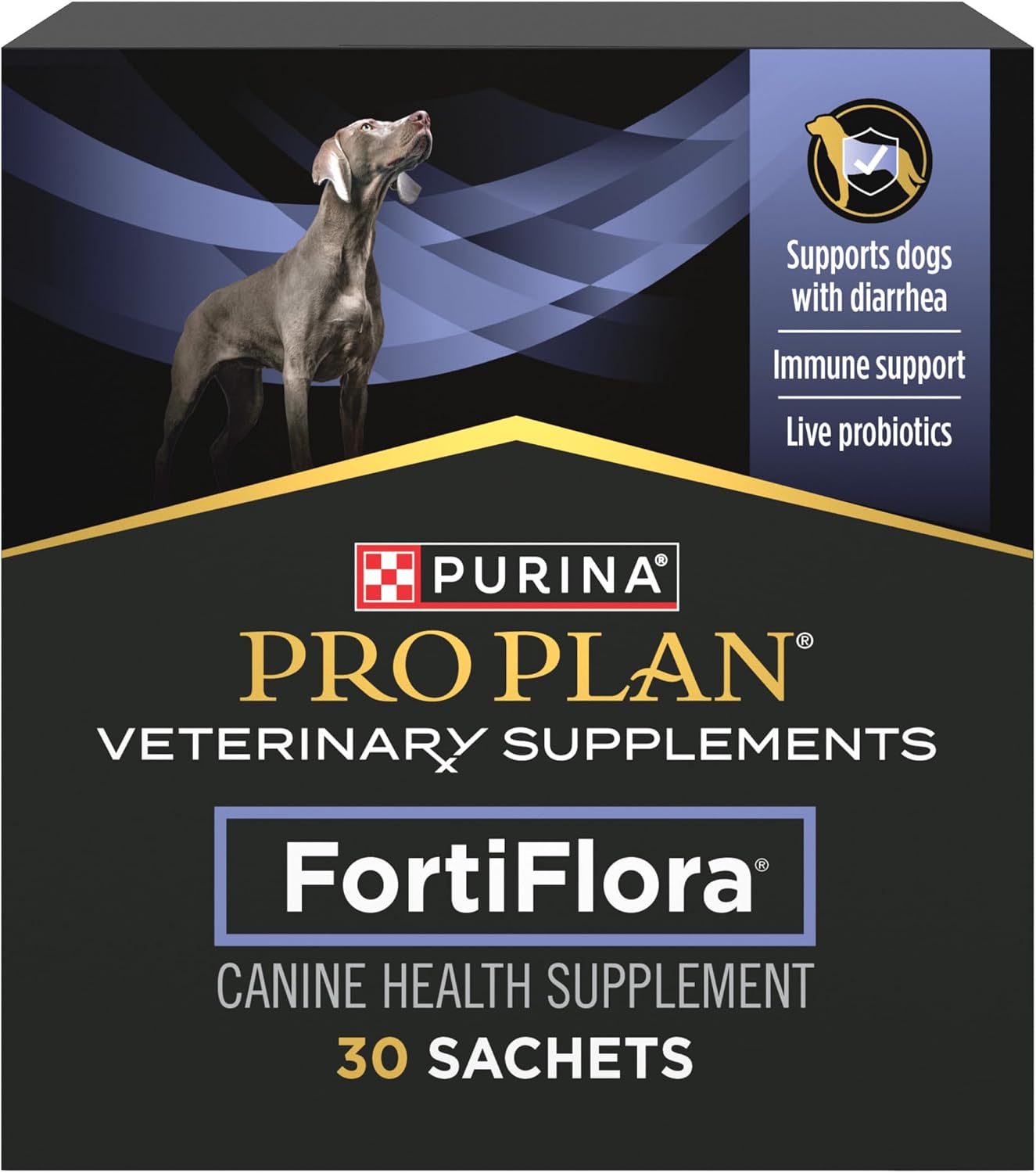
| Item Form | Powder |
|---|---|
| Flavor | Unflavored |
| Active Ingredients | Enterococcus Faecium SF68 1×10^8 CFU |
| Specific Uses For Product | Digestive Health; Gastrointestinal; Probiotics |
Purina Pro Plan FortiFlora is a single-serve powdered probiotic intended to be sprinkled on a dog's food to support intestinal microflora and help manage occasional diarrhea. Each packet delivers a guaranteed level of Enterococcus faecium SF68 and uses microencapsulation to preserve probiotic viability until it reaches the gut, plus antioxidants to support immune health. It is simple to dose—feed one packet daily or follow your veterinarian's instructions—so administration is quick for both puppies and adult dogs. The powder form is easy to mix into wet or dry food and is unflavored, relying on included liver flavoring to encourage acceptance. Practical limitations include small packet size that means you'll need to buy in multi-count boxes for long-term use and that it is a targeted digestive aid rather than a comprehensive multi-supplement for other conditions. For pet owners wanting a vet-trusted, easy-to-use probiotic focused on digestive balance, FortiFlora is a reliable, straightforward option.
Best for: Buyers who want a vet-endorsed, easy-to-dose probiotic to manage occasional digestive upsets and prioritize proven effectiveness and straightforward administration.
Less Ideal for: Owners seeking a broader daily multivitamin or joint-and-digestive combination supplement should consider products formulated for multiple concerns rather than a single-purpose probiotic.
- Veterinarian-recommended strain proven to promote normal intestinal microflora
- Microencapsulation for probiotic stability through the digestive tract
- Single-serve powder that is easy to sprinkle on food and simple to dose
- Formulated for both puppies and adult dogs and intended for occasional diarrhea management
- Small unit count per package requires frequent repurchasing for ongoing use
- Focused specifically on digestive support and not a multi-purpose supplement
Verdict: The best overall probiotic for dog allergies that balances proven strains, appropriate potency, and tolerability to reduce allergy-related gut and skin issues for most pets.
SnazFirst Probiotics for Dogs
Best Budget Probiotic for Dog Allergies

| Form | Soft chews |
|---|---|
| Count | 150 chews |
| Target | Dogs (all life stages) |
| Active strains | 5 probiotic strains |
These SnazFirst probiotic chews deliver a multi-strain formula in a soft, chicken-flavored chew that makes daily dosing simple. Intended for day-to-day digestive support, the product is typically given as a treat to help rebalance gut flora, firm loose stool, soften hard stool, and reduce symptoms linked to food sensitivities such as itchy skin and ears. The formula highlights five active probiotic strains plus prebiotic ingredients like inulin and pumpkin to support nutrient absorption and immune health. A practical benefit is the large bottle size—150 chews—so households needing long-term maintenance can buy less often. The chews are positioned as gentle enough for puppies, seniors, and sensitive stomachs and avoid artificial colors and preservatives. Limitations: the listing does not provide CFU counts or strain-by-strain dosing, which makes comparing potency to veterinary products harder, and specific clinical claims are not evaluated by regulators. For owners wanting an affordable, easy-to-administer probiotic chew for routine support, this is a straightforward option; those seeking precise clinical dosing or veterinarian-prescribed products should look elsewhere.
Best for: Owners who prioritize straightforward, daily digestive support at an entry-level cost and prefer an easy-to-administer chewable supplement their dog will accept.
Less Ideal for: Pet owners who need veterinarian-prescribed formulations or exact CFU/strain dosing for medical conditions should consider clinical or prescription options instead.
- Soft, chicken-flavored chews that dogs readily accept
- Contains five probiotic strains plus prebiotic ingredients for gut support
- Formulated for all life stages including puppies and seniors
- Large 150-count bottle suitable for long-term maintenance
- No artificial colors, flavors, or preservatives listed
- Product listing does not state total CFU or detailed strain amounts
- Clinical claims are not evaluated by regulatory authorities
Verdict: The best budget probiotic for dog allergies that delivers effective strains and acceptable potency for owners prioritizing cost without sacrificing core allergy support.
Pawlooza Dog Allergy Itchy Relief Chews 120ct
Best High-Potency Probiotic
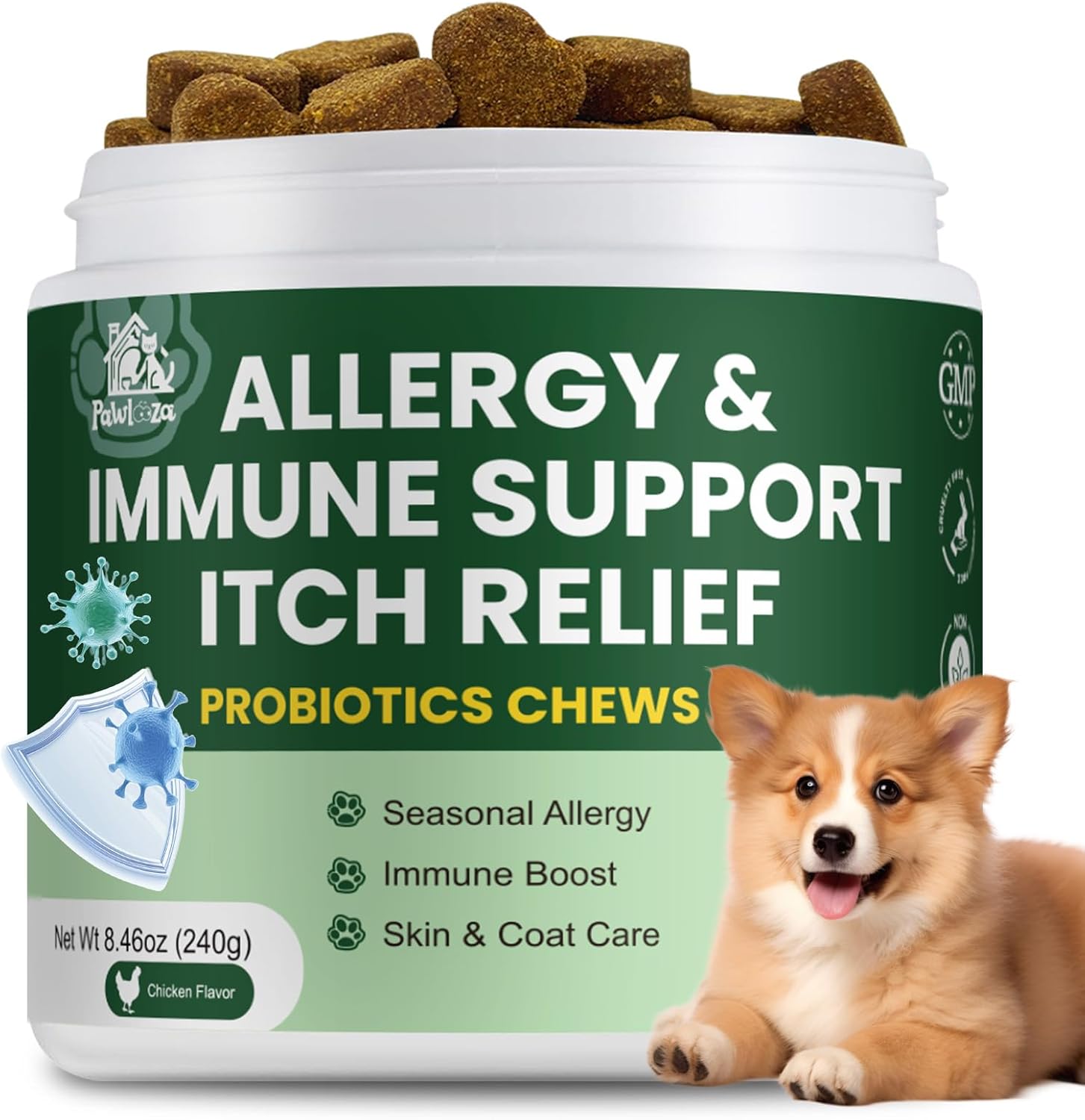
| Unit Count | 120 Count |
|---|---|
| Flavor | Chicken |
| Item Form | Pellet |
| Product Benefits | Immune Support, Pet Immune Probiotics for Dogs, Skin Care |
Pawlooza's Allergy Itchy Relief Chews combine a high-potency probiotic dose with immune and skin-supporting ingredients aimed at allergy-prone dogs. The product delivers 10 billion CFU alongside 400 mg colostrum, turmeric, astragalus root, krill oil and borage oil in chicken-flavored pellet chews that can be given daily or sprinkled on food. In practice this acts as both a gut microbiome booster and a targeted skin/anti-yeast formula: the probiotic and FOS support digestive balance while colostrum and botanicals aim to modulate immune response and calm inflammation. The chews are convenient for owners who prefer an all-in-one daily supplement rather than separate fish oil or allergy products, and the chicken flavor should help with picky eaters. Important limitations are typical of combination supplements: results on itching and coat improvement can take weeks and individual response varies, and the formula packs several active components so monitor for sensitivities and check dosing with your veterinarian for dogs on other immune or medication regimens.
Best for: Dog owners looking for a strong, multi-ingredient daily probiotic that pairs gut rebalancing with targeted immune and skin support to address allergy-related symptoms.
Less Ideal for: Owners who prefer single-ingredient probiotics, need immediate veterinary treatment for severe allergic reactions, or whose dogs have known sensitivities to any listed botanical or oil ingredients.
- High probiotic potency at 10 billion CFU per serving to more quickly influence gut flora
- Includes immune-supporting 400 mg colostrum and botanicals that target inflammation
- Added krill and borage oils supply omega-3s for skin and coat support
- Chicken-flavored pellet form is easy to give or sprinkle over food
- Combination formula may make it hard to identify which ingredient is responsible for improvements
- Effects on itching and allergies can take several weeks and vary by dog
Verdict: The best high-potency probiotic for owners seeking a robust dose to more quickly influence the gut microbiome and help reduce allergy-related inflammation.
Nutramax Proviable Probiotics 60ct
Best Gentle Probiotic

| Unit Count | 60 Count |
|---|---|
| Item Form | Tablet |
| Flavor | Natural Flavor |
| Active Ingredients | Multiple probiotic strains (Enterococcus, Bifidobacterium, Streptococcus, Lactobacillus spp.) |
| Directions | Give 1 tablet daily or as directed by your veterinarian |
Proviable chewable tablets deliver a multi-strain probiotic formula with 5 billion CFUs per tablet plus prebiotics to encourage growth of beneficial bacteria and help restore intestinal balance after dietary changes, stress, or mild upset. They come as tasty chewables that can be hand-fed or crumbled into food, making daily administration straightforward for most dogs. The formula lists seven bacterial strains commonly used in veterinary products and is supported by clinical research and veterinary recommendation, which is helpful when choosing a low-risk digestive support. Practical benefits include easy dosing for dogs of all sizes and a reputation for quality from a veterinary supplement company. Limitations are that this is a general daily support product rather than a targeted allergy treatment, and individual responses vary so it may not relieve severe or immune-mediated food reactions without veterinary guidance. For dogs with sensitive stomachs the chewable format and inclusion of prebiotics make it a gentle option, but consult your veterinarian when symptoms persist.
Best for: Owners seeking a gentle, easy-to-give daily probiotic to soothe occasional digestive upset or support gut balance in dogs prone to mild sensitivities.
Less Ideal for: Dogs with severe allergy-driven GI disease, chronic vomiting or diarrhea, or pets needing targeted elimination-diet management should see a veterinarian for a tailored treatment plan.
- Multi-strain formula with seven probiotic strains for broad-spectrum gut support
- Includes prebiotics to help encourage growth of beneficial bacteria
- Tasty chewable tablet that can be given by hand or mixed into food
- Clinically researched and produced by a veterinarian-recommended supplement company
- Not formulated specifically to treat allergy-driven gastrointestinal disease
- Contains inactive tablet ingredients that some very sensitive dogs could react to
Verdict: The best gentle probiotic for dogs that need soothing, low-irritant formulations designed to improve gut balance without triggering digestive upset.
Native Pet Probiotics for Dogs 60 Ct
Best Powder Probiotic

| Form | Powder |
|---|---|
| Unit Count | 60 Count |
| Active Ingredients | Bacillus coagulans; Enterococcus faecium; Bifidobacterium animalis; Bifidobacterium bifidum |
| Product Benefits | Digestive Health, Immune Support |
| Dog Breed Size | All |
Native Pet Probiotics is a daily powdered probiotic designed to be sprinkled over wet or dry food to support digestion and stool quality. It delivers 6 billion CFU from four strains chosen for dogs and includes organic pumpkin seed and inulin as prebiotic fiber, so it helps feed beneficial bacteria rather than just introducing them. The powder comes with a 60-scoop supply and simple directions based on body weight, making it straightforward to dose across puppies to seniors. In practice this mixes easily into meals and is unlikely to change texture or flavor, which helps with picky eaters and when splitting doses across multiple feedings. Because it is shelf-stable and vet-developed, it fits into everyday routines without refrigeration. Limitations: the formula contains beef broth which matters for dogs with specific protein sensitivities, and powder dosing requires measuring each serving rather than a single-serve packet for travel. For owners who need flexible portioning and easy mixing into food, this powder is a practical daily gut-health option.
Best for: Pet owners who need flexible, weight-based dosing and an easy-to-mix powder that will blend into meals for picky eaters or households with dogs of different sizes.
Less Ideal for: Owners seeking prepackaged single-serve doses for travel or those whose dogs must avoid beef-based ingredients should consider alternatives.
- Dog-specific probiotic blend delivering 6 billion CFU from four strains
- Includes prebiotic fiber (organic pumpkin seed and inulin) to support growth of beneficial bacteria
- Powder form mixes into wet or dry food for easy administration and picky eaters
- Vet-formulated and shelf-stable so no refrigeration is needed
- Weight-based dosing gives flexible portioning for different sizes and ages
- Contains beef broth ingredient, so not suitable for dogs with beef sensitivities or strict dietary restrictions
- Requires measuring scoops rather than single-serve packets which may be less convenient for travel
Verdict: The best powder probiotic for owners who prefer flexible dosing and effortless mixing into meals to ensure consistent allergy-supporting supplementation.
Pet Naturals Daily Probiotic 60 Count
Best Chewable Probiotic

| Unit Count | 60 Count |
|---|---|
| Active Ingredients | Bacillus coagulans 120 million CFU/chew; FOS 200 mg/chew |
| Item Form | Chew |
| Pet Type | Dog |
Pet Naturals Daily Probiotic delivers a daily chew containing Bacillus coagulans (GanedenBC30) and FOS prebiotic fiber to support digestion, regularity, and immune function. It is given as one soft chew per 25 pounds, so dosing is simple for multi-dog homes and can be used every day or during acute stressors like travel or boarding. The chews are palatable duck-flavored treats that most dogs accept easily, and the product is NASC quality certified and third-party tested for purity. Practical benefits include reduced gas and bloating for dogs with mild GI upset, potential fresher breath, and a convenient soft-chew format that doubles as a treat. Limitations to consider are the presence of multiple grain ingredients and fillers in the ingredient list, which may be unsuitable for dogs on strict limited-ingredient diets or with specific grain allergies, and the single strain formulation may not match multi-strain formulas some veterinarians recommend for complex microbiome issues.
Best for: Owners looking for a gentle, easy-to-give daily probiotic to reduce occasional digestive upset and support skin-related issues from the gut side, especially for dogs that accept chews readily.
Less Ideal for: Dogs that require a strict limited-ingredient or grain-free formula or cases where a veterinarian has recommended a multi-strain prescription-strength probiotic.
- Contains GanedenBC30 (Bacillus coagulans) plus FOS prebiotic to support gut flora and regularity
- Soft, duck-flavored chew that most dogs accept as a treat
- Simple dosing of 1 chew per 25 pounds makes daily use straightforward
- NASC quality certified and third-party tested for purity
- Includes multiple grain/flour ingredients and other fillers that may not suit strict limited-ingredient diets
- Single probiotic strain rather than a multi-strain blend some vets prefer
Verdict: The best chewable probiotic for pet owners who want a palatable, easy-to-administer format that improves adherence while supporting allergy-related gut health.
Progility Allergy & Immune Soft Chews 90 ct
Best Premium Probiotic

| Flavor | Cheese, Bacon |
|---|---|
| Item Form | Soft Chew |
| Product Benefits | Immune Support |
| Specific Uses For Product | Seasonal Allergies |
| Dog Breed Size | All |
Progility Allergy & Immune soft chews are a daily supplement aimed at dogs that need extra immune and seasonal allergy support. They are flavored bacon and cheese soft chews designed to be given once daily as part of a routine and contain ingredients like colostrum, bromelain, quercetin, apple cider vinegar, and probiotics that together target histamine regulation and skin-related allergy symptoms. The soft-chew format makes dosing straightforward for most dogs and the product is manufactured in the U.S. to NASC quality standards, which is important for owners prioritizing rigorous production and ingredient sourcing. In practice these chews can reduce itchiness and support gut immune health over several weeks, but results vary by dog and the formula is a supplemental approach rather than a standalone treatment for severe allergies. The product list does not specify strain-level probiotic details or clinical trial data on the label, so owners seeking clinically validated probiotic strains should verify those specifics with the manufacturer or their veterinarian before committing.
Best for: Owners who prioritize premium manufacturing and a supplement that pairs probiotics with botanical and enzymatic ingredients for daily allergy and immune support.
Less Ideal for: Owners seeking a probiotic with fully documented, clinically studied strain-level data on the label or those needing prescription-strength allergy therapy.
- Combines probiotics with anti-allergy actives like quercetin and bromelain for a multi-pronged approach
- Soft chew format and savory bacon-cheese flavor make daily dosing easy for most dogs
- Manufactured in the U.S. and meets NASC quality standards for supplements
- Formulated specifically to target seasonal and environmental skin-related allergy concerns
- Label does not list specific probiotic strains or CFU counts for assessing clinical backing
- Not intended as a replacement for veterinary allergy treatments for moderate to severe cases
Verdict: The best premium probiotic for owners willing to invest in clinically backed strains, rigorous manufacturing standards, and added ingredients for comprehensive allergy support.
Choosing the Right Probiotic Dog Allergy: Key Factors to Consider
Strain Composition and Evidence
Different bacterial strains produce different effects. Some strains are more likely to influence the gut-skin axis and immune signaling, which is especially relevant for dogs with allergic dermatitis. Look for products that list specific strains rather than vague group names; strain-level information helps you match a formula to research-backed benefits.
Strain interactions matter too. A single well-documented strain can be effective, but complementary strains may broaden benefits for digestion and inflammation control. Avoid formulas that do not publish strain identifiers because they offer no way to check relevance to allergy-related outcomes.
Colony-forming Units and Potencies
CFUs measure viable microorganisms at the time stated on the label. For allergy-related goals, adequate potency helps ensure enough organisms survive the stomach to reach the intestine where they act. Look for products that specify CFUs at the time of expiration or guarantee counts through shelf life rather than only at manufacture.
Higher CFUs are not always better, but very low-potency supplements may be ineffective. Consider your dog's size and condition: smaller dogs may need lower doses while larger or more symptomatic dogs may benefit from higher-potency formulations administered under veterinary guidance.
Delivery Format and Survival Through the Gut
How a probiotic is delivered affects whether organisms survive stomach acid to reach the intestine. Enteric-coated capsules, chewables formulated to protect bacteria, or microencapsulated powders can improve survival. When choosing a format, balance survival characteristics with how willing your dog is to eat the product. Powders are easy to mix into food, while soft chews can simplify dosing for picky eaters.
Storage needs interact with format: some live-culture products require refrigeration while others are shelf-stable due to protective technologies. Pick a delivery method that fits your routine and storage options to maintain viability.
Formulation Extras and Hypoallergenic Carriers
Many probiotics include prebiotics, vitamins, or omega fats intended to support gut health or skin condition. These extras can be helpful but may also introduce ingredients your dog is allergic to. For allergy-prone dogs, choose hypoallergenic carriers and minimal additional compounds to reduce the risk of triggering reactions.
Check the full ingredient list for common allergens like wheat, soy, dairy, or artificial colors and flavors. A simple formula that prioritizes strain integrity and avoids unnecessary fillers is often the safest choice for sensitive dogs.
Administration Convenience and Dosing Flexibility
Consistent daily dosing is key to seeing benefits from probiotics. Look for products that offer clear dosing guidelines by weight or provide flexible dosage forms so you can adjust as needed. Single-dose sachets simplify travel and reduce dosing errors, while bulk tubs may be more economical but less controlled for small dogs.
Also consider palatability. If your dog refuses a supplement, the best formulation in theory will not help. Chewables, pastes, or flavored powders can increase compliance, but ensure flavoring agents are free of known allergens.
Quality Control and Transparency
Quality and manufacturing practices determine whether label claims match what is actually in the product. Look for suppliers that disclose CFU counts, strain identifiers, and manufacturing standards. Third-party testing or certificates of analysis increase confidence that the product contains the listed organisms and is free of contaminants.
Transparency about storage, shelf-life, and recommended handling is also important. Products that hide strain details or provide vague potency information should be treated cautiously, especially when you are managing allergy-related symptoms.
How Quickly Do Probiotics Help with Allergy Symptoms?
Probiotics do not act instantly for allergy relief. Many owners see improvements in digestive signs within a week, but reductions in skin inflammation and itching often take several weeks of consistent use. Expect at least four to eight weeks before judging a product's effectiveness for skin-related allergy issues.
Individual response varies. Improvements depend on the dog's baseline gut health, the specific strains used, dosing consistency, and whether the probiotic is paired with other management strategies such as diet changes or topical treatments.
- Digestive benefits can appear within days to a week.
- Skin and immune-related changes typically require 4–8 weeks.
- Stop or reassess if symptoms worsen or new reactions appear.
Can You Give Probiotics with Allergy Medications or Other Supplements?
Probiotics are commonly compatible with many antihistamines and anti-inflammatory medications, but interactions are possible depending on the specific drug and the dog's health status. If your dog is on prescription medication, check with a veterinarian before starting a new probiotic to avoid unintended effects.
When combining supplements, choose complementary ingredients and avoid duplicating active compounds. For example, pairing a probiotic with a gentle prebiotic can support colonization, but adding multiple supplements that alter immune signaling without guidance can complicate outcomes.
- Consult your veterinarian when combining probiotics with prescription drugs.
- Monitor for changes in symptoms after adding a new supplement.
How to Introduce a Probiotic to a Sensitive Dog
Start with a lower dose than recommended and gradually increase to the target dose over several days. This reduces the chance of transient digestive upset as the microbiome adjusts. Use a simple, hypoallergenic carrier such as plain wet food to mask taste if needed.
Track symptoms and stool quality while introducing the probiotic. A short period of soft stools or mild gas can be normal, but persistent diarrhea, vomiting, or worsening skin signs warrant stopping the supplement and consulting your veterinarian.
- Begin with half the recommended dose for 3–5 days, then increase.
- Mix with a small amount of food to improve acceptance.
- Keep a log of skin and stool changes during the trial period.
Which Probiotic Formats Are Easiest for Travel and Outdoor Activities?
Single-dose sachets and chewable tablets are generally the most travel-friendly options because they are premeasured and less likely to be affected by humidity. Choose shelf-stable formulations if refrigeration is not practical while away from home.
If you expect heat exposure, avoid products that require cold storage unless you can pack them in insulated containers. Compact packaging that protects against moisture will better preserve viability during outdoor activities.
- Sachets and chewables are convenient for trips.
- Prefer shelf-stable options when refrigeration is unavailable.
- Use insulated carriers for heat-sensitive products when necessary.
When Should You Stop a Probiotic and Seek Veterinary Care?
Stop the probiotic if your dog shows signs of severe digestive distress, persistent vomiting, blood in the stool, or a sudden worsening of skin symptoms. Those signs can indicate an intolerance or an unrelated medical issue needing prompt attention.
Also consult a veterinarian if there is no improvement after a reasonable trial period, typically eight weeks for skin-related issues. A professional can help adjust treatment plans, run diagnostic testing, or recommend alternative interventions tailored to your dog's specific allergy profile.
- Seek veterinary care for severe or persistent adverse reactions.
- Reassess plan after about eight weeks if there is no benefit.
How We Chose the Best Probiotic Dog Allergy
We selected products that provide targeted support for dogs with allergy-related symptoms by focusing on evidence-backed probiotic strains, clinically relevant potency, and formulations that suit dogs with sensitive digestion. Our evaluation prioritized strain diversity and specificity because certain lactobacilli and bifidobacteria have more research showing benefits for skin and immune modulation. We also measured delivery practicality, preferring formulations that preserve viability through handling and storage and that offer consistent dosing for different dog sizes. Tolerance and safety were critical filters: we excluded products with common allergenic carriers or unnecessary additives that could aggravate sensitive dogs. Shelf stability and packaging that protects cultures from moisture and heat were considered, as were third-party quality checks and transparent labeling of colony-forming units at expiration. Finally, we assessed ease of administration for picky eaters, such as chewable formats or powders that mix with food, and noted options suitable for long-term use versus short-term supports.
Our full evaluation process is outlined in our review methodology.
FAQ
Are probiotics safe for dogs with food allergies?
Often they are safe, but safety depends on the product's ingredient list. Choose formulas without common food allergens, and introduce the supplement gradually while monitoring for reactions.
Can probiotics replace allergy medication?
Usually not. Probiotics can support gut health and may reduce some allergy-driven symptoms over time, but they are typically an adjunct to, not a replacement for, medications prescribed to control acute allergic reactions.
How long should I give a probiotic for allergy management?
Many veterinarians recommend a multiweek to multi-month trial, with at least four to eight weeks to assess skin improvements. Long-term use can be appropriate for maintenance if the dog tolerates the product and shows benefit.
Do probiotics cause allergy flare-ups?
They can in rare cases if a product contains an ingredient your dog is allergic to. Select hypoallergenic carriers and monitor closely during the introduction phase to detect any adverse responses.
Should I look for human-grade strains in dog probiotics?
Human-derived strains are not inherently superior for dogs. What matters more is whether the strains have evidence of benefit in canines or are known to colonize and function in the canine gut.
Final Verdict
Prioritize a probiotic that lists specific strains, guarantees CFUs through shelf life, and uses a delivery format that preserves viability while fitting your dog's preferences. For allergy-prone dogs, choose simple, hypoallergenic formulations and introduce them gradually while tracking skin and digestive responses. Balance the desire for rapid results with realistic timelines: digestive improvements can show quickly, but meaningful reductions in skin inflammation usually require consistent use over several weeks. Use veterinary guidance when combining probiotics with existing allergy treatments or when symptoms persist.

