

If your dog just finished a course of antibiotics, you may be dealing with loose stools, reduced appetite, or low energy. Choosing the right probiotic for dogs after antibiotics helps restore beneficial gut bacteria, support digestion, and reduce the duration of post-antibiotic digestive upset. This guide highlights the top shortlisted probiotics designed specifically for recovery after antibiotics and explains the features that matter most. We focus on strain selection, colony-forming unit counts, delivery format, and dosing strategies so you can pick an option that fits your dog's size and recovery needs.
Top Picks at a Glance
| Best Overall Probiotic The best all-around choice for most dogs recovering from antibiotics | Pro Plan FortiFlora Probiotic Powder |  |
| Best Budget Probiotic A low-cost option that still supports gut recovery after antibiotics | TTLXBL Probiotics for Dogs 50ct |  |
| Best Premium Probiotic A higher-end formula focused on potency, testing, and ingredient quality | Visbiome GI Care Probiotic 112.5B |  |
| Best High-CFU Probiotic Formulas with a higher viable colony count for stronger reseeding | Clear Max Liquid Probiotics 2 oz |  |
| Best Multi-Strain Probiotic Contains several complementary strains to cover broader gut needs | Pet Ultimates Probiotics Powder |  |
| Best Refrigerated Probiotic Cold-chain formulas aimed at maximizing live-culture stability | Visbiome Vet Probiotic 30 ct |  |
| Best Chewable Probiotic Treat-like chewables that are easy to give to picky dogs | Vetoquinol Pro-Pectalin Chewable Tablets 60ct |  |
Pro Plan FortiFlora Probiotic Powder
Best Overall Probiotic
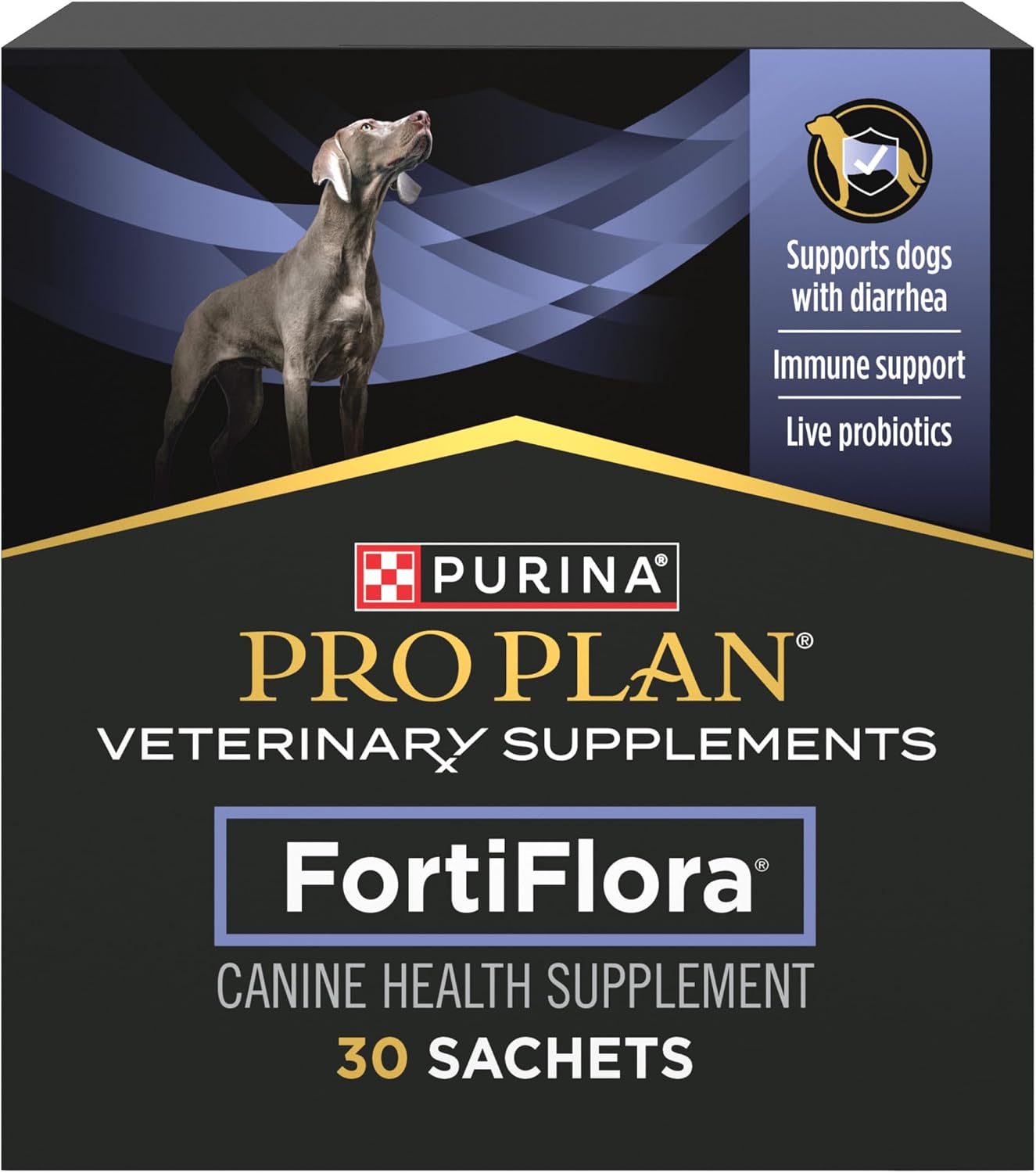
| Item Form | Powder |
|---|---|
| Flavor | Unflavored |
| Active Ingredients | Enterococcus Faecium SF68 1×10^8 CFU |
| Specific Uses For Product | Digestive Health; Gastrointestinal; Probiotics |
Purina Pro Plan FortiFlora is a single-serve powdered probiotic intended to be sprinkled on a dog's food to support intestinal microflora and help manage occasional diarrhea. Each packet delivers a guaranteed level of Enterococcus faecium SF68 and uses microencapsulation to preserve probiotic viability until it reaches the gut, plus antioxidants to support immune health. It is simple to dose—feed one packet daily or follow your veterinarian's instructions—so administration is quick for both puppies and adult dogs. The powder form is easy to mix into wet or dry food and is unflavored, relying on included liver flavoring to encourage acceptance. Practical limitations include small packet size that means you'll need to buy in multi-count boxes for long-term use and that it is a targeted digestive aid rather than a comprehensive multi-supplement for other conditions. For pet owners wanting a vet-trusted, easy-to-use probiotic focused on digestive balance, FortiFlora is a reliable, straightforward option.
Best for: Buyers who want a vet-endorsed, easy-to-dose probiotic to manage occasional digestive upsets and prioritize proven effectiveness and straightforward administration.
Less Ideal for: Owners seeking a broader daily multivitamin or joint-and-digestive combination supplement should consider products formulated for multiple concerns rather than a single-purpose probiotic.
- Veterinarian-recommended strain proven to promote normal intestinal microflora
- Microencapsulation for probiotic stability through the digestive tract
- Single-serve powder that is easy to sprinkle on food and simple to dose
- Formulated for both puppies and adult dogs and intended for occasional diarrhea management
- Small unit count per package requires frequent repurchasing for ongoing use
- Focused specifically on digestive support and not a multi-purpose supplement
Verdict: The best all-around probiotic for most dogs after antibiotics, balancing strain diversity, viable CFU count, stability, and ease of dosing for everyday recovery support.
TTLXBL Probiotics for Dogs 50ct
Best Budget Probiotic

| Flavor | Chicken |
|---|---|
| Item Form | Tablet |
| Specific Uses For Product | Stomach |
| Unit Count | 50 Count |
These TTLXBL probiotic chews are a budget-friendly daily supplement aimed at supporting digestive balance in dogs. Packaged as 50 chicken-flavored chewable tablets, the formula combines Bacillus subtilis (delivered as part of a 4.5 billion CFU blend), prebiotic fibers inulin and oligofructose, and digestive enzyme sources like pumpkin and papaya. In practice you give one chew daily for dogs over three months old to help reduce occasional diarrhea, constipation, gas, and bloating while supporting nutrient absorption and immune function. The portable bottle makes them easy to carry for travel or quick dosing, and the chicken taste is likely to appeal to picky eaters. On the downside the label does not list a full strain breakdown or per-chew CFU detail beyond the total figure, and the product description focuses on general gut health rather than targeted antifungal or yeast-specific ingredients, so extra measures may be needed for persistent yeast problems. For routine daily gut support at a low price this is a convenient option, but severe or chronic yeast infections should be evaluated by a veterinarian.
Best for: Dog owners seeking an inexpensive daily probiotic chew to support regular digestion and gut balance who prioritize convenience and palatability over clinical-strength, targeted antifungal formulations.
Less Ideal for: Owners dealing with recurring or severe yeast infections that require targeted antifungal therapy or veterinary-prescribed formulations should look for clinical products or consult their veterinarian.
- Includes Bacillus subtilis and a stated 4.5 billion probiotics per serving for general gut support
- Contains prebiotics (inulin and oligofructose) to help beneficial bacteria establish
- Chicken-flavored chew format that most dogs accept as a treat
- Compact 50-count bottle suitable for travel and daily dosing
- Does not provide a full strains list or detailed per-strain CFU breakdown
- Not formulated with specific antifungal or yeast-targeting ingredients
Verdict: The best budget probiotic for owners who need effective post-antibiotic support without a high price, offering reasonable strain variety and viable counts for short-term use.
Visbiome GI Care Probiotic 112.5B
Best Premium Probiotic

| CFU per capsule | 112.5B |
|---|---|
| Strains | 8 clinically-tested strains |
| Form | Vegetable capsule |
| Storage | Refrigerated (ships cold) |
Visbiome GI Care is a clinically oriented, high-potency probiotic delivered as a medical food capsule that contains eight tested strains and 112.5 billion CFU per dose. It is intended for daily use to support gut recovery and long-term microbiome balance, particularly after antibiotic courses; dosing is simple capsule administration. Notable features include an emphasis on clinical evidence, cold-chain shipping and storage to preserve viability, Activ-Vial moisture protection, and certification claims like Low-FODMAP and Non-GMO. In practice the refrigerated handling and insulated packaging help ensure live cultures arrive potent, but they add complexity because the product should be stored cold and only tolerates brief room-temperature periods. The formula is free of common fillers and uses a vegetable capsule, though it does contain trace milk. For someone prioritizing rigorous testing, high CFU counts, and traceable strain IDs, Visbiome delivers a premium, research-backed option; budget buyers or users wanting shelf-stable convenience may prefer alternatives.
Best for: Buyers who prioritize clinically supported, high-potency formulations and are willing to manage refrigerated storage for maximal probiotic viability after antibiotic use.
Less Ideal for: People seeking a low-cost, shelf-stable probiotic or those who need a fully dairy-free product should consider other options.
- Very high potency at 112.5 billion CFU per capsule with eight clinically tested strains
- Packaged and shipped cold with temperature monitoring to preserve viability
- Activ-Vial moisture protection and vegetable capsule reduce moisture-related degradation
- Certifications and clean-label claims (Low-FODMAP, Non-GMO, gluten free) support ingredient transparency
- Requires refrigerated storage and cold-chain handling which limits portability
- Contains trace amounts of milk, so not fully dairy-free
Verdict: The best premium probiotic for owners willing to invest in advanced formulations and rigorous testing to maximize recovery, long-term gut health, and product transparency.
Clear Max Liquid Probiotics 2 oz
Best High-CFU Probiotic

| Volume | 2 fluid ounces |
|---|---|
| CFU per 2 ml | 120 billion |
| Dose measurement | Dropper (1–3 droppers = 1–3 ml) |
| Active ingredients | Six probiotic strains + prebiotics and digestive enzymes |
Clear Max Liquid Probiotics is a small 2 oz dropper bottle that delivers a high-concentration probiotic blend for dogs and cats, intended for daily digestive support or short courses after stress or antibiotics. The formula combines six probiotic strains (L. acidophilus, L. casei, B. lactis, E. faecium, B. breve, B. longum) plus prebiotics (Inulin, FOS) and digestive enzymes (papain, bromelain, peptidase), so a 2 ml dose supplies the advertised CFU and enzyme support in a fast-absorbing liquid form. Dosing is simple by weight (1 to 3 droppers), and the dropper bottle makes precise small-volume dosing easy for small dogs, picky eaters, and pets that resist pills. The product is shelf-stable and does not require refrigeration, but the label recommends storage in a cool dry place and limited use after opening. Limitations are that the label advises cycling use rather than continuous long-term administration and it is a supplement not a treatment for serious conditions, so veterinary guidance is advised for acute or chronic GI issues.
Best for: Buyers who need a highly concentrated liquid probiotic to deliver potent doses in minimal volume for precise dosing, especially for small dogs, picky eaters, or pets recovering from antibiotics.
Less Ideal for: Owners seeking a long-term daily maintenance probiotic in large serving quantities or those who prefer refrigerated formulations and continuous use without cycling should consider alternatives.
- High concentration: 120 billion CFU per 2 ml providing potent dosing in small volumes
- Multi-strain formula with six probiotic strains plus prebiotics for broader gut support
- Includes digestive enzymes to aid nutrient breakdown and absorption
- Liquid dropper format enables precise dosing and easy administration to picky or small pets
- Shelf-stable formula that does not require refrigeration for storage
- Small 2 oz bottle may require repeat purchases for long-term use in larger dogs
- Manufacturer recommends taking breaks between courses rather than continuous daily use
Verdict: The best high-CFU probiotic for dogs needing robust microbial reseeding after antibiotics, prioritizing high viable cell counts per dose to accelerate gut recolonization.
Pet Ultimates Probiotics Powder
Best Multi-Strain Probiotic

| Formulation | Powder |
|---|---|
| Number of Species | 22 Species |
| Active Ingredients | Inulin |
| Item Form | Powder |
| Included Components | Scoop |
Pet Ultimates Probiotics is a powder supplement designed to be sprinkled on food for daily digestive and immune support. It contains 22 probiotic strains plus inulin as a prebiotic and comes with a 1/4 teaspoon scoop for flexible dosing, which makes it easy to start low and increase slowly when introducing senior dogs. Typical use is one scoop daily for dogs up to 50 pounds and two scoops for larger dogs, so it works as a food topper for picky eaters or pets that refuse pills or chews. The virtually tasteless powder mixes into kibble or wet food without altering flavor, and the broad strain profile aims to restore gut flora after antibiotics or dietary changes while supporting nutrient absorption that can benefit aging skin and coat. Limitations are the modest CFU count per scoop compared with some high-CFU supplements and the need to dose carefully to avoid digestive upset when increasing amounts rapidly.
Best for: Dog owners who need a flexible, food-mixable probiotic for senior pets or animals that will not take pills or chews and who prioritize broad strain coverage over ultra-high CFU counts.
Less Ideal for: Owners seeking very high CFU single-dose products or those who prefer probiotic chews or treats with added flavors and conveniences.
- Powder form mixes into food for easy dosing with picky or pill-resistant dogs
- 22 probiotic strains plus prebiotic inulin for broad-spectrum gut support
- Includes scoop for adjustable dosing to suit different dog sizes
- Formulated to support digestive recovery after antibiotics and improve nutrient absorption
- Lower CFU per scoop compared with some concentrated probiotic products
- Requires gradual dose increases to avoid stomach upset in sensitive dogs
Verdict: The best multi-strain probiotic for owners who want broad-spectrum microbial support after antibiotics, combining complementary strains to address digestion and immune support.
Visbiome Vet Probiotic 30 ct
Best Refrigerated Probiotic

| Unit Count | 30 Count |
|---|---|
| Item Form | Powder |
| Flavor | Unflavored |
| Specific Uses For Product | Stomach |
Visbiome Vet delivers an 8-strain, high-potency probiotic in single-use powder packets intended for daily GI support in dogs and cats. Each packet contains 225 billion live bacteria and is designed to be dosed by weight, so owners can add the unflavored powder to food for animals under stress, after dietary changes, or when occasional loose stools occur. The product emphasizes stability and potency through cold-chain handling and refrigerated storage, and it carries clinical backing for the De Simone Formulation plus third-party screening for impurities. Practical benefits include veterinarian-grade dosing, a clean-ingredient list with only inulin as an inactive, and convenient single packets that reduce measuring errors. The main trade-offs are the need to keep the product refrigerated and the premium positioning, which makes it more expensive than generic probiotics; occasional users unwilling to manage cold storage may find lower-potency shelf-stable options easier. For owners seeking a clinically studied, high-strength probiotic and willing to follow storage guidance, this is a strong option.
Best for: Owners who prioritize clinically tested formulations and ingredient quality and are prepared to follow refrigerated handling for maximum potency.
Less Ideal for: Casual users who prefer low-maintenance, shelf-stable supplements or buyers on a tight budget who do not need veterinarian-grade potency.
- Very high potency at 225 billion CFU per packet
- Clinically backed De Simone Formulation with multi-strain blend
- Single-dose powder packets for accurate, easy dosing
- Third-party impurity screening and limited inactive ingredients
- Requires refrigerated shipping and storage to maintain potency
- Higher cost compared with shelf-stable, lower-potency probiotics
Verdict: The best refrigerated probiotic for pet owners who prefer cold-chain products that preserve live cultures and potency, especially when long-term viability matters.
Vetoquinol Pro-Pectalin Chewable Tablets 60ct
Best Chewable Probiotic

| Item Form | Freeze-Dried Chew |
|---|---|
| Active Ingredients | Kaolin 1.00 g; Pectin 0.05 g; Enterococcus faecium 0.6 Billion CFU per tablet |
| Flavor | Other |
| Product Benefits | Supports digestive health and stool firmness |
Vetoquinol Pro-Pectalin is an oral chewable supplement aimed at short-term digestive support and occasional loose stool in dogs and cats. Each tablet combines kaolin and pectin to absorb excess water and soothe irritated intestines while a single direct-fed microbial strain, Enterococcus faecium, helps restore normal intestinal flora. The beef liver flavor and chewable freeze-dried form make administration straightforward either given whole or crumbled into food, which is useful during travel, diet changes, or mild gastrointestinal upset. Practical benefits include fast-acting stool firming and a simple single-strain probiotic profile that appeals to owners who prefer targeted bacterial therapy with clearer strain identity. Limitations are that it is positioned for situational use rather than as a multi-strain daily maintenance probiotic and the label advises veterinary consultation for persistent or severe conditions. It also does not replace veterinary diagnostics or therapy when underlying disease is suspected.
Best for: Pet owners who want a targeted, single-strain probiotic to address occasional loose stool or short-term GI upset and who prioritize clear strain identity over multi-strain formulas.
Less Ideal for: Owners seeking an all-day maintenance multi-strain probiotic for chronic gut issues or pets requiring vet-prescribed therapeutic interventions should consider other options.
- Single identified probiotic strain (Enterococcus faecium) for targeted gut support
- Kaolin and pectin combination absorbs excess water and helps firm stool
- Beef liver flavored chewable form that can be given whole or crumbled into food
- Formulation intended for quick relief during occasional loose stool episodes
- Designed for short-term or situational use rather than a broad-spectrum daily probiotic
- Not a replacement for veterinary diagnosis or treatment of persistent digestive disorders
Verdict: The best chewable probiotic for dogs that resist pills or powders, offering palatable, treat-style dosing that simplifies administration during post-antibiotic recovery.
Choosing the Right Probiotic Dog Antibiotics: Key Factors to Consider
Strain Selection and Evidence
Different probiotic strains have distinct effects on the canine gut. Look for formulas that list strains by name rather than generic "proprietary blends," because strain-level information lets you verify whether those microbes have been studied for antibiotic recovery or general digestive support.
Certain strains are better at colonizing the gut briefly after antibiotics, while others primarily modulate immune response or reduce diarrhea. Choosing a product with multiple complementary strains increases the chance of restoring a balanced microbiome during the short recovery window.
Colony-forming Units (CFU) at Time of Use
CFU indicates the number of viable organisms in a serving. For post-antibiotic recovery, you want an effective CFU count delivered at the time of administration, not only at manufacture. Products should state CFU per serving and guarantee counts through the labeled expiration or at time of opening.
Higher CFU is not always better; the goal is an appropriate therapeutic dose for the dog's size and condition. Ensure dosing guidance scales for small, medium, and large dogs so you can deliver a meaningful number of organisms during the recovery period.
Delivery Format and Survivability
How the probiotic is formulated affects whether microbes survive passage through the acidic stomach environment. Options include enteric-coated capsules, chewables with protective matrices, powders combined with buffer agents, or freeze-dried/live cultures with stabilizers.
Choose a delivery method that you and your dog can use consistently. For dogs that will not take pills, palatable chews or powders that mix with food are practical. Confirm the product has design features intended to maintain viability until the bacteria reach the intestine.
Dosing Simplicity and Administration
Clear, simple dosing reduces owner error during a sensitive recovery period. Look for products with measured scoops, per-weight dosing tables, or single-serve packets that remove guesswork. Instructions should explain whether to give the probiotic with food, how long to continue after antibiotics stop, and whether to adjust dose for puppies or senior dogs.
Complex dosing regimens increase the risk of missed doses, which can undermine recovery. A formula that is straightforward to administer improves consistency and outcomes.
Safety and Ingredient Transparency
Safety matters when the gut barrier is recovering after antibiotics. Check labels for possible allergens, unnecessary additives, or large amounts of fillers. Ingredients should be clearly listed, including excipients and any prebiotic fibers.
Products intended for short-term therapeutic use should avoid untested herbal additives or high doses of vitamins that could interact with medications. Transparent labeling allows you to cross-check ingredients with your veterinarian if there are allergy or medication concerns.
Stability, Storage, and Shelf Life
Some probiotic strains require refrigeration to maintain viability, while others are shelf-stable due to drying or protective packaging. Stability affects how many viable organisms reach the gut, particularly if you will not give the product immediately after opening or if you travel.
Consider storage needs against your lifestyle. Guaranteed shelf-life claims, lot testing, and packaging that limits moisture exposure all increase the odds the product remains effective through the recovery period.
When Should I Start a Probiotic After Antibiotics?
You can often start a probiotic during the last few days of an antibiotic course or immediately after finishing, depending on your veterinarian's advice. Some protocols call for concurrent administration so beneficial microbes are present while antibiotics taper off, while others recommend waiting until the antibiotic is finished to avoid killing added organisms.
Talk to your veterinarian about the timing for your dog's specific antibiotic and condition. For many dogs, beginning probiotic administration within 24 to 48 hours after the final antibiotic dose helps repopulate beneficial flora and reduce the duration of loose stools.
- Start during the final days for gradual repopulation when recommended by a vet.
- Begin within 24–48 hours after the last dose to support recovery.
- Follow product dosing instructions for duration—often 2 to 4 weeks after antibiotics.
How Long Should a Dog Stay on Probiotics After Antibiotics?
Typical post-antibiotic courses last two to four weeks, but duration depends on the initial condition, severity of digestive symptoms, and the veterinarian's judgment. Shorter courses may suffice for mild disturbance, while dogs with prolonged diarrhea or repeated antibiotic use may need longer support.
Monitor stool quality, appetite, and energy during the recovery period. If symptoms persist beyond the recommended timeframe, consult your veterinarian to reassess the plan and rule out other causes such as infection or dietary intolerance.
- Standard recovery supplementation: 2–4 weeks.
- Extend duration if diarrhea continues or if the dog receives repeated antibiotics.
- Use veterinary guidance for puppies, seniors, and immunocompromised dogs.
Can Probiotics Interfere with Antibiotics or Other Medications?
Probiotics are generally safe but can interact conceptually with antibiotic timing. Antibiotics can reduce the viability of concurrently given probiotics, so timing or choice of resilient strains matters. This is why discussion with your veterinarian about scheduling doses or selecting resistant strains is important.
Probiotics are not substitutes for antibiotics when antibiotics are needed. For dogs on other medications, check with your veterinarian to confirm there are no contraindications, particularly for immunocompromised animals or dogs on antifungal or immunosuppressive therapies.
- Separate dosing when advised to reduce direct antibiotic killing of probiotic strains.
- Avoid using probiotics as a replacement for prescribed antibiotics.
- Consult your vet for dogs on immunosuppressants or complex medication regimens.
What Format Is Easiest to Give a Dog Recovering From Antibiotics?
Powders and single-serve packets are often easiest for dogs with reduced appetite because you can mix them into a small amount of palatable food or broth. Chewable tablets or soft chews work well for dogs that accept treats and provide consistency in dosing without measuring.
If your dog is pill-averse, look for highly palatable formulations or delivery methods that do not change food texture significantly. The best format is the one you can administer reliably during the entire recovery period.
- Powders: mix with food or liquid for easy dosing.
- Chews: convenient and palatable for cooperative dogs.
- Capsules: good for owners who can pill dogs or open and mix contents.
Signs a Probiotic Is Helping Your Dog
Improvement is usually incremental. Expect firmer stools, increased appetite, and more consistent energy within a few days to a couple of weeks. Reduction in gas and bloating is another positive sign.
If there is no improvement after the recommended course or symptoms worsen, stop the product and check with your veterinarian. Persistent or worsening signs may indicate an underlying condition that needs diagnostic evaluation rather than further probiotic use.
- Firmer, more formed stools within several days to two weeks.
- Improved appetite and energy levels.
- Reduced gas and fewer episodes of diarrhea.
How We Chose the Best Probiotic Dog Antibiotics
We prioritized products that specifically target post-antibiotic recovery based on strain evidence, survivability, and practical dosing. Key evaluation criteria included selected bacterial strains known for restoring gut flora after antibiotics, minimum effective colony-forming unit (CFU) counts at the time of use, formulation and delivery methods that protect microbes from stomach acid, and clear dosing guidance across dog sizes and ages. We also considered ingredient transparency, inclusion of prebiotic support where appropriate, and suitability for short-term therapeutic use versus daily maintenance. We excluded products lacking strain-level information, incomplete dosing instructions, or ambiguous stability claims. We did not include items that rely solely on single-strain formulas with no evidence for antibiotic recovery. Our shortlist favors multi-strain formulations with demonstrated survivability and practical packaging that helps owners dose accurately during a recovery period. Safety, ease of administration, and clear labeling were additional filters used to eliminate unclear or poorly supported options.
Our full evaluation process is outlined in our review methodology.
FAQ
Are human probiotics safe for dogs after antibiotics?
Some human probiotics contain strains that are safe for dogs, but formulation, flavorings, and excipients may not suit canine digestion. It is better to use products formulated for dogs or to check with your veterinarian before using a human product.
Should puppies get the same probiotic dose as adult dogs?
No. Puppies need lower doses scaled to weight and age, and some strains are better studied in growing animals. Always follow pediatric dosing guidance on the product label or get a veterinarian's recommendation for safe puppy dosing.
Can probiotics cause side effects after antibiotics?
Mild side effects such as temporary gas or soft stools can occur as the gut adjusts. These usually resolve within a few days. Severe or prolonged reactions are uncommon but should prompt discontinuation and veterinary consultation.
Do probiotics need refrigeration to work for post-antibiotic use?
Some probiotic strains require refrigeration to remain viable, while others are shelf-stable due to processing and packaging. Check the product label for storage instructions and guaranteed potency to ensure effective dosing during recovery.
Can I give my dog prebiotics with probiotics after antibiotics?
Prebiotics can support the growth of beneficial bacteria and are often included in recovery formulas. Introduce prebiotics cautiously, as they can sometimes increase gas; follow product guidance or veterinary advice for combined use.
Final Verdict
When selecting a probiotic for dogs after antibiotics, prioritize strain transparency, appropriate CFU at time of use, and a delivery format you can administer consistently. Balance potency with safety for your dog's size and health status, and favor products with clear dosing schedules and stability data. Remember that probiotics support recovery but do not replace veterinary care. If digestive symptoms persist or worsen, consult your veterinarian for targeted evaluation and treatment. Choose a product that matches your dog's needs and follow dosing guidance to restore gut health confidently.

