

When you have a large dog, gut health and immune resilience matter day to day. The right probiotic can reduce loose stools, support nutrient absorption, and help manage stress-related digestive upset in bigger breeds. This guide highlights our shortlisted options for large dogs and explains the features that make each one appropriate for animals with higher body weight and caloric intake. Below you will find practical evaluation points and clear buying guidance that focuses on strain composition, dose scaling for larger animals, and stable delivery formats. Use the criteria to match a probiotic to your dog's feeding style and health priorities.
Top Picks at a Glance
| Best Overall Probiotic for Large Dogs A balanced, all-purpose formula suited to most large-breed needs | Pro Plan FortiFlora Probiotic Powder |  |
| Best Budget Probiotic for Large Dogs A low-cost option that still delivers core probiotic benefits | TTLXBL Probiotics for Dogs 50ct |  |
| Best High-Potency Probiotic Formulas with higher CFU counts for stronger daily support | Visbiome Vet Probiotic 30 ct |  |
| Best Chewable Probiotic Palatable chewables that make daily dosing easier for dogs | Probios Soft Chews Medium and Large |  |
| Best Powder Probiotic Flexible powder mixes easily into food for custom dosing | Native Pet Probiotics for Dogs 60 Ct |  |
| Best Premium Probiotic Higher-end formulas with advanced ingredients and quality controls | Nusentia Probiotic Miracle 360 |  |
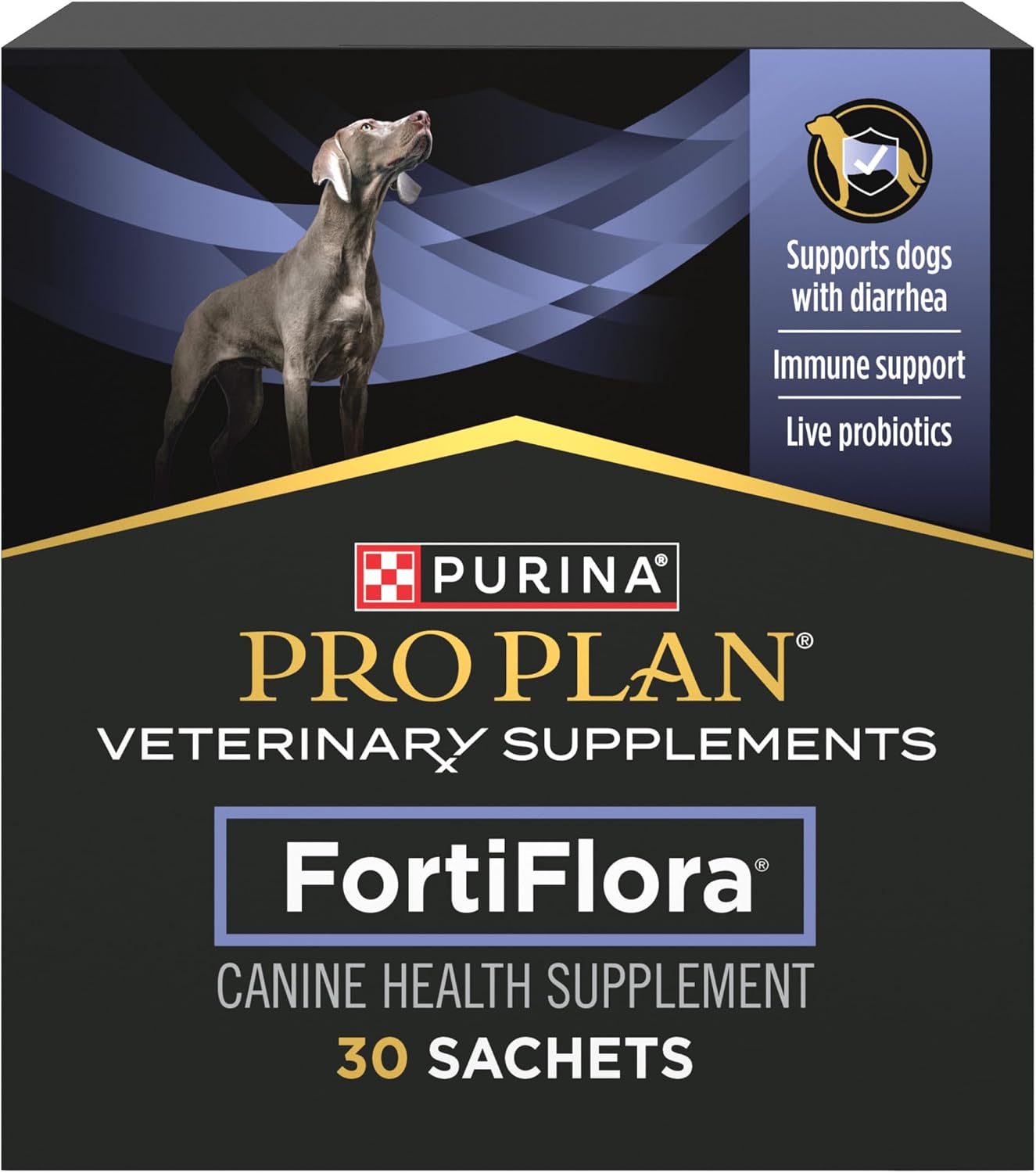
Pro Plan FortiFlora Probiotic Powder
Best Overall Probiotic for Large Dogs
| Item Form | Powder |
|---|---|
| Flavor | Unflavored |
| Active Ingredients | Enterococcus Faecium SF68 1×10^8 CFU |
| Specific Uses For Product | Digestive Health; Gastrointestinal; Probiotics |
Purina Pro Plan FortiFlora is a single-serve powdered probiotic intended to be sprinkled on a dog's food to support intestinal microflora and help manage occasional diarrhea. Each packet delivers a guaranteed level of Enterococcus faecium SF68 and uses microencapsulation to preserve probiotic viability until it reaches the gut, plus antioxidants to support immune health. It is simple to dose—feed one packet daily or follow your veterinarian's instructions—so administration is quick for both puppies and adult dogs. The powder form is easy to mix into wet or dry food and is unflavored, relying on included liver flavoring to encourage acceptance. Practical limitations include small packet size that means you'll need to buy in multi-count boxes for long-term use and that it is a targeted digestive aid rather than a comprehensive multi-supplement for other conditions. For pet owners wanting a vet-trusted, easy-to-use probiotic focused on digestive balance, FortiFlora is a reliable, straightforward option.
Best for: Buyers who want a vet-endorsed, easy-to-dose probiotic to manage occasional digestive upsets and prioritize proven effectiveness and straightforward administration.
Less Ideal for: Owners seeking a broader daily multivitamin or joint-and-digestive combination supplement should consider products formulated for multiple concerns rather than a single-purpose probiotic.
- Veterinarian-recommended strain proven to promote normal intestinal microflora
- Microencapsulation for probiotic stability through the digestive tract
- Single-serve powder that is easy to sprinkle on food and simple to dose
- Formulated for both puppies and adult dogs and intended for occasional diarrhea management
- Small unit count per package requires frequent repurchasing for ongoing use
- Focused specifically on digestive support and not a multi-purpose supplement
Verdict: The best overall probiotic for large dogs balances effective strain variety, adequate CFUs, easy dosing, and reliable packaging to support digestive and immune health in bigger breeds.
TTLXBL Probiotics for Dogs 50ct
Best Budget Probiotic for Large Dogs

| Flavor | Chicken |
|---|---|
| Item Form | Tablet |
| Specific Uses For Product | Stomach |
| Unit Count | 50 Count |
These TTLXBL probiotic chews are a budget-friendly daily supplement aimed at supporting digestive balance in dogs. Packaged as 50 chicken-flavored chewable tablets, the formula combines Bacillus subtilis (delivered as part of a 4.5 billion CFU blend), prebiotic fibers inulin and oligofructose, and digestive enzyme sources like pumpkin and papaya. In practice you give one chew daily for dogs over three months old to help reduce occasional diarrhea, constipation, gas, and bloating while supporting nutrient absorption and immune function. The portable bottle makes them easy to carry for travel or quick dosing, and the chicken taste is likely to appeal to picky eaters. On the downside the label does not list a full strain breakdown or per-chew CFU detail beyond the total figure, and the product description focuses on general gut health rather than targeted antifungal or yeast-specific ingredients, so extra measures may be needed for persistent yeast problems. For routine daily gut support at a low price this is a convenient option, but severe or chronic yeast infections should be evaluated by a veterinarian.
Best for: Dog owners seeking an inexpensive daily probiotic chew to support regular digestion and gut balance who prioritize convenience and palatability over clinical-strength, targeted antifungal formulations.
Less Ideal for: Owners dealing with recurring or severe yeast infections that require targeted antifungal therapy or veterinary-prescribed formulations should look for clinical products or consult their veterinarian.
- Includes Bacillus subtilis and a stated 4.5 billion probiotics per serving for general gut support
- Contains prebiotics (inulin and oligofructose) to help beneficial bacteria establish
- Chicken-flavored chew format that most dogs accept as a treat
- Compact 50-count bottle suitable for travel and daily dosing
- Does not provide a full strains list or detailed per-strain CFU breakdown
- Not formulated with specific antifungal or yeast-targeting ingredients
Verdict: The best budget probiotic for large dogs gives reliable digestive support at a lower price by focusing on key strains and straightforward dosing without premium extras.
Visbiome Vet Probiotic 30 ct
Best High-Potency Probiotic

| Unit Count | 30 Count |
|---|---|
| Item Form | Powder |
| Flavor | Unflavored |
| Specific Uses For Product | Stomach |
Visbiome Vet delivers an 8-strain, high-potency probiotic in single-use powder packets intended for daily GI support in dogs and cats. Each packet contains 225 billion live bacteria and is designed to be dosed by weight, so owners can add the unflavored powder to food for animals under stress, after dietary changes, or when occasional loose stools occur. The product emphasizes stability and potency through cold-chain handling and refrigerated storage, and it carries clinical backing for the De Simone Formulation plus third-party screening for impurities. Practical benefits include veterinarian-grade dosing, a clean-ingredient list with only inulin as an inactive, and convenient single packets that reduce measuring errors. The main trade-offs are the need to keep the product refrigerated and the premium positioning, which makes it more expensive than generic probiotics; occasional users unwilling to manage cold storage may find lower-potency shelf-stable options easier. For owners seeking a clinically studied, high-strength probiotic and willing to follow storage guidance, this is a strong option.
Best for: Owners who prioritize clinically tested formulations and ingredient quality and are prepared to follow refrigerated handling for maximum potency.
Less Ideal for: Casual users who prefer low-maintenance, shelf-stable supplements or buyers on a tight budget who do not need veterinarian-grade potency.
- Very high potency at 225 billion CFU per packet
- Clinically backed De Simone Formulation with multi-strain blend
- Single-dose powder packets for accurate, easy dosing
- Third-party impurity screening and limited inactive ingredients
- Requires refrigerated shipping and storage to maintain potency
- Higher cost compared with shelf-stable, lower-potency probiotics
Verdict: The best high-potency probiotic is ideal for owners who want higher colony-forming unit counts per dose to support more robust gut flora in large dogs.
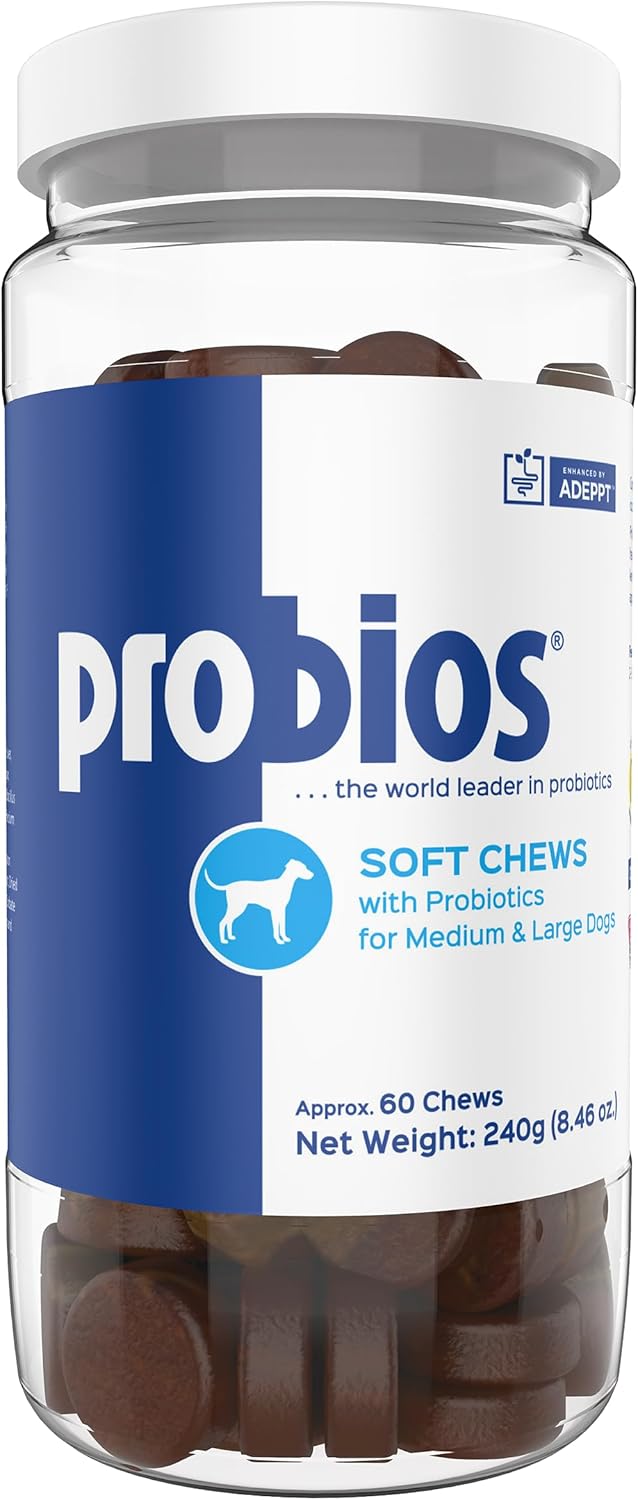
Probios Soft Chews Medium and Large
Best Chewable Probiotic
| Unit Count | 60 chews per jar |
|---|---|
| Dose per Chew | 4 g each |
| Target Breed Size | Medium and Large |
| Active Cultures | Bacillus subtilis, Bacillus licheniformis |
Probios Soft Chews are chicken liver flavored probiotic chews designed for medium and large dogs to provide daily gut and immune support. Each chew delivers live, shelf-stable probiotic strains including Bacillus subtilis and Bacillus licheniformis plus a proprietary prebiotic blend, and the soft texture makes them easy to give as a handheld treat or mixed into food. Typical use is one to three chews daily based on body weight, which fits well into travel, boarding, post-antibiotic, or routine-support scenarios. The product is made in the USA at an SQF-certified facility and is shelf-stable so refrigeration is not required. Practical benefits include simple dosing, a palatable flavor that picky dogs often accept, and multi-strain coverage that supports stool consistency and digestion over time. Limitations are that dosing requires multiple chews for very large dogs and the formula contains common ingredients like wheat and chicken liver which may not suit dogs with specific food sensitivities.
Best for: Pet owners who want a tasty, single-dose chewable probiotic that large dogs will readily accept as a treat for daily digestive and immune support.
Less Ideal for: Owners seeking a hypoallergenic, grain-free probiotic or a single-pill option for very large dogs who prefer fewer doses per day should consider alternatives.
- Soft, treat-like texture that most dogs will accept without mixing into food
- Contains shelf-stable Bacillus strains so chews do not require refrigeration
- Includes a prebiotic blend to help support beneficial bacteria in the gut
- Made in the USA at an SQF-certified facility with NASC preferred supplier strains
- Contains common food ingredients such as wheat and chicken liver that could trigger sensitivities
- Large dogs may need multiple chews per day, reducing how long one jar lasts
Verdict: The best chewable probiotic is for pet owners who need a tasty, easy-to-administer chew that large dogs will accept without mixing with food or using capsules.
Native Pet Probiotics for Dogs 60 Ct
Best Powder Probiotic

| Form | Powder |
|---|---|
| Unit Count | 60 Count |
| Active Ingredients | Bacillus coagulans; Enterococcus faecium; Bifidobacterium animalis; Bifidobacterium bifidum |
| Product Benefits | Digestive Health, Immune Support |
| Dog Breed Size | All |
Native Pet Probiotics is a daily powdered probiotic designed to be sprinkled over wet or dry food to support digestion and stool quality. It delivers 6 billion CFU from four strains chosen for dogs and includes organic pumpkin seed and inulin as prebiotic fiber, so it helps feed beneficial bacteria rather than just introducing them. The powder comes with a 60-scoop supply and simple directions based on body weight, making it straightforward to dose across puppies to seniors. In practice this mixes easily into meals and is unlikely to change texture or flavor, which helps with picky eaters and when splitting doses across multiple feedings. Because it is shelf-stable and vet-developed, it fits into everyday routines without refrigeration. Limitations: the formula contains beef broth which matters for dogs with specific protein sensitivities, and powder dosing requires measuring each serving rather than a single-serve packet for travel. For owners who need flexible portioning and easy mixing into food, this powder is a practical daily gut-health option.
Best for: Pet owners who need flexible, weight-based dosing and an easy-to-mix powder that will blend into meals for picky eaters or households with dogs of different sizes.
Less Ideal for: Owners seeking prepackaged single-serve doses for travel or those whose dogs must avoid beef-based ingredients should consider alternatives.
- Dog-specific probiotic blend delivering 6 billion CFU from four strains
- Includes prebiotic fiber (organic pumpkin seed and inulin) to support growth of beneficial bacteria
- Powder form mixes into wet or dry food for easy administration and picky eaters
- Vet-formulated and shelf-stable so no refrigeration is needed
- Weight-based dosing gives flexible portioning for different sizes and ages
- Contains beef broth ingredient, so not suitable for dogs with beef sensitivities or strict dietary restrictions
- Requires measuring scoops rather than single-serve packets which may be less convenient for travel
Verdict: The best powder probiotic suits owners who prefer to blend doses into meals for giant or picky eaters and who need adjustable serving sizes for large dogs.
Nusentia Probiotic Miracle 360
Best Premium Probiotic

| Item Form | Powder |
|---|---|
| Flavor | Unflavored |
| Active Ingredients | Prebiotics, live cultures probiotics |
| Target Species | Dogs, Cats |
| Unit Count | 131 Grams |
Nusentia Probiotic Miracle is a dry, unflavored powder designed to sprinkle over food to help manage diarrhea, loose stool, and other digestive upsets in dogs and cats. It contains six probiotic strains including Lactobacillus and Bifidobacterium plus inulin as a prebiotic, and the included scoop makes small, flexible daily dosing simple for different sized pets. Typical use is one tiny scoop mixed into a meal daily for 5 to 6 weeks to re-seed gut flora, with instructions to start low and increase as the pet adapts; increased stool output or gas early on is explained as normal gut activity. The product is made in a GMP facility, third-party tested, free from fillers, dairy, gluten, and grains, and is marketed in a large 360-scoop jar for long-term use or multi-pet households. Limitations are that results vary by animal and the powder requires consistent daily use for weeks to see change, and there is no medical claim approval so consult your veterinarian for ongoing or severe conditions.
Best for: Owners who want precise, adjustable dosing and an easy-to-mix powder to address diarrhea and reestablish healthy gut bacteria in dogs and cats.
Less Ideal for: People seeking an immediate medical treatment for acute severe illness or those who prefer chewable or single-dose formats over daily powder mixing.
- Multi-strain formula with six probiotics plus a prebiotic to support gut flora
- Unflavored powder mixes into food for flexible, measured dosing
- Large 360-scoop jar offers strong value for multi-pet homes or long-term use
- Made in USA at a GMP facility and third-party tested with no fillers or common allergens
- Requires consistent daily dosing for several weeks before benefits are likely
- Not a veterinary drug and not intended to diagnose or treat disease
Verdict: The best premium probiotic is for owners willing to pay more for clinical-grade strains, third-party testing, superior delivery systems, and attention to ingredient sourcing.
Choosing the Right Probiotic Large Dog: Key Factors to Consider
Strain Diversity and Documented Strains
Different probiotic strains perform different roles in the canine gut. A mix that includes strains known to support stool consistency, immune signaling, and small-intestine digestion gives broader coverage than a single-strain product. Look for products that identify species and strain codes rather than generic names so you can check whether a strain has supporting research in dogs or other mammals.
Knowing the specific strains helps veterinarians advise on compatibility with other therapies and on whether a probiotic is likely to address your dog's particular issue, such as chronic loose stools versus occasional stress-related diarrhea.
Colony Forming Units Scaled for Large Dogs
CFU count indicates how many live organisms are in each serving at the time of manufacture or guaranteed through shelf life. Larger dogs may require higher daily CFU totals to achieve similar gut colonization effects compared with smaller breeds, so consider products that provide dosing guidance by weight or offer higher per-serving counts.
Avoid focusing only on very large CFU numbers without strain clarity. A well-formulated moderate CFU product with proven strains can be more effective than an unlabeled high-count option. Check whether the manufacturer guarantees CFU through the expiration date or only at time of manufacture.
Delivery Form and Dosing Convenience
Probiotics for dogs come in powders, chews, capsules, and paste. For large dogs, dosing convenience and palatability matter because you may be giving larger daily volumes or splitting doses across meals. Powders that mix easily into kibble or wet food work well for multiple-meal routines, while chewable formats are convenient if your dog accepts them as treats.
Consider whether the product's serving measure scales cleanly with weight and whether it is practical to split doses. Also think about caregivers: an easy-to-administer format reduces missed doses and dosing errors, which is especially relevant for multi-dog households with at least one large dog.
Stability, Storage, and Packaging
Probiotic viability depends on formulation and how the product is packaged and stored. Look for formulations with protective delivery systems, desiccant packaging, or single-serve packets that limit moisture exposure. Some probiotics require refrigeration to maintain potency, while others are shelf-stable; choose based on your storage habits and the product's stated stability.
For large dogs that will use products faster due to higher dosing, packaging that preserves potency across the expected consumption period reduces waste and ensures you are administering the intended number of live organisms throughout the product's life.
Safety and Ingredient Transparency
Safety for adult dogs is paramount. Check for clear labeling of all inactive ingredients, absence of unnecessary fillers, and any statements about allergens. Products with limited extra additives reduce the chance of digestive upset or reactions in sensitive dogs. Also look for canine-specific formulations or explicit guidance for dog use rather than human products repurposed for pets.
Transparency about strain sources, manufacturing testing, and third-party analyses helps build confidence in both safety and label accuracy.
Veterinary Compatibility and Health Goals
Different probiotics support different outcomes, such as routine digestive maintenance, post-antibiotic recovery, or immune support in senior dogs. Match the probiotic's documented functions to your dog's health goals and any ongoing veterinary treatments. Some strains complement antibiotic therapy when used under veterinary guidance; others are better for everyday maintenance.
If your dog has chronic gastrointestinal disease, metabolic conditions, or is on immunosuppressive medication, consult a veterinarian before starting a new probiotic supplement to ensure the product aligns with therapeutic plans.
How Much Probiotic Should a Large Dog Take Each Day?
Dosing for large dogs depends on CFU per serving and the manufacturer's weight-based recommendations. Many products provide a per-kilogram or per-pound guideline; use those as the primary reference and adjust within the recommended range. If you cannot find weight-based guidance, aim for a product that offers higher per-serving CFU so you can provide an appropriate total daily dose without excessive serving counts.
Start with the lower end of the recommended range and monitor stool quality and appetite for a week before increasing. Sudden large jumps in daily CFU can cause transient gas or softer stools for some dogs, so titrating up helps identify an ideal maintenance dose.
- Split doses across two meals for better tolerance and even gut exposure.
- Follow label instructions about mixing with food and timing relative to antibiotics.
- If your dog is on other supplements, confirm cumulative daily powder volume is manageable.
Can Probiotics Help a Large Dog Recover After Antibiotics?
Probiotics are often used to help repopulate beneficial gut bacteria after antibiotic treatment. Choose strains with evidence for restoring gut balance and look for products that recommend timing for administration relative to antibiotic dosing. Some veterinarians advise administering probiotics a few hours after each antibiotic dose to reduce direct killing of the probiotic organisms.
Recovery-support probiotics are not a substitute for veterinary care if diarrhea is severe or prolonged. Use them as an adjunctive measure under veterinary guidance, and monitor hydration and stool consistency closely during the recovery period.
- Confirm the product's label has guidance for concurrent antibiotic use.
- Prefer products that show stability through gastric passage to reach the intestine.
Which Delivery Form Is Best for Picky Large Dogs?
If your dog is picky, choose a delivery form that matches their preferences. Powdered probiotics that blend invisibly into kibble or wet food work well when a dog does not accept pills or chews. Chewables are helpful if your dog enjoys treats and will voluntarily take a daily dose.
For dogs that have dental issues or difficulty chewing, a paste or liquid form that can be applied to the gums or mixed into food may be preferable. Consider single-serve packets to avoid measuring errors and to preserve potency if you do not use the entire container quickly.
- Test a small amount for palatability before committing to a large container.
- Avoid hiding powders in highly aromatic foods that might alter regular feeding patterns.
How to Store Probiotics to Keep Them Effective
Follow the manufacturer's storage recommendations carefully. Many products are shelf-stable when kept in a cool, dry place away from direct sunlight, while others recommend refrigeration to maximize longevity. For bulk containers, transfer refills into an airtight container with desiccant packets if recommended to protect against humidity.
Keep track of expiration or guaranteed-potency dates and use products within the time frame that matches your dog's dosing rate to ensure you are providing the labeled CFU counts throughout the container's life.
- Avoid storing powders near heat sources or in bathrooms where humidity fluctuates.
- If a product requires refrigeration, keep it cold during travel or when moving between homes.
When Should You Expect to See Results in a Large Dog?
Some owners notice stool improvement or reduced gas within a few days, but more consistent benefits for digestion and immune markers may take several weeks of daily dosing. Keep a simple log of stool consistency, appetite, and energy levels for at least 4 weeks to evaluate whether the probiotic is helping.
If no improvement is seen after a reasonable trial period or if symptoms worsen, stop the supplement and consult your veterinarian to rule out underlying disease or the need for alternative therapies.
- Allow 2 to 4 weeks for measurable digestive improvements in many dogs.
- Use objective measures like stool scoring to track progress.
Special Considerations for Senior and Working Large Dogs
Senior large dogs may benefit from probiotics that support nutrient absorption and immune resilience, while active working dogs might need strains that help maintain gut health under stress and high-calorie diets. Adjust dosing to account for any age-related digestive changes, concurrent medications, and overall calorie intake.
Consult a veterinarian when adding probiotics alongside joint, cardiac, or metabolic medications common in senior or high-performance dogs to avoid interactions or overlap in supportive ingredients that could affect appetite or metabolism.
- Reassess dosing after major diet or activity changes.
- Prioritize products with veterinary usage guidance for dogs with chronic conditions.
How We Chose the Best Probiotic Large Dog
We selected probiotics for large dogs using a consistent editorial framework focused on formulations and practicality for bigger animals. Primary evaluation criteria included strain diversity, colony forming unit (CFU) counts scaled for larger body sizes, and delivery form suitability for dogs that eat dry kibble or require pill administration. We also weighed manufacturing and storage stability, looking for products formulated to remain viable through typical shelf life and common home storage conditions. Ingredient transparency and absence of unnecessary fillers or artificial additives were important because large dogs consume larger daily volumes and are more exposed to cumulative ingredient effects. Finally, we considered ease of dosing, packaging options that preserve potency, and documented safety in adult dogs. We excluded products lacking clear strain labels or CFU information, supplements not intended for canine use, and formulations that require refrigeration without stability data. The result is a focused list of probiotics appropriate for large dogs, with editorial choices driven by measurable formulation and usability factors rather than marketing claims.
Our full evaluation process is outlined in our review methodology.
FAQ
Are human probiotics safe for large dogs?
Human probiotics are not formulated for canine diets and often lack canine-specific dosing guidance. Some human strains may be safe, but veterinary confirmation is recommended because dose scaling and inactive ingredients can differ.
Can probiotics cause side effects in large dogs?
Probiotics can cause mild, temporary effects such as increased gas or softer stools as the gut adjusts. These usually resolve within a week when dosing is started slowly; persistent or severe symptoms warrant stopping the product and consulting a veterinarian.
How long should a large dog stay on a probiotic?
Duration depends on the purpose: short courses are common for post-antibiotic recovery, while maintenance dosing may be continued long-term for chronic digestive support. Reassess periodically with objective measures and veterinary input to determine ongoing need.
Do probiotics interact with other supplements or medications?
Probiotics have few direct interactions, but timing with antibiotics matters because antibiotics can reduce probiotic viability. For dogs on immune-modulating drugs or with severe illness, consult a veterinarian before adding a probiotic.
Is a higher CFU count always better for large dogs?
Not necessarily. Higher CFU counts can be useful for large dogs, but strain selection, stability, and documented efficacy matter more than raw numbers. Choose products that balance appropriate CFU levels with proven strains and clear dosing guidance.
Final Verdict
Prioritize strain transparency, appropriate CFU scaling, and a delivery form that fits your dog's feeding routine when choosing a probiotic for a large dog. Stability and clear dosing instructions reduce guesswork and help ensure your dog receives an effective daily amount. Match the product to the specific health goal—short-term recovery, routine maintenance, or support during stress—and consult your veterinarian for dogs with chronic health issues. With realistic expectations about onset and measurable outcomes, you can pick a probiotic that supports digestion and immune health in larger breeds without unnecessary complexity. Start with a clear dosing plan, monitor results, and adjust under veterinary guidance.

