

Starting dental care early sets a puppy up for healthier adult teeth and fewer oral problems down the road. The right puppy toothbrush and paste make daily brushing less stressful for both you and your dog while protecting delicate baby teeth and tender gums. This guide shortlists the top puppy toothbrush and paste options available for at-home dental care. We evaluated each pick for safety, ease of use, and how well it encourages consistent brushing. Read on to find a gentle, puppy-friendly combination that fits your routine.
Top Picks at a Glance
| Best Overall Puppy Toothbrush A reliable, well-rounded toothbrush that suits most puppies | Vet's Best Puppy Toothpaste Kit |  |
| Best Budget Puppy Toothbrush An affordable option that still cleans teeth effectively | Arm & Hammer Complete Care Puppy Dental Kit |  |
| Best Compact Puppy Toothbrush A smaller, easy-to-maneuver brush for tiny mouths and travel | VVHOMIFE Small Dog Toothbrush Kit |  |
| Best Soft-Bristle Puppy Toothbrush Ultra-gentle bristles designed for sensitive gums and baby teeth | RADIUS Organic Puppy Dental Kit |  |
| Best Starter Puppy Toothbrush A beginner-friendly kit or brush to ease puppies into brushing | Arm & Hammer Puppy Dental Kit |  |
| Best Premium Puppy Toothbrush Higher-end materials and features for owners seeking top quality | Petsmile Teeth Brushing Kit 2.5 oz |  |
Vet's Best Puppy Toothpaste Kit
Best Overall Puppy Toothbrush

| Flavor | Peanut Butter |
|---|---|
| Size | 3.5 oz |
| Includes | Toothpaste and triple-headed toothbrush |
| Formulation | Enzymatic, safe to swallow |
This kit combines a non-toxic, enzymatic peanut butter toothpaste with a triple-headed toothbrush built to encircle each tooth for more complete coverage during brushing. It is intended for puppy use and is formulated to be safe to swallow so you do not need to rinse, which makes introductions to brushing less stressful. The enzymatic formula targets plaque and tartar while natural flavors and oils freshen breath, and the included toothbrush's three angled heads help reach front and back teeth without aggressive scrubbing. Typical use is daily to several times per week, applying gel to the brush, finger, or directly for quick breath control before progressing to full brushing as the puppy adapts. Limits include the small 3.5 oz tube size for frequent use and that flavored pastes can encourage licking rather than focused brushing if the handler does not maintain technique. The kit is a practical starter for puppy owners training a brushing routine, but owners should still monitor technique and follow veterinary guidance for persistent dental concerns.
Best for: Puppy owners who struggle to get their young dog to accept toothbrushing and need a tasty, puppy-safe toothpaste to build a regular routine and positive brushing habits.
Less Ideal for: Owners seeking an economical long-term supply for multiple dogs or those needing medicated or prescription-strength dental treatments should consider other options.
- Enzymatic, non-toxic formula designed to reduce plaque and tartar.
- Peanut butter flavor that encourages puppy acceptance and cooperation.
- Triple-headed toothbrush that covers multiple angles for more efficient brushing.
- Safe to swallow formulation removes need to rinse, easing training for puppies.
- Tube size may run out quickly with frequent brushing.
- Flavor can lead to licking instead of sustained brushing if technique is not enforced.
Verdict: The best all-around puppy toothbrush that balances gentle bristles, easy handling, and effective plaque control for everyday use.
Arm & Hammer Complete Care Puppy Dental Kit
Best Budget Puppy Toothbrush

| Quantity | 2.5 fl oz (67.5 g) |
|---|---|
| Intended pet | Puppies and small dogs |
| Flavor | Peanut butter |
| Formula highlights | Enzymatic, baking soda, calcium, fluoride-free |
This kit supplies the basics to start a puppy brushing routine: a 2.5 oz enzymatic, fluoride-free peanut butter toothpaste plus two small brushes (a microfiber finger brush for training and a compact toothbrush for harder-to-reach teeth). The enzymatic formula and baking soda aim to lift surface buildup and freshen breath while added calcium supports enamel development, so daily use can help reduce plaque and tartar accumulation between vet cleanings. The finger brush makes first sessions less intimidating and the toothbrush handles transition to a more thorough clean. Practical benefits include a puppy-friendly flavor that encourages licking and a compact tube sized for short-term use. Limitations are that this is a basic kit without specialized clinical ingredients or large-volume toothpaste, so owners seeking stronger tartar control or professional-grade formulas will need alternatives. The kit does not replace veterinary dental care but is a convenient, low-cost way to build consistent brushing habits with puppies and small dogs.
Best for: Buyers who want an inexpensive, ready-to-use kit to start and maintain a daily puppy brushing habit and prefer a palatable flavor to ease training.
Less Ideal for: Owners seeking a long-term, high-strength tartar control toothpaste or veterinary-grade dental treatment should consider clinical formulas instead.
- Complete starter set including toothpaste, finger brush, and small toothbrush
- Peanut butter flavor that is appealing to puppies and eases training
- Enzymatic, baking soda, and calcium formula helps lift surface buildup and freshen breath
- Fluoride-free, nontoxic formula made for puppies and small dogs
- Small 2.5 oz tube may run out quickly for regular daily brushing
- Basic formula without clinical-strength tartar control ingredients
Verdict: The best budget puppy toothbrush for owners who want decent cleaning performance and durability at a low price.
VVHOMIFE Small Dog Toothbrush Kit
Best Compact Puppy Toothbrush
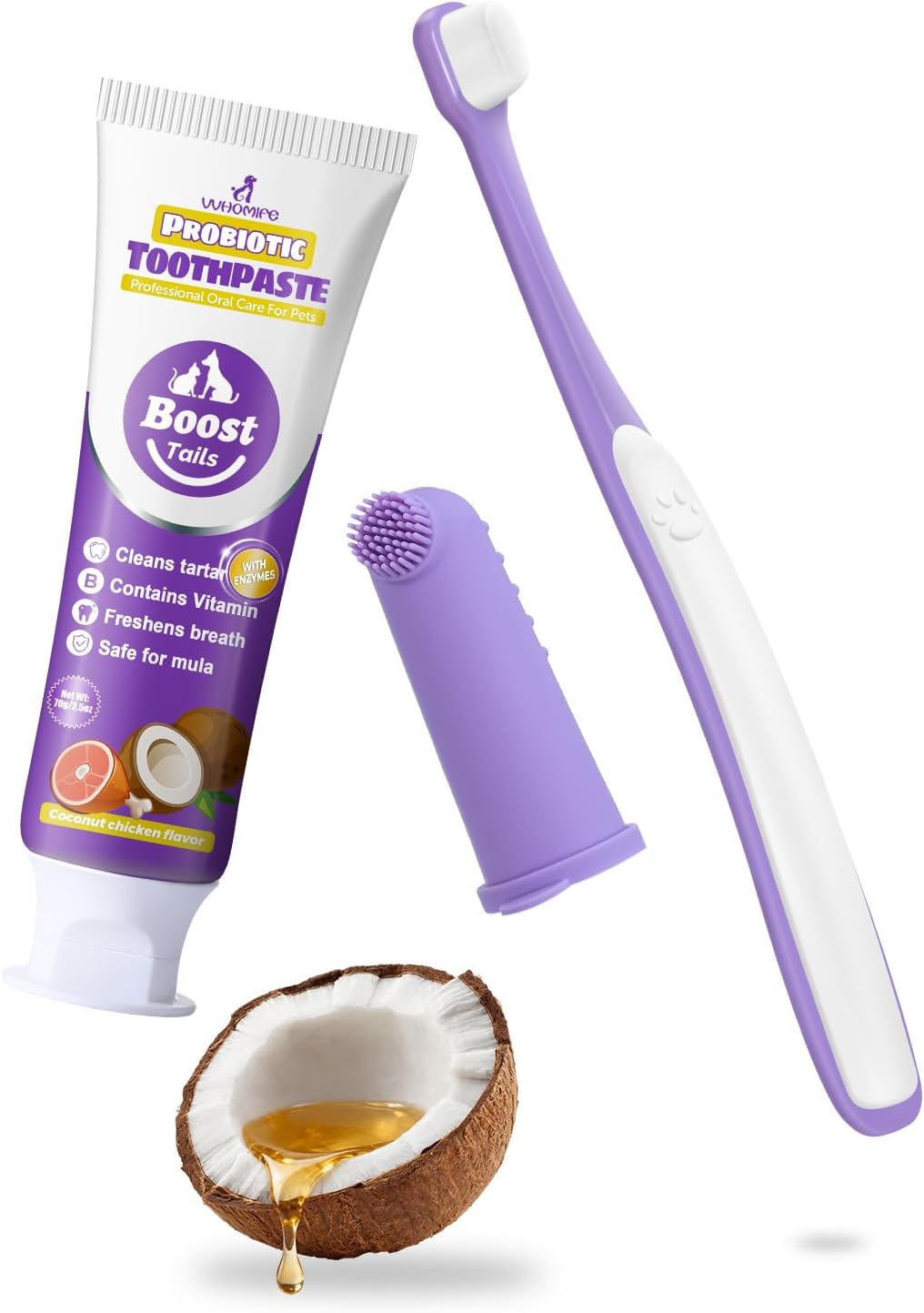
| Recommended weight | For dogs under 30 lbs |
|---|---|
| Toothpaste flavor | Coconut Chicken |
| Toothpaste size | 2.5 oz |
| Brush head size | 0.39 inch mini |
This VVHOMIFE kit pairs a 2.5 oz coconut-chicken flavored toothpaste with a 0.39-inch mini toothbrush and a silicone finger brush designed for small mouths. It is intended for daily brushing of dogs under 30 pounds and uses coconut oil and enzymatic ingredients to help reduce plaque and freshen breath. The tiny brush head and very soft bristles make it easy to access tight teeth and sensitive gums, while the finger toothbrush is useful for introducing Yorkies to brushing or cleaning awkward areas. The kit includes a whitening comparison card to track visible improvement. Practical limits are its focus on small breeds only and that the toothpaste is a flavored, non-therapeutic formulation rather than a veterinary treatment for advanced dental disease. For routine at-home maintenance and building a brushing habit in a small, skittish breed, the set is thoughtfully sized and gentle.
Best for: Someone who needs a gentle, small-headed toothbrush solution to establish a daily brushing routine for a small, delicate dog like a Yorkie.
Less Ideal for: Owners seeking a veterinary-strength or treatment-focused dental product or those with medium to large breed dogs should look elsewhere.
- Mini 0.39-inch brush head suited to very small mouths
- Ultra-soft bristles and bite-resistant rubber for gentle gum care
- Includes silicone finger brush to ease training and hard-to-reach spots
- Coconut-chicken flavored, enzymatic toothpaste encourages acceptance and helps control plaque
- Whitening comparison card helps track progress over time
- Formulation is for daily hygiene, not a medical treatment for periodontal disease
- Kit is sized for small dogs only and not intended for larger breeds
Verdict: The best compact puppy toothbrush for small-breed pups and travel because its size improves access and makes handling easier during brushing.
RADIUS Organic Puppy Dental Kit
Best Soft-Bristle Puppy Toothbrush

| Item model number | PN801 |
|---|---|
| Manufacturer | RADIUS |
| Ingredients | USDA organic blend including coconut oil, sweet potato, cinnamon |
The RADIUS Organic Puppy Dental Kit combines a compact 0.8 oz USDA-certified organic tooth gel with an ultra-soft-bristle toothbrush sized for young dogs, making it simple to brush a puppy's teeth at home or on the go. The gel uses real ingredients like coconut oil, sweet potato and cinnamon to create a flavor most pups accept, and it is free from xylitol, artificial flavors, dyes, and many common additives, which helps make daily use safe. The toothbrush has a smooth, oval, cornerless head and ultra-soft bristles intended to protect sensitive puppy gums while reaching teeth surfaces. Practical benefits include TSA-friendly toothpaste sizing for travel, a formulation aimed at freshening breath and reducing plaque, and a brush head shaped for small mouths. Limitations are the small tube size, which will require replacement for regular long-term use, and the kit is targeted at puppies so adult dogs with larger mouths may need a larger brush option for more efficient cleaning.
Best for: Buyers who need a compact, gentle oral-care kit for puppies and want a natural, travel-ready toothpaste and a brush that protects sensitive gums.
Less Ideal for: Owners seeking a long-lasting supply or a toothbrush for medium to large adult dogs should consider larger tube sizes or adult brush models instead.
- USDA certified organic gel made from recognizable ingredients
- Ultra-soft, compact brush head sized for puppy mouths to protect gums
- Travel-friendly toothpaste tube size that is TSA compliant
- Formula excludes xylitol, artificial flavors, dyes, and many common additives
- Small 0.8 oz tube will run out quickly with daily use
- Brush in the kit is sized for puppies and may be too small for adult dogs
Verdict: The best soft-bristle puppy toothbrush for puppies with tender gums or newly erupting teeth, prioritizing comfort while removing plaque.
Arm & Hammer Puppy Dental Kit
Best Starter Puppy Toothbrush

| Toothpaste size | 0.84 oz |
|---|---|
| Includes | Toothpaste, small toothbrush, soft finger brush, toothbrush cover |
| Flavor | Vanilla ginger |
The Arm & Hammer Puppy Dental Kit is a beginner-friendly set designed to introduce puppies to daily brushing. It pairs a small 0.84 oz tube of baking soda–enhanced enzymatic toothpaste in a vanilla ginger flavor with a small toothbrush sized for tiny mouths, a soft finger brush for hands-on introduction, and a protective brush cover. The toothpaste formulation aims to reduce tartar and freshen breath while remaining gentle for young dogs, and the finger brush makes the first sessions less intimidating for puppies who resist rigid brushes. In practice the kit is useful for training a routine: start with the finger brush or a dab on your finger, then graduate to the small toothbrush once the puppy is comfortable. The kit is compact and has everything a new owner needs to begin daily care, but the toothpaste tube is small and will need replacement as the puppy grows or if you have multiple dogs. Also it is not a veterinary treatment for established periodontal disease, so expect it mainly to support preventive home care.
Best for: New puppy owners who want a gentle, all-in-one kit to introduce daily tooth brushing calmly and build a consistent routine.
Less Ideal for: Owners looking to treat active periodontal disease or those needing larger quantities for multiple dogs should consider clinical products or larger toothpaste sizes.
- Complete starter kit with toothpaste, small toothbrush, finger brush, and cover
- Enzymatic formula with baking soda targets tartar and freshens breath
- Small brush and soft finger brush are sized and textured for puppy mouths
- Vanilla ginger flavor helps make brushing a positive experience
- Toothpaste tube (0.84 oz) is small and may run out quickly for frequent use or multiple pets
Verdict: The best starter puppy toothbrush for new puppy owners, offering gentle design and features that help introduce teeth cleaning calmly and consistently.
Petsmile Teeth Brushing Kit 2.5 oz
Best Premium Puppy Toothbrush

| Flavor | Rotisserie Chicken |
|---|---|
| Includes | Toothpaste & Toothbrush |
| Volume | 2.5 ounces |
| VOHC | Accepted |
This Petsmile Teeth Brushing Kit combines a VOHC-recognized Calprox toothpaste formula with a dual-angle, 45° soft-bristle toothbrush to make daily pet oral care practical and effective. The tube uses a human-grade ingredient list and a proprietary Calprox system that helps dissolve the biofilm where plaque and tartar start, while supplying minerals to support enamel. The included angled brush is designed to reach below the gumline and the brand recommends letting pets lick the paste first then working up to brushing; that approach plus the chicken flavor makes it easier to build a routine. In real-world use the kit is best for owners who want a premium, clinically oriented toothpaste and a purpose-built brush in one box—daily application or brushing is straightforward and suitable for puppies through seniors. Limitations: the 2.5 ounce tube is a starter size that may require repurchasing more frequently for multi-pet households, and results depend on consistent daily use and basic brushing technique rather than being a one-time fix for heavy tartar.
Best for: Owners who prioritize a premium, vet-recognized toothpaste and are committed to a daily brushing routine to improve long-term oral health.
Less Ideal for: People looking for a bulk or long-lasting supply for multiple pets or those unwilling to perform regular brushing sessions.
- VOHC-accepted Calprox formula for plaque and tartar control
- Human-grade ingredients and veterinarian-recommended formulation
- 45° angled toothbrush designed to reach below the gumline
- Flavoring that encourages pets to accept toothpaste and simplifies habit building
- Small 2.5 oz tube is a limited supply for multi-pet homes
- Effectiveness requires daily use and some brushing skill from the owner
Verdict: The best premium puppy toothbrush for owners willing to pay more for superior materials, ergonomic design, and longer-lasting performance.
Choosing the Right Puppy Toothbrush Paste: Key Factors to Consider
Bristle Softness and Head Size
Puppies have smaller mouths and tender gums, so bristle softness and head size directly affect comfort and safety. Very soft, rounded bristles reduce the risk of gum irritation while still dislodging food and plaque from tooth surfaces. A compact brush head helps reach back premolars without forcing the puppy to overopen its mouth.
When assessing head size, consider the puppy's breed and mouth anatomy. Smaller breeds and toy puppies need narrower heads and shorter bristles, while larger-breed puppies can tolerate slightly larger designs. Choosing the right combination reduces stress during training and makes it easier to establish a consistent brushing routine.
Handle and Grip Design
A secure, ergonomic handle helps you maintain gentle control during brushing sessions. Non-slip grips and angled handles let you reach different parts of the mouth without excessive wrist strain, which is useful for short, frequent sessions that puppies tolerate better.
If you plan to use the same brush for multiple handlers, a simple, easy-to-clean handle design prevents buildup and cross-contamination. Consider fingertip brushes for initial training since they give more tactile feedback and let you acclimate the puppy to having something in its mouth before moving to a full handle brush.
Paste Formulation and Flavor
Puppy toothpastes must be formulated without toxic sweeteners, strong detergents, or alcohol. Enzyme-based pastes that work chemically to break down plaque can be gentler than abrasive pastes and are often better tolerated by sensitive puppies. Mild, pet-safe flavors such as poultry or beef encourage acceptance without masking oral issues.
Avoid pastes with human toothpaste ingredients that can upset a puppy's stomach. Look for clear ingredient lists and avoid unnecessary additives that could trigger allergic reactions or irritation. A pleasant but subtle flavor improves compliance during the training phase.
Ease of Introduction and Training
How quickly a puppy accepts brushing affects whether the habit will stick. Tools that support gradual introduction, like fingertip brushes, chewable dental toys with grooves, or paste applicators, make early sessions less intimidating. Short, positive sessions with praise and treats speed habituation.
Also consider whether the brush allows you to brush while the puppy is calm or distracted. Brushes designed for one-handed use or with removable pads let you adapt technique as the puppy grows. Training-friendly features make daily care more likely to become a long-term routine.
Cleanability and Hygiene
Keeping toothbrushes and paste applicators clean protects oral health. Brushes that disassemble or have removable heads are easier to rinse and dry thoroughly between uses. Materials that resist mildew and hold up to routine cleaning maintain sanitary conditions.
Pay attention to storage: covered caps or separate holders prevent contamination when the brush is not in use. Also consider how paste is dispensed; tubes or pump-style containers that minimize backflow reduce bacterial growth and keep paste fresh longer.
Durability and Replacement Frequency
Even with gentle use, puppy toothbrushes need periodic replacement to remain effective. Brushes with reinforced necks and secure bristle attachment last longer without shedding or deforming, which maintains brushing performance. However, replace a brush as soon as bristles become splayed or worn.
Consider the cost and availability of replacement heads if the brush supports them. Durable materials also reduce the risk of pieces breaking off in the mouth, an important safety consideration with active puppies that may chew at the brush.
How Do I Start Brushing a Very Young Puppy?
Introduce brushing gradually over several short sessions. Begin by letting the puppy sniff and lick a small amount of paste from your finger so the flavor is familiar before any brush contact. Use a fingertip brush or a soft cloth wrapped around your finger to gently rub the outside surfaces of the teeth for a few seconds at a time.
Keep sessions positive and end before the puppy becomes restless. Once the puppy accepts the finger and paste, transition to a small-headed toothbrush and focus on the outer tooth surfaces, which is where most plaque forms. Consistency matters more than duration at first, so aim for daily short interactions rather than infrequent long sessions.
- Start with calm, quiet moments such as after a nap.
- Use praise and a small treat after each successful try.
- Limit initial sessions to 20–30 seconds and increase gradually.
What Paste Ingredients Should I Avoid for Puppies?
Avoid pastes containing xylitol, alcohol, or strong detergents, as these can be toxic or irritating to puppies. Human toothpaste is not safe due to higher fluoride levels and foaming agents that can upset a puppy's stomach. Look for clear labeling that a product is formulated for puppies or dogs.
Mild enzyme-based cleaners or low-abrasive formulations are preferable. If your puppy has known food sensitivities, check for common allergens in flavorings and avoid those options. When in doubt, consult your veterinarian about specific ingredient concerns.
- Do not use human toothpaste.
- Avoid xylitol, alcohol, and harsh detergents.
- Prefer enzyme-based or low-abrasive formulas.
How Often Should I Brush My Puppy's Teeth?
Daily brushing is ideal for preventing plaque buildup and establishing a routine. If daily brushing is not feasible, aim for at least three times a week to significantly reduce plaque accumulation. Short daily sessions are more effective long term because they build familiarity and reduce resistance.
Regular brushing combined with veterinary dental checks provides the best preventive care. Adjust frequency if your veterinarian notes excessive tartar or gum changes; they may recommend increasing brushing or adding supplemental dental care.
- Aim for once per day if possible.
- Minimum three times per week for basic maintenance.
- Increase frequency if your vet observes oral issues.
Can I Use Fingertip Brushes While My Puppy Learns?
Fingertip brushes are an effective training tool because they let you control pressure and feel the puppy's mouth movements. They are especially useful for very small or wary puppies who need a gentle introduction. Use them for short rubs along the gumline and tooth surfaces until the puppy tolerates a full toothbrush.
Fingertip brushes are not a permanent replacement for a full brush in older puppies because they provide less reach and lower brushing surface contact. Still, they are a practical intermediate step that reduces stress during the learning period.
- Use as a training aid for initial acceptance.
- Limit to short sessions until the puppy tolerates a toothbrush.
- Transition to a toothbrush for more thorough cleaning.
Signs Your Puppy Is Tolerating Brushing Well
A puppy that relaxes, shows no flinching, and accepts repeated short sessions is adapting well. Look for minimal resistance when you open the mouth and for the puppy to engage with the paste voluntarily. Calm behavior during and after brushing indicates the routine is working.
If the puppy pulls away, yelps, or shows signs of oral pain, stop and reassess technique and tools. Persistent signs of discomfort warrant a veterinary exam to rule out underlying dental problems or sore spots that make brushing painful.
- Relaxed body language and steady breathing during brushing.
- Voluntary licking of paste and minimal mouth flinching.
- Gradual increase in session length without stress signals.
How We Chose the Best Puppy Toothbrush Paste
We selected products based on criteria that matter specifically for puppies rather than adult dogs. Safety was top priority: we favored toothbrushes with soft, rounded bristles and paste formulations without xylitol, alcohol, or harsh detergents. Usability and training convenience were also key; we looked for designs that make it easy to introduce brushing to a young dog, including fingertip brushes and compact heads that fit small mouths. Ingredient transparency for pastes was an important filter. We prioritized pastes with pet-safe flavors, mild abrasives or enzyme-based cleaners, and minimal additives that might irritate sensitive gums. Durability and cleaning ease for toothbrushes were considered so brushes can be kept sanitary between uses. Packaging and storage features that reduce contamination risk were also part of the evaluation. We excluded products intended only for adult dogs, dental gels with medicinal claims requiring a prescription, and items lacking clear ingredient lists. The final picks balance safety, training-friendly design, and effective plaque control appropriate for puppies.
Our full evaluation process is outlined in our review methodology.
FAQ
When should I start brushing my puppy's teeth?
You can begin introducing brushing as soon as the puppy is comfortable with mouth handling, often around 8 to 12 weeks. Start very gradually with finger rubs and a puppy-safe paste, then progress to a small toothbrush as the puppy tolerates it.
Is human toothpaste safe for my puppy?
No. Human toothpaste contains ingredients like fluoride and foaming agents that can upset a puppy's stomach and may be toxic. Use a paste formulated for puppies or dogs that clearly lists safe ingredients.
How long will it take my puppy to accept brushing?
Acceptance time varies by individual puppy, but many adapt within one to four weeks with short, consistent sessions. Persistent resistance usually improves with gradual exposure, positive reinforcement, and using a pleasant-tasting, puppy-safe paste.
Can chewing on toys replace brushing for puppies?
Chew toys and dental chews can help reduce plaque buildup but do not replace mechanical brushing. They are a useful supplement but should be combined with regular brushing for thorough cleaning, especially along the gumline and between teeth.
How do I clean and store a puppy toothbrush?
Rinse the brush thoroughly after each use and let it air dry in a clean, ventilated spot. Use a protective cap or holder to keep it free from dirt when stored, and replace the brush when bristles become worn or splayed.
Final Verdict
Start simple and prioritize gentle, puppy-safe tools and pastes. Focus on soft bristles, a small head, and paste formulations that avoid toxic or irritating ingredients. Training-friendly features such as fingertip brushes and pleasant flavors will help the puppy accept daily care. Balance convenience with hygiene and replace brushes when worn. With short, consistent sessions and the right toothbrush and paste, you can establish a lifelong brushing habit that supports better oral health as the puppy grows.

