

Helping a dog climb onto a bed without jumping reduces joint stress and lowers the risk of injury, especially for small, senior, or recovering pets. A well-chosen ramp makes daily routines easier for both you and your dog by providing predictable footing and a gentler incline compared with jumping or hopping. This guide shortlists the top ramps for dogs to get on bed, focusing on stability, surface traction, and ease of use. We evaluate each pick using practical criteria that matter for daily use and long-term durability. Read on to find options that match your home layout and your dog's mobility needs.
Top Picks at a Glance
| Best Overall Ramp The best all-around ramp for most dogs and beds | SweetBin Adjustable Dog Ramp |  |
| Best Budget Ramp An affordable ramp that still provides safe, basic access | Fecuria 3-Step Dog Stairs |  |
| Best Compact Ramp A smaller-footprint ramp for tight spaces and small dogs | aodisman 4-Step Dog Stairs |  |
| Best Heavy-Duty Ramp Built for larger dogs or repeated heavy use without flexing | Tsukiko Dog Ramp for Bed 64" |  |
| Best Foldable Ramp A portable ramp that collapses for storage and travel convenience | VEVOR Folding Dog Ramp |  |
SweetBin Adjustable Dog Ramp
Best Overall Ramp
| Load Capacity | 200 Pounds |
|---|---|
| Material Type | Wood |
| Foldable | Yes |
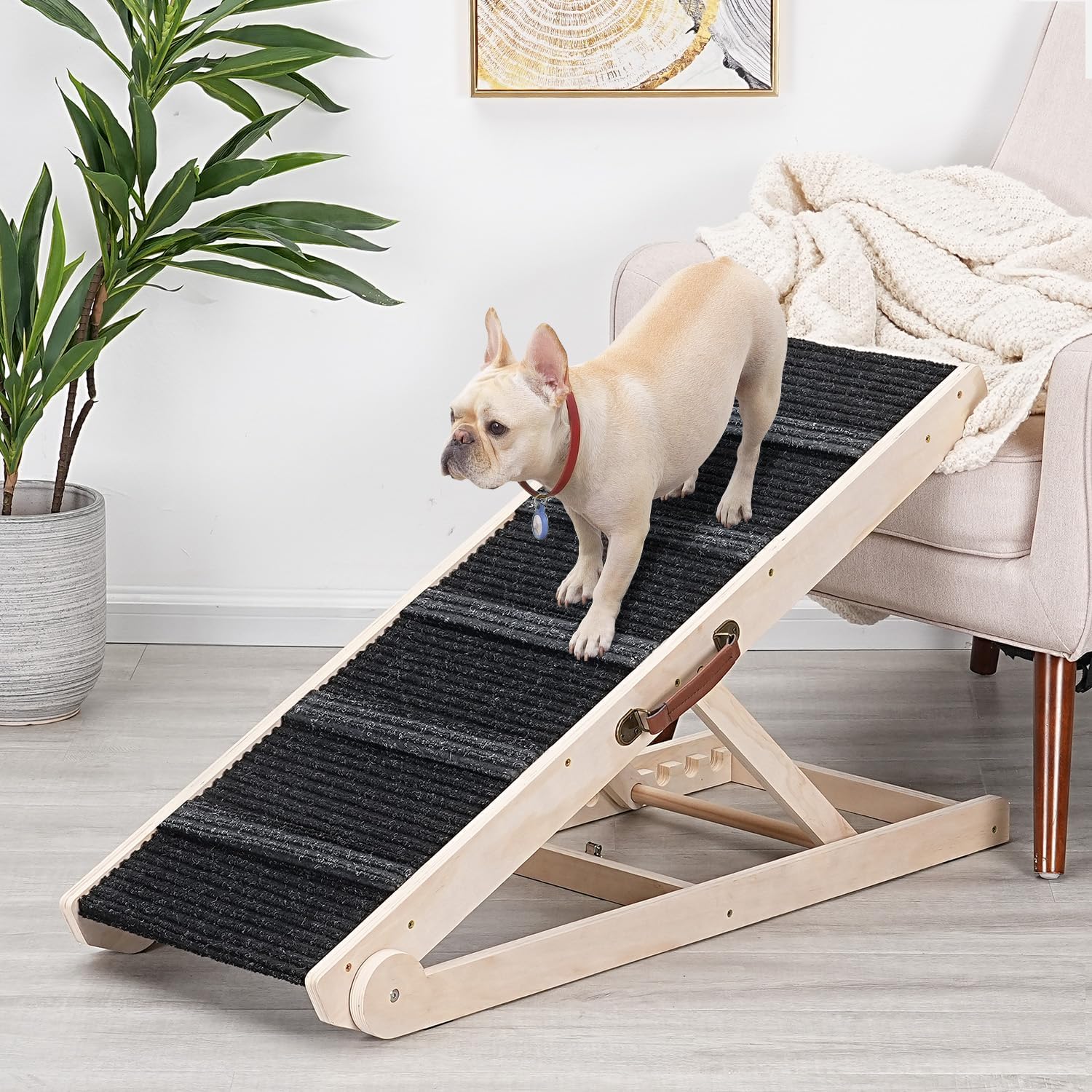
This SweetBin adjustable dog ramp is a solid, wood-built ramp designed to help small and larger dogs climb onto beds, couches, and into cars without jumping. It folds flat for storage and has six height settings from 12 to 24 inches so you can match the ramp angle to furniture or vehicle heights. The surface uses a striped wear-resistant carpet plus crossbars for traction, which helps cautious or injured pets feel secure while climbing. Construction uses multilayered plywood and reinforced cross supports, giving the ramp a firm feel and a 200 pound load rating so it tolerates frequent daily use and heavier small-breed dogs. The ramp is relatively heavy compared with plastic models but that weight contributes to stability and reduces wobble; it also has side handles to move it when needed. Limitations include a wooden finish that can scuff over time and a non-removable carpet surface that will need occasional cleaning, so owners who want washable covers or ultra-light portability may prefer other materials.
Best for: Owners who need a robust, long-lasting ramp for daily use and want a higher weight tolerance for heavier small-breed or aging dogs that still need help getting onto beds or into cars.
Less Ideal for: People who prioritize the lightest possible travel ramp, fully removable/washable covers, or a plastic waterproof design for outdoor use.
- Sturdy multilayer plywood construction with reinforced cross supports for durability
- 200 pound load capacity suitable for heavier small dogs and frequent daily use
- Six adjustable height settings to match a range of bed, couch, and vehicle heights
- Foldable design stores flat at about 3.5 inches and includes side handles for portability
- Non-slip carpet surface plus integrated crossbars for secure traction
- Wood construction makes it heavier than plastic ramps, reducing ease of carrying long distances
- Carpeted surface is not removable and will require spot cleaning over time
Verdict: The best all-around ramp that balances stability, gentle incline, durable materials, and ease of use for most dog owners and sleeping surfaces.
Fecuria 3-Step Dog Stairs
Best Budget Ramp

| Number of Layers | 3 |
|---|---|
| Material Type | Scratch-Resistant Oxford Fabric, Soft Foam Inner, Sturdy MDF Frame |
| Included Components | 3-Step Dog Stair*1 |
| Item Highlight | Wide Dog Steps for High Bed Couch Window Car, Joint-Friendly with Storage |
The Fecuria 3-Step Dog Stairs is a basic, no-frills pet stair that combines soft foam steps and a sturdy MDF frame to help dogs and cats climb up to furniture or into vehicles. Setup requires no tools — the zip-together fabric cover and bottom pad install in minutes — and the removable covers are machine washable for easy cleaning. Each step lifts to reveal built-in storage, which is handy for stashing toys, blankets, or grooming supplies and keeps the stairs functional beyond just climbing. The non-slip base and sponge inner cushioning reduce joint stress for older or recovering pets, and the listed 200 lb support rating makes it suitable for most medium and many large pets. Trade-offs are minimal features and a fabric exterior that will wear faster than solid plastic or carpeted alternatives, and the MDF core means you should avoid prolonged outdoor exposure. For buyers prioritizing safety and low cost, this stair delivers straightforward performance with useful extras like storage and washable covers.
Best for: Buyers who need an affordable, safe stair to help senior, small, or recovering pets access sofas, beds, or vehicles and who value easy cleaning and simple setup.
Less Ideal for: Owners who need heavy-duty, weatherproof outdoor steps or a permanently mounted, commercial-grade platform should consider sturdier materials or specialized ramps.
- Removable, machine-washable fabric covers for easy cleaning
- Built-in storage in each step for toys and supplies
- Tool-free zip assembly that sets up in minutes
- Soft foam inner layers and non-slip base to protect pet joints
- Sturdy MDF frame with a high stated weight capacity
- Fabric exterior will show wear faster than solid materials
- Not designed for extended outdoor exposure due to MDF core
Verdict: The best budget ramp for owners who need a safe, functional ramp at a low price without extra premium features.
aodisman 4-Step Dog Stairs
Best Compact Ramp
| Material Type | Foam, Polyester |
|---|---|
| Number of Layers | 4 |
| Pet Type | Cat, Dog |
| Dog Breed Size | Medium, Small |
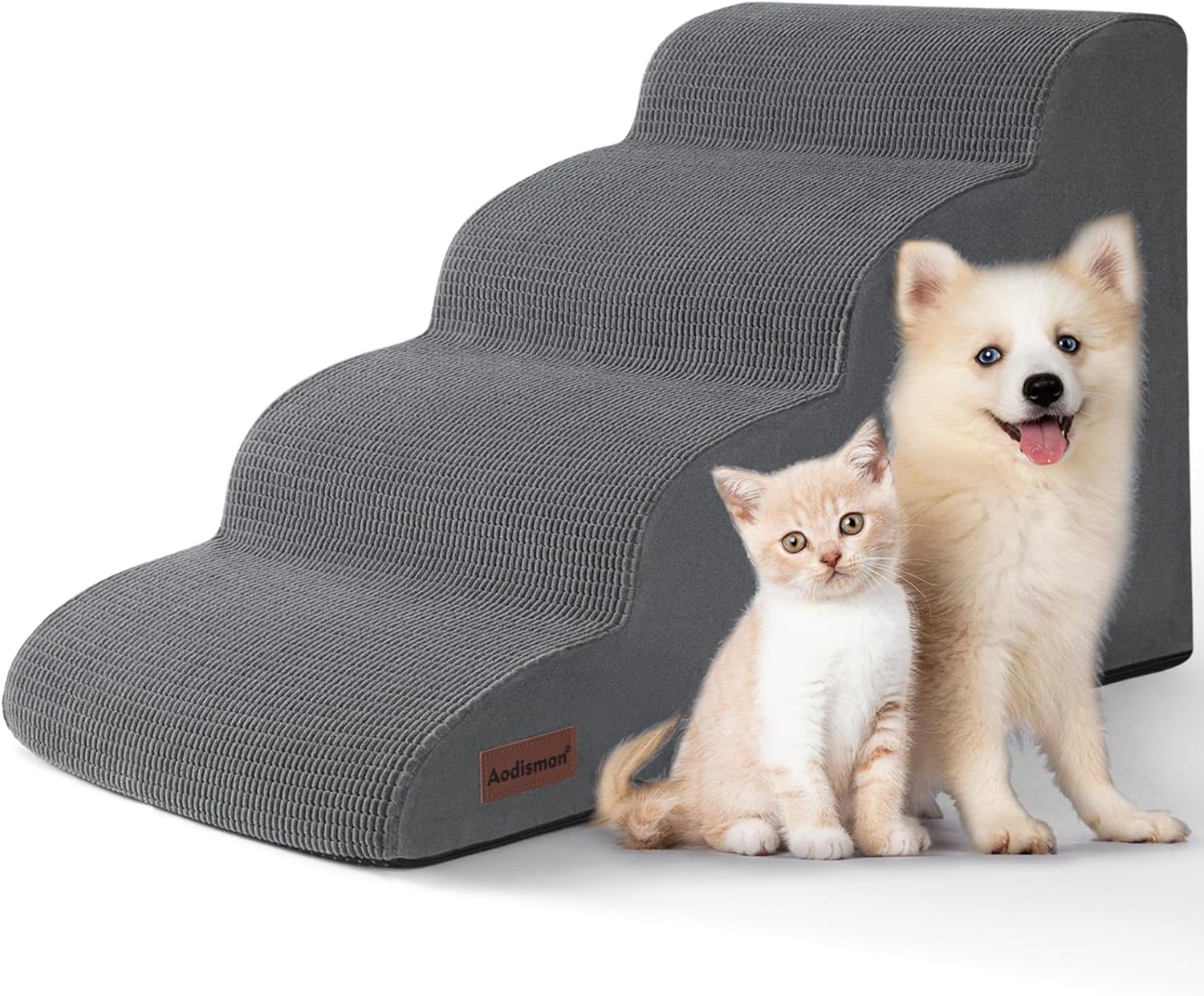
These compact 4-step stairs are a soft, low-profile ramp designed to help small dogs, seniors, and short-legged pets get onto beds and sofas without jumping. The steps are made from high-rebound foam with a removable polyester cover that arrives compressed and expands within 24–48 hours, so it is easy to move into place and set up with no assembly required. The fabric surface is friction-resistant and the base is non-slip, which keeps the stairs stable on most indoor floors during use. The washable zip-off cover is convenient for cleaning, though the inner foam must not be washed. Because the unit is foam-based it is lightweight and easy to reposition, but it will not offer the firm feel or long-term durability of solid wood or plastic stairs for heavier dogs. Overall, this model works well where space is limited and a gentle, cushioned approach is preferred for small or mobility-impaired pets.
Best for: Buyers with limited floor space or compact rooms who need a gentle, easy-to-move ramp for small dogs, puppies, or older pets that struggle with jumping.
Less Ideal for: Owners of large or very heavy dogs who need a firm, long-lasting stair or those seeking a waterproof, rigid ramp should consider sturdier alternatives.
- Low-profile four-step design suited to beds and low couches
- High-rebound foam provides cushioned support and is lightweight to move
- Non-slip fabric surface and bottom help keep the stairs stable during use
- Removable zip-off cover allows for hand or machine washing of the outer fabric
- Foam construction is less sturdy for larger or very heavy dogs compared with solid-step options
- Inner foam cannot be washed and requires airing after unpacking to regain shape
Verdict: The best compact ramp for pet owners with limited space or smaller dogs who need a stable, low-profile walkway.
Tsukiko Dog Ramp for Bed 64"
Best Heavy-Duty Ramp

| Length | 64 inches |
|---|---|
| Adjustable heights | 24" to 30" (6 settings) |
| Load Capacity | 220 Pounds |
| Material Type | Wood |
This 64" Tsukiko ramp is built to give pets a stable, high-traction path up to elevated beds, sofas, or vehicle entrances. It folds for storage and transport, has a short landing platform to reduce gaps, and adjusts to six height positions between roughly 24" and 30" so you can match common bed or SUV heights. The surface uses heavy-duty carpet with six raised strips for grip and the ramp's triangular bracket structure, stainless fasteners, and solid wood construction aim to keep the unit steady even when used independently. A leather handle and metal latch make moving and locking the folded ramp straightforward. Expect a sturdy feel and good traction for anxious or arthritic dogs, though the wooden build and carpeted surface require occasional cleaning and will add weight when carrying. The ramp supports up to 220 lbs, so larger dogs near that limit should be monitored for any flex during use.
Best for: Buyers who want a high-traction, confidence-building ramp for anxious or mobility-impaired dogs that need secure access to high beds, sofas, or vehicles.
Less Ideal for: People needing an ultralight or fully waterproof ramp for outdoor-only use or owners of very large, very active dogs who routinely exceed the listed weight capacity.
- Long 64-inch length with a dedicated landing platform reduces gaps at high beds and vehicles
- Textured heavy-duty carpet plus six raised strips provides strong skid resistance
- Solid wood frame with triangular bracket structure and stainless fastening for independent stability
- Six height settings let you match common bed and SUV heights
- Foldable design with handle and latch for easier storage and transport
- Wood construction and carpeted surface add weight and require occasional cleaning
- Maximum load near 220 lb may show some flex with very heavy or active large dogs
Verdict: The best heavy-duty ramp for owners of big or heavy dogs who need extra load capacity and long-term structural durability.
VEVOR Folding Dog Ramp
Best Foldable Ramp

| Load Capacity | 250 lbs |
|---|---|
| Material Type | Wood |
| Item Weight | 14.1 pounds |
The VEVOR Folding Dog Ramp is a portable wooden ramp that folds for storage and offers six height settings so pets can reach beds, sofas, or car seats. It arrives fully assembled and has a rubber carpet with grooves plus seven crossbars to improve traction, which helps nervous or older pets climb with more confidence. Built from pine wood with a triangular support structure and rubber footpads, the ramp is stable and rated to support up to 250 pounds, so it works for most small to large dogs. The handle and foldable profile make it straightforward to carry and stow under furniture or in a vehicle when you are traveling. Practical limitations are that the ramp is relatively long and still weighs about 14 pounds, so it is not the lightest folding ramp available, and the wooden construction can be bulkier than lightweight aluminum options. Also it is not suitable for bed heights above the top adjustable setting.
Best for: Owners who need a foldable ramp they can store easily and move between home and vehicle to help older or less-mobile pets reach beds and sofas.
Less Ideal for: People who prioritize the absolute lightest travel gear or need a ramp for platforms taller than 27.6 inches should consider other styles.
- Folds for compact storage and includes a carry handle for easy transport
- Six adjustable height settings accommodate a range of bed and sofa heights
- High-traction rubber carpet and crossbars provide secure footing for pets
- Solid pine wood construction with triangular support and rubber footpads for stability
- Arrives fully assembled so it is ready to use out of the box
- At about 14 pounds the ramp is not the lightest option for very frequent travelers
- Wood construction is bulkier than lightweight metal alternatives
- Not suitable for platforms taller than the top adjustment setting
Verdict: The best foldable ramp for owners who need easy storage or frequent travel with a lightweight, quick-to-fold design.
Choosing the Right Ramp Dog On Bed: Key Factors to Consider
Weight Capacity
A ramp's weight capacity determines whether it safely supports your dog without sagging or bending. Choose a ramp with a maximum load rating comfortably above your dog's weight to allow for dynamic movement, such as when the dog walks up briskly or shifts position.
Underestimating required capacity increases the chance of structural failure or excessive flexing that makes the ramp feel unstable. For multi-dog households, consider the heaviest dog that will use the ramp and add a safety margin to accommodate occasional two-dog interactions or a dog carrying a toy in its mouth.
Incline and Ramp Length
The ramp angle affects how easy it is for a dog to ascend without strain. A gentler incline is more comfortable for older dogs and those with mobility issues but requires a longer ramp. Measure the vertical rise from the floor to bed height and compare it with available ramp lengths to estimate the incline.
Very steep ramps increase the effort and can discourage use or cause slips. Short ramps that force a steep angle may be acceptable for small, agile pets but are generally a poor fit for senior or large dogs. If space is limited, look for ramps with multi-section folding designs that extend without becoming unwieldy.
Surface Traction
Traction directly affects a dog's confidence and safety on the ramp. Non-slip textures, rubberized surfaces, or low-profile treads provide grip for paws in dry and slightly damp conditions. The surface should be firm enough to resist shedding or rapid wear from claws, as a smooth or worn surface becomes hazardous over time.
Consider surfaces that are easy to clean yet maintain grip when wet. Some ramps use carpet-like fabrics that can trap dirt and moisture, while others rely on molded rubber or textured plastic that can be rinsed clean. Prioritize a surface type that fits your dog's gait and the maintenance level you are willing to do.
Stability and Anti-slip Feet
A ramp that shifts or slides is unsafe. Look for secure anti-slip feet or wide bases that increase contact with the floor and resist movement when the dog steps on. Anchor systems or lip features that hook to the bed frame or mattress edge help keep the ramp from shifting at the top.
Wider ramps provide more lateral stability and ease for dogs that hesitate near edges. Also evaluate how the ramp distributes weight—ramps that concentrate load on small feet can damage flooring or move more easily, so broad, rubberized feet or non-skid pads are preferable.
Portability and Storage
How often you plan to move or store the ramp affects the ideal design. Foldable ramps and multi-section models are easier to stow in a closet or slide under a bed. Consider the ramp's folded dimensions and overall weight if you will carry it frequently, or choose lightweight materials for portability.
Portability should not sacrifice stability. Ramps that fold or telescope should lock securely in place when in use. If you plan to keep the ramp set up permanently, choose a design that balances a compact footprint with robust construction.
Build Materials and Durability
Material choice affects longevity, maintenance, and how the ramp performs in different home environments. Molded plastics and composites resist moisture and are easy to clean, while wood can feel sturdy but may require sealing to resist stains and wear. Metal frames offer strength but should have corrosion-resistant finishes.
Examine joinery and hinge designs for wear points that can loosen with frequent use. Durable materials reduce long-term maintenance and the risk of unexpected failures, which is especially important for ramps used daily by dogs with mobility issues.
How Steep Should the Ramp Be for a Senior or Arthritic Dog?
Aim for the gentlest incline that fits your space. For older or arthritic dogs, a slope under 18 degrees is usually easier on hips and joints. Achieving that angle often requires a longer ramp, so measure the vertical rise and available floor length before choosing a model.
If you cannot fit a long ramp, consider a multi-step approach using a short ramp coupled with a low step or platform to break the ascent into easier segments. Observe your dog's gait during initial use and be prepared to try a different setup if the animal shows hesitation.
- Measure vertical rise and floor run before shopping
- Look for ramps that specify incline or provide a length guide
- Consider a wider ramp for nervous or unsteady dogs
Can My Puppy Use the Same Ramp as My Adult Dog?
Puppies can use ramps but may need training and supervision until they feel confident. Ensure the ramp's surface is gentle on small paws and that the incline is not too steep for a developing spine. For mixed-age households, pick a ramp with adequate weight capacity and a low enough slope for the adult dog while remaining safe for a puppy.
Introduce puppies gradually, encouraging calm walking and rewarding each successful pass. Avoid forcing the puppy to use the ramp; consistent, short practice sessions help build a positive association.
- Supervise initial uses until comfortable
- Use treats and praise to encourage calm walking
- Check traction for small paw pads
What Maintenance Keeps a Ramp Safe Long Term?
Regular inspections for loose hardware, worn traction, or cracked panels prevent small issues from becoming safety hazards. Tighten hinges and locking mechanisms periodically, and replace worn grip surfaces when they start to smooth or peel. Clean the surface according to the manufacturer's guidance to remove dirt and oils that reduce traction.
If the ramp has replaceable traction strips or covers, keep spares on hand so you can restore full grip quickly. Store foldable ramps dry and away from extreme heat that can warp materials, and avoid exposing non-weatherproof ramps to prolonged moisture.
- Check fasteners and locks monthly with regular use
- Replace worn traction before it becomes slick
- Store indoors or under cover to extend life
How to Teach Your Dog to Use a Ramp Safely
Begin with the ramp at a shallow angle and secure it so it does not move. Use treats or a favorite toy to encourage the dog to approach, sniff, and then place a paw on the ramp. Reward incremental progress and keep training sessions short and positive to avoid building anxiety.
Once the dog is comfortable, gradually increase the ramp to its intended position. Offer verbal praise and keep body language calm and supportive. If the dog resists, lower the angle or create a step-up platform to bridge the gap and slowly build confidence.
- Start with short, rewarded sessions
- Keep the ramp secure and stable during training
- Progress to longer runs only when the dog is relaxed
Solutions for Limited Bedroom Space
When floor run is limited, consider compact multi-section ramps that fold or extend only when needed. A ramp with an adjustable angle or telescoping sections can provide a gentler approach without permanently occupying floor space. Alternatively, a low profile ramp paired with a small step or platform reduces required length while keeping the incline manageable.
Measure doorways, walkways, and storage spots to ensure the ramp can be moved or stowed as required. Choose a model with quick folding and a secure locking mechanism so setup and takedown are fast and safe.
- Measure available floor run and storage space
- Look for foldable or sectional ramps with secure locks
- Consider pairing with a low platform to shorten run
How We Chose the Best Ramp Dog On Bed
We evaluated ramps using criteria that reflect real-world use and long-term reliability for helping dogs reach a bed safely. Key evaluation areas included weight capacity and load distribution to ensure the ramp supports dogs across size ranges without flexing or sagging. Surface traction and tread pattern were assessed to minimize slipping on both paws and paw pads under varied conditions. Stability features such as non-slip feet, secure anchor systems, and side rails were considered to prevent shifting during use. Portability and storage were weighed for owners who need to move or stow the ramp daily, including foldability, sectional design, and overall weight. Materials and build quality were examined for weather and wear resistance, focusing on rot-resistant composites and corrosion-resistant hardware for long service life. We excluded products that lacked clear load ratings, had flimsy anchoring, or used surface finishes prone to rapid wear. Final selections balanced safety, usability, and durability so the options listed are practical for everyday home use and for dogs with mobility concerns.
Our full evaluation process is outlined in our review methodology.
FAQ
Is a ramp better than stairs for dogs to get on a bed?
It depends on the dog. Ramps offer a continuous, low-effort slope that is often easier on joints, while stairs allow short, repeated steps that some dogs prefer. For dogs with balance issues or severe joint pain, ramps are usually the safer choice.
How wide should a dog ramp be for comfort and safety?
Wider ramps give dogs more room to maneuver and feel more secure. A width that allows at least a few inches of clearance on either side of the shoulders is a good target. Extremely narrow ramps can cause hesitation or missteps.
Can a ramp damage my flooring or mattress?
Properly designed ramps use broad, non-slip feet and rubberized contact points that minimize pressure and gripping that could mark floors. Still, check the ramp's contact points and consider a thin protective mat under the ramp if you are concerned about delicate flooring or mattress edges.
How do I choose a ramp for a heavy or large dog?
Select a ramp with a weight capacity well above your dog's weight and a robust frame with wide feet for stability. Also prioritize a gentler incline and a surface that maintains traction under heavier paws to reduce strain during ascent.
Are foam or carpeted surfaces better for traction?
Both have pros and cons. Carpet and foam can feel soft and provide grip for some dogs but may trap dirt and wear quickly. Molded textured surfaces and rubberized treads are often easier to clean and retain traction longer, especially for dogs with wet or dirty paws.
Final Verdict
Choose a ramp that balances weight capacity, a gentle incline, and reliable traction to match your dog's size and mobility needs. Tradeoffs are common: longer ramps reduce slope but require more floor space, while compact designs save space but can be steeper. Prioritize stability and surface grip, and plan for regular maintenance to keep the ramp safe over time. Focus on practical fit for your home and on how your dog responds during initial use. With the right ramp, you can reduce joint stress and make getting on the bed a comfortable, repeatable process for your pet.

