

Dental care is a crucial part of keeping your miniature schnauzer healthy and comfortable. Because this breed can be prone to tartar buildup and early periodontal disease, choosing the right toothpaste makes daily brushing more effective and less stressful for both of you. This guide highlights our top picks for toothpaste that balance safety, palatability, and cleaning power for miniature schnauzer mouths. We shortlisted six products that meet practical hygiene and safety standards; the following sections explain the criteria we used and what to look for when picking toothpaste for your miniature schnauzer.
Top Picks at a Glance
| Best Overall Toothpaste A balanced everyday formula that suits most miniature schnauzers | C.E.T. Enzymatic Toothpaste Poultry 2.5 oz |  |
| Best Budget Toothpaste An inexpensive option that still delivers basic plaque control | Petrodex Enzymatic Dog Toothpaste 2.5oz |  |
| Best Premium Toothpaste A higher-end formula with advanced ingredients and performance | Petsmile Professional Toothpaste 2.5 oz |  |
| Best Natural Toothpaste Made with plant-based or minimally processed ingredients for sensitive pets | RADIUS USDA Organic Canine Toothpaste 3 oz |  |
| Best Enzymatic Toothpaste Contains enzymes to help break down plaque without aggressive brushing | Arm & Hammer Complete Care Dog Toothpaste 6.2 oz |  |
| Best Travel-Size Toothpaste Compact tubes or packets that are easy to pack and use away from home | Vetoquinol Enzadent Toothpaste Kit |  |
C.E.T. Enzymatic Toothpaste Poultry 2.5 oz
Best Overall Toothpaste

| Flavor | Poultry |
|---|---|
| Formulation | Enzymatic dual-enzyme system |
| Net weight | 2.5 oz |
| Made in | USA |
C.E.T. Enzymatic Toothpaste is a vet-recommended daily toothpaste for dogs and cats that uses a dual-enzyme formula to work with saliva to reduce plaque and tartar buildup while freshening breath. It is formulated without foaming agents so it is safe if swallowed and comes in a poultry flavor that many pets accept, which makes routine application with a soft-bristled toothbrush straightforward. Typical use is a short daily brushing session or as directed by your veterinarian; the enzymatic action helps control plaque between professional cleanings. Practical benefits include veterinarian backing, a variety of flavor options to improve pet cooperation, and U.S. manufacturing. Limitations are minimal for a toothpaste product but include the need for consistent daily application for best results and that it complements rather than replaces professional dental care.
Best for: Pet owners who want an easy, vet-recommended daily toothpaste that uses enzymatic action to reduce plaque and is palatable enough to encourage regular brushing.
Less Ideal for: Owners looking for a stand-alone treatment for advanced tartar or periodontal disease should seek veterinary procedures or adjunctive products instead.
- Dual-enzyme formula designed to work with pet saliva to reduce plaque formation
- No foaming agents so it is safe for pets to swallow
- Poultry flavor that encourages acceptance by many dogs and cats
- Veterinarian-recommended brand with a long track record in pet dental care
- Requires daily or regular application to see meaningful plaque control
Verdict: The best overall toothpaste that balances effectiveness, taste acceptance, safety, and ease of use for regular dental care in miniature schnauzers.
Petrodex Enzymatic Dog Toothpaste 2.5oz
Best Budget Toothpaste

| Flavor | Poultry |
|---|---|
| Formulation | Enzymatic, non-foaming, no-rinse |
| Net weight | 2.5 oz |
Petrodex Enzymatic Dog Toothpaste is a straightforward, budget-friendly paste designed for regular home brushing. It contains patented enzymes in a non-foaming, no-rinse formula formulated specifically for pets, so swallowing during brushing is not a safety concern. The poultry flavor makes it easier to get many dogs to accept brushing and the paste helps reduce plaque and tartar buildup when used a few times per week as part of a routine. Practical benefits include easy cleanup since there is no rinsing required and a formulation targeted to canine oral chemistry rather than human toothpaste. Limitations are that visible tartar already bonded to teeth will need professional cleaning to remove, and the small 2.5 ounce tube needs regular repurchase for multi-dog households or long-term daily use. For basic, cost-conscious dental maintenance between vet cleanings, this product does what it promises without extra frills.
Best for: Buyers who want an affordable, vet-oriented enzymatic toothpaste to maintain oral hygiene between professional cleanings and who prioritize a pet-safe, no-rinse formula their dog will accept.
Less Ideal for: Owners looking for a long-lasting supply for multiple dogs or those needing products that remove heavy tartar without a vet procedure should consider alternative options.
- Enzymatic formula targets plaque and tartar formation specifically for dogs
- No-rinse, non-foaming paste makes brushing and cleanup simple
- Poultry flavor increases palatability for many dogs
- Widely used and available in a compact tube for easy storage
- Small 2.5 oz tube means frequent repurchase for larger households
- Does not remove heavy, established tartar which requires professional cleaning
Verdict: The best budget toothpaste for owners who want reliable daily plaque and tartar control without spending much.
Petsmile Professional Toothpaste 2.5 oz
Best Premium Toothpaste

| Flavor | London Broil |
|---|---|
| Net weight | 2.5 ounces |
| VOHC | Accepted |
| Ingredients highlight | Contains Calprox |
Petsmile Professional Toothpaste is a premium, VOHC-accepted dental paste for dogs and cats that uses the brand's Calprox formula to dissolve biofilm, whiten teeth, and help remineralize enamel. It is designed for daily use and can be applied directly to a pet's teeth, to a toothbrush, or to an applicator swab; the London Broil flavor makes it more treat-like so many pets accept it without a brushing routine. The formula lists human-grade ingredients and excludes common irritants such as parabens and sulfates, which makes it suitable for pets with sensitivities and for multi-pet households. Practical benefits include simplified at-home care when brushing is difficult, a non-abrasive action that aims to protect enamel, and VOHC recognition that supports its plaque and tartar claims. Limitations are that results require consistent daily use and the tube size is modest — the 2.5 oz tube is intended as a short to medium supply — so buyers seeking long-term value may prefer larger sizes or multi-packs.
Best for: Owners who prioritize premium, clinically backed oral care ingredients and want a nonabrasive, vet-recognized toothpaste that pets will usually accept without a fight.
Less Ideal for: Buyers looking for a value-focused, economy-sized refill should consider larger tubes or bulk options instead of this single 2.5 oz tube.
- VOHC-accepted formula clinically aimed at plaque and tartar control
- Calprox proprietary blend that whitens and helps remineralize enamel
- Human-grade ingredients and free from parabens, sulfates, and animal by-products
- Flavoring that encourages compliance without needing a full brushing session
- Small 2.5 oz tube may run out faster with daily use
- Requires consistent daily application to see meaningful oral-health benefits
Verdict: The best premium toothpaste for owners willing to pay more for enhanced active ingredients, longer-lasting breath control, and superior clinical results.
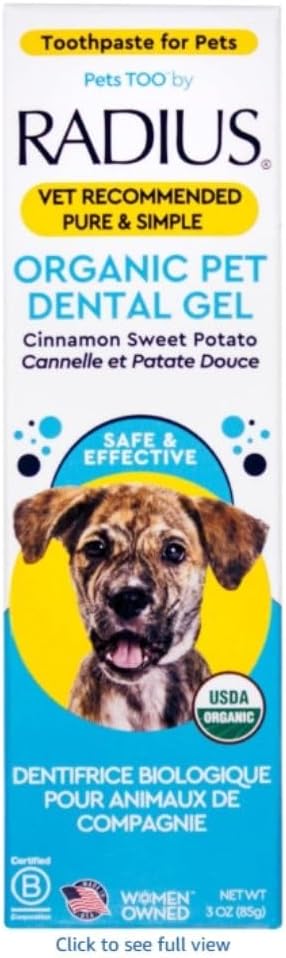
RADIUS USDA Organic Canine Toothpaste 3 oz
Best Natural Toothpaste
| Net weight | 3 oz |
|---|---|
| Manufacturer | RADIUS |
| Xylitol | Free |
This USDA organic canine gel toothpaste is designed for routine toothbrushing and freshening breath using a plant-based ingredient list rather than synthetic chemicals. You apply a small amount to a dog toothbrush and brush as you would with human toothpaste; the formulation includes coconut oil, sweet potato and cinnamon plus peppermint and thyme oils to help control bacteria and mask odor. It is xylitol-free and marketed for daily use on puppies through seniors, so it is suitable for sensitive mouths and owners seeking a gentle, minimally processed option. The gel texture and pet-friendly flavor profile make brushing easier for many dogs who resist minty pastes, and the travel-sized 3 oz tube is convenient for trips. Expect natural breath improvement and gradual plaque control with consistent use, but this product is not a substitute for professional dental cleanings and lacks clinical claims for tartar reversal. For owners prioritizing organic ingredients and low synthetic exposure, this paste offers a practical daily-care solution with a pleasant taste dogs are likely to accept.
Best for: Pet owners who prioritize organic, minimally processed ingredients and want a gentle, natural daily toothpaste for dogs with sensitive mouths.
Less Ideal for: Families looking for a large, long-lasting supply or those wanting a toothpaste with explicit clinical studies proving tartar removal should consider other options.
- USDA certified organic ingredients and no xylitol or synthetic preservatives
- Formulated with coconut oil, sweet potato and natural oils to freshen breath and reduce bacteria
- Safe for daily use across life stages including puppies and seniors
- Gel texture and pet-friendly flavor increase acceptance during brushing
- Travel-friendly 3 oz tube that is easy to pack
- Not a replacement for professional dental cleanings and does not claim clinical tartar removal
- Smaller 3 oz size will require frequent repurchasing for multi-dog households
Verdict: The best natural toothpaste for owners preferring plant-based or minimal-ingredient formulas that avoid artificial additives while supporting dental health.
Arm & Hammer Complete Care Dog Toothpaste 6.2 oz
Best Enzymatic Toothpaste

| Flavor | Chicken |
|---|---|
| Formula type | Enzymatic with baking soda |
| Net weight | 6.2 oz |
| Intended pet | Adult dogs |
Arm & Hammer Complete Care Enzymatic Dog Toothpaste combines enzymatic plaque and tartar action with baking soda deodorizing and added calcium in a larger 6.2 ounce tube intended for regular at-home brushing. It is used like any dog toothpaste: start by letting a dog lick a small amount from your finger, then progress to rubbing along the gum line and switching to a toothbrush or finger brush for full cleaning. The enzymatic component helps break down plaque between brushings while the baking soda helps neutralize odors, and the calcium aims to support enamel over time. Chicken flavor increases acceptance for many dogs, making routine brushing easier for owners. The value-size tube lowers the need for frequent repurchases for multi-dog households or daily brushers, but the formula is labelled for adult dogs only and does not contain fluoride, so it is not a substitute for veterinary dental care in cases of advanced disease. For owners focused on adding a biologically active toothpaste to a regular brushing routine, this product balances efficacy and convenience in a familiar pump-style tube.
Best for: Pet owners who prioritize biologically active enzymatic formulas and want a larger, flavored toothpaste to make daily or frequent brushing practical and more acceptable to dogs.
Less Ideal for: Owners seeking a product specifically formulated for puppies or those needing veterinary-strength treatments for advanced dental disease should look elsewhere.
- Enzymatic formula targets plaque and tartar during brushing.
- Includes baking soda for breath deodorizing.
- Added calcium supports tooth enamel as part of ongoing care.
- Chicken flavor improves dog acceptance for easier brushing routines.
- Large 6.2 oz value tube reduces how often you need to replace it.
- Formulated for adult dogs and not labeled for puppies.
- Does not contain fluoride and is not a replacement for professional dental treatment.
Verdict: The best enzymatic toothpaste for owners seeking gentle, enzyme-driven plaque reduction that helps control buildup between brushings.
Vetoquinol Enzadent Toothpaste Kit
Best Travel-Size Toothpaste

| Size | 0.75 oz |
|---|---|
| Includes | Fingerbrush and toothpaste |
| Target audience | Dogs and cats |
| Flavor | Poultry |
The Vetoquinol Enzadent Toothpaste Kit pairs a 0.75 oz poultry-flavored enzymatic paste with a silicone fingerbrush to make at-home brushing and travel use straightforward. The triple-enzyme formula (glucose oxidase, lactoperoxidase, lactoferrin plus lysozyme) targets plaque and supports gum and enamel health when used consistently, and the poultry flavor helps many pets accept brushing. The fingerbrush slips onto a fingertip for gentler, controlled brushing in hard-to-reach spots and is convenient for short sessions or when a full toothbrush is impractical. Its very small tube and compact brush make it easy to pack for trips and quick cleanups after outings. Limitations are the tiny 0.75 oz tube that will run out quickly for multi-pet households or long travel, and users should follow safety guidance if their pet has ingredient sensitivities. For routine travel or occasional use it simplifies keeping up oral care away from home.
Best for: Pet owners who want a compact, easy-to-use toothpaste for maintaining dental care on short trips or for occasional use away from home.
Less Ideal for: Households needing a long-lasting supply for multiple pets or those who prefer a full-size toothbrush-and-paste routine for daily heavy-duty cleaning.
- Enzymatic triple-enzyme formula addresses plaque and supports gum health.
- Poultry flavor increases palatability for many cats and dogs.
- Compact 0.75 oz tube and fingerbrush are highly portable for travel.
- Fingerbrush design offers controlled, gentle brushing for reluctant pets.
- Small 0.75 oz tube may not last long for multiple pets or extended trips.
- Not suitable for pets with allergies to any listed ingredients.
Verdict: The best travel-size toothpaste for owners who need a portable, TSA-friendly option for brushing on trips and outings.
Choosing the Right Toothpaste Miniature Schnauzer: Key Factors to Consider
Ingredient Safety
Ingredient safety is critical because small-breed dogs like miniature schnauzer can be especially sensitive to certain additives and sweeteners. Avoid formulas containing known toxic substances such as xylitol. Look instead for toothpaste that uses pet-safe flavoring agents and preservatives. Natural does not always mean safe, so check for clear labeling and veterinary approval or recommendations where available.
Also consider allergen potential. Some dogs react to poultry or beef-derived flavors; if your schnauzer has food sensitivities, seek hypoallergenic or novel-protein flavored toothpastes. Finally, evaluate the active cleaning ingredients: enzymes and mild abrasives are generally safer for daily use than harsh chemical cleaners.
Palatability and Flavor
A toothpaste your miniature schnauzer will accept makes brushing feasible as a daily habit. Flavors designed for dogs often mimic meat or poultry tastes that encourage licking and acceptance, but not every dog likes the same profile. Expect some trial and error and choose small tubes initially if you are testing flavors.
Palatability affects how cooperative your dog will be and how much time you can spend brushing. Strong mint flavors that work for humans can be off-putting to dogs, so stick with canine-safe flavors. Texture is also part of palatability; a smooth paste that spreads easily on the brush is usually better tolerated than a grainy formula.
Cleaning Mechanism and Effectiveness
Different toothpastes remove plaque and tartar through enzymatic breakdown, mechanical abrasion, or a combination of both. Enzymatic toothpastes contain ingredients that help break down plaque biofilm and are gentle for daily use. Mild abrasives provide physical scrubbing action but should not be so abrasive that they wear down enamel or irritate gums.
Consider the practical cleaning action: a toothpaste that foams slightly can help reach between teeth, but heavy foaming is unnecessary. For miniature schnauzer, which have compact mouths with closely spaced teeth, a formula that aids in biofilm disruption is particularly useful.
Application and Ease of Use
How you apply the toothpaste affects whether brushing becomes part of your routine. Toothpastes that come in soft tubes and spread easily on a finger brush or small dog toothbrush speed the process. Consider whether the toothpaste works with alternative applicators for dogs that resist a full brushing session.
Packaging that dispenses cleanly reduces waste and makes portioning easier. Also check whether the manufacturer provides clear usage guidance, such as how long to brush and frequency recommendations, because consistent technique matters more than any single ingredient in achieving cleaner teeth.
Breath Control and Odor Management
Bad breath is often the first sign owners notice; while a toothpaste cannot treat advanced periodontal disease, it can reduce odor by decreasing bacterial load and removing trapped food particles. Look for formulas with mild deodorizers and enzymes that reduce volatile sulfur compounds without simply masking the smell with strong flavors.
Persistent foul breath may signal dental disease, so while a good toothpaste helps, it does not replace periodic veterinary dental checks. Choose a product that improves short-term breath and supports long-term oral hygiene when used consistently.
Safety for Daily Use
Daily brushing is the ideal routine for small-breed oral health, so toothpaste intended for everyday use must be gentle on teeth and gums. Ingredients that are fine for occasional use but too abrasive over time should be avoided. Also consider pH balance and whether the formula is labeled safe for daily application.
If your miniature schnauzer has previously had oral surgery or sensitive gums, consult your veterinarian about suitable toothpaste textures and frequencies. A toothpaste that supports consistent daily use without irritation will help maintain oral health and reduce the need for more invasive interventions.
How Often Should I Brush My Miniature Schnauzer's Teeth?
Daily brushing is ideal because plaque accumulates continuously; even a few missed days allow biofilm to harden into tartar. If daily brushing is not realistic, aim for several short sessions each week to keep plaque levels down.
Start slowly and build tolerance: brief, positive sessions are better than long, stressful attempts. Even two to three minutes of focused brushing several times a week can reduce plaque compared with no brushing.
- Daily brushing prevents plaque from mineralizing into tartar.
- Short, consistent sessions help dogs accept the routine.
- Combine brushing with periodic veterinary dental checks for best results.
What Flavor Profiles Do Miniature Schnauzers Usually Accept?
Many small dogs prefer savory flavors such as poultry, beef, or liver because they mimic typical food aromas. Some dogs accept mint or vanilla, but strong mint flavors are often rejected. If your dog is picky, try small sampler sizes or a finger-applied sample before committing to a full tube.
Consider any known food sensitivities when selecting flavorings. If a dog has had gastrointestinal sensitivity to certain proteins, choose a toothpaste with a neutral or hypoallergenic flavor.
- Savory flavors tend to encourage licking and acceptance.
- Avoid human-style strong mint formulations unless the dog tolerates them.
- Test flavors in small amounts before regular use.
Can Enzymatic Toothpastes Replace Professional Cleaning?
Enzymatic toothpastes help break down plaque and can slow tartar formation when used consistently, but they do not replace professional dental cleanings when disease is present. If plaque has already mineralized into tartar, a professional cleaning is necessary to remove it safely.
Use enzymatic products as a preventative routine to reduce how often deep cleanings are required and to support post-procedural maintenance after a veterinary cleaning.
- Enzymatic toothpastes are preventive, not curative for advanced tartar.
- They support daily hygiene and can extend the time between professional cleanings.
- Veterinary assessment is required for established periodontal disease.
How to Introduce Toothpaste and Brushing to a Resistant Dog
Go slow and use positive reinforcement. Let your miniature schnauzer sniff and taste a small amount of toothpaste from your finger before attempting to brush. Reward calm behavior with praise or a brief play session rather than food treats that counteract dental goals.
Gradually introduce a finger brush or soft toothbrush, starting with short contact on the front teeth, then increasing duration as tolerance builds. Consistency and patience are more effective than long, infrequent sessions.
- Start with short, calm sessions and reward nonfood incentives.
- Use your fingers initially, then progress to a small toothbrush.
- Keep sessions short and end on a positive note to build acceptance.
Do Toothpaste Flavors Affect Daily Oral Microbiome?
Flavors themselves are primarily about acceptance, but accompanying ingredients can influence the oral environment. Enzymes and certain mild antibacterials target plaque bacteria, while some flavor additives may temporarily alter odor without impacting bacterial load.
When choosing a toothpaste, prioritize formulations where active ingredients address plaque and bacteria rather than products that rely mainly on strong flavor masking.
- Active ingredients matter more for oral health than flavor alone.
- Flavors help with compliance but should not be the primary selection factor.
- Look for formulas that combine palatability with plaque-targeting actions.
How to Tell when a Veterinary Dental Visit Is Needed
Look for signs such as persistent bad breath, visible tartar buildup, red or bleeding gums, pain on mouth handling, or loosened teeth. These symptoms indicate plaque progression and warrant professional evaluation.
Regular home checks combined with consistent brushing help spot changes early. If you notice any of the warning signs, schedule a veterinary dental assessment rather than relying solely on at-home toothpaste routines.
- Persistent halitosis or bleeding gums are red flags.
- Visible tartar and reluctance to chew suggest advanced disease.
- Home care reduces risk but does not replace veterinary exams.
How We Chose the Best Toothpaste Miniature Schnauzer
We focused on practical, breed-appropriate criteria that matter most when selecting toothpaste for miniature schnauzer. First, ingredient safety: we prioritized formulas without xylitol or other known canine toxins, and we looked for veterinary-friendly active ingredients such as enzymatic cleaners and safe abrasives. Second, palatability and acceptance: a toothpaste that your dog will tolerate or enjoy helps make daily brushing realistic. Third, cleaning effectiveness: we evaluated formulations for plaque and tartar control mechanisms, including enzymatic action, mild abrasives, and foaming ability that help dislodge debris. Fourth, ease of use: texture, tube dispensing, and whether the toothpaste can be used with a finger brush or traditional dog toothbrush were considered. Fifth, breath control: how well the formula reduces halitosis without masking it with overpowering flavors. Sixth, formulation transparency and labeling: clear ingredient lists and usage instructions mattered. We excluded products that contain unsafe sweeteners, lack ingredient lists, or are primarily marketed for other species. We did not include non-toothpaste dental treatments such as water additives, chews, or dental wipes in this selection. The final shortlist reflects products that meet safety, daily-usage practicality, and demonstrable cleaning approaches appropriate for miniature schnauzer oral anatomy and common issues.
Our full evaluation process is outlined in our review methodology.
FAQ
Can I use human toothpaste on my miniature schnauzer?
No, human toothpaste can contain xylitol and other ingredients that are unsafe for dogs. Human formulas may also foam more and contain stronger flavors that irritate a dog's mouth. Use a toothpaste made specifically for dogs or labeled safe for canine use.
How much toothpaste should I use each brushing session?
A pea-sized amount is enough for most miniature schnauzer sessions. The goal is to coat the brush and reach tooth surfaces; excess paste is unnecessary and can discourage dogs from accepting brushing. Smaller amounts also reduce ingestion of nonessential ingredients.
My dog hates brushing. Are there alternatives that still help?
Alternatives like dental chews and water additives can supplement brushing but usually do not replace its mechanical effectiveness. These options can help reduce plaque in dogs that refuse brushing, but regular attempts at brushing remain the most reliable method for long-term control.
Is enzymatic toothpaste safe for puppies?
Enzymatic toothpastes designed for dogs are generally safe for puppies, but check product labeling for age recommendations. Introduce toothpaste and gentle brushing slowly, and consult your veterinarian if your puppy has health issues or you are unsure about a specific formulation.
How long before I see improvement in breath or plaque?
Improvement in breath may be noticeable within days of regular brushing, but visible reduction in plaque and tartar can take weeks and depends on initial buildup. Consistent daily brushing produces the best results over time; severe tartar requires professional cleaning.
Final Verdict
Focus on safety, acceptance, and a cleaning mechanism that suits your miniature schnauzer's mouth when choosing toothpaste. Prioritize products with pet-safe ingredients, good palatability, and plaque-targeting action so you can maintain a consistent daily routine. Remember that toothpaste and brushing are preventive measures: they help reduce plaque and control breath but do not replace necessary veterinary dental care when disease is present. Choose a gentle, easy-to-use toothpaste and commit to regular brushing to keep your miniature schnauzer's mouth healthy.

