

Losing a limb does not have to mean losing mobility. If you care for a three-legged dog, the right wheelchair can restore independence, reduce strain on the remaining limbs, and make walks and playtime easier. In this guide we shortlisted the top wheelchairs designed specifically for three-legged dogs and evaluated them on stability, fit, and ease of use. Below you will find concise guidance on how these wheelchairs perform in everyday situations, key fit and comfort considerations, and what to expect when fitting a wheelchair for a tripawd dog.
Top Picks at a Glance
| Best Overall Wheelchair The top all-around choice for most three-legged dogs | Best Friend Mobility Dog Wheelchair Small |  |
| Best Budget Wheelchair A low-cost option that covers essential mobility needs | LetPetRun Dog Wheelchair |  |
| Best Lightweight Wheelchair A lighter-frame design that’s easier to carry and maneuver | LetPetRun Dog Wheelchair Small |  |
| Best Heavy-Duty Wheelchair Reinforced construction for stronger support and rougher use | Generic Foldable 4-Wheel Dog Wheelchair Large |  |
| Best Adjustable-Fit Wheelchair Highly adjustable sizing and straps for a custom fit | Whisker Bark Dog Wheelchair L |  |
Best Friend Mobility Dog Wheelchair Small
Best Overall Wheelchair

| Material | 6061 aluminum frame |
|---|---|
| Wheels | No-puncture all-terrain |
| Hardware | Stainless steel |
| Support modes | Full suspension or partial paw contact |
| Fits weight range | 5 to 175 pounds |
This Best Friend Mobility rear-support wheelchair is built to get dogs moving again after injury, surgery, or amputation by supporting the hindquarters on a lightweight, adjustable aluminum frame. It is used by measuring the dog, assembling the frame, mounting the harness and stirrups, and then adjusting height, length, and width so the dog can either bear weight on the paws or have the hind legs suspended. Notable features include aircraft-grade 6061 aluminum tubing, stainless hardware, sealed bearings, no-puncture all-terrain wheels, and two rear-leg support modes for full suspension or partial contact. The chair folds flat for transport and the parts are washable, which helps for travel and cleanup. Practical benefits are preserved muscle activity, easier outdoor exercise, and improved quality of life for three-legged dogs adapting to hind-end support. Important limitations are that correct sizing and patient training are required for success and assembly plus repeated adjustments may be needed to fit atypical body shapes; owners should expect a learning curve when introducing the cart to a wary or immobile pet.
Best for: Owners who need a durable, widely adjustable rear-support cart that restores mobility and is practical to transport and clean, especially when fit and comfort across different body shapes are top priorities.
Less Ideal for: Owners seeking a plug-and-play device who cannot invest time in measuring, adjusting, and training their pet or those wanting a permanent brace rather than a wheeled mobility aid.
- Highly adjustable frame for height, width, and length to fit a wide range of dogs
- Lightweight aircraft-grade aluminum with stainless hardware for corrosion resistance
- No-puncture, all-terrain wheels and sealed bearings for smoother movement and low maintenance
- Two rear-leg support modes let dogs either walk with paw contact or be fully suspended
- Folds flat and has washable parts for easier transport and cleaning
- Assembly and careful adjustments are necessary to achieve a proper fit
- Requires time and training for many dogs to accept and use the cart comfortably
Verdict: The best overall wheelchair balances fit, comfort, durability, and ease of adjustment for the widest range of three-legged dogs and owners.
LetPetRun Dog Wheelchair
Best Budget Wheelchair

| Maximum weight recommendation | 20 pounds |
|---|---|
| Maximum height recommendation | 13.8 inches |
| Frame material type | Aluminum |
This LetPetRun dog wheelchair is a lightweight, adjustable mobility cart intended for dogs with impaired back legs but healthy front limbs. It assembles from an aluminum frame with straps and two wheels that support the rear of the dog while the front legs provide steering and propulsion. Height, width, and length adjustments let you dial in fit for smaller pets, and the foldable design makes storage and transport straightforward. In practice it lets dogs walk, trot, and play again while reducing strain on injured hindquarters, and the included leash buckle adds a simple safety anchor for outings. The frame material keeps the unit low weight yet reasonably durable for occasional use, and the product includes sizing guidance to help pick the correct fit. Limitations are the 20 pound maximum and compact maximum height, which restrict this to small breeds and short-term or supplemental mobility use rather than heavy daily duty for larger dogs.
Best for: Owners seeking an affordable, practical mobility aid to restore short-term or occasional walking and play for small dogs with hind-leg weakness.
Less Ideal for: People needing a heavy-duty or long-term mobility solution for medium or large breeds or for dogs with complex medical conditions.
- Adjustable height, width, and length for a better fit on small dogs
- Lightweight aluminum frame that is easy to carry and store
- Foldable design improves portability and space-saving storage
- Built-in leash buckle adds a simple safety attachment for walks
- Maximum weight recommendation of 20 pounds limits use to small dogs
- Not intended for severe hind-leg injuries without veterinary guidance
Verdict: The best budget wheelchair provides reliable mobility and basic support at a lower price for owners prioritizing affordability over premium features.
LetPetRun Dog Wheelchair Small
Best Lightweight Wheelchair

| Weight range supported | 1.90–4.74 lbs (sizes 2XS–S) |
|---|---|
| Adjustable | Height, width, length |
| Harness | Thickened vest-style, detachable |
| Frame material | Aluminum |
This LetPetRun wheelchair is a lightweight, portable two-wheel cart built to help dogs with weak or paralyzed hind legs move outdoors again. The aluminum frame and quick-release harness make it easy to carry, assemble, and fit in under a minute, which is useful for daily walks or travel. Height, width, and length adjustments let you tailor posture so the dog bears weight comfortably on its front legs while the vest-style harness and padded straps reduce chafing. Wheels and the sporty frame allow the dog to walk and run on pavement or grass, and the detachable fabric parts are hand-washable for maintenance. The main limitation is this model is intended only for rear-leg support and requires healthy front limbs; it is sized toward micro and small dogs so it will not work for medium or large breeds. Buyers should measure carefully and expect to spend time dialing in the fit for the most comfortable gait.
Best for: Owners who prioritize portability and frequent setup—those who travel with their small dog or need a cart that is quick to fit, remove, and carry for daily outings.
Less Ideal for: People with medium to large dogs or dogs that need support for front legs should look at more heavy-duty or four-wheel mobility options.
- Very lightweight aluminum frame improves portability and handling for travel
- Quick-release vest-style harness allows fast on/off and easier daily use
- Adjustable height, width, and length for a more customized fit
- Detachable, hand-washable harness and pads simplify cleaning
- Designed only for dogs with healthy front legs and rear-leg weakness
- Sized for micro and small dogs so not suitable for larger breeds
Verdict: The best lightweight wheelchair is ideal for owners who need a portable, easy-to-handle frame without sacrificing essential support for their three-legged dog.
Generic Foldable 4-Wheel Dog Wheelchair Large
Best Heavy-Duty Wheelchair
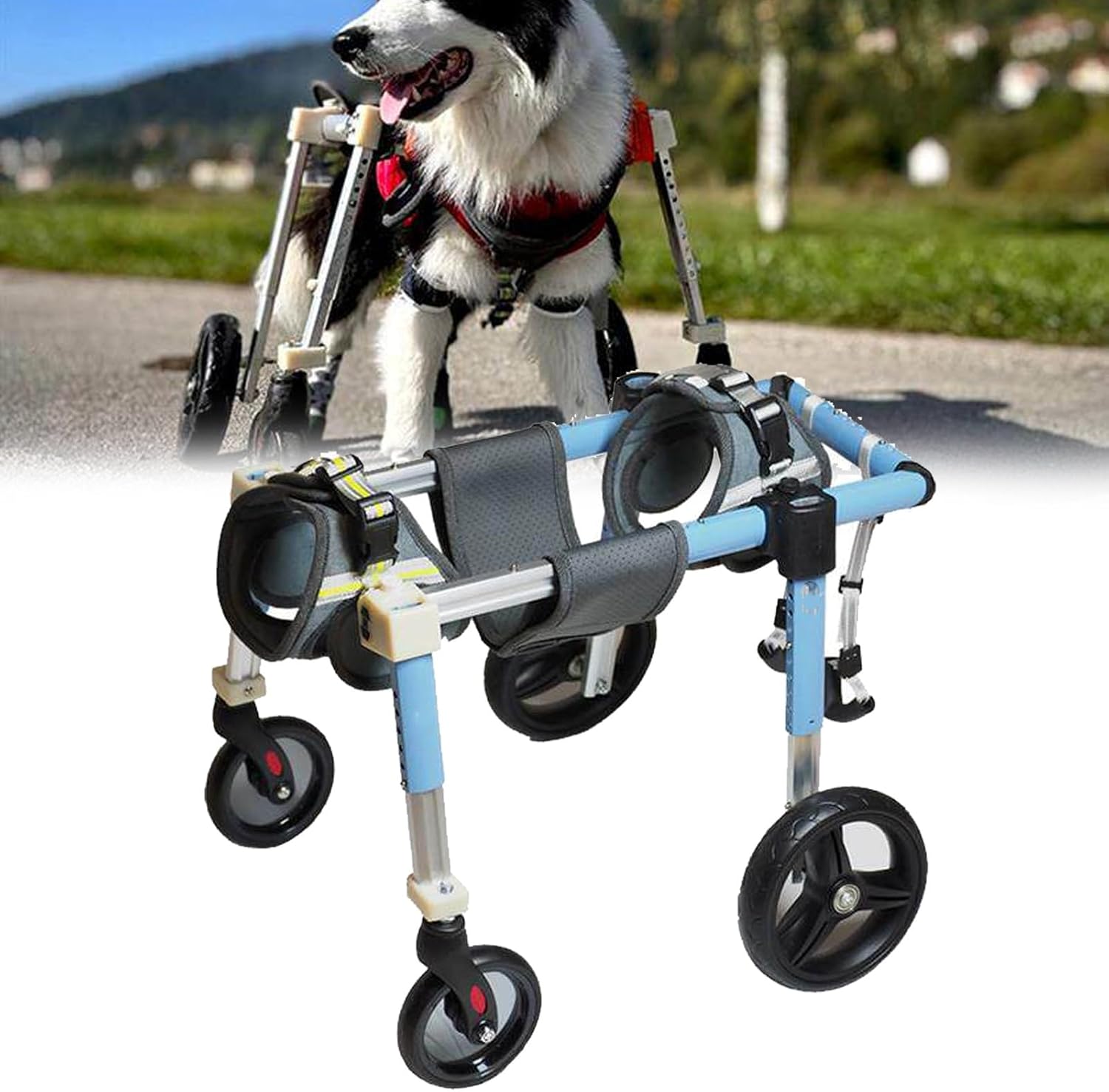
| Number of Wheels | 4 |
|---|---|
| Harness Feature | anti-abrasion, breathable, padded |
| Frame Material | Aluminum |
This foldable dog wheelchair is built to restore mobility for pets with hind leg weakness or injury while staying compact enough for indoor use. The aviation-grade aluminum frame keeps the unit lightweight yet sturdy, and tool-free length, width, and height adjustments let you fine-tune the fit quickly without tools. The design converts between 4-wheel full support and 2-wheel partial support as a dog recovers, and outward-tilted, double-bearing wheels plus shock-absorbing tires improve lateral stability and smoothness on sidewalks, grass, and indoor floors. The padded, breathable harness includes anti-abrasion ear-shaped covers and a rear groove that allows urination without removing the cart, which helps with comfort and hygiene during longer sessions. It folds and disassembles for storage and travel, and aluminum parts resist rust for easier cleaning. Limitations include the generic sizing claim of one-size-fits-most, which may still require careful measurement for larger or atypical body shapes, and the product relies on user adjustment rather than custom fitting for specific mobility needs.
Best for: Households that need a mobility aid with a smaller footprint and easier indoor maneuvering while still supporting large dogs during recovery or age-related weakness.
Less Ideal for: Owners who require a custom-fitted mobility device or have dogs with unusual body proportions that need veterinary-prescribed orthotics.
- Tool-free length, width, and height adjustment for quick fitting
- Aviation aluminum frame offers a lightweight yet durable structure
- Convertible 2-wheel/4-wheel setup supports different recovery stages
- Outward-tilted, double-bearing shock-absorbing wheels for stable, smoother movement
- Breathable padded harness with anti-abrasion covers and a rear groove for hygiene
- One-size-fits-most approach may not provide an ideal fit for every large dog body shape
- Some buyers may need to fine-tune adjustments frequently for optimal comfort
Verdict: The best heavy-duty wheelchair suits active dogs or challenging environments by providing extra-strength materials and sturdier components for dependable support.
Whisker Bark Dog Wheelchair L
Best Adjustable-Fit Wheelchair

| Item model number | YM-Dog wheelchairs |
|---|---|
| Manufacturer | Whisker Bark |
| Date First Available | October 22, 2025 |
| Package Dimensions | 24 x 18 x 4 inches; 5 pounds |
This adjustable rear-leg wheelchair is built around a stainless steel frame that aims to balance strength and lightness while letting you tune height, width, and length for a closer fit. It is used by fitting the padded belly support and harness, setting the frame to the dog's measurements, and rolling on the solid rubber wheels for walks on grass, sidewalks, or indoor floors. The padded belly strap and harness areas help keep the dog secure and comfortable during movement and the open rear design lets dogs relieve themselves normally. Practical benefits include a corrosion-resistant frame that should tolerate outdoor use and a modular fit that accommodates growing dogs or animals with nonstandard proportions. Important limitations are that full adjustability requires careful measurement and setup to avoid rubbing or poor gait, and the product is a single-size L variant targeted at heavier dogs so buyers with smaller pets must choose a different size or model.
Best for: Buyers who need a highly adjustable rear-leg mobility aid for dogs that are still growing or have atypical body proportions and who are willing to spend time tuning the fit for comfort and gait improvement.
Less Ideal for: Owners who want a ready-to-wear, no-adjustment solution or who have very small dogs, short-term needs, or prefer a lightweight fabric-only sling instead of a metal-frame wheelchair.
- Fully adjustable height, width, and length for a tailored fit
- Stainless steel frame offers durability with relatively low weight
- Padded belly support and harness improve comfort and reduce chafing
- Solid rubber wheels handle indoor and outdoor surfaces and are low maintenance
- Open, bathroom-friendly design lets the dog relieve itself without frame removal
- Only provided here in the L (60+ lb) variant so not suitable for smaller dogs without other sizes
- Requires careful measurement and adjustment to avoid improper fit or rubbing
- Assembly and repeated size tuning may be time consuming for owners
Verdict: The best adjustable-fit wheelchair is designed for precise sizing and strap adjustments to ensure secure, comfortable support for varied body shapes and recovery stages.
Choosing the Right Wheelchair 3 Legged Dog: Key Factors to Consider
Size and Adjustability
Getting the right size matters because a three-legged dog shifts its center of gravity compared with four-legged dogs. Adjustable frame length, width, and height let you position the wheels so the dog can use its remaining legs without overreaching or crouching.
Look for multiple adjustment points and a clear sizing guide. Small incremental adjustments are valuable because even modest differences in torso or leg length change how comfortably a dog bears weight. A poorly sized wheelchair will cause rubbing, require the dog to change gait, or encourage frequent escapes from the harness.
Stability and Wheelbase
Stability is critical for a tripawd because losing one limb changes balance and weight distribution. A wider wheelbase and a stable axle reduce tipping risk, while wheel size affects how easily the dog can handle uneven ground.
Consider the terrain you will use most. Larger wheels roll over obstacles more smoothly but can add weight. Look for designs that keep the dog's center of mass between the wheels rather than behind them to avoid backward pitching when stopping or climbing inclines.
Harness, Sling, and Body Support
The harness and sling transfer weight from the missing limb to the wheelchair and remaining limbs. Quality padding and breathable materials prevent chafing, and well-shaped slings support the belly and chest without restricting breathing.
Support should be balanced: too much restriction reduces mobility, while too little lets the dog slump and places extra load on the remaining limbs. Look for adjustable attachment points so you can fine-tune where weight is borne and minimize pressure points.
Ease of Entry and Exit
Daily use demands a wheelchair that you and the dog can manage repeatedly. Systems that allow the dog to step into a frame or that open at the rear make independent entry possible for more confident dogs. Quick-release buckles and tool-free adjustments speed routine fittings.
If the dog is nervous or has limited mobility, a simple step-in design or a model that can be partially disassembled for easier placement will reduce stress during each session. Consider how many steps the setup requires and whether one person can handle fitting.
Durability and Maintenance
Wheelchairs face outdoor wear, moisture, and regular cleaning. Corrosion-resistant metals, robust fasteners, and washable slings extend usable life. Wheels with sealed bearings and puncture-resistant tires reduce maintenance time.
Check how easy it is to remove pads and slings for washing, and whether replacement parts are available. A design that balances lightweight construction with sturdy components will better survive the daily bumps and strains of active pets.
Adjusting for Behavior and Activity Level
A three-legged dog's activity level—lap-bound, casual walker, or highly active—should influence your choice. More active dogs need frames that allow a natural gait and tolerate higher speeds, while calmer dogs benefit from extra stability and support.
Some wheelchairs offer accessories or configuration changes to shift support toward mobility or safety. Choose a design that can be tuned as your dog builds strength or changes activity patterns to avoid having to replace the unit as needs evolve.
How Do I Measure My Three-legged Dog for a Wheelchair?
Measure height at the shoulder and length from the front of the chest to the base of the tail while the dog stands naturally. Also record the girth around the widest part of the ribcage and the distance from the chest to the floor. These measurements let you choose a frame that places the axle in the right spot relative to the dog's center of mass.
If the missing limb is a hind leg, the axle typically sits behind the ribcage to allow natural use of the front legs. For a missing front limb, the axle is usually positioned under the chest to support forward balance. Always follow the manufacturer's sizing guidance and leave room for minor adjustments.
- Measure while the dog is standing, not sitting.
- Record both height and torso length for best fit.
- Account for seasonal coat changes when measuring girth.
What Terrain and Activities Should Influence Wheel Choice?
Think about where you walk most often. Smooth sidewalks and indoor surfaces favor smaller, lighter wheels that improve maneuverability. Parks, trails, and gravel benefit from larger, treaded wheels that absorb bumps and roll over obstacles more easily.
If you take frequent trips across curbs or up inclines, choose wheels and a axle position that keep the dog centered between the wheels to avoid pitching backward. Consider a model that allows you to swap wheel sizes if your routine includes varied terrain.
- Small wheels: better indoors and for tight turns.
- Large wheels: better off-road and uneven surfaces.
- Puncture-resistant tires reduce maintenance for trail use.
How to Introduce a Wheelchair to a Nervous Tripawd
Introduce the device gradually. Start by letting the dog sniff and explore the frame off the dog. Reward calm behavior with treats or praise. Next, try short, supported sessions with the sling loosely attached so the dog gets used to the sensation of partial weight support.
Increase session length slowly and practice walking in a quiet, familiar area before attempting longer outings. Use positive reinforcement, and stop sessions if the dog shows persistent stress signals. Patience and consistent short practices help most dogs accept a mobility aid.
- Start with 5 to 10 minute sessions.
- Use rewards and keep encounters positive.
- Adjust support incrementally as confidence grows.
Maintenance Tips That Prolong Service Life
Rinse off dirt after muddy walks, wipe down metal parts, and allow textiles to air dry to prevent mildew. Check fasteners and straps weekly for wear or loosening. Lubricate wheel bearings occasionally and inspect tires for wear or damage.
Keep a small toolkit and spare straps at home so you can handle minor repairs quickly. Replace worn pads and slings before they fail to avoid chafing and loss of support.
- Clean textiles regularly according to care instructions.
- Inspect wheels and bearings monthly.
- Store the wheelchair dry and out of direct sunlight.
Can a Wheelchair Help Prevent Overuse Injuries on the Remaining Limbs?
When fitted correctly, a wheelchair redistributes weight so that the remaining limbs are less likely to carry excessive load. This can reduce compensatory strain and slow the development of joint or muscle overuse issues that commonly affect tripawds.
However, the wheelchair must be sized and adjusted to keep the dog moving with a natural gait. Poor fit or a device that forces awkward posture can increase stress. Work gradually to build strength and consult your veterinarian or a canine rehabilitation professional if you have concerns about long-term joint health.
- Proper fit promotes natural gait and balanced weight distribution.
- Poorly adjusted devices can worsen strain.
- Combine wheelchair use with conditioning exercises when appropriate.
How We Chose the Best Wheelchair 3 Legged Dog
We focused on features that directly affect how well a wheelchair helps three-legged dogs move comfortably and safely. Primary evaluation criteria included stability and wheelbase design to prevent tipping; adjustability of frame height, length, and torso supports for a secure fit; harness and sling design to distribute weight without rubbing; ease of entry and exit so dogs can be fitted independently when possible; and durability of materials for outdoor and indoor use. We included only wheelchairs whose design accommodates weight distribution typical of three-legged dogs and that offer fine adjustments to dial in fit. Products without clear adjustability, inadequate torso support, or designs that rely solely on generic straps were excluded. We also considered how simple the setup and routine maintenance are, since daily use demands practical solutions that owners can manage at home. Safety, comfort, and real-world usability guided our picks.
Our full evaluation process is outlined in our review methodology.
FAQ
How long does it take for a three-legged dog to get used to a wheelchair?
Adjustment time varies by dog, but many adapt within a few days to a few weeks. Short, frequent sessions and positive reinforcement speed acceptance. Dogs with prior mobility limitations or anxiety may need a longer acclimation period.
Will a wheelchair stop my dog from gaining muscle strength?
No, when used properly a wheelchair supports mobility while allowing the dog to use remaining limbs, which can help maintain or increase muscle strength. It is important to encourage active movement rather than full passive support so muscles continue to engage.
Can I use a wheelchair indoors and outdoors?
Yes. Many wheelchairs are suitable for both, but wheel size and frame width affect maneuverability indoors. Choose a configuration that balances indoor turning ability with outdoor roll-over performance based on where you spend most of your time.
How do I prevent chafing from the harness or sling?
Ensure proper fit and use padded, breathable materials. Check contact areas frequently, adjust straps to eliminate rubbing, and remove the wheelchair for breaks during long outings. Replace worn padding promptly.
Is professional fitting necessary for a three-legged dog?
A professional fitting can be helpful, especially for dogs with unusual body shapes, significant weight distribution changes, or existing orthopedic issues. Many owners can fit and adjust a wheelchair successfully at home using manufacturer sizing charts and gradual testing.
Final Verdict
Choose a wheelchair that prioritizes a secure, adjustable fit and stability while matching the dog's activity level and the terrain you use most. Focus on harness comfort, ease of entry, and the ability to fine-tune frame dimensions; these factors determine whether the dog will accept the device and use it safely. Accept that tradeoffs exist between weight, ruggedness, and maneuverability. Start with conservative support and increase freedom as the dog gains confidence. With the right fit and a gradual introduction, a wheelchair can restore mobility and reduce strain on the remaining limbs, making daily life easier for both dog and owner.

