

When you have a small dog, choosing the right GPS tracker matters for safety and peace of mind. A unit that is too heavy or bulky will bother a tiny pet, while one with poor signal or short battery life leaves you blind at critical moments. This guide covers the top shortlisted options designed specifically for small dogs and explains the key tradeoffs between comfort, battery, and accuracy. Below you will find the top picks for small-dog-friendly GPS trackers, plus practical advice on choosing and using them based on how they perform in everyday situations and escape scenarios.
Top Picks at a Glance
| Best Overall GPS Tracker A dependable all‑around tracker that fits most small‑dog needs | Tractive Smart Dog GPS Tracker | 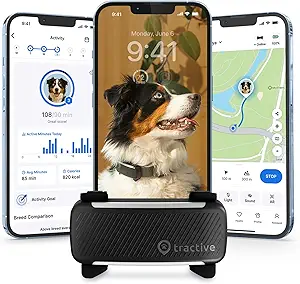 |
| Best Budget GPS Tracker A low‑cost option that covers the essentials without extras | Fepzirk GPS Pet Tracker |  |
| Best Premium GPS Tracker A higher‑end choice with advanced features and stronger build quality | Life360 Pet GPS Tracker |  |
| Best Compact GPS Tracker A smaller, lightweight tracker made for tiny breeds and collars | Focushine Pet GPS Tracker |  |
| Best Long‑Battery GPS Tracker A tracker that prioritizes extended runtime between charges | Wnrfg GF11 Dog GPS Tracker |  |
| Best Waterproof GPS Tracker A water‑resistant model built to handle swimming and wet conditions | galawelly GPS Dog Tracker |  |
| Best High‑Accuracy GPS Tracker A tracker focused on precise location data and fast updates | Apple AirTag 2nd Generation 4‑Pack |  |
Tractive Smart Dog GPS Tracker
Best Overall GPS Tracker

| Connectivity Technology | Cellular, GPS |
|---|---|
| Additional Features | Activity Tracking, Bark Detection, Location History, Real Time Tracking, Waterproof |
| Battery Average Life | 14 days |
| Compatible Devices | Smartphone |
| Battery Capacity | 1400 |
The Tractive Smart Dog GPS Tracker combines continuous real-time location updates with activity and health monitoring in a compact, waterproof package. It attaches to a collar and uses cellular and GPS connectivity to deliver live tracking updates every few seconds, plus location history and escape alerts via customizable virtual fences. The built-in sensors also monitor heart and respiratory rates and detect changes in activity or barking to send health and behavior alerts. Battery life is rated up to 14 days in typical use, and the tracker is light enough for dogs over about 8 pounds, with a brighter LED and louder sound to assist locating a pet. Setup is done through the Tractive smartphone app and requires a compatible subscription for cellular service. Practical trade-offs are that continuous live updates can reduce runtime compared with minimal-reporting trackers, and effective coverage depends on cellular signal in your area.
Best for: Dog owners who want a dependable everyday tracker that balances precise live location with health and activity monitoring and an easy smartphone setup.
Less Ideal for: Owners with dogs that weigh under 8 pounds or people who lack reliable cellular coverage in the areas where their dog roams.
- Real-time GPS updates every 2–3 seconds for precise tracking
- Activity tracking plus heart and respiratory rate monitoring for wellness insights
- Escape alerts and virtual fences with location history to retrace routes
- Waterproof, lightweight design suitable for everyday wear on dogs over 8 pounds
- Long battery life up to 14 days in typical mixed-use scenarios
- Requires a cellular subscription for full tracking functionality
- Continuous live mode reduces battery life compared with less frequent update modes
Verdict: The best overall GPS tracker balances size, battery life, accuracy, and app features to reliably keep tabs on most small dogs in everyday use.
Fepzirk GPS Pet Tracker
Best Budget GPS Tracker
| Supported Application | Find My |
|---|---|
| Battery Average Life | 1 years |
| Battery Capacity | 220 milliamp_hours |
| Additional Features | Real Time Tracking, Water Resistant |
| Enclosure Material | Acrylonitrile Butadiene Styrene (ABS) |
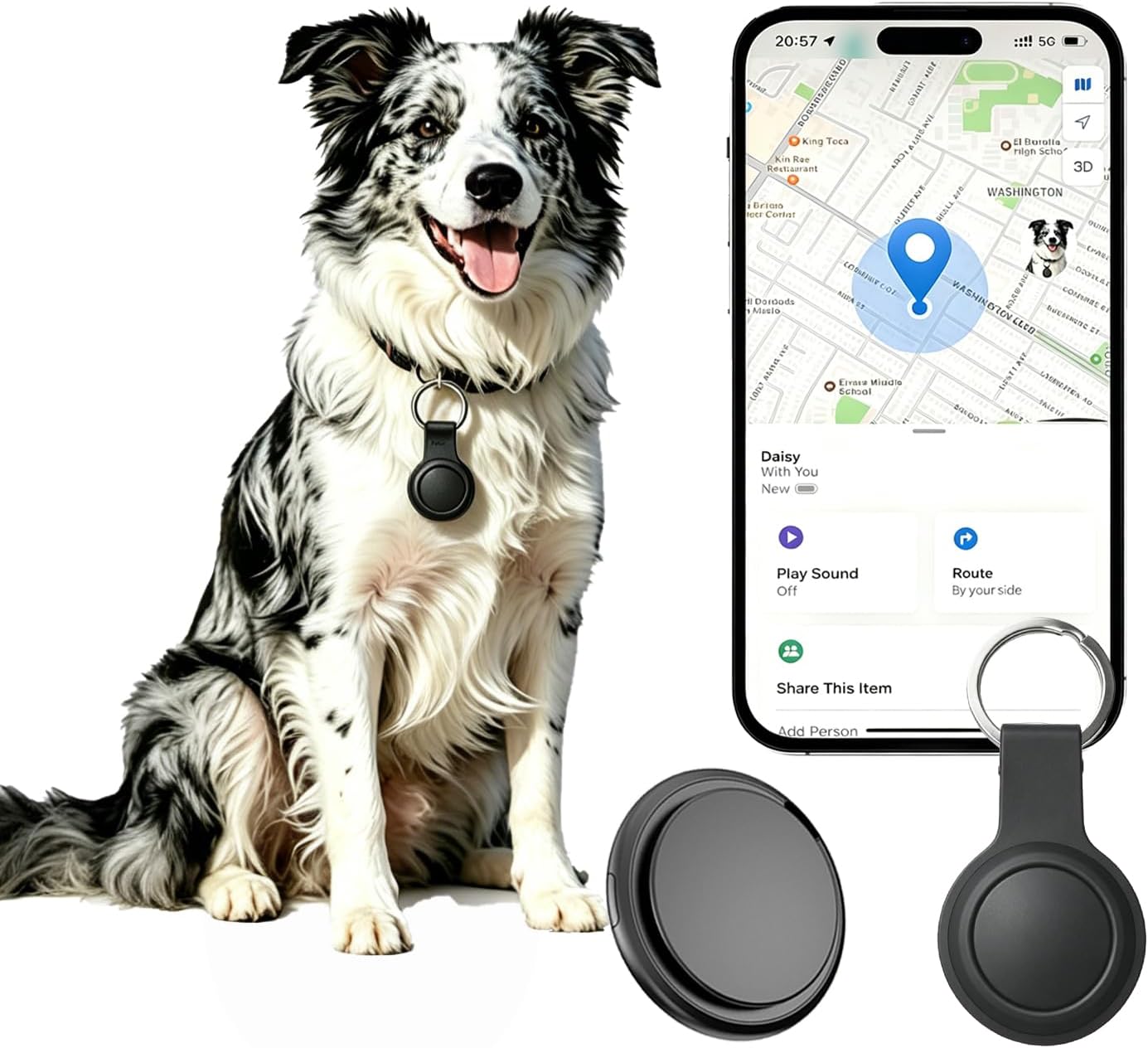
This small, lightweight tracker attaches to a pet collar and shows location through Apple's Find My app without a separate subscription or SIM card. It is designed for urban and suburban use where many Apple devices will relay its Bluetooth-based location; in those areas you can expect location refreshes often enough to find a lost small dog and you can play a sound from the app to help locate them nearby. The unit is IP67 water resistant and uses a single CR2032-style cell (listed as 220 mAh) that the listing says lasts roughly 12 months, so you avoid frequent charging but must replace the battery annually. Because it relies on the Find My network it is not a true real-time GPS tracker and updates can be slow or stop in rural or low-traffic areas. Setup and pairing are straightforward with iPhone only, and the tracker's slim ABS housing is unobtrusive on small collars. For buyers wanting a simple, low-cost locator for city dogs this delivers core location features; those needing live GPS tracking or Android compatibility should look elsewhere.
Best for: Pet owners with iPhones who need an inexpensive, low-maintenance tracker for small dogs that primarily spend time in populated areas and city neighborhoods.
Less Ideal for: Owners who need continuous, real-time GPS tracking, reliable coverage in rural areas, or an Android-compatible tracker should consider a different device.
- Works with Apple Find My network so no monthly fee or SIM required
- Long user-replaceable battery claimed to last up to one year
- IP67 water resistance suitable for rain and splashes
- Slim, lightweight tag that fits on small dog collars and is unobtrusive
- Simple setup and basic alerts like safe zones and separation notifications
- iOS only — not compatible with Android devices
- Uses Bluetooth/Find My network so location updates are not real-time and depend on nearby Apple devices
Verdict: The best budget GPS tracker gives pet owners core location tracking and basic app functionality at a lower price, sacrificing some battery life or advanced features to hit the cost point.
Life360 Pet GPS Tracker
Best Premium GPS Tracker

| Connectivity Technology | Bluetooth, Cellular, GPS, Wi-Fi |
|---|---|
| Control Method | App |
| Compatible Devices | Smartphone, Tablet |
| Number of Batteries | 1 Nonstandard Battery (included) |
The Life360 Pet GPS Tracker is a compact collar-style tracker that uses GPS, LTE, Bluetooth, and Wi-Fi to deliver live location updates and virtual fence alerts to the Life360 smartphone app. It is typically clipped to a collar or harness and is aimed at pet owners who want reliable, multi-day tracking without daily charging. Notable features include up to 14 days of battery life in standard mode with a Reserve Mode that keeps the device findable for up to six months after the main battery depletes, IP68 water resistance, USB-C charging, a built-in safety light, and activity monitoring like zoomies alerts and weekly distance reports. The included 12-month Silver subscription for new and free members covers basic multi-pet tracking but the device requires an ongoing Life360 membership and cellular coverage to function. Practical benefits include minimal maintenance during multi-day trips and the leverage of a large community Pet Finder Network for lost-pet recovery. Important limitations are the dependency on a subscription and cellular signal for real-time tracking and that some advanced features require higher-tier plans.
Best for: Pet owners who prioritize long between-charge runtimes and need reliable multi-day location tracking for small dogs during travel or extended outdoor time.
Less Ideal for: Owners who lack consistent cellular coverage where they travel or those who do not want to maintain a subscription-based service for tracking.
- Long battery life up to 14 days in standard mode with Reserve Mode extending findability for months
- Live GPS and LTE tracking with virtual fence escape alerts delivered to the app
- IP68 water-resistant enclosure and lightweight design for small dogs
- USB-C charging and included silicone sleeve, clip, and cable for collar attachment
- Activity monitoring and shared household care features integrated into the app
- Requires a paid Life360 subscription after the first included year to continue service
- Real-time tracking depends on cellular coverage so updates will pause without signal
- Some advanced features and multi-pet coverage require higher-tier subscription plans
Verdict: The best premium GPS tracker is for owners who want top-tier accuracy, longer battery life, extra safety features, and a more durable, feature-rich experience regardless of price.
Focushine Pet GPS Tracker
Best Compact GPS Tracker

| Connectivity Technology | Bluetooth |
|---|---|
| Supported Application | Find My |
| Additional Features | Location History |
| Compatible Devices | Smartphone |
| Enclosure Material | ABS |
The Focushine Pet GPS Tracker is a small, clip-on style locator designed for everyday wear on cats and small dogs and pairs directly with Apple Find My via Bluetooth so no separate app or subscription is required. In daily use it provides real-time location updates when within range of Apple devices, records seven-day movement history, and can trigger a built-in audible alarm to help find a pet nearby. The unit is IP68 waterproof and lightweight for comfortable all-day wear, and the package includes protective cases for collar or keychain mounting. Because it relies on Bluetooth and the Find My network rather than a cellular modem, it is best for owners in populated areas with iOS devices nearby; remote tracking in truly rural areas will be limited by the availability of other Apple devices. Battery life is claimed to deliver long standby time, which suits low-maintenance use, but advanced features like continuous cellular tracking or multi-platform app support are not present.
Best for: Pet owners who want a minimal, lightweight tracker for small dogs or cats and already use iPhone/iPad devices, prioritizing comfort and no monthly fees over remote cellular coverage.
Less Ideal for: People who need guaranteed long-range tracking in rural areas or who do not use Apple devices should consider trackers with built-in cellular connectivity and broader platform support.
- Pairs directly with Apple Find My for location history and no monthly fees
- Compact, lightweight design suitable for all-day wear on small pets
- IP68 waterproof rating for use outdoors
- Built-in speaker to emit a locating alarm for nearby recovery
- Relies on Bluetooth/Find My network so coverage depends on nearby Apple devices
- No cellular modem or multi-platform tracking for non-iOS users
Verdict: The best compact GPS tracker fits comfortably on small dogs or slim collars while still providing reliable location updates and reasonable battery life.
Wnrfg GF11 Dog GPS Tracker
Best Long‑Battery GPS Tracker

| Additional Features | Waterproof, No Monthly Fee, Real-Time Location Tracking, Location History, Location Sharing, Replaceable Battery |
|---|---|
| Connectivity Technology | RF |
| Supported Application | Find My Phone |
| Specific Uses For Product | Camping, Hiking |
| Compatible Devices | Smartphone |
The Wnrfg GF11 is a slim, lightweight pet GPS tracker designed to stay attached to a collar and report real-time locations roughly every minute via a free smartphone app. It uses built-in GPS and RF connectivity so you do not need a SIM card or subscription, and the app stores location history and supports sharing with others. The tracker ships in a protective silicone case with a metal ring for quick collar attachment and is rated IP68 for waterproofing, which makes it suitable for rainy walks and outdoor adventures. The replaceable battery and the product focus on long run times make this unit attractive for owners who want infrequent charging or battery swaps, though the actual days between charges will vary with update frequency and signal conditions. Setup and tracking are phone-based through the supported app, and the device is best for typical pet use such as hiking, camping, and daily outings rather than fine-grained telemetry in very dense urban canyons. Overall it delivers practical, low-maintenance tracking for active pets thanks to its no-subscription operation and durable, water-resistant design.
Best for: Pet owners who prioritize long intervals between charges and want a low-maintenance, subscription-free tracker for regular outdoor activity and occasional outings.
Less Ideal for: Buyers who need continuous cellular-based tracking in urban canyons or professional-grade telemetry for working animals should consider cellular trackers with detailed coverage maps instead.
- No monthly fee or SIM required for tracking
- Approximately one-minute GPS location updates for near real-time tracking
- Replaceable battery reduces long-term maintenance compared with sealed units
- IP68 waterproof rating and protective silicone case for outdoor use
- Lightweight ultra-slim design is easy to mount on collars
- Actual battery life between charges is not specified and depends on update frequency and signal conditions
- Connectivity listed as RF rather than cellular may reduce performance in some dense urban or remote areas
Verdict: The best long‑battery GPS tracker is ideal for owners who need fewer recharges and dependable multi‑day tracking for dogs that roam or travel frequently.
galawelly GPS Dog Tracker
Best Waterproof GPS Tracker

| Compatibility | Android and iPhone |
|---|---|
| Waterproof rating | IP68 |
| App | DEONETAG |
| Historical playback | 7 days |
This compact galawelly tracker clips into a dedicated holder and delivers real-time location updates to Android and iPhone via the DEONETAG app without requiring a SIM card or monthly subscription. It records up to seven days of route history, so you can review where your dog has been, and the app supports encrypted QR sharing to let others view location data quickly. The tracker is rated IP68 for waterproofing, so it tolerates rain, splashes, and brief submersion and is built light and slim to minimize pull on a collar. Setup is simple with one-click pairing and the included holder keeps the unit secure during running and rough play. Limitations to note are that advanced cellular backup features are not available since it is designed to work via the app ecosystem rather than a paid cellular network, and battery life details are not specified so heavy continuous live-tracking may require more frequent charging. For owners who prioritize easy setup, no subscriptions, and strong water protection, this unit is practical and straightforward.
Best for: Owners who need a rugged, waterproof tracker for dogs that swim or play in wet outdoor conditions and who prefer a subscription-free, app-based solution.
Less Ideal for: Users who require nationwide cellular fallback tracking or long unattended runtime between charges should consider trackers with paid cellular plans and published battery endurance.
- No monthly fee or SIM card required for core tracking functions
- IP68 waterproof rating suitable for rain, splashes, and brief submersion
- Real-time tracking with 7-day historical route playback in the DEONETAG app
- Compact, lightweight design with a dedicated holder for secure collar attachment
- Encrypted QR path sharing for easy, controlled location sharing
- No built-in cellular subscription or SIM-based fallback for coverage gaps
- Battery life and charging interval are not specified in the listing
Verdict: The best waterproof GPS tracker protects against rain, splashes, and brief submersion so owners can track dogs that play in water without worrying about device failure.
Apple AirTag 2nd Generation 4‑Pack
Best High‑Accuracy GPS Tracker

| Item model number | MFEA4LL/A |
|---|---|
| Battery life | More than 1 year (replaceable coin cell) |
| Manufacturer | Apple |
The AirTag (2nd generation) is a compact item tracker designed to attach to collars, keyrings, or small accessories and report their location through Apple's Find My network. In daily use it relies on Bluetooth for general proximity and upgraded Ultra Wideband chips for higher-precision direction finding when used with a compatible iPhone or Apple Watch. Notable practical improvements over the prior model include a louder speaker for easier audible locating, expanded precision finding range, and the ability to temporarily share location access with trusted contacts. Battery life is advertised at more than a year on a user-replaceable coin cell, and the enclosure uses a high share of recycled plastic. Limitations for dog owners are that AirTag is an item tracker rather than a dedicated GPS collar: it does not have built-in cellular GPS or continuous live-tracking, and precision features require modern Apple hardware and software to reach their full potential. For small dogs it performs well as a lightweight backup tracker that leverages the large Find My network, but it is not a substitute for purpose-built GPS trackers when you need real-time tracking over long distances or in areas without nearby Apple devices.
Best for: Owners of small dogs who want an unobtrusive, lightweight backup tracker that provides very accurate nearby location when paired with modern Apple devices.
Less Ideal for: People who need continuous real-time GPS tracking, long-range location updates, or coverage in areas without other Apple devices should choose a dedicated GPS collar instead.
- High-precision direction finding with upgraded Ultra Wideband when used with compatible iPhone or Apple Watch
- Louder built-in speaker makes audible locating easier
- Works with the large Find My network so lost items can be located by nearby Apple devices
- Replaceable coin cell offers over a year of typical battery life and easy swaps
- Compact, lightweight design suitable to attach to small collars or gear
- Not a true GPS device — no built-in cellular or satellite location for continuous tracking
- Key precision features require recent iPhone or Apple Watch models to function fully
Verdict: The best high‑accuracy GPS tracker provides more precise positioning and quicker location refreshes for owners who need tight, dependable tracking in complex environments.
Choosing the Right GPS Tracker Small Dog: Key Factors to Consider
Weight and Size
Small dogs have less tolerance for bulk and extra weight. A tracker that weighs only a few dozen grams is less likely to interfere with the dog's gait or cause discomfort during play. Consider both the tracker weight and the combined weight when attached to a collar or harness; a lightweight tracker is especially important for very small breeds.
Size also affects placement. Low-profile units fit better on narrow collars and are less likely to be chewed or snagged. If your dog wears a harness most of the time, check whether the tracker can be mounted securely to that style without shifting into an uncomfortable position.
Tracking Accuracy and Update Frequency
Accuracy determines how close the reported position will be to your dog's actual location. For small dogs that can slip into dense vegetation or tight spaces, high accuracy reduces search time. Update frequency affects how quickly you see movement: frequent updates help you follow a running dog in real time, while slower intervals conserve battery.
Think about where you walk your dog. In open areas, basic GPS accuracy may be sufficient. In urban canyons or wooded parks, look for devices with assisted positioning or stronger location fidelity. Also consider whether the tracker provides a history log so you can retrace routes after the fact.
Battery Life and Charging Convenience
Battery life is a major tradeoff against size and update speed. Small trackers often have smaller batteries, so runtime varies with how often the device reports position and whether continuous tracking is used. Choose a model whose typical runtime fits your routine—daily walks, multi-hour outings, or extended monitoring when your dog is loose.
Charging convenience matters too. A tracker with a simple magnetic charger or USB interface reduces the friction of keeping it topped up. Some models offer power-saving modes or user-selectable tracking intervals to stretch battery life between charges.
Attachment Method and Durability
How a tracker attaches affects whether it stays on during play and rough terrain. Clip-on units must have secure latches and a low profile to avoid snagging, while collar-integrated modules should fasten firmly without rotating. A tracker that can be attached to a harness gives extra flexibility for owners who prefer harness use.
Durability includes water resistance and impact tolerance. Small dogs often splash through puddles and brush, so a tracker rated for at least light water exposure will last longer. Build quality influences how well the device withstands everyday knocks and the occasional drop.
Alerts, Geofencing, and Safety Features
Real-time alerts and geofencing help you respond quickly if your dog leaves a safe area. Geofencing lets you set virtual boundaries and receive notifications when they are crossed. Look for customizable alert radii and multi-zone support if you use several regular locations.
Additional safety features like live-tracking mode, audible beepers, or lights can assist in quick recovery. Evaluate how alerts are delivered—push notifications, SMS, or in-app banners—and whether the system allows multiple caretakers to receive notifications.
Connectivity and Range
Connectivity determines how the tracker communicates location data. Some devices rely on a cellular network to send positions to your phone, while others use a hub or Bluetooth for close-range tracking. For small dogs that roam beyond immediate sight, cellular-based systems generally offer broader range, though coverage varies by area.
Consider the typical environments where your dog spends time. If you frequently visit remote trails, check coverage expectations and whether offline recovery features exist. Also review how quickly the device reports a lost connection and how it behaves when signal is intermittent.
How Can I Make a Small Tracker Comfortable for My Dog?
Start by choosing the right mounting location. Low-down on the collar or centered on a harness chest plate keeps the weight balanced and reduces flipping or rubbing. Rotate the mounting position during the first week to let your dog acclimate and to verify there are no chafing spots.
Use a soft, narrow collar or a padded harness to distribute any pressure. If the tracker has detachable covers or protective sleeves, try those to smooth edges. Short monitoring sessions at first will help your dog get used to the sensation without stress.
- Trim any sharp edges on the collar or harness near the tracker
- Check for rotation that could cause rubbing after 24 hours of wear
- Limit initial wearing time and gradually increase to full-day use
What Tracking Modes Are Most Useful for Small Dogs?
Different modes suit different needs. A low-frequency mode conserves battery for daily monitoring and is fine when you keep your dog close. High-frequency or live-tracking modes are valuable during off-leash play or when you suspect a run-off because they provide near real-time updates.
Some trackers also offer activity or motion-triggered updates that increase reporting only when the dog is moving. These hybrid modes are often the best compromise, giving timely location data without draining the battery too quickly.
- Use low-frequency mode for routine walks and at-home monitoring
- Switch to live-tracking during outings where escape risk is higher
- Enable motion-triggered updates to balance accuracy and battery
How Reliable Is Cell Coverage for Tracking in Suburban and Rural Areas?
Coverage depends on the carrier network used by the tracker and local geography. In suburban neighborhoods, cellular trackers usually deliver consistent updates, though tall buildings and dense tree cover can create temporary gaps. In rural areas, coverage can be spotty and lead to delayed location reports.
If you frequently visit low-coverage zones, consider a tracker that logs location history for delayed upload or one that can pair with a short-range hub when you are nearby. Also plan recovery strategies for temporary signal loss, like using sound alerts or searching along probable escape routes instead of relying solely on live pings.
- Check local cellular reception in the places you walk and play
- Have a fallback plan for short outages, such as using lights or sound
- Prefer trackers with offline logging if you spend time off-grid
Can a Small Gps Tracker Also Monitor Activity and Health?
Many compact trackers include activity tracking, recording steps or movement levels. These metrics can give a rough sense of daily exercise but are not a substitute for veterinary assessments. For small dogs, activity monitors can help spot sudden drops in movement that might indicate injury or illness.
Be realistic about what these features deliver. Small form-factor units may have limited sensor suites and offer basic activity summaries rather than detailed health diagnostics. Use activity data as a supplemental insight rather than a clinical measurement.
- Expect broad activity trends rather than medical-grade data
- Use sudden changes in activity to prompt closer observation
- Combine activity tracking with routine vet checks for best results
How to Maintain and Clean a Small Dog Tracker
Regular maintenance keeps the tracker working and prevents skin irritation. Wipe the device and attachment points with a damp cloth after wet or muddy outings. Remove the tracker periodically to check the collar or harness for wear and to inspect for trapped dirt or hair.
Follow the manufacturer instructions for water exposure and charging port care. If the unit has replaceable covers, rotate them to even out wear. Keep charging contacts dry and free from debris to maintain reliable charging and connectivity.
- Wipe down after each outdoor session if exposed to dirt or water
- Inspect straps and mounting clips for fatigue monthly
- Store in a dry place and avoid extreme temperatures when not in use
How We Chose the Best GPS Tracker Small Dog
We focused on criteria that actually affect small dogs and their owners rather than broad feature lists. First, we prioritized physical fit and weight because small dogs are more sensitive to bulk and scale. Second, we evaluated location accuracy under typical urban and suburban conditions, since visibility and foliage affect real-world tracking. Third, battery life and realistic runtime were considered with attention to standby and active-use expectations. Fourth, we assessed attachment options and water resistance levels to ensure the tracker stays put during walks and light play. Fifth, we looked at user control and alert features that help owners respond quickly, including geofencing and real-time updates. Excluded items included trackers that are primarily designed for larger dogs or heavy-duty outdoor work where size and weight are not limiting factors. We also filtered out devices with unreliable connectivity or consistently poor user feedback on essential functions. The final list balances fit, accuracy, battery life, attachment security, and practical alerting features that matter most for small dogs.
Our full evaluation process is outlined in our review methodology.
FAQ
Will a small gps tracker bother my tiny dog?
Often not if you choose a device sized appropriately for the dog and mount it low on the collar or on a harness. Many small trackers are designed to be lightweight and low-profile. Introduce the tracker gradually and watch for signs of rubbing or behavioral changes during the first week.
How long does the battery usually last on a small tracker?
It depends on tracking frequency and features. With low-frequency updates you may get several days of runtime, while continuous live-tracking can shorten runtime to a few hours. Power-saving modes and motion-triggered updates extend battery life for typical small-dog use.
Can a small tracker find my dog indoors or under dense foliage?
Gps signal penetration is limited indoors and under heavy cover, so accuracy can decline in those conditions. Some trackers combine assisted positioning or use nearby Wi-Fi or cell data to improve indoor accuracy, but results vary. Sound alerts and last-known-location features can help in these scenarios.
Do I need a special collar to use a small tracker?
Not usually. Many trackers attach to standard collars or harnesses, but you should ensure the collar width and attachment point match the tracker design. A padded or narrow collar can improve comfort and stability. For persistent rotation, using a harness mount may be a better option.
Are small gps trackers waterproof?
Many small trackers offer at least splash resistance and some provide higher water-resistance ratings suitable for short swims. Check the water resistance level for the intended use. For frequent swimming or heavy exposure to water, choose a model rated for submersion.
Final Verdict
For small dogs, prioritize fit and comfort first, then balance accuracy and battery life based on how and where you use the tracker. Lightweight, low-profile units that attach securely to a collar or harness minimize discomfort and reduce the chance of loss during play. Accept tradeoffs: the smallest trackers usually have shorter battery life or fewer sensors, while larger units offer longer runtime but may be less comfortable. Decide whether you need continuous live-tracking or can rely on motion-triggered updates and geofencing, and choose the option that best matches your routine and typical environments.

