

If you let your dog explore off-leash or worry about escapes, a dog collar tracking device can provide peace of mind by letting you locate your pet quickly. Choosing the right tracker matters because accuracy, battery life, mounting method, and durability determine whether it works when you need it most. This guide shortlists seven top-rated options across common use cases and evaluates them on signal accuracy, run-time, durability, and everyday usability. Read on to find a tracker that fits your dog and lifestyle, with notes on installation and typical performance expectations.
Top Picks at a Glance
| Best Overall Collar GPS Tracker The all-around best tracker balancing accuracy, features, and reliability | Tractive Smart Dog GPS Tracker | 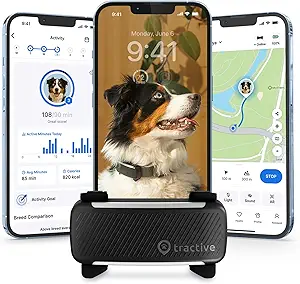 |
| Best Budget Collar GPS Tracker A reliable, low-cost tracker that covers basic tracking needs | galawelly GPS Dog Tracker |  |
| Best Long-Battery Collar GPS Tracker Models that prioritize extended runtime between charges for long outings | Tractive XL Smart Dog GPS Tracker |  |
| Best Compact Collar GPS Tracker Small, lightweight trackers that suit small dogs and active pets | Fi Mini GPS Dog Tracker |  |
| Best Heavy-Duty Collar GPS Tracker Tough, rugged units built to withstand rough play and impacts | Garmin Alpha TT 25 Collar |  |
| Best Waterproof Collar GPS Tracker Water-resistant designs for swimming, rainy walks, and wet conditions | IOYDC GF11 GPS Pet Tracker |  |
| Best Premium Collar GPS Tracker Higher-end trackers with extra features, accuracy, and app tools | Halo Collar 5 |  |
Tractive Smart Dog GPS Tracker
Best Overall Collar GPS Tracker

| Connectivity Technology | Cellular, GPS |
|---|---|
| Additional Features | Activity Tracking, Bark Detection, Location History, Real Time Tracking, Waterproof |
| Battery Average Life | 14 days |
| Compatible Devices | Smartphone |
| Battery Capacity | 1400 |
The Tractive Smart Dog GPS Tracker combines continuous real-time location updates with activity and health monitoring in a compact, waterproof package. It attaches to a collar and uses cellular and GPS connectivity to deliver live tracking updates every few seconds, plus location history and escape alerts via customizable virtual fences. The built-in sensors also monitor heart and respiratory rates and detect changes in activity or barking to send health and behavior alerts. Battery life is rated up to 14 days in typical use, and the tracker is light enough for dogs over about 8 pounds, with a brighter LED and louder sound to assist locating a pet. Setup is done through the Tractive smartphone app and requires a compatible subscription for cellular service. Practical trade-offs are that continuous live updates can reduce runtime compared with minimal-reporting trackers, and effective coverage depends on cellular signal in your area.
Best for: Dog owners who want a dependable everyday tracker that balances precise live location with health and activity monitoring and an easy smartphone setup.
Less Ideal for: Owners with dogs that weigh under 8 pounds or people who lack reliable cellular coverage in the areas where their dog roams.
- Real-time GPS updates every 2–3 seconds for precise tracking
- Activity tracking plus heart and respiratory rate monitoring for wellness insights
- Escape alerts and virtual fences with location history to retrace routes
- Waterproof, lightweight design suitable for everyday wear on dogs over 8 pounds
- Long battery life up to 14 days in typical mixed-use scenarios
- Requires a cellular subscription for full tracking functionality
- Continuous live mode reduces battery life compared with less frequent update modes
Verdict: The best overall Collar GPS Tracker for most pet owners, offering dependable location accuracy, easy setup, intuitive app features, and consistent day-to-day performance.
galawelly GPS Dog Tracker
Best Budget Collar GPS Tracker

| Compatibility | Android and iPhone |
|---|---|
| Waterproof rating | IP68 |
| App | DEONETAG |
| Historical playback | 7 days |
This compact galawelly tracker clips into a dedicated holder and delivers real-time location updates to Android and iPhone via the DEONETAG app without requiring a SIM card or monthly subscription. It records up to seven days of route history, so you can review where your dog has been, and the app supports encrypted QR sharing to let others view location data quickly. The tracker is rated IP68 for waterproofing, so it tolerates rain, splashes, and brief submersion and is built light and slim to minimize pull on a collar. Setup is simple with one-click pairing and the included holder keeps the unit secure during running and rough play. Limitations to note are that advanced cellular backup features are not available since it is designed to work via the app ecosystem rather than a paid cellular network, and battery life details are not specified so heavy continuous live-tracking may require more frequent charging. For owners who prioritize easy setup, no subscriptions, and strong water protection, this unit is practical and straightforward.
Best for: Owners who need a rugged, waterproof tracker for dogs that swim or play in wet outdoor conditions and who prefer a subscription-free, app-based solution.
Less Ideal for: Users who require nationwide cellular fallback tracking or long unattended runtime between charges should consider trackers with paid cellular plans and published battery endurance.
- No monthly fee or SIM card required for core tracking functions
- IP68 waterproof rating suitable for rain, splashes, and brief submersion
- Real-time tracking with 7-day historical route playback in the DEONETAG app
- Compact, lightweight design with a dedicated holder for secure collar attachment
- Encrypted QR path sharing for easy, controlled location sharing
- No built-in cellular subscription or SIM-based fallback for coverage gaps
- Battery life and charging interval are not specified in the listing
Verdict: The best budget Collar GPS Tracker for owners who need dependable location tracking and basic features at a lower price without premium extras.
Tractive XL Smart Dog GPS Tracker
Best Long-Battery Collar GPS Tracker

| Connectivity Technology | Cellular |
|---|---|
| Additional Features | Geo-Fence, Location History, Real Time Tracking, Water Resistant |
| Battery Average Life | 6 weeks |
| Compatible Devices | Smartphone |
The Tractive XL Smart Dog GPS Tracker is a collar attachment designed for larger dogs that combines continuous GPS location tracking with health and activity monitoring. It uses a built-in cellular connection and provides real-time location updates every 2–3 seconds so you can follow your dog's movements with no distance limits, and it includes virtual fences and location history for quick recovery after escapes. The tracker also monitors heart and respiratory rates plus barking and activity patterns, sending alerts if it detects unusual behavior. Its key practical advantage is battery life, advertised up to six weeks, which makes it suitable for multi-day trips or owners who prefer low-maintenance devices. The unit is water resistant and pairs with a smartphone app for setup and notifications, but it requires a subscription for the SIM/data service. The device is compact and meant to attach to a collar, though buyers should plan for the ongoing subscription and occasional charging despite the long battery life.
Best for: Pet owners who prioritize long battery life and continuous, real-time tracking during extended outings or multi-day periods and want basic health alerts alongside location monitoring.
Less Ideal for: People who want a one-time purchase without recurring subscription costs or those who need veterinary-grade health diagnostics rather than consumer-level alerts.
- Real-time GPS updates every 2–3 seconds for precise live tracking
- Up to six weeks of battery life reduces how often you need to recharge
- Health monitoring for heart rate, respiratory rate, activity, and barking alerts
- Virtual fence and location history features help find a lost dog
- Built-in cellular SIM provides unlimited range without relying on owners’ phone Bluetooth
- Requires a subscription for cellular service and data
- Heart and respiratory monitoring may not replace veterinary diagnostics
Verdict: The best long-battery Collar GPS Tracker for pet owners who need the device to last multiple days or long outdoor excursions without frequent recharging.
Fi Mini GPS Dog Tracker
Best Compact Collar GPS Tracker

| Connectivity Technology | Bluetooth, Wi-Fi |
|---|---|
| Supported Application | Fi app |
| Additional Features | Geo-Fence, Real Time Tracking, Alert Notification |
| Battery Capacity | 285 milliamp_hours |
The Fi Mini is a tiny, lightweight GPS tracker made to clip onto a collar or harness and keep continuous tabs on a dog's location and activity. It uses GPS plus LTE-M coverage (membership required) to give live tracking beyond Bluetooth range, and the app supports Safe Zones with escape alerts and a Lost Mode that delivers rapid updates. The device also records activity and health signals such as steps, sleep, barking, licking, and eating so owners can spot behavior changes and share data with a vet. Its main strengths are the small footprint and long battery life for a compact tracker, and the included silicone cases and USB-C charging make daily use simple. Limitations include the need for a paid Fi membership for GPS/LTE service and reliance on the company app and network for real-time tracking; some users may find setup or cellular performance varies by location. The Mini is best when you prioritize a nearly weightless tracker and continuous location monitoring for small or very active dogs.
Best for: Owners of small or highly active dogs who need a near-weightless, low-profile tracker to monitor location and daily health without adding bulk to a collar.
Less Ideal for: Users who want a tracker that works entirely offline or without a subscription, or those who need enterprise-scale tracking without reliance on a single brand app.
- Extremely lightweight and compact so it does not burden small dogs
- Real-time GPS tracking with virtual fence and escape alerts for rapid location updates
- Up to two months of battery life in typical use for less frequent charging
- Activity and health monitoring captures steps, sleep, barking and other behaviors for vet sharing
- Includes multiple silicone cases and USB-C charging for easy everyday use
- Requires a Fi membership for GPS/LTE coverage and unlimited tracking
- Cellular tracking performance depends on local LTE-M network availability
Verdict: The best compact Collar GPS Tracker for owners of small or active dogs who need a lightweight, low-profile unit that won’t weigh the pet down.
Garmin Alpha TT 25 Collar
Best Heavy-Duty Collar GPS Tracker

| Tracking range | Up to 9 miles |
|---|---|
| Update rate | As frequent as 2.5 seconds |
| Training levels | 18 levels, momentary and continuous |
| Battery life | Up to 68 hours (standard) or 136 hours (expanded) with dynamic tracking |
| LED | Multicolor LED |
The Garmin Alpha TT 25 is a slim, rugged collar module that combines GPS tracking with training functions when paired with a compatible Garmin handheld. It provides up to 9 miles of tracking range with update rates as frequent as 2.5 seconds and supports 18 levels of momentary and continuous stimulation plus tone and vibration for training. The unit includes a bright multicolor LED for nighttime identification, a user-replaceable flex band, and rechargeable Li-ion battery packs with dynamic tracking that optimizes update rate for extended run time — standard and expanded packs deliver up to 68 or 136 hours respectively under dynamic tracking. The housing is built to withstand outdoor use and the collar installs firmware updates automatically over Wi-Fi while charging. Practical benefits for active dogs include long battery life, clear identification in low light, and a compact profile that fits many breeds, while the need for a compatible Garmin handheld and the learning curve for training levels are important to consider for buyers who want an all-in-one standalone tracker.
Best for: Buyers who need a rugged, long-range collar tracker that will keep working during heavy outdoor use and want integrated training controls when used with a Garmin handheld.
Less Ideal for: Owners who want a standalone Bluetooth-only tracker or a simple location-only collar without the need for a separate handheld should look elsewhere.
- Long-range GPS tracking up to 9 miles with fast update rates down to 2.5 seconds
- Durable, slim housing with user-replaceable flex band suited for active outdoor use
- Multiple training modes including 18 stimulation levels plus tone and vibration
- Bright multicolor LED for easy dog identification in low light
- Dynamic battery management with standard or expanded packs for extended runtime
- Requires a compatible Garmin handheld for tracking and sending training commands
- Training features have a learning curve and may need professional guidance for best results
Verdict: The best heavy-duty Collar GPS Tracker for dogs that romp, dig, or work outdoors and need a durable, impact-resistant tracker that keeps working under stress.
IOYDC GF11 GPS Pet Tracker
Best Waterproof Collar GPS Tracker
| Pet Type | Cat, Dog |
|---|---|
| Model Number | GF11 |
| Material Type | Plastic |
| IP Rating | IP68 |
| Included Components | Battery |
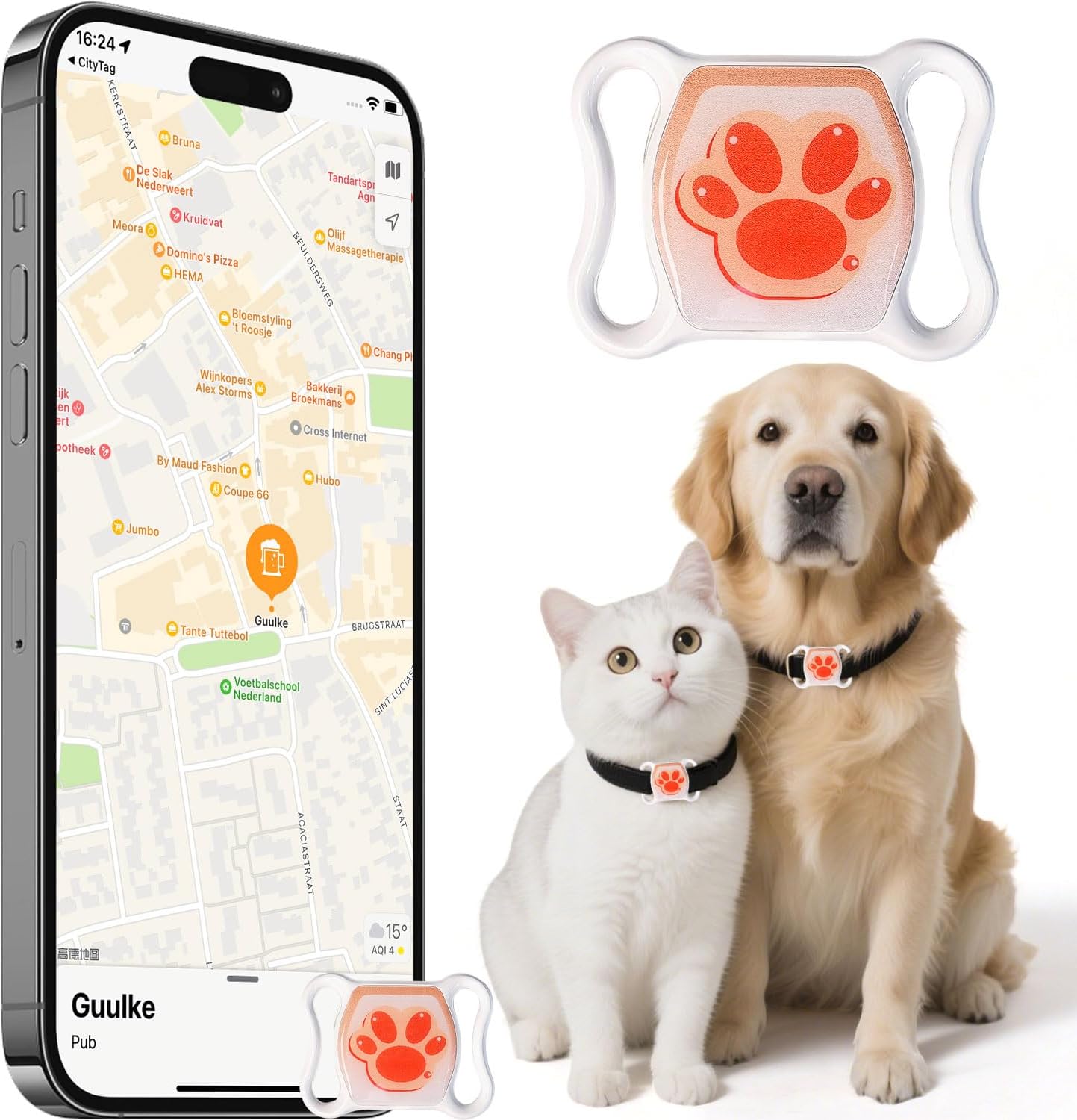
The IOYDC GF11 is a small collar-mounted GPS tracker designed to keep tabs on dogs and cats in outdoor and wet conditions. It pairs with an iOS or Android app to deliver real-time position updates beyond Bluetooth range and stores up to 30 days of route history for review. The tracker ships with an adjustable glow-in-the-dark collar and a buzzer you can trigger from the app to help find a nearby pet. IP68 dust and water protection plus a cold-resistant build make it suitable for swimming, rainy walks, and other wet environments, and the unit uses a replaceable battery advertised to provide up to one year of standby life. Notable conveniences include no monthly subscription or SIM card requirement and encrypted data sharing with family members. Expect occasional dependence on local positioning services for accuracy and that active tracking frequency will affect battery life, so aggressive real-time polling will reduce the stated standby runtime.
Best for: Buyers who need a waterproof collar tracker for pets that swim or spend lots of time outdoors and want a no-subscription solution that pairs with a smartphone app.
Less Ideal for: Owners who need ultra-precise, continuous live tracking for professional or high-risk recovery scenarios should consider solutions with dedicated cellular plans and higher update rates.
- IP68-rated waterproofing suitable for swimming and wet conditions
- Real-time GPS tracking with up to 30 days of route playback in the app
- Includes adjustable glow-in-the-dark collar for low-light visibility
- No monthly subscription or SIM card required
- Replaceable battery with up to one year standby life under light use
- Location accuracy and update frequency depend on local connectivity and positioning services
- Active real-time tracking modes will significantly shorten battery life
Verdict: The best waterproof Collar GPS Tracker for pets who swim or spend time in wet environments and require a tracker that maintains performance when exposed to water.
Halo Collar 5
Best Premium Collar GPS Tracker

| Batteries | 1 Lithium Ion (included) |
|---|---|
| Manufacturer | Protect Animals with Satellites LLC |
| Material Type | Waterproof Housing (IP67) |
| Included Components | Contact Tips, Magnetic Charger, Perfect Fit Kit, Pro Case + Strap |
The Halo Collar 5 is a premium GPS containment and tracking collar that creates virtual fences and reports your dog's exact location in real time. You set up fences in the Halo app, fit the collar to your dog, and the system issues progressive feedback — sound, vibration, and optional low-level static — as the dog approaches or crosses boundaries while sending instant alerts to your phone. Dual-frequency Precision+ GPS, AI drift prevention, and ground-station corrections claim sub-2-foot accuracy and continuous tracking, which makes the system useful on large yards, rural properties, and trails where traditional wired fences are impractical. The collar also records activity and includes guided training content to help your dog learn the boundary signals. Major trade-offs are the required subscription to enable GPS, fences, and cellular data and the need to charge the collar nightly for best performance. The unit is feature-rich and engineered for owners who prioritize high accuracy, app control, and integrated training support over a no-subscription or lower-cost containment option.
Best for: Owners who prioritize best-in-class location accuracy, advanced geofencing, and deep app features and are willing to pay for a subscription and premium hardware.
Less Ideal for: Buyers who want a one-time-purchase containment solution or who prefer low-maintenance devices that do not require regular charging or ongoing service plans.
- Dual-frequency Precision+ GPS with ground-station corrections for high location accuracy
- Real-time tracking with instant smartphone alerts when boundaries are approached or crossed
- Multiple feedback modes (sound, vibration, optional static) plus guided training content
- Wireless virtual fences with flexible placement and no digging or physical installation
- Waterproof housing and included charging accessories and fit kit for everyday use
- Requires an active subscription to enable GPS tracking, virtual fences, and cellular data
- Needs nightly charging for best performance which adds daily maintenance
Verdict: The best premium Collar GPS Tracker for owners willing to pay more for superior location precision, advanced geofencing, richer app features, and higher-quality materials.
Choosing the Right Dog Collar Tracking Device: Key Factors to Consider
Location Accuracy
Accuracy determines how quickly and precisely you can find a lost dog. GPS-based coordinates are useful in open areas but can degrade near tall buildings, dense trees, or steep terrain where satellite reception is obstructed.
Many collars supplement GPS with cellular triangulation or multi-constellation support to improve fixes. Consider whether the tracker reports continuous live location or occasional checkpoints, because real-time tracking helps during an active search. Map presentation and the clarity of coordinates in the companion app also affect how effectively you can interpret the device's data.
Battery Life and Charging
Battery runtime affects how often you must charge the tracker and whether it will last through day trips or multi-day outings. Trackers with frequent live updates use more power than those sending periodic checkpoints.
Look for devices that offer a clear tradeoff between update frequency and runtime, and check the charging method and time to full charge. Removable batteries or swappable packs reduce downtime for highly active dogs. Also consider low-battery alerts and reserve modes that extend operation when charge is low.
Mounting, Fit, and Comfort
How a tracker attaches to the collar affects both comfort for the dog and the security of the device. Low-profile mounts reduce snagging, while secure clips or integrated housings prevent loss during rough play.
Consider the combined weight relative to your dog's size; heavier units can be uncomfortable for small breeds. Check for compatibility with different collar widths and for options to attach to harnesses. Good cable routing, rounded edges, and balanced placement help prevent chafing and interference with normal movement.
Durability and Weather Resistance
Trackers need to survive wet conditions, mud, and rough handling. Water resistance ratings indicate how well a device tolerates rain, splashes, and short submersion, which matters for dogs that swim or play in puddles.
Impact resistance and rugged housings reduce failure from drops and rough use. Sealed connectors and reinforced attachment points prevent common failure modes. Consider materials and ingress protection when you expect heavy outdoor use.
Coverage and Connectivity
Coverage depends on the technology the tracker uses. Cellular-enabled devices rely on mobile networks and work across broad areas where carriers provide service. Radio-based trackers use dedicated long-range links and can work off-grid within their range. Bluetooth-only devices are limited to short distances.
Think about where you typically let your dog roam. If you frequent remote wilderness without cell reception, choose a tracker with appropriate radio range or alternative retrieval strategies. Also consider whether the device offers offline logging that synchronizes when a connection is restored.
App Usability and Alerting
The companion app is the primary interface for most owners, so ease of use and clarity matter. Look for intuitive mapping, customizable update intervals, and straightforward geofencing controls for safe-zone alerts.
Reliable push notifications and configurable alert thresholds help reduce false alarms while ensuring you get notified promptly. History playback, battery warnings, and multi-device support are useful features that improve day-to-day management.
How Often Should a Tracker Update Location During an Escape?
Update frequency depends on your priorities. For an active search you want more frequent updates, such as once every few seconds to once a minute, which gives near real-time movement. That level of tracking shortens search time but consumes more battery, so it is best reserved for active retrieval situations.
For routine monitoring, periodic checkpoints every few minutes or longer preserve battery life and still provide useful location history. Choose a device that lets you switch between a power-saving mode for daily use and a high-frequency mode when you need to locate your dog quickly.
- High-frequency tracking: better in active searches, uses more battery
- Low-frequency checkpoints: better for everyday battery life
- Switchable modes allow flexible tradeoffs
Can I Use a Collar Tracker on a Small Dog or Puppy?
Small dogs and puppies require lighter, low-profile trackers that do not interfere with gait or cause neck strain. Check the unit's weight and consider whether the manufacturer provides size guidance for small breeds. Removable or swappable battery options help reduce overall weight.
Placement matters: using a harness attachment instead of a collar can reduce pressure on the neck for very small or developing dogs. Ensure the mount does not rub or chafe and that the device stays securely fastened during play.
- Aim for the lightest suitable tracker for tiny breeds
- Consider harness mounting to protect the neck
- Verify attachment security for active play
What to Do when Gps Signal Is Poor
When GPS reception is degraded, many trackers fall back to alternative methods such as cellular triangulation, wifi-based location hints, or radio beacons. If those are not available, offline logging can store the dog's path and upload it once you regain a connection. In the field, move to higher ground or open areas to get a better satellite fix.
Physical search techniques remain important: follow likely scent routes, recheck last known coordinates, and look for signs such as disturbed vegetation. A tracker complements these search methods but should not be the sole plan when signal conditions are unreliable.
- Fallback location methods can help when GPS is blocked
- Offline logging preserves location history until reconnection
- Combine tracker data with traditional search tactics
Managing Battery Life During Trips or Multi-day Outings
Plan the outing with the tracker's expected runtime in mind. For long trips, carry a portable charger or extra battery packs if the tracker supports hot swapping. Reduce update frequency when continuous monitoring is not required to extend operational time.
Enable low-power notifications to know when the device needs attention, and test how long it takes to recharge to factor that into your schedule. Consider configuring geofences that trigger higher-frequency tracking only when the dog leaves a predefined safe area.
- Bring spare power if you expect extended use
- Use power-saving settings when full-time tracking is unnecessary
- Test recharge times before traveling
Safety and Attachment Best Practices
Secure mounting reduces the chance of losing a tracker during vigorous activity. Use reinforced clips, lock mechanisms, or integrated housings rather than temporary ties. Periodically inspect attachment hardware for wear and tighten or replace parts as needed.
Avoid positions where the device can snag on underbrush or obstacles. Keep straps and fasteners in good condition and choose collars or harnesses that match the tracker's recommended widths and thicknesses to reduce movement and improve location consistency.
- Inspect mounts regularly for wear
- Position the tracker to minimize snagging
- Use recommended collar widths for a secure fit
How We Chose the Best Dog Collar Tracking Device
To build this list we applied practical, owner-focused filters that reflect real-world use. We prioritized location accuracy under varied conditions, including open fields, wooded areas, and suburban environments. Battery life and charging options were weighted heavily because frequent recharging reduces usability for active dogs. Durability and water resistance were required to ensure the tracker survives rain, mud, and routine play. Mounting and attachment options mattered for safety and comfort on different collar types. We also considered responsiveness of companion apps and the clarity of location history and alerts. We excluded devices that rely solely on short-range bluetooth without supplementary cellular or long-range radio options, since those are unsuitable for dogs that roam beyond close proximity. We also excluded trackers with unverified weatherproofing or weak attachment hardware. Final selections emphasize a balance of reliable location updates, practical battery life, robust construction, and simple day-to-day operation.
Our full evaluation process is outlined in our review methodology.
FAQ
how accurate are dog collar tracking devices in wooded areas?
Accuracy often decreases in dense woods because trees block satellite signals. Many trackers compensate with cellular or radio fallback modes, but these are still less precise than a clear-sky GPS fix.
do trackers work without a cellular connection?
Some trackers can operate without cellular service by using radio links or by logging locations offline for later upload. Their effectiveness depends on the specific device capabilities and whether you are within the radio range.
will the tracker bother my dog while running or swimming?
Trackers designed for pets prioritize low profile and water resistance to minimize interference. Choose a device with a suitable waterproof rating and a compact mount to reduce chafing during activity.
how does geofencing help with pet tracking?
Geofencing lets you define safe zones and receive alerts when the dog leaves those areas. It reduces the need for constant monitoring by notifying you only when the pet crosses a boundary you set.
what is the typical lifespan of a tracker battery?
Battery life varies widely based on update frequency and conditions. Expect anything from a day of continuous live tracking to several weeks in low-frequency mode. Checking manufacturer guidance and real-world tests helps set expectations.
Final Verdict
Choosing the right dog collar tracking device means balancing location accuracy, battery life, and durability against your typical routines. Prioritize devices that offer the coverage and update frequency you need, secure mounting that fits your dog comfortably, and companion app features such as reliable alerts and easy map views. Accept tradeoffs between real-time tracking and runtime, and plan for battery management during longer outings. With the right priorities, you can select a tracker that reduces search time and gives you greater confidence when your dog explores off-leash.

